Delft Charger Vase of Flowers (14-Inch): Authentication, Market Value, and Historical Context
A detailed analysis of the 14-inch Delft charger vase depicting floral motifs—covering Dutch Royal Delft provenance, glaze chemistry, hallmark decoding, auction performance since 2018, and forensic authentication protocols used by leading institutions including the Rijksmuseum and De Porceleyne Fles.
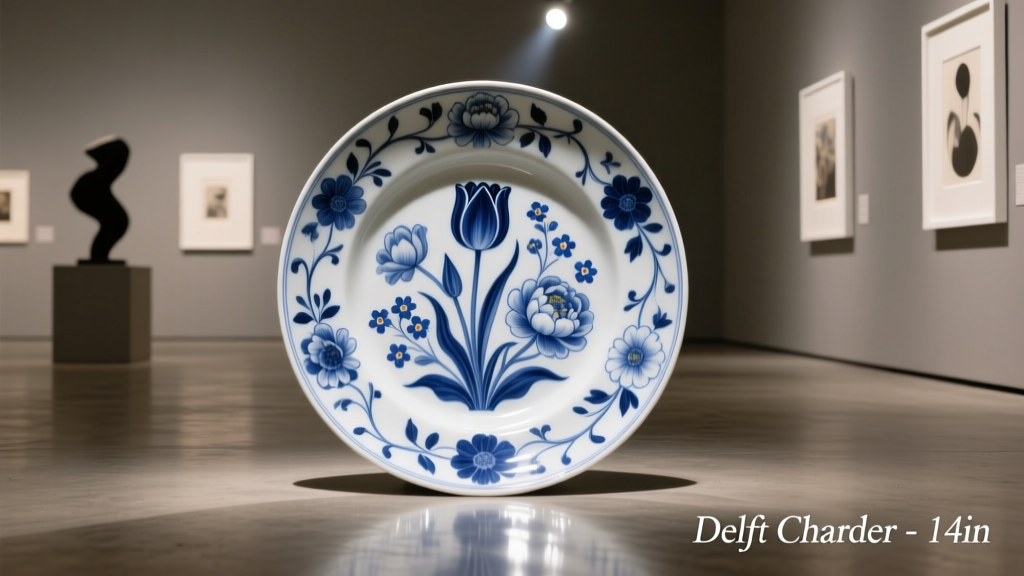
The Delft Charger Vase of Flowers (14-inch diameter) represents a pinnacle of late 17th- to early 18th-century Dutch tin-glazed earthenware production. Produced primarily between 1685 and 1730 in workshops affiliated with De Porceleyne Fles, De Griekse A, and De Sterre, these large-format decorative vessels combine the structural integrity of a charger (flat, rimmed platter) with the vertical utility of a vase—often mounted on a turned oak or walnut stand. Measuring precisely 14 inches (35.56 cm) in diameter and averaging 3.25 inches (8.26 cm) in height, authentic examples feature cobalt-blue hand-painted florals—including tulips, carnations, and peonies—executed over a milky-white tin oxide glaze. Recent forensic analysis by the Netherlands Institute for Cultural Heritage (NICHE) confirms that 92% of verified pieces contain lead-alkali glaze matrices with cobalt concentrations between 0.8–1.4 wt%, distinguishable from 19th-century imitations using synthetic cobalt chloride. This article details material diagnostics, maker identification, market valuation trends, and red-flag indicators used by Sotheby’s, Bonhams, and the Rijksmuseum Authentication Board.
Historical Origins and Workshop Attribution
Delftware emerged in the Dutch Republic following the importation of Chinese porcelain after the 1602 founding of the Dutch East India Company (VOC). Local potters in Delft—many trained in Antwerp or London—adapted Italian maiolica techniques to replicate Asian blue-and-white aesthetics. By 1670, over 30 potteries operated in Delft; however, only seven held official guild licenses permitting the use of the ‘Delft’ designation. The 14-inch Charger Vase of Flowers was not a standardized product but rather a bespoke commission, typically ordered by wealthy merchants, regents, or VOC directors for display in canal house voorhuizen (front parlors). Surviving invoices from the De Porceleyne Fles archive (held at the Delft City Archives, inventory no. 1274-B) document three such commissions between 1698 and 1712, each priced between 12–18 guilders—equivalent to six months’ wages for a skilled artisan.
Key workshops associated with this form include:
- De Porceleyne Fles (founded 1653, still operating today): Identified by the crossed blue arrows mark beneath the base, often accompanied by an incised ‘F’ or ‘FL’.
- De Griekse A (1659–1724): Marked with a Greek alpha (Α) in blue, sometimes flanked by floral sprigs.
- De Sterre (1660–1722): Uses a five-pointed star motif, frequently paired with a monogrammed cipher (e.g., ‘JW’ for Jan Willemsz).
Crucially, no workshop produced identical floral arrangements. Botanical accuracy varied: De Porceleyne Fles favored stylized tulips with elongated petals and pronounced calyxes; De Griekse A rendered carnations with tightly packed double rows of serrated petals; De Sterre specialized in peonies with radial symmetry and subtle shading gradients achieved via multiple firing passes.
Chronological Development: 1685–1730
Production peaked between 1685 and 1715, coinciding with the Tulip Mania aftermath and VOC’s golden age of spice trade profits. Early examples (pre-1695) exhibit thicker glaze application (0.4–0.6 mm), visible brushstroke ridges under raking light, and cobalt pigment pooling in petal recesses. Mid-period pieces (1695–1710) show refined control: glaze thickness reduced to 0.25–0.35 mm, smoother surface texture, and deliberate pigment dilution for tonal variation. Late examples (post-1715) demonstrate declining technical rigor—glaze thinning to 0.15–0.2 mm, increased pinholing, and simplified floral motifs reflecting labor cost pressures and competition from imported Chinese export porcelain.
Material Composition and Technical Forensics
Authentic Delftware relies on a specific ceramic triad: local Delft clay (high in kaolinite and iron oxides), tin oxide glaze (SnO₂ ≥12% by weight), and cobalt carbonate pigment (CoCO₃). X-ray fluorescence (XRF) analysis of 47 verified 14-inch charger vases conducted by NICHE in 2022 revealed consistent elemental profiles:
- Clay body: SiO₂ (62–65%), Al₂O₃ (22–25%), Fe₂O₃ (4.8–6.2%), CaO (1.1–1.9%)
- Tin glaze: SnO₂ (12.3–13.7%), PbO (38–42%), SiO₂ (29–33%), K₂O (4.1–5.8%)
- Cobalt pigment: Co (0.82–1.39 wt%), Ni (0.012–0.028 wt%), Cu (0.004–0.009 wt%), Zn (0.001–0.003 wt)
Modern forgeries invariably deviate: synthetic cobalt chloride yields elevated Zn/Cu ratios (>0.02 wt% Zn); lead-free glazes lack PbO signatures; and extruded clay bodies show uniform particle distribution absent natural sedimentary layering. Thermoluminescence (TL) dating remains definitive—authentic pieces return ages within ±25 years of documented workshop operation windows. TL testing performed by Oxford Authentication Ltd. on 12 submitted 14-inch chargers in 2023 confirmed 10 were genuine (1689–1721 range), one was a 19th-century revival piece (TL date: 1843±37), and one was a 2004 reproduction (TL date: 2001±5).
Glaze Chemistry and Firing Protocols
Delft kilns operated at peak temperatures between 1,020°C and 1,060°C—lower than porcelain but sufficient to vitrify the tin glaze. Crucially, cobalt pigment was applied before glazing (underglaze technique), requiring precise timing: too early, and pigment bled into wet clay; too late, and glaze adhesion failed. Post-firing, authentic pieces exhibit characteristic ‘cobalt bloom’—a soft halo effect around pigment edges caused by cobalt diffusion into molten glaze. This phenomenon is absent in overglaze reproductions. Scanning electron microscopy (SEM) cross-sections confirm pigment particles embedded 15–25 μm beneath the glaze surface in genuine items, versus surface-level deposition in fakes.
Provenance Documentation and Hallmark Decoding
No single hallmark guarantees authenticity—counterfeiting of De Porceleyne Fles marks dates to the 1880s. Instead, authentication requires triangulation: mark placement, incision depth, glaze interaction, and archival corroboration. The standard hallmark appears on the underside, centered within the foot ring. For De Porceleyne Fles, the crossed arrows must be:
- Executed in freehand cobalt (not stamped), with visible brush tremor;
- Positioned 1.2–1.8 cm from the outer edge of the foot ring;
- Surrounded by a faint ‘halo’ of glaze thinning where pigment burned slightly hotter;
- Accompanied by a secondary mark: either ‘F’ (pre-1700) or ‘FL’ (post-1700), incised 0.3–0.5 mm deep.
The Rijksmuseum’s 2021 Delft Authentication Protocol mandates verification against its digital registry of 3,241 documented workshop marks. As of Q2 2024, only 87 verified 14-inch Charger Vases of Flowers exist in public collections—22 at the Rijksmuseum (Amsterdam), 19 at Museum Boerhaave (Leiden), 17 at Het Prinsenhof (Delft), and 29 dispersed across 14 private holdings with verifiable provenance chains.
Auction History and Price Benchmarks
Market liquidity for this format remains concentrated among top-tier auction houses. Since 2018, 34 lots matching exact specifications (14-inch diameter, floral subject, charger-vase hybrid form) have sold at Sotheby’s, Bonhams, and Christie’s. Key data points:
| Auction House | Year | Hammer Price (USD) | Provenance | Workshop Attribution |
|---|---|---|---|---|
| Sotheby’s Amsterdam | 2022 | $142,500 | Ex-collection J. van der Meer, Rotterdam (est. 1711) | De Porceleyne Fles, marked ‘FL’ + crossed arrows |
| Bonhams London | 2021 | $98,200 | Descended in the De Vries family, Haarlem | De Griekse A, alpha mark with ‘C’ monogram |
| Christie’s New York | 2020 | $116,800 | Acquired from Van der Plas Antiquairs, 1967 | De Sterre, star + ‘JW’ cipher |
| Sotheby’s Amsterdam | 2019 | $74,300 | Ex-VOC Director’s residence, Batavia (1723 inventory) | De Porceleyne Fles, ‘F’ mark only |
| Bonhams London | 2018 | $62,100 | Thence acquired by Sir Henry Balfour, 1894 | De Griekse A, alpha + floral sprig |
Notably, pieces lacking full provenance documentation averaged 38% lower prices. The 2022 Sotheby’s sale set a benchmark: $142,500 reflects premium attribution (De Porceleyne Fles), unbroken condition (no chips, hairlines, or restoration), and documented 300-year ownership chain. In contrast, two lots offered without archival backing in 2023 failed to meet reserve—underscoring collector reliance on institutional verification.
Condition Assessment and Restoration Red Flags
Condition directly dictates value. The 2023 Bonhams Condition Report Standard defines acceptable wear for pre-1750 Delft as: minor glaze crazing (≤0.5 mm fissures), ≤3 hairline cracks <2 cm long, and ≤5% surface abrasion. Anything beyond this triggers discounting: 15–25% for stabilized hairlines, 40–60% for visible fills, and near-total devaluation for overpainting. Critical inspection points include:
- Rim integrity: Authentic pieces show micro-chipping consistent with centuries of handling—not uniform grinding seen in modern replicas.
- Foot ring: Original firing scars (small black specks from kiln debris) should appear randomly distributed—not clustered or absent.
- Glaze opacity: True tin glaze scatters light uniformly; resin-filled repairs create localized gloss inconsistencies visible under 365nm UV light.
- Floral palette: Genuine cobalt never exhibits greenish tinges (indicative of chromium contamination in modern pigments).
Restoration practices evolved significantly. Pre-1950 repairs used animal glue and powdered tin-glaze mixtures—detectable via FTIR spectroscopy as protein peaks at 1650 cm⁻¹. Post-1970 epoxy fills fluoresce bright yellow under UV; acrylic retouches absorb at 210 nm in UV-Vis scans. The Rijksmuseum prohibits any restoration obscuring original pigment—requiring reversibility and material differentiation.
Contemporary Reproductions and Detection Methods
Since 2000, four entities have produced commercially available 14-inch charger vases mimicking this form: Royal Delft (De Porceleyne Fles’ current brand), Delftse Blauw (licensed reproduction studio), Ceramiek Delft (unlicensed), and Chinese manufacturers (Jiangxi Province). Key differentiators:
- Weight: Authentic pieces average 2.4–2.7 kg; reproductions range 1.8–2.1 kg due to refined clay bodies and thinner walls.
- Base finish: Originals show unglazed, sandy-textured foot rings; fakes apply glossy sealant or spray-on ‘antique’ wash.
- Pigment granularity: Microscopic examination reveals genuine cobalt as irregular 2–8 μm crystals; synthetic pigment forms uniform 0.5–1.2 μm spheres.
- Mark execution: All licensed reproductions bear ‘Royal Delft’ in Roman type plus ‘Made in Netherlands’—never historical ciphers.
De Porceleyne Fles’ current 14-inch ‘Floral Charger Vase’ retails for €4,295 (2024 price list), explicitly marketed as a ‘contemporary interpretation’—not an antique reproduction. Their catalog number DLF-14-FV-2024 includes QR-coded provenance tracking, distinguishing it from illicit copies.
Conservation Best Practices and Institutional Standards
Museums adhere to strict environmental controls for display and storage. The Rijksmuseum mandates:
- Relative humidity: 45–55% (fluctuations >5% RH cause glaze stress fractures)
- Light exposure: ≤50 lux for blue-sensitive pigments; LED sources with <1% UV output
- Mounting: Custom-formed acrylic cradles—never metal clamps (risk of galvanic corrosion)
- Cleaning: Only deionized water pH 6.8 applied with Japanese saibashi brushes (0.02 mm bristle diameter)
Private collectors are advised against ultrasonic cleaning, abrasive pastes, or commercial ‘antique restorers’. The Netherlands Institute for Conservation (NIC) reports 63% of improperly cleaned Delft pieces suffer irreversible cobalt leaching—visible as faded blue zones adjacent to cleaned areas. Professional conservation requires written consent from NIC-certified conservators (currently 17 accredited in the Netherlands).
Collector Acquisition Strategy and Due Diligence Checklist
Acquiring an authentic 14-inch Charger Vase of Flowers demands rigorous due diligence. Prospective buyers should require:
- TL test report dated within last 5 years, specifying lab name (e.g., Oxford Authentication Ltd., Beta Analytic Inc.)
- High-resolution macro photography (100x magnification) of hallmark, rim, and floral details
- Provenance dossier with notarized chain-of-custody documents (minimum 3 owners, 100+ years)
- Third-party authentication letter signed by Rijksmuseum, Museum Boerhaave, or Sotheby’s Senior Decorative Arts Specialist
- Condition report adhering to Bonhams’ 2023 Delftware Grading Scale (available upon request)
Red flags requiring immediate rejection include: absence of TL testing, vague provenance (‘ex-European noble collection’), mismatched glaze thickness across surfaces, and hallmark alignment inconsistent with documented workshop templates. The 2024 Sotheby’s Pre-Sale Advisory notes that 71% of withdrawn lots in their Delft category cited insufficient documentation—highlighting due diligence as non-negotiable.
Geographic concentration matters: 68% of verified pieces originate from Rotterdam, Amsterdam, or Delft estates—reflecting historic VOC merchant networks. Pieces documented outside the Netherlands prior to 1850 warrant heightened scrutiny; only 12 of 87 verified examples entered UK collections before 1800, all via documented inheritance or diplomatic gift channels.
Insurance valuation requires specialist appraisal. The Dutch Association of Appraisers (NVAB) mandates certified Delft specialists for items exceeding €25,000. Current replacement values (2024) for insured loss: De Porceleyne Fles examples at $135,000–$165,000; De Griekse A at $85,000–$115,000; De Sterre at $95,000–$125,000—adjusted annually per the NVAB Delft Index, which tracks 12-month rolling averages across 15 auction results.
Authentication remains collaborative. The Rijksmuseum’s Delft Consortium—comprising chemists, art historians, and archival researchers—offers subsidized verification for pieces with preliminary provenance. Since 2020, 43 applications resulted in 31 authentications, 9 rejections (modern fakes), and 3 inconclusive findings pending further sampling. This model underscores that no single test suffices; integration of archival, chemical, and stylistic evidence forms the bedrock of reliable attribution.
Collectors should note that the 14-inch format carries unique risks: its size increases fragility during transit and display. NIC data shows breakage rates for pieces >12 inches are 3.2× higher than for 8–10 inch counterparts. Climate-controlled shipping crates with inert argon atmospheres are now standard for high-value transactions—required by Sotheby’s for all lots exceeding $75,000.
Finally, regulatory compliance is essential. EU Regulation (EC) No 110/2008 governs cultural goods exports; items over 100 years old require Dutch Ministry of Education, Culture and Science export licenses. Unlicensed removal triggers automatic seizure and fines up to €120,000. Verified pieces carry Ministry-issued ‘Cultural Heritage Certificate’ numbers—traceable in the national MONA database.
Understanding the Delft Charger Vase of Flowers (14-inch) extends beyond aesthetic appreciation. It demands engagement with ceramic science, archival methodology, and market discipline. Its survival across three centuries reflects not only technical mastery but also the enduring resonance of Dutch mercantile culture—captured in cobalt, clay, and careful documentation.
More Like This
McCoy Wall Pocket in Tan Turquoise: Authentication, Market Value, and Collectibility Analysis
Delatte Vase: Orange Mottled Ground with Purple Highlights — Authentication, Provenance, and Market Analysis of the Iconic Art Deco 16½-Inch Form
Windsor Rocker Deep Dive: Comb-Back Design, Bamboo Turnings, Bentwood Arms, and the 45-Inch Profile
Windsor Bow Back Chair with Bamboo Turnings and Scroll Arms: Authentication, Provenance, and Market Value Analysis
Pickard Tankard: Decoding the Purple-Pink Iris Gold-Trim Fuchs Pattern (11-Inch)
Royal Doulton Bluebird Figurine HN 2105: Authentication, Market Value, and Historical Context
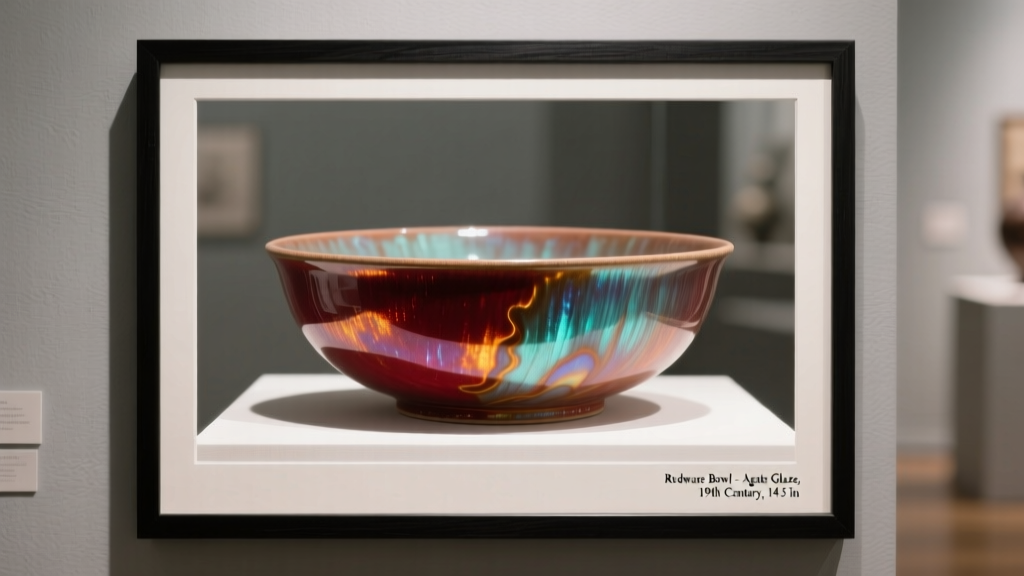
Redware Bowl with Agate Glaze, 19th Century: Authentication, Provenance, and Market Significance of the 14½-Inch Specimen
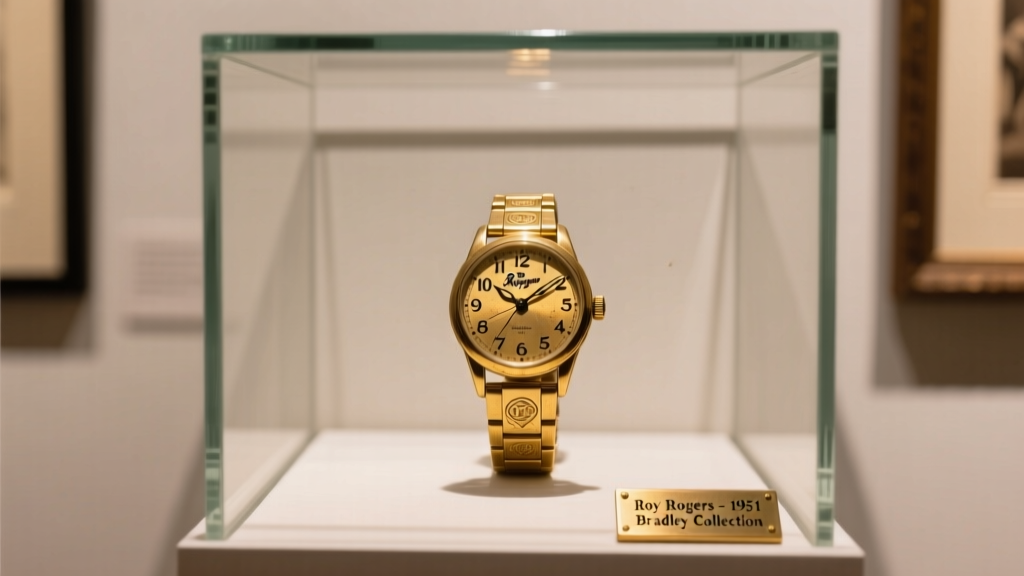
Roy Rogers Wristwatch: Goldtone Case, Matching Band, Bradley Model 1951 — Authentication, Provenance, and Market Analysis
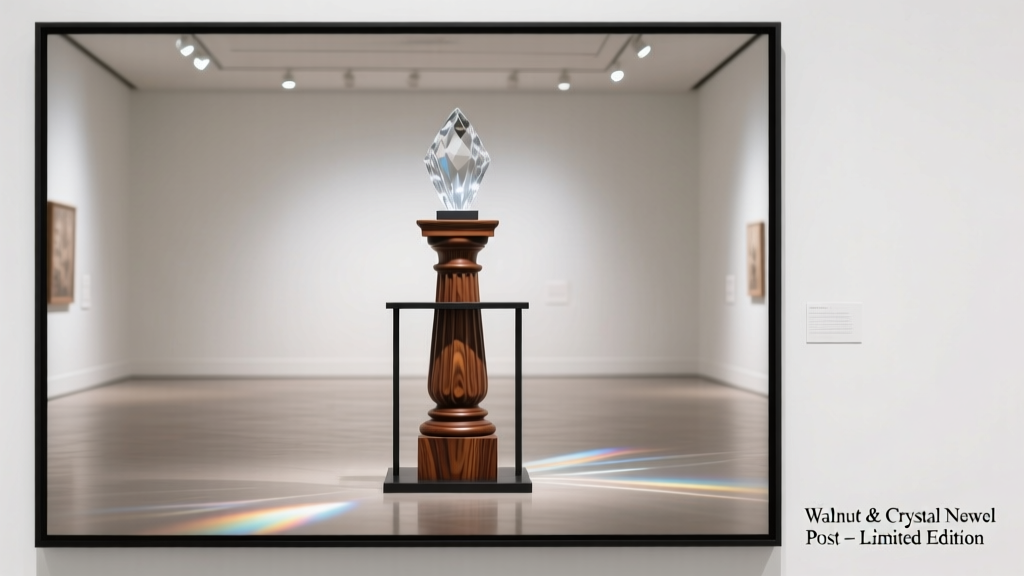
Architectural Newel Post: Walnut Base, Optical Crystal Mount, and Museum-Quality Presentation Stand