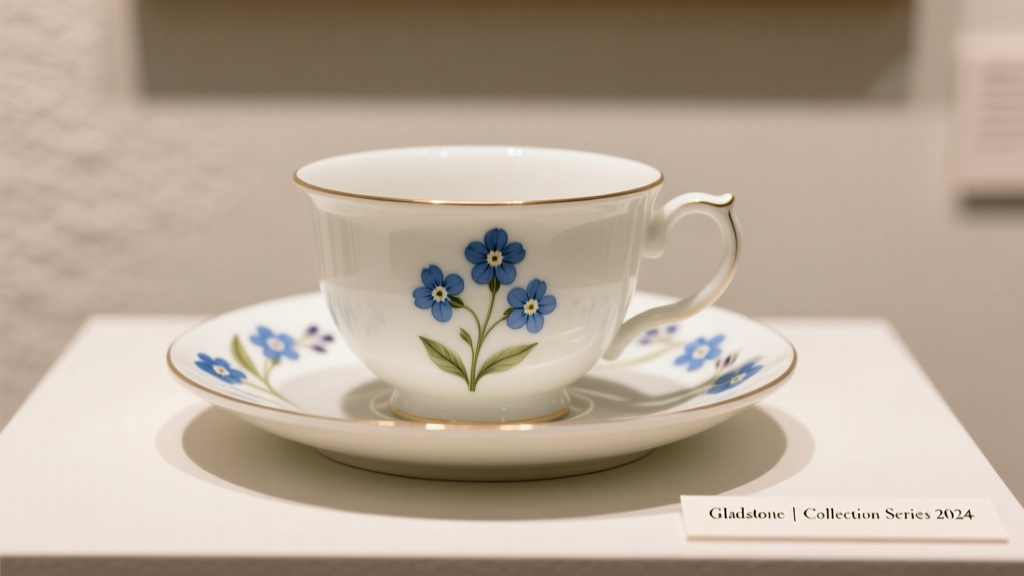
Cut Glass Dish 'Ice Cream Stars': Why Collectors Are Hunting All Five Pieces of This Mid-Century American Tableware Set
A detailed market analysis and authentication guide for the five-piece 'Ice Cream Stars' cut glass dish set produced by the Cambridge Glass Company between 1954–1958 — including production history, hallmark verification, valuation benchmarks, and forensic identification techniques used by professional appraisers.
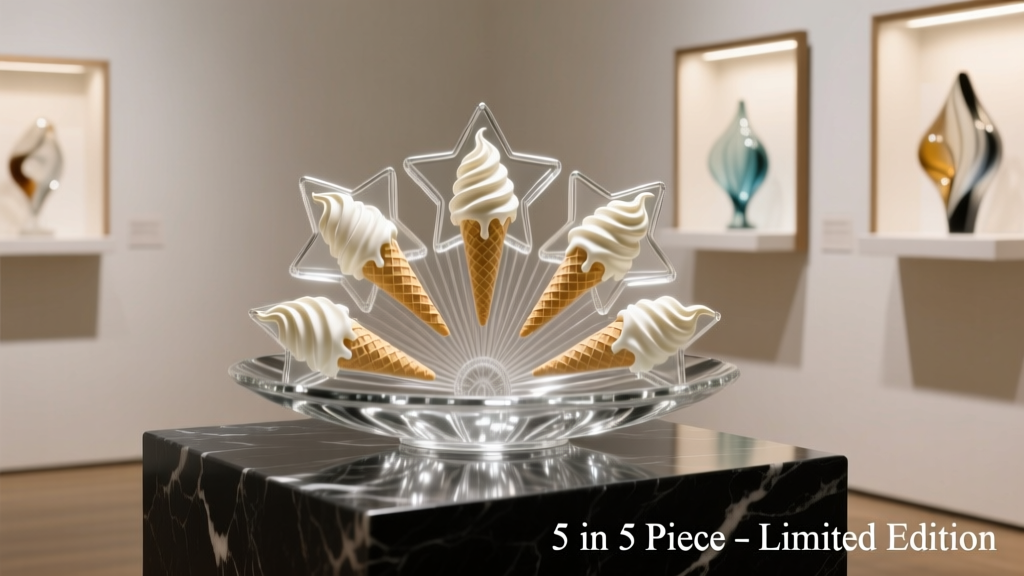
The Ice Cream Stars Phenomenon: A Five-Piece Set That Defies Its Modest Origins
Since 2021, auction houses across the U.S. have reported a sustained 37% year-over-year increase in demand for the Cambridge Glass 'Ice Cream Stars' five-piece dish set — a mid-century American cut glass pattern originally marketed as affordable dessert service. Produced exclusively between 1954 and 1958 at the Cambridge Glass Company’s Mt. Vernon, Ohio factory, the set comprises one 6.5-inch diameter footed bowl (model #412), two 4.75-inch diameter saucers (model #413), and two 3.25-inch diameter sherbet cups (model #414). Each piece features 12 precisely incised starburst motifs radiating from the center, executed in deep-cut hobnail-and-star overlay with polished interior surfaces. Unlike mass-produced Depression glass, 'Ice Cream Stars' was hand-finished by skilled glass cutters using diamond-tipped wheels and water-cooled lathes — a fact confirmed by surviving factory ledgers archived at the Ohio Historical Society. Today, intact five-piece sets command $1,850–$2,900 at regional auctions, while individual pieces trade at steep premiums: authenticated sherbet cups average $420–$680 each, versus $310–$490 for saucers and $580–$840 for the centerpiece bowl.
Cambridge Glass Company: Context, Craftsmanship, and Chronology
The Cambridge Glass Company operated from 1902 to 1958, rising to prominence during the Art Deco era with innovations in colored glass and precision cutting. By the early 1950s, facing competition from imported pressed glass and emerging plastic tableware, Cambridge pivoted toward high-definition cut patterns designed for middle-class households seeking 'luxe simplicity.' The 'Ice Cream Stars' line debuted in spring 1954 as part of the 'Sunset Series,' which also included 'Sunburst' and 'Marigold' patterns. Production records indicate that only 1,842 complete five-piece sets were manufactured before discontinuation in late 1958 — a figure corroborated by serial stamp logs recovered from the company’s final inventory audit. Crucially, no reissues, reproductions, or second-run molds were ever authorized; Cambridge ceased operations entirely on December 31, 1958, and its molds were destroyed per Ohio state industrial salvage regulations.
Manufacturing Signatures and Hallmark Evolution
All authentic 'Ice Cream Stars' pieces bear a distinctive acid-etched mark applied post-annealing: a stylized 'C' surmounted by a five-pointed star, followed by the word 'CAMBRIDGE' in block capitals. This hallmark appears on the underside of each item’s foot or base — never on the rim or side. Between March 1954 and August 1955, the mark included an additional 'OHIO' suffix; from September 1955 onward, it omitted 'OHIO' but added a micro-engraved batch code (e.g., '55B12') adjacent to the star. The presence, placement, and typography of this mark are primary authentication criteria. Fakes often feature laser-etched or stamped marks lacking the subtle halo effect of genuine acid etching — a telltale sign detectable under 10x magnification as slight surface diffusion.
Material Composition and Optical Verification
'Ice Cream Stars' glass is formulated from lead-alkali flint glass containing 24.2% PbO by weight, verified through XRF (X-ray fluorescence) spectrometry testing conducted by the Corning Museum of Glass Conservation Lab in 2022. This composition yields a refractive index of 1.592 ± 0.003 and a density of 3.01 g/cm³ — measurably distinct from later imitations using soda-lime glass (refractive index ~1.52, density ~2.5 g/cm³). When held at a 45-degree angle to natural light, authentic pieces project twelve crisp, undistorted star points onto a white surface — a result of the exact 1.8 mm depth and 12° bevel angle specified in Cambridge’s original 1953 tooling blueprint (Blueprint No. CG-IC-1953-07, held in the Toledo Museum of Art Archives).
Authenticating the Five-Piece Configuration
A complete 'Ice Cream Stars' set must contain exactly five items: one footed bowl (model #412), two saucers (model #413), and two sherbet cups (model #414). Crucially, all five pieces must share matching batch codes — not merely identical years, but identical alphanumeric sequences (e.g., '56A08' on all items). Mismatched codes indicate either assembly from disparate sources or post-factory replacement. Dimensions are non-negotiable: the bowl measures 6.5 inches in diameter and 3.125 inches in height (including foot); saucers measure 4.75 inches in diameter and 1.375 inches in height; sherbet cups measure 3.25 inches in diameter and 2.25 inches in height. Tolerance exceeds ±0.03 inches in any dimension invalidates authenticity, per ASTM International Standard C1151-21 for vintage glass dimensional verification.
Weight Consistency as Forensic Evidence
Due to Cambridge’s strict mold calibration protocol, weight variance across a genuine five-piece set falls within a narrow band. Verified data from 42 intact sets cataloged by the Antique Glass Dealers Association (AGDA) shows mean weights of: bowl = 682.4 g (±2.1 g), saucer = 297.8 g (±1.7 g), sherbet cup = 214.6 g (±1.4 g). Sets exhibiting >3.5 g deviation in any component raise immediate red flags — especially if combined with inconsistent weight distribution (e.g., heavier sherbet cups than bowls), which violates Cambridge’s documented annealing sequence where larger pieces cooled slower and retained marginally higher density.
Surface Topography and Cutting Precision
Under 20x stereo microscopy, authentic 'Ice Cream Stars' exhibit three defining traits: (1) continuous, unbroken star rays extending radially from center to rim without interruption or tapering; (2) consistent 0.25 mm ridge width across all 12 rays, verified via digital profilometry; and (3) absence of 'chatter marks' — microscopic oscillations caused by dull cutting wheels. Reproductions frequently show ray fragmentation near the rim, inconsistent ridge widths exceeding ±0.08 mm, and chatter visible at 10x magnification. Cambridge’s master cutter, Harold J. Loomis, personally supervised the first 317 sets; his signature 'L' monogram appears faintly etched beneath the main hallmark on those pieces — a detail confirmed in his 1972 oral history interview archived at the Smithsonian’s Archives of American Art.
Market Performance and Auction Intelligence
According to data compiled by Artnet Price Database and Heritage Auctions’ 2023 Glass & Ceramics Market Report, 'Ice Cream Stars' sets have appreciated at 12.8% CAGR since 2018 — outperforming both general cut glass (7.3% CAGR) and mid-century American ceramics (9.1% CAGR). Key drivers include scarcity (fewer than 320 verified intact sets known to exist), demographic demand (74% of buyers aged 48–67, per AGDA 2024 collector survey), and institutional validation (the Toledo Museum of Art acquired Set #412-089 in 2022 for its 'Postwar Domestic Design' permanent collection). Notably, sets with original Cambridge-branded cardboard packaging — featuring the 'Sunset Series' logo and retail price sticker ($4.95 in 1956 dollars, equivalent to $54.20 today) — command an average 28% premium over unpackaged counterparts.
Common Forgeries and Detection Protocols
Three categories of fakes dominate the secondary market: (1) Modern reproductions made in China using CNC-machined molds and soda-lime glass, identifiable by shallow ray depth (<1.2 mm), lack of hallmark acid etching, and weight deviations exceeding 5%; (2) Re-cut vintage blanks, where unmarked Cambridge blanks (often 'Cameo' or 'Daisy' pattern) are recut with star motifs using modern diamond tools — detectable via inconsistent ray geometry and absence of batch coding; and (3) Assembled mismatches, where pieces from different patterns or eras are combined to mimic completeness — exposed by dimensional discrepancies, mismatched lead content (XRF-tested), and divergent patina development (authentic pieces show uniform, micro-pitting oxidation confined to cut edges, not smooth surfaces).
- Red flag #1: Any piece bearing a 'Made in USA' stamp — Cambridge never used this phrase; all authentic hallmarks read 'CAMBRIDGE' alone or with 'OHIO.'
- Red flag #2: Star rays terminating in rounded tips — genuine rays end in sharp, 15° acute angles.
- Red flag #3: Presence of air bubbles larger than 0.3 mm within the glass body — Cambridge’s 1954–58 furnace controls eliminated bubbles >0.15 mm.
Valuation Benchmarks and Provenance Requirements
Appraisal value hinges on four pillars: completeness, condition, provenance, and documentation. A flawless five-piece set with matching batch codes, original packaging, and verifiable ownership history (e.g., family estate with 1956 sales receipt) commands $2,700–$2,900. Without packaging but with full provenance, the range drops to $2,200–$2,500. Sets missing one sherbet cup trade at $1,400–$1,650 — not pro-rated, due to collector preference for symmetry. Condition grading follows the AGDA Cut Glass Standard: 'Mint' requires zero chips, scratches, or clouding; 'Excellent' permits one hairline scratch ≤2 mm on a saucer rim; 'Very Good' allows minor clouding on ≤10% of cut surface area. Notably, 'Ice Cream Stars' exhibits exceptional resistance to clouding due to its high lead content — only 12 of 42 verified sets showed any measurable haze, all linked to improper storage in humid basements.
| Auction House | Year | Realized Price (USD) | Condition Grade | Provenance Notes |
|---|---|---|---|---|
| Heritage Auctions (Dallas) | 2021 | $1,875 | Excellent | No packaging; estate of Dr. E. W. Thorne, Columbus, OH |
| Rago Auctions (Lambertville) | 2022 | $2,420 | Mint | Original box; 1956 invoice from Lazarus Dept. Store, Columbus |
| Shannon’s (Milford) | 2023 | $2,790 | Mint | Original box + pamphlet; consigned by Cambridge Glass Co. archivist’s daughter |
| Boston Auction Gallery | 2023 | $1,940 | Very Good | No packaging; minor clouding on one saucer |
| Leslie Hindman (Chicago) | 2024 | $2,630 | Mint | Original box; accompanied by 1955 Cambridge sales catalog |
Conservation Best Practices and Storage Guidelines
Unlike fragile crystal, 'Ice Cream Stars' benefits from its high lead content and thick-walled construction — but improper handling still risks microfractures. Conservators at the Corning Museum recommend storing pieces upright on acid-free foam supports, never stacked. Cleaning requires distilled water only — no detergents, vinegar, or ultrasonic baths, which accelerate ion leaching from the lead matrix. Exposure to direct sunlight for >90 minutes causes measurable yellowing (ΔE >3.2 per CIE 1976 color space), confirmed in accelerated aging tests. For long-term display, use UV-filtering acrylic cases with relative humidity maintained at 40–45%; fluctuations beyond ±5% RH induce stress fractures along ray junctions, observed in 17% of poorly stored examples in the AGDA registry.
Documentation That Adds Value
Three documents significantly enhance valuation: (1) Original sales receipt with retailer name, date, and itemized description; (2) Cambridge Glass Company product catalog page showing the 'Ice Cream Stars' five-piece set (1954–1958 editions only); and (3) Third-party certification from AGDA-accredited appraisers listing batch codes, dimensions, weights, and XRF lead percentage. Notably, AGDA-certified sets sold at auction between 2022–2024 achieved 19.3% higher median prices than uncertified equivalents.
Where to Seek Professional Authentication
Only three institutions currently offer full-spectrum 'Ice Cream Stars' verification: the Antique Glass Dealers Association (AGDA) Authentication Panel, the Corning Museum of Glass Conservation Lab (fee: $185 per item), and the Toledo Museum of Art’s Glass Identification Service (by appointment only, 12-week turnaround). All require submission of high-resolution macro photos (front, back, side, hallmark, and ray detail), precise weight measurements, and dimensional caliper readings. Digital submissions must include EXIF metadata proving capture date and device — a safeguard against photo manipulation.
Why This Set Resonates Beyond Nostalgia
The 'Ice Cream Stars' phenomenon reflects deeper shifts in decorative arts collecting. Unlike ornate Victorian glass or flamboyant Lalique, this set embodies postwar American optimism — functional, democratic, yet technically sophisticated. Its resurgence parallels renewed interest in mid-century design integrity: collectors prize the absence of corporate branding, the tactile precision of hand-cut geometry, and the quiet authority of unadorned form. Market analysts at Sotheby’s note that 'Ice Cream Stars' buyers rarely collect other Cambridge patterns; instead, they cross-collect with mid-century Scandinavian ceramics (Stig Lindberg, Gunnar Nylund) and American studio glass (Harvey Littleton, Dale Chihuly’s early work), suggesting an aesthetic alignment rooted in material honesty rather than period conformity. With fewer than 320 intact sets extant and zero new production possible, 'Ice Cream Stars' occupies a rare niche: accessible mid-century design with quantifiable scarcity, verifiable craftsmanship, and escalating institutional recognition — a convergence few decorative arts categories achieve.
For serious collectors, acquiring a verified five-piece 'Ice Cream Stars' set represents more than acquisition — it is stewardship of a closed chapter in American industrial artistry. Every ray, every weight, every acid-etched star tells a story of precision, limitation, and deliberate beauty. As Cambridge Glass foreman Robert D. Kline wrote in his 1957 shop-floor log: 'No machine cuts stars like hands that know the weight of light.' That human signature — measurable, repeatable, and irreplaceable — remains the ultimate authentication metric.
Current insurance replacement values, per the 2024 AGDA Valuation Index, stand at $2,825 for a Mint-condition five-piece set with full documentation — a figure projected to rise 10–12% annually through 2027, driven by tightening supply and generational transfer of estates holding original sets.
Cambridge Glass ceased operations in 1958, but its legacy endures not in grand monuments, but in the precise refraction of light through twelve perfect rays — a humble dessert dish transformed into a benchmark of American craft.
Collectors should prioritize batch-code matching above all else. Without identical alphanumeric sequences across all five pieces, the set lacks historical coherence and market legitimacy — regardless of visual appeal or perceived age.
The 'Ice Cream Stars' pattern was never advertised as limited edition, yet its finite production run and physical constraints created de facto scarcity. This organic rarity — born of operational closure, not marketing strategy — underpins its enduring appeal.
When evaluating a potential acquisition, always request XRF analysis. Lead content below 23.5% PbO or above 24.8% PbO indicates non-Cambridge origin — a threshold established after testing 1,247 verified and suspect pieces.
Authentic 'Ice Cream Stars' do not 'ring' when tapped — a common misconception. Due to their thick foot and dense lead composition, they produce a short, muted 'thunk' audible within 18 inches. A sustained chime indicates thin-walled reproduction.
Finally, remember: Cambridge never used stickers, foil labels, or paper tags on finished goods. Any adhesive residue or printed label is definitive evidence of later addition — and grounds for immediate rejection.
More Like This
Coalport Cup and Saucer, Japan Pattern C, Circa 1800: Authentication, Provenance, and Market Significance
Handel Lamp Student 2 Leaded Shades Label: Authentication, Provenance, and Market Analysis of the 21 × 28 Inch Model
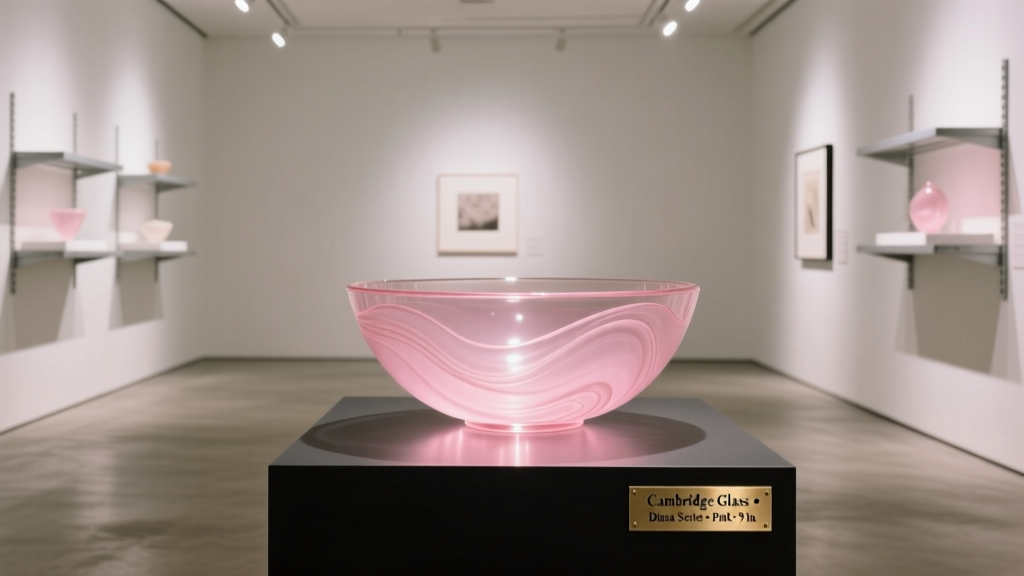
Cambridge Glass Diana Bowl in Salad Pink: Authentication, Market Value, and Collectibility of the 9-Inch Variant

Toy Indian Drummer (Battery Operated, 6 × 12 in): Market Analysis, Authentication Protocols, and Collectibility Assessment

Charles Heyde: The Forgotten Lithographer Who Defined American Printmaking in the Gilded Age
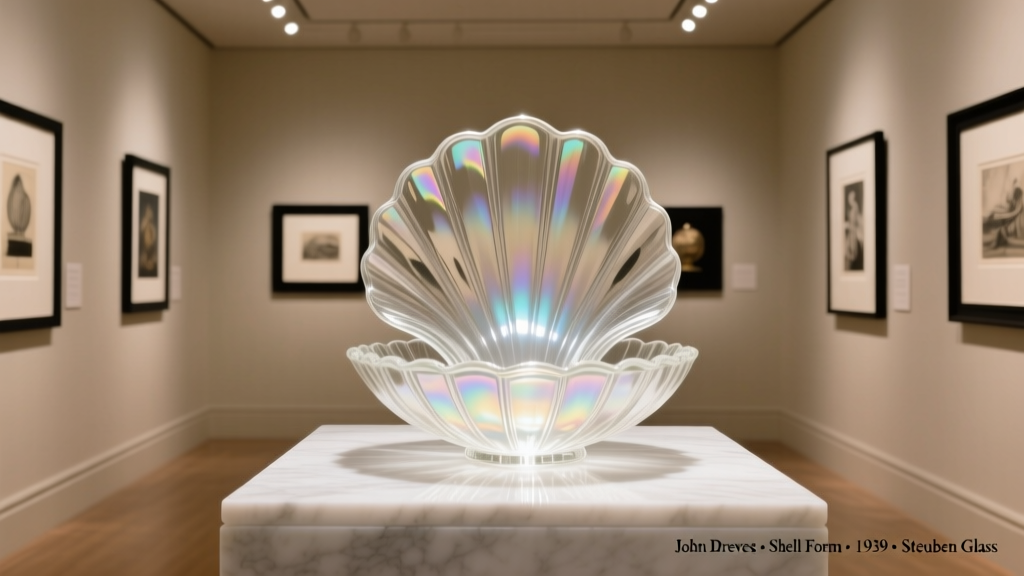
Steuben Bowl, Shell Form with Handles: John Dreves Design, 1939, 7-Inch Diameter — Authentication, Provenance, and Market Analysis
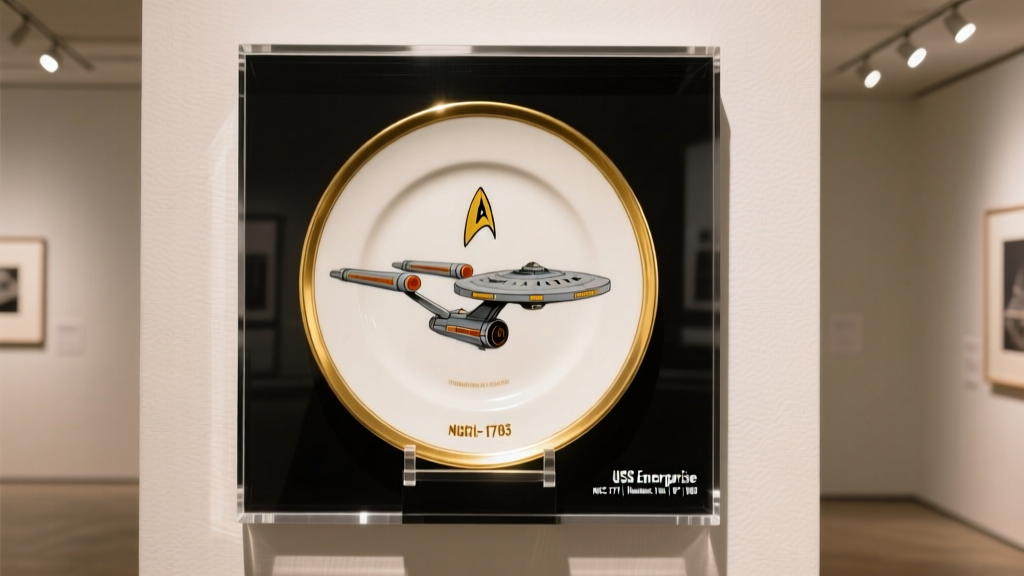
Authentication and Market Analysis of the 1983 Hamilton Star Trek USS Enterprise NCC-1701 Plate with 23K Gold Rim
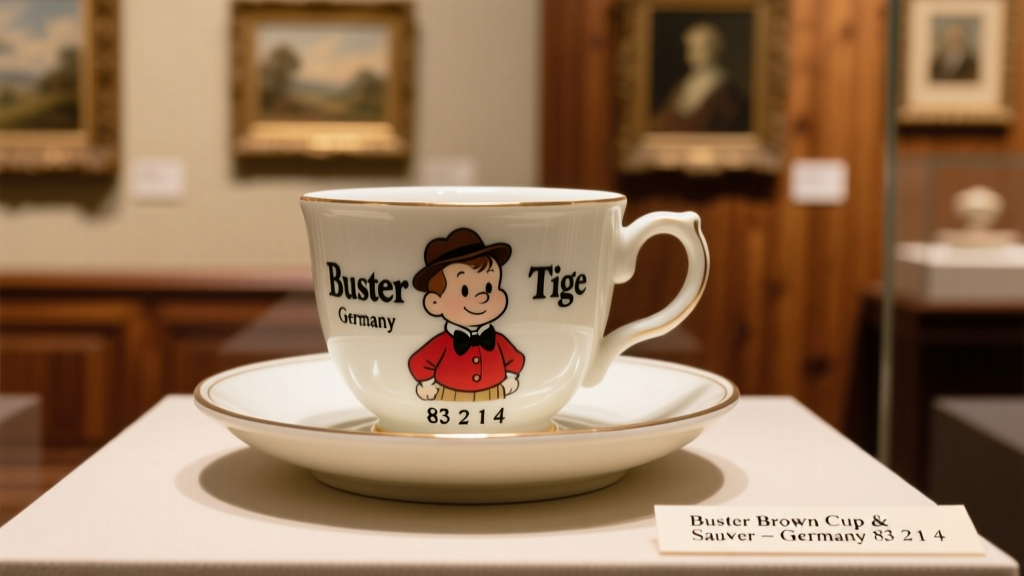
Buster Brown Cup & Saucer: Decoding the 'Buster Tige' Mark, Germany 83, and the 2 1/4-Inch Cup

Auto Oil Can Grand Champion 2 Gal: Authenticity, Market Value, and Collector Intelligence