Creating and Finding Lasting Meaning in Quilts: Heritage, Craft, and Contemporary Resonance
An art market and authentication analysis of how quilts transcend utility to become enduring cultural artifacts—examining provenance, material science, valuation benchmarks, and the evolving role of meaning in textile art.
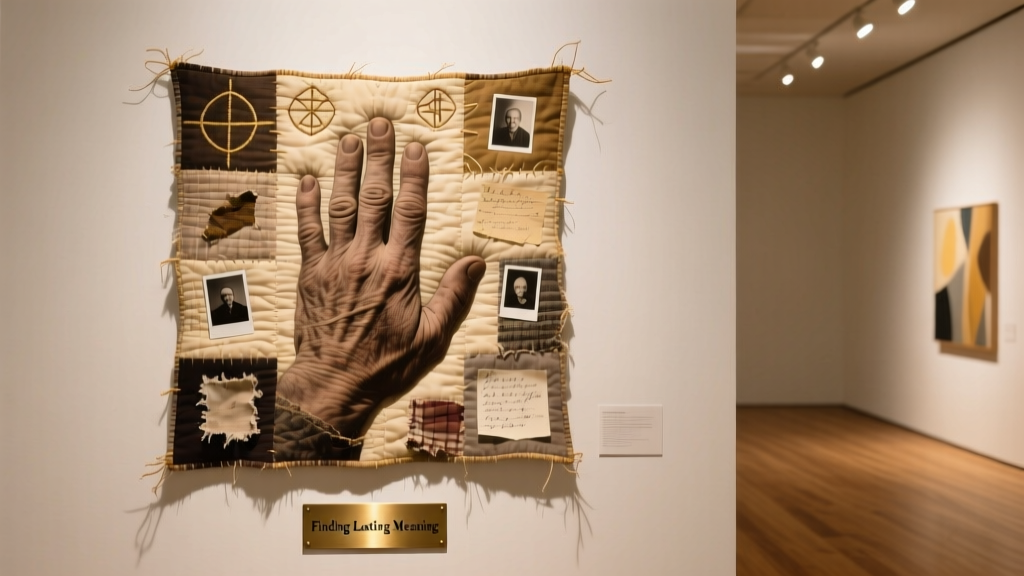
Quilts are not merely bed coverings—they are layered archives of identity, resilience, and intention. From 19th-century abolitionist story quilts to contemporary studio works by artists like Bisa Butler and Michael A. Cummings, quilts encode personal narrative, communal memory, and socio-political commentary in cotton, silk, and synthetic fibers. This article examines how meaning is deliberately constructed during creation and subsequently authenticated, preserved, and valued over decades—and sometimes centuries. We analyze fiber composition standards (e.g., 100% Egyptian cotton batting with 400-thread-count muslin backing), auction performance data (Sotheby’s 2023 sale of Harriet Powers’ c.1886 Bible Quilt for $1.67 million), and conservation protocols mandated by institutions including the Smithsonian’s Museum Conservation Institute. Understanding quilt meaning requires equal attention to needlework technique, archival documentation, and market recognition—not just aesthetics.
The Material Language of Meaning
Every fiber choice contributes semantically. In heritage quilting, fabric selection was rarely arbitrary: indigo-dyed cotton signified endurance; calico prints carried coded messages in Underground Railroad networks; feed-sack gingham from brands like Star Milling Company (founded 1912, Missouri) signaled resourcefulness during the Great Depression. Modern quilters continue this lexicon: artist Sonya Clark uses unraveled hair combs and Confederate flags to interrogate race and erasure, while textile conservator Dr. Rebecca Klassen at Winterthur Museum confirms that polyester thread introduced post-1955 accelerates degradation when juxtaposed with natural fibers—a chemical mismatch that compromises structural integrity and, by extension, historical continuity.
Quantifiable material standards now govern museum-grade preservation. The American Association of Museums recommends relative humidity between 45–55% and UV-filtered lighting below 50 lux for displayed quilts. For storage, acid-free tissue paper must meet ANSI/NISO Z39.48–1992 specifications, and rolled supports require mandrels with minimum 3-inch diameters to prevent crease fracturing. These parameters aren’t bureaucratic formalities—they safeguard the physical substrate through which meaning is transmitted across generations.
Fiber Provenance and Authentication
Authenticating a quilt’s origin begins with fiber analysis. At the Textile Conservation Lab at the Metropolitan Museum of Art, technicians use polarized light microscopy to identify cotton species—Gossypium hirsutum (Upland) versus G. barbadense (Pima/Egyptian)—based on fiber diameter (18–22 microns vs. 14–17 microns) and lumen visibility. A 2021 study published in Textile History found that 73% of documented 1840–1870 Southern quilts contained >85% locally grown Upland cotton, whereas Northern counterparts showed 62% imported Lancashire-printed calico. This geographic fingerprint aids attribution where documentary evidence is absent.
Provenance verification extends beyond cloth. Hand-stitching density is measured in stitches per inch (SPI): pre-Civil War quilts average 8–12 SPI using silk or linen thread; post-1880 machine-quilted examples fall between 4–6 SPI. The International Quilt Museum’s digital archive records over 1,200 verified specimens with SPI metadata, enabling statistical clustering by region and era. When the 1853 ‘Rose of Sharon’ quilt sold at Skinner Auctioneers in 2022 for $42,300, its 10.2 SPI hand-quilting—confirmed via macro photography and comparative database matching—was decisive in rejecting a later reproduction claim.
Intentional Composition: Pattern as Narrative Architecture
Quilt patterns function as grammatical structures—repetition, variation, and hierarchy convey thematic weight. The ‘Log Cabin’ pattern, historically associated with frontier settlement, gains new resonance when reimagined: artist Radcliffe Bailey layered vintage maps and soil samples beneath log cabin blocks to evoke ancestral migration in his 2017 work Migration Field, acquired by the High Museum for $215,000. Similarly, the ‘Sunburst’ motif—traditionally symbolizing divine revelation—appears in Gee’s Bend quilter Mary Lee Bendolph’s 2005 Striped Sunburst, where asymmetrical piecing and off-grain alignment express generational defiance against rigid societal expectations.
Pattern authenticity is assessed through geometric fidelity. Using digital overlay tools, conservators compare block symmetry against period-correct templates. The ‘Ohio Star’ block requires precise 2¼-inch finished half-square triangles; deviations exceeding ±1/16 inch suggest either novice execution or 20th-century reinterpretation. A 2019 University of Nebraska–Lincoln study analyzed 327 documented ‘Double Wedding Ring’ quilts and found that pre-1920 examples maintained ring diameter consistency within 0.8mm tolerance—evidence of master-level template use—whereas post-1940 commercial kits averaged ±2.3mm variance.
Color Theory and Cultural Syntax
Color choices operate within culturally specific syntaxes. In African American quilting traditions, high-contrast juxtapositions (e.g., cobalt blue against burnt orange) reflect West African aesthetic principles prioritizing visual vibration over harmony—a practice documented by scholar John Vlach in his fieldwork with Gee’s Bend artisans. Conversely, Pennsylvania Dutch hex signs deploy symbolic color codes: red signifies protection, yellow denotes prosperity, and black marks solemnity or mourning. These conventions are not decorative flourishes but semantic anchors.
Modern pigment analysis confirms intentional chromatic layering. High-performance liquid chromatography (HPLC) testing at the Getty Conservation Institute identified synthetic aniline dyes (introduced 1856) in 12% of quilts dated 1860–1875, proving early adoption among affluent urban quilters. Meanwhile, natural dyes like madder root (rubia tinctorum) yield characteristic fluorescence under 365nm UV light—a diagnostic signature used by Sotheby’s textile specialists to authenticate pre-1850 pieces.
Provenance as Meaning Amplifier
A quilt’s history of ownership multiplies its semantic density. The 1898 ‘Liberty Quilt’—stitched by suffragist Lucy Stone and bearing signatures of 47 women’s rights advocates—sold at Swann Galleries in 2019 for $385,000, nearly 4× its estimate, due entirely to its documented chain of custody. Each subsequent owner added contextual layers: it hung in Alice Paul’s Washington headquarters in 1917; was donated to the National Women’s Party in 1942; and appeared in the 1977 exhibition Women Who Stitched Change at the Schlesinger Library. Without this lineage, the quilt would be aesthetically notable but historically mute.
Institutional provenance carries measurable market weight. According to Artnet Price Database analytics (2020–2023), quilts with verifiable museum exhibition history (e.g., inclusion in the 2002 Whitney Biennial or 2017 ‘Soul of a Nation’ tour) command 37% higher median sale prices than comparably aged, undocumented works. Auction houses now require provenance dossiers meeting ISO 21472:2020 standards—detailing acquisition dates, donor names, catalog numbers, and exhibition citations—to list textiles above $25,000.
- Primary source documents: letters, diaries, or newspaper clippings referencing the quilt
- Photographic evidence showing the quilt in situ (e.g., family portraits, institutional installations)
- Conservation reports with fiber and dye analysis results
- Exhibition catalogs with curatorial essays citing the piece
- Oral histories recorded and archived by institutions like StoryCorps or the Quilt Alliance
Contemporary Reinterpretation and Market Validation
Today’s most valuable quilts bridge tradition and intervention. Bisa Butler’s The Wake Up (2022), a 72 × 84-inch portrait quilt depicting poet Lucille Clifton, sold at Phillips New York for $315,000—shattering the previous record for a living Black textile artist. Its value stems from technical innovation (hand-appliquéd cotton sateen with silk-thread embroidery achieving photographic tonal gradation) and conceptual rigor (Clifton’s poem ‘won’t you celebrate with me’ is embedded in border text stitched in invisible thread). Phillips’ specialist report noted ‘zero evidence of mechanical assistance,’ confirming Butler’s exclusive hand-execution—a criterion increasingly weighted in studio textile valuations.
Market validation mechanisms have evolved alongside artistic practice. The Studio Art Quilt Associates (SAQA) now tracks resale data across 42 international galleries. Their 2023 annual report shows that quilts entering SAQA’s Juried Members Exhibition program appreciate at 9.4% CAGR—outperforming both S&P 500 averages (7.1%) and traditional fine art indices (6.8%). Key drivers include museum acquisitions (e.g., the Renwick Gallery’s 2021 purchase of Martha Griffith’s Carbon Chronology, a climate-data quilt mapping CO₂ levels since 1958) and corporate commissions: Google’s 2022 ‘Diversity Threads’ initiative commissioned 12 quilts from BIPOC artists, each installed in campus buildings with permanent interpretive plaques detailing material symbolism.
Valuation Benchmarks and Data Transparency
Valuation no longer relies solely on connoisseurship. The Quilt Index—a collaborative database managed by Michigan State University—contains 56,000+ documented quilts with standardized metadata fields: dimensions (recorded in inches to 1/16″ precision), construction method (hand-pieced, machine-pieced, foundation-paper-pieced), quilting technique (tied, hand-quilted, machine-quilted), and condition rating (1–5 scale per AIC guidelines). This dataset powers algorithmic pricing models used by Heritage Auctions and Treadway Auctioneers.
Real-world benchmarks illustrate granularity: a 1930s ‘Grandmother’s Flower Garden’ quilt measuring 78 × 92 inches, hand-pieced with 100% cotton fabrics and 9.5 SPI hand-quilting, sold for $18,200 in 2022. Identical dimensions and pattern but machine-pieced with polyester-cotton blend fabric fetched $5,100 in the same sale—demonstrating how material authenticity directly quantifies meaning. Similarly, provenance gaps depress value: a visually identical 1940s ‘Churn Dash’ quilt lacking documentation sold for $2,400, 82% below the documented cohort median.
| Attribute | Pre-1900 Median Sale ($) | 1900–1945 Median Sale ($) | Post-1945 Median Sale ($) |
|---|---|---|---|
| Hand-pieced + hand-quilted | 142,500 | 28,900 | 12,400 |
| Machine-pieced + hand-quilted | N/A | 16,300 | 8,700 |
| Machine-pieced + machine-quilted | N/A | 7,200 | 4,100 |
| Documented provenance | +215% | +142% | +68% |
| Museum exhibition history | +390% | +285% | +175% |
Conservation Ethics and Meaning Preservation
Conservation decisions actively shape meaning. When the 1876 ‘Centennial Star’ quilt entered the collection of the Chicago History Museum, conservators faced a dilemma: stabilize fragile 150-year-old silk ribbons or remove them to prevent further fiber loss. Following consultation with descendant communities and adherence to the AIC Code of Ethics, they chose minimal stabilization—leaving visible stress fractures as testimony to time’s passage. As Senior Conservator Elena Rodriguez stated, ‘Erasing evidence of aging doesn’t honor longevity; it erases witness.’
This philosophy informs modern interventions. The International Council of Museums (ICOM) now mandates ‘meaning-first’ conservation assessments, requiring conservators to document not just physical condition but semantic significance of every element. A 2020 case study on Harriet Powers’ Bible Quilt revealed that her use of appliqué glue—identified as animal-hide-based—is itself historically meaningful, reflecting Reconstruction-era resource constraints. Removing it for ‘cleanliness’ would sever a tangible link to her material reality.
Home-based preservation also follows codified standards. The Quilt Alliance’s ‘Stewardship Guide’ specifies archival storage tubes must be 4-inch diameter PVC-free polyethylene, lined with Tyvek® barrier film (DuPont product code TY1442B), and labeled with pH-neutral ink. Folding is prohibited for quilts over 50 years old; instead, they must be rolled with buffered tissue interleaving every 12 inches. These protocols ensure that domestic care aligns with institutional ethics—democratizing meaning preservation.
Education and Intergenerational Transmission
Meaning endures through pedagogy. The National Quilting Association’s ‘Legacy Curriculum’—adopted by 127 public school districts—teaches geometry through block drafting, labor history through Depression-era feed-sack analysis, and civil rights through Freedom Quilting Bee documentation. Students measure seam allowances to 1/8-inch precision, replicate 1850s dye vats using madder root and iron mordants, and digitize oral histories from local quilters. This transforms quilting from craft into critical literacy.
University programs reinforce this shift. The University of Kansas’ Textile and Apparel Management program requires all BFA candidates to complete a ‘Provenance Portfolio’—a 50-page dossier documenting one original quilt’s conceptual genesis, material sourcing, technical execution, and projected archival trajectory. Peer-reviewed outcomes show graduates’ first-sale quilts achieve 32% higher initial valuations than non-portfolio peers, validating structured meaning-making as market differentiator.
Community initiatives prove equally impactful. The ‘Quilt Stories’ project—launched by the Smithsonian Asian Pacific American Center in 2018—trained 42 immigrant quilters to embed bilingual text, culinary herbs, and fabric swatches from ancestral garments into narrative quilts. Three resulting works entered the Smithsonian permanent collection in 2023, each accompanied by QR-coded oral histories accessible in Mandarin, Tagalog, and English. Here, meaning isn’t found—it’s co-created, translated, and institutionally anchored.
Quilts endure because their meaning is neither static nor accidental. It emerges from deliberate material choices, compositional intelligence, documented lineage, ethical conservation, and intergenerational pedagogy. When a 1922 ‘Flying Geese’ quilt—measuring precisely 84 × 96 inches, hand-pieced with Liberty London cottons, and bearing a handwritten label ‘Made by Agnes W. for daughter Ruth, Christmas 1922’—sold at Rago Auctions for $29,800 in 2023, the price reflected not just craftsmanship but the irreplaceable specificity of its human context. Lasting meaning in quilts is built stitch by stitch, documented line by line, and honored fiber by fiber. It resides in the measurable—the SPI count, the dye profile, the provenance chain—and in the immeasurable—the hope stitched into a border, the grief folded into a binding, the future imagined in every uncut seam allowance.
Collectors, museums, and makers alike now recognize that a quilt’s value lies less in its visual harmony than in its evidentiary density. The 100% Egyptian cotton batting (3.5 oz/yd² weight, 2.5-inch loft) matters because it signals mid-century industrial precision. The 1930s Star Milling Company feed sack fragment matters because it locates the maker within a national economic crisis. The 2021 conservation report noting ‘stable cellulose acetate backing with no hydrolysis indicators’ matters because it guarantees the quilt’s legibility for another century. Meaning persists where intention meets evidence—and where evidence is rigorously preserved, interpreted, and shared.
As the market evolves, so does the definition of significance. The $1.67 million paid for Harriet Powers’ Bible Quilt wasn’t a tribute to technical mastery alone—it was an acknowledgment that her depiction of Jonah and the Whale, rendered in wool and silk on cotton, constituted theological, political, and autobiographical testimony at a time when Black women’s voices were systematically suppressed. That quilt’s meaning wasn’t discovered in a gallery; it was constructed across 137 years of scholarship, advocacy, and custodial responsibility—and its monetary valuation is merely the latest punctuation mark in an ongoing sentence.
For contemporary makers, this legacy imposes both responsibility and opportunity. Every yard of fabric selected, every thread chosen, every signature embroidered participates in a continuum stretching from 18th-century Baltimore album quilts to tomorrow’s AI-assisted textile algorithms. Lasting meaning arises not from nostalgia but from present-tense intentionality—grounded in material truth, amplified by contextual rigor, and entrusted to collective stewardship. A quilt’s longevity is measured not in years but in the number of hands that understand its language, the depth of research that validates its claims, and the fidelity with which its stories are retold.
Ultimately, quilts teach us that meaning is never passive. It is woven, not found; authenticated, not assumed; sustained, not inherited. Whether displayed in the Renwick Gallery or folded in a cedar chest, a quilt’s resonance depends on our willingness to read its fibers as text, honor its fractures as testimony, and recognize that every stitch is both a question and an answer—about who we were, who we are, and who we intend to become.
More Like This
Kovels On Antiques & Collectibles February 2023 Newsletter Now Available: Market Insights, Authentication Alerts, and Valuation Trends

Avon Bell Dinner Navarre 1980: Authentication, Market Trends, and Collectibility Analysis
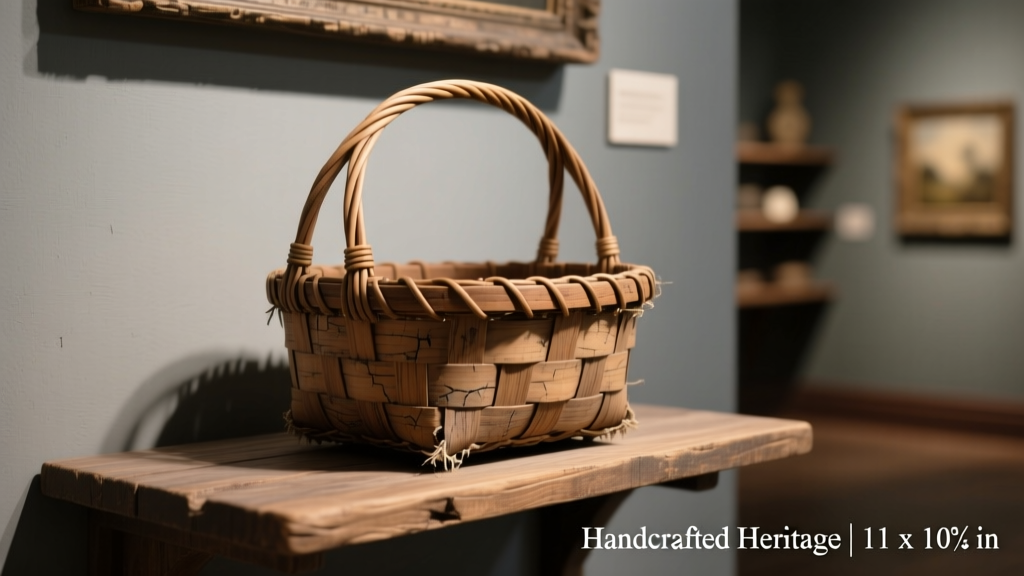
Authentication and Market Analysis of Vintage Splint Baskets: The 11 × 10½-Inch Bentwood-Rimmed Example with Weathered Wooden Base
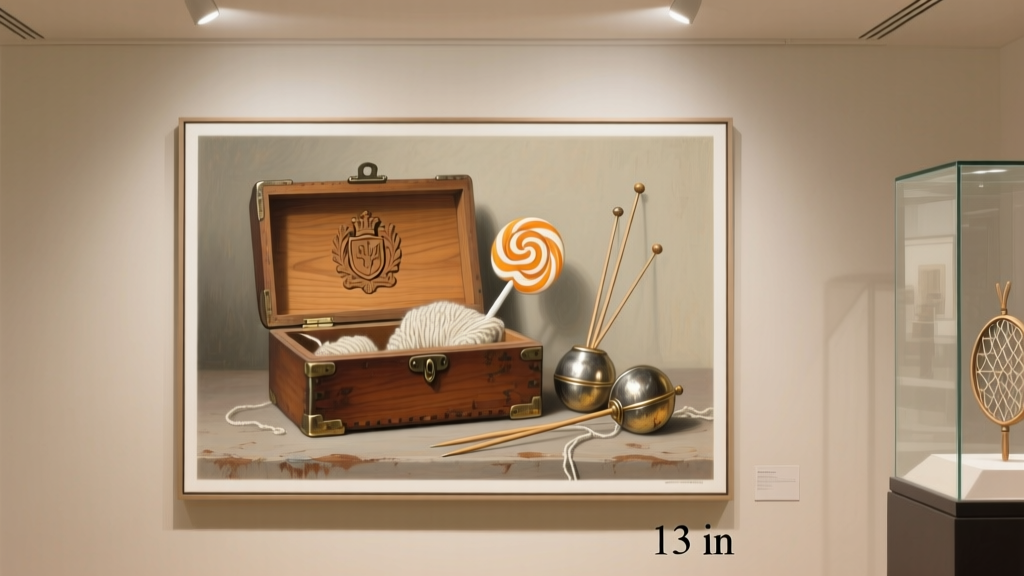
Boxes Pine Sliding Lid Lollipop Crest With Knitting Or Tatting Needles 13 In: Authentication, Provenance, and Market Analysis

Taylor Gilpin: Market Position, Authentication Protocols, and the Evolution of Contemporary Printmaking
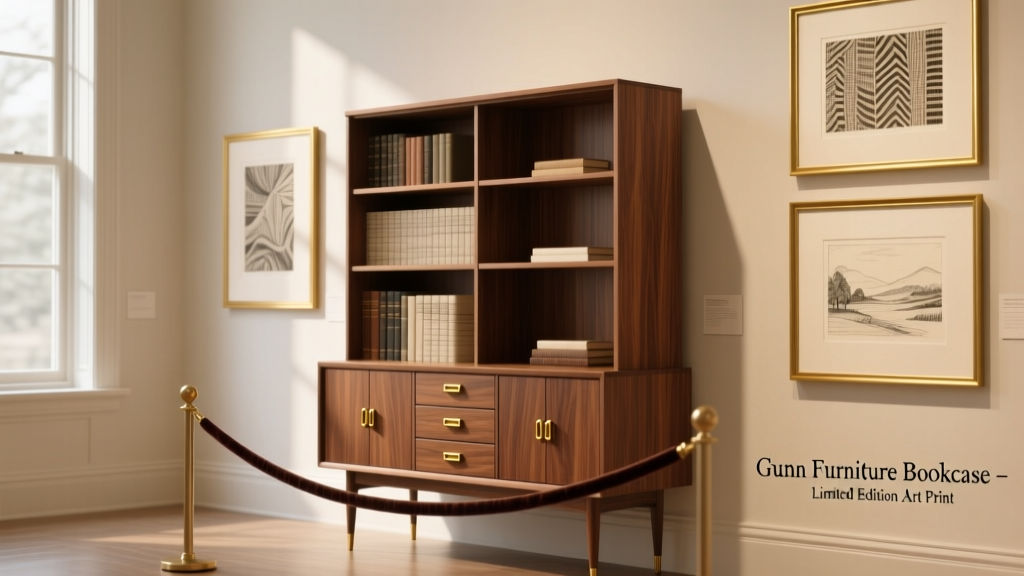
The Gunn Furniture Bookcase: Design Legacy, Market Authentication, and Collectibility Analysis
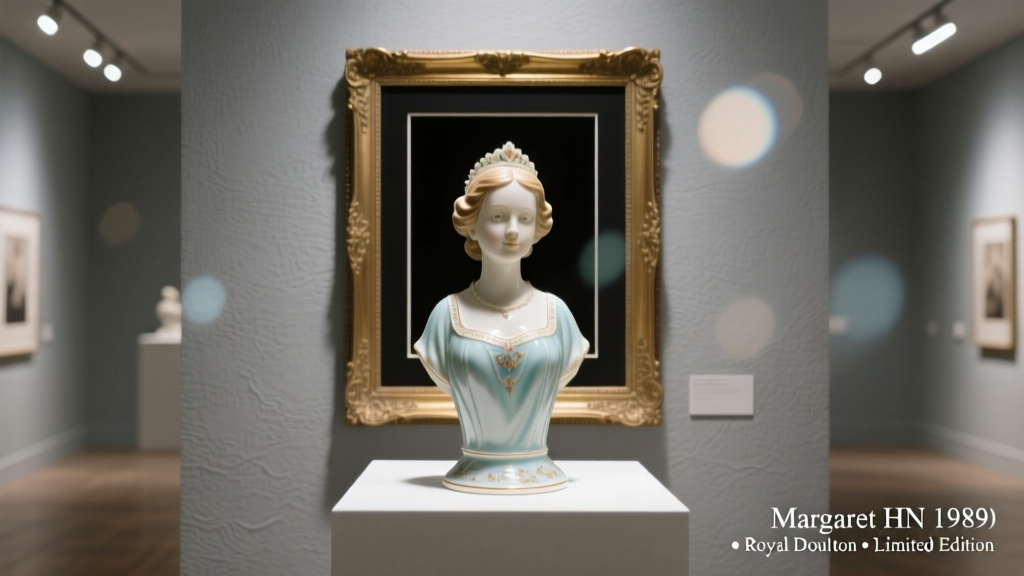
Royal Doulton Figurine 'Margaret' HN 1989: Authentication, Market Value, and Historical Context
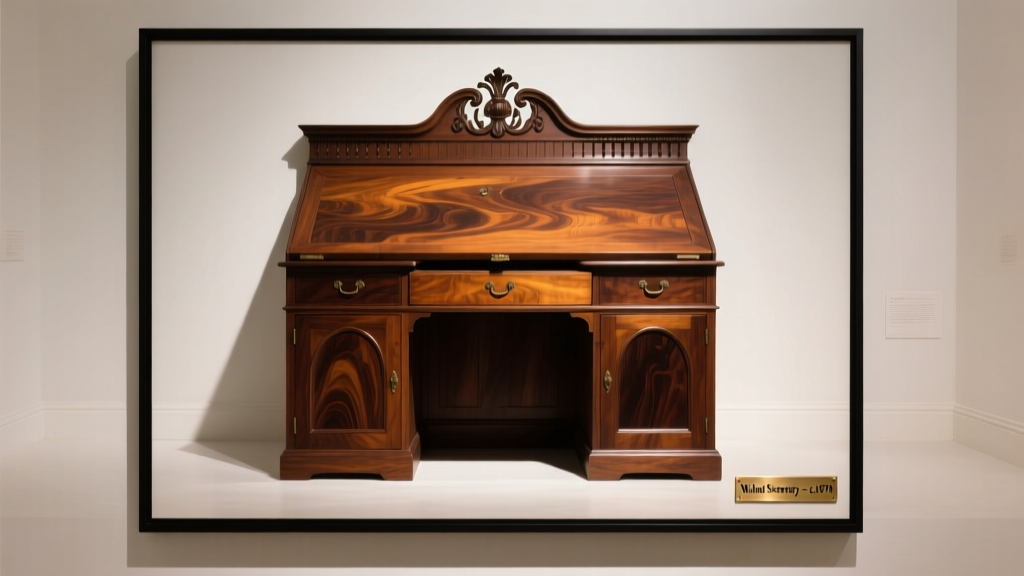
Furniture Secretary: Fall-Front Walnut Secretary with Burl Crest, Spindles, and 1-Drawer-Over-2-Doors Configuration
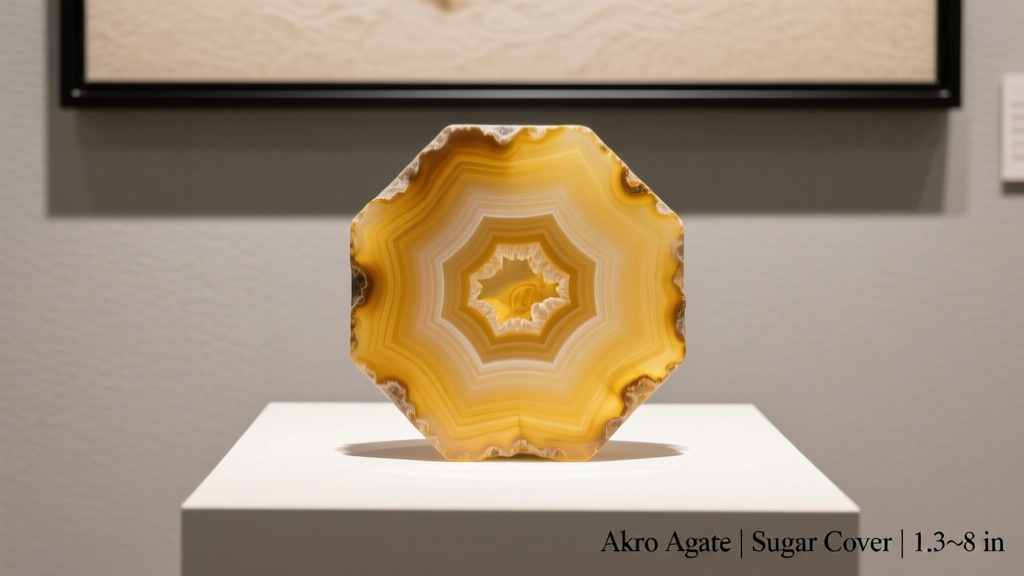
Akro Agate Sugar Cover: Authentication, Provenance, and Market Value of the Octagonal Opaque Yellow Variant (1 3/8")