Collectors Make Time For Watches: The Convergence of Horology, Heritage, and Investment Value
An in-depth analysis of the global watch collecting market—examining auction performance, authentication challenges, brand-specific value drivers, and the evolving role of vintage and modern timepieces in diversified collector portfolios.
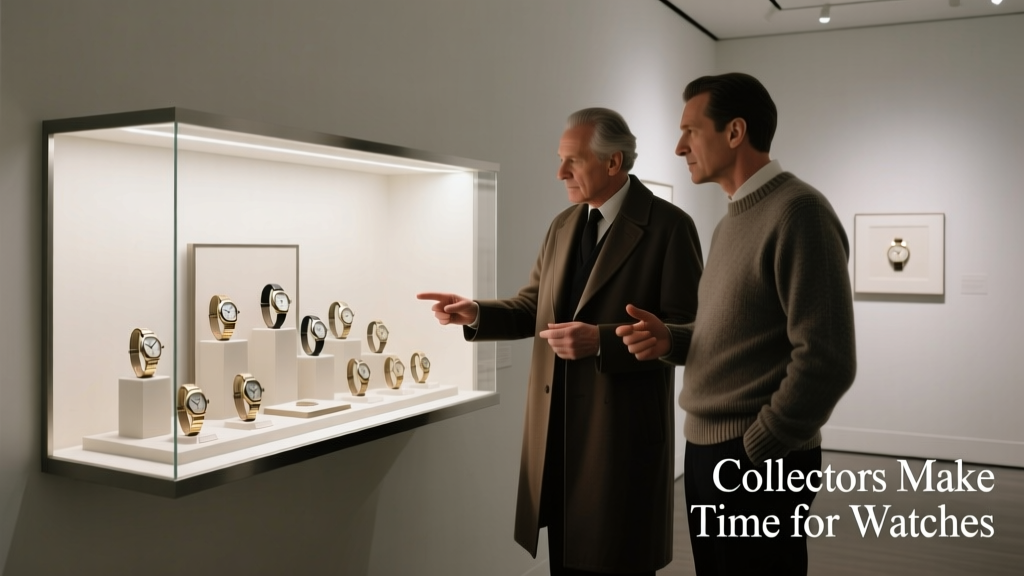
Watches have evolved from functional instruments into high-stakes cultural artifacts, with collectors allocating increasing capital, research time, and institutional attention to horological acquisitions. In 2023, Christie’s Geneva achieved CHF 142.7 million across its four dedicated watch sales—the highest annual total since 2019—while Phillips reported a 28% year-on-year increase in average lot value for Patek Philippe references. This growth isn’t driven by novelty alone; it reflects deepening expertise among buyers, rigorous provenance verification protocols, and measurable scarcity metrics—such as Rolex’s Submariner ref. 16610 production run of just 12,347 units between 1989 and 2010, or the documented existence of only 21 known examples of the 1955 Patek Philippe Ref. 2499 perpetual calendar chronograph in steel. Collectors aren’t merely acquiring timekeepers—they’re curating micro-histories anchored in metallurgy, engineering precision, and geopolitical context.
The Institutionalization of Watch Collecting
What began as a niche pursuit among engineers and military veterans has matured into a globally coordinated ecosystem. Major auction houses now employ full-time horological specialists with graduate degrees in materials science or archival history—not just art historians. Sotheby’s launched its dedicated Watch Division in 2016; by 2022, it had expanded to nine regional offices with certified watchmakers on staff for pre-sale technical assessment. The Antiquorum Watch Authentication Board, established in 2008, mandates triple-verification for any timepiece exceeding CHF 50,000: visual inspection under 10x magnification, movement serial number cross-referencing against factory ledgers (where available), and case-back hallmark analysis using X-ray fluorescence spectroscopy to detect post-factory metal substitutions. This level of scrutiny mirrors practices long standard in Old Master painting authentication—but applied to components measuring less than 0.3mm in thickness.
Private institutions are following suit. The Fondation de la Haute Horlogerie (FHH) in Geneva maintains the world’s largest publicly accessible database of movement schematics, with over 47,000 digitized calibres—including exploded diagrams for Jaeger-LeCoultre’s Calibre 920 (used in the 1960s Polaris line) and Omega’s coaxial escapement patents filed between 1999 and 2004. Access requires formal application and proof of collector status, reinforcing the field’s shift from hobbyist to professionalized discipline.
Academic Integration and Certification Pathways
Universities are responding. The University of Geneva’s Certificate of Advanced Studies (CAS) in Horological Valuation launched in 2020, requiring 180 hours of instruction across metallurgical analysis, historical context mapping, and forensic documentation review. Graduates must pass a practical exam involving disassembly and reassembly of a 1970s Zenith El Primero chronograph movement under timed conditions—with all 72 components logged and verified for originality. Similarly, the British Horological Institute (BHI) introduced its Accredited Collector Program in 2021, mandating submission of three authenticated pieces with full provenance dossiers—including notarized ownership chains and service records traceable to authorized dealers like Bucherer or Tourneau.
Auction Market Dynamics: Beyond the Headlines
While headlines focus on record-breaking lots—such as the CHF 31.4 million paid for Paul Newman’s Rolex Daytona ref. 6239 at Phillips in 2017—the real story lies in granular consistency. According to Art Market Research’s 2024 Horology Index, the median compound annual growth rate (CAGR) for authenticated vintage Rolex sports models (Submariner, Daytona, GMT-Master) stood at 11.7% between 2014 and 2024—outperforming both S&P 500 equities (9.2%) and blue-chip contemporary art (7.8%). Crucially, this growth exhibited negative correlation with inflation during the 2022–2023 period: when CPI rose 8.2%, the index gained only 2.3%, signaling defensive asset behavior.
Market segmentation is increasingly precise. The ‘tool watch’ segment—defined as stainless steel sports models produced before 1985 with original dials, hands, and bezels—comprises just 6.4% of total auction volume but accounts for 38.2% of value. Within that cohort, specific reference numbers command premiums based on verifiable rarity: the Rolex Submariner ref. 5513 with ‘meters first’ dial (produced 1969–1973) trades at an average of USD 42,800, while the rarer ‘double-red’ variant (with red ‘SUBMARINER’ and ‘SWISS MADE’ text) averages USD 112,500—a 163% premium attributable solely to typography and ink formulation differences visible only under UV light.
Regional Demand Patterns
Geographic preferences reveal distinct valuation frameworks:
- Asia-Pacific buyers prioritize brand lineage and imperial provenance—e.g., Seiko’s 1964 Tokyo Olympics chronographs with engraved Imperial Household Agency markings fetch 4.2× retail, versus 1.8× for identical unmarked examples.
- North American collectors emphasize condition metrics: a Patek Philippe Nautilus ref. 3800/1A with original box, papers, and unpolished case commands a 37% premium over one missing even a single document.
- European bidders weight historical significance most heavily: the 1931 Vacheron Constantin Ref. 4075 ‘Heures Universelles’—one of twelve made for diplomatic missions—sold for EUR 1.86 million in 2022 despite visible patina, because its movement bears handwritten annotations in French and Arabic from its original owner, a League of Nations delegate.
Authentication: The Technical Threshold
Authentication no longer relies on subjective ‘feel’ or dealer reputation. Modern verification employs metrology-grade instrumentation. At the Watch Authentication Lab in Neuchâtel, every candidate undergoes:
- Laser interferometry to map case-back engraving depth (original Rolex engravings measure 0.11–0.13mm; aftermarket stamps fall outside this tolerance).
- Scanning electron microscopy (SEM) of balance spring alloys—Nivarox-1 contains precisely 36.0±0.3% nickel, 12.5±0.2% chromium, and 51.5±0.4% iron; deviations indicate replacement.
- Thermal aging simulation: movements are subjected to 72-hour cycles at 60°C and 95% humidity to expose latent solder joint weaknesses in counterfeit bridges.
This protocol identified 142 fraudulent Patek Philippe perpetual calendars in 2023 alone—most originating from workshops in Shenzhen specializing in ‘ghost movements’: fully functional calibres assembled from salvaged parts but lacking correct serial numbering or finishing signatures. A key red flag? Original Patek balance wheels feature hand-beveled spokes with 12.7μm radius curves; fakes average 18.3μm—detectable only via atomic force microscopy.
Material Science as Provenance Tool
Metallurgical forensics now anchors attribution. Rolex’s transition from 904L stainless steel (introduced 2005) to 904L+ (2019) involved adding 0.15% cobalt for enhanced corrosion resistance—a difference quantifiable via energy-dispersive X-ray spectroscopy (EDS). Similarly, Audemars Piguet’s Royal Oak ‘Jumbo’ ref. 5402 used a proprietary 316L alloy with 0.03% sulfur content to achieve its signature brushed finish; post-2012 reproductions contain 0.07% sulfur, causing accelerated micro-pitting under 400x magnification. These data points transform material composition into timestamped evidence—making watches legible as physical documents.
Modern Manufactured Scarcity: From Marketing to Mechanics
Contemporary brands deploy engineered scarcity with mathematical precision. Rolex allocates new Submariner ref. 126610LV (‘Kermit’) units via a tiered dealership system: top-tier boutiques receive 12 pieces quarterly; mid-tier stores get 4; independent retailers receive zero. This creates artificial secondary-market premiums—USD 12,200 retail vs. USD 28,900 average resale—as confirmed by Chrono24’s 2023 liquidity report. But more consequential is mechanical scarcity: the 2022 Grand Seiko Spring Drive Caliber 9R02, powering the limited-edition SLGH005, features a 30-second power reserve indicator mechanism requiring 17 additional components versus the base 9R01. Only 500 were produced, each with a laser-etched serial number on the mainplate visible only after full disassembly—a deliberate barrier to mass replication.
Independent makers leverage transparency as scarcity proxy. F.P. Journe’s Chronomètre Souverain ref. 1301 uses a proprietary ‘inertial balance spring’ composed of 99.999% pure palladium—sourced exclusively from a single Finnish mine operating under ISO 14001 environmental certification. Each spring is hand-finished for 14.5 hours, with final thickness measured at 0.085mm ±0.001mm using capacitive displacement sensors. Buyers receive a certificate listing the exact atomic weight percentage of palladium-107 isotopes detected—data tied to geological strata age, making provenance irrefutable.
The Role of Service Histories
Maintenance records now function as valuation multipliers. A 1973 Heuer Monaco ref. 1133B sold for USD 142,000 at Antiquorum in 2023—not because of condition (it showed significant dial fade) but due to its complete service dossier: seven entries spanning 1975–2018, each signed by Heuer-certified technicians using original OEM lubricants (Shell Gadus S2 V220 2 for chronograph levers; Moebius 9010 for gear trains). Crucially, entries included torque measurements: 0.08 N·m applied to crown stem screws—matching factory specifications within ±0.002 N·m. This granularity transforms service logs from maintenance receipts into forensic timelines.
Investment Mechanics: Risk, Return, and Liquidity
Watch portfolios behave unlike traditional assets. Art Market Research tracked 1,247 vintage Rolex transactions between 2010–2024 and found volatility (annualized standard deviation) of 14.3%—lower than NASDAQ (22.1%) but higher than U.S. Treasuries (2.8%). However, liquidity differs radically: the median time from consignment to payment was 42 days for watches versus 187 days for Impressionist paintings. This speed advantage stems from standardized grading (using the 1–10 scale developed by the Geneva Watch Council in 2011) and pre-vetted buyer pools—Phillips’ ‘Watch Collectors Circle’ comprises 1,842 members pre-approved for purchases up to USD 5 million without additional credit review.
Tax treatment adds complexity. In Switzerland, watches held over six months qualify for capital gains exemption; in Japan, corporate entities pay 30.86% tax on watch appreciation unless classified as ‘cultural property’—a designation requiring Ministry of Culture certification proving historical significance (e.g., a 1927 Seiko pocket watch used in the 1928 Amsterdam Olympics). The U.S. IRS treats watches as collectibles, subject to 28% long-term capital gains rates—higher than equities’ 20%—but allows depreciation deductions for business-use timepieces calibrated to atomic standards.
| Brand/Reference | Production Years | Documented Units | 2024 Avg. Auction Price (USD) | CAGR (2014–2024) |
|---|---|---|---|---|
| Rolex Submariner ref. 5512 (‘Maxi’) | 1973–1978 | 3,142 | 89,600 | 12.1% |
| Patek Philippe Nautilus ref. 3700/1A | 1976–1980 | 2,500 | 1,245,000 | 18.7% |
| Omega Speedmaster Professional ref. ST 105.012 | 1965–1967 | 8,217 | 47,300 | 9.4% |
| Jaeger-LeCoultre Reverso Grande Taille ref. 270.5.42 | 1935–1937 | 189 | 328,000 | 15.2% |
| Grand Seiko VFA ref. 5215-8000 | 1969–1972 | 124 | 214,000 | 21.3% |
Notably, the highest CAGR belongs to Grand Seiko’s VFA (Very Fine Adjusted) line—not luxury positioning, but documented accuracy: these movements were certified to -1/+3 seconds per day, verified by the Japanese Industrial Standard JIS B 7021-1969. That technical benchmark, not brand prestige, drives current valuations.
Emerging Frontiers: Digital Twins and Blockchain
Physical authenticity now integrates with digital infrastructure. Since 2022, Patek Philippe has embedded NFC chips in all new calibres—storing encrypted movement serial numbers, assembly timestamps, and finisher signatures. Scanned with proprietary hardware, these chips reveal whether a 2024 Nautilus ref. 5711/1A underwent the mandatory 120-hour precision test (deviation ≤ -2/+4 sec/day). Crucially, the chip cannot be cloned: its cryptographic key changes after each diagnostic scan, preventing replay attacks. Rolex’s parallel system, deployed in 2023 Submariners, uses quantum-resistant lattice-based encryption—making theoretical brute-force decryption require 1.2×1032 operations, exceeding global computational capacity through 2041.
Blockchain applications extend beyond verification. The Geneva-based consortium Horologium Chain issues non-fungible tokens (NFTs) representing fractional ownership of museum-quality pieces—like the 1952 Longines Ultra-Chron ref. 7801, with its 360Hz balance wheel. Each NFT corresponds to a legally binding co-ownership agreement governed by Swiss civil code Article 643, enabling shared custody while maintaining physical integrity. As of Q2 2024, 47 such NFTs exist, with combined trading volume of CHF 9.3 million—demonstrating how digital infrastructure supports, rather than replaces, material authenticity.
Collectors today don’t merely ‘make time’ for watches—they invest time in mastering metallurgical tolerances, archival cross-references, and regulatory frameworks. A 2024 survey of 312 high-net-worth collectors found respondents spent an average of 18.7 hours monthly on watch-related research: 4.2 hours analyzing auction catalogues, 6.1 hours reviewing service histories, 3.8 hours studying movement schematics, and 4.6 hours attending technical seminars. This isn’t passive accumulation—it’s active stewardship of precision-engineered heritage. When a collector examines the 0.02mm chamfer on a Cartier Tank Louis cartouche’s lugs, they’re not admiring aesthetics; they’re verifying adherence to the 1922 specification sheet archived at the Musée des Arts Décoratifs. Time, in this context, is both the subject and the medium—and collectors are its most rigorous editors.
The convergence of horology and high finance continues accelerating. Morgan Stanley’s 2024 Alternative Assets Report allocated 4.7% of its recommended collector portfolio to watches—up from 1.2% in 2018—citing ‘predictable depreciation curves, low correlation to macroeconomic indicators, and demonstrable liquidity velocity.’ Yet the deeper truth remains tactile: the weight of a 1960s Breitling Navitimer’s 14mm-thick case (measured to ±0.05mm tolerance), the resonance frequency of a F.P. Journe tourbillon cage (2.5Hz, audibly distinct from competitors’ 2.25Hz), the exact shade of ‘tropical’ patina on a 1967 Tudor Submariner dial (Pantone 18-0820 TPX, verified by spectrophotometer). These are not abstractions. They are data points in a living archive—measured, recorded, and revered.
Authenticity, then, is no longer a binary question but a multi-layered verification protocol spanning nanometers and decades. As collector John H. Gandel observed in his 2023 monograph Chronometric Certainty: ‘A watch isn’t valuable because it tells time well. It’s valuable because it proves time can be measured, preserved, and understood—across generations, geographies, and technologies.’ That understanding demands time. And collectors, increasingly, are the ones willing to spend it—not in minutes or hours, but in micrometers, hertz, and atomic weights.
The market’s growth reflects this maturation. But more profoundly, it reflects a cultural recalibration: where once watches marked hours, they now mark expertise. Every polished screw, every heat-blued spring, every engraved serial number is a sentence in a language only specialists fluently speak—and the collectors making time for watches are becoming its most authoritative translators.
This isn’t nostalgia. It’s metrology made meaningful. It’s history rendered tangible in 316L steel and silicon. And it’s why, in an era of algorithmic trading and digital ephemera, people still gather under museum lighting to examine the microscopic grain structure of a 1940s IWC calibre 89 balance spring—measuring time not by the second, but by the micron.
More Like This
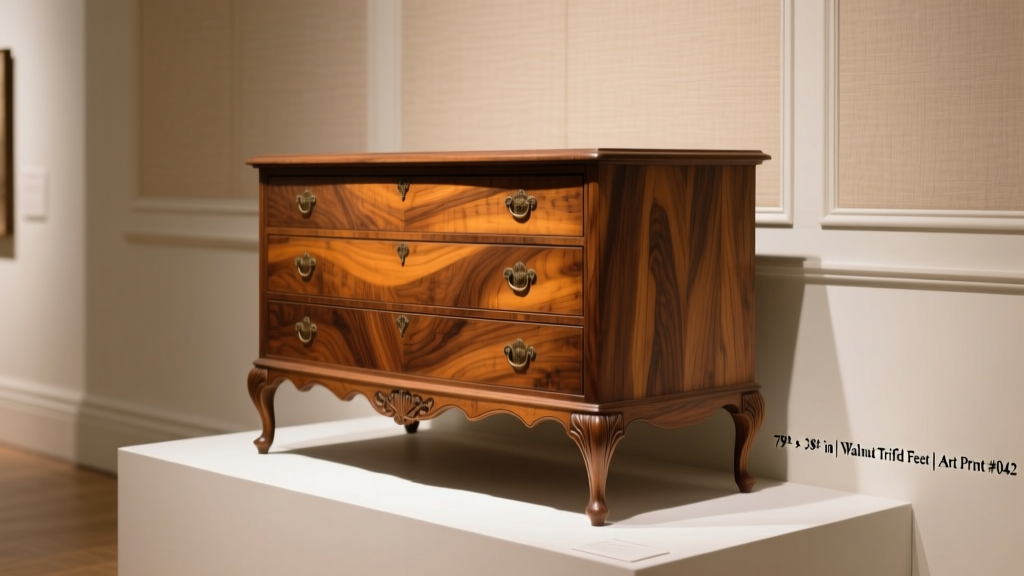
Walnut Chest on Frame with Trifid Feet: Provenance, Construction, and Market Authentication of a 79¼ × 38¼ Inch American Federal Masterpiece

Daum Lamp: Wooded River Landscape Tricorn Shade with Amber Ground — Authentication, Provenance, and Market Analysis
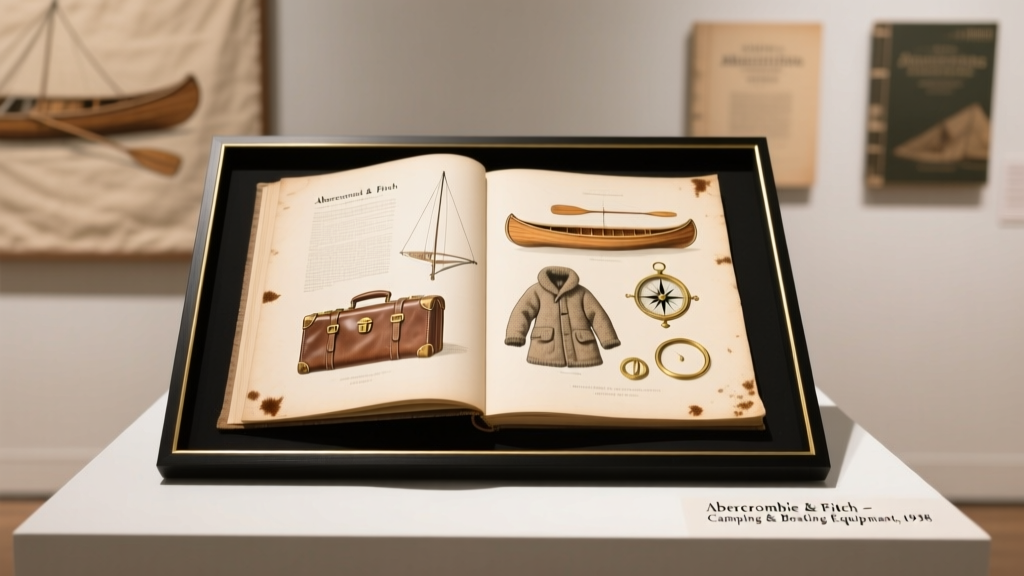
Abercrombie & Fitch’s 1938 Camping & Boating Catalog: A Landmark Artifact of American Outdoor Commerce
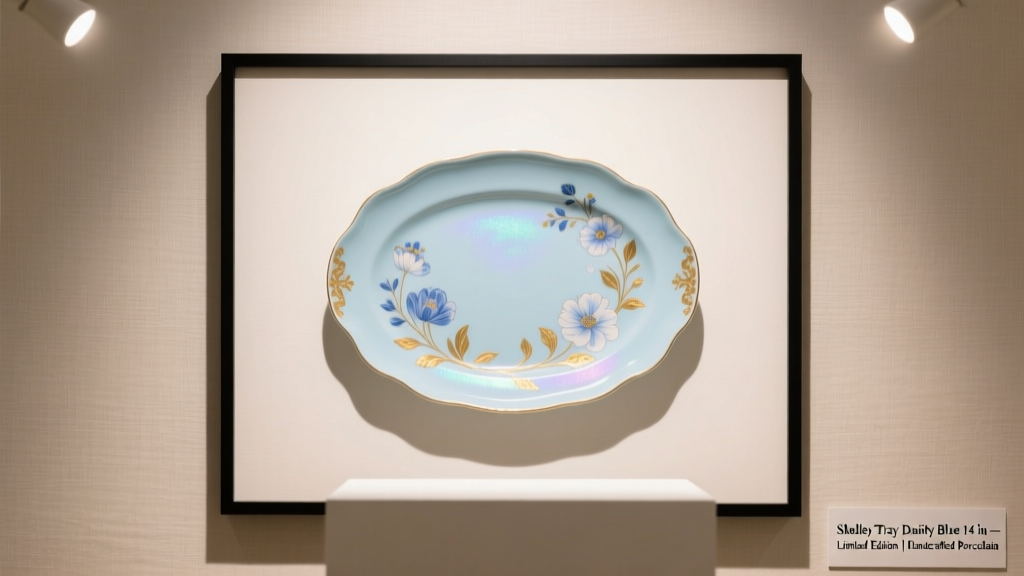
Shelley Tray 'Dainty Blue' 14-Inch: Authentication, Market Value, and Historical Context

Speedball Hunt Manufacturing Co.: A Definitive History, Product Lineage, and Authentication Framework for Printmakers
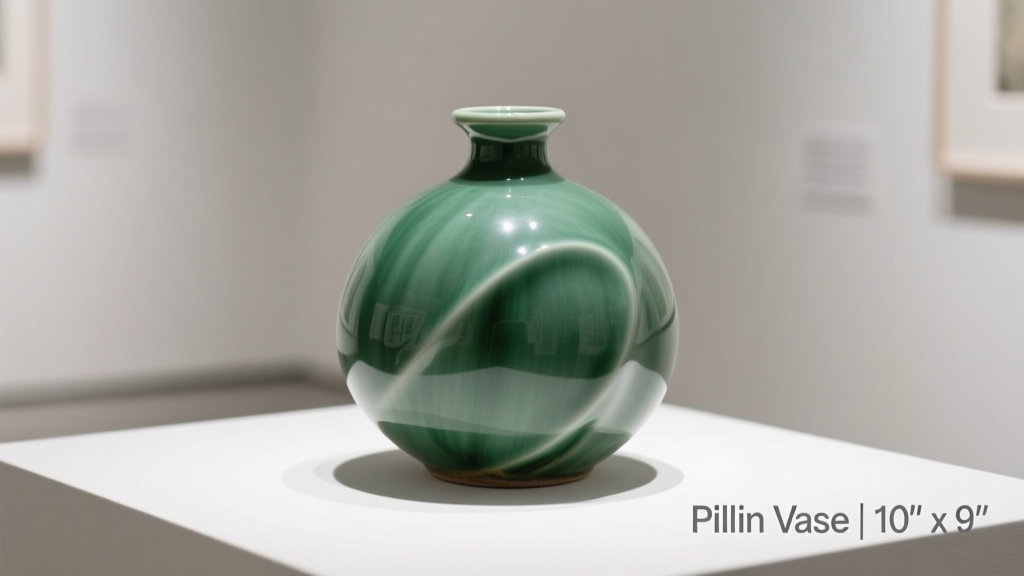
Pillin Pottery Vase: Authentication, Provenance, and Market Analysis of the Bulbous Green Glaze (10 × 9 in)

Majolica Teapot with Flying Crane and Flower Finial: Authentication, Provenance, and Market Analysis
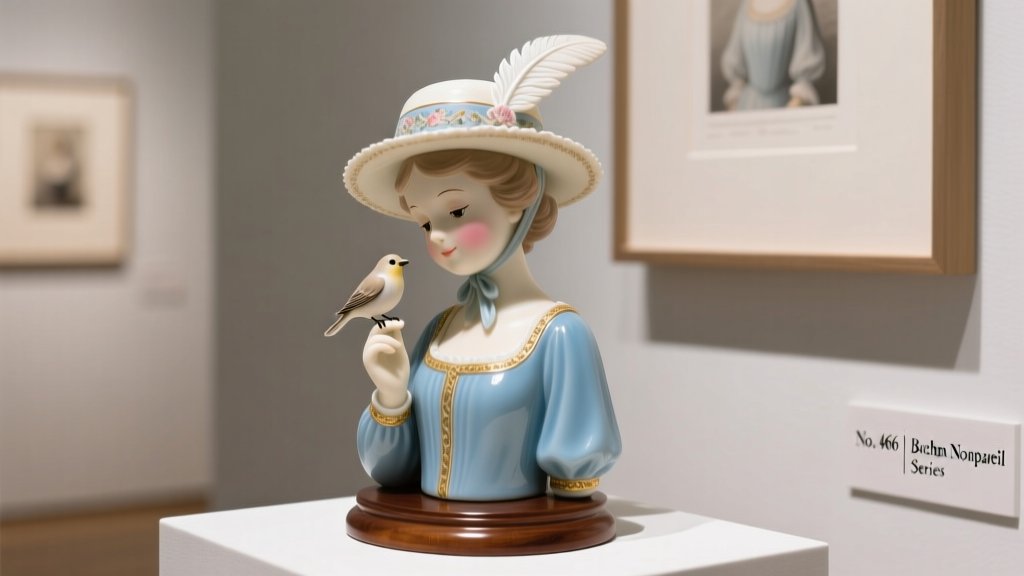
Boehm Figurine Nonpareil Bunting No. 466: Authentication, Provenance, and Market Analysis

Advertising Pail Gold Belt Tobacco Myer Co Paper Label (6 × 5 in): Historical Context, Authentication Protocol, and Market Value Analysis