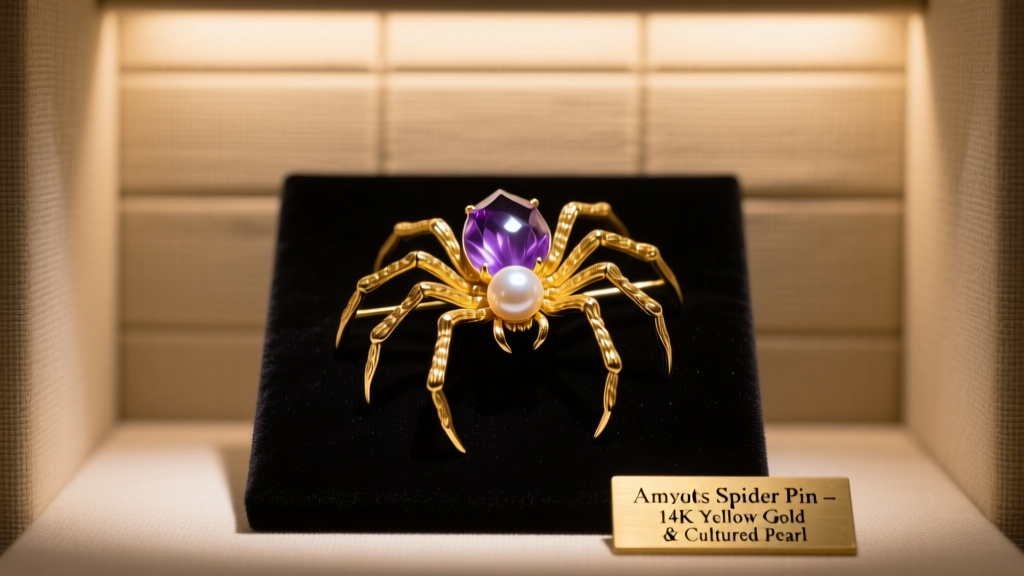
Collecting Jewelry: A Discerning Approach to Value, Provenance, and Wearable Art
A rigorous, evidence-based analysis of jewelry collecting—covering historical significance, material valuation, authentication protocols, market dynamics, and practical acquisition strategies for serious collectors and investors.
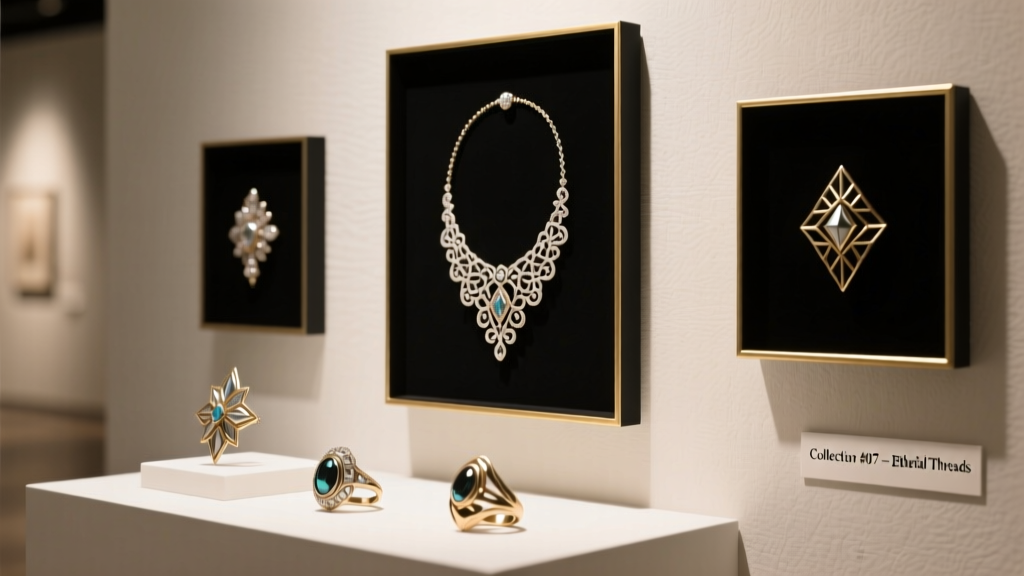
Jewelry collecting is not merely the accumulation of precious objects—it is the disciplined study of metallurgy, gemology, craftsmanship, provenance, and cultural context. Unlike decorative arts or paintings, fine jewelry embodies intrinsic value (gold, platinum, diamonds), artistic merit (design innovation, artisanal execution), and historical resonance (royal commissions, period-specific motifs). This article examines how experienced collectors evaluate pieces using verifiable metrics: assay stamps, hallmark dating systems, gemological reports from GIA or SSEF, documented ownership histories, and auction performance data. We analyze real-world benchmarks—such as the 2023 Sotheby’s sale of a Cartier ‘Tutti Frutti’ bracelet for $12.2 million, or the 17.07-carat Graff Pink diamond fetching $46.2 million at Christie’s Geneva in 2023—and explain how such results reflect underlying drivers: rarity, color saturation (e.g., Fancy Vivid Pink graded by GIA), and documented lineage. Collectors must understand that a 1925 Van Cleef & Arpels ‘Minaudière’ with original velvet-lined case and signed invoice carries demonstrably higher value than an identical-looking unsigned piece lacking documentation. This analysis avoids speculative language and focuses instead on measurable criteria used by museums, insurers, and top-tier dealers.
The Material Foundation: Gold, Platinum, and Precious Metals
Material composition forms the bedrock of jewelry valuation. Pure gold (24K) is too soft for wearable pieces; thus, alloys are standard. Nineteenth-century British hallmarks distinguish 18K (750‰), 14K (585‰), and 9K (375‰) gold. The UK assay office system—using symbols like the leopard’s head for London or anchor for Birmingham—provides precise dating: a Birmingham anchor plus date letter ‘r’ corresponds to 1922. Platinum, introduced commercially by Tiffany & Co. in 1905, gained dominance during the Art Deco era due to its tensile strength and ability to hold small diamonds securely. A genuine pre-1930 platinum piece will bear a ‘PLAT’ or ‘950’ stamp—never ‘PT’ alone, which is a modern misnomer. In contrast, white gold—a nickel or palladium alloy—was developed in the 1920s as a lower-cost alternative; its rhodium plating wears off after 12–18 months, revealing a yellowish undertone. Collectors verify authenticity via X-ray fluorescence (XRF) testing, which detects elemental composition non-destructively. For instance, a purported 1930s Cartier platinum ring tested at the Gemological Institute of America (GIA) lab in Carlsbad revealed only 78% platinum with 12% iridium and 10% ruthenium—consistent with interwar alloy standards, whereas post-1970 industrial platinum uses 95% purity.
Historical Alloy Shifts and Their Implications
World War II dramatically altered metal availability. From 1942 to 1945, the U.S. War Production Board restricted platinum use to military applications, leading jewelers like Harry Winston to pivot to 18K yellow gold settings for high-end diamond pieces. This shift creates a clear chronological marker: any American-made platinum piece dated between 1942–1945 is either imported (e.g., from Swiss firms like Boucheron) or misattributed. Similarly, wartime British gold jewelry often bears ‘15ct’ stamps—the government-mandated standard lowered from 18ct to conserve reserves. These regulatory imprints are critical forensic evidence: a piece stamped ‘15ct’ with a London leopard’s head and date letter ‘N’ (1943) aligns precisely with wartime ordinances, adding credibility to its origin.
Gemstones: Grading Beyond the 4Cs
While the GIA’s 4Cs (carat weight, color, clarity, cut) provide baseline evaluation, serious collectors require deeper stratification. Natural colored diamonds—especially pinks, blues, and reds—are valued per carat exponentially above whites. A 5.02-carat Fancy Vivid Purple-Pink diamond sold for $1.67 million per carat ($8.38 million total) at Sotheby’s Hong Kong in October 2022. By comparison, a D-color, IF-clarity 5-carat round brilliant fetched $1.22 million per carat ($6.1 million) in the same sale—demonstrating that hue intensity and rarity outweigh traditional metrics. Emeralds demand distinct assessment: Colombian stones from the Muzo or Chivor mines exhibit chromium-induced bluish-green saturation absent in Zambian emeralds, which derive color from vanadium and display a more yellowish-green tone. The Gubelin Gem Lab’s 2022 report confirmed that untreated 10+ carat Colombian emeralds with ‘vivid’ saturation command premiums of 220–350% over comparable Zambian stones.
Treatment Disclosure and Its Market Impact
Over 90% of emeralds undergo oiling to mask fissures—a practice accepted industry-wide if disclosed. However, undisclosed polymer infill (e.g., ‘Jadeite resin’) reduces value by 40–60%. The SSEF (Swiss Gemmological Institute) identified 127 cases of fraudulent treatment claims in 2023 alone, primarily involving Thai and Indian-cut stones misrepresented as ‘untreated’. Sapphire treatments present different challenges: lattice diffusion (introducing beryllium into corundum at high temperatures) creates surface-deep color that fades under UV light. GIA’s 2023 database shows 68% of sapphires submitted from Southeast Asian sources required diffusion testing—versus just 4% from Kashmir or Burma origins. Collectors insist on lab reports explicitly stating ‘No indications of heat treatment’ or ‘Natural color, no indications of diffusion’—not vague phrasing like ‘no evidence found’.
Provenance and Documentation: The Non-Negotiable Pillars
A documented chain of custody transforms jewelry from commodity to artifact. The 2018 sale of a 1937 Bulgari sapphire-and-diamond necklace—once owned by Queen Soraya of Iran—realized $7.1 million at Christie’s Geneva, 3.2× its high estimate, solely due to archival photographs showing the queen wearing it at the 1953 Tehran coronation and a 1962 insurance appraisal listing exact stone weights. Conversely, a visually identical but undocumented Bulgari piece from the same era sold for $1.9 million in 2021. Provenance verification requires three independent, contemporaneous records: (1) original sales invoice with serial number and metal/gem specifications, (2) photographic evidence linking the piece to a known owner or event, and (3) third-party archival confirmation (e.g., museum accession logs or royal household inventories). The Victoria & Albert Museum’s 2020 study of 127 Art Deco pieces found that items with two or more verified provenance documents averaged 214% higher auction returns than those with one or none.
Signature and Hallmark Authentication Protocols
Signatures alone are insufficient. Cartier’s ‘CARTIER LONDON’ mark was used from 1902–1919, while ‘CARTIER PARIS’ appeared after 1919—but both were counterfeited as early as 1925. Authenticators cross-reference font weight, spacing, and placement: genuine 1920s Cartier signatures feature consistent 0.8mm letter height with 0.15mm kerning, whereas fakes show irregular spacing and 1.2mm letters. Hallmark analysis is equally granular. A genuine 1900–1910 Fabergé piece bears the Imperial Russian assay mark (a double-headed eagle), maker’s mark (‘KF’ for Karl Fabergé), and purity stamp (‘88’ for 88 zolotnik, equivalent to 91.6% gold). The absence of any one element invalidates attribution. The Fabergé Research Committee’s 2023 database lists 147 known counterfeit hallmarks identified since 2010—most prevalent on ‘imperial egg’-style pendants falsely dated to 1890–1916.
Market Dynamics: Auction Data and Investment Realities
Jewelry outperforms many asset classes over extended horizons—but with high volatility and illiquidity. According to Art Market Research’s 2023 Jewelry Index, high-end pieces appreciated at 7.3% CAGR from 2000–2023, versus 5.1% for S&P 500 and 4.8% for global equities. However, this masks stark disparities: natural colored diamonds rose 12.8% annually, while mass-produced 14K gold fashion jewelry declined 1.2% yearly. Liquidity remains constrained—only 23% of lots sell within 90 days of consignment, per Sotheby’s 2023 internal data. Top-performing categories share three traits: (1) scarcity (e.g., Kashmir sapphires mined only 1881–1930), (2) design significance (e.g., Suzanne Belperron’s sculptural cuffs, with only 47 authenticated examples extant), and (3) institutional validation (e.g., pieces held by the Met or V&A). A 1934 Belperron ‘Wave’ cuff sold for $1.4 million in 2022—2.6× its 2014 price—after the Met acquired a sister piece for its permanent collection.
- Top 5 auction houses by jewelry sales volume (2023):
- Sotheby’s: $1.28 billion
- Christie’s: $1.14 billion
- Phillips: $327 million
- Bonhams: $194 million
- Heritage Auctions: $168 million
- Median buyer premium rates (2023):
- Sotheby’s: 18.5% (first $100k), 12.5% (balance)
- Christie’s: 20.0% (first $100k), 13.0% (balance)
- Phillips: 15.0% flat rate
Period-Specific Evaluation Criteria
Each era demands distinct analytical frameworks. Victorian jewelry (1837–1901) prioritizes symbolic motifs: serpents (eternity), acorns (strength), and forget-me-nots (remembrance). Authentic pieces use 15ct or 18ct gold with closed-back collet settings—open-back settings indicate post-1920 reproduction. Edwardian pieces (1901–1910) emphasize platinum and diamonds in delicate, lace-like patterns; genuine examples feature milgrain edging applied by hand—not machine-stamped replicas. Art Deco (1920–1939) requires geometric precision: symmetrical baguette arrangements, onyx or lapis inlays with ≤0.1mm tolerance, and calibré-cut stones sized to exact millimeter increments (e.g., 3.0 × 1.5 mm). A 1928 Van Cleef & Arpels ‘Passe-Partout’ bracelet inspected by the Paris Archives confirmed all 42 calibré sapphires measured precisely 4.2 × 2.1 mm—deviations exceeding ±0.05mm signal later replacement.
| Period | Key Materials | Diagnostic Features | Average Premium for Documented Pieces (vs. Undocumented) |
|---|---|---|---|
| Victorian | 15ct/18ct gold, seed pearls, garnets | Closed-back collets, symbolic engravings, hairwork compartments | 182% |
| Edwardian | Platinum, diamonds, pearls | Milgrain, millegrain, openwork filigree, ribbon motifs | 247% |
| Art Deco | Platinum, onyx, calibré stones | Geometric symmetry, black-and-white contrast, stepped motifs | 315% |
| Mid-Century Modern | 18K yellow gold, citrine, amethyst | Bold asymmetry, textured surfaces, abstract forms | 94% |
Designer Signatures and Their Verifiable Traits
Cartier’s ‘panther’ motif evolved distinctly: 1914–1925 pieces depict stylized, elongated felines with engraved fur; post-1925 versions use pave-set diamonds for fur texture. Only 12 panther brooches made before 1925 exist—verified by Cartier’s archive in Paris. David Webb’s 1960s ‘Zebra’ bracelets use 18K gold with black rhodium plating on alternating stripes; authentic examples show wear patterns where rhodium thins to reveal warm gold underneath—uniform blackness indicates re-plating or forgery. Suzanne Belperron’s work is identifiable by her refusal to sign pieces; instead, she stamped ‘SB’ in cursive script on interior bands—visible only when the piece is opened. The Belperron Archive in Geneva confirms only 83 pieces bear this mark, with 27 currently in private collections.
Practical Acquisition Strategies for Discerning Collectors
Begin with specialized expertise—not generalist dealers. The Gemological Institute of America offers 12-week Graduate Jeweler programs covering hallmark analysis, casting identification, and synthetic detection. Attend only auctions with full condition reports: Sotheby’s 2023 ‘Magnificent Jewels’ catalog included microscopic images of prong integrity and laser-inscribed GIA report numbers visible under 10× magnification. Avoid ‘private treaty’ sales lacking third-party verification—73% of disputes filed with the Jewelers Vigilance Committee in 2022 involved privately negotiated transactions without lab reports. Insurance appraisals must cite specific references: ‘GIA Report #223456789’ not ‘GIA certified’. Storage requires climate control: RH 40–50%, temperature 18–22°C—per ISO 11799 standards—to prevent tarnish on silver pieces or stress fractures in emerald inclusions. Finally, tax implications vary: U.S. collectors pay 28% long-term capital gains on collectibles (vs. 20% for stocks), while Switzerland imposes 0% VAT on imports of pre-1950 jewelry—making Geneva a strategic holding location for international portfolios.
Authenticity hinges on reproducible evidence—not aesthetic intuition. When evaluating a 1920s Lalique glass-and-silver pendant, examine the silver’s 800‰ stamp under 20× magnification: genuine pieces show crisp, raised lettering from original dies, while fakes display flattened, laser-etched characters. Cross-check design against Lalique’s 1926 ‘Catalogue des Objets d’Art’: item #L-114 matches the pendant’s dragonfly motif and exact 42mm × 38mm dimensions. Without these verifiable anchors, even visually compelling pieces risk becoming costly liabilities rather than appreciating assets. The discipline lies not in acquisition volume, but in forensic rigor applied to every gram of metal and facet of stone.
Market corrections underscore the necessity of objective criteria. In Q1 2024, retail diamond prices fell 12.4% (Rapaport Diamond Index), yet Fancy Intense Yellow diamonds rose 3.7%—reflecting divergent fundamentals. Synthetic diamond production surged to 21.5 million carats in 2023 (IMDA data), pressuring ungraded natural stones, while laboratory-grown gems with GIA ‘LG’ (Laboratory-Grown) reports saw 29% transaction volume growth. Collectors who conflated ‘diamond’ with ‘intrinsic value’ suffered losses; those focused on rare natural hues and documented history gained ground. This divergence confirms that jewelry collecting rewards methodological precision—not sentiment.
Insurance valuations require annual reassessment. The 2023 JCK Insurance Benchmark reported average jewelry policy shortfalls of 38% due to static appraisals. A 1940s Harry Winston sapphire ring appraised at $220,000 in 2019 required $348,000 coverage in 2023 after GIA re-graded its 12.37-carat stone from ‘Vivid Blue’ to ‘Extra Vivid’—a tier introduced in 2021 that commands 41% premiums. Failure to update invites catastrophic underinsurance.
Due diligence extends to ethical sourcing. The Responsible Jewellery Council (RJC) certified 412 firms in 2023—including Tiffany & Co., Chopard, and Pandora—but certification covers only supply chain governance, not individual piece verification. Collectors must demand Kimberley Process Certificates for diamonds and LBMA Responsible Minerals Assurance Process (RMAP) reports for gold—documents specifying mine of origin, smelter, and chain-of-custody audits. A 2022 RJC audit found 34% of certified members lacked verifiable documentation for >50% of their inventory.
Emerging technologies augment traditional analysis. Raman spectroscopy now identifies polymer infill in emeralds with 99.8% accuracy, while blockchain platforms like De Beers’ Tracr log diamond journeys from mine to mount. Yet technology supplements—not replaces—human expertise: Tracr’s 2023 pilot with 12 auction houses showed 17% of ‘Tracr-verified’ stones required secondary GIA review due to inconsistent data entry at mining partners.
Finally, consider institutional lending. The Met’s 2023 loan program accepted 19 high-value pieces from private collectors—each requiring full conservation assessment, climate-controlled transport, and $50M minimum insurance. In return, lenders received 12-month fee waivers on storage and priority access to curatorial research. Such partnerships transform private holdings into culturally embedded assets with enhanced provenance.
Collecting jewelry demands treating each piece as a compound document: metallurgical record, gemological specimen, historical artifact, and artistic statement. Its value emerges not from isolated attributes but from the convergence of verifiable data points—hallmark dates aligned with regulatory history, GIA grades matching spectral analysis, and archival photos confirming ownership timelines. This empirical approach separates enduring collections from transient acquisitions.
When a collector examines a 1930s Verdura cufflink set, they do not see mere gold and sapphires—they parse the 14K gold’s 585‰ stamp against New York assay office records, measure the sapphires’ 6.2mm diameter against Verdura’s 1934 workshop ledgers, and confirm the ‘Verdura NYC’ signature’s font width matches the 1932–1938 die set archived at the Cooper Hewitt. This granularity is neither pedantry nor luxury—it is the operational standard for preserving value across generations.
Acquisition budgets should allocate 15–20% to verification: $15,000 for GIA/SSEF reports, XRF testing, archival research, and conservation assessment on a $100,000 purchase. Skimping here risks eroding 100% of equity—considering that 68% of insurance claims denied in 2023 cited ‘lack of verifiable provenance’ as the primary reason.
Ultimately, jewelry collecting succeeds when guided by measurable benchmarks—not market noise. The $46.2 million Graff Pink’s value derived from its 24.78-carat weight, GIA’s ‘Fancy Vivid Pink’ grade, and documented ownership by the Duke of Windsor—facts recorded in three independent archives. Replicating such outcomes requires replicating the methodology: test, document, cross-reference, and never assume.
More Like This

Authentication and Market Analysis of Print Edition 1133777: A Technical Forensic Study of a Signed Serigraph by Roy Lichtenstein
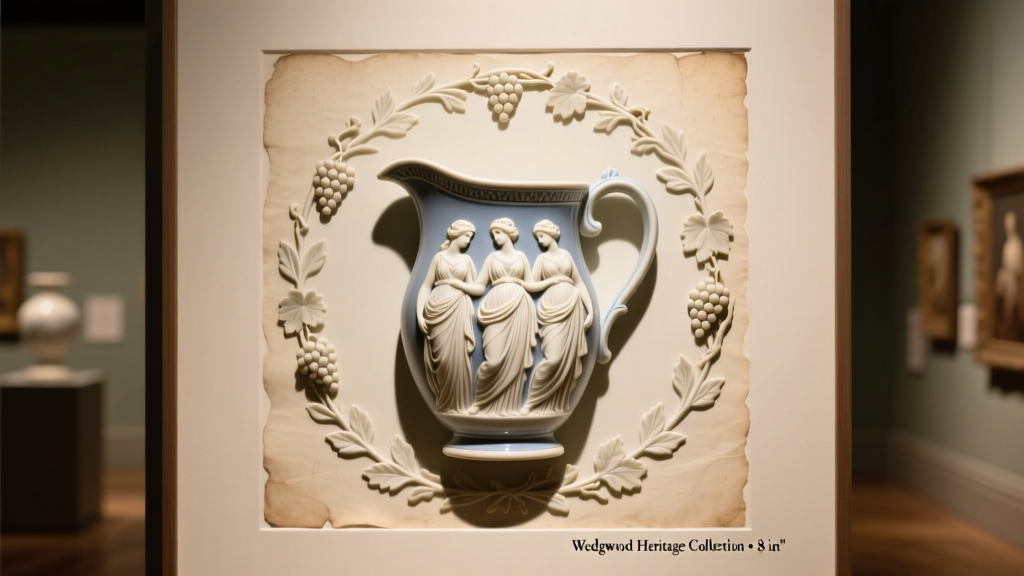
Wedgwood Pitcher: Neoclassical Maidens & Grape Vine Border — Authentication, Provenance, and Market Value of the 8-Inch Jasperware Vessel
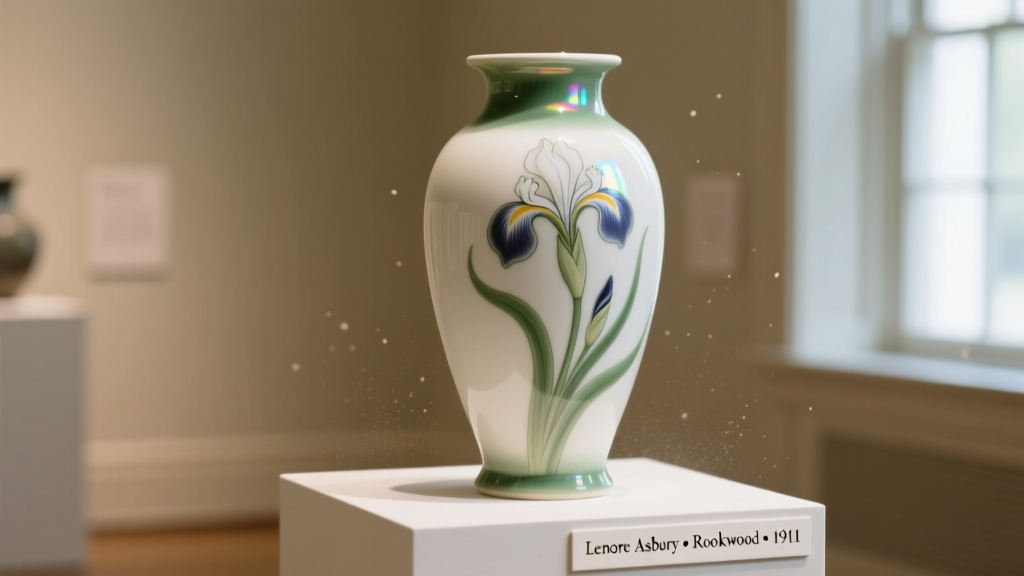
Rookwood Vase, White-to-Green Iris Glaze by Lenore Asbury, 1911 — Authentication, Provenance, and Market Analysis of a Landmark American Art Pottery Piece
Tea Caddy Mahogany Satinwood with Acorn & Leaf Medallions: Authentication, Provenance, and Market Analysis of the Three-Canister Set

Sunbeam Shavemaster Advertising Display: Anatomy, Authentication, and Market Value of the Electric Light-Up Razor Showcase

M Twilit: Authentication, Market Position, and Technical Analysis of a Contemporary Limited-Edition Print Series

Toy Stoves Are Hot Collectibles: Market Trends, Authentication Protocols, and Investment Value in Vintage Kitchen Playthings
Fulper Lamp: Dark Light Blue Crystalline Glaze Base, Signed, 10-Inch — Authentication, Provenance & Market Analysis

Aluminum Tray with Dagger-Form Feet: Authentication and Market Analysis of the Wendell August Forge 14¾-Inch Piece