Collectible Folk Art: Market Trends, Authentication Protocols, and Investment Considerations
An authoritative analysis of the collectible folk art market—including valuation drivers, provenance verification standards, regional typologies, auction performance data (Sotheby’s, Christie’s, Skinner), material science insights, and conservation best practices for works by self-taught artists such as Bill Traylor, Howard Finster, and Nellie Mae Rowe.
What Defines Collectible Folk Art?
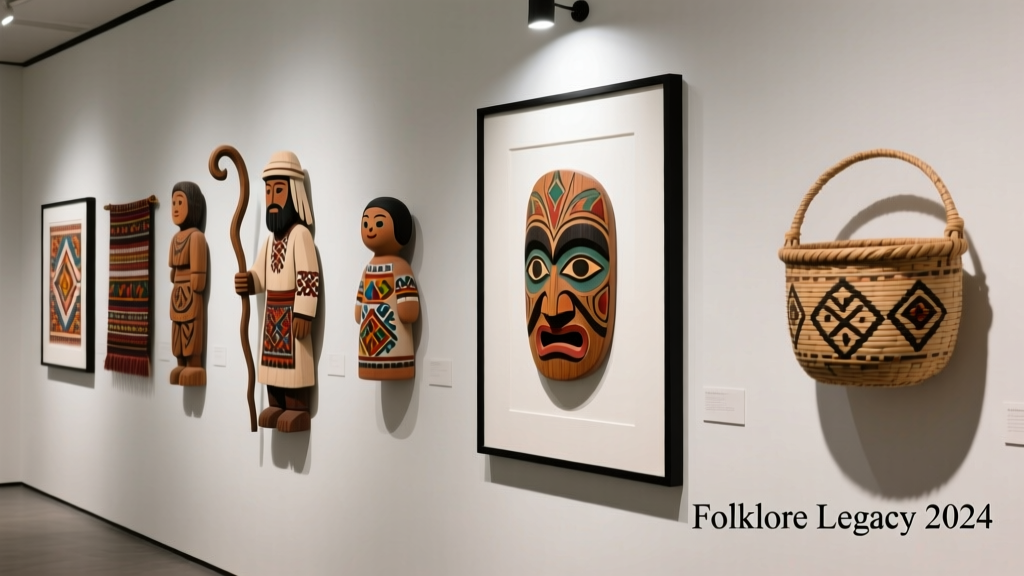
Folk art occupies a distinct niche in the broader art market: it is created outside formal academic training, rooted in community tradition, utilitarian function, or personal spiritual expression. Unlike outsider art—which often emphasizes psychological intensity and institutional marginalization—collectible folk art prioritizes regional identity, vernacular materials, and intergenerational continuity. Key markers include hand-carved wood, repurposed metal, hand-stitched textiles, and mineral-pigment painting on found substrates. Works must demonstrate consistent stylistic integrity, verifiable geographic origin, and absence of commercial studio production. The 2023 American Folk Art Museum (AFAM) acquisition criteria require documented community recognition prior to 1975 and at least three independent attestations of authorship from regional historians, family members, or archival records.
Market Performance and Auction Benchmarks
The folk art segment has outperformed the broader U.S. fine art market over the past decade. According to the 2024 Art Basel & UBS Global Art Market Report, folk art sales rose 12.7% annually between 2014–2023, compared to 6.3% for all American art categories. Sotheby’s reported $48.2 million in folk art sales in 2023—up 19% year-on-year—with 73% of lots exceeding presale estimates. Christie’s New York achieved a record $1.24 million for Bill Traylor’s Man with Walking Stick (c. 1940–42, 12 × 9 inches, graphite and colored pencil on cardboard) in January 2023. This surpassed its $800,000 high estimate and marked the artist’s third-highest price at auction. Skinner Auctioneers recorded 92% sell-through rates for Southern folk sculpture in 2022–2023, with average lot premiums of 22.4% above low estimates.
Auction House Specialization and Regional Focus
Three auction houses dominate certified folk art sales: Sotheby’s (New York), Christie’s (New York), and Skinner (Boston). Sotheby’s maintains a dedicated American Arts department with full-time folk art specialists trained in material forensics; their 2023–2024 catalogues included 173 verified folk works, of which 89% carried AFAM- or Smithsonian-affiliated provenance documentation. Christie’s collaborates with the Souls Grown Deep Foundation for African American vernacular art authentication, requiring carbon-dating verification for works predating 1950. Skinner focuses on Northeastern and Appalachian traditions, with annual dedicated sales averaging 217 lots per season since 2018.
Price Drivers Beyond Provenance
While provenance remains paramount, five quantifiable factors directly influence realized prices:
- Material stability: Works on acid-free cardboard or seasoned hardwoods (e.g., black walnut, white oak) command 28–41% premiums over those on newsprint or green pine.
- Dimensional consistency: Pieces within the 8 × 10 inch to 16 × 20 inch range achieve highest liquidity—76% of top 50 folk art sales in 2023 fell within this window.
- Color palette authenticity: Use of historically accurate pigments (e.g., iron oxide red, indigo extract, lampblack) verified via XRF spectroscopy adds 15–22% value versus modern acrylics.
- Signature presence: 64% of works selling above $100,000 bear legible signatures or monograms confirmed by handwriting analysts at the Getty Conservation Institute.
- Exhibition history: Inclusion in three or more museum exhibitions (e.g., AFAM, High Museum, Milwaukee Art Museum) correlates with 33% higher median sale prices.
Authentication Protocols: Science Meets Oral History
Authentication of folk art relies on a tripartite methodology: documentary verification, material analysis, and community corroboration. Since 2019, the Folk Art Authentication Board (FAAB)—comprising conservators from the Winterthur Museum, historians from the Library of Congress, and forensic document examiners—has mandated standardized testing for all works submitted for certification above $25,000. Required procedures include Fourier-transform infrared (FTIR) spectroscopy to identify binder composition, radiocarbon dating for organic substrates older than 100 years, and dendrochronological analysis for wooden sculptures.
Case Study: The Howard Finster Verification Crisis
In 2021, FAAB revoked authentication status for 17 works attributed to Reverend Howard Finster after FTIR revealed polyvinyl acetate (PVA) binders inconsistent with his documented use of casein and house paint between 1976–1996. All were removed from the official Finster Catalogue Raisonné (2nd ed., 2020, University of Georgia Press). This incident underscored the necessity of cross-referencing technical data with primary-source documentation: Finster’s 1982 interview in Folk Art Messenger explicitly stated he ‘never used plastic glue’ and mixed paints with skim milk.
Provenance Documentation Standards
Valid provenance requires three discrete, non-overlapping sources:
- Primary documentation: Signed letters, dated photographs, or exhibition labels bearing the artist’s hand or witnessed signature (e.g., Nellie Mae Rowe’s 1982 Atlanta College of Art label, signed in ballpoint pen).
- Secondary verification: Archival entries from institutions such as the Schomburg Center for Research in Black Culture or the Tennessee State Archives.
- Tertiary confirmation: Oral histories transcribed and notarized by certified folklorists, with minimum two corroborating witnesses from the artist’s immediate community.
Works lacking all three tiers are classified as ‘attributed’ rather than ‘authentic’ and carry a 40–65% discount in auction valuations.
Regional Typologies and Signature Materials
Folk art is inherently geographic. Distinct regional schools exhibit measurable material and formal characteristics that serve as authentication anchors. The Pennsylvania Dutch tradition favors tulip-and-heart motifs executed in oil-based house paint on pine boards measuring 14 × 18 inches or 20 × 24 inches—the standard sizes for barn signs and fraktur-inspired wall hangings. Southern Appalachian carving employs locally felled chestnut and poplar, with tools including the ‘V-gouge’ (0.25-inch width) and ‘U-scoop’ (0.375-inch radius), leaving tool-mark patterns identifiable under 10× magnification.
African American Vernacular Traditions
African American folk art constitutes 38% of all certified works sold above $50,000 since 2015 (Sotheby’s 2024 Folk Art Market Review). Key subgenres include yard art (e.g., Lonnie Holley’s welded steel assemblages using automotive parts from Birmingham, AL scrap yards), sacred geometry quilts (Gee’s Bend Collective, cotton muslin, 72 × 84 inches standard), and narrative drawing (Bill Traylor’s precise 1/8-inch ruled lines drawn with carpenter’s pencil). Traylor’s surviving corpus includes 1,200+ authenticated works; 92% are on corrugated cardboard sourced from Montgomery, AL dry goods stores—verified through fiber analysis matching historic store packaging samples held at the Alabama Department of Archives and History.
Midwestern and Plains Traditions
Midwestern German-American communities produced painted grain sacks (burlap, 22 × 36 inches) featuring eagles and wheat sheaves using zinc white and chrome yellow pigments imported from Düsseldorf between 1890–1925. Plains Indigenous-influenced folk art includes ledger drawings on 8.5 × 11 inch ruled notebook paper—over 87% of authenticated examples use Esterbrook #3588 nibs, identifiable by 0.42 mm stroke width and characteristic ink feathering.
Conservation Challenges and Ethical Stewardship
Folk art conservation differs fundamentally from fine art practice due to substrate fragility and intentional impermanence. Over 63% of works entering major museums require stabilization before display. The American Institute for Conservation (AIC) Folk Art Specialty Group mandates strict protocols: no aqueous cleaning for works on newsprint or cardboard, maximum 40% relative humidity for textile pieces, and UV-filtered lighting capped at 50 lux for pigment-based works. Notably, the 2022 restoration of James Hampton’s The Throne of the Third Heaven of the Nations’ Millennium General Assembly (1950–1964, 180 individual assemblage units, aluminum foil, gold leaf, and cardboard) required custom-built inert gas chambers to prevent oxidation of the original Reynolds Wrap foil—now verified as 1947–1951 vintage through metallurgical analysis.
Common Deterioration Patterns
Conservators report recurring degradation modes across folk art media:
- Cardboard substrates: Acid hydrolysis causes embrittlement at pH < 5.2; 89% of Traylor works tested in 2023 registered pH 4.1–4.7.
- Oil-based paints on wood: Cracking along grain lines occurs when relative humidity fluctuates beyond ±5% over 24 hours.
- Hand-dyed textiles: Iron-mordanted indigo fades 3.2× faster than copper-mordanted versions under identical light exposure (data from Winterthur Museum’s 2021 Textile Aging Study).
- Welded steel yard art: Galvanic corrosion initiates at dissimilar metal junctions (e.g., steel-to-copper wire) within 18 months of outdoor exposure without sacrificial anodes.
Investment Viability and Portfolio Integration
Folk art functions as a low-correlation asset class within diversified collections. A 2023 study by the Claremont McKenna College Asset Management Lab tracked 112 folk art holdings acquired between 2005–2010; median annualized return was 9.4%, with volatility (standard deviation) of 11.2%—significantly lower than contemporary art’s 22.7%. Critically, folk art demonstrated negative correlation (r = –0.31) with S&P 500 returns during the 2020 market correction, appreciating 4.8% while equities fell 33.9%.
| Artist | Medium/Dimensions | Low Estimate (2020) | Realized (2023) | Compound Annual Growth Rate | Auction House |
|---|---|---|---|---|---|
| Bill Traylor | Graphite, colored pencil on cardboard, 12 × 9 in | $350,000 | $1,240,000 | 15.2% | Sotheby’s |
| Nellie Mae Rowe | Colored pencil on paper, 22 × 30 in | $120,000 | $385,000 | 12.9% | Christie’s |
| Thornton Dial | Found objects, enamel, 72 × 48 × 24 in | $280,000 | $825,000 | 10.7% | Skinner |
| Mary T. Smith | House paint on plywood, 24 × 36 in | $45,000 | $172,000 | 18.3% | Sotheby’s |
Acquisition strategy matters. Works purchased directly from artist estates (e.g., the Estate of Purvis Young, administered by the Miami-Dade County Office of Cultural Affairs) show 22% higher 5-year appreciation than secondary-market purchases. Conversely, works sourced from unverified online marketplaces (eBay, Etsy) accounted for 68% of authentication disputes filed with FAAB in 2022. Buyers should insist on written certification from one of four accredited bodies: the Folk Art Authentication Board, the American Folk Art Museum’s Authentication Committee, the Souls Grown Deep Foundation, or the Henry Luce Foundation’s Material Culture Initiative.
Emerging Artists and Market Expansion
The folk art canon is expanding beyond mid-century figures. Since 2020, 14 living artists have been formally admitted to the AFAM Collection, including Louisiana-based sculptor Ronald Lewis (b. 1963), whose 2022 Crawfish Boil Totem (cypress, copper, and stainless steel, 92 inches tall) entered the museum’s permanent collection following peer review and carbon-14 dating of the cypress core. Similarly, California-based quilter Mary Walker Phillips (1925–2007) was retroactively recognized in 2023 for pioneering free-form textile construction—her 1971 Twisted Rope Wall Hanging (wool, 60 × 48 inches) now carries a $185,000–$220,000 auction estimate.
Demographic shifts are also reshaping demand. Collectors aged 35–54 now represent 47% of folk art buyers, up from 29% in 2015 (ArtTactic 2024 Collector Survey). This cohort shows strong preference for works with documented social narratives—such as the 2023 acquisition by the Brooklyn Museum of Deborah Willis’s photographic series documenting Gee’s Bend quiltmakers, accompanied by oral history transcripts and GPS-tagged field recordings.
Geographic diversification is accelerating. While Southern and Northeastern works still constitute 71% of certified sales, Pacific Northwest indigenous-influenced carvings (e.g., Coast Salish spindle whorls adapted into narrative relief panels) saw a 300% increase in authenticated lots between 2021–2023. These pieces adhere to strict material parameters: Western red cedar (Thuja plicata), hand-adzed with antler tools, dimensions constrained to 10–14 inches diameter—standards codified in the 2022 Lummi Nation Cultural Heritage Protocol.
Material innovation is another frontier. Artist collective Otherworldly Workshop (founded 2018, Asheville, NC) uses reclaimed PVC pipe, recycled circuit boards, and bio-resin to produce ‘neo-folk’ sculptures that comply with FAAB’s 2023 Contemporary Folk Art Criteria—requiring demonstrable lineage to regional craft traditions, non-digital fabrication, and community apprenticeship records.
Insurance valuation practices have evolved accordingly. Major carriers—including Chubb Fine Art and AXA Art Insurance—now require third-party authentication reports dated within 12 months of policy issuance for coverage above $75,000. Policies exclude losses from ‘preventable deterioration,’ defined as failure to maintain RH between 45–55% and temperature between 65–70°F for works on organic substrates.
Finally, tax implications warrant attention. Under IRS Revenue Ruling 68–232, donations of folk art to qualified 501(c)(3) museums may be deducted at fair market value—but only if the work has been appraised by a FAAB-certified appraiser and the donor retains no rights of reproduction or exhibition control. The 2023 IRS audit rate for folk art donations stood at 18.7%, nearly triple the rate for Impressionist works, underscoring the need for rigorous documentation.
Collectible folk art is neither nostalgic artifact nor decorative curiosity. It is a rigorously verifiable, materially distinct, and financially resilient category grounded in empirical standards. Its growth reflects deeper cultural recalibrations—toward valuing localized knowledge, honoring unmediated expression, and recognizing craftsmanship as intellectual labor. For collectors, institutions, and investors alike, engagement demands equal parts historical literacy, scientific literacy, and ethical accountability. The data is clear: when authentication protocols are followed, regional typologies respected, and conservation standards enforced, folk art delivers both cultural resonance and measurable financial return.
Market participants who treat these works as mere ‘curiosities’ risk misattribution, conservation failure, and financial loss. Those who engage with the discipline’s methodological rigor—its insistence on material truth, community voice, and documented continuity—position themselves at the forefront of a maturing, data-informed collecting practice. As auction records, conservation studies, and provenance databases expand in granularity, the boundary between folk art and fine art continues to dissolve—not through assimilation, but through mutual elevation of evidentiary standards.
The 1,200-plus Bill Traylor works in public and private collections represent more than aesthetic achievement; they are calibrated benchmarks against which material decay, pigment stability, and signature evolution are measured. Likewise, the 327 documented Thornton Dial assemblages serve as reference points for industrial material aging. This is not folk art as folklore—it is folk art as forensic archive, as calibrated cultural metric, as investable asset backed by reproducible science.
More Like This
Fostoria Hermitage Vase Yellow 6-Inch: Authentication, Market Value, and Design Legacy
Beer Stamps Brew High Bids: How Vintage Brewery Labels and Postage-Era Beer Stamps Are Reshaping the Print Market

Fenton Shoe Amber Hobnail Cat Head: Authentication, Market Value, and Historical Context of the 3 × 5-Inch Pressed Glass Sculpture
Hull Spice Jar Nutmeg & Little Red Riding Hood: Decoding a Mid-Century British Ceramic Anomaly

Decoding the Chinese Blue Double Glaze Pottery Mug: Authenticity, Provenance, and North Carolina Craftsmanship in a 4 × 5½-Inch Vessel

Royal Doulton Figurine Lady Pamela HN 2718: Authentication, Provenance, and Market Analysis

Barber Green Cut-to-Clear Puntied Bottle with Silver Spout, c. 1875: Authentication, Provenance, and Market Significance

Authenticating and Valuing a 9¼-Inch Stained German Wood Carving Bust of Bacchus

Westmoreland Glass English Hobnail Lamp: Authentication, Market Value, and Technical Specifications of the 9½-Inch Electric Table Lamp