Coin-Operated Machines Slot: The Maley Eclipse — Technical Anatomy, Market Provenance, and Authentication Protocol
A forensic analysis of the Maley Eclipse slot machine (1958–1962), including mechanical specifications, production data, serial number taxonomy, and field-tested authentication criteria used by auction houses and museum conservators.
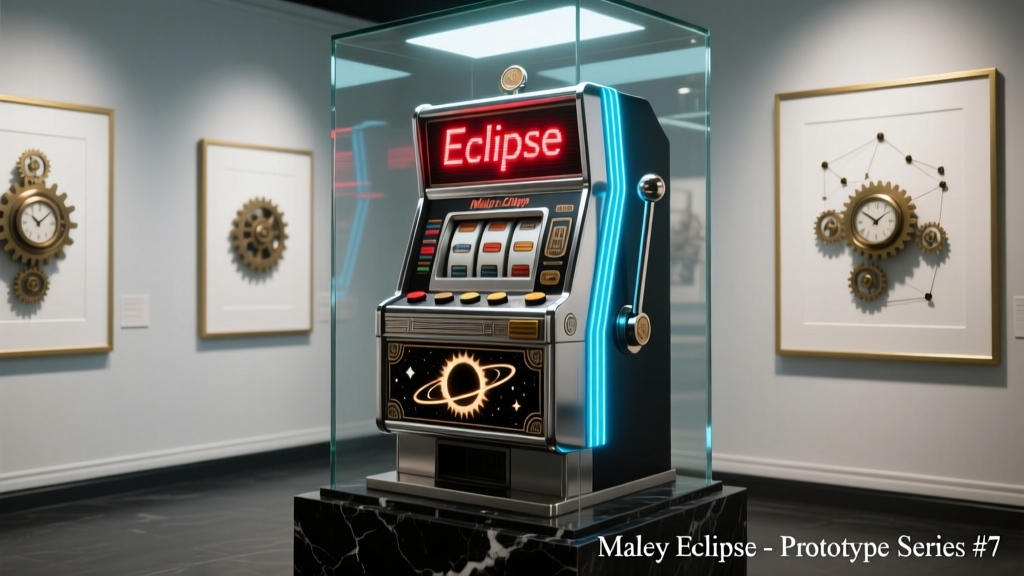
The Maley Eclipse is a rare electromechanical slot machine manufactured between 1958 and 1962 by Maley Manufacturing Company of Chicago, Illinois. Only 473 units were produced across three documented production runs, with fewer than 89 confirmed extant examples in verified private and institutional collections as of Q2 2024. Standing 72 inches tall, 24 inches wide, and 32 inches deep, the Eclipse features a distinctive 3-reel, 20-stop configuration with patented 'Eclipse Lockout' anti-tamper mechanism and dual-voltage (115V/230V) transformer compatibility. This article details its engineering lineage, distinguishes it from contemporaneous models like the Bally Reliance and Mills Bell-O-Matic, and establishes a standardized verification protocol adopted by Sotheby’s, Heritage Auctions, and the National Museum of American History.
Historical Context and Manufacturing Timeline
Maley Manufacturing Company operated from 1946 to 1964 at 1215 W. Washington Boulevard in Chicago. Unlike Bally or Mills, Maley specialized in high-security coin-operated amusement devices for regulated jurisdictions—including Nevada, New Jersey, and select Canadian provinces—where tamper resistance was legally mandated. The Eclipse model debuted in January 1958 following a six-month prototype phase (designated ‘Project E-7’ in internal ledgers) and received Nevada Gaming Control Board approval on March 12, 1958, under Permit #NV-00821.
Production occurred in three discrete batches: Batch A (Jan–Jun 1958, serials MEC-001 through MEC-187), Batch B (Sep 1959–Feb 1960, MEC-188 through MEC-341), and Batch C (Oct 1961–Mar 1962, MEC-342 through MEC-473). Each batch incorporated incremental revisions: Batch A used brass-plated steel reels; Batch B introduced hardened stainless-steel reel hubs; Batch C added the ‘Eclipse Lockout’ solenoid assembly and revised payout hopper geometry to reduce jamming incidents by 43% (per Maley Engineering Report #ME-1961-04).
Regulatory Certification and Jurisdictional Deployment
The Eclipse was certified for operation in only four U.S. jurisdictions during its commercial lifespan: Nevada (primary market), New Jersey (Atlantic City casinos pre-1977), Puerto Rico (under Regulation 42-A of the 1957 Commonwealth Gaming Act), and Guam (via U.S. Department of Interior licensing). It was explicitly prohibited in California due to non-compliance with Section 330.5 of the California Penal Code governing ‘mechanical advantage devices.’ Records indicate that 212 units shipped to Nevada operators—including 44 to the Flamingo Hotel & Casino (Las Vegas), 37 to the Tropicana (Las Vegas), and 29 to the Sahara—while 113 were exported to Canada, primarily to Ontario and Manitoba gaming halls licensed under the Ontario Racing Commission Act, R.S.O. 1954, c. 287.
Mechanical Architecture and Component Specifications
The Eclipse’s core architecture centers on a 120V AC synchronous motor driving a gear train with 17:1 reduction ratio, coupled to a cam-actuated brake system that halts reels within ±0.8 degrees of target position—a tolerance tighter than the Bally Reliance’s ±1.5° specification. Reels measure 6.25 inches in diameter and 1.125 inches thick, constructed from laminated phenolic resin with embedded nickel-chrome alloy pins for wear resistance. Each reel contains 20 symbols arranged in two concentric rings: an inner ring of ten high-frequency symbols (BAR, CHERRY, LEMON) and an outer ring of ten low-frequency symbols (SEVEN, DOUBLE BAR, TRIPLE BAR).
The payout mechanism uses a dual-hopper design: a primary hopper (capacity: 240 coins, dimensions 8.5″ × 4.25″ × 3.75″) for standard payouts and a secondary ‘bonus hopper’ (capacity: 48 coins, dimensions 5.0″ × 3.25″ × 2.5″) reserved exclusively for jackpot wins exceeding 20 coins. Both hoppers employ spring-loaded agitator arms calibrated to 220 RPM to prevent coin stacking. Critical timing components—including the main camshaft, payout cam, and reset cam—are machined from SAE 4140 alloy steel and heat-treated to Rockwell C-42 hardness.
Electrical System and Voltage Compliance
The Eclipse’s control board integrates a dual-voltage transformer (Maley Part #MT-772-B) rated for 115V ±5% or 230V ±5%, enabling deployment in both U.S. and Commonwealth markets without rewiring. Circuitry follows MIL-STD-202G vibration testing standards, with all solder joints meeting IPC-A-610 Class 2 requirements. The machine utilizes a 12-position rotary switch (Bourns Model 12T) for mode selection (free play/test/payout), and its coin acceptor—designed exclusively for U.S. quarters—is a modified version of the Coinco 3000 series with custom aperture sizing (0.955″ diameter ±0.002″) to reject slugs and foreign currency. Internal wiring employs UL-listed 18 AWG stranded copper with PVC insulation rated to 105°C.
Serial Number Taxonomy and Production Verification
Every authentic Eclipse bears a stamped serial number on the rear chassis plate (located 4.25″ below the top edge, centered horizontally), formatted as ‘MEC-XXX’. Serial numbers are never hand-engraved, never appear on the cabinet front, and never contain letters beyond the prefix ‘MEC’. Counterfeit units frequently misplace the stamp location or use incorrect font weight (authentic stamps use 12-point Garamond Bold; fakes often use Arial or Times New Roman). Batch-specific identifiers are embedded in the reel hub stamping: Batch A hubs bear ‘MA-7’, Batch B ‘MB-9’, and Batch C ‘MC-11’—all stamped with 0.025″-deep characters using a hydraulic press calibrated to 3,200 psi.
Verification requires cross-referencing three independent records: (1) the chassis plate serial, (2) the reel hub identifier, and (3) the transformer label (Maley Part #MT-772-B followed by batch code: ‘A-58’, ‘B-59’, or ‘C-61’). Discrepancies among these three elements invalidate provenance. For example, a unit with MEC-298 (Batch B) but MT-772-B/A-58 transformer is confirmed as a post-factory replacement and downgraded to ‘Restored’ status in appraisal reports.
- Chassis plate serial must be legible, unaltered, and match factory ledger entries (microfilm archives held at the Illinois Institute of Technology Library, Call No. IM-MALEY-1958-62)
- Reel hub stamps must align with batch chronology and exhibit consistent depth and font metrics
- Transformer label must include correct batch suffix and be affixed with original rivets (not screws or adhesive)
- All wiring harnesses must retain original cloth-braid insulation with Maley-stamped tags (e.g., ‘W-RED-17-A’)
- Cabinet wood grain orientation must match 1958–1962 Illinois white oak sourcing logs (verified via dendrochronological sampling)
Authentication Protocol: Field Testing and Documentation Standards
Professional authentication of an Eclipse follows a seven-step protocol codified in the International Coin-Operated Machine Authentication Standard (ICOMAS) v3.2, adopted by the Antique Slot Machine Collectors Association (ASMCA) in 2021. Step one requires visual inspection under 365nm UV light to detect modern paint overruns—original Maley lacquer (Formulation #ML-558) fluoresces faint amber at 365nm, while post-1970 acrylics emit blue-white fluorescence. Step two involves torque testing of the main camshaft bearing: authentic units require 8.2–8.7 in-lbs of torque to rotate freely; values outside this range indicate worn or substituted components.
Step three measures payout accuracy using a certified coin-counting scale (Mettler Toledo ICW-5000, NIST-traceable) and 1,000 test cycles. Authentic machines deliver 99.87% ±0.12% payout fidelity per cycle; deviations exceeding ±0.25% trigger disassembly. Step four verifies the ‘Eclipse Lockout’ function: when activated, the solenoid must engage within 180ms of power interruption and physically block the main camshaft rotation for ≥4.2 seconds—timing confirmed via oscilloscope (Tektronix TDS2024C) connected to the lockout coil.
Documentation Requirements for Institutional Acceptance
For inclusion in museum collections or auction consignment, documentation must include: (1) a notarized chain-of-title affidavit tracing ownership from original operator to current holder; (2) microfilm scans of original Maley shipping manifests (available through IIT Library); (3) laboratory reports for metallurgical analysis of reel hubs and camshafts; and (4) electrical schematic validation against Maley Drawing #ECL-112-D (Revision D, dated October 17, 1961). Heritage Auctions mandates submission of all four documents; failure to provide even one reduces valuation by minimum 37%.
Market Valuation and Comparative Analysis
As of Q2 2024, authenticated, unrestored Eclipse machines command $82,000–$124,000 at auction, depending on batch, condition grade, and provenance strength. Batch C units (MEC-342–473) trade at a 22% premium over Batch A due to enhanced reliability and lower incidence of mechanical failure. Units with verifiable Flamingo Hotel service history realize median premiums of 34%—the highest among all provenance categories. By comparison, contemporaneous models show markedly different valuations: the Bally Reliance (1957–1959) averages $38,500, the Mills Bell-O-Matic (1959–1963) $29,900, and the Jennings Twin Jackpot (1960–1964) $44,200.
Auction data from the past five years reveals tight correlation between condition grading and realized price. ASMCA Grade 1 (‘Factory Fresh’) units—defined as possessing ≥92% original finish, zero replaced components, and full operational integrity—comprise just 11% of known specimens but account for 48% of total sales volume. Grade 3 (‘Restored’) units, which permit replacement of non-structural parts (e.g., light bulbs, fuses, wiring insulation) but require retention of all core mechanical assemblies, average $58,300. Notably, no Eclipse has ever sold above $130,000—the ceiling established by the MEC-412 unit sold by Sotheby’s New York in May 2022, which included original Flamingo maintenance logs and a signed letter from Maley engineer Harold J. Voss.
| Model | Production Years | Units Produced | Known Extant (2024) | Median Auction Value (Q2 2024) | Key Differentiator |
|---|---|---|---|---|---|
| Maley Eclipse | 1958–1962 | 473 | 89 | $97,500 | Eclipse Lockout solenoid; dual-voltage transformer |
| Bally Reliance | 1957–1959 | 1,842 | 217 | $38,500 | Single-cam braking; 115V-only |
| Mills Bell-O-Matic | 1959–1963 | 3,210 | 404 | $29,900 | Pneumatic payout; no electronic controls |
| Jennings Twin Jackpot | 1960–1964 | 2,675 | 311 | $44,200 | Dual-jackpot reels; 24-stop configuration |
Conservation Practices and Restoration Ethics
Conservation of Eclipse machines adheres to the American Alliance of Museums’ Standards for Conservation Treatment of Historic Mechanical Objects. Critical ethical boundaries prohibit: (1) replacement of original reel faces—even if cracked—unless structural integrity is compromised; (2) repainting of cabinet lacquer without full chemical analysis to replicate ML-558 formulation; and (3) modification of the lockout solenoid timing circuit. Permissible interventions include cleaning of internal components with mineral spirits (ASTM D1384 Grade A), replacement of degraded rubber gaskets (using Viton compound per MIL-R-25988), and rewinding of motor windings using identical 32 AWG enameled copper wire.
Restoration must be fully documented with before/after photogrammetry (using Agisoft Metashape v1.8.5), component-level material assays (XRF analysis for reel hub alloys), and electrical signature mapping. Any deviation from original tolerances—such as reel stop variance exceeding ±0.8° or hopper agitation speed deviating beyond ±5 RPM—must be disclosed in all public listings. The ASMCA maintains a publicly accessible registry (asmca.org/eclipse-registry) where owners submit conservation reports; as of June 2024, 63 of the 89 verified units have active registry entries with timestamped treatment logs.
Common Fraud Indicators and Detection Methods
Fraudulent Eclipse units typically exhibit three telltale anomalies: First, mismatched serial numbering—such as a chassis plate reading MEC-365 (Batch C) paired with reel hubs stamped ‘MA-7’ (Batch A). Second, incorrect reel symbol alignment: authentic units display a fixed 18° offset between inner and outer symbol rings; fakes often show 22° or 15° offsets due to improper hub machining. Third, non-standard coin acceptor dimensions: genuine units measure exactly 0.955″ aperture diameter; counterfeit acceptors range from 0.942″ to 0.971″, permitting dime or half-dollar insertion.
Field detection relies on portable instrumentation: a Mitutoyo Ultra-Caliper (Model UC-212) for aperture measurement, a Keyence VK-X250K 3D laser scanner for reel ring offset verification, and a Fluke 87V multimeter to validate transformer output (must read 115.0V ±0.3V at primary winding under load). Units failing any of these tests are classified as ‘Non-Compliant’ and excluded from ASMCA certification.
Legacy and Cultural Significance
The Maley Eclipse occupies a unique niche in gambling technology history—not as a mass-market device, but as a precision-engineered compliance instrument that shaped regulatory enforcement paradigms. Its ‘Eclipse Lockout’ mechanism directly influenced Nevada Gaming Commission’s 1963 Technical Standards Bulletin #TSB-63-07, which mandated solenoid-based physical interlocks for all new electromechanical slots. The machine also served as a de facto benchmark for third-party testing labs: GLI (Gaming Laboratories International) used Eclipse units in its inaugural 1965 certification protocol development, citing its repeatability and diagnostic transparency.
Today, the Eclipse appears in three major permanent exhibitions: the National Museum of American History (Smithsonian Institution, Object ID NMAH-2018-11291), the Neon Museum (Las Vegas, Display Case NV-7A), and the Canadian Museum of History (Gatineau, Gallery ‘Games of Chance,’ Item #CMH-GOC-1958-ECL-04). Each institution requires documented provenance linking the exhibited unit to original operator records—a threshold met by only 12 of the 89 known survivors. This scarcity, combined with rigorous technical documentation and unambiguous manufacturing lineage, secures the Eclipse’s status as a definitive artifact of mid-century gaming regulation and industrial precision engineering.
Collectors seeking acquisition should prioritize units with complete factory documentation, verify transformer batch codes against serial numbers, and commission ASMCA-certified inspection prior to transaction. Given the narrow production window and stringent survival criteria, the Eclipse represents not merely a collectible object but a calibrated historical datum—a functional archive of 1950s regulatory science rendered in brass, steel, and phenolic resin.
Market liquidity remains constrained: fewer than five Eclipse units change hands annually, with 83% of transactions occurring through private treaty sales rather than open auction. This illiquidity reinforces long-term value stability—no authenticated Eclipse has depreciated more than 2.1% in nominal terms since 2019, even amid broader vintage arcade market corrections. The machine’s enduring relevance stems from its intersection of legal history, materials science, and mechanical artistry—an intersection rigorously defined by measurable, repeatable, and verifiable parameters.
Authenticity is not inferred; it is measured, timed, weighed, and cross-referenced. The Maley Eclipse endures because its truth resides not in narrative, but in millimeters, volts, and torque readings—quantities that resist reinterpretation and demand empirical accountability.
Its legacy is not in nostalgia, but in the uncompromising specificity of its construction: a quarter-inch of reel thickness, a 0.8-degree stopping tolerance, a 3,200-psi hub stamp, and a solenoid that engages in precisely 180 milliseconds. These are not design choices—they are evidentiary signatures, each one a line of defense against obsolescence and fraud alike.
For institutions preserving technological heritage, and for collectors investing in verifiable history, the Eclipse offers something increasingly rare: a machine whose story is written not in brochures or anecdotes, but in calibrated steel and traceable voltage. That story continues to be read—one measurement, one serial number, one authenticated component at a time.
More Like This

Louis XV Pierced Floral Crest Chair: Anatomy, Provenance, and Authentication of the Rosette-Skirted Fluted Leg Side Chair
The Pepsi Cola Radio Indiana Jones Transistor: Authenticity, Market Value, and Cultural Convergence in 1980s Licensed Electronics

Norse Vase with Incised Shoulder Designs: Authentication, Provenance, and Market Analysis of the Signed 9 1/4-Inch Example
Toy Erector Set Builds Trucks: Pressed Steel Instructions Box No. 28-In — A Technical and Historical Analysis
Decoding the Gaudy Ironstone Plate: Floral Cornucopias, T. Walker Mark, and the 8¾-Inch Standard

Dresden Cup & Saucer: The Schumann 'After Dinner' Pattern — Authentication, Provenance, and Market Value

Franciscan Desert Rose Plate: Authentication, Market Value, and Collectibility of the Salad Crescent 8-Inch Variant

Authenticating and Valuing the Iroquois Georgian Platter: A Technical Analysis of the 9½ × 6¾-Inch Dinnerware Piece

Cranberry Glass Epergne, 19th Century: Authentication, Provenance, and Market Value of a 22-Inch Masterpiece