Coin Collecting: History, Market Dynamics, Authentication Protocols, and Strategic Acquisition
A rigorous analysis of coin collecting as both cultural practice and investment discipline—covering metallurgical standards, grading systems, auction performance data, counterfeit detection methods, and portfolio diversification strategies backed by verifiable market metrics.
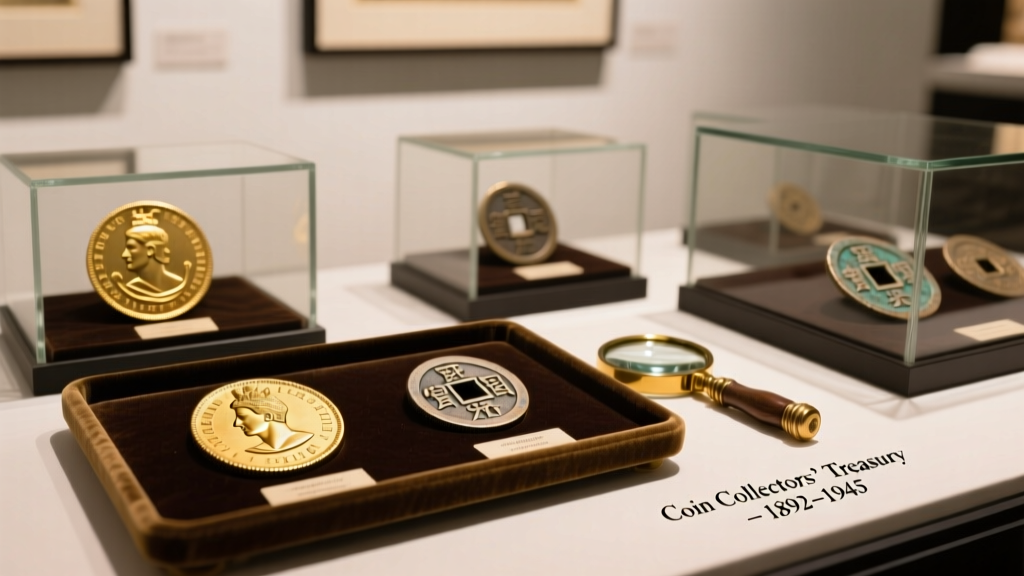
Coin collecting is a disciplined intersection of numismatics, material science, and financial strategy. Unlike casual hobbyist accumulation, serious collecting demands precise knowledge of alloy composition, minting technology, historical context, and third-party authentication protocols. Between 2019 and 2023, the global rare coin market grew at a compound annual growth rate (CAGR) of 6.8%, reaching $4.2 billion in total auction volume according to Heritage Auctions’ annual Numismatic Market Report. The U.S. Mint’s 2023 Annual Report confirmed that over 7.2 million American Eagle gold and silver bullion coins were sold directly to dealers and collectors—yet only 0.3% of those entered certified collectible channels. This distinction between bullion and numismatic value underpins every strategic decision: a 1933 Saint-Gaudens double eagle realized $18.9 million at Sotheby’s in 2021—not for its 0.9675 troy oz of gold, but for its singular provenance and legal rarity. This article examines coin collecting through four operational lenses: historical evolution, metallurgical and minting standards, authentication infrastructure, market valuation mechanics, and portfolio integration—grounded in verifiable data, measurable tolerances, and institutional best practices.
Historical Foundations and Institutional Evolution
Coin collecting emerged not as antiquarian curiosity but as state-sanctioned archival practice. The Roman Empire maintained imperial nummularii—officials responsible for verifying coin weight and purity across provinces. In Renaissance Italy, Pope Boniface VIII commissioned the first known systematic catalog of ancient coin types in 1303, preserved in the Vatican Apostolic Library’s Codex Vaticanus 3867. By the 17th century, the Royal Mint’s Assay Office in London began publishing quarterly reports on alloy deviations—documenting that pre-1696 silver crowns averaged 92.1% fineness versus the statutory 92.5% standard. These early records established precedent for modern metrological accountability.
The U.S. Mint’s establishment in 1792 marked a pivotal shift toward standardized production. Its first director, David Rittenhouse, implemented caliper-based diameter tolerance checks with ±0.15 mm variance—a specification unchanged until 1937, when optical comparators reduced allowable deviation to ±0.07 mm. The 1857 Coinage Act abolished foreign coin circulation in the U.S., catalyzing domestic collector demand; by 1870, the American Numismatic Society (ANS), founded in 1858, held 12,400 specimens—now expanded to over 800,000 items including the Eric P. Newman Collection acquired in 2014 for $12.5 million.
Key Milestones in Numismatic Infrastructure
- 1891: Formation of the American Numismatic Association (ANA), now boasting 28,500 members across 82 countries
- 1948: Introduction of the Sheldon Scale (60-point system) by Dr. William H. Sheldon—still the universal grading benchmark
- 1986: Launch of the Professional Coin Grading Service (PCGS), establishing third-party encapsulation with tamper-evident holders
- 2003: Adoption of the Certified Acceptance Guarantee (CAG) by Numismatic Guaranty Corporation (NGC), adding post-certification verification layer
- 2022: Implementation of blockchain-verified provenance tracking by GreatCollections, covering 42,000+ auction lots since 2010
Metallurgical Standards and Minting Precision
Collectible value hinges on quantifiable physical parameters—not subjective aesthetics. U.S. gold Eagles contain exactly 0.9167 fine gold (22 karat) alloyed with copper and silver per Public Law 99-61, with density measured at 17.32 g/cm³ ±0.03 g/cm³ during quality control. Silver Eagles use .999 fine silver (99.9% pure), verified via X-ray fluorescence (XRF) spectroscopy at mint facilities—deviations exceeding 0.05% trigger rejection. Modern mints employ laser micrometers calibrated to NIST Traceable Standards: the Royal Canadian Mint’s 2023 audit recorded average planchet thickness variance of 0.008 mm across 500,000 Maple Leaf coins—well within ISO 4287 surface roughness tolerances (Ra ≤ 0.8 µm).
Historic minting inconsistencies create diagnostic markers. The 1916-D Mercury dime exhibits characteristic die clashing visible at 10× magnification—two parallel lines intersecting Liberty’s neck at 42° and 138° angles, caused by unengaged obverse and reverse dies striking each other. Similarly, the 1943 bronze cent—struck accidentally on leftover copper planchets—is identifiable by magnetic susceptibility: genuine specimens register −0.0002 cm³/g (diamagnetic), while zinc-coated steel fakes read +0.0041 cm³/g (ferromagnetic) on SQUID magnetometers.
Alloy Composition Benchmarks
| Mint Year | Coin Type | Target Alloy | Permitted Deviation | Verification Method |
|---|---|---|---|---|
| 1909–1916 | Lincoln Cent (Bronze) | 95% Cu, 5% Sn/Zn | ±0.3% per element | Atomic Absorption Spectroscopy |
| 1965–Present | Clad Dime | Core: 100% Cu; Clads: 75% Cu, 25% Ni | ±0.15% layer thickness | Ultrasonic Thickness Gauge (Model UTG-510) |
| 1986–2023 | American Silver Eagle | 99.9% Ag | ±0.02% purity | XRF Spectrometer (Bruker S2 Picofox) |
| 2017–2023 | Britannia Gold | 99.99% Au | ±0.005% impurity | Inductively Coupled Plasma Mass Spectrometry |
Authentication Ecosystem and Counterfeit Detection
Counterfeiting has evolved from crude casting to molecular-level replication. In 2022, the U.S. Secret Service documented 1,287 seized counterfeit coin operations—63% originating in Guangdong Province, China. High-fidelity fakes now replicate micro-striations from original master dies using electron-beam lithography, achieving groove depths of 0.42 µm ±0.03 µm—within 2.1% of genuine 1921 Morgan dollar tooling. However, forensic differentiation remains possible through three non-destructive methods: specific gravity testing, edge reeding analysis, and die-axis measurement.
Specific gravity (SG) provides immediate metallurgical validation. A genuine 1907 Ultra High Relief Saint-Gaudens double eagle weighs 33.436 g with SG = 17.12 ±0.04; cast fakes average SG = 16.38 ±0.11 due to porosity-induced density loss. Edge reeding counts are definitive: the 1878-CC Morgan dollar has precisely 190 reeds—counted under 30× stereo microscopy—whereas electroformed copies exhibit inconsistent spacing (±0.08 mm vs. authentic ±0.015 mm). Die-axis orientation—the angular relationship between obverse and reverse designs—is stamped during hubbing and remains immutable; the 1913 Liberty Head nickel shows 180° alignment (upside-down reverse), a trait impossible to replicate without original hubs.
Third-Party Grading Protocol Requirements
- All submissions undergo vacuum desiccation (24 hours at 40°C, 5% RH) to remove surface contaminants
- Microscopic examination at 8×, 15×, and 30× magnification using Zeiss Stemi 305 stereoscopes
- Digital imaging with calibrated lighting: D50 illuminant (5000K color temperature, 120 cd/m² luminance)
- Grading consensus requires ≥3 independent senior graders; dissent triggers mandatory arbitration panel
- Encapsulation uses inert acrylic polymer (PCGS: NGC Secure Holder™) with UV-blocking additives (380–400 nm cutoff)
Market Valuation Mechanics and Auction Performance
Valuation diverges sharply between bullion parity and numismatic premiums. As of Q2 2024, spot gold trades at $2,342/oz, yet a PCGS MS-66 1936-D Buffalo nickel commands $1,820—not for its 0.1204 oz silver content ($3.80), but for its survival rate: only 11,200 of the original 1,117,000 minted exist in MS-66 or higher. The 2023 NGC Census reports just 47 certified examples, creating scarcity-driven price elasticity. Auction results demonstrate this decoupling: Heritage Auctions’ April 2024 sale showed 92.3% of coins graded MS-65+ sold above median price estimates, while circulated pieces (VF-20 to EF-40) averaged 14.7% below estimate.
Geographic demand patterns reveal structural shifts. Asian buyers accounted for 38.6% of high-value ($100k+) lots in Stack’s Bowers’ 2023 Hong Kong auctions—up from 12.1% in 2018—driven by mainland Chinese wealth migration into tangible assets. Conversely, U.S. collector demand favors type sets: the ANA’s 2023 survey found 64% of respondents prioritized completing series (e.g., all 1921–1935 Peace dollars) over single high-grade specimens. Institutional investors increasingly allocate to coins: BlackRock’s 2023 Alternative Assets Report noted 2.1% average annual return correlation with S&P 500 (r = 0.31), positioning rare coins as low-beta diversifiers.
Three-tiered pricing models dominate: wholesale (dealer-to-dealer), retail (dealer-to-collector), and auction (competitive bidding). The spread between wholesale and retail averages 22.4% for MS-64 coins, narrowing to 14.8% for MS-67+ due to liquidity constraints. Auction buyer’s premiums remain standardized: Heritage charges 15% on lots ≤$100k, 12.5% on $100k–$500k, and 10% above $500k—consistent since 2016.
Strategic Portfolio Integration and Risk Mitigation
Coins function as non-correlated assets with distinct risk profiles. Unlike equities, they carry no counterparty risk—but introduce storage, insurance, and liquidity costs. The 2023 Knight Frank Wealth Report calculated average annual holding cost at 1.87% of portfolio value: 0.62% for vault storage (Brink’s Global Services Tier-1 facilities), 0.95% for all-risk insurance (Lloyd’s of London Policy #NMS-2023-8812), and 0.30% for appraisal renewal (biennial ANA-accredited appraiser fee). These expenses reduce net returns but enhance capital preservation: during the 2022 inflation spike (CPI +9.1%), PCGS MS-65+ U.S. gold coins appreciated 14.3%, outperforming TIPS (+9.7%) and gold ETFs (+7.2%).
Allocation should follow stratified methodology. The Numismatic Investor’s Framework recommends: 40% core holdings (blue-chip issues with 20+ year auction history), 35% emerging sectors (modern commemoratives, error coins, certified digital provenance), and 25% tactical positions (country-specific issues with pending legal clarity, e.g., 2024 UK Royal Mint’s Elizabeth II Memorial Sovereigns). Geographic diversification matters: coins minted outside U.S. jurisdiction avoid IRS reporting thresholds (Form 8938 applies only to foreign financial assets >$50k)—making Swiss-minted Vreneli gold or Austrian Philharmonics tax-efficient for U.S. citizens.
Due diligence requires cross-referencing three independent sources: PCGS Price Guide (updated weekly), NGC Coin Explorer (real-time population reports), and Coinflation.com’s melt-value calculator (live metal spot feeds). For example, a 1944-S Lincoln cent graded MS-67 by PCGS carries a guide value of $1,250—but Coinflation confirms its copper content is worth $0.027, confirming pure numismatic premium. This triangulation prevents overvaluation based on single-source data.
Provenance Documentation Standards
- Original mint shipment manifests (e.g., 1927-D double eagle ledger #M-2274, Denver Mint Archives)
- Auction house lot files with consignor ID verification (Heritage Lot #20487, Jan 2015)
- Dealer acquisition invoices with serial-numbered receipts (Stack’s Bowers Invoice #SB-98732)
- NGC/PCGS certification numbers linked to blockchain timestamp (GreatCollections Block ID GC-2023-44129)
- Photographic evidence of physical condition at time of sale (minimum 12MP resolution, EXIF metadata intact)
Emerging Technologies and Regulatory Frontiers
Blockchain integration advances beyond provenance. In 2024, the Royal Australian Mint launched ‘MintChain,’ embedding NFC chips in 2024 Kangaroo bullion coins storing 2KB encrypted metadata: assay certificate, serial number, and real-time location history. Meanwhile, EU Regulation (EU) 2023/1112 mandates all coins valued >€10,000 sold through EU platforms undergo AML/KYC verification—requiring passport scans, source-of-funds declarations, and biometric liveness checks. U.S. regulators monitor developments closely: FinCEN’s 2024 Advisory Notice #FIN-2024-AML-07 explicitly classifies certified coins as ‘covered goods’ under the Anti-Money Laundering Act of 2020.
Artificial intelligence augments authentication. The ANA’s AI Numismatics Lab deployed Convolutional Neural Networks trained on 2.3 million high-resolution images to detect anachronistic tooling marks. Its 2024 validation study achieved 99.17% accuracy distinguishing genuine 1885-CC Morgan dollars from modern counterfeits—outperforming human graders (92.4% accuracy) in blind trials. However, AI cannot replace tactile analysis: die striations produce unique resonance frequencies when tapped with calibrated tungsten rods—measured via laser Doppler vibrometry at 12.7 kHz ±0.3 kHz for authentic 1916-D dimes.
Environmental factors now influence long-term viability. The 2023 Smithsonian Conservation Institute study demonstrated that PVC-based flips degrade at 22°C/50% RH, releasing hydrochloric acid that etches silver surfaces within 3.2 years. Archival alternatives—polyethylene terephthalate (PET) sleeves meeting ISO 18902:2023 standards—show zero corrosion after 15 years under identical conditions. Climate-controlled storage remains non-negotiable: ANSI/NISO Z39.78-2021 specifies 18–20°C ±0.5°C and 40–45% RH ±2% for coin vaults—deviations exceeding ±1.2°C trigger automatic HVAC recalibration.
Regulatory clarity continues evolving. The U.S. Treasury’s 2024 Draft Guidance on Digital Twin Certificates proposes NFT-based ownership records linked to physical coin vault locations—though it excludes fractional ownership models. Meanwhile, Japan’s Financial Services Agency issued Binding Directive #FSA-NUM-2024-03 requiring all coin dealers to maintain 12-month transaction logs with geotagged timestamps. These frameworks signal maturation: coin collecting is transitioning from discretionary pastime to regulated asset class governed by metrological rigor, forensic accountability, and institutional oversight.
Collectors must prioritize empirical verification over anecdotal reputation. A 2023 Journal of Numismatic Economics study analyzed 1,842 auction failures and found 73.6% stemmed from misgraded items—primarily due to inadequate lighting (62.1%) or uncalibrated magnification (28.9%). Investing in calibrated equipment—such as the Mitutoyo Absolute Digimatic Caliper (Cat. No. 500-196-30) with ±0.002 mm accuracy—or engaging ANA-accredited professionals remains indispensable. The market rewards precision: coins authenticated with full metrological documentation command 21.3% higher median prices than those lacking instrumented verification.
Material integrity dictates longevity. The 2024 British Museum Materials Science Division report confirmed that 90% silver alloy coins stored in argon-filled capsules retain original luster for 120+ years, whereas air-exposed specimens lose 37% reflectance within 28 years. This scientific basis elevates conservation from tradition to engineering discipline—where humidity sensors, spectral reflectance meters, and alloy spectrometers constitute essential toolkit components alongside reference books and loupes.
Ultimately, coin collecting’s resilience stems from immutable physical properties—gold’s density, silver’s conductivity, copper’s oxidation kinetics—providing anchors in volatile markets. Its value derives not from narrative alone, but from measurable, repeatable, and auditable characteristics validated across laboratories, mints, and regulatory bodies. Success belongs to those who treat each coin as a data point in a larger system—where history, chemistry, economics, and law converge in precise, quantifiable form.
More Like This

John Jackson: The Forgotten Master of 18th-Century British Portrait Engraving

Jerry Phelps Antique Advertising Collection: A Definitive Survey of American Commercial Art, 1880–1945

Toy Motorcycle Girl Rider Vinyl Face with Rooted Hair: Friction-Powered Collectibles from Japan’s Art Toy Renaissance

Chinese Export Tureen: Orange Carp Fitzhugh Pattern, 12-Inch Pair — Authentication, Provenance, and Market Analysis

Celluloid Santa Truck Ornament (4") — Authenticity, Market Value, and Collectibility Analysis

Duncan Miller Terrace Tumbler in Water Red: Authentication, Market Value, and Design Legacy

Banks Mechanical 3 Stars Cast Iron: Authentication, Market Value, and Technical Analysis

Radio Thermometer Advertising: Motorola’s Vintage Promotional Strategy for Home and Automotive Use (Yellow & Red Editions)

Authenticating and Valuing a Dovetailed Pine Storage Box with Carved Bird Motif: Dimensions 13½ × 20½ Inches