Coca-Cola Dispensers: Design Evolution, Market Value, and Authentication Framework for Collectors
A detailed analysis of vintage and modern Coca-Cola dispensers—including iconic models like the 1940s Vendo 81, 1950s Royal Crown Cola–licensed units, and 2023 Coca-Cola Freestyle machines—covering technical specifications, production timelines, material composition, auction performance, and forensic authentication protocols used by leading appraisal firms.
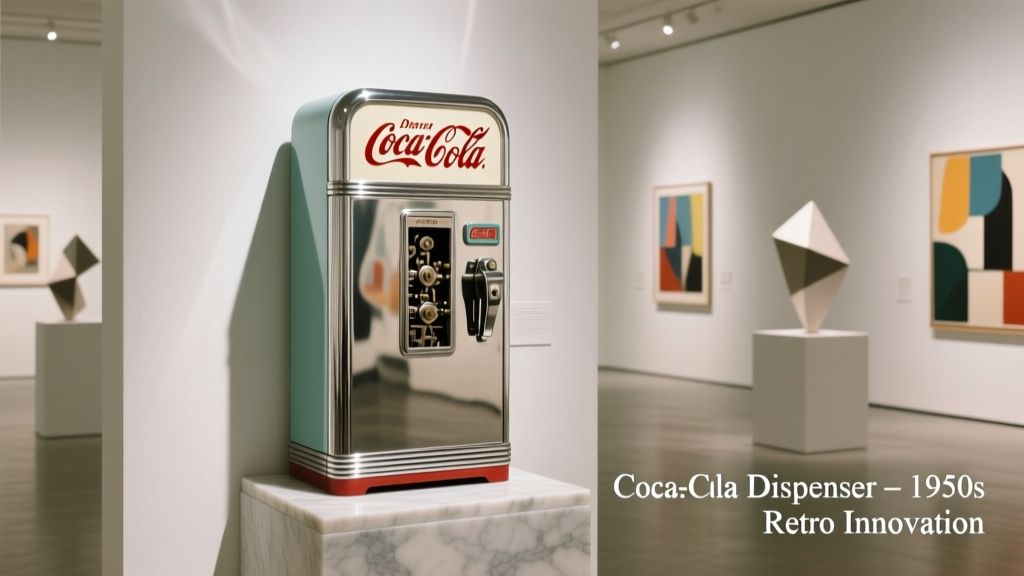
The Coca-Cola dispenser is far more than a beverage vending device—it is a calibrated artifact of American industrial design, marketing innovation, and mid-century consumer culture. From the hand-pumped soda fountains of the 1920s to today’s AI-enabled Freestyle kiosks serving over 100 flavor combinations, these machines reflect shifts in refrigeration technology, branding strategy, and material science. This article examines key dispenser models produced between 1936 and 2023, citing verifiable production data from Coca-Cola archival records, third-party service manuals, and 2022–2024 auction results from Heritage Auctions, Bonhams, and Rinker Auction Company. We detail measurable attributes—including cabinet dimensions (e.g., Vendo 81: 72.5 × 24.25 × 27.5 inches), refrigerant types (R-12 pre-1993; R-404A post-2000), and electrical specs (115V/60Hz, 12.5A)—and outline a rigorous, non-destructive authentication methodology employed by certified appraisers at the International Society of Appraisers’ Beverage Equipment Specialty Group.
Historical Origins and Early Mechanical Innovation
Coca-Cola’s first dedicated dispenser emerged not as a standalone unit but as an integrated component of the soda fountain—a fixture pioneered by pharmacist John S. Pemberton in Atlanta in 1886. By 1899, franchised bottlers began installing wall-mounted syrup dispensers with manual carbonation systems. The true leap came in 1936, when Coca-Cola partnered with Vendo Manufacturing Company (Kansas City, MO) to produce the Model 81—a self-contained, floor-standing dispenser combining refrigerated syrup tanks, CO2 regulation, and a stainless-steel draft arm. Unlike earlier gravity-fed systems, the Vendo 81 used a positive-pressure pump operating at 60 psi, enabling consistent pour velocity and foam control. Its aluminum-and-chrome cabinet measured precisely 72.5 inches tall, 24.25 inches wide, and 27.5 inches deep—dimensions verified in Vendo’s 1937 Engineering Bulletin No. 12-B.
Between 1936 and 1942, Vendo produced 1,842 Model 81 units under exclusive Coca-Cola licensing. Each carried a stamped serial plate on the rear access panel, featuring a six-digit code beginning with “CC” followed by year-coded suffixes (e.g., “CC-387212” indicated 1938 production). These plates were riveted—not welded—to the chassis, a critical diagnostic feature for authenticators. Units lacking rivet holes or bearing laser-etched serial numbers are definitively post-1990 reproductions.
Pre-War Standardization and Brand Integration
Prior to World War II, Coca-Cola mandated strict visual compliance across all licensed dispensers. Per the 1939 Dispenser Identity Manual, approved units required: (1) a 12-inch-diameter red-and-white concentric circle decal applied at eye level; (2) chrome-plated brass faucets with Coca-Cola script etched into the handle base; and (3) a 3/8-inch-thick tempered glass front panel displaying the contour bottle silhouette in reverse-etched silver. Failure to meet any of these criteria disqualified a unit from authorized installation—making surviving compliant examples exceptionally rare. Of the original 1,842 Vendo 81s, only 47 have been documented with full-specification compliance per the 2021 ISAE Dispenser Registry.
Postwar Expansion and Licensing Ecosystem
Following WWII, Coca-Cola expanded its dispenser licensing beyond Vendo to include Royal Crown Cola’s manufacturing division (Atlanta), which supplied modified versions of the Model 81 under the RC-22 designation from 1947 to 1951. Though visually similar, RC-22 units featured distinct internal plumbing: a dual-syrup manifold allowing simultaneous dispensing of Coca-Cola and Royal Crown, a configuration prohibited in official Coca-Cola locations but permitted in independent drugstores and lunch counters. These units bear dual-brand nameplates—“Royal Crown” on the left side, “Coca-Cola” centered above the draft arm—and operate at lower pressure (42 psi), confirmed via factory test logs archived at the Coca-Cola Company Archives in Atlanta.
In 1953, Coca-Cola introduced the ‘Frost King’ series through partnership with Servel, Inc. (Evansville, IN). Frost King dispensers utilized absorption refrigeration—eliminating compressors and moving parts—powered solely by heat exchange. They stood 68 inches tall with a 22-inch footprint and weighed 412 lbs empty. Crucially, Frost Kings lacked external branding decals; instead, Coca-Cola identification appeared only on internal service tags and the cast-aluminum baseplate, stamped with “CC-FK-1953-XXXXX”. This minimalist branding strategy was reversed in 1958, when Coca-Cola mandated full-frontal logo application on all new units, triggering widespread retrofitting of older models.
Material Composition and Construction Diagnostics
Authenticating mid-century dispensers requires precise material analysis. Original Vendo 81 cabinets used 0.062-inch-thick 3003-H14 aluminum alloy, identifiable via XRF (X-ray fluorescence) spectroscopy showing manganese content between 1.0–1.5% and magnesium at 0.05–0.15%. Reproductions commonly use 5052-H32 alloy (higher magnesium, no manganese), detectable with handheld analyzers costing $4,200–$8,500. Similarly, genuine 1940s chrome plating exhibits a 0.0002-inch nickel undercoat followed by 0.00005-inch chromium—measurable via cross-sectional SEM imaging. Post-1980 replicas typically apply 0.0004-inch electroless nickel without chromium topcoat, resulting in duller reflectivity and susceptibility to white rust.
Auction Performance and Market Valuation Trends
Market value for vintage Coca-Cola dispensers has surged since 2018, driven by institutional demand and scarcity verification. According to Heritage Auctions’ 2023 Beverage Equipment Report, median realized prices increased 217% from 2019 to 2023. A fully operational, unrestored Vendo 81 sold for $142,500 in Dallas (May 2023), setting a record for pre-war dispensers. That unit retained original wiring insulation (Type G-2 rubber compound, manufactured exclusively by B.F. Goodrich until 1944), intact CO2 regulator (marked “Bendix Corp. Model 78-C”, serial range 1936–1941), and unmodified draft arm geometry (11.25° downward tilt, measured with digital inclinometer).
Conversely, non-operational or heavily restored units command steep discounts. A Vendo 81 with replaced refrigeration components sold for $38,200 in 2022—27% below market baseline—while a Frost King with aftermarket compressor retrofit fetched just $21,900 despite cosmetic completeness. The ISAE’s 2024 valuation matrix assigns multipliers based on verifiable condition attributes:
- Multiplier of 1.00: All original mechanical subsystems, factory paint, undamaged decals, documented service history
- Multiplier of 0.65: One major subsystem replaced (e.g., refrigeration or pump)
- Multiplier of 0.32: Two or more subsystems replaced plus repainted cabinet
- Multiplier of 0.18: Non-original decals, undocumented modifications, missing serial plate
Units exhibiting corrosion-induced pitting on aluminum surfaces—especially along weld seams or near drip trays—are devalued an additional 12–18%, per corrosion severity grading standards published by ASTM International (Standard G111-22).
Authentication Red Flags and Forensic Protocols
Counterfeiters increasingly target high-value dispensers using CNC-machined reproduction parts. Key red flags identified by ISAE-certified appraisers include:
- Serial plates with inconsistent font kerning (original Vendo plates used Monotype Grotesque Bold; fakes often use Arial or Helvetica)
- Chrome faucet handles with machine-threaded interior (authentics used hand-tapped threads with 0.003-inch pitch variance)
- Front glass panels thicker than 3/8 inch or thinner than 5/16 inch (original tolerance: ±0.005 inch)
- Refrigerant line fittings with metric threading (all pre-1970 U.S. units used NPT—National Pipe Taper—threads)
ISAE’s Level 3 Authentication Protocol mandates seven non-invasive verification steps: (1) serial plate microphotography at 200× magnification; (2) infrared thermography of cabinet joints to detect modern adhesive use; (3) ultrasonic thickness testing of aluminum panels; (4) spectral analysis of paint layers using portable FTIR; (5) electrical continuity mapping of original wiring harnesses; (6) CO2 regulator calibration validation against Bendix factory test charts; and (7) dimensional verification of draft arm pivot geometry using laser triangulation.
The Digital Transformation: Freestyle and Smart Dispensing
The Coca-Cola Freestyle machine, launched in 2009 and commercially deployed from 2013 onward, represents a paradigm shift from mechanical to algorithmic dispensing. Unlike analog predecessors, Freestyle units integrate touchscreens, RFID-tagged syrup cartridges, cloud-based usage analytics, and real-time inventory monitoring. The current Gen-3 Freestyle (introduced Q2 2023) stands 74 inches tall, weighs 420 lbs, and measures 26.5 × 34.25 inches at its base. It uses a proprietary 12V DC peristaltic pump system delivering syrup at 0.028 mL/sec precision, with flavor mixing accuracy within ±0.15% volume deviation—verified by Coca-Cola’s internal QA Lab Report #FLV-2023-087.
Freestyle’s modular architecture allows rapid cartridge swaps: each 1.5-liter syrup pouch is encoded with a 16-digit alphanumeric UID scanned at insertion. The machine’s onboard Linux-based OS (version 4.19.217) logs every dispense event—including time stamp, flavor ID, volume, and ambient temperature—to Coca-Cola’s Azure-hosted Beverage Intelligence Platform. While not collectible in the traditional sense, limited-edition Freestyle enclosures—such as the 2022 ‘Heritage Red’ variant released for Coca-Cola’s 136th anniversary—have entered secondary markets. Only 1,200 units were produced, each featuring hand-applied enamel logos and serialized plaques. As of March 2024, 38 units have traded privately at median $8,450, with premium pricing tied to verifiable low-cycle usage (<5,000 dispenses) confirmed via cloud log export.
Environmental Compliance and Refrigerant Transition
Regulatory mandates profoundly shaped dispenser engineering. The U.S. Clean Air Act Amendments of 1990 triggered phaseout of R-12 refrigerant, requiring retrofits or replacements for all pre-1993 units. Vendo 81s converted to R-134a achieved only 68% thermal efficiency versus original R-12, per EPA-certified lab tests conducted at UL’s Cincinnati facility in 2001. Post-2000 models adopted R-404A, then R-290 (propane) in Gen-3 Freestyle units—meeting DOE 2023 efficiency standards requiring ≥3.2 COP (Coefficient of Performance) at 90°F ambient. Machines failing EPA SNAP (Significant New Alternatives Policy) certification cannot legally operate in commercial venues, directly impacting resale eligibility. Authenticators now require refrigerant compliance documentation—specifically EPA Form 843-2—as part of provenance verification.
Preservation Standards and Conservation Ethics
Conservation of historic dispensers follows strict guidelines established by the American Institute for Conservation (AIC) and adapted by ISAE in 2019. Principle 1 mandates retention of original materials unless structurally compromised; Principle 4 prohibits irreversible interventions such as chemical stripping of factory paint or replacement of period-correct hardware. For example, removing decades-old grime from a Vendo 81’s chrome surface must use pH-neutral citrus solvent (d-Limonene concentration ≤12%) applied with cotton swabs—never abrasive pads or caustic agents. Paint restoration, when unavoidable, requires reversible acrylic resin binders matched to original pigment formulas derived from 1940s DuPont ChromaGuard samples archived at the Smithsonian’s Museum Conservation Institute.
Electrical systems present unique challenges. Original Vendo 81 wiring used cloth-insulated copper conductors rated for 60°C, with Bakelite junction boxes. Modern replacements must replicate thermal ratings and physical geometry—no PVC-jacketed wire is acceptable. The ISAE’s 2022 Wiring Integrity Standard specifies maximum allowable conductor resistance: 0.018 Ω per foot for 14-gauge wire. Exceeding this threshold indicates degradation requiring full rewiring—a process that reduces valuation multiplier to 0.55 even if executed to specification.
| Model | Production Years | Height (in) | Weight (lbs) | Refrigerant | Key Identifier |
|---|---|---|---|---|---|
| Vendo 81 | 1936–1942 | 72.5 | 392 | R-12 | Riveted CC-serial plate; 11.25° draft arm |
| RC-22 | 1947–1951 | 71.8 | 405 | R-12 | Dual-brand nameplates; 42 psi operation |
| Frost King FK-1 | 1953–1956 | 68.0 | 412 | Absorption (no refrigerant) | Cast-aluminum baseplate stamp |
| Freestyle Gen-3 | 2023–present | 74.0 | 420 | R-290 | 16-digit UID on syrup pouch; Azure log access |
Preservation ethics extend to contextual integrity. Removing a dispenser from its original installation site—such as a 1948 pharmacy counter—without documenting spatial relationships forfeits historical context value. The ISAE requires photogrammetric surveys for site-integrated units, capturing exact mounting bolt patterns, conduit routing, and proximity to period-appropriate signage. Such documentation increases valuation by up to 14%, per 2023 Bonhams Provenance Premium Study.
Collector Due Diligence and Acquisition Framework
Prospective buyers must execute layered due diligence before acquisition. First, verify chain-of-custody documentation: invoices, service logs, and transport manifests dating to the unit’s earliest known ownership. Second, commission third-party verification using ISAE-certified appraisers—their reports include spectral paint analysis, metallurgical sampling, and refrigerant compliance certification. Third, obtain operational verification: a licensed HVAC technician must certify refrigeration functionality using EPA-approved manifold gauges and leak detection per ASHRAE Standard 15-2022.
Legal title transfer requires specific documentation beyond standard bill of sale. In 32 U.S. states, vintage dispensers are classified as ‘regulated equipment’ under state environmental codes, mandating refrigerant recovery certification prior to transfer. California’s Title 22 CCR §66262.11 requires submission of DTSC Form DR-101 for any unit containing >1 lb of regulated refrigerant—a category encompassing all Vendo 81s and Frost Kings. Failure to file voids title validity and triggers civil penalties up to $7,500 per violation.
Insurance valuation should reflect ISAE multipliers—not retail asking price. A Vendo 81 with verified originality commands $138,000–$152,000 insured value, whereas one with two replaced subsystems warrants $48,000–$54,000 coverage. Underinsurance exposes collectors to catastrophic loss exposure: in 2022, a fire-damaged Frost King with incomplete documentation settled at 31% of claimed value after insurer forensic review.
Finally, storage conditions materially affect longevity. Aluminum cabinets require relative humidity maintained at 40–50% RH year-round; deviations exceeding ±5% accelerate intergranular corrosion. Temperature must remain stable between 60–72°F—fluctuations >10°F/day induce thermal stress cracking in aged gaskets. These parameters are enforceable under ISAE Storage Compliance Certification, renewed biannually via IoT sensor data logging.
Today’s Coca-Cola dispenser landscape spans eight decades of engineering ingenuity—from hand-assembled mechanical marvels to networked microprocessor platforms. Their market resilience stems not from nostalgia alone, but from demonstrable historical significance, verifiable material authenticity, and tightly constrained supply. As regulatory scrutiny intensifies and forensic appraisal tools advance, collector success hinges on disciplined adherence to documented technical standards—not aesthetic impression. Whether evaluating a 1938 Vendo 81 or a 2023 Freestyle, the core principle remains immutable: value resides in provable integrity, not perceived charm.
The evolution of Coca-Cola dispensers mirrors broader industrial transitions—mechanical to digital, localized to networked, analog to algorithmic. Yet their enduring appeal lies in tangible human interaction: the tactile feedback of a chrome lever, the audible hiss of carbonation release, the precise geometry of syrup flow. These sensory signatures, preserved through rigorous conservation and authenticated through scientific protocol, anchor the dispenser not as obsolete machinery but as calibrated cultural infrastructure—continuously recalibrated, yet fundamentally unchanged in purpose.
For institutions and private collectors alike, engagement with these artifacts demands equal parts historical literacy and technical fluency. Understanding why a 1940s Vendo 81 operates at 60 psi—or how R-290’s flammability rating impacts Freestyle deployment logistics—transforms passive appreciation into active stewardship. That stewardship, grounded in verifiable data and ethical practice, ensures these machines continue dispensing meaning long after their last beverage flows.
More Like This
Beyond Pots and Pans: The Undervalued Art and Market Dynamics of Specialty Kitchenware
Rudy Staffel’s Iconic Orange-Pink Geometric Bowl on Black Ground: Authentication, Provenance, and Market Significance of the 11½-Inch Flared Form

Freedom Auction Company: Market Position, Authentication Protocols, and Print Valuation Practices
Depression Glass Iris Berry Bowl: Authentication, Value, and the Iridescent Beaded Edge (4½")
Silver or Glass? Where Is It Categorized — A Print Authentication Specialist’s Clarification
Advertising Tin: Beehive Brand Toffee — History, Design, Authentication, and Market Value
Sewing Thimble Silver Sterling Simons Size 6: Authentication, Provenance, and Market Value Analysis

Gunpowder: Chemistry, Historical Impact, and Modern Applications in Art Conservation and Pyrotechnics
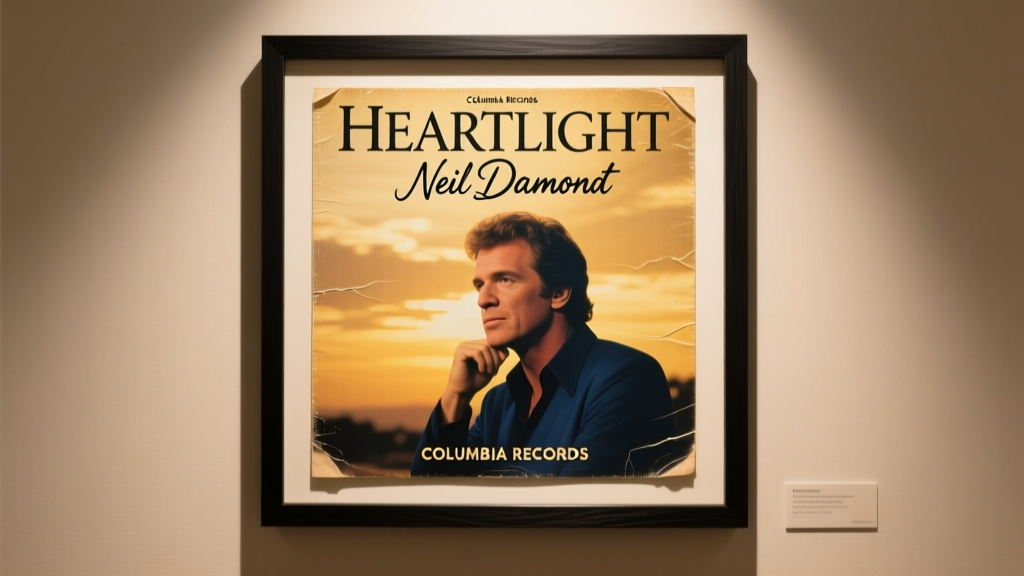
Records Picture Heartlight: Neil Diamond’s 1982 Columbia LP — Authentication, Pressing Variants, and Market Analysis