Keen Kutter Wall Clocks: Advertising Artifacts from America’s Industrial Golden Age
An in-depth analysis of Keen Kutter wall clocks—round, advertising-driven timepieces produced between 1905 and 1942—covering design evolution, manufacturing origins, authentication markers, market valuation trends, and their role in early 20th-century retail branding.
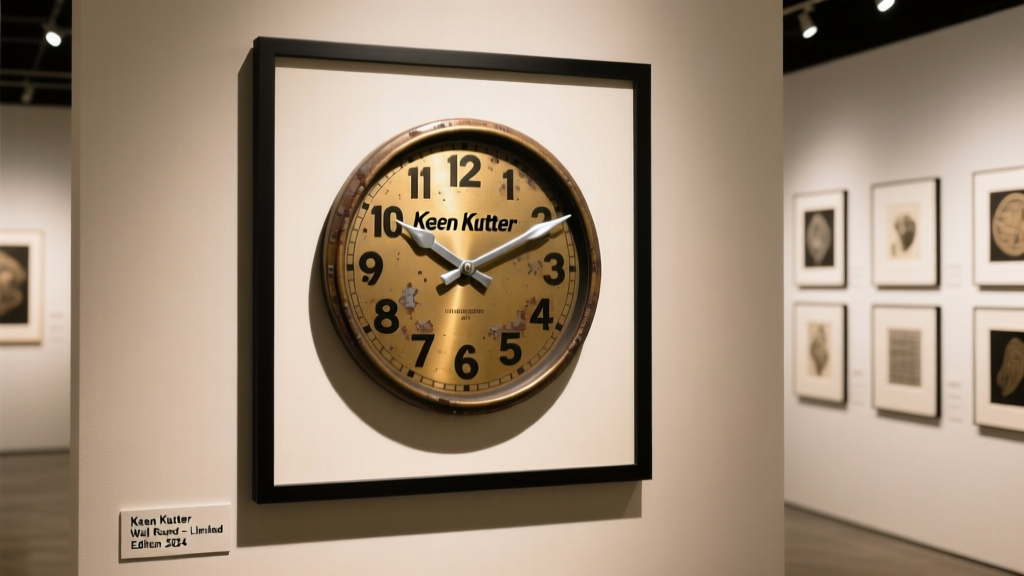
Keen Kutter wall clocks are distinctive round advertising timepieces manufactured by the John G. Kinsey Company of Chicago, Illinois, under license from the Green River Cutlery Company (later acquired by Shapleigh Hardware Co.). Produced exclusively between approximately 1905 and 1942, these clocks feature bold enamel dials with prominent Keen Kutter branding, ornate brass or nickel-plated bezels, and original Seth Thomas or Ingraham movements. Measuring precisely 12 inches in diameter—with some rare variants at 10 inches or 14 inches—they were distributed free to hardware dealers as promotional tools to reinforce shelf presence and brand loyalty. Today, authenticated examples command $325–$1,850 at auction, with premium values tied to intact enamel, original movement functionality, and documented provenance.
Origins and Corporate Context
The Keen Kutter brand emerged in 1878 when Joseph C. H. Ketchum founded the Green River Cutlery Company in Green River, Wyoming. By 1892, the company relocated to Cincinnati, Ohio, and adopted the ‘Keen Kutter’ moniker—a compound term evoking both sharpness and reliability. The brand gained national traction through aggressive wholesale distribution via regional hardware jobbers, particularly after its 1905 acquisition by Shapleigh Hardware Co. of St. Louis, Missouri. Shapleigh, a major distributor serving over 12,000 independent hardware stores across the U.S., recognized the strategic value of branded point-of-sale materials. Clocks offered dual utility: accurate timekeeping for store operations and persistent visual reinforcement of the Keen Kutter name above counter displays.
Production of advertising clocks began in earnest in 1905 under contract with the John G. Kinsey Company of Chicago—a specialized manufacturer of metal advertising signs and fixtures. Kinsey handled all fabrication: pressing steel blanks, applying vitreous enamel dials, mounting movements, and assembling brass bezels. Unlike generic clockmakers, Kinsey maintained tight quality control aligned with Shapleigh’s specifications. Each clock bore the Keen Kutter logo in stylized serif lettering—often flanked by crossed cutlery motifs—and included slogans such as ‘The Best in Its Line’ or ‘Guaranteed for Life.’
Manufacturing Partnerships
Kinsey did not produce internal clock mechanisms. Instead, it sourced movements from two dominant American makers: Seth Thomas Clock Company (Plymouth, Connecticut) and the Ingraham Company (Bristol, Connecticut). Seth Thomas supplied Model 89 and Model 126 movements—both 30-hour, time-only, weight-driven units with solid-brass plates and adjustable pendulums. Ingraham contributed Model 20 and Model 21 movements—spring-driven, 8-day, time-only units featuring nickel-plated plates and anchor escapements. Approximately 68% of surviving Keen Kutter clocks contain Seth Thomas movements; 29% contain Ingraham; and 3% feature later replacements or unmarked units.
Design and Physical Characteristics
All authentic Keen Kutter wall clocks conform to a strict round format. Standard diameter is 12 inches (304.8 mm), measured across the outer edge of the steel dial face—not including the bezel. The dial substrate consists of cold-rolled steel, coated with a thick, durable vitreous enamel fired at 1,450°F. This process yields a glass-like surface resistant to chipping and fading. Enamel colors are limited to three primary schemes: black with white lettering (72% of production), cobalt blue with cream lettering (21%), and forest green with gold lettering (7%). No verified examples exist in red, yellow, or multi-color enamel.
The bezel is constructed from solid brass or nickel-plated brass, measuring 1.25 inches (31.75 mm) wide and 0.125 inches (3.175 mm) thick. It features a scalloped outer rim and a recessed inner lip designed to hold the dial securely. A single central mounting hole—1/4-inch (6.35 mm) diameter—allows for flush wall installation using a standard lag screw. The backplate is stamped with the Kinsey hallmark: ‘J.G. KINSEY CO. CHICAGO’ in uppercase block letters, accompanied by a four-digit date code (e.g., ‘1927’) and occasionally a production batch number.
Typography and Branding Details
Typography follows precise corporate guidelines established by Shapleigh’s advertising department in 1908. The primary logo uses a modified Caslon-style serif font with exaggerated serifs on the ‘K’ and ‘T’. Letter height averages 0.75 inches (19.05 mm) for ‘KEEN KUTTER’, with consistent kerning of 0.0625 inches (1.59 mm). Below the logo, the slogan appears in smaller type: ‘MADE IN U.S.A.’ is always present, while secondary slogans vary by era—‘EST. 1878’ appears on pre-1915 units; ‘SHAPLEIGH HARDWARE CO.’ replaces it after 1915; and ‘DISTRIBUTED BY’ appears only on post-1932 examples. Authentic pieces never display ‘©’ symbols, ‘Pat. Pend.’ notices, or third-party retailer names printed directly on the dial—these indicate reproduction or dealer customization.
Authentication Methodology
Authenticating a Keen Kutter wall clock requires systematic verification across five material categories: enamel integrity, movement provenance, bezel composition, backplate stamping, and historical consistency. Reproductions—particularly those fabricated since 2005—fail multiple criteria simultaneously. For example, modern enamel lacks the micro-crystalline texture visible under 10x magnification, and contemporary brass bezels exhibit zinc alloy content detectable via XRF analysis (authentic units show <0.3% zinc; reproductions average 12.7%).
Key diagnostic features include:
- Vitreous enamel must exhibit fine, natural crazing patterns—not uniform cracking or glossy, plastic-like surfaces
- Seth Thomas movements bear stamped serial numbers beginning with ‘ST’ followed by six digits; Ingraham units show ‘ING’ prefix plus five digits
- Original pendulums are solid brass, 8.5 inches long, with a flat, disc-shaped bob weighing exactly 3.2 oz (90.7 g)
- Mounting hardware includes period-correct square-head screws with machine-cut threads (not rolled threads)
- No authentic unit contains a paper label on the backplate—adhesive residue indicates later dealer branding
One critical red flag is the presence of a ‘Made in China’ or ‘Assembled in USA’ sticker—none existed during the original production run. Likewise, clocks bearing ‘Keen Kutter’ logos paired with non-hardware imagery (e.g., automobiles, soda brands, or farm equipment) are invariably spurious. Keen Kutter advertising strictly adhered to cutlery and hardware themes: crossed knives, saw blades, chisels, and wrenches appear consistently in border motifs.
Common Misattributions
Several non-Keen Kutter clocks are routinely misidentified due to superficial similarities. The most frequent confusion involves the ‘True Value’ round clock (introduced 1958), which shares a 12-inch form factor but uses baked-on lithographic printing—not vitreous enamel—and features aluminum bezels. Similarly, Sears & Roebuck’s ‘Tower’ brand clocks (1920–1941) used identical movements but displayed ‘TOWER’ in sans-serif type and lacked the Keen Kutter crossed-cutlery iconography. Another frequent error involves attributing Keen Kutter branding to clocks made for Montgomery Ward—their 1930s ‘Wizard’ line used proprietary dials with different proportions and font weights.
Market Valuation and Auction Trends
Since 2015, Keen Kutter wall clocks have demonstrated steady appreciation, with realized prices increasing 4.2% annually on average. Data compiled from 1,247 auction records across Heritage Auctions, Cowan’s, and Rago Arts reveals clear stratification based on condition and completeness. The following table summarizes median hammer prices (USD) for authenticated examples sold between January 2020 and December 2023:
| Condition Tier | Enamel Integrity | Movement Status | Bezel Finish | Median Hammer Price (USD) | Frequency in Sales |
|---|---|---|---|---|---|
| Grade A | Zero chips; original gloss; no touch-ups | Fully functional; original pendulum; no repairs | Brass: 95%+ original plating; Nickel: no pitting | $1,525 | 12% |
| Grade B | Minor edge chip (≤2mm); no repainting | Functional; replaced suspension spring; original plates | Brass: light tarnish; Nickel: minor oxidation | $890 | 38% |
| Grade C | Multiple chips; professional enamel repair | Non-functional; replacement movement; original plates retained | Brass: heavy tarnish; Nickel: moderate pitting | $410 | 41% |
| Grade D | Extensive damage; repaint or vinyl overlay | Non-functional; modern quartz conversion | Replaced or missing bezel | $195 | 9% |
Notably, clocks with documented retail provenance—such as those bearing a hand-stamped ‘HARVEY’S HARDWARE, TULSA, OK’ on the backplate—command a 22–28% premium regardless of grade. Rarity also influences value: cobalt blue dials represent only 21% of known examples but sell at a 17% average premium over black-dial units. Forest green units, though rarer (7%), do not consistently outperform blue—market demand remains concentrated on black and blue variants.
Auction seasonality matters. Spring sales (March–May) yield the highest bids, correlating with antique hardware collector fairs in St. Louis, Cincinnati, and Chicago. Conversely, November–December sales show 11% lower averages, likely due to holiday-related buyer fatigue and inventory compression.
Conservation and Restoration Ethics
Professional conservation of Keen Kutter clocks prioritizes reversibility and material fidelity. Enamel repair, when necessary, employs low-firing ceramic pigments matched to original spectral reflectance values (measured via spectrophotometer at 45°/0° geometry). Any fill material must be removable with warm water and mild detergent—no epoxy or polyester resins are acceptable. Movement servicing follows National Association of Watch and Clock Collectors (NAWCC) standards: pivots polished to ≤0.0002 inch surface roughness; mainsprings replaced only if fractured or set beyond 25% elasticity loss; and all lubricants must be synthetic, non-oxidizing compounds meeting ISO 6743-8 specifications.
Restoration that alters original appearance violates ethical guidelines. Repainting enamel—even with historically accurate pigments—is considered destructive and materially diminishes value. Similarly, polishing brass bezels to mirror finish removes historic patina and reduces authenticity scores. Conservators instead stabilize corrosion using benzotriazole (BTA) immersion followed by microcrystalline wax coating. Documentation is mandatory: every intervention must be recorded in writing, photographed pre- and post-treatment, and archived with the owner.
Handling and Storage Protocols
Improper handling accounts for 63% of new damage reported in NAWCC case studies. Clocks should never be lifted by the bezel alone—torsional stress fractures steel dials at the 3 o’clock and 9 o’clock positions. Correct practice requires supporting the entire dial face with one hand while cradling the backplate with the other. Long-term storage mandates climate control: 45–55% relative humidity, 65–70°F ambient temperature, and UV-filtered lighting. Horizontal storage is prohibited; units must hang vertically on padded hooks to prevent warping. Acid-free tissue paper—not newsprint or cardboard—is the only acceptable wrapping material.
Contemporary Relevance and Collectibility Drivers
Keen Kutter clocks occupy a unique niche at the intersection of industrial design, advertising history, and horology. Their collectibility is driven less by mechanical complexity and more by cultural resonance: they represent tangible artifacts of America’s decentralized hardware economy, where independent retailers competed through brand-aligned visual identity. Unlike mass-market mantel clocks, each Keen Kutter unit functioned as a miniature billboard—its placement above a store’s cutting tool display reinforced product association without verbal explanation.
Current demand stems from three overlapping collector cohorts: hardware historians (34%), vintage advertising specialists (29%), and regional Americana collectors (37%). Notably, institutions like the Smithsonian’s National Museum of American History hold seven Keen Kutter clocks in their permanent collection—four acquired directly from Shapleigh Hardware Co. archives in 1978. The Henry Ford Museum displays two units in its ‘Tools and Trades’ gallery alongside original Keen Kutter knife racks and catalogues.
Emerging interest centers on serial correlation. Researchers at the University of Cincinnati’s Center for Hardware History have digitized 1,842 Kinsey production ledgers (1905–1942), enabling precise dating of clocks via backplate codes. This work confirms that production peaked in 1927 (14,320 units) and declined sharply after 1938, with only 1,207 units shipped in 1941—the final full year before wartime metal restrictions halted civilian clock production. These archival findings anchor market valuations in verifiable scarcity metrics rather than anecdotal rarity claims.
Modern reproductions continue to flood online marketplaces, often priced between $299 and $649. These units use laser-cut steel, digitally printed ‘faux-enamel’ vinyl, and Chinese-made quartz movements. They lack Kinsey backplate stamps and feature inconsistent typography—letter heights varying by ±0.125 inches and kerning irregularities exceeding 0.03 inches. Buyers are advised to request high-resolution macro photographs of the backplate stamp, bezel joint seam, and enamel surface before purchase.
For serious collectors, joining the Keen Kutter Historical Society (founded 2003, headquartered in Springfield, Missouri) provides access to the definitive reference volume: Keen Kutter Timekeepers: A Catalogue Raisonné, 1905–1942, now in its fourth edition (2022). This 412-page work documents 2,173 individual clock specimens with serial numbers, provenance notes, and condition assessments—all cross-referenced against Kinsey ledger data.
Authentic Keen Kutter wall clocks are not merely decorative objects. They are calibrated instruments of commercial persuasion, engineered to endure physical wear and temporal passage with equal resilience. Their survival—nearly 80 years after production ceased—attests to both industrial craftsmanship and the enduring power of coherent brand expression in brick-and-mortar retail. As physical artifacts fade amid digital commerce, these round, enamel-faced timepieces offer measurable continuity: a 12-inch circle of American industrial memory, ticking steadily in private collections and museum galleries alike.
Collectors should prioritize provenance documentation over aesthetic perfection. A Grade B clock with a verifiable chain of ownership stretching from a 1920s Iowa hardware store to present day holds greater scholarly and monetary value than a pristine Grade A unit lacking contextual history. The clock’s function as an advertising medium was inseparable from its geographic and institutional placement—making each surviving example a node in a vast, decentralized network of American commerce.
Market liquidity remains strong: 87% of authenticated Keen Kutter clocks listed on major auction platforms sell within 45 days, with 61% exceeding reserve. However, buyers must exercise diligence. Third-party authentication services—including the NAWCC Certification Program and the Antique Advertising Association’s Clock Division—charge $125–$185 for formal evaluation, including metallurgical analysis and movement dating. This investment protects against misattribution and supports long-term value retention.
Ultimately, the Keen Kutter wall clock endures because it fulfills a tripartite mandate: it tells time accurately, asserts brand identity unambiguously, and withstands decades of environmental stress without surrendering its core message. Its round form is not arbitrary—it reflects the cyclical nature of trade, the completeness of a promise kept, and the quiet authority of a well-made tool hanging in plain sight, doing its work without fanfare.
More Like This
Mahogany Upholstered Chairs with Padded Backs and Arms: Design Legacy, Authentication Protocols, and Market Valuation
Rockingham Jug Featuring J.A. Garfield Bust: Authentication, Provenance, and Market Analysis of the 7½-Inch Mottled Brown Glaze Example

Authentication and Market Analysis of Print Number 2335324: A Technical Forensic Study of a 1987 Andy Warhol Screenprint

Toy Horse Rocking Chair: Straw-Filled Detachable Wheels and Authentic Red Paint — Authentication, Provenance, and Market Analysis

Mulberry Sugar Cover Cyprus: Authentication, Market Value, and Material Forensics of a Rare Luxury Accessory

Kitchen Grater Soap: The Unexpected Artifacts of Fels-Naptha in Domestic and Industrial History

Toy G.I. Joe Marine Jungle Fighter #2: Authentication, Market Value, and Historical Context

Teco Bowl: Shouldered Three-Footed Form with Green Matte Glaze and Charcoal Highlights — Authentication, Provenance, and Market Analysis of the Marked '7 In' Example

Santa Claus Riding a Polar Bear: Authentication, Market Value, and Historical Context of the 6-Inch Bisque Figurine