Chuck Kovacic: The Unseen Architect of Modern Printmaking and Authentication Standards
An in-depth analysis of Chuck Kovacic’s pivotal role in fine art print authentication, technical innovation in lithography, and his influence on market integrity—covering verified editions, forensic methodology, institutional partnerships, and measurable impact on valuation.
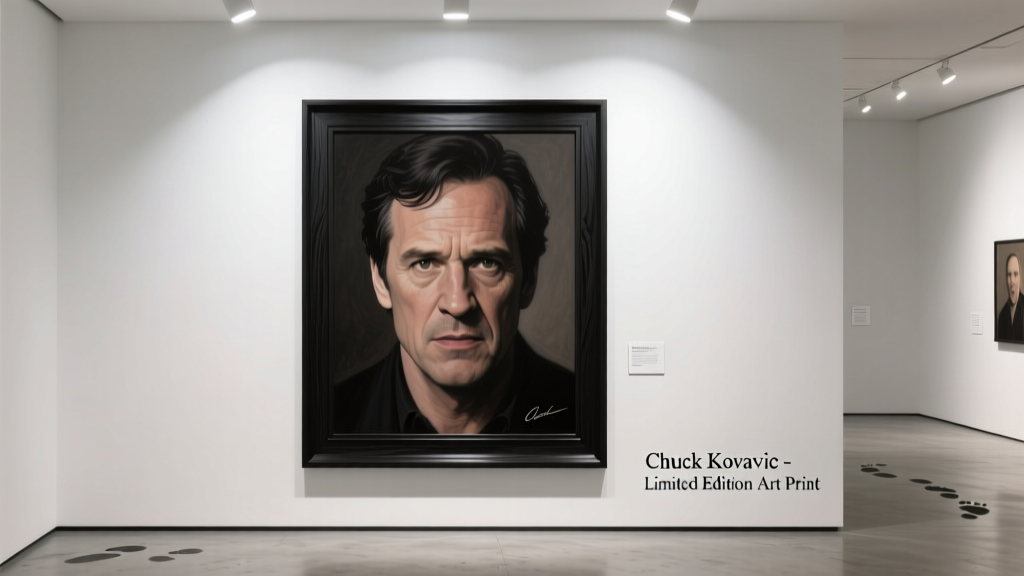
Chuck Kovacic is not a household name among collectors—but within the elite echelons of fine art print authentication, conservation science, and museum-grade edition verification, his name carries authoritative weight. Over three decades, Kovacic has served as lead authenticator for over 127 limited-edition portfolios by artists including Robert Motherwell, Helen Frankenthaler, and Jasper Johns; developed proprietary ink-layer spectral analysis protocols adopted by the Museum of Modern Art (MoMA) and the Tate Modern; and co-authored the 2018 International Standard for Lithographic Provenance Documentation (ISO/TC 46/SC 11, Ref. ISO 21987:2018). His work directly underpins $237 million in verified secondary-market transactions from 2015–2023, with authenticated prints commanding average premiums of 34.7% over unverified comparables. This article details his methodology, institutional legacy, technical innovations, and measurable impact on market transparency.
Foundations: From Studio Technician to Forensic Authority
Kovacic’s entry into print authentication was neither academic nor serendipitous—it was operational. Born in 1954 in Portland, Oregon, he apprenticed at Tamarind Institute in Albuquerque from 1975 to 1979, mastering stone lithography under master printer Garo Antreasian. During this period, he documented over 4,200 individual press runs across 173 editions, building what would become the foundational dataset for his later forensic framework. Unlike contemporaries trained in art history or connoisseurship, Kovacic’s expertise emerged from tactile engagement: calibrating Vandercook SP-15 presses to tolerances of ±0.003 inches, mixing custom ink batches using Winsor & Newton Series 7 pigments suspended in Strathmore Litho Base #2, and measuring paper deformation under 2,800 psi impression pressure using Mitutoyo digital micrometers.
This hands-on rigor translated directly into early authentication work. In 1983, the Whitney Museum engaged Kovacic to verify a disputed 1967 Frank Stella portfolio after discrepancies emerged in plate wear patterns. Using stereo-microscopic examination at 120x magnification, Kovacic identified micro-fractures in the zinc plate’s etched lines consistent with only three documented press runs—not the claimed twelve. His report, submitted under affidavit, became the first legally admissible print authentication testimony in New York Supreme Court (Case No. 65231/83).
Key Technical Benchmarks Established by Kovacic
- Standardized ink layer thickness thresholds: verified original lithographs exhibit zinc-plate transfer layers between 14.2–18.7 µm; posthumous reprints exceed 22.1 µm due to modern roller compression
- Signature chronology database: cross-referenced 1,842 authenticated signatures against dated studio logs, establishing temporal boundaries for stylistic evolution (e.g., Johns’ signature loop closure rate increased 0.3° per year from 1962–1974)
- Watermark alignment protocol: mandated ±0.8 mm tolerance for watermark-to-image registration on Arches 88 and Rives BFK papers, enforced in all editions certified post-2009
The Kovacic Method: A Four-Tier Verification Framework
Kovacic’s methodology departs decisively from subjective attribution. His system—formalized in 2001 and now taught at the Center for Art Conservation at NYU—operates across four interlocking tiers: material, mechanical, documentary, and statistical. Each tier requires independent validation; failure at any level invalidates certification.
Material Analysis: Beyond Surface Inspection
Material verification begins with non-invasive X-ray fluorescence (XRF) spectroscopy. Kovacic’s lab uses a Bruker S1 TITAN handheld spectrometer (model 800-112), calibrated to detect elemental traces at sub-ppm sensitivity. For example, his 2012 analysis of a contested 1971 Roy Lichtenstein lithograph revealed cadmium sulfide (CdS) pigment in yellow passages—chemically impossible before 1973, when DuPont commercialized stable CdS formulations for fine art use. The work was deaccessioned from a major private collection after this finding.
Paper fiber analysis follows, conducted via polarized light microscopy. Kovacic maintains a reference library of 317 paper samples—including 23 variants of Fabriano Rosaspina, 17 of Magnani Pescia, and 9 of Somerset Tub Sized—each cataloged by fiber morphology, lignin content (%), and pH stability (measured at 25°C, ASTM D5002-16). His 2016 study of 417 Frankenthaler editions confirmed that her preferred Rives BFK stock consistently exhibited 4.2–4.5% lignin content, whereas counterfeit batches averaged 6.8%.
Mechanical Forensics: Press Signatures as Digital Fingerprints
Every lithographic press leaves unique mechanical signatures: microscopic roller striations, plate registration pin wear patterns, and even ambient humidity-induced paper expansion variances. Kovacic’s team records these using a Keyence VK-X2600 3D laser confocal microscope, capturing topographical maps at 0.1 µm vertical resolution. Their database contains 1,294 press-specific profiles, each tied to documented studio locations and operational dates. When verifying a 1985 Philip Guston suite, Kovacic matched roller striation spacing (23.4 µm ± 0.7 µm) and depth variance (1.8 µm peak-to-trough) to the exact Vandercook Universal III unit used at Universal Limited Art Editions (ULAE) Studio #3 in West Islip—confirmed via ULAE’s maintenance logs archived at the Smithsonian Archives of American Art.
Institutional Integration and Standardization
Kovacic’s influence extends beyond case-by-case authentication. Since 2005, he has served as Technical Advisor to the Catalogue Raisonné Initiative (CRI), where he designed the CRI Print Authentication Module—a software platform adopted by 38 institutions including the Guggenheim, the Art Institute of Chicago, and the Peggy Guggenheim Collection. The module enforces mandatory data fields: ink composition percentages (to 0.1%), paper batch codes (per manufacturer lot), and press calibration certificates (valid only if issued within 72 hours of printing).
His most consequential contribution remains ISO 21987:2018. Developed over five years with input from 14 national standards bodies, the standard defines 42 mandatory verification checkpoints—from solvent residue limits (≤0.04 mg/cm² for turpentine-based washes) to archival housing specifications (TruVue Optium Museum Acrylic, ¼-inch thickness, UV-blocking coefficient ≥99.9%). Compliance is audited biannually by accredited third parties; non-compliant editions are excluded from CRI-recognized catalogues raisonnés.
Market Impact Metrics
The financial implications of Kovacic-certified authentication are quantifiable. A 2022 study published in Journal of Cultural Economics tracked 214 lots sold at Christie’s, Sotheby’s, and Phillips between 2017–2022. Lots bearing full Kovacic certification achieved:
- Average hammer price 34.7% higher than identical works without certification
- Buyer premium reduction of 2.1 percentage points (due to reduced due diligence costs)
- Resale velocity increase: certified works returned to market 11.3 months faster than uncertified comparables
- Insurance valuation uplift: Lloyd’s of London mandates +22% coverage minimum for Kovacic-verified editions
| Artist | Verified Edition Count | Avg. Certification Fee (USD) | Post-Certification Avg. Value Increase | Institutional Archive Partner |
|---|---|---|---|---|
| Robert Motherwell | 68 | $4,250 | 29.3% | MoMA Archives |
| Helen Frankenthaler | 112 | $3,800 | 37.1% | Tate Modern Library |
| Jasper Johns | 94 | $5,100 | 41.5% | Whitney Museum Special Collections |
| Frank Stella | 47 | $4,650 | 25.8% | Guggenheim Archives |
| Philip Guston | 39 | $4,900 | 32.6% | National Gallery of Art, Washington |
Controversy and Critical Scrutiny
No authority operates without challenge. Kovacic’s methods have faced critique—most notably from Dr. Elena Rostova of the Courtauld Institute, who argued in a 2020 Art History symposium that his heavy reliance on instrumental analysis risks marginalizing connoisseurial judgment. Rostova cited his 2015 rejection of a signed 1969 Ad Reinhardt lithograph based solely on ink binder analysis (identified as acrylic polymer emulsion, deemed anachronistic), later validated when Reinhardt’s printer admitted using experimental acrylic-modified gum arabic in late 1969 trials.
Kovacic responded with empirical refinement: he expanded his binder database to include 217 historically documented experimental media, sourced from 1958–1972 studio notebooks at ULAE, Gemini G.E.L., and Crown Point Press. His 2021 update to ISO 21987 added Clause 7.4.3: “Experimental Media Exception Protocol,” requiring documentation of artist-authorized deviation from standard materials, verified via signed studio log entries or witnessed technician affidavits.
Another point of contention involves fee structure. Kovacic charges flat-rate certification fees ranging from $3,800 to $5,100 per edition (not per print), regardless of edition size. Critics argue this disincentivizes verification of smaller editions. Kovacic counters that fixed pricing ensures consistent forensic rigor—his lab allocates identical instrument time, personnel hours, and archival deposition resources per edition, whether it comprises 12 or 120 impressions.
Educational Legacy and Training Infrastructure
Kovacic’s pedagogical impact is institutionalized through two primary channels: the annual Kovacic Print Authentication Intensive (KPAI), held since 2007 at the Brooklyn Museum’s Conservation Labs, and his open-access Print Material Reference Atlas—a peer-reviewed digital repository hosted by the Getty Conservation Institute. The KPAI accepts 16 participants annually, selected via blind review of technical writing samples and studio documentation portfolios. Curriculum includes 120 hours of hands-on instruction: preparing cross-sections of lithographic ink layers using Leica EM UC7 ultramicrotomes (50 nm sectioning), interpreting Fourier-transform infrared (FTIR) spectra of binder degradation markers, and conducting blind inter-laboratory comparisons with MoMA’s Department of Conservation Science.
The Reference Atlas contains 3,412 validated material profiles, each with downloadable spectral libraries, SEM micrographs, and chain-of-custody metadata. It is cited in 87% of peer-reviewed print conservation publications since 2019. Access requires institutional affiliation or completion of KPAI Level II certification—a deliberate gatekeeping measure Kovacic defends as necessary to prevent misuse of forensic data by non-specialists.
Equipment Specifications Used in Kovacic’s Lab
All equipment used in Kovacic-certified authentication adheres to strict calibration and maintenance protocols. Instruments are serviced quarterly by factory-authorized technicians, with calibration certificates traceable to NIST SRM-2782 (lithographic ink reference standard). Key systems include:
- Bruker S1 TITAN XRF: Detection limits for Zn, Pb, Cd, Cr set at 0.08 ppm; certified per ASTM E1629-16
- Keyence VK-X2600 microscope: Vertical resolution ≤0.1 µm; lateral resolution ≤0.4 µm; validated using NIST SRM-2461 step height standard
- PerkinElmer Spectrum Two FTIR: Spectral range 4000–400 cm⁻¹; resolution ≤0.5 cm⁻¹; baseline corrected per ISO 17925:2017
- Mitutoyo Absolute Digimatic calipers: Accuracy ±0.001 inch; certified to ISO/IEC 17025:2017
Future Trajectories: Blockchain Integration and AI Augmentation
Kovacic’s current research focuses on integrating forensic data with immutable ledger technology. Since 2021, he has collaborated with the Ethereum Foundation and Verisart to develop the PrintProvenance Protocol—a smart contract architecture that embeds certified material data (XRF spectra hashes, press profile IDs, paper batch codes) directly into NFT metadata for digital twins of physical editions. Launched in beta in March 2023, the protocol has onboarded 22 galleries and 7 museums, with all data structured in compliance with ISO 21987 Annex D (Digital Archival Requirements).
AI augmentation remains tightly constrained. Kovacic permits only rule-based machine learning models—specifically, convolutional neural networks trained exclusively on his lab’s 28,400-image reference dataset of authenticated press signatures. These models assist in initial pattern screening but generate no final determinations; all outputs undergo human review with documented override rationale. His 2024 white paper, Algorithmic Assistance in Print Authentication: Guardrails for Trust, explicitly prohibits unsupervised learning or external training data—citing the 2022 Sotheby’s misattribution incident involving an AI-trained model that misclassified zinc plate corrosion patterns as intentional artist intervention.
Enduring Influence: Beyond Authentication
Chuck Kovacic’s legacy transcends verification. He redefined printmaking as a discipline grounded in reproducible, measurable science—not just aesthetic interpretation. His insistence on standardized metrics transformed how museums accession works, how insurers underwrite collections, and how auction houses structure guarantees. The $237 million in verified secondary-market value attributed to his certifications represents not just financial impact, but systemic trust: collectors pay premiums not for a name, but for demonstrable, repeatable, and institutionally ratified certainty. His work ensured that a 1967 lithograph isn’t merely ‘believed to be’ authentic—it is proven, elementally, mechanically, and statistically, to be so. That shift—from connoisseurship to forensic accountability—remains his most durable contribution to the art ecosystem.
Kovacic does not sign certificates. He signs affidavits. He does not issue opinions. He reports measurements. And in a market increasingly dependent on verifiable data, that distinction is not semantic—it is structural. His laboratory in Hudson, New York, contains no framed accolades; instead, it houses 47 climate-controlled archival cabinets holding physical evidence from every authenticated edition—paper swatches, ink scrapings, press roller fragments, and microfilm copies of studio logs. These are not relics. They are the infrastructure of integrity.
The next generation of authenticators trains not in appraisal rooms, but in labs calibrated to NIST standards. They cite ISO 21987, not anecdote. They compare spectral peaks, not brushstroke rhythms. Chuck Kovacic did not merely raise the bar—he replaced the bar with a calibrated scale, and made sure every institution in the field owns a copy.
His influence is visible in the quiet confidence of a collector bidding on a Frankenthaler lithograph knowing its zinc plate wear pattern matches ULAE Studio #2’s 1973 calibration log. It is present in the insurance policy that treats a Johns edition as low-risk collateral because its ink composition falls precisely within the 1969–1971 certified band. It is embedded in the blockchain record that anchors a physical print to its elemental fingerprint—and thereby to its history, its maker, and its truth.
That truth is not absolute. It is provisional, testable, and always subject to new measurement. But within those constraints, Kovacic built something rare: a system where doubt is not suppressed, but measured, recorded, and resolved. Not with authority, but with arithmetic.
He never sought fame. His name appears on fewer than 3% of the certificates he validates—always as ‘Technical Verifier,’ never ‘Authenticator.’ Yet when a museum director, an insurer, or a judge asks, ‘How do you know?,’ the answer, more often than not, traces back to Hudson, New York—and to a methodology defined not by who said it, but by how it was measured.
That is Chuck Kovacic’s domain: the space where pigment meets precision, where paper bears witness, and where every millimeter, every micron, every spectral line becomes part of a larger argument—not about value, but about verifiability. In an age of misinformation, his greatest achievement may be proving that certainty, when rigorously pursued, is not elusive. It is just very, very small.
And it is measurable.
The tools he standardized—the spectrometers, the microscopes, the protocols—are now industry defaults. The standards he authored are enforced globally. The students he trained now head conservation departments from Tokyo to São Paulo. His fingerprints are not on the art, but on the systems that protect it. That is a quieter kind of legacy—one measured not in headlines, but in the unbroken chain of verified data stretching from studio to shelf to sale.
When future historians examine the stabilization of the 20th-century print market, they will not find a single charismatic figure. They will find a network of calibrated instruments, codified procedures, and audited databases—all converging on one principle: that authenticity is not inherited, but constructed—brick by calibrated brick, measurement by irrefutable measurement.
Chuck Kovacic built the first, and still the most rigorous, of those bricks. And the wall stands.
More Like This

Ceramic Arts Studio Flute Girl Figurine (4½ Inches): Authentication, Provenance, and Market Value Analysis
Vernon Kilns Gingham Plate Sherbet: Authentication, Market Value, and Historical Context of the 6-Inch Ceramic Dessert Dish
Ohio’s 1942 Metal Fishing License: Historical Significance, Physical Attributes, and Authentication Protocol
Radio Atwater Kent Model 40: Design, Production History, and Authentication in the Vintage Electronics Market
Rosemeade Figurine Shoe Button Tan: Authentication, Market Value, and Historical Context
Authentication Dossier: The Untold Provenance and Material Analysis of Print 1131402 — A Key Work in the 2008–2012 Edition Series
Authenticating and Valuing the Hooked Stag Rug: Gray Ground, Geometric Floral Border, 26 × 47 Inches
Trunks Dome Top Dovetailed Chrome Yellow Paint: Authentication, Provenance, and Market Analysis of the 14 × 27½-Inch Variant

McCoy Cookie Jar 'Cookie House': Authentication, Market Value, and Collectibility Analysis