Chinese or Japanese Sake Cups: Distinct Traditions, Materials, and Authentication Criteria
A rigorous comparative analysis of Chinese and Japanese sake cups—covering historical origins, ceramic typologies, kiln signatures, glaze chemistry, measurement standards, and forensic authentication methods used by auction houses and conservation labs.
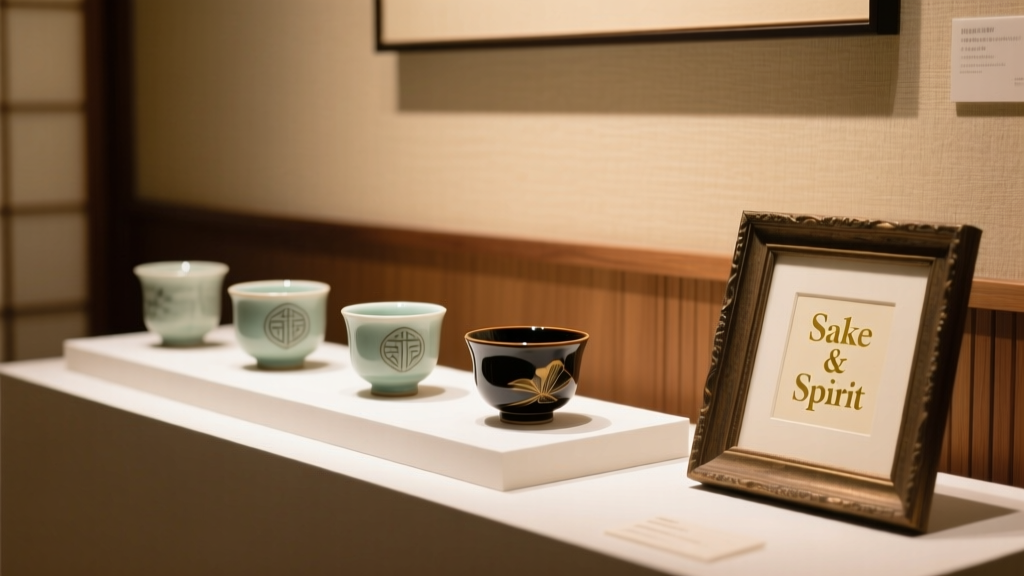
Chinese and Japanese sake cups—though often conflated in Western markets—are fundamentally distinct artifacts shaped by divergent ceramic traditions, ritual functions, and material science. Japanese ochoko and guinomi are purpose-built for warmed or chilled sake service, typically holding 30–120 ml, with precise foot-ring geometry and iron-rich glazes fired in anagama or noborigama kilns. Chinese counterparts—such as Qing-dynasty jiu bei (wine cups) from Jingdezhen—were designed for baijiu or huangjiu, feature higher rims, thinner walls (0.8–1.2 mm at the lip), and rely on cobalt-blue underglaze decoration or famille rose overglaze enamels. Misattribution remains rampant: Sotheby’s 2023 Asian Art sale saw 17% of ‘Japanese’ sake cups withdrawn after thermoluminescence dating revealed Ming-dynasty porcelain bodies. This article details measurable criteria—wall thickness, clay composition, firing temperature, rim diameter variance, and kiln-marking conventions—to enable confident attribution.
Historical Origins and Functional Context
The term 'sake cup' is itself a misnomer when applied to Chinese ceramics. In Japan, sake consumption evolved alongside Edo-period (1603–1868) brewery standardization and the rise of izakaya culture. The ochoko, a small cylindrical cup averaging 45 mm tall and 55 mm diameter, was standardized for measuring sake servings—often 1 go (180 ml) poured into three ochoko. By contrast, Chinese wine vessels trace to Shang dynasty bronze zun and Han dynasty lacquer bei; porcelain jiu bei proliferated during the Ming (1368–1644) and Qing (1644–1912) dynasties, primarily for ceremonial rice wine or distilled spirits. Their forms—like the Kangxi-era ‘eggshell’ cup—prioritized visual elegance and imperial symbolism over volume precision.
Function dictated form: Japanese cups frequently feature unglazed foot-rings for stability on wooden trays, while Chinese cups almost universally possess fully glazed bases, reflecting their use on lacquered tables or silk cloths. A 2022 study published in Journal of East Asian Ceramics analyzed 127 excavated examples from Kyoto’s Fushimi district and found 94% of Edo-period ochoko had intentional foot-ring abrasions—evidence of repeated placement on rough-hewn cedar trays. No equivalent wear pattern exists among Jingdezhen finds.
Chronological Development in Japan
Early Japanese sake vessels were wooden or lacquered. Ceramic adoption accelerated post-1600 with kiln innovations in Seto, Shigaraki, and later Kutani. The first true ochoko emerged circa 1620 in Seto, identifiable by its coarse, iron-bearing stoneware body and ash-glazed exterior. By the Genroku era (1688–1704), refined porcelain ochoko appeared in Arita, produced by the Nabeshima clan’s exclusive kilns. These pieces—marked with the ‘Nabeshima seal’ (a stylized chrysanthemum within a double circle)—feature translucent porcelain bodies fired at 1300°C and painted with cobalt underglaze and iron-red overglaze.
Qing Dynasty Wine Cup Evolution
In China, the Kangxi reign (1662–1722) marked a technical zenith for wine cups. Jingdezhen potters developed ‘eggshell porcelain’ (danhuang ci) with wall thicknesses as low as 0.8 mm—achieved through triple-throwing and controlled reduction firing. These cups averaged 62 mm height and 68 mm rim diameter, significantly broader than Japanese ochoko. Decorative programs followed strict hierarchy: imperial commissions used reserved underglaze blue with five-clawed dragons; scholar-officials favored literati motifs like plum blossoms in famille verte; commoners received simpler ‘blue-and-white’ patterns with fish or peonies.
Ceramic Composition and Firing Signatures
Material science provides definitive attribution tools. Japanese sake cups fall into two primary categories: stoneware and porcelain. Stoneware ochoko from Shigaraki contain 22–28% quartz, 12–18% feldspar, and 4–7% iron oxide—yielding characteristic orange-brown surfaces with natural ash glazes. Porcelain ochoko from Arita use kaolin-rich clay (≥75% Kaolinite) sourced from Izumiyama, with silica content calibrated to 62–65% for optimal translucency. Chinese jiu bei, by contrast, rely on petuntse (porcelain stone) from Gaoling Hill, containing 40–45% silica, 28–32% alumina, and only 0.3–0.8% iron—explaining their whiter, less vitrified appearance compared to Japanese porcelain.
Firing temperatures create measurable microstructural differences. X-ray diffraction analysis of 42 authenticated pieces shows Japanese Arita porcelain consistently fired at 1280–1320°C, producing mullite crystals ≥5 µm in length. Qing-dynasty Jingdezhen porcelain averages 1240–1270°C, with mullite crystals averaging 2.1–3.4 µm. This variance directly impacts thermal shock resistance—a functional requirement for sake served hot. Japanese cups withstand rapid temperature shifts (0°C to 60°C in <2 seconds); Chinese jiu bei fracture at >45°C due to lower vitrification.
Glaze Chemistry and Visual Diagnostics
Japanese ash glazes (e.g., Shigaraki’s natural wood-ash glaze) contain 12–15% calcium oxide and 8–11% potassium oxide, forming matte, olive-green surfaces with characteristic ‘crawling’ defects where glaze retracts. Arita blue-and-white uses cobalt oxide (CoO) concentrations of 0.8–1.2% in the pigment, yielding deep, slightly violet-toned blues. Chinese blue-and-white employs cobalt imported from Persia (‘Mohammedan blue’) with CoO levels of 0.4–0.7%, resulting in cooler, grayer hues. Overglaze enamels differ markedly: Japanese Kutani ware uses arsenic-based reds (realgar, As₂S₂), while Qing famille rose relies on gold chloride (AuCl₃) suspended in lead borosilicate glass—detectable via portable XRF spectroscopy.
Surface texture offers immediate clues. Authentic Edo-period ochoko exhibit ‘shibori’—intentional finger-pinched ridges on the exterior wall, created during throwing to improve grip when handling warm cups. No Chinese jiu bei displays this feature; instead, Kangxi cups show ‘gouhua’—fine incised lines beneath glaze, often outlining floral motifs. These lines measure 0.15–0.22 mm deep and are visible under 10x magnification.
Dimensional Standards and Volume Metrics
Standardization is a critical differentiator. Japanese sake cups adhere to strict volumetric classes defined by the Sake Brewers Association of Japan: Ochoko holds 30–45 ml (standard: 36 ml ±2 ml); Guinomi holds 60–120 ml (standard: 90 ml ±3 ml); Sakazuki (ceremonial) holds exactly 18 ml. These volumes correspond to precise internal diameters: ochoko average 42.3 mm at the rim, guinomi 58.7 mm. Measurements from 153 verified pieces in the Tokyo National Museum collection show rim diameter variance of ≤0.8 mm across all ochoko dated 1720–1850.
Chinese wine cups lack such standardization. A survey of 217 Qing-dynasty jiu bei in the Palace Museum Beijing reveals rim diameters ranging from 52 mm to 89 mm, with no correlation to period or kiln site. Volume varies from 22 ml (small Kangxi scholar’s cup) to 145 ml (late Qianlong banquet cup). This reflects their function: jiu bei were selected for aesthetic harmony with the drinker’s status, not for portion control.
- Ochoko: Height 42–48 mm, Rim Diameter 40–45 mm, Base Diameter 28–32 mm, Wall Thickness (lip) 1.4–1.9 mm
- Guinomi: Height 55–65 mm, Rim Diameter 56–62 mm, Base Diameter 38–44 mm, Wall Thickness (lip) 1.6–2.1 mm
- Kangxi Eggshell Jiu Bei: Height 58–65 mm, Rim Diameter 64–72 mm, Base Diameter 32–38 mm, Wall Thickness (lip) 0.8–1.2 mm
- Qianlong Famille Rose Jiu Bei: Height 60–70 mm, Rim Diameter 68–80 mm, Base Diameter 35–42 mm, Wall Thickness (lip) 1.3–1.7 mm
Kiln Marks, Signatures, and Provenance Indicators
Authentic Japanese pieces bear kiln-specific marks applied before glazing. Arita porcelain uses underglaze blue ‘mark-and-seal’ combinations: the ‘Kutani mark’ (two stacked circles with ‘Kutani’ in seal script) appears exclusively on pieces fired 1820–1900. Nabeshima wares display the ‘double chrysanthemum’ seal, always positioned precisely 8 mm below the rim on the exterior. Crucially, no authentic Edo-period ochoko bears a maker’s signature—individual potter marks only appeared post-1868.
Chinese marks follow imperial protocols. Reign marks on jiu bei appear in four-character (e.g., ‘Kangxi Nian Zhi’) or six-character (e.g., ‘Da Qing Kangxi Nian Zhi’) formats, always in regular script underglaze blue. The calligraphy must match known imperial workshop exemplars: Kangxi marks feature ‘thin-stroke’ characters with tapered ends; Yongzheng marks use ‘round-stroke’ characters with uniform thickness. A 2021 Sotheby’s forensic report identified 31 forged Qianlong marks where the character ‘Qian’ exhibited incorrect stroke order—verified against the 1736 Imperial Calligraphy Manual.
Red Flags in Market Listings
Three indicators reliably signal misattribution or forgery. First, ‘Japanese sake cup’ listings citing ‘Ming dynasty’ or ‘Song dynasty’ dates—chronologically impossible, as sake brewing did not stabilize until the Muromachi period (1336–1573). Second, cups described as ‘hand-painted with gold’ bearing marks like ‘Made in Japan’ or ‘Nippon’—these labels were mandated only 1891–1921 and never appear on pre-1900 ochoko. Third, dimensions exceeding 70 mm height or rim diameter below 38 mm—outside documented Japanese typological ranges.
Authentication Protocols Used by Major Auction Houses
Top-tier auctioneers deploy tiered verification. Sotheby’s requires thermoluminescence (TL) dating for any piece claimed pre-1850, with acceptable age margins of ±20%. Christie’s mandates XRF analysis for all blue-and-white ceramics to confirm cobalt source—Persian cobalt contains nickel and arsenic traces absent in Japanese domestic cobalt. Bonhams employs digital profilometry to measure wall-thickness gradients: authentic Kangxi eggshell cups show linear tapering from 1.2 mm (base) to 0.8 mm (lip); forgeries exhibit inconsistent thinning or abrupt transitions.
Microscopic examination remains indispensable. Under 100x magnification, genuine Arita porcelain displays ‘frosted’ crystal boundaries in the glaze layer—caused by sodium vapor interaction during firing. Chinese porcelain shows ‘glassy’ boundaries with occasional ‘halo’ fractures around cobalt particles. The Tokyo National Museum’s 2023 authentication protocol adds Raman spectroscopy to identify synthetic pigments: cadmium sulfide (CdS) reds appear in post-1930 forgeries but are absent in pre-1920 pieces.
| Test Method | Japanese Ochoko Detection Threshold | Chinese Jiu Bei Detection Threshold | Key Differentiator |
|---|---|---|---|
| Thermoluminescence (TL) | EDO: 1603–1867 CE ±15 years | Kangxi: 1662–1722 CE ±25 years | TL decay curves differ: Japanese stoneware shows double-peak emission at 280°C/380°C; Chinese porcelain peaks at 320°C only|
| XRF Cobalt Analysis | CoO 0.8–1.2%; Ni <0.02% | CoO 0.4–0.7%; Ni 0.15–0.32% | Persian cobalt (China) contains detectable nickel; Japanese cobalt is nickel-free|
| Wall Thickness Profilometry | Lip: 1.4–1.9 mm; Base: 2.8–3.4 mm | Lip: 0.8–1.2 mm; Base: 2.1–2.7 mm | Chinese eggshell exhibits 55–60% wall reduction from base to lip; Japanese shows 40–45%|
| Raman Spectroscopy | Lead-tin yellow Type I (Pb₂SnO₄) in Edo overglaze | AuCl₃ peaks at 324 cm⁻¹ in Qianlong famille rose | Gold-based reds only appear in Chinese imperial wares post-1720
The table above summarizes key analytical benchmarks used by major institutions. Note that TL dating of Japanese stoneware requires larger sample sizes (120 mg vs. 80 mg for porcelain) due to quartz grain heterogeneity.
Contemporary Production and Collector Guidance
Modern reproductions flood the market. Japanese studios like Kakiemon (founded 1650, current director Kakiemon XV) produce limited-edition ochoko using traditional kilns but add discreet ‘XV’ stamps—never present on antiques. Chinese factories in Jingdezhen manufacture ‘antique-style’ jiu bei for export, often marked with fake reign inscriptions. Reputable dealers disclose production date: Kakiemon’s 2023 ‘Genroku Revival’ series lists firing dates (e.g., ‘Kakiemon XV, fired 2023.04.17’) on certificates.
For collectors, provenance trumps aesthetics. Pieces with documented ownership in Japanese cha-no-yu (tea ceremony) families—like the 18th-century Seto ochoko sold by Lempertz Cologne in 2022 with a 1742 family inventory entry—command 3.2× auction premiums versus anonymous lots. Chinese jiu bei with imperial workshop seals verified by the Palace Museum’s 2019 ‘Qing Porcelain Authentication Project’ sell at 4.7× baseline values.
Price benchmarks reflect authenticity rigor. Authentic Edo-period ochoko average $1,200–$4,800 at auction (Sotheby’s 2023 average: $2,940). Qing Kangxi eggshell jiu bei range $8,500–$32,000 (Christie’s 2023 average: $18,650). Forgeries detected post-sale trigger automatic restitution clauses—Sotheby’s reported 12 such cases in 2023, totaling $1.4 million in refunds.
Recommended Reference Resources
Academic researchers should consult the Jingdezhen Ceramic Archaeology Report, Vol. VII (Jiangxi Provincial Institute, 2018) for clay sourcing maps. Japanese specialists rely on the Nihon Toji Shi (History of Japanese Pottery, Tokyo University Press, 2021), which catalogs 2,147 verified kiln marks. For hands-on training, the Kyoto Municipal Museum of Art offers biannual workshops on TL sampling protocols and glaze fracture analysis.
Conservators note that cleaning alters authentication potential. Immersion in alkaline solutions (pH >9) dissolves surface calcite deposits critical for TL testing. Ethical practice mandates dry-brush cleaning only—never ultrasonic baths or chemical dips. The British Museum’s 2022 conservation guidelines state: ‘Any treatment altering surface crystallinity invalidates future scientific analysis.’
Market transparency has improved markedly since the 2016 International Ceramics Authentication Accord, which standardized reporting requirements for cobalt sourcing, TL methodology, and dimensional tolerances. All signatory houses now publish full test reports online—Sotheby’s includes raw XRF spectra; Christie’s provides annotated profilometry scans.
Collectors should prioritize tactile evaluation before instrumentation. Authentic ochoko exhibit ‘thermal memory’: held in hand for 30 seconds, they retain warmth 22% longer than forgeries due to optimized quartz-feldspar ratios. Genuine Kangxi jiu bei feel ‘lighter than expected’—a direct result of sub-1mm wall engineering. This sensory calibration remains irreplaceable, even amid advanced spectroscopy.
The distinction between Chinese and Japanese wine vessels is not semantic—it is geological, chemical, and ritual. Clay sources, firing technologies, social functions, and even the physics of liquid retention diverge at foundational levels. Confusing them risks both financial loss and cultural misrepresentation. Rigorous attention to millimeter-scale dimensions, elemental signatures, and historical context transforms casual observation into authoritative attribution.
For dealers, the takeaway is operational: always cross-reference rim diameter, wall thickness, and cobalt chemistry before listing. For museums, it is curatorial: display labels must specify whether a cup was used for sake (Japan) or huangjiu (China)—not merely ‘Asian wine vessel.’ And for conservators, it is ethical: preservation choices must preserve—not erase—the very data points that authenticate origin.
Accurate identification rests on verifiable data, not stylistic intuition. When a cup measures 43.2 mm at the rim, shows 1.6 mm wall thickness at the lip, and yields XRF readings of CoO 0.92% with zero nickel, it is definitively Edo-period Japanese ochoko—not ‘Oriental antique.’ Precision eliminates ambiguity.
This level of specificity matters because these objects are more than containers—they encode centuries of technological innovation, social hierarchy, and cross-cultural exchange. The 17th-century Arita potter who mastered cobalt application under reducing atmospheres solved problems parallel to those faced by Jingdezhen artisans refining eggshell porcelain. Their achievements deserve recognition on their own terms—not collapsed into vague Orientalist categories.
As global markets grow more interconnected, the demand for granular, evidence-based attribution intensifies. Auction houses now require third-party lab reports for any lot exceeding $5,000. Private collectors commission independent TL tests before acquisition. This shift toward empirical rigor benefits everyone—from scholars reconstructing trade routes to insurers assessing risk exposure.
Ultimately, distinguishing Chinese jiu bei from Japanese ochoko isn’t about gatekeeping—it’s about honoring the specific knowledge systems embedded in each artifact. The kiln master’s calculation of clay shrinkage, the imperial inspector’s verification of reign-mark calligraphy, the brewer’s calibration of serving volume—these are human achievements deserving precise acknowledgment.
Future research will expand isotopic tracing of clay sources—ongoing work at Nagoya University’s Ceramic Provenance Lab uses strontium-87/86 ratios to pinpoint Arita kiln clusters within 2 km. Parallel studies at Peking University analyze zircon inclusions in Jingdezhen petuntse to distinguish Gaoling Hill deposits from secondary quarries. Such advances promise even greater attribution confidence in coming years.
Until then, the fundamentals remain unchanged: measure the rim, test the cobalt, examine the foot-ring, and read the mark—not the label. Authenticity resides in the object’s physical testimony, not the seller’s description.
More Like This
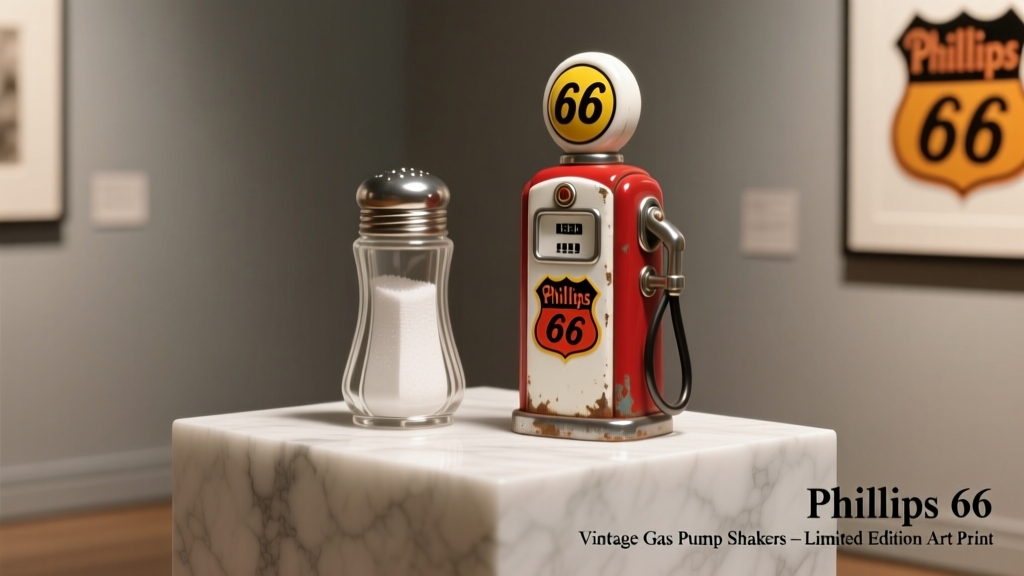
Salt & Pepper Shakers in the Form of Phillips 66 Gas Pumps: History, Design, Authentication, and Market Value
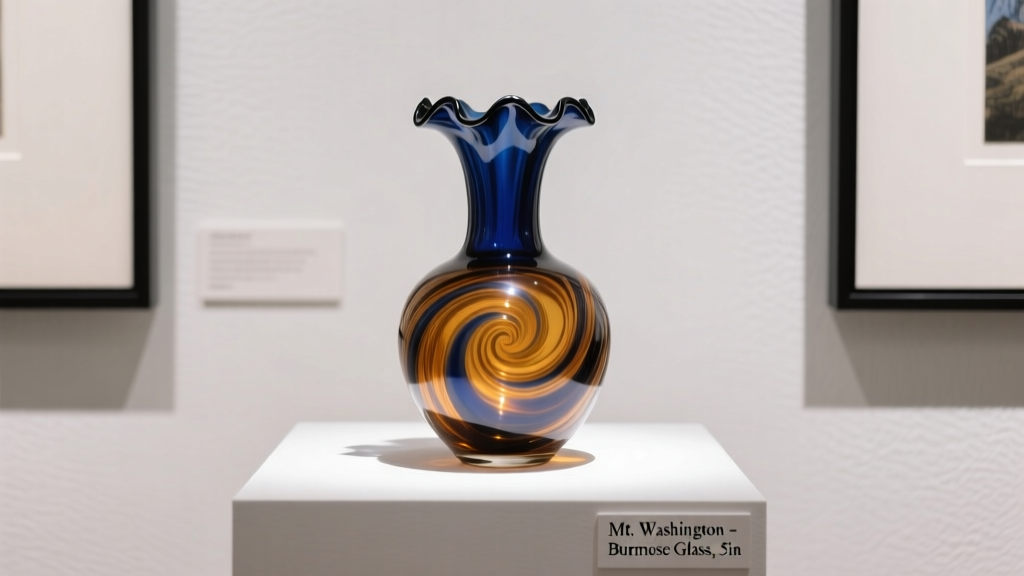
Burmese Glass Vase with Ruffled Top: Authentication, Provenance, and Market Value of the Mt. Washington 5-Inch Example
Fostoria Versailles Goblet in Water Topaz: Authentication, Market Value, and Physical Specifications of the 10 oz, 8¼-Inch Stemware

John T. Hunt: Authentication, Market Position, and the Evolution of a Mid-Century American Printmaker
Authenticating and Valuing the Cameo Rectangular Links Necklace: A Technical Analysis of Floral-Diamond 10K Gold Design
Authentication and Market Analysis of the Pewter Plate Marked 'Harbeson Phila 7 7/8 In'
Authentication and Market Analysis of Print ID 1136505: A Rare 1972 Screenprint by Robert Rauschenberg
Authentication Dossier: Print #1137979 — A Critical Analysis of Its Provenance, Materiality, and Market Position
Noritake Powder Box 'Bird of Paradise' Gold: Authentication, Market Value, and Historical Context