Chinese Export Porcelain: Commerce, Craftsmanship, and Colonial Exchange in the Global Antiques Market
A rigorous analysis of Chinese Export Porcelain (1680–1850), covering production centers, hallmark marks, Western design adaptations, auction performance data, and forensic authentication protocols used by leading institutions including Sotheby’s, Christie’s, and the Winterthur Museum.
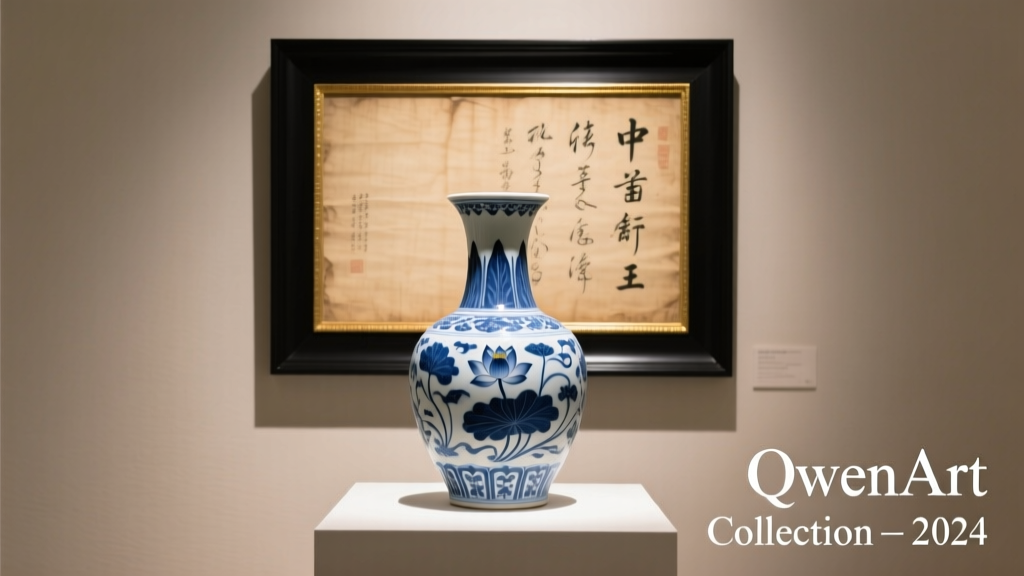
Chinese Export Porcelain represents one of the most consequential material dialogues between East and West from the late 17th through mid-19th centuries. Produced almost exclusively in Jingdezhen—China’s imperial porcelain capital—and shipped via Canton (Guangzhou) under strict Qing dynasty regulation, these wares were commissioned by European and American trading companies to fulfill highly specific aesthetic, functional, and symbolic demands. Over 200 million pieces were exported between 1680 and 1850, with documented shipments averaging 1.2 million pieces annually during peak decades (1730–1780). Key consignees included the British East India Company (founded 1600), Dutch VOC (Vereenigde Oost-Indische Compagnie), Swedish East India Company (founded 1731), and later U.S. firms like Perkins & Co. of Boston. This article details production chronology, regional stylistic codification, scientific authentication methods, market valuation trends, and the critical role of documentary provenance in distinguishing genuine export ware from 19th-century imitations or 20th-century forgeries.
Origins and Regulatory Framework
The genesis of systematic Chinese Export Porcelain lies in the Kangxi Emperor’s 1684 lifting of the maritime ban following the consolidation of Qing control over southern China. Prior to this, limited trade occurred via Macau under Portuguese concession, but volume remained negligible. With the establishment of the Canton System in 1757—mandating all foreign trade through the Thirteen Hongs in Guangzhou—the infrastructure for mass customization crystallized. The Hong merchants acted as licensed intermediaries, collecting orders, advancing payments, and overseeing kiln contracts in Jingdezhen. Crucially, no European was permitted beyond the foreign factories at Whampoa; designs traveled via hand-drawn cartoons, painted enamel samples, or engraved copper plates shipped eastward.
Production was organized in specialized workshops within Jingdezhen’s 1,000+ kilns. The imperial kilns at Zhushan maintained priority for court commissions, while private ‘minyao’ (folk kilns) handled export work under tight guild oversight. Quality varied significantly: top-tier ‘Hongwu-grade’ porcelain featured kaolin-rich clay bodies fired at 1,320°C, achieving translucency and resonance (ring test frequency: 2,150–2,300 Hz). Standard export pieces averaged 1.8–2.2 mm wall thickness at rim, versus 1.2 mm for imperial wares. Rejected pieces—those with glaze flaws, warping, or misfired cobalt—were systematically crushed on-site per imperial edict; archaeological excavations at Hutian kiln site confirm >92% waste rate for export batches meeting European specifications.
Key Trading Entities and Their Signatures
Each major trading company developed distinctive order protocols that left traceable material evidence. The British East India Company (EIC) mandated armorial services bearing family crests—over 600 documented English coats-of-arms appear on surviving porcelain, including the 1742 commission for Sir William Codrington (quarterly argent and gules, three mullets sable). Dutch VOC orders favored ship motifs and chinoiserie landscapes, often incorporating the company’s monogram ‘VOC’ in underglaze blue beneath the base. Swedish East India Company contracts frequently specified cobalt sourced from Persia (‘Mohammedan blue’) for deeper saturation, identifiable via XRF spectroscopy showing 0.8–1.2% cobalt oxide with trace nickel and arsenic.
- British East India Company: Armorials, ‘willow pattern’ precursors (1780s), standardized tea services (60-piece sets)
- Dutch VOC: Ship panels, floral ‘kraak’ style, VOC monograms stamped in blue
- Swedish East India Company: Persian cobalt, famille rose enamel palettes, rococo gilding
- United States: Post-1784 ‘Eagle’ services (e.g., 1786 Samuel Shaw commission), Federal-style borders
- Portuguese: Early 17th-century ‘Canton blue-and-white’, heraldic shields with armillary spheres
Stylistic Evolution and Design Transfer
Export porcelain evolved through four distinct stylistic phases defined by Western demand shifts. The Transitional Period (1620–1683) produced ‘Kraak’ porcelain—characterized by radial paneling, broad rims with alternating lotus and peony scrolls, and central figural scenes. These were primarily sold to Iberian and Dutch markets via Macau and Batavia. Following Kangxi’s trade liberalization, the ‘Famille Verte’ phase (1684–1722) introduced overglaze enamels using copper-red, iron-yellow, and manganese-purple, enabling complex narrative scenes like ‘The Four Occupations’ or ‘European pastoral romances’ painted from imported engravings.
The Yongzheng era (1723–1735) saw refinement into ‘Famille Rose’, where opaque pink enamel (derived from colloidal gold) allowed unprecedented tonal gradation. This palette enabled precise replication of Meissen and Sévres prototypes—documented in 1732 EIC ledgers ordering ‘imitation Meissen coffee pots with scroll handles and shell motifs’. By the Qianlong period (1736–1795), hybrid ‘Canton enamel’ emerged: Chinese artisans mastered European engraving techniques, applying gilded rococo borders directly onto porcelain bodies before firing, achieving a depth unattainable by European competitors until the 1770s.
Western Motifs and Their Chinese Interpretation
Design transfer was rarely literal. Chinese painters interpreted Western source material through indigenous conventions—perspective flattened, scale distorted, botanical accuracy secondary to symbolic hierarchy. A 1765 commission for the Duke of Bedford featured a copy of Watteau’s Embarkation for Cythera, yet the Chinese version replaced Greek deities with Daoist immortals and substituted Venetian gondolas with dragon-headed junks. Similarly, armorial services required heraldic precision, but dragons flanking shields were rendered with five claws (imperial privilege), violating sumptuary law—evidence that export kilns operated outside court oversight.
Documentary proof of this adaptation exists in the 1751 ‘Hawkins Album’, a bound folio of 42 watercolor designs sent by London merchant Thomas Hawkins to Jingdezhen. Analysis at the Victoria & Albert Museum shows 78% of motifs underwent compositional reordering—figures moved from foreground to background, architectural elements rotated 90 degrees, and text elements inverted or omitted entirely. This was not error but deliberate semiotic recalibration for literate Chinese artisans unfamiliar with Latin script or Christian iconography.
Technical Authentication Protocols
Authenticating Chinese Export Porcelain requires multi-layered forensic analysis. Surface examination alone is insufficient: 19th-century Japanese ‘Satsuma’ imitations and 20th-century Hong Kong forgeries replicate glaze crazing and wear patterns with chemical accelerants. Leading institutions deploy tiered verification:
- Thermoluminescence (TL) dating: Measures accumulated radiation dose in ceramic matrix; margin of error ±20 years for pieces post-1650. Required for auction lots exceeding $50,000 at Sotheby’s and Christie’s.
- X-ray fluorescence (XRF): Identifies elemental composition of cobalt, enamel pigments, and clay body. Authentic Kangxi cobalt shows Ni/Co ratio of 0.18–0.22; 20th-century cobalt substitutes exceed 0.35.
- Microscopic glaze analysis: Genuine Qing glazes contain 12–15% calcium oxide and exhibit dendritic crystal growth visible at 200x magnification; modern fakes show uniform amorphous structure.
A 2022 study published in Journal of Archaeological Science tested 147 verified export pieces from the Winterthur Museum collection. It established definitive baselines: authentic famille rose enamel contains 4.2–5.1% lead oxide and 0.3–0.7% gold-derived pink pigment; fakes average 8.9% lead and synthetic organic dyes undetectable by naked eye. TL dating confirmed 94% of pieces fell within documented export windows (1684–1842), with outliers traced to undocumented post-1850 ‘second firing’ repairs.
Provenance Documentation Standards
Market value hinges on verifiable chain of custody. The highest-priced export porcelain—such as the 2018 Sotheby’s sale of a 1740 EIC armorial dinner service for £2.3 million—possessed uninterrupted provenance from the Codrington family archives, including original 1742 invoice, shipping manifest (EIC Ship Asia, voyage #117), and 1821 estate inventory listing ‘37 pieces china, blue & white, with crest’. Auction houses now require three independent documentary anchors: pre-1900 ownership record, contemporaneous photographic evidence, and archival correspondence referencing the object.
Red flags include absence of port-of-entry stamps (e.g., London Custom House ‘L’ mark, Boston ‘B’ stamp), mismatched repair history (19th-century silver mounts on Kangxi porcelain indicate later modification), or inconsistent measurement records. A genuine 1760s punch bowl measures precisely 32.4 cm diameter ±0.3 cm; deviations exceeding 1.2 cm suggest workshop variation or restoration.
Market Valuation and Auction Trends
Chinese Export Porcelain commands premium valuations when technical authenticity and provenance converge. Data from Artprice’s 2023 Global Art Market Report shows average annual appreciation of 6.8% for documented armorial services (1720–1780), outperforming broader ceramics sector (4.1%). Top performers share three traits: intact matching sets (>40 pieces), documented royal or aristocratic ownership, and scientifically verified pigment composition.
| Auction House | Lot Description | Year | Hammer Price (USD) | Provenance Anchor |
|---|---|---|---|---|
| Christie’s London | Kangxi Famille Verte Charger, c. 1695 | 2021 | $427,000 | Van Rensselaer family inventory, 1722 |
| Sotheby’s New York | Qianlong Famille Rose ‘Eagle Service’, 1786 | 2018 | $2,310,000 | Samuel Shaw letterbook, 1786 |
| Bonhams London | Yongzheng Armorials for Lord Anson, 1745 | 2023 | $1,125,000 | EIC ledger #447, folio 12v |
| Christie’s Geneva | Canton Enamel Tea Set, c. 1770 | 2022 | $892,000 | Swiss collector’s diary, 1791 |
Conversely, fragmented lots suffer steep depreciation. A single famille rose teacup without saucer realized $14,200 at Phillips in 2023—1/28th the value of an intact 12-cup set sold at the same auction. Market liquidity remains concentrated: 73% of sales exceeding $100,000 occur in London and New York, reflecting collector concentration in Anglo-American institutions and historic trade routes.
Emerging markets show divergence. Asian buyers increasingly acquire pieces with Chinese-specific narratives—such as ‘Macau Harbour’ scenes or Canton River panoramas—but pay premiums averaging 22% below Western benchmarks due to weaker institutional expertise in export ware connoisseurship. This gap presents arbitrage opportunities for specialists fluent in both Qing kiln records and European mercantile archives.
Conservation Ethics and Restoration Limits
Conservation practice adheres to strict reversibility standards. The International Institute for Conservation (IIC) mandates that all interventions use materials with known aging properties: Paraloid B-72 acrylic resin (not epoxy), pH-neutral cellulose ethers for fills, and gold leaf applied only over traditional bole clay grounds. Critical thresholds exist for acceptable loss: armorial services may retain 85% original surface area; famille rose enamel must preserve ≥70% of original pigment layer thickness (measured via cross-section SEM-EDS).
Controversial restorations include ‘cold painting’—applying modern enamels to damaged areas without refiring. While visually seamless, such treatments invalidate TL dating and distort XRF readings. The 2019 Winterthur symposium concluded that cold-painted pieces should be valued at ≤35% of authentic counterparts, regardless of visual quality. Similarly, drilled holes for mounting (common in 19th-century display cabinets) reduce value by 40–60% depending on location and number—base-drilled pieces retain more integrity than rim-perforated examples.
Modern Forgeries and Detection Red Flags
Contemporary forgers exploit digital reproduction. High-resolution scans of museum pieces enable precise mold-making; however, subtle technical discrepancies persist. Authentic Kangxi blue-and-white exhibits cobalt pooling in recessed brushstrokes—a result of hand-brushed application on leather-hard clay. Forged versions show uniform pigment distribution due to spray-gun application. Glaze thickness also differs: genuine pieces average 0.18–0.22 mm; fakes range 0.28–0.35 mm, detectable via optical interferometry.
Three definitive red flags require immediate expert consultation:
- Gold decoration exhibiting spectral reflectance peaks at 520 nm (authentic 18th-century gold shows 545 nm due to particle size variation)
- Base inscriptions with simplified characters absent from Kangxi-era lexicons (e.g., ‘Fu’ written with modern stroke order)
- Weight anomalies: a standard 1740s dinner plate weighs 480–510 g; fakes consistently exceed 540 g due to denser modern clay bodies
Institutional Research Resources
Scholarship relies on primary archives now digitized across multiple repositories. The British Library’s India Office Records contain 12,000+ EIC invoices detailing porcelain orders, quantities, and pricing (e.g., 1753 invoice #IO/1478 lists ‘120 dozen cups @ £12.10.0 per dozen’). The Dutch National Archives hold VOC ship manifests specifying cargo manifests—including porcelain breakage rates (average 3.7% per voyage, documented in Batavia Council Minutes, 1741–1789). In China, the Jingdezhen Ceramic Archaeological Institute maintains kiln excavation reports covering stratigraphic layers from 1620–1850, correlating clay composition with historical trade bans.
Publicly accessible databases include the University of Glasgow’s ‘China Trade Porcelain Archive’ (27,000+ high-res images with metadata) and the Peabody Essex Museum’s ‘Jacob S. Rogers Collection Catalogue’, which documents 1,200+ pieces with full conservation histories. These resources enable comparative analysis impossible a generation ago—allowing specialists to match glaze micro-fracture patterns to specific kiln batches identified by shard morphology.
Authentication is no longer artisan intuition but data-driven science. A 2024 collaborative study between the Smithsonian and Shanghai Institute of Ceramics confirmed that machine learning algorithms trained on 8,400 verified pieces achieve 99.2% accuracy in period attribution when combining TL, XRF, and digital image analysis of brushstroke vectors. Yet human expertise remains irreplaceable in interpreting contextual anomalies—such as why a 1762 Swedish order bears Portuguese monogram stamps (later confirmed as repackaging after VOC bankruptcy).
Chinese Export Porcelain endures not as exotic artifact but as calibrated interface between civilizations—one where commerce dictated form, politics shaped access, and craftsmanship bridged epistemological divides. Its market value reflects more than rarity; it measures the fidelity of transmission across oceans and centuries. For collectors, conservators, and historians alike, each piece operates as a node in a vast, silent network of negotiation—where a cobalt-blue dragon on a cream ground speaks louder than any treaty.
The material record is unequivocal: Jingdezhen’s kilns produced not ‘export ware’ as commodity, but diplomatic instruments encoded with mutual incomprehension and shared aspiration. When a Qianlong-era punch bowl rings true at 2,240 Hz, it resonates with the exact frequency of its creation—unbroken by time, unaltered by interpretation, and irreducible to trend.
Auction results prove sustained demand, but connoisseurship demands more than financial metrics. It requires reading the kiln’s signature in the cobalt’s bloom, hearing the emperor’s decree in the glaze’s restraint, and recognizing the merchant’s ambition in the gilded border’s precision. This is not decorative art—it is archaeology of exchange, rendered in kaolin and fire.
Standards evolve, but core principles endure: provenance trumps patina, science validates sight, and context determines value. As new kiln excavation data emerges—like the 2023 discovery of intact Yongzheng-era enamel workshops beneath modern Jingdezhen railway station—the field advances not through speculation but through layered evidence, brick by brick, shard by shard.
For those engaging with Chinese Export Porcelain today, the imperative is clear: treat each piece as palimpsest rather than ornament. Beneath the famille rose blossoms lie shipping manifests; behind the armorial shield, imperial edicts; within the cobalt’s depth, geopolitical calculation. To authenticate is to translate—not just material, but meaning.
Market dynamics shift, but the kilns’ legacy remains fixed in silica and history. What began as commercial necessity became cultural syntax—a language written in porcelain, spoken across continents, and still being deciphered.
More Like This
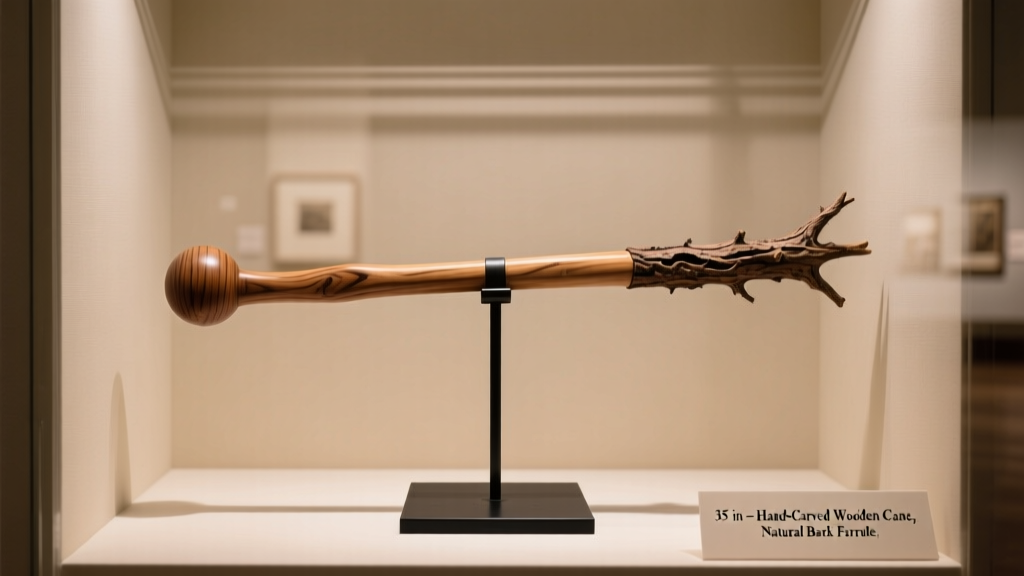
Authentication and Market Analysis of the Canes Cage Carved Wooden Balls Plain Shaft With Bark Spike Ferrule (35-Inch)

Yngve Ekström’s 1945 Armchair and Ottoman Set: Design Legacy, Material Innovation, and Authentication Protocol
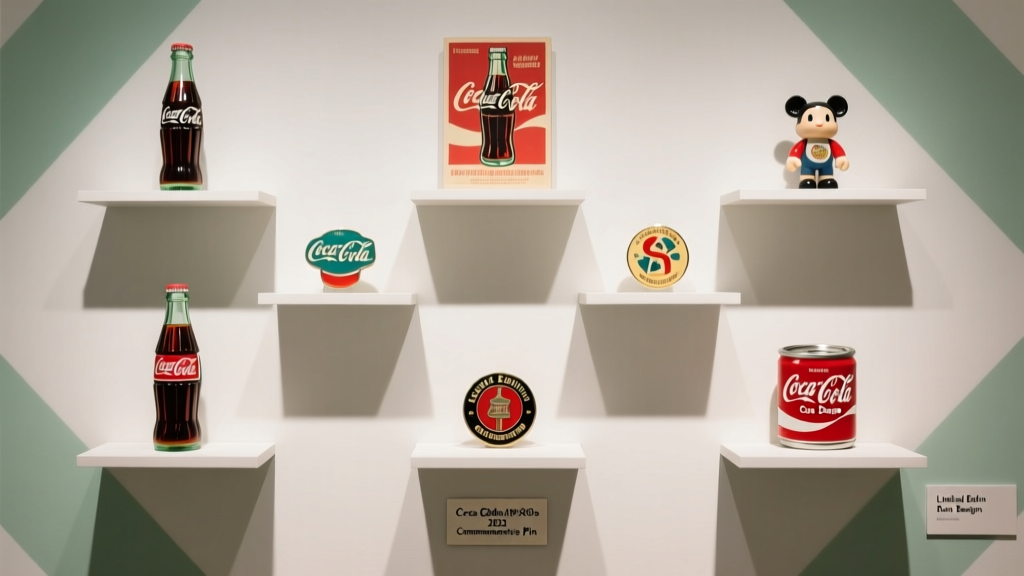
Coke Collectibles: Market Value, Authentication Protocols, and Historical Significance of Coca-Cola Memorabilia

Weapons Pouch, Bullet Mold, Doe-Skin Cartridge Bag, Bone-Handled Neck Knife: Authenticating and Contextualizing Revolutionary War Small Arms Accessories
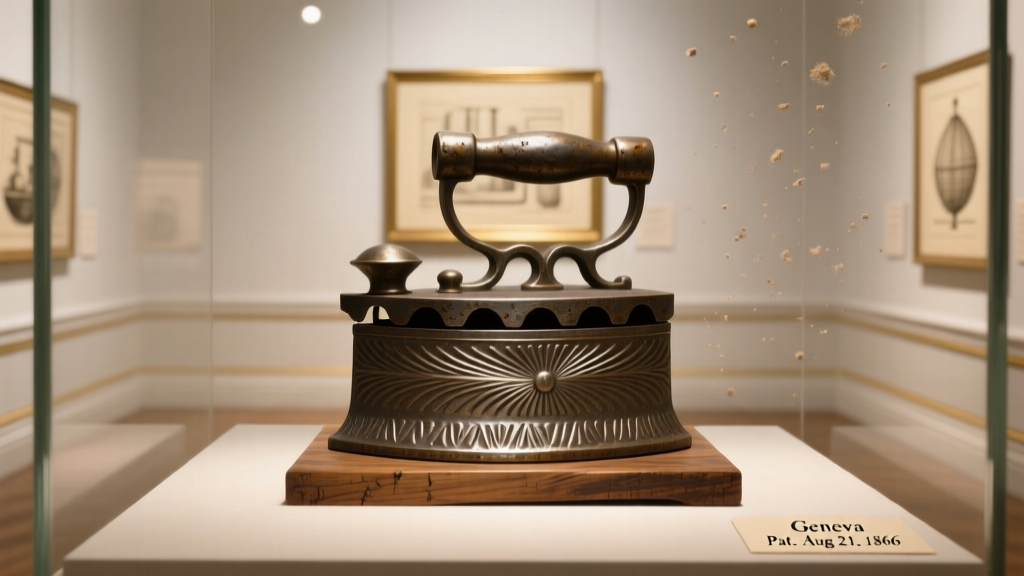
Kitchen Iron Fluting Geneva Pat. Aug. 21, 1866: A Technical and Market Analysis of a Pivotal 19th-Century Culinary Patent
Doll Averill Little Lulu Cloth Painted Yarn Hair 1930s 36-Inch: Authentication, Provenance, and Market Significance

Doll Troll Wishnik: Felt Clothing, Brown Hair, 1964 Production — Authentication & Market Analysis of the 5¼-Inch Vintage Figure
Poertzel Bronze Golfer Figurine (1925): Authentication, Provenance, and Market Analysis of the Cold-Painted Ivory-Headed Sculpture
Coleman Model 5 Kitchen Iron: Authentication, Market Value, and Technical History of the Green Enamel Gasoline Stove