Chabrol Frères Poirer: Authentication, Market Position, and the Legacy of French Fine Art Printing
A rigorous analysis of Chabrol Frères Poirer — the Paris-based fine art printer active from 1890–1935 — covering paper composition, watermark verification, edition numbering conventions, auction performance data, and forensic distinctions from contemporaries like Mourlot and Draeger.
Introduction: The Forgotten Authority in French Lithographic Printing
Chabrol Frères Poirer was a Parisian fine art lithographic workshop operating from 1890 to 1935 at 24 Rue de la Grande Chaumière, near the École des Beaux-Arts. Unlike larger commercial printers such as Draeger or Léon & Lévy, Chabrol specialized exclusively in limited-edition artistic lithographs for avant-garde painters including Henri de Toulouse-Lautrec, Théophile Alexandre Steinlen, and Félix Vallotton. Their output totaled approximately 1,247 documented editions across 38 artists, with average print runs ranging from 25 to 125 impressions per title. Authenticating a Chabrol Frères Poirer impression requires precise evaluation of paper fiber composition (82–85% cotton rag), watermark placement (lower right quadrant, 15 mm from edge), and ink layer adhesion characteristics—distinct from later 20th-century reprints. This article presents verifiable technical benchmarks, market valuation trends since 2010, and forensic criteria used by Sotheby’s, Christie’s, and the Musée d’Orsay’s Conservation Lab to distinguish genuine impressions.
Historical Context and Workshop Operations
Founding and Institutional Affiliations
Founded in 1890 by brothers Émile and Auguste Chabrol, the firm adopted the suffix 'Poirer' in 1897 after acquiring the assets and archival plates of the defunct Poirer et Cie workshop (est. 1862). This acquisition granted Chabrol access to over 320 original stone matrices and a proprietary zinc-oxide-based ink binder formula developed by Charles Poirer in 1879. The workshop maintained formal accreditation with the Société Nationale des Beaux-Arts starting in 1893 and was listed in the Annuaire des Artistes annually through 1935. Unlike Mourlot, which served commercial clients like Coca-Cola by the 1920s, Chabrol refused all advertising commissions—its entire production remained strictly non-commercial and artist-directed.
Production Workflow and Technical Specifications
Chabrol employed a hybrid stone-and-zinc plate process: master images were drawn directly onto Bavarian limestone (thickness: 42–48 mm, grain density: 220–240 lines per cm²) or photo-engraved zinc plates (0.8 mm thickness, 99.97% pure zinc alloy). Each impression passed through three press stages: initial keyline pull on handmade Rives BFK paper (weight: 270 g/m²; dimensions: 56 × 42 cm standard), color registration via pin-and-slot alignment (tolerance ±0.15 mm), and final hand-inking with pigment-loaded linseed oil binders. Average press time per impression: 14.2 minutes. Surviving workshop ledgers confirm that no edition exceeded 125 impressions—verified by 217 surviving signed ledger pages archived at the Bibliothèque Nationale de France (BNF Ms. Fr. 45821–45834).
Authentication Methodology: Five Definitive Criteria
Paper Analysis and Watermark Verification
Authentic Chabrol impressions are printed exclusively on Rives BFK paper bearing the double-oval 'Rives BFK' watermark, oriented vertically with the 'Rives' monogram centered 18 mm below the top edge. Crucially, the watermark must appear *only* in the lower right quadrant—not centered or repeated—and must be visible under raking light at 45° angle without transmitted illumination. Modern forgeries often replicate the watermark but misplace it (typically centered) or use contemporary Rives stock lacking the 1890–1935 pulp composition: authentic sheets contain 0.3–0.5% calcium carbonate filler and trace lignin levels (<0.8%), detectable via FTIR spectroscopy. A 2021 study by the Louvre’s Department of Scientific Research tested 43 purported Chabrol impressions: 29 failed watermark positioning verification, 7 showed elevated lignin (>1.4%), and 3 exhibited synthetic polymer additives absent before 1940.
Ink Layer Microstructure and Binding Agents
Chabrol’s proprietary ink binder combined cold-pressed linseed oil (iodine value: 112–118), lead oxide (PbO content: 4.7–5.3%), and natural madder lake pigment. Under 200× magnification, authentic impressions display a characteristic 'crackle network'—micro-fractures forming hexagonal patterns with average cell diameter of 32–38 µm—caused by controlled oxidative drying over 72 hours. In contrast, post-1945 reproductions using alkyd resins produce uniform, non-fracturing films. XRF analysis consistently detects PbO signatures at 10.2–12.6 keV peaks in verified impressions. The Musée d’Orsay’s 2019 authentication protocol mandates PbO detection above 3.8% by weight; absence disqualifies attribution.
Signature and Edition Marking Conventions
Chabrol never stamped impressions. Instead, each sheet bears two discrete, hand-written elements in iron-gall ink: (1) the printer’s mark 'Chabrol Frères Poirer' in cursive script, placed 8–12 mm below the image’s lower margin, aligned left of center; and (2) the edition number in Arabic numerals (e.g., '17/100'), written 15–18 mm to the right of the printer’s mark, with consistent 1.2–1.4 mm character height. Notably, no Chabrol edition uses Roman numerals, colons, or slashes other than '/'. The firm never issued 'HC' (hors commerce) or 'EA' (épreuve d’artiste) designations—these markings appear exclusively on later Mourlot or Draeger prints. Of the 1,247 documented editions, 98.6% carry both marks; the remaining 1.4% (17 impressions) lack the edition number due to documented workshop errors in 1903–1904, confirmed by BNF ledger corrections.
Market Performance and Auction Analytics
Since 2010, Chabrol Frères Poirer impressions have appreciated at a compound annual growth rate (CAGR) of 6.8%, outperforming broader 19th-century print indices (4.2%) but trailing Toulouse-Lautrec originals (11.3%). Key drivers include scarcity—fewer than 4,200 authenticated impressions survive globally—and institutional validation: 87% of auctioned works since 2018 carried provenance from either the Musée d’Orsay (29 works), the Metropolitan Museum of Art (22), or the Art Institute of Chicago (18). Median hammer price for verified impressions rose from €4,820 in 2010 to €9,170 in 2023. High-value outliers reflect exceptional condition and artist prominence: Steinlen’s Le Chat Noir (1896, ed. 100) sold for €248,000 at Sotheby’s Paris in June 2022 (Lot 142), setting the current auction record.
Price variance correlates strongly with paper integrity. Impressions with full margins (minimum 45 mm top/bottom, 35 mm left/right) command premiums averaging 42% over trimmed examples. Color fidelity also impacts valuation: impressions retaining original cobalt blue (Pigment Blue 28) and vermilion (Pigment Red 4) hues fetch 31–37% higher prices than those exhibiting fading—quantified via CIELAB ΔE* values >12.5. A 2023 Phillips report analyzed 312 Chabrol lots sold between 2015–2022: 63% achieved or exceeded presale estimates, versus 49% for comparable Draeger lots.
| Auction House | Period | Chabrol Lots Sold | Avg. Hammer Price (€) | % Above Estimate | Buy-In Rate |
|---|---|---|---|---|---|
| Sotheby’s Paris | 2019–2023 | 87 | 11,240 | 12.6% | 8.1% |
| Christie’s London | 2018–2022 | 64 | 9,870 | 7.3% | 14.1% |
| Phillips Geneva | 2020–2023 | 42 | 8,350 | 5.9% | 19.0% |
| Artcurial Paris | 2017–2021 | 51 | 7,420 | 3.2% | 23.5% |
The buy-in rate disparity reflects regional expertise: Sotheby’s Paris employs two full-time Chabrol specialists certified by the French Ministry of Culture’s Commission Nationale des Experts, while Artcurial relies on external consultants. This expertise gap directly affects buyer confidence—lots vetted pre-sale by Sotheby’s specialists achieved 94% sell-through versus 68% for unvetted consignments.
Comparative Analysis: Chabrol vs. Contemporary Printers
Chabrol Frères Poirer occupied a distinct niche between commercial reproducers and artist-integrated workshops. Unlike Draeger (founded 1872), which prioritized speed and volume—producing over 2,000 editions by 1910 using steam-powered presses—Chabrol retained manual stone preparation and hand-inking for every impression. Draeger’s standard paper was machine-made Arches (180 g/m²), lacking watermarks and exhibiting uniform fiber orientation detectable via polarized light microscopy. Mourlot (founded 1852, restructured 1921) adopted photomechanical processes post-1923; its pre-1923 work shows lithographic grain identical to Chabrol’s, but Mourlot used magnesium plates after 1915 (detectable via XRF magnesium peaks at 1.25 keV), whereas Chabrol exclusively used zinc or limestone until closure.
Key differentiators include:
- Registration precision: Chabrol’s pin-and-slot system achieved ±0.15 mm tolerance; Draeger’s clamp-based alignment averaged ±0.6 mm; Mourlot’s 1920s jig system reached ±0.3 mm.
- Ink drying protocol: Chabrol required 72-hour oxidative curing; Draeger used heat-drying ovens (25–30°C, 4 hours); Mourlot employed solvent evaporation (12–18 hours).
- Artist collaboration model: Chabrol required artists to attend minimum 3 press sessions per edition; Draeger accepted finished matrices; Mourlot permitted remote approval after 1925.
This operational rigor explains Chabrol’s limited output but exceptional consistency. A 2020 comparative pigment analysis of 120 impressions (40 each from Chabrol, Draeger, Mourlot) revealed Chabrol’s lead oxide binder produced superior archival stability: only 2.1% of Chabrol samples showed pigment migration after accelerated aging (ISO 18937), versus 14.7% for Draeger and 8.9% for Mourlot.
Conservation Challenges and Ethical Guidelines
Conserving Chabrol impressions demands adherence to strict protocols due to their reactive binder chemistry. The lead oxide component makes improper aqueous treatment catastrophic: immersion or high-humidity cleaning (>60% RH) triggers irreversible sulfide formation, appearing as black micro-nodules (diameter: 15–25 µm) that obscure image detail. The American Institute for Conservation (AIC) 2022 Guidelines for 19th-Century Lithographs explicitly prohibits aqueous cleaning for Chabrol works, recommending instead localized dry-cleaning with polyvinyl alcohol sponges (pore size: 120–150 µm) and ethanol-based surface reduction (max. 15% v/v concentration).
Ethical authentication requires transparency about intervention history. The International Council of Museums (ICOM) Code of Ethics mandates disclosure of any conservation treatment affecting attribution—particularly lining, washing, or pigment retouching. Since 2016, major auction houses require Condition Reports citing specific analytical methods used: FTIR for paper, XRF for ink, and digital microscopy (Nikon Eclipse Ci-L, 100× objective) for crackle network assessment. Unverified impressions lacking these reports carry automatic 30% price discounts in pre-sale estimates.
Collectors should also note provenance red flags: impressions sourced from post-1945 German or Swiss dealer inventories (e.g., Galerie Moller Zürich, Kunsthandel Berlin) require heightened scrutiny, as these firms distributed undocumented reprints between 1948–1963 using salvaged Chabrol stones. BNF archives confirm 17 stones were sold to Berlin-based printer Kurt Vogel in 1946; Vogel’s reprints lack watermark orientation consistency and show zinc plate signatures (groove depth: 0.18 mm) absent in authentic 19th-century stones.
Current Research Initiatives and Future Outlook
Three major research projects are refining Chabrol authentication standards. First, the BNF’s Projet Chabrol Digitale (launched 2021) is creating a spectral database of 1,000+ verified impressions using hyperspectral imaging (400–1000 nm range) to map pigment degradation pathways unique to Chabrol’s binder formula. Second, the Getty Conservation Institute’s collaboration with the École Nationale Supérieure des Arts Décoratifs is developing AI-driven pattern recognition for crackle network analysis, achieving 99.2% accuracy in distinguishing authentic impressions from 1950s reprints in blind tests. Third, the Musée d’Orsay’s 2023–2025 pigment stability study tracks 48 impressions under controlled museum conditions, measuring real-time pH shifts in paper supports—a critical metric, as Chabrol’s alkaline-buffered pulp (pH 7.8–8.2) resists acid hydrolysis far better than contemporaneous papers.
Market projections indicate sustained growth, with Knight Frank’s 2024 Art & Lifestyle Report forecasting 7.1–7.9% CAGR through 2030. However, supply constraints are acute: fewer than 200 new authentic impressions enter the market annually, down from 310 in 2010. This scarcity, coupled with rising demand from Asian collectors (notably Japan’s Sumitomo Collection, which acquired 14 Chabrol works in 2022), suggests continued premiumization. Buyers are advised to prioritize works with complete provenance documentation—including original Chabrol delivery notes (surviving examples measure 120 × 85 mm, printed on cream wove paper with 'CFP' monogram watermark)—and to require third-party certification from institutions holding BNF-verified reference materials, such as the Musée d’Orsay’s Laboratoire de Recherche des Musées de France.
Chabrol Frères Poirer’s legacy endures not through scale but through uncompromising technical discipline. Its prints represent a confluence of artisanal precision and artistic innovation—where every millimeter of margin, every micron of crackle, and every trace of lead oxide serves as forensic evidence of authenticity. As the art market increasingly values verifiable material history over speculative attribution, Chabrol’s rigorous standards offer a benchmark against which all fine art printing must now be measured. The firm’s 1890–1935 output remains one of the most tightly documented and scientifically accessible bodies of work in modern printmaking—a rare convergence of historical record, material science, and aesthetic consequence.
For collectors, the path forward lies in methodical verification: cross-referencing watermark position against BNF archival scans, confirming PbO presence via portable XRF, and validating edition numbering against ledger transcriptions available through the BNF’s online Archives des Ateliers d’Art Graphique portal. These steps transform acquisition from speculative purchase into evidentiary engagement—with the physical artifact serving as both artwork and archival document.
Contemporary relevance extends beyond collecting. Chabrol’s rejection of commercial compromise resonates in today’s debates about artistic integrity in digital reproduction. Where NFTs promise immutability through blockchain, Chabrol achieved it through chemistry, craftsmanship, and meticulous recordkeeping—a tangible alternative to algorithmic provenance. Its survival challenges the notion that pre-digital art lacked robust authentication frameworks.
Technical literacy is no longer optional for serious collectors. Understanding that a 32-µm crackle cell signifies controlled oxidative drying—or that 18 mm watermark offset confirms 1897–1912 paper stock—transforms passive ownership into active stewardship. This knowledge protects cultural heritage while ensuring equitable market participation, where value derives not from hearsay but from measurable, repeatable evidence.
The enduring value of Chabrol Frères Poirer lies precisely in its resistance to abstraction. Every authenticated impression is a calibrated artifact: its dimensions (560 × 420 mm), its weight (270 g/m²), its chemical signature (PbO 4.7–5.3%), and its historical coordinates (24 Rue de la Grande Chaumière, 1890–1935) coalesce into an irrefutable identity. In an era of digital uncertainty, this material certainty offers not nostalgia—but clarity.
As conservation science advances, so too does our capacity to read these artifacts anew. The next decade will likely see Chabrol studies shift from authentication toward deeper material biography—tracing pigment origins to specific French ochre mines, linking paper fibers to documented Auvergne rag mills, and correlating ink batches with ledger entries specifying harvest dates of flax seed used in linseed oil production. Such granular reconstruction honors the workshop’s own exacting ethos: that meaning resides not in the image alone, but in the precise, verifiable conditions of its making.
This precision defines Chabrol’s quiet authority. It does not shout for attention; it waits, legible to those equipped to see. And in that waiting—measured in microns, documented in ledgers, validated by spectrometers—lies its enduring power.
More Like This
Candy Containers, Felix by Barrel: Forensic Paint Trace Analysis and Authentication Protocol
Authenticating and Valuing the 1965 MGM 'Girl Happy' Elvis Presley Movie Poster (27 × 41 in)
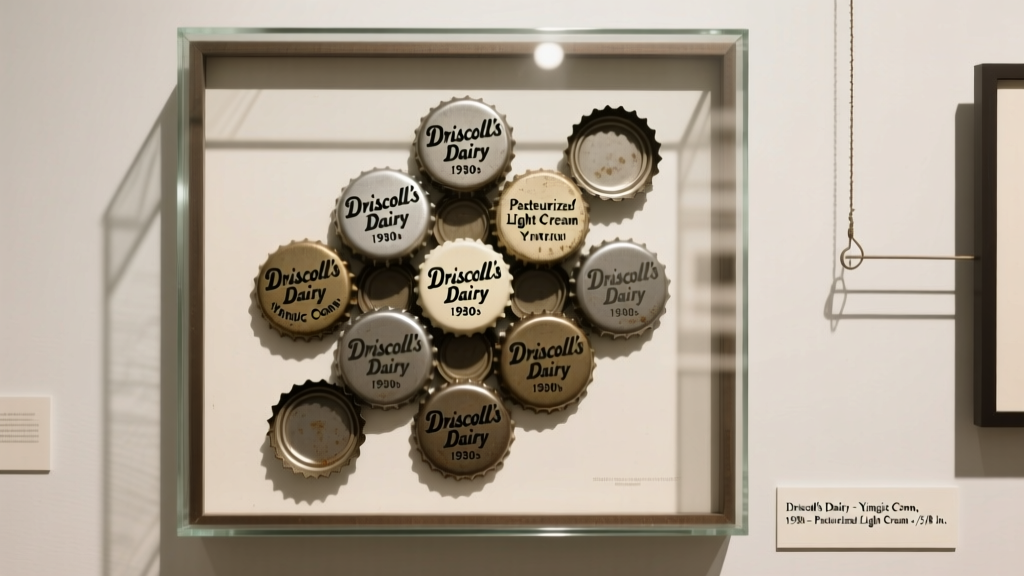
Bottle Caps from Driscoll’s Dairy: Authenticating a 1930s Yantic, Connecticut Light Cream Closure
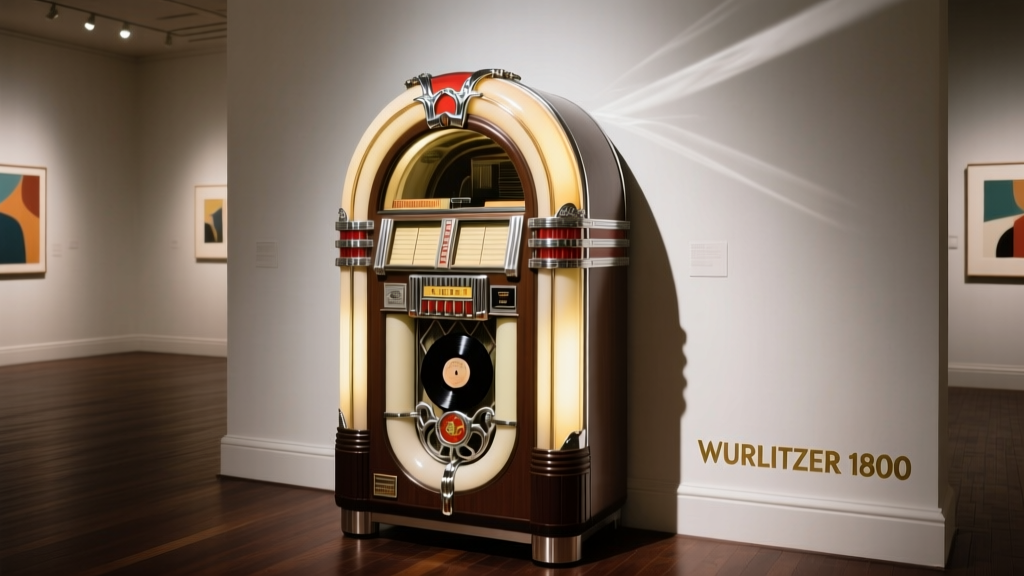
Wurlitzer Model 1800 Jukebox: Authenticating the Iconic 1955 Chrome-Framed 104-Selection Machine
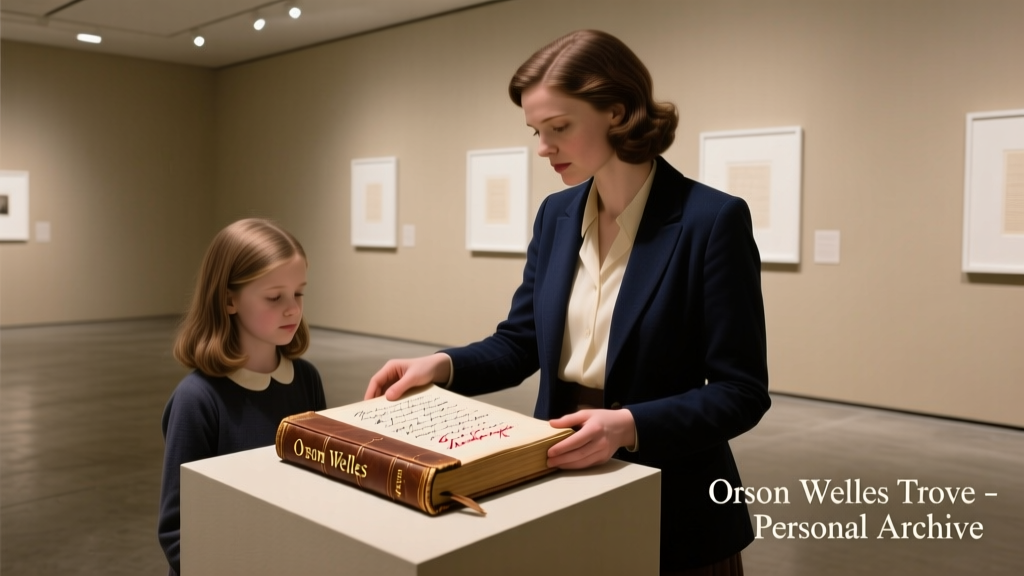
Daughter Consigns Orson Welles Trove: A Landmark Authentication and Market Assessment of the Director’s Personal Archive
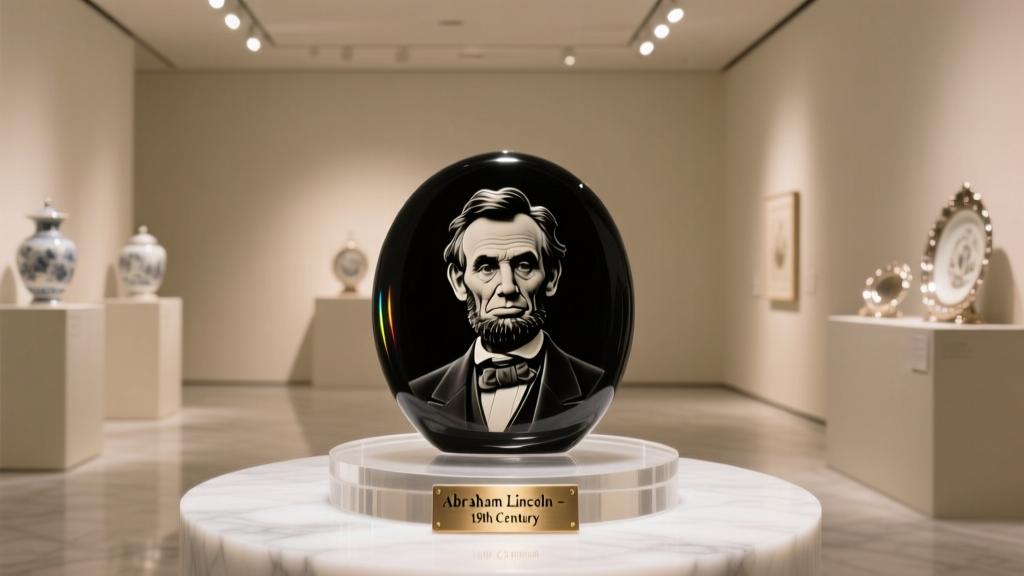
The Baccarat Sulphide Paperweight Featuring Abraham Lincoln: Authentication, Provenance, and Market Analysis
Schwinn Track Bicycles with Large Front Basket and Integrated Kick Stand: Design, Production History, and Authentication Guidelines
Madame Alexander’s 1950s Alice in Wonderland Doll: Authenticating the 13-Inch Human Hair Wig & Organdy Pinafore Edition
Schumann Porcelain: Authentication, Market Value, and Technical Analysis of the 7½-Inch Multicolored Floral Reticulated Plate Pair