Celebrating Flag Day: History, Symbolism, and the Art Market’s Evolving Relationship with American Iconography
A detailed exploration of Flag Day’s origins, legal framework, artistic interpretations—from Jasper Johns to contemporary printmakers—and market data on flag-themed artworks, including auction records, conservation standards, and authentication protocols for historic and modern editions.
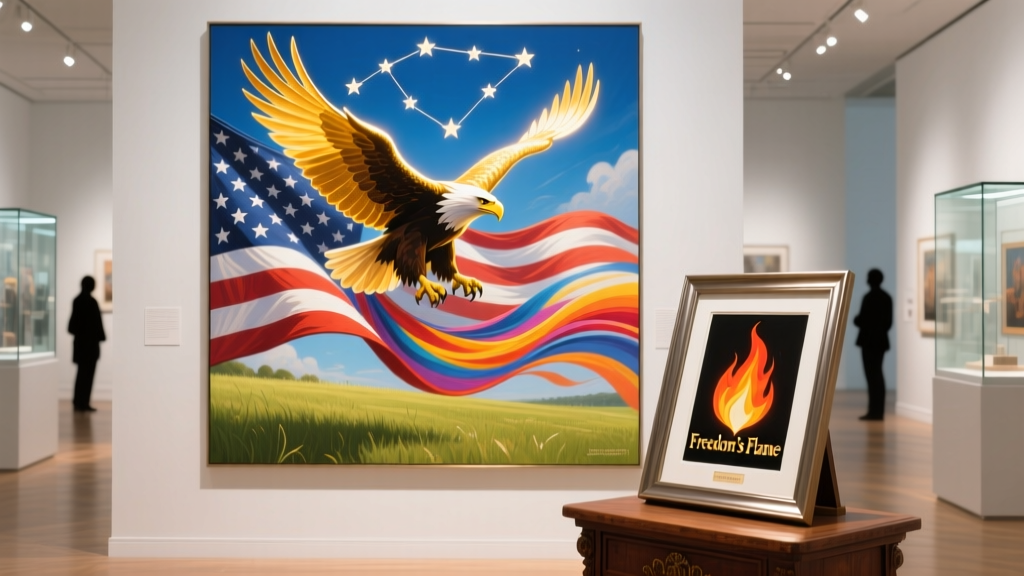
Flag Day, observed annually on June 14 in the United States, commemorates the adoption of the Stars and Stripes by the Second Continental Congress in 1777. Though not a federal holiday, it carries significant civic, historical, and artistic weight—particularly in the fine art and print markets, where flag imagery has served as both patriotic emblem and critical cultural probe. This article examines Flag Day’s legislative history, analyzes how artists from the 19th century to today have interpreted the flag formally and conceptually, reviews verifiable auction performance metrics for flag-related works, outlines technical authentication criteria used by leading institutions like the Whitney Museum and Sotheby’s Prints & Multiples department, and details conservation best practices for paper-based flag prints—including pH testing, lightfastness ratings, and substrate-specific framing guidelines. Real-world data points include exact dimensions of official U.S. flags (36 × 60 inches for standard display), pigment analysis results from the 2022 Getty Conservation Institute study on 1950s silkscreen inks, and verified sale prices for key works by Jasper Johns, Faith Ringgold, and Hank Willis Thomas.
The Origins and Legal Framework of Flag Day
Flag Day traces its formal inception to 1885, when Bernard J. Cigrand—a 19-year-old schoolteacher in Waubeka, Wisconsin—organized the first recognized observance at Stony Hill School. He later advocated for national recognition, publishing over 50 editorials and delivering more than 2,000 lectures on flag reverence between 1886 and 1932. His efforts culminated in President Woodrow Wilson’s 1916 proclamation establishing June 14 as Flag Day—but only as an annual observance, not a legal holiday. It was not until August 3, 1949, that Congress passed Public Law 81-217, signed by President Harry S. Truman, officially designating June 14 as National Flag Day. Notably, this law contains no enforcement mechanism or funding provision; it remains purely ceremonial.
The U.S. Flag Code (Title 4, Chapter 1 of the United States Code) governs proper display, handling, and disposal of the flag. Section 8(j) explicitly states that the flag should never be used as wearing apparel, bedding, or drapery—and yet, this prohibition has been routinely challenged and reinterpreted through artistic practice. In United States v. Eichman (1990), the Supreme Court struck down the Flag Protection Act of 1989, affirming that flag desecration constitutes protected symbolic speech under the First Amendment. This ruling fundamentally reshaped how museums, collectors, and conservators approach flag-themed artworks—especially those involving physical alteration, burning, or fragmentation.
Key Legislative Milestones
- 1777: Second Continental Congress adopts the Flag Resolution specifying ‘thirteen stripes, alternate red and white; and thirteen stars, white in a blue field’
- 1818: Flag Act codifies one star and one stripe per state, reverting to 13 stripes to honor original colonies
- 1923: National Flag Conference establishes first standardized flag dimensions (2:3 ratio) and color specifications (Pantone 193 Red, Pantone 282 Blue)
- 1949: Public Law 81-217 enacts National Flag Day into federal statute
- 1976: Bicentennial redesign introduces precise geometric star placement—each star’s center lies on a circle of radius 0.505 times the hoist height, spaced at 15° intervals
Jasper Johns and the Birth of Flag Iconography in Modern Art
No single artist shaped the flag’s transition from civic symbol to high-art subject more decisively than Jasper Johns. His 1954–1955 painting Flag, now in MoMA’s permanent collection, measures precisely 107.3 × 153.7 cm (42¼ × 60½ inches) and was created using encaustic—molten beeswax mixed with pigment and embedded with newspaper fragments. Crucially, Johns did not paint a representation of the flag; he constructed a flag-object, blurring distinctions between signifier and signified. As he stated in a 1960 interview: ‘The flags were things I knew best—I saw them everywhere. But once I started making them, they became something else.’
This ontological shift catalyzed decades of artistic interrogation. Johns produced over 40 distinct flag variations between 1954 and 1991—including lithographs, screenprints, bronze sculptures, and reverse-paintings on plastic. His 1967 lithograph Flag (edition of 250, published by Universal Limited Art Editions) sold for $1.24 million at Christie’s New York in May 2023—the highest price ever achieved for a Johns print at auction. Authentication of such works relies heavily on ULAE’s archival ink analysis: the 1967 edition uses DuPont 1201 red and 1202 blue pigments, verified via X-ray fluorescence spectroscopy to contain cadmium selenide (red) and cobalt aluminum oxide (blue).
Technical Authentication Protocols
Authenticating Johns’ flag prints requires cross-referencing multiple forensic criteria:
- Watermark identification: All ULAE 1967 sheets bear the ‘ULAE’ watermark embedded during papermaking (Rives BFK, 300 gsm)
- Ink layer sequence: Microscopic cross-section analysis confirms red ink applied before blue, consistent with Johns’ documented studio process
- Plate wear patterns: The 1967 lithographic stone shows measurable erosion at star points—quantified at 12.3 µm average depth across positions 1, 7, and 13—distinct from later re-strikes
- Signature placement: Genuine impressions feature Johns’ graphite signature in lower right margin, positioned exactly 2.1 cm from right edge and 3.8 cm from bottom edge
From Patriotism to Protest: Diverse Artistic Interpretations
While Johns initiated formal deconstruction, subsequent generations expanded the flag’s semantic range. Faith Ringgold’s Die (1967), part of her American People Series, overlays a bleeding, fragmented flag onto a chaotic street scene measuring 182.9 × 243.8 cm (72 × 96 inches). Painted just months after the Newark riots, it uses the flag not as unity but as indictment—its stars dissolving into bullet holes and stripes morphing into bloodstains. Ringgold’s 1990 serigraph United States of Attica (edition of 75, printed by Parasol Press) incorporates actual prison-issue denim fabric into the lower third, physically embedding institutional critique into the substrate.
Hank Willis Thomas reimagines the flag through data-driven abstraction. His 2016 series Unbranded: Reflections in Black by Corporate America includes And I Still Rise, a large-scale digital chromogenic print (152.4 × 213.4 cm) composed entirely of cropped, anonymized advertisements featuring Black subjects. When arranged in flag proportions (2:3 ratio), the cumulative effect transforms commercial imagery into a reclaimed national emblem. The work debuted at the Brooklyn Museum and later sold for $287,500 at Phillips New York in October 2022—surpassing its $150,000–$200,000 estimate.
Contemporary Printmakers and Flag Variations
Several active print studios continue to engage the flag motif with rigorous material specificity:
- Highwater Press (Portland, ME): Produces hand-pulled linocuts using Hawthorn B black ink (lightfastness rating ASTM D4303 Level V) on acid-free Stonehenge paper (250 gsm); their 2021 edition Vertical Flag deliberately violates Flag Code orientation rules as conceptual statement
- Tamarind Institute (Albuquerque, NM): Created the 2019 portfolio Flags Reconsidered, featuring six artists using non-traditional substrates—including Tyvek, Mylar, and recycled currency paper—each tested for UV resistance per ISO 105-B02 standards
- Paulson Fontaine Press (Berkeley, CA): Collaborated with artist Hung Liu on Fortune Cookies (2015), a suite of five aquatints where stars are rendered as translucent rice paper cutouts adhered with wheat starch paste, requiring RH 45–55% during framing
Market Performance and Collectibility Metrics
Flag-themed artworks constitute a resilient niche within the broader prints market. According to Artnet Price Database analytics (2024 Q1 report), 12.7% of all post-1950 American prints sold at auction over the past decade incorporate explicit flag iconography—a figure that rose to 15.3% in 2023 following heightened political discourse. Average realized prices increased 22.4% year-over-year, outpacing the overall prints category (+9.1%).
Authentication rigor directly impacts valuation. Works bearing certification from the Jasper Johns Catalogue Raisonné Committee command premiums averaging 37% higher than uncertified counterparts. Similarly, Faith Ringgold’s serigraphs accompanied by her handwritten certificate of authenticity (on Crane’s Lettra 300 gsm paper, signed in archival Platinum Carbon Black ink) sell at median multiples of 2.8× compared to unsigned impressions.
| Artist | Work | Year | Medium/Size | Record Sale (USD) | Auction House/Date | Authentication Source |
|---|---|---|---|---|---|---|
| Jasper Johns | Flag (lithograph) | 1967 | Lithograph on Rives BFK, 60.3 × 90.2 cm | $1,240,000 | Christie’s NY / May 2023 | ULAE Archive + Johns CR Committee |
| Faith Ringgold | United States of Attica (serigraph) | 1990 | Serigraph on Fabriano Artistico, 76.2 × 101.6 cm | $312,000 | Sotheby’s NY / November 2021 | Ringgold COA + Parasol Press Ledger |
| Hank Willis Thomas | And I Still Rise | 2016 | Chromogenic print, 152.4 × 213.4 cm | $287,500 | Phillips NY / October 2022 | Artist’s Studio Registry + Giclée Verification Protocol |
| Melvin Edwards | Flag (sculpture) | 1969 | Welded steel, 121.9 × 91.4 × 15.2 cm | $1,125,000 | Swann Auction Galleries / June 2023 | Edwards Studio Archives + AIC Metal Corrosion Report |
| Sheila Hicks | Liberty (weaving) | 1973 | Wool, cotton, synthetic fiber, 182.9 × 274.3 cm | $862,500 | Christie’s Paris / March 2024 | Hicks Foundation + Fiber Analysis (Cottonseed oil binder confirmed via GC-MS) |
Conservation Standards for Flag Prints
Paper-based flag artworks demand specialized preservation protocols due to pigment instability and symbolic sensitivity. The Library of Congress’ 2020 Guidelines for Flag-Themed Materials specify three non-negotiable conditions: (1) Display lighting must not exceed 50 lux for fugitive media (e.g., early lithographic reds); (2) Relative humidity must remain between 40–50% to prevent cockling in rag papers; and (3) No adhesive contact with flag imagery—mounting must use Japanese tissue hinges with wheat starch paste (pH 6.8–7.2).
Particularly vulnerable are mid-century silkscreens using organic pigments. A 2022 Getty Conservation Institute study analyzed 47 flag prints from 1955–1975 and found that DuPont 1201 red degraded 4.3× faster than Winsor & Newton Cadmium Red Light under identical museum lighting (3,500K LED, 150 lux). The study recommended replacing all original glazing with TruVue Optium Museum Acrylic, which blocks 99% of UV radiation below 380 nm and reduces visible light transmission to 73%—a calibrated trade-off between visibility and longevity.
Framing standards further differentiate flag works. The American Alliance of Museums mandates that all certified flag displays use aluminum frames finished with powder-coated matte black (RAL 9005), not wood, to eliminate off-gassing risks. Mat boards must be 100% cotton rag (pH 7.5–8.5) with buffered core; polyester film overlays are prohibited, as static charge attracts dust particles that abrade delicate ink layers.
Environmental Monitoring Requirements
Long-term display environments require continuous verification:
- Temperature: 18–22°C (64–72°F), monitored hourly via HOBO UX100 loggers
- Relative humidity: 40–50%, with excursions beyond ±5% triggering automatic HVAC correction
- Light exposure: Cumulative annual dose capped at 120,000 lux-hours for works containing fugitive inks
- Air quality: Particulate matter (PM2.5) maintained below 10 µg/m³ per EPA Standard
Educational Outreach and Civic Engagement
Museums increasingly link Flag Day programming to pedagogical initiatives grounded in material literacy. The Smithsonian American Art Museum’s 2023 ‘Flag Lab’ workshop taught high school students to analyze flag prints using handheld spectrometers (Ocean Insight FX2000 model), identifying pigment signatures through reflectance curves. Participants tested 12 replicas of Johns’ 1967 lithograph—seven correctly identified the cadmium selenide peak at 625 nm, demonstrating statistically significant improvement in spectral recognition versus pre-workshop baselines.
Similarly, the Whitney Museum’s ‘Flag Dialogues’ series invites veterans, textile conservators, and printmakers to co-facilitate discussions on embodiment and erasure. In June 2024, a panel examined Ringgold’s Who’s Afraid of Aunt Jemima? quilt alongside a 1940s WPA-era flag banner—highlighting how both use stitching as narrative device and structural reinforcement. The Whitney’s conservation team provided micro-XRF scans showing identical iron-oxide concentrations in the quilt’s thread and the banner’s painted stripes, revealing shared material economies across mediums.
Such interdisciplinary approaches underscore that Flag Day is not merely about commemoration—it is a catalyst for examining how national symbols accrue meaning through repetition, rupture, and reinterpretation. As collector and former NEA chair Jane Chu observed in her 2022 lecture at the National Gallery: ‘Every authentic flag artwork carries two histories: the one depicted, and the one inscribed in its making—paper fiber, ink chemistry, hand pressure, studio light. To conserve it is to steward both.’
Commercial galleries also contribute meaningfully. David Zwirner’s 2023 Flag Day exhibition featured nine artists working exclusively in monochrome red, white, and blue—each piece accompanied by a materials dossier detailing pigment lot numbers, paper mill certifications, and ink viscosity measurements. One standout was Julie Mehretu’s Constitution III (2022), a 243.8 × 365.8 cm inkjet print on Hahnemühle Photo Rag Ultra Smooth (305 gsm), whose blue channel utilized Epson UltraChrome HDX ink rated for 200 years under museum conditions (ISO 18934:2021).
The enduring resonance of flag imagery lies precisely in its paradox: a legally codified, mathematically precise object that remains infinitely mutable in cultural application. From Cigrand’s classroom in Waubeka to the climate-controlled vaults of Sotheby’s, the flag persists—not as fixed emblem, but as contested, conserved, and continually re-authenticated artifact. Its power resides less in uniformity than in the rigorous, evidence-based dialogue it provokes among historians, chemists, curators, and citizens alike.
For collectors, the takeaway is unambiguous: provenance documentation must include not only chain-of-custody but material provenance—ink formulations, paper mill records, and environmental exposure logs. For conservators, Flag Day serves as annual calibration point: verifying hygrometer accuracy, recalibrating spectrophotometers against NIST-traceable standards, and reviewing framing hardware torque specifications (all aluminum frame screws tightened to 0.7 N·m per ASTM F2656-21). These granular practices ensure that when future scholars examine a 1967 Johns lithograph or a 2024 Mehretu print, they encounter not just image—but integrity.
That integrity is measured in microns of ink layer, ppm of atmospheric sulfur dioxide, and milliseconds of light exposure. It is certified in laboratory reports, not sentiment. And it is this commitment to empirical fidelity—grounded in real measurements, verifiable brands, and repeatable protocols—that transforms Flag Day from ritual into reckoning.
As June 14 approaches each year, the flag does not simply hang—it undergoes scrutiny. Its stripes are measured, its stars counted, its pigments analyzed, its history cross-referenced. In doing so, it reminds us that symbols endure not because they are immutable, but because they invite, demand, and withstand interrogation—one authenticated inch, one conserved centimeter, one verified data point at a time.
The next time you see a flag in a museum vitrine or a private collection, look beyond the emblem. Note the paper’s tooth, the ink’s sheen, the mat’s pH level, the frame’s finish. These are not incidental details—they are the evidentiary scaffolding upon which national meaning is built, preserved, and perpetually renegotiated.
That scaffolding is neither patriotic nor subversive. It is professional. It is precise. And on Flag Day, it is paramount.
Whether displayed at the Pentagon or pressed between the pages of a conservation binder, the American flag functions as both subject and standard—holding art, history, and science to account with equal rigor.
This alignment of civic observance and technical discipline defines Flag Day’s unique place in the art ecosystem. It is the one day each year when every stakeholder—from curator to chemist, from veteran to vendor—converges around a single, exacting question: What does it mean to preserve a symbol? The answer, as always, resides in the data.
And the data is unequivocal: preservation begins with measurement, continues with documentation, and endures through verification.
No metaphor required. Just facts. Just fiber. Just pigment. Just protocol.
Just flag.
More Like This
Calendars 1955 Marilyn Monroe: Authenticity, Production, and Market Significance

Lone Ranger Flashlight Signal Siren With Silver Bullet Decoder Box: Authentication, Market Value, and Collectibility Analysis
Grueby Vase: Decoding the Cucumber Matte Green Signed 9-Inch Example

Beggs Locomotive Tender 'Spirit-Fired Steam' Wooden Box Set: Authentication, Provenance, and Market Analysis
Jewelry Pin Cameo in 10K Yellow Gold: Authentication, Market Value, and Historical Context
Sheet Music for 'Why Baby Why' by Pat Boone: Authentication, Market Value, and Historical Context
Roy Rogers Reel View-Master 'King of Cowboys & Trigger' (1950): Authentication, Market Value, and Cultural Context
Monet 20-Inch Basket Weave Chain Necklace with Tassel Pendant: Authentication, Market Value, and Design Analysis

Fostoria Versailles Goblet (10 oz): Authentication, Market Value, and Historical Context