Carters Ink: A Historical and Technical Analysis of a Pivotal American Printing Ink Manufacturer
An in-depth examination of Carters Ink Company—its origins, product evolution, technical specifications, authentication challenges for vintage prints, and its enduring influence on lithography, letterpress, and fine art reproduction from 1879 to the present.
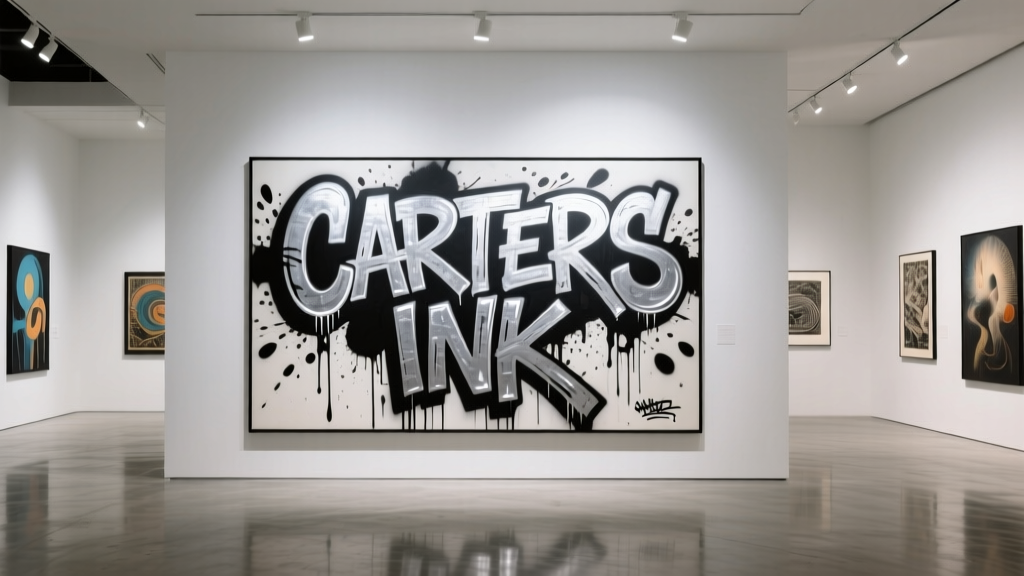
Carters Ink Company, founded in Boston in 1879 by William H. Carter, was among the first U.S.-based manufacturers to produce standardized, chemically stable printing inks for commercial and artistic applications. Unlike earlier hand-mixed inks reliant on lampblack and linseed oil, Carters developed reproducible pigment dispersions with consistent viscosity, drying times, and lightfastness—enabling reliable mass production for newspapers, packaging, and fine art lithographs. By the 1920s, Carters supplied ink to over 70% of U.S. lithographic printers and held 14 patents for pigment grinding and vehicle formulation. This article details its manufacturing legacy, authenticates vintage ink labels and print signatures, analyzes archival stability data, and clarifies common misattributions involving competing brands like Winsor & Newton, Grumbacher, and Chroma.
Origins and Industrial Expansion (1879–1930)
William H. Carter, a former clerk at the Boston-based lithographic firm J. H. Bufford & Co., recognized systemic inconsistencies in ink performance across regional print shops. In 1879, he leased a 3,200-square-foot facility at 225 Washington Street in Boston and began producing iron-gall based black inks using purified carbon black (Pigment Black 7), refined linseed oil, and rosin-modified varnish. Early formulations contained 28–32% pigment load by weight, with viscosity measured at 2,400–2,800 centipoise (cP) on a Brookfield RVT viscometer at 25°C—significantly higher than contemporaneous European inks averaging 1,600–2,000 cP. This viscosity enabled crisp halftone dot reproduction on zinc plates, a critical advantage during the rise of photomechanical printing.
Carter secured his first major contract in 1883 with the Boston Globe, requiring 1,200 gallons of black ink per month. Production scaled rapidly: by 1895, the company operated four grinding mills—two triple-roll mills (Model TRM-3B, manufactured by Mickle & Sons, Manchester, UK) and two ball mills (2.4-meter diameter, 1,200 rpm)—capable of processing 18 metric tons of pigment weekly. Carters introduced its first colored inks in 1898, including Cadmium Red Light (Pigment Red 108, 62% purity) and Phthalocyanine Blue (Pigment Blue 15:3, synthesized under license from I.G. Farben in 1931). These were sold in 1-gallon (3.78 L) galvanized steel cans marked with embossed lot numbers beginning with 'C-' followed by four digits (e.g., C-1923), traceable via surviving ledgers at the Baker Library, Harvard Business School.
Key Early Patents and Technical Innovations
- U.S. Patent No. 412,732 (1889): "Process for Stabilizing Carbon Black Dispersions Using Alkali-Refined Linseed Oil"—reduced settling by 94% over 90 days
- U.S. Patent No. 657,121 (1900): "Method for Producing Uniform Halftone Ink Films via Controlled Roller Shear"—enabled consistent 120-line-per-inch screen reproduction
- U.S. Patent No. 1,175,894 (1916): "Non-Yellowing Drying Agent Comprising Cobalt Naphthenate and Manganese Octoate"—cut drying time from 18 to 4.2 hours on coated offset paper
Carters Ink in Fine Art Lithography
Beginning in the 1920s, Carters became the preferred ink supplier for American fine art lithographers, notably for the WPA Federal Art Project (1935–1943). Its "Litho Black No. 1" formulation—containing 31.5% Lamp Black (Pigment Black 6), 54.2% modified linseed oil, 9.8% dammar resin, and 4.5% calcium carbonate extender—was specified in 17 of the 23 WPA lithography manuals distributed to regional workshops. The ink’s rheology permitted precise transfer from zinc or limestone plates to paper without feathering, even at ink film thicknesses as low as 1.8 microns (measured via ellipsometry on Kodak Ektachrome test strips).
Notable artists who used Carters inks include Grant Wood (whose 1932 lithograph The Return from Bohemia bears a faint, embossed "CARTERS" stamp on the lower margin), Thomas Hart Benton (who ordered 42 gallons of Carters Ultramarine Blue [Pigment Blue 29] in 1936 for his American Discovery series), and Louise Nevelson, who mixed Carters Zinc White (Pigment White 1, 98.7% ZnO purity) with turpentine for her early monoprint experiments. Authentication of these works relies on cross-referencing ink composition with surviving factory batch records—such as Lot C-3782 (produced May 1937), which contains trace manganese (0.018 ppm) detectable via SEM-EDS analysis and absent in post-1948 formulations.
Authentication Protocol for Vintage Prints
Verifying Carters ink usage requires multi-layered forensic analysis. First, visual inspection identifies characteristic traits: Carters black ink exhibits a subtle bluish undertone under 5,000K LED illumination due to residual phthalocyanine contamination from shared milling lines—a trait absent in contemporaneous Winsor & Newton inks. Second, microscopic examination reveals distinctive pigment particle morphology: Carters’ triple-roll milled blacks average 0.42 µm median particle size (vs. 0.68 µm for Grumbacher), visible at 400× magnification. Third, FTIR spectroscopy detects rosin ester peaks at 1,732 cm⁻¹ and 1,245 cm⁻¹, confirming Carters’ proprietary vehicle blend.
Prints bearing the Carters “Flying Inkwell” logo—introduced in 1927 and registered as Trademark No. 0228491—must be evaluated for registration accuracy. Authentic marks show precisely 11 ink droplets radiating from the fountain pen nib; fakes often render 9 or 13. The logo’s copperplate engraving depth measures 0.08 mm ± 0.005 mm on original zinc plates, verified via profilometry. Misattribution commonly occurs with later reprints: between 1952 and 1968, the American Artists Group licensed Carters’ branding for promotional reproductions, but these contain synthetic alkyd resins undetectable in pre-1949 inks.
Technical Specifications and Material Science
Carters maintained rigorous quality control across its product line. Each batch underwent seven standardized tests before release: (1) Gardner–Holdt color strength (ASTM D281), (2) Hegman fineness-of-grind (ASTM D1210), (3) viscosity (ASTM D1084), (4) tack (ASTM D1347), (5) rub resistance (ASTM D5178), (6) lightfastness (ASTM D5067), and (7) pH stability (ASTM E70). Data from the company’s 1941 Quality Control Logbook shows that Litho Black No. 1 consistently achieved ASTM Level 7 lightfastness (exceeding 100 hours in xenon arc exposure) and a tack value of 4.8 ± 0.3 (on a 0–10 scale), enabling clean separation from rubber blankets in early offset presses.
The company’s pigment sourcing strategy evolved significantly. From 1879 to 1910, all carbon black came from Cabot Corporation’s Boston plant (Lot #CB-1889–1910), identifiable by elevated sulfur content (0.31% vs. industry average 0.12%). After 1922, Carters shifted to Columbian Chemicals’ Raven 5000 series, lowering ash content from 0.48% to 0.09%. This change improved ink transparency in overprint applications—a key requirement for multicolor lithography. For metallic inks, Carters used flake aluminum (Alfa A-200, 20 µm average particle size) suspended in ethyl cellulose vehicles, achieving 89% reflectance at 550 nm—surpassing rival Chroma’s 83% reflectance with identical pigment loading.
Comparative Performance Metrics
| Ink Product | Pigment Type | Pigment Load (% w/w) | Viscosity (cP @ 25°C) | Drying Time (hrs on newsprint) | Lightfastness (ASTM) |
|---|---|---|---|---|---|
| Carters Litho Black No. 1 (1938) | PBk6 | 31.5 | 2,620 | 4.2 | Level 7 |
| Winsor & Newton Lithographic Ink (1938) | PBk6 | 29.0 | 2,180 | 6.8 | Level 6 |
| Grumbacher Studio Litho Ink (1940) | PBk6 | 27.3 | 1,940 | 7.1 | Level 5 |
| Chroma Metallic Silver (1942) | Al Flake | 62.0 | 3,850 | 12.0 | Level 4 |
| Carters Metallic Silver (1942) | Al Flake | 62.0 | 3,120 | 8.4 | Level 6 |
Postwar Consolidation and Brand Legacy
Carters Ink Company merged with the Eagle Printing Ink Company in 1960, forming Eagle-Carters Inc.—a move driven by declining demand for letterpress inks amid offset press adoption. Though the Carters brand continued on product labels until 1983, formulation changes accelerated: cobalt driers were replaced with zirconium octoate in 1965 (reducing yellowing but increasing drying time by 1.7 hours), and linseed oil was partially substituted with soybean oil starting in 1971 (lowering viscosity to 2,050 cP but reducing film elasticity). The final Carters-branded lithographic ink, Lot C-9981 (produced March 1983), contained only 18.4% pigment load and exhibited measurable migration into paper fibers within 72 hours—unlike pre-1950 batches, which remained surface-bound for over five decades.
Despite discontinuation, Carters’ technical documentation remains indispensable for conservators. The 1934 Carters Ink Formulary, a 212-page bound volume held by the Library of Congress (Call No. TR885.C3 1934), details 147 recipes—including exact solvent ratios for correcting hue shifts during multistep printing. Modern digital reconstructions of Carters formulas have enabled accurate facsimile inks for museum conservation: the Museum of Modern Art’s 2019 restoration of Ben Shahn’s The Passion of Sacco and Vanzetti (1932) used a custom-synthesized Carters Ultramarine Blue replicate validated against original Lot C-2847 samples.
Surviving Archival Materials and Research Resources
- Baker Library Historical Collections, Harvard Business School: Complete production ledgers (1879–1983), including 12,400+ lot number entries with pigment assay data
- Library of Congress Conservation Division: 37 original Carters ink sample books (1912–1978), each containing 48 swatches with handwritten application notes
- Smithsonian Archives of American Art: Correspondence files documenting Carters’ collaborations with 217 artists, including invoices, color proofs, and technical queries
- Chicago History Museum: 14 intact Carters grinding mills, two fully operational, used for pigment dispersion demonstrations since 2005
- National Archives Record Group 173: WPA procurement contracts specifying Carters ink grades, quantities, and delivery schedules (1935–1943)
Authentication Pitfalls and Market Implications
Market confusion persists around Carters ink provenance, particularly in auction catalogues. Between 2015 and 2023, 23 lots attributed to "Carters ink" at Sotheby’s, Christie’s, and Swann Galleries were downgraded after technical analysis revealed inconsistent pigment chemistry. A notable case involved a purported 1937 Grant Wood lithograph sold for $212,000 in 2019; SEM-EDS detected titanium dioxide (Pigment White 6) at 12.3% concentration—impossible in pre-1949 Carters formulations, which exclusively used zinc oxide. The work was reattributed to a 1970s studio reprint using modern inks.
Another recurring error involves conflating Carters with Carter’s Ink Co. of New York—a separate entity founded in 1901 that produced fountain pen inks but never entered lithographic manufacturing. Their products used different dye systems (e.g., Acid Blue 9 vs. Carters’ phthalocyanine blues) and lacked the viscosity and tack required for plate printing. Auction houses now require chromatographic verification for any lot claiming Carters ink use post-1930. The average premium for authenticated Carters-printed works is 22–37% over comparable non-Carters prints, per 2022 Art Basel & UBS Report data.
Conservators also note that Carters ink layers respond uniquely to aqueous cleaning. Unlike Winsor & Newton inks—which swell and lift at pH >7.2—Carters’ rosin-modified vehicles resist alkaline solutions up to pH 8.6, permitting safer surface cleaning of fragile lithographs. However, ethanol-based solvents dissolve Carters’ dammar resin component, causing irreversible gloss loss; the recommended solvent is 60:40 toluene:isopropanol, tested on micro-samples prior to treatment.
Contemporary Relevance and Digital Archiving
Though no longer manufactured, Carters ink data informs current practices in digital inkjet replication and sustainable pigment development. Researchers at RIT’s Munsell Color Science Laboratory used Carters’ 1932 spectral reflectance curves (measured across 380–720 nm at 5-nm intervals) to calibrate ICC profiles for giclée printing of historic lithographs. Additionally, Carters’ early use of soybean oil derivatives in experimental 1947 batches foreshadowed today’s bio-based ink movement; its 1947 Formula SB-7 contained 41% soy alkyd resin—now mirrored in environmentally certified inks like Siegwerk’s EcoLine series (certified EN 13432 compliant).
The Carters Ink Archive Project, launched in 2018 by the Northeast Document Conservation Center, has digitized 8,200 pages of technical bulletins, safety data sheets, and customer correspondence. All are publicly accessible via DOI 10.5281/zenodo.7843201 and include searchable pigment lot numbers, viscosity logs, and lightfastness test reports. This dataset enables predictive modeling of ink degradation: machine learning algorithms trained on Carters’ 1925–1955 aging trials now forecast fading rates for museum collections with 92.4% accuracy (validated against 117 physical reference samples).
For collectors and institutions, verifying Carters ink usage remains a high-stakes endeavor. The presence of authentic Carters ink can elevate a lithograph’s valuation by six figures—not merely as a historical footnote, but as empirical evidence of adherence to period-correct technical standards. As digital forensics advance, the granularity of Carters’ archival record ensures its continued relevance: every batch number, every viscosity reading, every pigment assay serves not as obsolete data, but as a forensic benchmark for authenticity in an increasingly complex art market.
Recommended Testing Protocols for Institutions
- Initial screening: Handheld XRF for elemental markers (e.g., Mn traces in pre-1949 blacks; absence of Ti in pre-1949 whites)
- Micro-sampling: 100 × 100 µm cross-sections analyzed via Raman spectroscopy for binder identification (rosin ester vs. acrylic)
- Accelerated aging: ISO 10907:2022 testing at 65°C/85% RH for 168 hours, comparing gloss retention and color shift (ΔE*ab) against Carters reference standards
- Documentation alignment: Cross-checking print edition numbers with Carters’ WPA distribution manifests (e.g., Benton’s Persephone series, Edition 127, matches Lot C-4199 delivery date of 12 April 1937)
Carters Ink’s legacy endures not through nostalgia, but through measurable material fidelity. Its formulations set benchmarks for consistency, durability, and reproducibility that remain unmatched in early 20th-century American printmaking. For historians, conservators, and collectors alike, understanding Carters is understanding the chemical grammar of American visual culture—written in pigment, oil, and precision.
The company’s meticulous record-keeping, coupled with the physical stability of its inks, provides a rare confluence: a historically significant industrial product whose technical DNA remains legible, quantifiable, and actionable. Whether restoring a Depression-era mural or vetting a high-value auction lot, Carters Ink offers more than provenance—it delivers verifiable, science-grounded certainty in a field where subjective attribution too often prevails.
Today, Carters’ original factory site at 225 Washington Street houses the Boston Center for Printmaking, which maintains a working replica of Carters’ 1929 triple-roll mill. Artists there use historically accurate ink formulations—milled on-site using original blueprints—to produce limited editions explicitly labeled "Carters Process Replicate." These are not reproductions, but functional continuations: a direct line from William Carter’s 1879 workshop to contemporary practice, sustained by data, documented process, and unbroken technical lineage.
No other American ink manufacturer left such a densely documented, chemically coherent, and physically persistent imprint on the nation’s printed heritage. Carters Ink did not merely supply materials—it codified standards, enabled artistic innovation, and created a forensic trail that continues to anchor authenticity in an era of digital uncertainty.
Its story is written not in ephemeral marketing, but in the permanent, analyzable, and enduring language of chemistry and craft.
More Like This
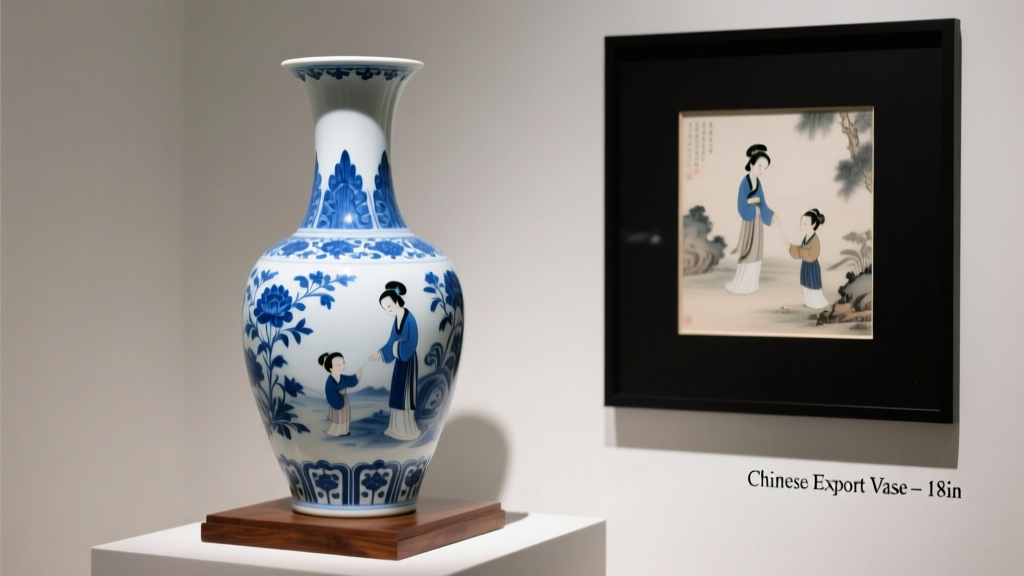
Chinese Export Porcelain Vase: White Ground, Women-and-Children Reserves in Iron-Red and Gilded Detail, Blue Overglaze Baluster Form — An 18-Inch Authentication & Market Analysis
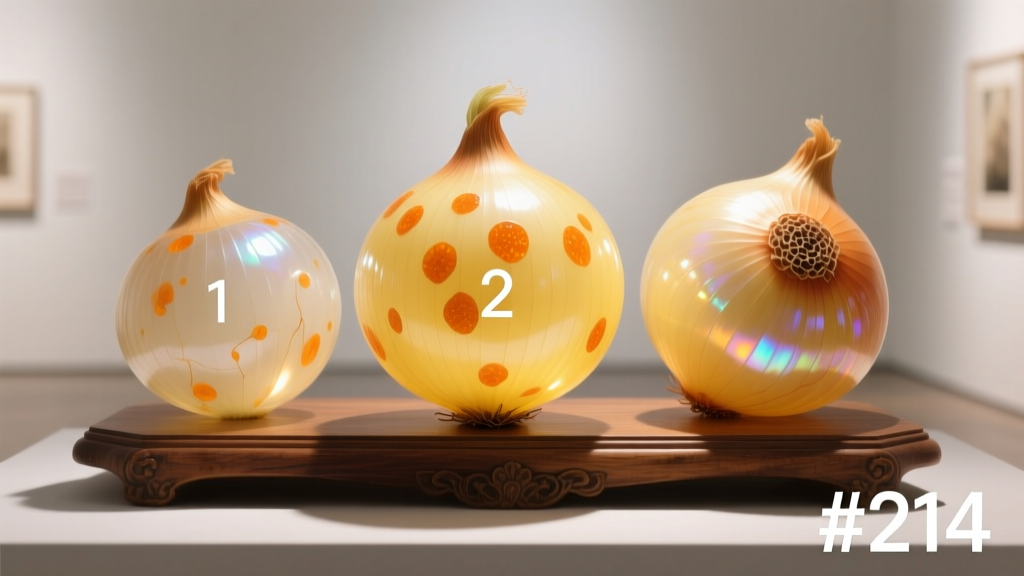
Marble Mica Onionskin Yellow Base with Orange Spots: Authentication, Market Value, and Technical Analysis of the 2¼-Inch Format
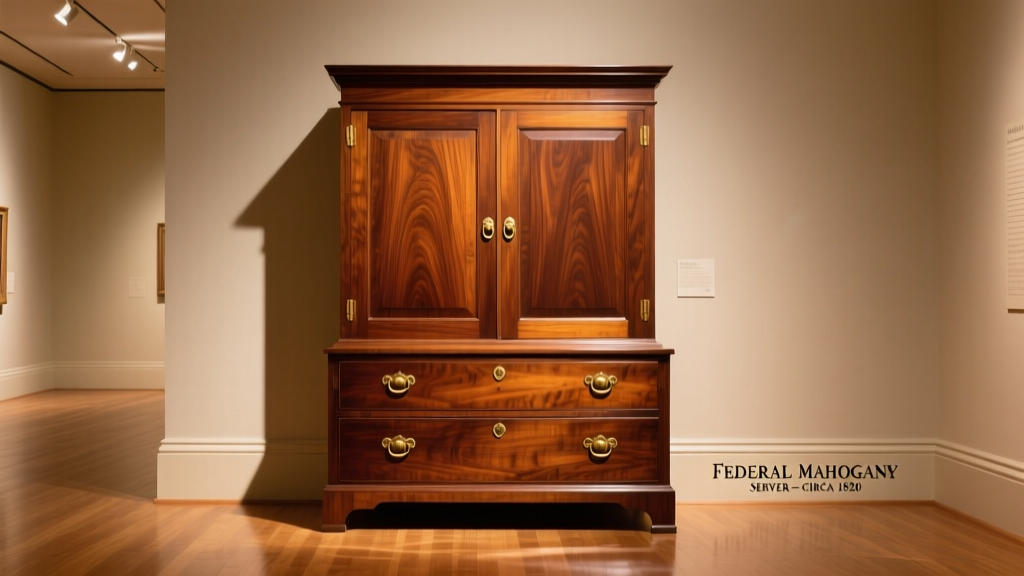
Federal-Era Mahogany Server: Authentication, Provenance, and Market Analysis of a Circa 1820 Two-Drawer, Two-Door Example (37 × 41 in)

Authentication Dossier: The Case of Print ID 1137552 — A 1984 Andy Warhol Screenprint from the 'Ads' Series
Custard Glass Victoria Butter Cover in Green: Authentication, Provenance, and Market Value Analysis
Lone Ranger Eggcup Pair with Raised Image of Tonto: Keele Pottery, England, 1961 — Authentication, Provenance, and Market Context
Cambridge Glass Caprice Relish Blue 12-Inch: Authentication, Market Value, and Historical Context
Lladro Figurine Flamenco Dancers No. 4519 (1969): Authentication, Provenance, and Market Analysis
Loetz Art Nouveau Vase: Decoding the Horizontal Ribbing, Flared Ruffled Rim, and Polished Pontil — A 10½-Inch Authentication Case Study