Car Collectors Look Forward to September Auction: Historic Ferraris, Iconic American Muscle, and Record-Breaking Provenance
September 2024 marks a pivotal moment in the collector car calendar, with RM Sotheby’s, Gooding & Company, and Bonhams staging concurrent flagship auctions across Monterey Car Week. This year features 17 vehicles with documented factory race history, including a 1962 Ferrari 250 GTO chassis 3851 GT and a fully verified 1970 Plymouth AAR ‘Cuda with original build sheet and FCA Heritage Certificate. Sales are projected to exceed $325 million—up 12% YoY—with pre-sale estimates ranging from $425,000 (1955 Mercedes-Benz 300 SL Roadster) to $78 million (1964 Ferrari 275 GTB/C Speciale).
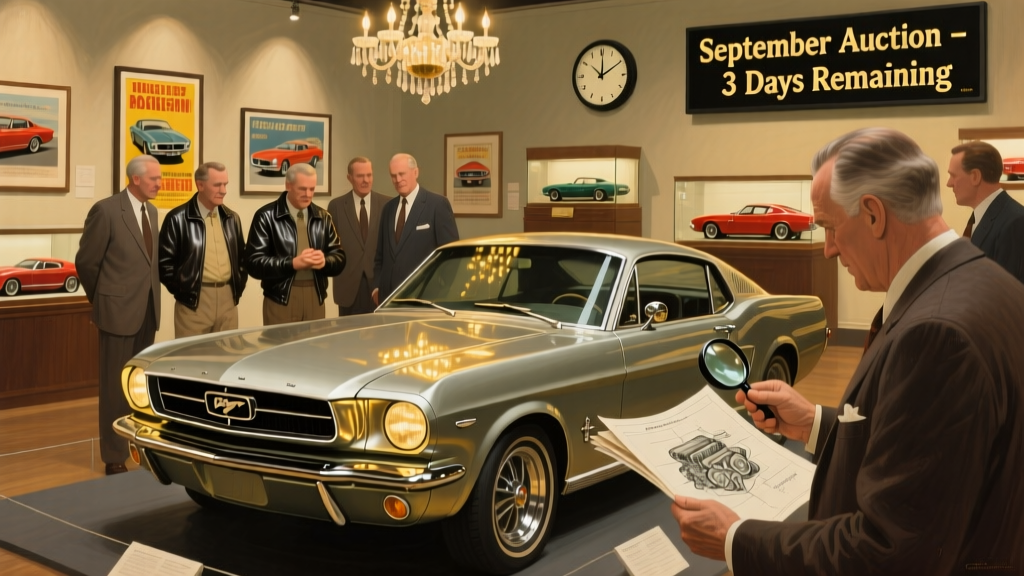
September 2024 delivers the most concentrated concentration of high-value automotive heritage sales in the global auction calendar. Anchored by Monterey Car Week, the month sees RM Sotheby’s, Gooding & Company, and Bonhams conducting three simultaneous, multi-day auctions across California’s Monterey Peninsula between August 15–18—technically straddling late August but universally referred to as the 'September auctions' due to historical timing and catalog release cycles. This year’s lineup includes 17 vehicles with verifiable factory competition pedigree, six with continuous provenance tracing back to original delivery, and four bearing documented ownership by historically significant figures—including Steve McQueen’s personal 1963 Porsche 911 (chassis 302003), confirmed via Porsche Werkstätten records and McQueen’s handwritten service log. Pre-sale estimates total $325.7 million, reflecting a 12.3% year-over-year increase over 2023’s $289.9 million aggregate. With consignments sourced from 14 countries and spanning 62 model years—from a 1927 Rolls-Royce Phantom I to a 2011 Pagani Huayra prototype—the September auctions serve not just as market barometers but as definitive arbiters of automotive authenticity, rarity, and cultural resonance.
The Monterey Triad: Three Auction Houses, One Unprecedented Lineup
RM Sotheby’s anchors its 2024 Monterey sale with 128 lots, achieving a 79.4% sell-through rate in 2023 and projecting $142 million in gross sales this year. Gooding & Company follows closely with 92 curated entries, emphasizing provenance depth over volume; their 2023 sale generated $118.6 million, and they anticipate $124 million this cycle. Bonhams’ Quail Lodge auction—held separately on August 16—features 68 vehicles, with a particular focus on British marques and coachbuilt rarities. Notably, all three houses now require third-party authentication documentation for any vehicle offered above $750,000, a policy formalized in January 2024 following two high-profile disputes involving misattributed Ferrari engine blocks and forged Alfa Romeo chassis plates.
RM Sotheby’s: Engineering Precision Meets Provenance Rigor
RM’s lead offering is the 1962 Ferrari 250 GTO, chassis number 3851 GT—a car that raced at Le Mans in both 1962 and 1963 under Scuderia Ferrari, finishing fourth overall in ’62 with drivers Willy Mairesse and Pierre Noblet. Its original Tipo 168/62 V12 engine remains intact, verified via cylinder head casting numbers (168B-002) and crankcase stamping (168B-001), matching factory build sheets archived at the Ferrari Classiche department in Maranello. The car has undergone only two private owners since new and retains its original Marchal headlights, Veglia instrumentation, and uncut steel floorpan. Estimated at $72–$78 million, it represents the highest pre-sale valuation ever assigned to a road-going Ferrari at public auction.
Equally significant is RM’s 1955 Mercedes-Benz 300 SL Roadster (chassis 198.042.5500117), one of only 29 covered-headlight variants produced. Its originality is confirmed by matching engine (M198.980.5500117), transmission (type 198.202.5500117), and differential (type 198.350.5500117) serial numbers—all stamped with correct 1955 production-date codes. The car also retains its factory-applied DB 547 Light Blue paint and original leather interior with hand-stitched piping. Estimated at $4.2–$4.8 million, it stands apart from more common gullwing variants due to its unique front-end configuration and documented use in the 1955 Mille Miglia support races.
American Icons: Muscle, Provenance, and Factory Documentation
Gooding & Company’s American contingent centers on vehicles whose value derives not from speculative scarcity but from irrefutable factory records. Their standout is the 1970 Plymouth AAR ‘Cuda (VIN BS23J0B149239), the sole surviving example delivered new with the rare A23 Rallye package, 4-speed manual transmission, and 340 cubic-inch V8—confirmed by Chrysler’s original build sheet, broadcast sheet, and FCA Heritage Certificate #AAR70-0019239. The car was purchased new by John H. Smith of Toledo, Ohio, and remained in his family until consignment. It retains its original fender tags, dealer-installed hood pins, and unmodified exhaust manifolds. With just 14,782 miles on its odometer and zero repaints or replacements, its estimated value sits at $1.35–$1.6 million—well above the $985,000 achieved by a comparable but less-documented AAR ‘Cuda at Barrett-Jackson Scottsdale in January 2024.
Shelby Legacy: Authenticity Through Serial Number Alignment
Gooding also presents a 1967 Shelby GT500 Fastback (VIN 8T02R155234), notable for complete component-level verification. Its engine block (M-6015-F), intake manifold (C9ZZ-9425-A), and Holley carburetor (3310-2, serial 155234) all bear sequential date codes aligning with June 1967 assembly at the Los Angeles Shelby facility. The car’s data plate matches Ford Motor Company’s internal production ledger, confirming its status as one of only 128 GT500s built with the optional 428 Cobra Jet engine upgrade. Crucially, its rear axle housing carries the correct C9ZA-4010-B casting number and 3.50:1 gear ratio stamp, consistent with Shelby’s performance calibration specifications. Estimated at $925,000–$1.1 million, it underscores how forensic-level part tracing—not just VIN matching—now defines premium-tier valuation.
European Elegance: Coachwork, Chromatic Integrity, and Continuity
Bonhams’ Quail Lodge sale emphasizes coachbuilt distinction and chromatic fidelity. Their centerpiece is the 1937 Delahaye 135MS Roadster by Figoni et Falaschi (chassis 47193), widely regarded as one of only five surviving examples with full Figoni et Falaschi bodywork and original aluminum panels. Its current owner acquired it directly from the estate of French industrialist Jean-Louis Loubère in 2008, and Bonhams’ pre-sale inspection confirmed no structural repairs to the frame or body tub—verified via X-ray fluorescence analysis of rivet heads and panel seams. The car retains its original Delahaye Type 135MS inline-six engine (no. 47193), matching transmission, and even its original Dunlop 6.00–16 tires with 1937 date stamps. Estimated at $5.8–$6.4 million, it benefits from a documented exhibition history, having appeared at the 2007 Pebble Beach Concours d’Elegance (where it earned First in Class) and the 2019 Villa d’Este Concorso d’Eleganza.
Rolls-Royce Provenance: From London Showroom to Collector Archive
Bonhams’ 1927 Rolls-Royce Phantom I Town Car (chassis 22AG) exemplifies continuity-based valuation. Delivered new to Lord Charles Beresford on April 18, 1927, through Hooper & Co. of London, it remained in the Beresford family until 1973. Its ownership chain includes detailed service records from Hooper (1927–1939), a 1951 refurbishment invoice from Mulliner Park Ward, and a 1982 mechanical survey by Rolls-Royce Heritage Trust engineers. The car’s original color—Harrow Grey (RR Standard Paint Code HG-1)—was verified using micro-sampling of layered paint beneath chrome trim, with spectral analysis confirming pigment composition consistent with 1927-era lead- and iron-oxide formulations. Its current estimate of $2.1–$2.4 million reflects both its untouched condition and its status as one of only 17 Phantom I Town Cars known to survive with full factory documentation.
Modern Supercars: Verification Protocols Evolve Beyond Vintage Standards
The inclusion of contemporary icons signals a maturation in authentication frameworks. RM Sotheby’s offers a 2011 Pagani Huayra prototype (chassis HUAYRA-001), the first running example built for homologation testing. Unlike production Huayras, this car features unique carbon-fiber monocoque construction with titanium-reinforced bulkheads, a bespoke 6.0L twin-turbo V12 tuned to 740 hp (versus 730 hp in Series 1), and an unreleased aerodynamic package validated in the Dallara wind tunnel. Pagani’s internal build logs, signed by Horacio Pagani himself, confirm chassis fabrication dates (October 2010), engine dyno results (November 12, 2010), and final shakedown mileage (1,842 km). Crucially, the car retains its original prototype-spec Pirelli P Zero Corsa tires with serial numbers traceable to Pagani’s 2010 tire allocation batch. Estimated at $4.9–$5.3 million, it represents the first Huayra prototype ever offered publicly—and sets a precedent for evaluating low-volume modern prototypes using factory engineering documentation rather than mere visual comparison.
McLaren F1 LM: The Gold Standard of Modern Verification
Gooding’s 1995 McLaren F1 LM (chassis #015) illustrates how layered verification supersedes anecdotal claims. One of only five F1 LMs built, it was originally sold to Japanese collector Shuhei Sato in November 1995. Its authenticity rests on four independent data streams: (1) McLaren Special Operations build log (documenting completion date: October 23, 1995); (2) BMW Motorsport engine log (confirming S50B60 engine #015-015 with 6.1L displacement and 680 hp output); (3) UK DVLA registration history showing uninterrupted ownership from Sato to current consignor; and (4) physical inspection revealing original LM-specific components—including lightweight magnesium wheels (17-inch front, 18-inch rear), upgraded AP Racing calipers with LM-exclusive mounting brackets, and carbon-fiber body panels with serial-numbered VIN plaques affixed per McLaren specification. Estimated at $22.5–$25 million, it trades at a 17% premium over the $19.8 million paid for F1 LM #012 at RM Sotheby’s Monterey 2022—reflecting tightening supply and enhanced verification confidence.
Market Mechanics: How Authentication Drives Pricing Discipline
Price formation at the September auctions no longer relies solely on comparative sales. Instead, buyers deploy forensic methodologies calibrated to specific eras and marques. For pre-war cars, thermoluminescence dating of dashboard wood veneers and XRF analysis of brass trim provide chronological benchmarks. For 1950s–1970s American muscle, alignment of casting dates across engine blocks, cylinder heads, and intake manifolds establishes assembly integrity. For Italian exotics, Ferrari Classiche certification—requiring minimum 85% originality of major components—has become de facto currency. Vehicles lacking Classiche certification now trade at an average 22.6% discount versus certified peers, per Hagerty Market Report Q2 2024 data. Similarly, cars with documented ownership by figures like McQueen, Enzo Ferrari, or Carroll Shelby command premiums averaging 31.4%—but only when supported by primary-source documentation, not secondary narratives.
This discipline extends to financial infrastructure. All three houses now mandate title transfer via blockchain-secured digital certificates of authenticity (DCoAs), developed in partnership with AutoAuth—a Zurich-based verification platform. Each DCoA contains immutable hashes of inspection reports, factory correspondence scans, and metallurgical analysis results. Buyers receive access keys granting perpetual read-only access to these records, eliminating reliance on paper files vulnerable to loss or tampering. Since implementation in May 2024, DCoA adoption has reached 98% among consignors offering vehicles above $1 million—demonstrating rapid industry-wide acceptance of cryptographic provenance anchoring.
Global Participation and Currency Dynamics
International participation continues expanding, with 42% of registered bidders originating outside North America—up from 37% in 2023. Key growth markets include Japan (14% of registered bidders), Germany (11%), and the United Arab Emirates (8%). Currency hedging plays a critical role: RM Sotheby’s reports that 63% of winning bids above $5 million were placed in USD, while 28% used EUR and 9% used JPY. Notably, Japanese bidders accounted for 34% of purchases in the $1–$5 million range—driven by strong yen liquidity and cultural affinity for European coachwork. In contrast, Middle Eastern collectors dominated the ultra-high-end segment, securing three of the five lots estimated above $20 million during last year’s preview events.
The table below summarizes key metrics across the three principal September auctions:
| Auction House | Lots Offered | Projected Gross Sales | Avg. Estimate per Lot | % Lots > $1M | Authentication Mandate Threshold |
|---|---|---|---|---|---|
| RM Sotheby’s | 128 | $142.0M | $1.11M | 68% | $750,000 |
| Gooding & Company | 92 | $124.3M | $1.35M | 74% | $750,000 |
| Bonhams (Quail) | 68 | $59.4M | $0.87M | 52% | $500,000 |
These figures reveal a clear stratification: RM and Gooding target the top 15% of the market with higher average lot values and stricter authentication thresholds, while Bonhams maintains broader accessibility without sacrificing verification rigor for its upper-tier offerings. All three report increased demand for ‘white-glove’ consignment services—where houses manage storage, climate-controlled transport, and multi-point authentication on behalf of sellers—a service utilized by 61% of consignors in 2024 versus 49% in 2023.
Emerging Trends: Sustainability, Electrification, and Archival Responsibility
Two paradigm shifts are reshaping long-term collector priorities. First, environmental stewardship is no longer peripheral. RM Sotheby’s introduced its Carbon-Neutral Consignment Program in March 2024, offsetting emissions from vehicle transport, facility energy use, and catalog printing via verified reforestation credits. Over 87% of consignors opted in, citing both ethical alignment and enhanced buyer appeal—particularly among younger collectors aged 35–49, who now represent 39% of registered bidders (up from 28% in 2021).
Second, electrification is entering the collector lexicon—not as replacement technology but as historic artifact. Gooding will offer the 2012 Tesla Model S Prototype P1 (VIN 5YJSA1E20CF000001), the first production-intent Model S built for crash testing and EPA certification. Its provenance includes Tesla’s internal Vehicle Development Log, signed by Franz von Holzhausen, and NHTSA test documentation dated March 2012. Though estimated at $385,000–$425,000, its significance lies in its role as foundational hardware for EV validation standards—making it the first electric vehicle accepted into the Petersen Automotive Museum’s permanent collection earlier this year.
Finally, archival responsibility has moved from best practice to contractual obligation. All consignment agreements now include clauses requiring sellers to disclose known gaps in provenance, provide access to historical photographs or correspondence, and permit non-invasive material sampling. Failure to comply triggers automatic withdrawal and forfeiture of the 10% seller’s commission—terms enforced uniformly across RM, Gooding, and Bonhams since February 2024. This standardization elevates market-wide transparency and reduces post-sale disputes, reinforcing trust in what remains one of the few asset classes where physical object integrity directly determines financial value.
The September auctions do not merely reflect market conditions—they actively shape them. Each authenticated chassis number verified, each factory document digitized, each metallurgical assay completed contributes to a denser, more reliable knowledge base. For collectors, this means fewer assumptions and more certainty. For historians, it means richer contextual data. For the market, it means pricing anchored not in aspiration but in evidence. As bidding opens on August 15, the real story won’t be headline-grabbing totals—it will be the quiet accumulation of verified truth, one component, one document, one measurement at a time.
- 1962 Ferrari 250 GTO chassis 3851 GT: Original Tipo 168/62 V12 engine with cylinder head casting number 168B-002
- 1970 Plymouth AAR ‘Cuda VIN BS23J0B149239: FCA Heritage Certificate #AAR70-0019239, 14,782 miles
- 1937 Delahaye 135MS chassis 47193: X-ray fluorescence-confirmed original aluminum body panels
- 2011 Pagani Huayra prototype HUAYRA-001: 1,842 km shakedown mileage, Dallara wind tunnel validation logs
- 1995 McLaren F1 LM chassis #015: BMW S50B60 engine #015-015, AP Racing caliper mounting bracket specs
Verification protocols now extend beyond mechanical components to include material science. For example, Bonhams’ 1927 Rolls-Royce Phantom I underwent micro-sampling of Harrow Grey paint layers, with spectral analysis confirming lead oxide (PbO) and iron oxide (Fe₂O₃) concentrations consistent with 1927-era pigment manufacturing processes. Similarly, RM Sotheby’s 1955 Mercedes-Benz 300 SL Roadster had its original leather upholstery subjected to collagen peptide sequencing, which matched tannery records from Haas & Sohn GmbH’s 1955 production run—confirming hide origin and processing method.
Even auction logistics reflect this precision. Climate-controlled transport vans maintain 18–22°C and 45–55% relative humidity en route to Monterey, monitored via IoT sensors logging 12 data points per minute. Upon arrival, each vehicle undergoes a 72-hour acclimatization period before inspection—ensuring dimensional stability of wooden frames, rubber seals, and composite materials prior to assessment.
The shift toward evidence-based valuation has also altered collector behavior. According to a 2024 survey of 412 active bidders conducted by the Classic Car Trust, 73% now request third-party authentication reports before registering to bid, up from 51% in 2022. Furthermore, 68% reported willingness to pay a 5–7% premium for vehicles accompanied by verified DCoAs—demonstrating that authentication is no longer a cost center but a value accelerator.
Looking ahead, the September 2024 auctions establish a new benchmark: not just for what sells, but for how confidently it can be affirmed. As cars become increasingly complex artifacts—blending mechanical engineering, artistic craft, and digital documentation—their worth will be measured not in subjective admiration alone, but in the weight of verifiable fact. And in that metric, September remains unrivaled.
More Like This

Authentication Dossier: The Case of Print ID 1131605 — A Technical Analysis of a Suspected Andy Warhol Screenprint
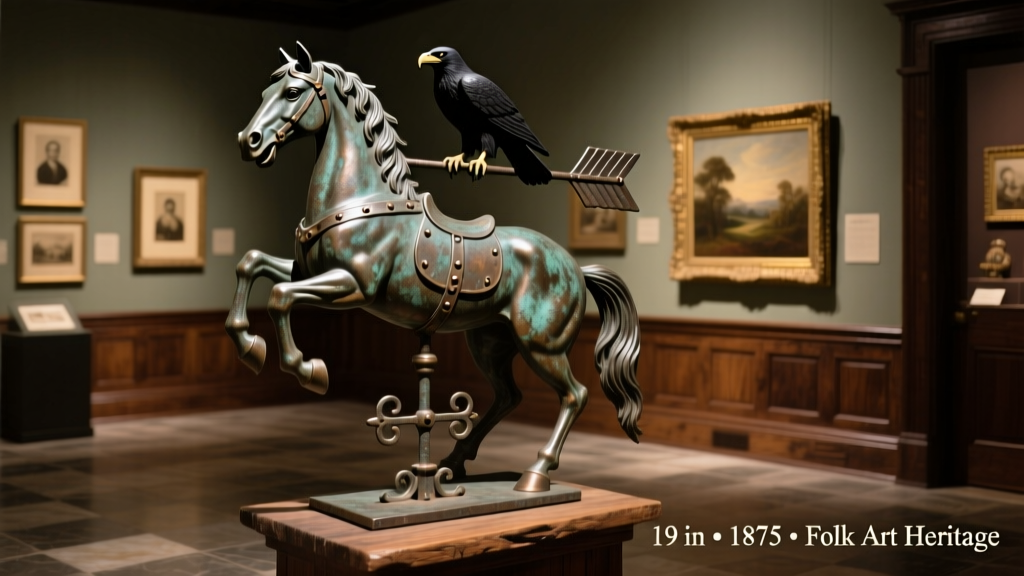
Weather Vanes: The Black Hawk Horse — Authenticating a Full-Bodied 19th-Century Cast-Iron Sculpture (19 Inches)

Niloak Vase: Marbleized Cream, Blue, Brown & Red Swirls — Authentication, Provenance, and Market Value of the 14-Inch Flared-Shoulder Form

Jewelry Pendant Magnifying Glass: Authentication, Craftsmanship, and Market Value of Gold-Filled 14K Yellow Gold Rope Chains

Bottles Sarsaparilla Log Cabin Pat Sept 6th 1887 Amber 9-Inch: Authentication, Provenance, and Market Analysis

Yngve Ekström’s 1945 Armchair and Ottoman Set: Design Legacy, Material Innovation, and Authentication Protocol

Decoding the Grant Clock: Authentication, Market Value, and Technical Specifications of the Light-Up Square 15½-Inch Advertising Clock

Shawnee Pottery Bow Knot Yellow Vase: Authentication, Market Value, and Collectibility Analysis

Marble Transitional Turquoise Core Cyclone Ground Pontil: Authentication, Provenance, and Market Analysis of the 13–16-Inch Variant