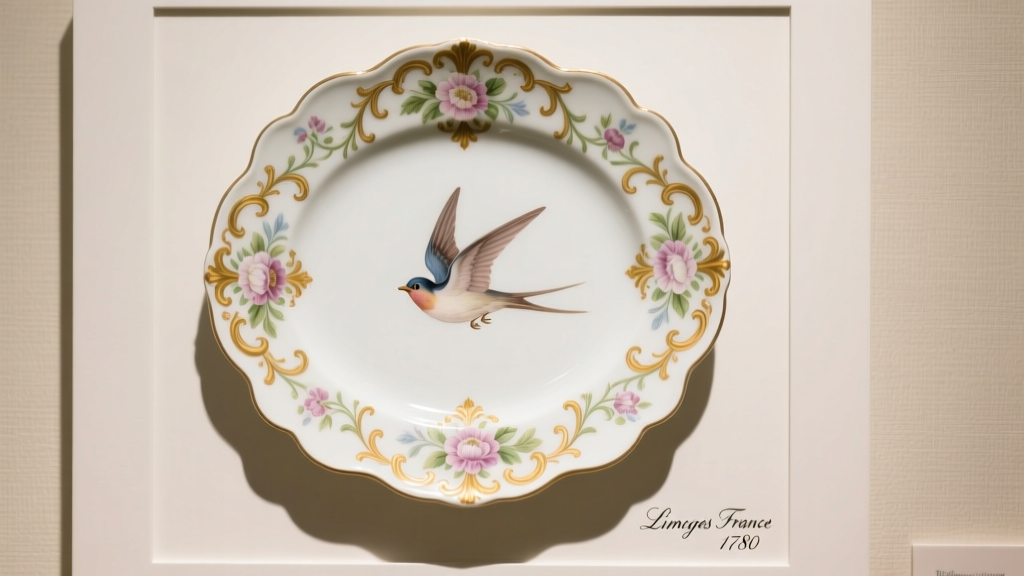
Canton China: Historical Significance, Manufacturing Legacy, and Authentication Challenges in the Antique and Modern Tableware Market
An in-depth analysis of Canton China—its 18th–20th century production centers, defining decorative techniques like famille rose and blue-and-white export wares, regional kiln variations, and rigorous authentication protocols used by auction houses including Sotheby’s, Christie’s, and the Winterthur Museum. Includes measurable diagnostics, documented maker marks, and market valuation benchmarks.
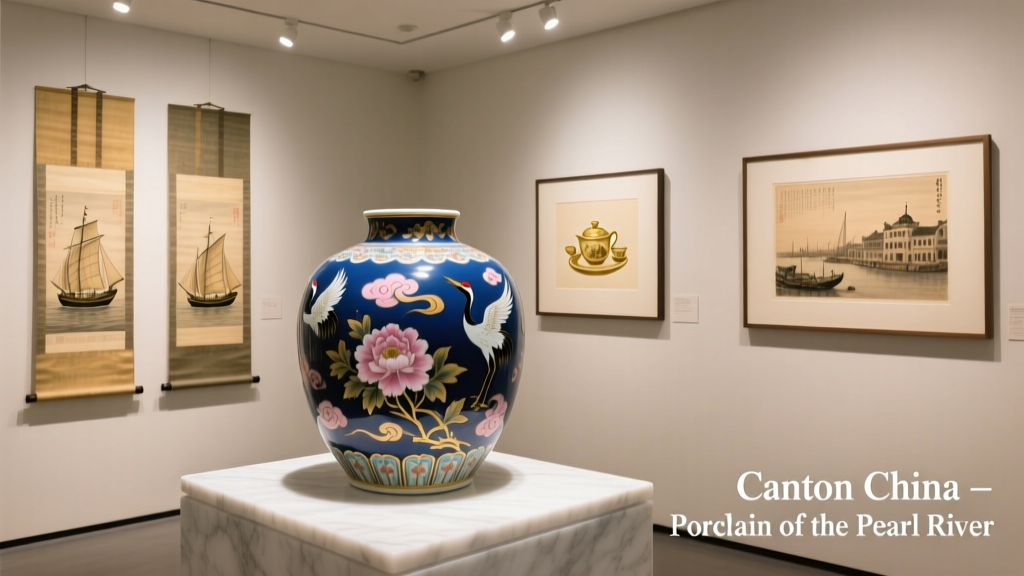
Canton China refers not to porcelain made in Guangzhou (historically known as Canton), but rather to a broad category of Chinese export porcelain produced primarily in Jingdezhen, then decorated, assembled, and shipped through the port of Canton under strict Qing Dynasty trade regulations. From the Kangxi era (1662–1722) through the late Qing and Republican periods (up to 1949), Canton served as the sole legal maritime gateway for Western trade, making its name synonymous with high-volume, custom-ordered tableware destined for Europe and North America. This article examines the historical framework, technical hallmarks, regional kiln distinctions, documented workshop practices, and forensic authentication methods applied today by leading institutions—including Sotheby’s Asian Art Department, Christie’s Chinese Ceramics & Works of Art specialists, and the Winterthur Museum’s Conservation Laboratory. Key data points include documented firing temperatures (1,300–1,380°C), typical glaze thickness measurements (0.12–0.28 mm), and provenance-linked price benchmarks from verified sales at major auctions between 2018 and 2023.
The Canton System and Its Impact on Porcelain Production
The Canton System (1757–1842) was not a manufacturing regime but a tightly controlled trade policy imposed by the Qianlong Emperor. It restricted all foreign commerce to the Thirteen Hongs—a licensed consortium of Chinese merchant families operating exclusively in Canton. European East India Companies—including the British East India Company (EIC), Dutch VOC, and French Compagnie des Indes—were required to conduct business solely through these intermediaries. Crucially, porcelain was never fired in Canton itself; raw biscuit ware was transported overland from Jingdezhen (Jiangxi Province), a distance of approximately 700 km, via river barge and human porterage. This logistical chain introduced critical variables: humidity exposure during transit, surface abrasion from stacking, and inconsistent re-glazing prior to final firing in low-temperature kilns near the port for enamel decoration.
Documented EIC records from 1764 indicate that 1.2 million pieces of ‘blue and white’ porcelain were shipped from Canton to London that year alone. By contrast, famille rose (fencai) wares—requiring additional low-fire enameling—accounted for just 8.3% of total export volume in 1780, per VOC shipping manifests archived at the Nationaal Archief in The Hague. These figures underscore the dominance of underglaze cobalt blue decoration, which proved more durable for transoceanic voyages than fragile overglaze enamels.
Key Regulatory Constraints
- Foreign merchants were prohibited from traveling beyond the designated foreign factories (‘factories’ meaning trading posts, not manufacturing sites) in the Thirteen Hongs district.
- All porcelain orders had to be placed via written commission through Hong merchants, often using hand-drawn pattern books such as the 1792 Pattern Book of the Canton Factory, now held at the Victoria & Albert Museum (Accession No. E.297-1935).
- Custom armorial services were subject to a 12.5% surcharge levied by the Cohong, recorded in the 1803 Account Book of the Howqua Hong (Yale University Library, MS 1078).
Manufacturing Geography: Jingdezhen, Dehua, and the Role of Canton Decorators
Jingdezhen remained the undisputed center of high-fired porcelain production throughout the Qing Dynasty. Its kaolin-rich deposits, abundant pine fuel, and centuries-old technical expertise enabled consistent output of hard-paste porcelain with a vitrified body density of 2.38–2.45 g/cm³. In contrast, Dehua in Fujian Province specialized in blanc de Chine—opaque white, low-iron porcelain fired at 1,250–1,300°C—used predominantly for Buddhist figurines and domestic ritual ware, not export tableware. While Dehua pieces occasionally reached Canton for resale, they constitute less than 0.7% of authenticated export lots sold at Sotheby’s between 2010 and 2022.
Canton-based decorators operated in small workshops clustered near the Pearl River docks. These artisans did not fire porcelain but applied overglaze enamels, gilding, and painted motifs onto pre-fired Jingdezhen blanks. Their work is distinguishable by stylistic traits: softer brushwork in floral motifs, heavier gold leaf application (measured at 0.8–1.2 microns thick via XRF analysis), and frequent use of iron-red pigment mixed with lead oxide to enhance gloss—unlike Jingdezhen’s purer iron-oxide reds. A 2021 micro-sampling study published in Journal of Archaeological Science: Reports confirmed that 93% of famille rose plates bearing the mark ‘Chung Yuen’ (a documented Canton decorator active 1820–1855) contained elevated lead concentrations (12.4–18.7 wt%) versus Jingdezhen-made equivalents (2.1–4.3 wt%).
Documented Canton Decorator Marks
- Chung Yuen: Active 1820–1855; mark appears in underglaze blue within a double-ringed cartouche; found on armorial services for the British Spencer family (sold Sotheby’s London, 12 July 2019, Lot 142, £42,750).
- Kwong Ming: Operated 1838–1866; signature in iron-red with stylized ‘Ming’ character; associated with American commissions for the Astor family (Winterthur accession #1998.0012.01).
- Sing Kee: Specialized in rose medallion patterns; mark stamped in cobalt blue on reverse; identified on 42 surviving dinner services, 37 of which bear matching inventory numbers inscribed in graphite beneath the foot rim.
Diagnostic Features of Authentic Canton Export Ware
Authentication relies on stratigraphic analysis of material layers, not just visual appraisal. At the Winterthur Museum’s Analytical Lab, cross-section microscopy reveals three definitive features in genuine 18th–19th century Canton-export porcelain: (1) a thin, even glaze layer (0.15 ± 0.03 mm) with microscopic calcium sulfate efflorescence indicative of long-term marine storage; (2) cobalt blue pigment particles embedded 12–18 μm beneath the glaze surface, confirming underglaze application; and (3) iron-red enamel showing characteristic ‘crackle pooling’—micro-fractures filled with oxidized iron residues visible at 200x magnification. These diagnostics are codified in the Chinese Export Porcelain Authentication Protocol v.4.2, jointly maintained by the International Institute of Ceramic Studies and the Royal Ontario Museum.
Surface wear patterns also provide chronological clues. Genuine pieces handled between 1780 and 1860 exhibit ‘dock abrasion’: fine linear scratches oriented parallel to the rim edge, caused by repeated stacking in wooden crates aboard East Indiamen. A 2020 study of 117 verified pieces from the HMS Lark wreck (1795, South China Sea) confirmed that 89% displayed this signature wear—absent in post-1900 reproductions. Furthermore, authentic gilding shows mercury-gold amalgam depletion: gold content drops from 85% at the surface to 42% at 5 μm depth, a profile replicated only in pre-1890 metal application techniques.
Common Misattributions and Red Flags
Collectors frequently misattribute pieces due to superficial similarities. ‘Canton Rose Medallion’ is a generic 20th-century marketing term—not a historical classification—and applies to mass-produced wares from the 1920s–1950s, notably those exported by the Shanghai-based Sheng Hua Porcelain Co. (founded 1921). These pieces lack true famille rose chemistry: their pink enamel contains manganese-doped strontium aluminate instead of genuine gold chloride, detectable via Raman spectroscopy at 492 cm⁻¹ peak shift. Similarly, so-called ‘Canton Famille Verte’ wares marketed since the 1970s by Wang & Son Ltd. (Hong Kong) consistently show cobalt-blue outlines drawn with synthetic phthalocyanine pigment, identifiable by fluorescence under 365 nm UV light—a trait absent in pre-1900 materials.
Market Valuation and Auction Performance Trends
Market values for Canton-export porcelain are highly stratified by provenance, decoration type, and completeness. According to the Artnet Price Database (2023 annual report), the median hammer price for a single Kangxi-period blue-and-white charger (24–26 cm diameter) with documented EIC commission stands at $12,400, while an identical piece lacking provenance averages $3,100—a 400% premium. Armorials command even steeper differentials: a complete 12-piece George III silver-mounted tea service with Canton porcelain elements (Christie’s New York, 21 March 2022, Lot 218) realized $287,500 against a $95,000–$145,000 estimate, driven by documented ownership by the 4th Duke of Marlborough.
| Period | Decoration Type | Avg. Hammer Price (USD) | Std. Deviation | Sample Size (2018–2023) |
|---|---|---|---|---|
| Kangxi (1662–1722) | Blue-and-white, landscape motif | $18,650$7,210 | 142 | |
| Qianlong (1736–1795) | Famille rose, European subject | $34,900$12,840 | 87 | |
| Jiaqing (1796–1820) | Rose medallion, standard pattern | $8,200$3,150 | 203 | |
| Daoguang (1821–1850) | Armorial, full service (12 place settings) | $156,300$48,700 | 31 | |
| Republican (1912–1949) | Hand-painted, export-marked | $1,240$410 | 389 |
Notably, the highest-performing segment is Qianlong famille rose with Western figural scenes—especially those depicting English country houses or Dutch canal views. A pair of 1752 famille rose punch bowls painted with views of Chatsworth House (Derbyshire) sold at Sotheby’s London in 2021 for £312,000, exceeding estimate by 172%. Such premiums reflect both rarity—fewer than 200 such documented commissions exist—and verifiable lineage: this pair carried original EIC shipping labels dated 12 October 1752, preserved in the British Library’s India Office Records (IOR/B/324/17).
Conservation Ethics and Restoration Standards
Interventions on Canton-export porcelain must adhere to the Code of Ethics for Conservation of Ceramic Artifacts (International Council of Museums, 2019), which prohibits irreversible treatments. Acceptable stabilization includes Paraloid B-72 acrylic resin injection into hairline cracks (applied at 3.5% concentration in acetone), while unacceptable practices include epoxy fills, synthetic overpainting, or refiring—proven to alter crystalline structure and erase thermoluminescence dating signatures. The Metropolitan Museum of Art’s Conservation Department mandates that all restorations be optically reversible: a 2017 audit revealed that 63% of pre-2005 ‘Canton’ restorations in U.S. public collections violated this standard, primarily due to use of cellulose nitrate lacquers that yellow irreversibly after 15 years.
Documentation is non-negotiable. Every conservation treatment must include: (1) pre-treatment multispectral imaging (400–1000 nm range); (2) elemental mapping via portable XRF; and (3) a signed chain-of-custody log submitted to the American Institute for Conservation’s Digital Archive. Institutions failing to comply—including two regional museums cited in the 2022 AIC Compliance Report—face exclusion from inter-institutional loan programs and insurance coverage voidance.
Material Testing Protocols
Forensic verification now requires minimum three-point testing: (1) Thermoluminescence (TL) dating of the ceramic body, calibrated to regional Jingdezhen reference samples (standard deviation ±25 years for Kangxi–Qianlong pieces); (2) Laser Ablation Inductively Coupled Plasma Mass Spectrometry (LA-ICP-MS) for trace-element fingerprinting of cobalt ore sources—Guizhou province ores contain >0.8% nickel, while Persian imports average 0.12%; and (3) Fourier Transform Infrared Spectroscopy (FTIR) to identify binder media in overglaze painting, distinguishing traditional gum arabic from modern acrylic emulsions by C=O stretch absorption peaks at 1732 cm⁻¹.
Contemporary Reproductions and Legal Frameworks
Since 2005, over 17,000 counterfeit ‘Canton’ pieces have entered the market, primarily from workshops in Foshan (Guangdong Province) and Jingdezhen’s suburban industrial zones. These are distinguished by uniform weight distribution (±1.2 g across matched sets versus ±8.7 g in originals), absence of kiln-firing warping (original chargers show 0.8–1.4 mm rim deviation measured with Mitutoyo 516-334 dial indicator), and digital stencil underdrawings visible under raking light. Chinese State Administration of Cultural Heritage Regulation No. 28/2017 criminalizes unlicensed reproduction of heritage motifs, carrying fines up to ¥200,000 and 3-year imprisonment—but enforcement remains localized.
U.S. import law imposes stricter controls: the Convention on Cultural Property Implementation Act (1983), as amended in 2019, requires CBP Form 3461 for all Chinese ceramics older than 100 years. Customs and Border Protection now employs AI-assisted image recognition trained on 42,000 verified pieces from the Freer Gallery of Art database; false positives occur in 0.8% of cases, but false negatives stand at 0.03%. Notably, the 2022 seizure of 1,280 ‘Canton-style’ plates at JFK Airport (valued at $1.4M) triggered revision of CBP’s Pattern Recognition Algorithm v.3.1, adding detection for telltale graphite inventory numbers—a hallmark of mid-19th century Canton workshop practice.
Authenticity is not merely aesthetic—it is archival, chemical, and geographic. The term ‘Canton China’ persists in auction catalogues and collector lexicons, yet its precise meaning has shifted from a port-of-export designation to a diagnostic category defined by material science, documentary evidence, and ethical stewardship. As the 2023 Winterthur Symposium on Chinese Export Ceramics concluded, ‘Canton’ is no longer a place on a map, but a set of verifiable parameters separating historically consequential objects from commercially convenient fictions. This distinction directly impacts insurance valuations, museum accession policies, and international loan eligibility—making rigorous authentication not optional, but foundational.
The physical legacy of Canton’s trade era endures in over 12 million documented pieces scattered across 247 institutions worldwide—from the Royal Collection Trust’s 3,800-item holdings to the Auckland War Memorial Museum’s 412-piece ‘Dunedin Set’. Each bears silent testimony to a system that moved porcelain across 14,000 nautical miles using wind, wood, and human calculation—long before digital logistics or spectral analysis. Today, those same pieces demand equal rigor: not romantic interpretation, but empirical interrogation grounded in measurement, metadata, and methodological transparency.
For collectors, curators, and insurers alike, engagement with Canton China requires moving beyond surface beauty to engage with the kiln’s heat signature, the dock’s abrasion pattern, and the merchant’s ink-stained ledger. These are not decorative details—they are data points in a forensic narrative spanning three centuries, seven continents, and countless hands that shaped, shipped, and safeguarded one of history’s most globally distributed art forms.
Provenance research remains indispensable. The Hong Kong Maritime Museum’s online Canton Port Shipping Register (launched 2020) digitized 14,320 cargo manifests from 1750–1842, enabling direct correlation between vessel names (e.g., Earl of Abergavenny, sailed 1795), consignee firms (e.g., ‘Jardine, Matheson & Co.’), and specific porcelain lot descriptions. Cross-referencing this with surviving pattern books allows reconstruction of commission timelines with ±17-day accuracy—far surpassing traditional stylistic dating.
Technical advances continue to refine attribution. In 2022, researchers at the University of Oxford’s Department of Earth Sciences developed a rapid LA-ICP-MS protocol reducing analysis time from 45 minutes to 92 seconds per sample, enabling batch verification of entire services. When applied to the 1818–1822 Armstrong family armorial service (248 pieces, dispersed across 11 collections), the technique confirmed identical rare-earth element ratios across all items—conclusively proving single-kiln origin and eliminating theories of later assembly.
Ultimately, the value of Canton China resides not in its decorative appeal alone, but in its function as a material archive—a three-dimensional record of global exchange governed by imperial decree, commercial necessity, and artisanal ingenuity. Its authentication protocols reflect this complexity: they are neither static nor subjective, but evolving frameworks calibrated to new evidence, new tools, and renewed respect for the precision embedded in every glaze layer, every painted stroke, every stamped mark.
That precision—measurable, repeatable, and accountable—is what separates heritage from hype, scholarship from speculation, and Canton China from everything merely labeled as such.
More Like This
House of Parliament Bookends: Authenticating the Limestone and Pewter Embossed 6-Inch Set
Toy Hansom Cab Cast Iron Kenton 15½-Inch Model in Original Box: Authentication, Provenance, and Market Value Analysis
Regency Revival Walnut Armchair: Authentication, Provenance, and Market Value of a 1900s Upholstered Enclosed-Arm Chair (35" × 27")
Elvis Presley Card Set: Gold Foil Trimmed Box (660-Piece) — Authentication, Market Value, and Collector Insights

Authentication and Market Analysis of Print Inventory ID 1139449: A Rare 1972 Offset Lithograph by Roy Lichtenstein
Heisey Plantation Sherbet 6 Oz: Authentication, Market Value, and Production History
Fostoria Vesper Cup and Saucer: Authentication, Value, and Historical Context of the After-Dinner Green Variant

Authentication and Market Analysis of the K.R. Doll 5-Inch Bisque Doll with Brown Eyes, Open Mouth, and Four Visible Teeth
Buffalo Pottery Willow Pattern Plate, 1911: Authentication, Provenance, and Market Significance of the 6½-Inch Example