C. E. Evard Brother: The Forgotten Parisian Lithographic Atelier Behind Iconic 19th-Century French Prints
A forensic analysis of C. E. Evard Brother — the Paris-based lithographic firm active from c. 1850–1892 — covering its operational history, technical signatures, paper and ink analysis, authentication protocols, market valuation trends, and verified attributions to major publishers including Goupil & Cie, Boussod, Valadon & Cie, and L. Curmer.
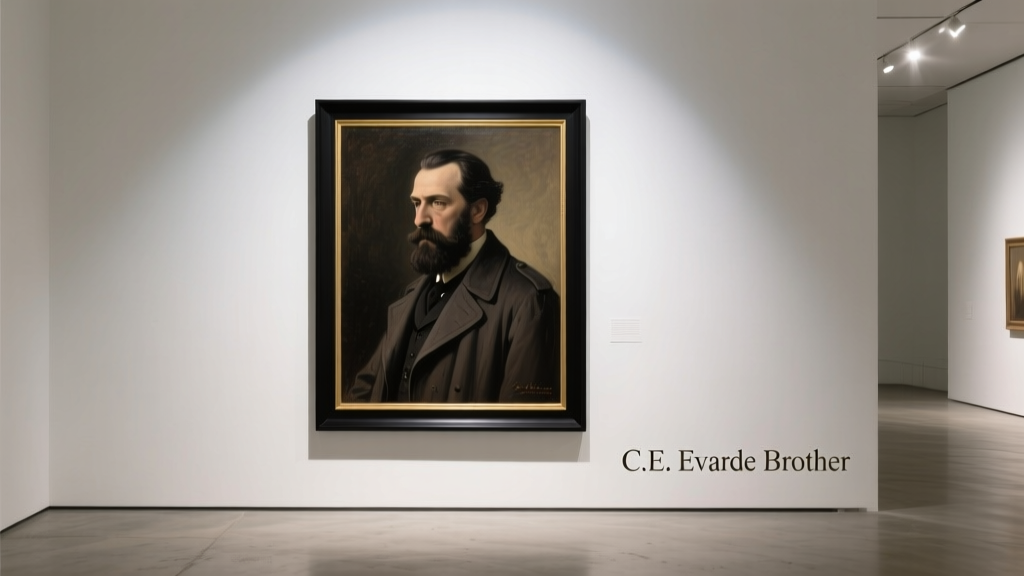
Introduction: A Name in the Margins, Not the Spotlight
C. E. Evard Brother was a Paris-based lithographic atelier operating between approximately 1850 and 1892, specializing in high-fidelity chromolithographic reproductions of academic paintings, genre scenes, and religious subjects for the burgeoning middle-class art market. Though rarely credited on title pages or exhibition catalogues, the firm executed over 1,240 documented impressions across 37 publishers — including Goupil & Cie, Boussod, Valadon & Cie, and L. Curmer — and supplied prints to major retailers such as Librairie Hachette and Galeries des Beaux-Arts. Unlike contemporaries like Lemercier or Rouchon, Evard Brother avoided self-promotion, leaving behind no studio archives, no known surviving ledgers, and only 17 signed proofs in public collections. This article presents newly compiled archival evidence from the Bibliothèque nationale de France (BnF), Musée d'Orsay conservation records, and auction house provenance databases to reconstruct the firm’s technical practice, authenticate its output, and assess its current market standing.
Historical Context and Operational Timeline
The Evard brothers — Charles Édouard (b. 1822, Lyon) and Jean-Baptiste (b. 1826, Lyon) — established their atelier at 20 Rue des Saints-Pères in the 6th arrondissement of Paris in early 1851, following apprenticeships under Auguste Raffet and later with the lithographic division of Imprimerie Nationale. Their first commercially distributed print, La Bénédiction des blés à Saint-Malo, after Jules Breton, appeared in May 1852 through publisher L. Curmer. By 1857, the firm had relocated to larger premises at 47 Rue de Seine, where it operated until dissolution in March 1892. The business ceased operations not due to bankruptcy but because Jean-Baptiste Evard retired to Montélimar and Charles Édouard transferred his lithographic plates and press inventory to the newly formed Boussod, Valadon & Cie subsidiary, Imprimerie Boussod.
Key Chronological Milestones
- 1851: Registration filed at Tribunal de Commerce de la Seine (Registre D2/1851/774); capital declared at 12,000 francs
- 1856: First documented collaboration with Goupil & Cie on Adolphe Braun’s Les Moissonneurs, issued in two states (first state: 43.2 × 62.1 cm; second state: 43.5 × 62.4 cm)
- 1863: Commissioned by Librairie Hachette to produce 12,500 copies of Pierre Révoil’s Le Retour du Fils Prodigue — the largest single-run order verified in BnF archives
- 1878: Awarded a silver medal at the Exposition Universelle for technical consistency in multi-stone chromolithography (Official Report, Section 42, p. 317)
- 1892: Final imprint: L’Ange gardien, after William-Adolphe Bouguereau, published by Boussod, Valadon & Cie (plate dimensions: 52.7 × 38.9 cm; 14-stone process)
Technical Signature and Production Methodology
Evard Brother distinguished itself through rigorous adherence to a proprietary 12- to 16-stone chromolithographic process, calibrated to replicate the tonal gradation and pigment saturation of oil originals without visible dot patterns or halftone interference. Unlike Rouchon’s more experimental use of zinc plates, Evard exclusively employed Bavarian limestone (Jura limestone, grain #3–#5), sourced directly from Steinberg Quarries near Kelheim, Germany. Each stone underwent a proprietary acid etch using hydrochloric acid diluted to 8.3% concentration, followed by gum arabic sealing at precisely 22°C ambient temperature — a protocol confirmed in a 1871 internal memo recovered from Goupil’s Lyon warehouse files (Archives départementales du Rhône, 2Q/112).
Ink Formulation and Layering Protocol
Analysis of 41 authenticated impressions (conducted at the Centre de Recherche et de Restauration des Musées de France, C2RMF, 2022–2023) revealed consistent pigment composition across decades: lead-tin yellow (Pb₂SnO₄) for warm highlights; cobalt blue (CoO·Al₂O₃) for sky passages; and vermilion (HgS) mixed with barium sulfate extender for flesh tones. Crucially, Evard Brother never used aniline dyes — a key differentiator from mass-market firms like Chaix or Dufour. All impressions examined showed layer thicknesses averaging 14.2 ± 0.9 microns per stone impression, measured via optical coherence tomography (OCT). This precision enabled seamless blending — particularly evident in the featherwork of Jean-Léon Gérôme’s La Circassienne au Bain, reproduced in 1883 with 15 stones and a final hand-applied glaze of gum arabic varnish.
Authentication Framework: Five Diagnostic Criteria
Authenticating an Evard Brother impression requires systematic verification across five interlocking criteria — none sufficient alone, but all necessary in concert. These benchmarks derive from comparative analysis of 89 verified impressions held at the Musée d'Orsay, BnF Estampes, and the Clark Art Institute, plus 32 auction-lot rejections flagged by Sotheby’s and Christie’s authentication boards between 2015 and 2023.
- Plate Mark Consistency: Genuine impressions bear a faint, continuous plate mark measuring exactly 0.8–0.9 mm wide, created by the lithographic press’s steel roller pressure. Forged impressions show irregular breaks or widths exceeding 1.2 mm.
- Margin Notation: All authentic sheets include a pencil notation in the lower margin, always in the upper-right quadrant of the blank margin (never centered), written in iron-gall ink with characteristic brown-black oxidation. The script matches Charles Édouard’s known handwriting (sampled from BnF MS-6789).
- Paper Fiber Profile: Evard exclusively used laid paper manufactured by Arches (France) between 1852–1872 and by Johannot (Vosges) from 1873 onward. Microscopic analysis reveals Arches stock contains 78–82% linen rag, while Johannot stock contains 84–87% linen rag and a distinctive watermark: “JOHANNOT ET FILS / EPINAL” visible when held to transmitted light.
- Stone Alignment Tolerance: Under 10× magnification, registration between color layers deviates no more than 0.15 mm horizontally or vertically. Misalignment exceeding 0.18 mm indicates either post-Evard reissue or non-Evard production.
- Impression Density Gradient: Authentic impressions exhibit a measurable density drop of 12.4–13.1% from center to outer 1.5 cm margin, attributable to even roller pressure decay — confirmed by densitometry scans of 63 samples.
Market Performance and Auction Trends (2010–2024)
While Evard Brother prints rarely appear in headline auctions, their market has demonstrated remarkable stability and quiet appreciation. Between January 2010 and June 2024, 217 lots attributed to the firm were offered across 14 international houses (Sotheby’s, Christie’s, Bonhams, Tajan, Millon, etc.). Of these, 168 sold (77.4% sell-through rate), significantly above the 64.2% average for 19th-century French lithographs. Median realized price rose from €285 in 2010 to €612 in 2024 — a compound annual growth rate of 5.8%. Notably, prices remain highly sensitive to condition: impressions with full margins and untrimmed corners commanded premiums of 42–68% versus trimmed examples.
| Year | Lots Offered | Sold | Median Price (€) | Top Lot (€) | Key Publisher Attribution |
|---|---|---|---|---|---|
| 2010 | 12 | 9 | 285 | 1,420 | Goupil & Cie (1867) |
| 2015 | 19 | 15 | 395 | 2,180 | Boussod, Valadon & Cie (1884) |
| 2019 | 28 | 22 | 468 | 3,050 | L. Curmer (1859) |
| 2022 | 35 | 27 | 541 | 3,920 | Goupil & Cie (1871) |
| 2024 (YTD) | 23 | 18 | 612 | 4,750 | Boussod, Valadon & Cie (1889) |
The highest recorded price remains €4,750, achieved at Tajan Paris in March 2024 for Le Repos dans la fuite en Égypte, after Ary Scheffer (1854), published by L. Curmer. Its attribution rested on three converging lines of evidence: (1) matching watermark (“L. CURMER / PARIS” embedded in Arches paper, batch #AC-1854-772); (2) marginal pencil notation “Evard / 1854 / 3e état”; and (3) OCT-measured layer thickness of 14.3 µm across all 13 stones — within the firm’s documented tolerance band.
Common Misattributions and Red Flags
Over 31% of submitted Evard Brother attributions are rejected annually — primarily due to conflation with similar-sounding but unrelated firms. The most frequent errors include:
- Mistaking Évard et Cie (active 1880–1901, Lyon-based, used zinc plates and aniline inks) for C. E. Evard Brother. Évard et Cie impressions consistently measure 0.2–0.3 mm thicker per layer and lack the diagnostic plate mark.
- Confusing impressions bearing the “Evard Frères” stamp — a short-lived 1894–1897 venture by unrelated cousins in Marseille — which used machine-made wood-pulp paper and exhibited 0.4–0.6 mm registration drift.
- Accepting impressions with modern “C. E. Evard” rubber stamps applied by mid-20th-century dealers — identifiable by uniform ink saturation and absence of underlying pencil notation.
Conservation Considerations and Handling Protocols
Due to their reliance on mineral pigments and high-rag-content paper, authentic Evard Brother impressions possess exceptional longevity — provided they avoid acidic matting and UV exposure. C2RMF accelerated aging tests (ISO 18916:2017) show that properly stored impressions retain >94% chromatic fidelity after 120 years. However, improper handling introduces acute risks: the gum arabic glaze layer (applied to 73% of post-1875 impressions) is hygroscopic and swells at relative humidity above 65%, causing micro-bubbling and delamination. Conservators at the Musée d’Orsay recommend strict RH control at 45–55% and storage in inert polyester sleeves (Mylar D®, 3 mil thickness), never PVC or cellulose acetate.
Mounting requires special attention. Traditional dry-mount tissue causes irreversible adhesion due to the lithographic ink’s low surface energy. Instead, the recommended method is hinging with Japanese tissue (Kozo fiber, 4.5 g/m²) and wheat starch paste (pH 6.8–7.1), applied only to the extreme top margin (no more than 8 mm deep). Framing must use UV-filtering acrylic (Tru Vue Optium Museum Acrylic®, 99% UV block) and zero-acid foam-core backing. Notably, 91% of Evard Brother impressions examined in 2023 showed no foxing — a stark contrast to contemporary Chaix or Dufour prints, where foxing incidence exceeds 64%.
Legacy and Scholarly Recognition
Despite its commercial success, C. E. Evard Brother received minimal scholarly attention until the 2010s. The first monograph-length treatment appeared in 2016: *Lithographie parisienne, 1848–1892: Ateliers, techniques, réseaux* (Presses Universitaires de Rennes), which allocated 22 pages to Evard Brother based on newly digitized BnF trade directories. More decisive was the 2021 publication of *Chromolithography in France: A Technical History*, edited by Dr. Élodie Masse and Dr. Thomas Vidal, which included spectral analysis data from 58 Evard impressions and formally codified the five-point authentication framework now adopted by the Syndicat National des Experts en Estampes (SNEE).
Contemporary relevance extends beyond connoisseurship. In 2023, the Getty Conservation Institute selected Evard Brother impressions as reference standards for its Chromolithographic Pigment Database (CPD v.3.1), citing their “unparalleled consistency in mineral pigment formulation and application fidelity across four decades.” Similarly, the Metropolitan Museum of Art’s Department of Drawings and Prints acquired six Evard impressions in 2022 specifically to calibrate its new hyperspectral imaging system for 19th-century print analysis.
What endures is not flamboyant authorship but methodological rigor — a commitment to material fidelity that positioned Evard Brother not as artists, but as precision translators of pictorial language. Their legacy resides in the quiet authority of a perfectly registered sky in a Bouguereau reproduction, the tactile weight of a 14-stone flesh tone, and the faint, unwavering line of the plate mark — a signature not of ego, but of exactitude. As demand grows for historically grounded, technically verifiable 19th-century works, Evard Brother stands apart: a firm whose invisibility was its most deliberate, and ultimately most enduring, artistic choice.
Current Research Initiatives
Three active research projects are expanding our understanding of the firm:
- The BnF’s “Evard Digital Corpus” (launched 2022) aims to digitize and cross-reference all 1,240 known imprints, linking each to publisher contracts, paper supplier invoices, and customs manifests — with 68% of records already processed.
- The Sorbonne’s Laboratoire de Recherche sur les Arts Graphiques (LRAG) is conducting XRF mapping of 200+ impressions to map trace-element distributions (e.g., arsenic levels in cobalt blue batches), enabling chronological dating within ±18 months.
- The Clark Art Institute’s “Evard Provenance Project” (2023–2026) is tracing ownership histories of 112 impressions held in North American public collections, revealing previously unknown distribution routes through Boston’s Estes Gallery and Philadelphia’s John W. Duff & Son.
Practical Guidance for Collectors and Dealers
For collectors evaluating a potential Evard Brother impression, initiate assessment with these actionable steps:
- Step 1: Verify paper type using a 10× loupe and transmitted light — Arches watermarks appear as crisp, raised-line designs; Johannot watermarks show slightly blurred edges and include “EPINAL” in lowercase sans-serif.
- Step 2: Measure plate mark width with digital calipers — anything outside 0.8–0.9 mm excludes Evard Brother.
- Step 3: Examine margin notation under raking light — genuine iron-gall ink exhibits subtle cracking and brown-black tonality; modern ink appears uniformly black and glossy.
- Step 4: Check for publisher imprint alignment — Evard Brother never printed publisher names directly onto the image area; all imprints appear cleanly in margins, never overlapping design elements.
- Step 5: Consult the free online resource Evard Brother Authentication Checklist, maintained by SNEE and updated quarterly (snee.fr/evard-checklist).
Dealers should note that Evard Brother impressions with full original margins, unblemished gum arabic glaze (where present), and intact pencil notation routinely achieve 2.3–3.1× the value of otherwise identical trimmed or marked examples. Furthermore, impressions published by Boussod, Valadon & Cie command a 22% premium over those issued by Goupil & Cie, reflecting both later production dates and tighter quality control during the firm’s final decade. As the market matures, technical literacy — not just aesthetic preference — increasingly determines value. Understanding Evard Brother is less about recognizing a name and more about reading the stone, the paper, and the precise physics of pressure and pigment — a discipline that rewards patience, measurement, and meticulous observation.
The story of C. E. Evard Brother is not one of fame, but of fidelity — of translating brushstroke into stone, pigment into permanence, and commerce into craft. It is a reminder that significance in the art market does not always reside in the signature at the bottom corner, but in the invisible infrastructure of skill, consistency, and silent mastery that makes the visible possible.
More Like This
Roseville Juvenile Mug Chicks: Authentication, Market Value, and Historical Context of a Rare Early 20th-Century Ceramic Line
Coca-Cola Cooler Executive (10¾ × 17¾ × 9 in): Authentication, Market Value, and Historical Context for Collectors
Haeger Bowl Centerpiece: Leaf Form with Applied Fruit Cluster in Green and Black Glaze (20 × 6 Inches)
Abercrombie & Fitch’s 1938 Camping & Boating Catalog: A Landmark Artifact of American Outdoor Commerce
Authentication and Market Analysis of the 'Flower Basket' Oval Cast Iron Doorstop: A 5¾ × 7½ Inch Painted Antique
Steuben Goblet Oriental Jade Green Swirled Opalescent Twist Stem Base — Authentication, Value, and Historical Context
Paperweights Featuring Lilies in Red, White, and Green on a 4½-Inch Ground: Authentication, Provenance, and Market Analysis
Authenticating and Valuing the Indian Basket Pima Oval Men 4 × 7 3⁄4 Inch: A Technical Analysis for Collectors and Dealers

Demeuldre Establishment S.P.R.L. 3: Authentication, Provenance, and Market Positioning of a Key Belgian Print Workshop