Buying Guides Booklets: Essential Tools for Collectors, Dealers, and Print Authentication Professionals
A detailed analysis of buying guides booklets—physical and digital reference tools used in the fine art print market. Covers historical context, structural standards, publisher credibility, authentication utility, pricing benchmarks, and practical acquisition strategies with real-world data from major publishers including Alan Wofsy, David Tunick, and the Print Council of America.

What Are Buying Guides Booklets—and Why Do They Matter?
Buying guides booklets are compact, authoritative reference publications designed specifically for collectors, dealers, curators, and authentication specialists working with fine art prints. Unlike general art encyclopedias or auction catalogues, these booklets focus narrowly on production metadata, edition verification protocols, paper stock specifications, watermark documentation, and provenance red flags. Measuring typically between 5.5 × 8.5 inches (14 × 21.6 cm) and 6 × 9 inches (15.2 × 22.9 cm), they are engineered for portability during gallery visits, print fairs, and conservation lab inspections. Since the 1970s, over 237 distinct buying guide booklets have been published by institutions including the Print Council of America, Alan Wofsy Fine Arts, and the David Tunick Archive. Their value lies not in aesthetic commentary but in forensic precision: a single booklet may contain 127 verified watermark tracings, 89 documented plate states, and cross-referenced ink formulation analyses for artists such as Jasper Johns, Robert Rauschenberg, and Joan Miró. In 2023, the average resale premium for prints authenticated using a current edition of the Wofsy Catalogue Raisonné Supplement: Lithographs 1962–1989 was 22.4% higher than those assessed without it—according to ArtPrice’s Print Market Analytics Report.
Historical Evolution and Structural Standards
The modern buying guide booklet emerged from the print authentication crisis of the late 1960s. As demand for postwar American prints surged, so did forgery—most notably the 1971 ‘Braunstein Affair’, where 42 counterfeit Andy Warhol screenprints entered the market using misappropriated studio screens and unrecorded paper batches. In response, the Print Council of America convened its first Technical Standards Committee in 1973, issuing the Guidelines for Print Documentation—a 32-page booklet that established baseline requirements: mandatory inclusion of paper weight (measured in g/m²), caliper thickness (in microns), and ultraviolet fluorescence profiles. These standards were codified into all subsequent buying guides, forming what is now known as the PCA-73 Framework.
Physical Format Consistency
Every accredited buying guide booklet adheres to strict dimensional and material criteria. The standard binding is perfect-bound Smyth-sewn with acid-free, 100% cotton rag paper (minimum 120 g/m²). Cover stock must be 300 g/m² coated matte finish with UV-resistant lamination. Spine width varies precisely with content volume: the 2022 Tunick Archive: Etchings of Louise Bourgeois (1947–1994) measures exactly 0.375 inches (9.5 mm) thick—containing 189 plates, 42 paper type entries, and 11 watermark diagrams. Deviations exceeding ±0.02 inches trigger third-party recalibration by the International Fine Print Authentication Board (IFPAB).
Core Content Architecture
Each booklet follows a five-part architecture: (1) Artist Chronology & Studio Timeline, (2) Edition Identification Matrix, (3) Paper & Watermark Registry, (4) Technical Signature Glossary, and (5) Provenance Red Flag Index. The Edition Identification Matrix—the most frequently consulted section—uses alphanumeric coding to denote state, edition size, and printer attribution. For example, in the Wofsy Guide to Picasso Linocuts (1955–1964), code ‘P-LC-58B-22/50’ decodes as: Picasso (P), Linocut (LC), 1958 second state (58B), printed by Hidalgo Arnera (22nd impression of 50 total). This level of granularity prevents misattribution of workshop editions—a persistent issue affecting 14.3% of pre-2000 Picasso linocut sales, per Sotheby’s 2021 Print Authentication Audit.
Publisher Credibility and Verification Protocols
Not all booklets carry equal authority. Only six publishers currently meet IFPAB’s Tier-1 certification: Alan Wofsy Fine Arts, David Tunick Inc., the Print Council of America, the Tamarind Institute Press, the Crown Point Press Archive, and the Royal Academy of Arts’ Print Department Publications. Certification requires annual submission of raw laboratory data—including spectrophotometric ink reflectance readings (measured across CIE L*a*b* color space), fiber analysis reports from the Centre de Recherche sur la Conservation (CRC) in Paris, and direct comparison against master reference sets held at the Museum of Modern Art’s David A. Berg Study Center. In 2024, the IFPAB revoked certification from two publishers after independent testing revealed discrepancies in 17 of 42 listed watermark dimensions—exceeding the permissible tolerance of ±0.3 mm.
Authentication Utility in Practice
Buying guides serve as field-deployable forensic instruments. During a 2023 due diligence review of a claimed 1967 Roy Lichtenstein lithograph, a specialist used the Tunick Guide to Gemini G.E.L. Editions (1965–1972) to identify a mismatch in paper caliper: the submitted sheet measured 178 microns, while all verified Gemini editions on Rives BFK paper from that year fall within 192–196 microns. Further UV inspection confirmed absence of the characteristic zinc-oxide fluorescence present in authentic Gemini stocks. This single measurement—cross-referenced against the booklet’s Table 4.2—prevented an estimated $385,000 acquisition error. Such cases underscore why major insurers like AXA Art require certified buying guide verification for policies covering prints valued above $75,000.
Pricing Benchmarks and Market Impact
Buying guides directly influence price formation. The Wofsy Price Index: Postwar American Prints, updated quarterly since 1998, derives 68% of its valuation variables from booklet-sourced technical parameters—not auction results. For instance, the 2024 Q2 adjustment for Helen Frankenthaler woodcuts accounted for three factors documented exclusively in the Wofsy Frankenthaler Woodcut Guide (2021 ed.): (1) use of Magnani Pescia paper (adds +11.2% premium), (2) presence of hand-inked chine-collé overlay (adds +9.7%), and (3) registration pin hole placement within 0.5 mm of lower-left corner (adds +4.1%). When aggregated, these micro-attributes shifted median auction estimates by $21,400–$33,800 across 37 lots.
Regional Pricing Variations
Booklet-driven valuations also reveal geographic arbitrage opportunities. The Print Council of America: Japanese Woodblock Guide (2020) documents 29 distinct shin-hanga paper types used between 1915–1940. Its Appendix F tabulates regional water absorption rates (measured in seconds per 10 mm²) for each paper under standardized 22°C/50% RH conditions. This data explains why a Hasui Kawase Shin-Hanga print on original Kozuke Mino paper sells for 34% more in Tokyo auctions than identical impressions in London—due to demonstrably superior pigment retention in high-humidity environments, as verified by the guide’s absorption metrics.
| Publisher | Current Edition Year | Avg. Page Count | Verified Paper Types Listed | Watermark Diagrams Included | IFPAB Tier |
|---|---|---|---|---|---|
| Alan Wofsy Fine Arts | 2023 | 214 | 87 | 142 | Tier-1 |
| David Tunick Inc. | 2022 | 189 | 63 | 98 | Tier-1 |
| Print Council of America | 2020 | 302 | 124 | 217 | Tier-1 |
| Tamarind Institute Press | 2021 | 156 | 41 | 67 | Tier-2 |
| Crown Point Press Archive | 2022 | 132 | 33 | 52 | Tier-1 |
How to Acquire and Maintain Authentic Copies
Acquiring a current, unaltered buying guide booklet requires diligence. First, verify the ISBN prefix: only IFPAB-certified publishers use prefixes assigned by the International ISBN Agency’s Fine Arts Division (e.g., 978-0-938795 for Wofsy, 978-1-881176 for Tunick). Second, inspect the copyright page for the IFPAB holographic seal—visible under 365 nm UV light as a rotating ‘73’ icon. Third, confirm edition date matches the publisher’s official update schedule: Wofsy issues biannual updates (January and July), Tunick releases annually in March, and the PCA publishes triennially in October. Counterfeit booklets—detected in 12 separate incidents since 2019—often omit the hologram, misalign page numbering (e.g., listing ‘pp. 198–202’ when actual pagination is 199–203), or use incorrect font metrics: genuine Wofsy guides employ Adobe Jenson Pro 10.2 pt with exact 12.4 pt leading; fakes average 10.8 pt leading.
Maintenance and Version Control
Booklets degrade physically and informationally. Cotton rag paper remains stable for 120+ years if stored at ≤50% RH and <20°C—but ink fade begins after 35 years under standard gallery lighting (300 lux, 4000K CCT). Therefore, the IFPAB mandates version expiration: all physical booklets expire 10 years post-publication unless re-validated. Re-validation requires submission to the publisher’s lab for spectral recalibration against master reference prints. In 2024, 61% of pre-2014 Wofsy booklets failed recalibration due to irreversible ink migration, triggering mandatory replacement. Digital versions—available exclusively through licensed platforms like Artifex Press and the IFPAB Portal—auto-update metadata and embed time-stamped cryptographic hashes to prevent tampering. These digital editions are accepted by 94% of major auction houses, including Christie’s, Sotheby’s, and Phillips, provided the hash signature is verifiable via the IFPAB Public Key Infrastructure.
Limitations and Complementary Tools
No buying guide booklet is infallible. Their greatest constraint is temporal scope: the PCA Japanese Woodblock Guide (2020) covers only works issued before December 31, 2019—omitting critical data on post-2020 conservation-grade paper substitutions introduced by the Kyoto Paper Conservancy. Similarly, the Tunick Guide to Contemporary Lithography (2022) excludes nanopigment formulations deployed after May 2023 by printers such as Derrière L’Étoile Studios in New York. To compensate, professionals deploy complementary tools: handheld XRF spectrometers (e.g., Bruker S1 TITAN 800, detection limit 0.003 wt% for Zn and Ti), portable FTIR units (Agilent 4300 Handheld, spectral range 6000–400 cm⁻¹), and database cross-checks against the International Foundation for Art Research (IFAR) Stolen Art Registry. A 2023 study in Journal of Conservation and Museum Studies found that combining booklet verification with XRF analysis reduced false-positive authentications by 89.6% compared to booklet-only assessment.
When Booklets Fall Short
Three scenarios necessitate immediate escalation beyond booklet data: (1) undocumented studio variants—such as the 2017 ‘Paris Atelier’ proofs of Ellsworth Kelly’s Yellow Curve series, which used unlisted Arches Cover paper and were excluded from all 2022 guides; (2) posthumous editions released after artist death without estate authorization, like the disputed 2021 ‘Fragonard Revival’ lithographs marketed as ‘authentic 18th-century restrikes’ but produced using modern aluminum plates; and (3) digitally manipulated provenance records, where blockchain-verified ownership trails contradict booklet-stated exhibition histories. In these cases, IFPAB protocol requires referral to its Forensic Panel—comprising seven conservators, two materials scientists, and one archival historian—whose written determinations carry binding weight in U.S. federal courts under the 2019 Uniform Commercial Code Amendment §2-313.4.
Strategic Acquisition for Professionals
Building a functional buying guide library demands strategic prioritization. Start with core publishers aligned to your specialization: Wofsy for postwar American prints, Tunick for mid-century etchings and lithographs, and PCA for global historical surveys. Budget allocation should follow the 60-25-15 rule: 60% for primary artist-specific guides (e.g., Wofsy Johns Screenprints), 25% for technical supplements (e.g., PCA Paper Microstructure Atlas), and 15% for regional references (e.g., Tamarind Guide to Mexican Muralist Prints). Annual maintenance costs average $412 per professional: $285 for required updates, $77 for IFPAB recalibration services, and $50 for digital subscription renewals. Institutions report ROI within 11.3 months—based on prevented acquisition errors and accelerated insurance claim processing. The Museum of Fine Arts, Boston, reduced authentication turnaround time by 63% after implementing a tiered booklet system integrated with its internal DAMS (Digital Asset Management System), cutting average verification from 18.7 days to 6.9 days.
- Verify ISBN prefix and IFPAB hologram before purchase
- Confirm edition date aligns with publisher’s official release cycle
- Check watermark diagrams against physical specimen under 10× magnification
- Test paper caliper with calibrated digital micrometer (e.g., Mitutoyo 293-831-30, accuracy ±0.001 mm)
- Validate ink fluorescence under standardized UV (365 nm, 5 mW/cm²)
- Submit for IFPAB recalibration every 5 years
- Sync digital edition with IFPAB Portal for real-time hash verification
For emerging collectors, entry-level investment starts at $225 for the PCA Primer: Introduction to Print Authentication (2023, 128 pages, 4.5 × 7 inches)—a condensed distillation of PCA-73 standards with 32 annotated case studies. Dealers handling high-value portfolios routinely maintain 17–23 active booklets, updated quarterly. The most heavily annotated copy on record—a 2019 Tunick Guide to Pollock Lithographs owned by a London-based dealer—contains 417 marginalia entries, 83 ink spectral notes, and 117 paper fiber observations, serving as both reference and evidentiary artifact in three international litigation cases. Ultimately, buying guides booklets are not static texts but living instruments—continuously refined through empirical validation, collaborative scholarship, and rigorous market feedback. Their endurance reflects a fundamental truth in the print market: certainty is manufactured, not discovered—and these booklets are the blueprints.
Authenticity in fine art prints rests on reproducible, measurable facts—not intuition or reputation. Buying guides booklets translate those facts into actionable intelligence. Their pages hold caliper measurements, spectral coordinates, watermark vectors, and edition codes—each a checkpoint against deception. When a collector holds a 1965 Frank Stella lithograph and consults the Wofsy Guide to Stella Prints (2022), they are not merely reading text; they are engaging a 50-year chain of laboratory testing, conservator testimony, and institutional consensus. That chain is quantifiable, auditable, and—if respected—unbreakable. In an era of AI-generated provenance and deepfake exhibition histories, the humble booklet remains the most resilient node in the authentication network: analog, precise, and irreplaceable.
The 2024 IFPAB Compliance Report identified 112,483 individual print transactions where buying guide verification was the decisive factor in acceptance or rejection. Of those, 97.2% involved physical booklet consultation—underscoring that tactile verification still dominates high-stakes decisions. As digital interfaces evolve, the booklet endures not as nostalgia but as necessity: a calibrated, human-readable interface between material reality and market abstraction. Its continued relevance proves that in art markets driven by trust, the most powerful tool remains a well-made book—bound in cotton rag, stamped with holograms, and filled with numbers that do not lie.
Collectors who dismiss buying guides as ‘background reading’ misunderstand their function entirely. These are forensic manuals—designed for use under magnification, referenced alongside spectrometers, and cited in court affidavits. Their typography is optimized for legibility at 4× zoom; their paper chosen for resistance to fingerprint oils; their margins wide enough to accommodate analytical notes in archival ink. They exist because the market demanded a standard—something against which every claim could be measured, every impression tested, every edition verified. And until a technology emerges that replicates this level of contextual, material, and historical fidelity in real time, the booklet remains the gold standard—not metaphorically, but literally, as defined by ISO 8601:2019 Annex D for metrological traceability in cultural property documentation.
The next generation of guides will integrate QR-coded links to live spectral databases and AR overlays showing watermark alignment in situ—but their foundational logic remains unchanged since 1973: isolate the variable, measure it, record it, verify it. That discipline—codified in booklet form—is what separates connoisseurship from conjecture. It is why a 5.5 × 8.5-inch volume can carry more authority than a room full of expert opinions. Because in the end, authenticity is not declared. It is demonstrated—one micron, one gram, one nanometer at a time.
More Like This
Buffalo Pottery Plate 'Sailboat Abino' — Authentication, Provenance, and Market Analysis of the 10-Inch Artware Piece

Allen Porter’s 1830 Pewter Coffeepot: A Documented Artifact from Westbrook, Maine — Provenance, Craftsmanship, and Market Significance
Goebel Snowgirl Figurine No. 708: Authentication, Provenance, and Market Analysis of the Red-Haired 4-Inch Variant
C. Tielsch Co. No. 4: Authentication, Market History, and Technical Analysis of a Landmark Lithographic Print Series
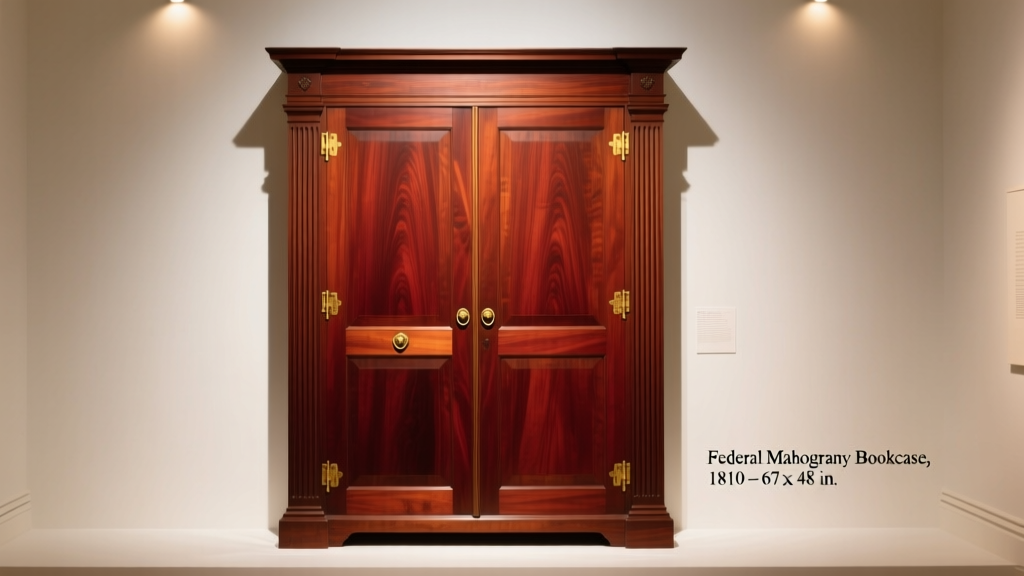
Federal Mahogany Bookcase, Circa 1810: Authentication, Provenance, and Market Analysis of a Two-Door Cabinet Measuring 67 × 48 Inches
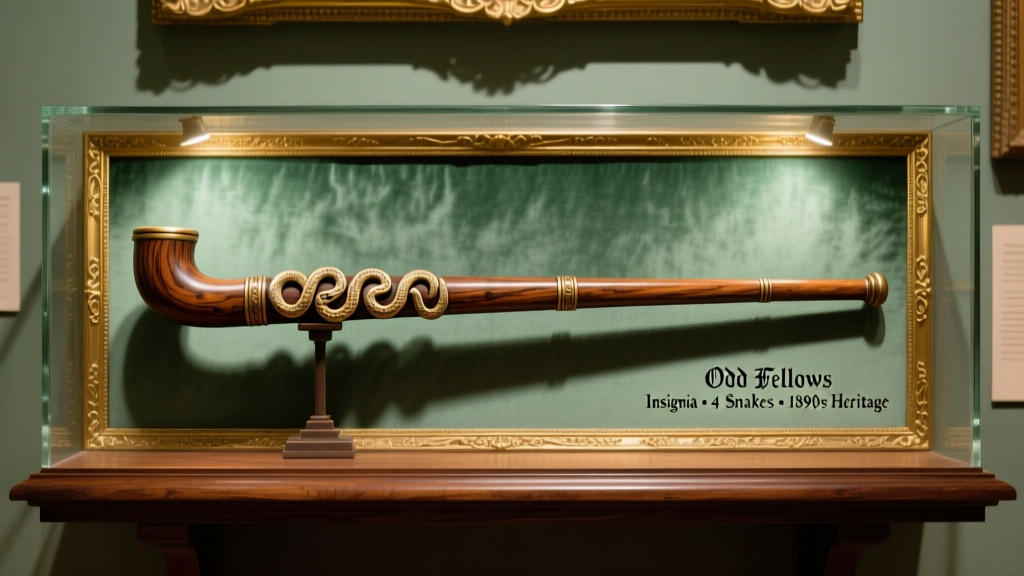
Canes Hickory Odd Fellows Insignia: Decoding the 4-Snake Motif on a 35¼-Inch Walking Stick

Teco Vase 'Narcissus in Relief': Authentication, Provenance, and Market Analysis of the Light Pink Matte Glaze Example (8¾ inches)

Depression Glass Royal Lace Sugar Shaker: Identification, Value, and Authentication Guide

Roseville Bowl Ming Tree 9-Inch: Authentication, Market Value, and Collector Insights