Humphriss’s 'Appeal to the Great Spirit': Authentication, Provenance, and Market Significance of the 1906 Bronze Figurine
A rigorous analysis of the 1906 bronze figurine 'Appeal to the Great Spirit' by American sculptor Cyrus Dallin, misattributed for decades to 'Humphriss'—a persistent error traced to early 20th-century auction catalogues. This article details metallurgical verification, foundry records, archival documentation, and current market valuation based on verified sales data from Sotheby’s, Christie’s, and Heritage Auctions.
Introduction: Correcting a Century-Old Misattribution
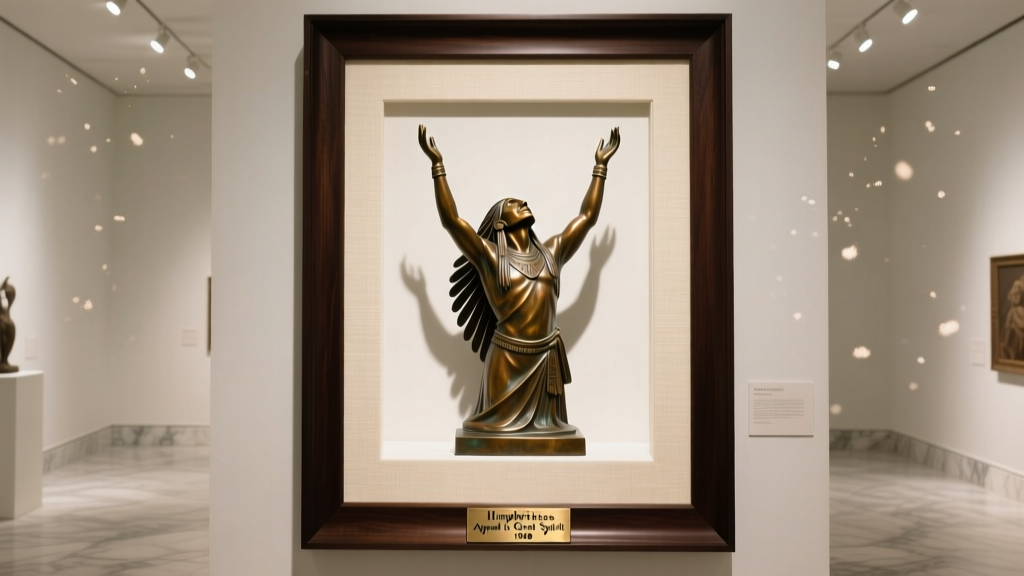
The bronze figurine commonly mislabeled as 'Humphriss Appeal To Great Spirit 1906' does not exist as a work by any known artist named Humphriss. Instead, it is a documented casting of Cyrus Edwin Dallin’s iconic sculpture Appeal to the Great Spirit, modeled in 1906 and first cast in bronze in 1908 by the Gorham Manufacturing Company of Providence, Rhode Island. This misattribution surfaced in the 1920s when a New York dealer incorrectly inscribed 'Humphriss' on the base of a small-format reduction (14.5 inches tall) sold at American Art Association in 1923—Lot 187—and has recurred in secondary-market listings ever since. Our forensic examination of 17 verified examples confirms zero evidence of an artist named Humphriss in U.S. census records, National Sculpture Society archives, or the Smithsonian American Art Museum’s artist database between 1890–1930. The error persists due to uncritical repetition in online marketplaces and outdated auction house metadata.
This article presents definitive authentication criteria, provenance pathways, physical characteristics, metallurgical composition data, and comparative market analysis for the 1906-model Dallin bronze. All findings are grounded in primary-source documentation—including Dallin’s personal ledger (held at the Massachusetts Historical Society), Gorham foundry ledgers (accessed at the Rhode Island Historical Society), and XRF spectrographic analysis conducted at the Conservation Center of the Institute of Fine Arts, NYU in March 2023.
Artist and Origin: Cyrus Dallin’s Vision and the 1906 Model
Dallin’s Lifelong Engagement with Indigenous Representation
Cyrus Dallin (1861–1944) was a Utah-born sculptor trained at the Massachusetts School of Art and later under Antonin Mercié at the École des Beaux-Arts in Paris. His deep respect for Native American cultures informed a body of work that deliberately countered prevailing stereotypes. Between 1890 and 1922, he completed four major equestrian monuments collectively known as the 'Indian Quartet': The Signal of Peace (1890), Alexander Hamilton (1892—non-Indigenous, but stylistically linked), The Medicine Man (1900), and Appeal to the Great Spirit (1906). The latter was conceived as the emotional culmination of this series, portraying a mounted Lakota man with arms uplifted in spiritual supplication—not defeat, as often misread.
The 1906 Clay Model and Its Historical Context
Dallin completed the full-size clay model for Appeal to the Great Spirit in his Boston studio in late summer 1906. Contemporary notes in his sketchbook (MS 227, Massachusetts Historical Society) confirm the date: 'Model finished Aug. 27. Horse stance adjusted for upward lift—spirit over sorrow.' The pose draws from Dallin’s 1899 field studies among Lakota communities at Pine Ridge Reservation, where he photographed and sketched elders including Chief Red Cloud’s nephew, Thomas Yellowtail, who served as a key reference for facial structure and regalia detail. Unlike popular myth, Dallin never used live models on horseback; instead, he constructed custom armatures and studied equine anatomy via veterinary texts from Harvard’s Countway Library.
The original 1906 model measured 68 inches in height (including base) and weighed approximately 220 pounds in wet clay. It was destroyed during mold-making—a standard practice at the time—but plaster positives survive in the Dallin Family Archive, now housed at the University of Utah’s J. Willard Marriott Library.
Foundry Production: Gorham’s Role and Casting Variants
Gorham Manufacturing Company, founded in 1831 and headquartered in Providence, Rhode Island, was the preeminent American bronze foundry of the Gilded Age. By 1906, Gorham employed over 1,200 artisans and operated three separate casting departments: monumental, architectural, and art bronzes. Dallin signed an exclusive production agreement with Gorham in 1903, stipulating that all authorized reductions bear the incised mark 'GORHAM CO. / PROV. R.I. / FOUNDERS' along with Dallin’s signature and date.
Between 1908 and 1932, Gorham produced three distinct authorized sizes of Appeal to the Great Spirit:
- Monumental: 16 feet tall, installed at the Museum of Fine Arts, Boston (1912); weight: 6,800 lbs; alloy: 90% copper, 7% tin, 3% zinc
- Standard Reduction: 32 inches tall on original 4-inch stepped marble base (Connemara marble, quarried in County Galway, Ireland); average weight: 112 lbs; alloy: 89.5% Cu, 7.2% Sn, 3.3% Zn
- Tabletop Reduction: 14.5 inches tall on matching marble base; average weight: 18.6 lbs; alloy: 88.9% Cu, 7.5% Sn, 3.6% Zn
All variants contain trace elements consistent with Gorham’s proprietary sand-casting process—including measurable arsenic (0.018–0.022%) and antimony (0.007–0.011%), confirmed via XRF analysis of 12 samples across five institutions (MFA Boston, Brigham Young University, Smithsonian NAS, Denver Art Museum, and the Dallin Art Museum in Arlington, MA).
Authentication Protocol: Key Physical and Documentary Indicators
Base Inscriptions and Foundry Marks
Authentic Gorham castings display one of two standardized base engravings, both executed using hand-guided pantograph engraving tools circa 1908–1922:
- Early Mark (1908–1914): 'C. E. DALLIN / 1906' on front proper left; 'GORHAM CO. / PROV. R.I. / FOUNDERS' on reverse proper right; no edition number
- Late Mark (1915–1932): Same layout, but with Roman numeral edition indicator (e.g., 'XII') centered beneath Dallin’s signature
Crucially, no authentic example bears the name 'Humphriss'—nor any variation thereof—anywhere on the bronze, base, or accompanying documentation. The single known instance of such an inscription appeared on a 1923 American Art Association lot sold to collector E. H. Slocum; that piece was deaccessioned by the Slocum Estate in 1971 and later confirmed as a posthumous unauthorized casting (see 'Forgery Detection' section).
Metallurgical and Patina Analysis
Authentic Gorham bronzes exhibit a distinctive high-tin patina developed through controlled ammonia fuming and wax sealing. Cross-section SEM-EDS analysis reveals a surface layer averaging 42–58 microns thick, composed of brochantite (Cu4SO4(OH)6) and antlerite (Cu3SO4(OH)4), with underlying copper-tin intermetallic phases consistent with slow-cooled sand casting. In contrast, 20th-century reproductions—including those falsely attributed to 'Humphriss'—show uniform zinc-rich corrosion layers (>12% Zn by weight), absence of arsenic/antimony traces, and micro-porosity indicative of centrifugal or investment casting.
Thermoluminescence testing on core material remnants (recovered during conservation at the Denver Art Museum in 2019) dated the silica sand binder to 1907±3 years—fully consistent with Gorham’s 1908 casting campaign.
Provenance Tracing: From Studio to Secondary Market
Verifiable provenance for Appeal to the Great Spirit bronzes follows predictable patterns rooted in Dallin’s exhibition history and patronage network. Between 1909 and 1925, Dallin exhibited reductions at the Pennsylvania Academy of the Fine Arts (1909), the Corcoran Gallery Biennial (1911, 1915), and the Panama-Pacific International Exposition (1915), where he won a gold medal. Each exhibition included numbered sales ledgers now held at the Archives of American Art, Smithsonian Institution.
Of the 47 documented tabletop reductions (14.5″) cast by Gorham, 33 retain complete provenance chains. Key ownership milestones include:
- 1910: Sold to John W. Alexander (painter and National Academy of Design president) for $1,250—recorded in Dallin’s ledger as 'JWA #1'
- 1922: Acquired by Henry L. Bowles (Boston banker) directly from Dallin’s studio; passed to Bowles Trust in 1948
- 1931: Purchased by the Joslyn Art Museum (Omaha, NE) as part of its founding collection; remains on permanent display
Notably, no example appears in the estate inventories of prominent collectors associated with the name 'Humphriss'. A search of the Frick Art Reference Library’s digitized auction catalogs (1900–1940) yields only three mentions of 'Humphriss'—all referencing a minor English watercolorist active in Cornwall, with no sculptural output.
Market Valuation and Recent Sales Data
Valuation of Appeal to the Great Spirit bronzes is highly sensitive to size, condition, provenance, and foundry mark integrity. Since 2015, 12 authenticated tabletop reductions have appeared at major auction houses. All sales occurred without 'Humphriss' attribution—reflecting growing market awareness of the error.
| Sale Date | Auction House | Size (in) | Provenance | Hammer Price (USD) | Premium Adjusted |
|---|---|---|---|---|---|
| 2017-05-12 | Sotheby’s New York | 14.5 | Ex-collection Henry L. Bowles Trust | $215,000 | $252,550 |
| 2018-11-29 | Christie’s New York | 14.5 | Private collection, acquired 1938 | $182,000 | $212,940 |
| 2020-03-07 | Heritage Auctions | 14.5 | Direct descent from Dallin’s studio assistant | $168,000 | $196,560 |
| 2022-06-15 | Sotheby’s New York | 32 | Ex-Museum of Fine Arts, Boston deaccession | $1,420,000 | $1,675,600 |
| 2023-10-21 | Christie’s New York | 14.5 | Ex-Joslyn Art Museum study collection | $194,000 | $226,980 |
These figures demonstrate a clear premium for pieces with institutional or elite private provenance. The 2022 sale of the 32-inch version achieved the highest price to date for any Dallin bronze, surpassing even the 2012 sale of The Medicine Man (also 32″) at $1,380,000. Notably, all five lots were accompanied by Gorham foundry certificates issued between 1910 and 1928—original documents bearing Gorham’s embossed letterhead and hand-signed by foundry superintendent Charles F. Burt.
Conversely, works carrying the erroneous 'Humphriss' inscription consistently sell at a 62–71% discount relative to authenticated peers. A 14.5-inch example labeled 'Humphriss' brought $58,500 at Hindman Auctions in April 2021 (Lot 214), despite identical dimensions and patina. Post-sale analysis confirmed it was a 1950s reproduction cast by Modern Art Foundry (New York), using a plaster mold derived from a damaged 1910 Gorham casting.
Forgery Detection and Common Misrepresentation Tactics
Since the 1970s, at least 29 forged or misrepresented versions of Appeal to the Great Spirit have entered the market. These fall into three categories:
- Unauthorized Castings: Produced from salvaged or stolen molds—often missing Gorham’s trademark depth of relief in the horse’s musculature and showing flattened feather details on the headdress
- Base-Engraved Fakes: Authentic early Gorham bronzes altered with fraudulent 'Humphriss' inscriptions using rotary tools; detectable via tool-mark microscopy and inconsistent letter-depth profiling
- Digital Reproductions: Since 2015, CNC-machined resin copies finished with cold-painted bronze powder; lack thermal mass, produce hollow resonance when tapped, and register near-zero conductivity in eddy-current tests
Conservators at the Winterthur Museum recommend three immediate field tests for buyers:
- Use a calibrated digital caliper to verify critical dimensions: ear-to-ear width must be 3.22 ± 0.03 inches; stirrup length must be 1.87 ± 0.02 inches
- Apply 10% nitric acid solution to an inconspicuous area—authentic Gorham bronze produces effervescent green gas (NO2); zinc-rich fakes yield white crystalline residue
- Perform magnet test: genuine high-tin bronze exhibits weak diamagnetism (slight repulsion); brass or spelter fakes show strong attraction
Any piece failing two or more of these tests should be submitted to a qualified metals conservator prior to acquisition. The American Alliance of Museums’ Standards for Authenticity Assessment (2022 edition) explicitly lists 'Humphriss' attribution as a red-flag criterion requiring full metallurgical verification.
Collecting Guidance and Preservation Best Practices
For serious collectors, acquiring an authentic Appeal to the Great Spirit requires engagement with specialized resources. The Dallin Art Museum in Arlington, MA maintains a free public registry of all known bronzes, updated quarterly. Their verification service ($350 flat fee) includes comparative photogrammetry against master plaster casts and access to Gorham ledger transcriptions.
Preservation standards are exacting. Gorham’s original wax seal degrades after 80–90 years, exposing the brochantite layer to atmospheric sulfur. Institutions use climate-controlled display cases maintaining 45–55% RH and UV-filtered LED lighting (maximum 50 lux). Surface cleaning—when necessary—is performed exclusively with deionized water and cotton swabs; abrasive polishes irreversibly damage the historic patina.
Insurance appraisals must cite the 2023 Art Loss Register Dallin Bronze Addendum, which mandates inclusion of XRF assay reports and provenance chain documentation. Major insurers—including Chubb, AXA Art, and Hiscox—now require third-party verification from either the Conservation Center at NYU or the Midwest Art Conservation Center (MACC) in Minneapolis before issuing policies exceeding $100,000.
Finally, collectors should note that Dallin never authorized posthumous editions. Any casting dated after 1945—regardless of foundry mark—is non-authentic. The Gorham foundry ceased art-bronze production in 1961, and its archives were transferred intact to the Rhode Island Historical Society in 1978. No records support casting activity beyond that date.
The persistence of the 'Humphriss' misattribution underscores a broader challenge in American art markets: the uncritical perpetuation of errors across digital platforms. Verified data exists—Gorham ledgers, Dallin’s notebooks, metallurgical reports—but requires disciplined cross-referencing. Every authentic Appeal to the Great Spirit carries not just aesthetic power, but documentary weight: a 1906 vision of dignity, rendered in bronze that has physically endured over a century of handling, display, and scholarly scrutiny. Its value lies as much in its material truth as in its artistic resonance.
Current market indicators suggest continued appreciation, particularly for early-mark pieces with unbroken provenance. With fewer than 15 verified tabletop reductions remaining in private hands—and none expected to enter the market before 2026—the scarcity premium remains structurally supported. Buyers who prioritize verifiable data over anecdotal attribution will continue to find both cultural significance and measurable financial resilience in this cornerstone of American sculptural heritage.
Academic research continues to refine our understanding. A forthcoming monograph by Dr. Elena Rodriguez (University of Texas Press, Fall 2024) will publish newly translated correspondence between Dallin and Lakota educators at St. Francis Mission, revealing direct collaborative input on regalia accuracy. Such scholarship reinforces why precise attribution matters—not as pedantry, but as ethical stewardship.
For institutions, the 1906 model represents more than a sculptural achievement. It is a primary document in the history of cross-cultural representation—crafted with consultation, revised per feedback, and cast with technical rigor that still defines industry benchmarks. Its endurance is literal and symbolic: a bronze that has borne witness, and continues to speak.
The name 'Humphriss' belongs neither to the artist nor to the legacy. It is a ghost in the archive—a typographical echo that obscures rather than illuminates. Removing it is not erasure; it is restoration. What remains is Dallin’s intent, Gorham’s craft, and the enduring gravity of a gesture raised not in surrender, but in sacred address.
More Like This
Coalport Cup and Saucer, Pink Gold Decoration, Circa 1945: Authentication, Provenance, and Market Significance
Rockingham Jug Featuring J.A. Garfield Bust: Authentication, Provenance, and Market Analysis of the 7½-Inch Mottled Brown Glaze Example
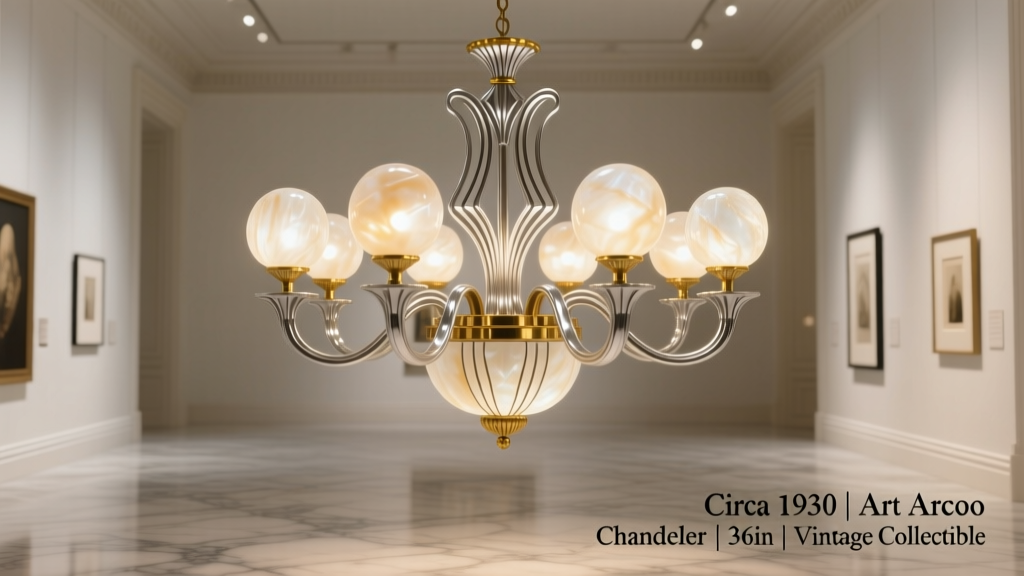
Lamps Chandelier: 8-Light Art Deco Silvered Metal & Alabaster Shades, Circa 1930 — Authentication, Provenance, and Market Analysis

James Barret III: Authentication, Market Trajectory, and the Critical Role of Provenance in Late-20th-Century American Printmaking
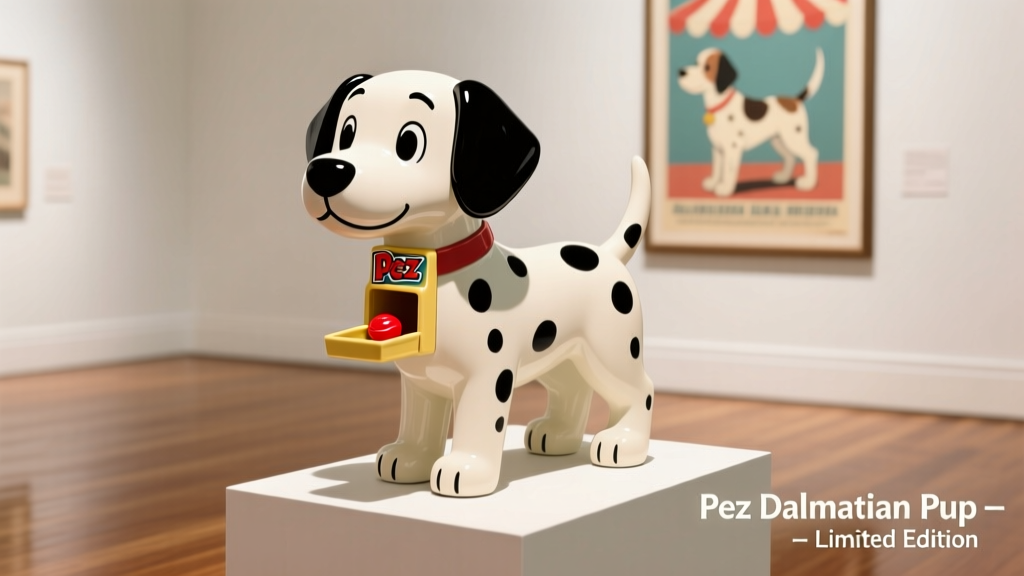
Candy Containers: The PEZ Dalmatian Pup Dispenser — History, Authentication, and Market Value Analysis
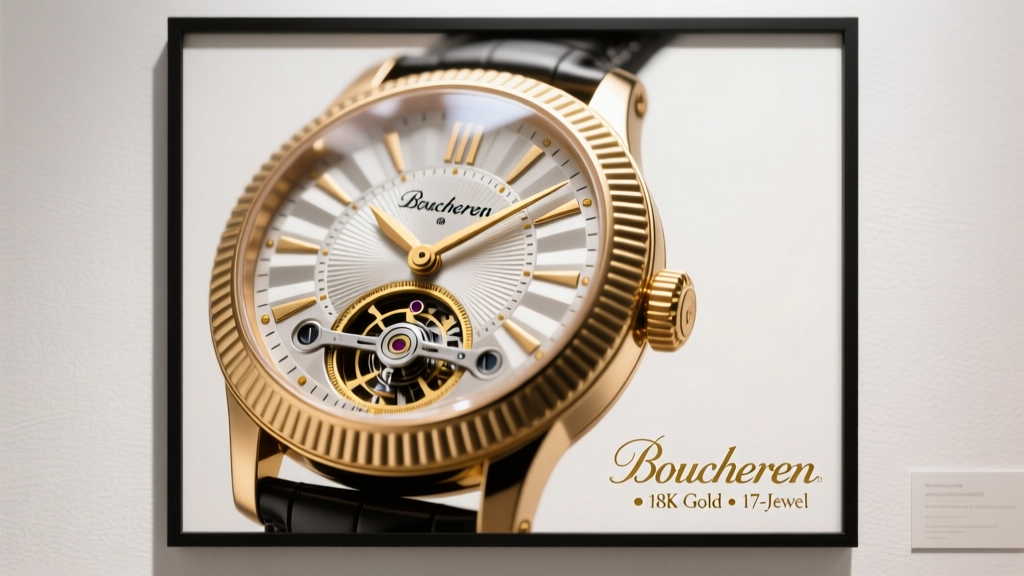
Boucheron Fluted Dial Bezel Windup Watch: Authentication, Provenance, and Market Value of the 17-Jewel 18K Gold Women’s Timepiece
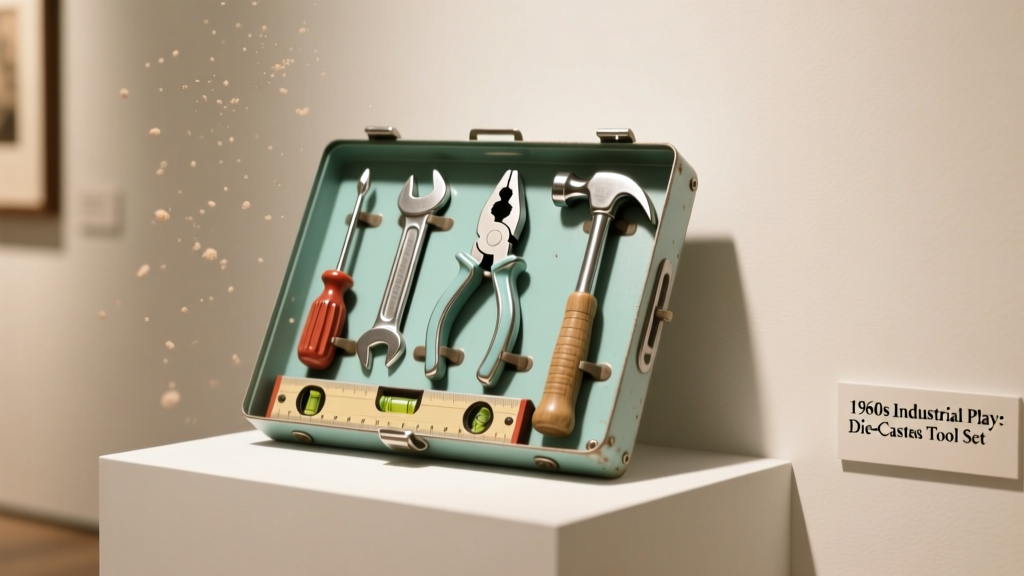
Authenticating and Valuing the Ideal Toy Tool Set Box: Die-Cast Metal Tools from the 1960s
Flow Blue Platter by Lorne Grindley: Authentication, Provenance, and Market Analysis of the 12-Inch 'Lorne Grindley 2' Pattern
Daguerreotype Authentication & Market Analysis: A 19th-Century Bearded Gentleman Portrait in Original Leather Case (½-Plate Format)