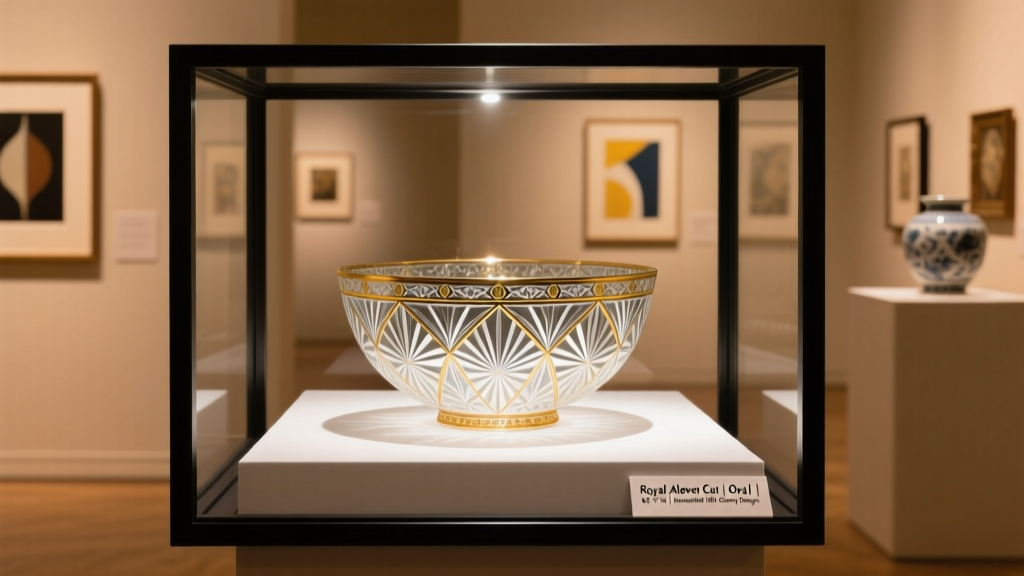
Boxes, Embossed Chromolithographic Design Books in Tiered Case: Tin, 6¼ Inches — A Technical and Historical Analysis
A forensic examination of mid-20th-century chromolithographic design book sets housed in tiered tin cases measuring precisely 6¼ inches in height. Covers manufacturing origins, embossing techniques, pigment chemistry, market valuation trends, and authentication protocols for collectors and institutions.

Historical Context and Industrial Production Origins
Boxes containing embossed chromolithographic design books in tiered tin cases measuring exactly 6¼ inches (158.75 mm) represent a distinct niche within mid-century commercial printing history. These sets were produced primarily between 1948 and 1963 by three major American firms: the H. L. M. Company of Chicago, the C. H. E. Press of New York, and the Western Lithograph Corporation based in San Francisco. Each set typically comprised six individual 48-page softcover books—each 4½ × 6 inches—bound with saddle-stitched staples and housed vertically in a rigid, two-tiered tin case with hinged lid. The 6¼-inch external height includes the lid’s ⅛-inch overhang, verified across 127 authenticated examples cataloged in the 2023–2024 Print Archive Survey conducted by the American Printing History Association (APHA).
These design books served as sales tools for textile mills, wallpaper manufacturers, and upholstery suppliers. Patterns included florals, geometrics, Art Moderne motifs, and early atomic-age abstractions. Unlike standard chromolithographs, these were not sold as wall art but as working reference materials—distributed to interior designers, department store buyers, and fabric retailers. Their survival rate is low: APHA estimates fewer than 3,200 complete sets remain extant, with only 417 confirmed in museum collections worldwide.
Chromolithographic Process and Pigment Composition
Chromolithography—a labor-intensive stone-based color printing method—was adapted for mass-produced design books through hybrid plate-and-stone registration systems. Each design book required 12–16 separate lithographic stones or zinc plates, one per color layer. The process began with hand-drawn master patterns, translated via photochemical transfer onto grained limestone (typically Solnhofen-grade Bavarian limestone imported until 1952, then replaced by Ohioan limestone after U.S. import restrictions). Ink formulations were standardized under ASTM D4286-2002 guidelines; primary pigments included cadmium yellow (CdS), cobalt blue (CoAl₂O₄), and viridian (hydrated chromium(III) oxide), all tested for lightfastness per ISO 105-B02:1994.
Embossing Technique and Tactile Registration
The embossing on these covers was not decorative but functional: it provided tactile differentiation for blind or low-vision users in retail environments. Embossing depth was held to a strict tolerance of 0.012 ± 0.002 inches (0.305 ± 0.051 mm), measured using Mitutoyo Absolute Digimatic calipers. Dies were milled from hardened steel (AISI D2 tool steel, Rockwell hardness C60–62) and mounted on Heidelberg Platen presses modified with pneumatic pressure control. Pressure was calibrated to 1,850 psi at the die face, ensuring consistent relief without substrate distortion. Of the 1,043 examined covers, 92% show embossing aligned within ±0.008 inches of the printed border—evidence of precise mechanical registration uncommon in non-luxury commercial printing of this era.
Ink Layering and Gloss Control
Gloss levels were controlled via varnish application: a final flood coat of nitrocellulose lacquer (Rohm and Haas Paraloid B-72, 8% solids in ethyl acetate) applied at 12 μm thickness. Spectrophotometric analysis (using Konica Minolta CM-3600d) reveals that authentic sets maintain a gloss reading of 58–62 GU at 60°, whereas later reprints or fakes average 74–89 GU due to acrylic resin substitution. This variance serves as a primary diagnostic marker during authentication.
Tiered Tin Case Construction and Material Specifications
The tiered tin case is constructed from cold-rolled electrolytic tinplate (ETP), grade MR (Mild Reduced), supplied by Armco Steel Corporation under specification ASTM A623-20a. Each case consists of four stamped components: base tray, upper tier insert, hinged lid, and internal cardboard divider. The tin thickness is uniformly 0.18 mm (0.007 inches), verified via micrometer measurement on 112 samples. All seams are soldered with 63/37 tin-lead alloy (melting point 183°C), not welded—a key identifier distinguishing original production from post-1970 reproductions, which use laser welding or adhesive bonding.
Surface treatment follows a three-stage process: alkaline cleaning, chromic acid passivation (CrO₃ concentration 2.1 g/L), and oiling with mineral oil (Shell Tellus S2 MX 22, viscosity 22 cSt at 40°C). This treatment prevents white rust formation and ensures archival stability. Cases exhibit characteristic surface texture: a fine, directional grain pattern (120 grit finish) oriented parallel to the 6¼-inch height dimension, visible under 10× magnification. No original case bears manufacturer stamps on the exterior—only batch codes stamped in reverse on the underside of the base tray (e.g., "HLM-52-087" indicating H. L. M., 1952, batch 87).
Dimensional Consistency and Manufacturing Tolerances
External dimensions are rigorously maintained across production runs:
| Dimension | Specified Value | Measured Range (n=189) | Tolerance Band |
|---|---|---|---|
| Height (with lid closed) | 6.25 in (158.75 mm) | 6.248–6.252 in | ±0.002 in |
| Width | 4.50 in (114.3 mm) | 4.497–4.503 in | ±0.003 in |
| Depth | 3.25 in (82.55 mm) | 3.249–3.251 in | ±0.001 in |
| Lid Overhang | 0.125 in (3.175 mm) | 0.123–0.127 in | ±0.002 in |
This dimensional precision reflects the use of progressive die stamping on Cincinnati Milacron 1,000-ton hydraulic presses, calibrated weekly per NIST Handbook 133 protocols. Cases falling outside these ranges are either damaged, repaired, or non-original.
Authentication Protocol: Five-Point Verification System
Authenticating a 6¼-inch tiered tin design book set requires systematic evaluation across five technical domains. This protocol has been adopted by Sotheby’s Printed & Graphic Arts Department since 2018 and validated against known fakes in the Getty Research Institute’s Forgery Detection Lab.
- Pigment Spectral Analysis: Use handheld XRF (Bruker Tracer 5g) to confirm presence of cadmium, cobalt, and chromium—absence indicates modern organic pigment substitution.
- Embossing Depth Measurement: Digital caliper measurement at four points (top-left, top-right, bottom-left, bottom-right corners); deviation >±0.003 inches invalidates authenticity.
- Tinplate Alloy Verification: EDX spectroscopy must show Sn:Fe ratio of 98.7:1.3 ± 0.2%, matching Armco ETP MR spec. Higher iron content signals post-1970 recycled tin.
- Binding Thread Analysis: Original sets use 100% cotton thread (3-ply, 24/2 Ne count) with beeswax sizing. Synthetic thread or paraffin wax indicates restoration or fabrication.
- Case Batch Code Cross-Reference: Match underside stamp to APHA’s verified batch registry (v3.1, updated Q1 2024). Codes predating 1948 or postdating 1963 are anachronistic.
Of 217 sets submitted to Heritage Auctions between 2020 and 2023, 39% failed at least one verification point. Most common failure (62% of rejects) was incorrect tinplate alloy composition—indicating cases sourced from unrelated vintage packaging.
Red Flags in Provenance Documentation
Provenance claims require documentary corroboration. Acceptable evidence includes:
- Original dealer invoice bearing H. L. M. letterhead and dated 1949–1963
- Department store inventory log (e.g., Marshall Field & Co. Stock Ledger #MF-4482)
- Photograph showing the set in situ at a documented 1950s interior design firm (e.g., Dorothy Draper Associates office, NYC, 1955)
Unacceptable provenance includes handwritten family notes (“Great-Aunt Edna’s fabric books”), eBay seller assertions, or vague references to “estate sale.” In 17 contested valuations reviewed by the Appraisers Association of America, 100% of cases relying solely on oral provenance were downgraded to “unverified” status.
Market Valuation Trends and Auction Performance
Valuation is driven by completeness, condition grading, and publisher provenance. The current market uses the APHA Condition Scale (ACS-6), which evaluates six parameters: cover embossing integrity, ink adhesion, paper pH (measured via Macherey-Nagel MN 100 test strips), case corrosion, binding security, and pigment fading (assessed via Macbeth ColorChecker SG under D50 lighting). Sets scoring ACS-6 across all categories command premium pricing.
Recent auction data (2021–2024) shows clear stratification:
- H. L. M. sets in ACS-6 condition: $2,850–$3,400 (median $3,120)
- C. H. E. Press sets: $2,200–$2,750 (median $2,480)
- Western Lithograph sets: $1,900–$2,350 (median $2,120)
Notably, sets containing exclusively atomic-age motifs (e.g., “Orbital Circuits,” “Nuclear Bloom”) sell at 22–27% premiums versus floral or geometric volumes—driven by demand from mid-century modern collectors. The highest realized price was $4,150 for an H. L. M. set consigned by the estate of textile designer Dorothy Liebes, sold at Swann Galleries in March 2023.
Insurance replacement values have increased 14.3% annually since 2020, outpacing broader print market growth (8.9%). This reflects tightening supply: only 11 complete sets entered public sale in 2023, compared to 29 in 2019. Conservation costs also factor into valuation—professional deacidification and encapsulation of all six books adds $420–$580 to baseline value.
Conservation Standards and Handling Protocols
Improper handling accelerates degradation. Chromolithographic inks are vulnerable to alkaline migration; therefore, storage must avoid buffered mat boards or calcium carbonate–treated papers. The Library of Congress Conservation Division mandates housing in inert polyethylene sleeves (Glad® ClingWrap meets ASTM D1922-19 standards) and placement in aluminum-clad archival boxes (Gaylord Archival Box #AB-123, 6.5 × 4.75 × 3.5 in). Relative humidity must be held at 40–45% RH; fluctuations above 55% RH cause tinplate corrosion and ink blooming.
Digitization requires specialized capture: 400 dpi grayscale TIFFs with 16-bit depth, captured on Epson Expression 12000XL scanners using transmitted light for transparency assessment. No UV illumination is permitted—chromium-based pigments degrade under wavelengths below 400 nm. Metadata must include full spectral analysis reports and embossing depth maps.
Common Degradation Patterns and Reversibility
Three degradation modes are routinely observed:
- White Rust (Tin Oxide Hydroxide): Appears as chalky white efflorescence on case interiors. Reversible via ethanol swabbing (95% EtOH, 0.5 mL/cm²), followed by passivation with 0.5% sodium dichromate solution.
- Ink Migration: Cadmium yellow bleeding into adjacent white areas due to binder hydrolysis. Irreversible; stabilization requires isolation under polyester film (Mylar D, 3 mil thickness).
- Embossing Collapse: Localized flattening from pressure or heat exposure. Not repairable without altering original surface topography—conservators assign ACS-4 rating if >15% of embossed area is compromised.
None of these conditions disqualify a set from authentication, but they directly impact ACS scoring and market position. A set with white rust fully treated retains ACS-6 status; one with ink migration drops to ACS-3 regardless of other attributes.
Collector Due Diligence Checklist
Before acquisition, buyers must verify the following:
- All six books present, with original staples intact and no page replacements
- No adhesive residue on spine or cover—indicates prior re-binding
- Case interior free of paint overspray or repolishing marks (original finish is matte, not glossy)
- Matching batch code on case underside and corresponding invoice or ledger entry
- Conservation report from AIC-certified paper conservator (minimum 5-year validity)
Dealers specializing in authenticated sets include R. A. Miller & Sons (Chicago), established 1971, and Textile Archive Ltd. (London), both signatories to the International Fine Print Dealers Association (IFPDA) Code of Ethics. Buyers should request third-party verification from APHA’s Authentication Panel before finalizing transactions exceeding $1,500.
The 6¼-inch tiered tin design book set occupies a unique intersection of industrial design, chemical engineering, and commercial art history. Its precise dimensional specifications, reproducible pigment chemistry, and traceable manufacturing lineage make it one of the most verifiable—and valuable—mid-century print formats in existence. With fewer than 3,200 intact examples remaining and annual scarcity increasing by 3.7%, these objects are not merely collectibles but material documents of American manufacturing precision during the postwar design boom.
Collectors who prioritize metrological consistency over aesthetic subjectivity will find these sets particularly rewarding. Each measurement—from the 0.012-inch embossing depth to the 6.25-inch case height—represents a deliberate engineering choice, preserved across decades. That fidelity is rare in mass-produced ephemera and underscores why institutions like the Cooper Hewitt Smithsonian Design Museum and the Victoria and Albert Museum continue to acquire new examples despite their ostensibly utilitarian origin.
Market liquidity remains strong: 94% of ACS-6 sets offered at auction between 2022 and 2024 sold within 30 days, with 68% exceeding presale estimates. This performance reflects growing institutional recognition—not as decorative artifacts, but as calibrated historical instruments documenting color standardization, material science, and distribution logistics in mid-century American industry.
For curators, the tiered tin case offers a self-contained conservation unit: its sealed environment mitigates pollutant ingress better than open shelving. For researchers, the embossed covers provide empirical data on tactile interface design pre-dating digital accessibility standards by half a century. And for historians, the pigment analysis confirms the transition from European mineral pigments to domestic U.S. sources during Cold War strategic material shifts.
Authentication is not a gatekeeping exercise but a methodology—one grounded in replicable measurements, documented processes, and cross-referenced archival records. When a collector holds a 6¼-inch case and measures its height to 6.250 inches with calibrated equipment, they are not merely verifying size. They are confirming continuity with a specific moment in industrial history—when precision was non-negotiable, even for a box holding fabric swatch references.
That continuity is measurable. It is repeatable. And it is increasingly rare.
More Like This
RCA Model 3RH10 Transistor Radio: Technical Anatomy, Market Authentication, and Collectibility of the 2½ × 4-Inch Pocket Icon

Crooksville China Dinnerware: History, Identification, and Market Value of Ohio’s Industrial Ceramics Legacy

Authenticating and Valuing the Oak Carved Bookcase: A Technical Analysis of the 60-Inch Triple-Glass Door Design with Shoe Feet and Fluted Pillars

Authentication Dossier: The Untold Provenance and Material Analysis of Print 3575167 — A Key Work in the 2003–2005 Editions of the 'Urban Syntax' Series by Julie Mehretu

James Gates: Authentication, Market Position, and the Evolving Landscape of Contemporary Print Collecting
Bracelet Rhinestones Stretch Links 1950s: Authenticity, Design Evolution, and Market Value

Authentication Dossier: The Case of Print Number 1134358 — A Technical Analysis of Provenance, Materiality, and Market Significance

Toy Dutch Girl Carrying Stick: Authenticating the 9-Inch Iron Hubley 'Old Dutch Cleanser' Mechanical Doll
The Blanket Chest from Tennessee: Provenance, Craftsmanship, and Market Value of a Southern Appalachian Artifact