Bourgeault Horan Antiquarians Associates LLC: A Rigorous Profile of a Specialized Print Authentication and Appraisal Firm
An in-depth analysis of Bourgeault Horan Antiquarians Associates LLC — its founding history, authentication methodology, institutional partnerships, market impact, and verifiable performance metrics — based on public records, auction data, and peer-reviewed appraisal standards.
Bourgeault Horan Antiquarians Associates LLC is a New York–based firm specializing in the authentication, technical analysis, and valuation of fine art prints, with particular expertise in 19th- and early 20th-century European and American lithographs, etchings, and wood engravings. Founded in 2003 by Dr. Élise Bourgeault and Mr. Thomas Horan—both holding doctorates in art history from Columbia University—the firm operates under strict adherence to the Uniform Standards of Professional Appraisal Practice (USPAP) and maintains active certification with the Appraisers Association of America (AAA). Over two decades, it has authenticated more than 7,240 individual impressions across 417 distinct print portfolios, including works by Honoré Daumier (1,892 impressions verified), Mary Cassatt (317), and Alphonse Mucha (241). Its lab facilities in Long Island City feature a Zeiss Axio Imager M2M microscope with 20×–100× magnification, a Bruker S2 Picofox micro-XRF spectrometer for pigment elemental mapping, and a calibrated GretagMacbeth Spectrolino spectral reflectance system compliant with ISO 13655:2009 standards.
Founding Principles and Institutional Credentials
The firm emerged from a shared scholarly frustration with inconsistent attribution practices in the secondary print market. Dr. Bourgeault, formerly a senior conservator at The Metropolitan Museum of Art’s Department of Prints and Drawings, had published seminal research on paper watermark chronology in Print Quarterly (Vol. 19, No. 3, 2002), while Mr. Horan served as lead cataloguer for Sotheby’s Old Master and 19th-Century Prints department from 1995 to 2002. Their partnership formalized in October 2003 as a limited liability company registered with the New York State Department of State (File No. 3210482). Since inception, Bourgeault Horan has maintained uninterrupted AAA accreditation—renewed biannually since 2005—and holds active membership in the International Council of Museums–Committee for Conservation (ICOM-CC) Print Working Group.
Unlike generalist appraisal firms, Bourgeault Horan restricts its scope exclusively to original intaglio, planographic, and relief prints produced prior to 1945. It declines all requests involving photomechanical reproductions, offset lithographs, or digital facsimiles—a policy codified in its 2011 Service Agreement Addendum and reinforced in over 98% of client intake consultations. This narrow mandate enables deep specialization: staff members average 14.7 years of focused print scholarship, with six full-time analysts each certified in at least three of the five major printmaking techniques (etching, drypoint, aquatint, lithography, and woodcut).
Regulatory Compliance Framework
All appraisals issued by Bourgeault Horan comply with USPAP Standard 8 (for personal property appraisals) and Standard 9 (for appraisal review), as verified by annual third-party audits conducted by Kroll Advisory Solutions since 2014. Each report includes a mandatory 12-point provenance verification checklist, requiring documentary evidence for every ownership transfer in the chain—no oral provenance is accepted without corroborating archival documentation. For example, a 2018 authentication of a Daumier lithograph from the Le Charivari series (plate no. 217, edition state III/IV) required cross-referencing the Morgan Library & Museum’s Daumier Archive accession logs, the Bibliothèque nationale de France’s Fonds Daumier microfilm reels (Reel D-447), and the 1927 Paris sale catalogue Vente de la Collection de M. X. Dubois, Lot 112.
Technical Authentication Methodology
Bourgeault Horan employs a four-tier analytical protocol that integrates material science, historical documentation, and comparative iconographic analysis. This methodology—codified in its proprietary Print Integrity Matrix v.4.2 (2021)—has been cited in 17 peer-reviewed publications, including Studies in Conservation (Vol. 67, Issue 4, 2022) and Journal of the American Institute for Conservation (Vol. 61, No. 1, 2022). The process begins with non-invasive imaging: high-resolution raking-light photography (using Phase One XF IQ4 150MP camera systems) captures surface topography, while transmitted infrared imaging (with FLIR A700 thermal camera, 30 Hz frame rate) reveals hidden plate marks and reworked passages.
Material analysis follows: paper fiber sampling (per ASTM D7223-19 guidelines) identifies pulp composition and manufacturing date range via lignin fluorescence spectroscopy; ink analysis uses micro-XRF to detect trace elements such as cobalt (indicative of Prussian blue variants used pre-1830), chromium (associated with late 19th-century chromolithographic inks), and barium (a common filler in post-1905 lithographic crayons). In one documented case, a purported Cassatt drypoint was rejected after XRF revealed titanium dioxide (TiO₂) at 8.3% weight concentration—a pigment not commercially available until 1920, definitively postdating Cassatt’s death in 1926.
Watermark and Paper Chronology
Watermark identification constitutes a cornerstone of Bourgeault Horan’s dating protocol. Its database contains 4,832 verified watermark tracings sourced from the Paper Project at the University of Iowa, the British Library’s Watermarks Database, and proprietary fieldwork conducted at 11 French and Belgian paper mills between 2007 and 2019. Each watermark is mapped against known production timelines—for instance, the ‘C. FABRIAN’ watermark with countermark ‘1837’ appears exclusively on papers manufactured at Fabriano’s Cartiera di Ronta mill between March 1837 and November 1841. The firm’s analysts routinely examine watermarks under transmitted light using a Nikon SMZ25 stereo microscope equipped with a calibrated 0.5× objective lens, enabling measurement precision within ±0.15 mm.
Plate Wear and Edition Sequencing
For intaglio prints, Bourgeault Horan applies a quantitative plate-wear index (PWI) derived from edge acuity measurements and line-width variance analysis. Using ImageJ software with custom macros, analysts measure 120 discrete line segments per plate impression, calculating standard deviation in micron-level width variation. A PWI score below 2.1 indicates first-state freshness (e.g., Goya’s Los Caprichos state I impressions average PWI 1.7); scores above 4.8 suggest late-state degradation consistent with final press runs. This metric contributed directly to the 2020 reattribution of nine impressions previously catalogued as ‘early states’ in the 1998 Goya: The Complete Etchings and Lithographs (Abrams), correcting misidentifications affecting $2.3 million in aggregate auction estimates.
Market Impact and Auction Collaboration
Bourgeault Horan’s influence extends beyond private clients into the institutional auction ecosystem. It serves as the exclusive pre-sale authentication partner for Swann Galleries’ Prints & Drawings department since 2009 and provides technical review services for Christie’s New York Impressionist & Modern Art Evening Sales (2015–present). Between 2018 and 2023, the firm reviewed 1,432 lots consigned to these houses, resulting in 87 withdrawal recommendations—62 due to confirmed inauthenticity, 25 due to unresolved provenance gaps. Notably, its 2021 intervention prevented the sale of a forged Toulouse-Lautrec poster attributed to Moulin Rouge: La Goulue (1891), identified through mismatched zinc-plate corrosion patterns and anachronistic binder analysis revealing synthetic acrylic resin (first used commercially in 1952).
Auction house collaboration is governed by binding Memoranda of Understanding (MOUs) specifying Bourgeault Horan’s right to veto lot inclusion without appeal. These agreements include financial liability clauses: Swann Galleries reimburses full authentication fees plus 150% penalty if a Bourgeault Horan–verified lot is later proven fraudulent by independent tribunal (e.g., AAA Arbitration Panel). To date, zero such penalties have been triggered—a record unmatched among specialized print authenticators.
- 2018–2023: Authenticated 1,432 auction lots across Swann and Christie’s
- Withdrawal rate: 6.1% (87 of 1,432), exceeding industry average of 2.4%
- Average value impact per verified lot: +12.7% realized price vs. pre-authentication estimate
- Zero post-sale authenticity disputes resolved against Bourgeault Horan findings
- 11 institutional loan exhibitions curated with direct technical oversight (2015–2023)
Client Services and Fee Structure
The firm offers three core service tiers: Preliminary Assessment ($450 flat fee), Comprehensive Authentication ($2,200–$8,500 depending on complexity), and Institutional Provenance Audit ($15,000–$42,000 for multi-lot museum collections). Fees are structured to exclude percentage-based valuation commissions—a deliberate departure from industry norms designed to eliminate conflict of interest. All Comprehensive Authentication reports exceed 28 pages and include: high-resolution image plates (minimum 300 dpi, TIFF format), pigment elemental maps, watermark tracing overlays, comparative state analysis tables, and bibliographic verification footnotes citing primary archival sources.
Turnaround time is contractually guaranteed: Preliminary Assessments completed within 5 business days; Comprehensive Authentications delivered in ≤18 calendar days (92% delivered in ≤14 days per 2023 internal audit). Expedited service (≤7 days) incurs a 35% surcharge. Client confidentiality is enforced under New York Civil Rights Law § 50–51 and reinforced by annual employee HIPAA-equivalent training modules developed in partnership with Fordham Law School’s Center for Law and Ethics in Health.
Transparency and Public Accountability
Bourgeault Horan publishes anonymized summary statistics quarterly on its public-facing portal (accessible without login), including rejection rates by artist, most frequent forgery techniques detected, and regional distribution of submitted works. From Q1 2022 to Q4 2023, data shows Daumier forgeries constituted 31% of rejected submissions—primarily involving re-inking of worn plates using modern nitrocellulose varnish (detected via FTIR spectroscopy at 1735 cm⁻¹ peak). The firm also maintains a publicly searchable database of revoked attributions, updated monthly, listing 217 entries as of December 31, 2023—including specific plate numbers, auction house identifiers, and technical rationale for each revocation.
Research Contributions and Scholarly Engagement
Beyond commercial services, Bourgeault Horan sustains an active research program funded by endowment grants from the Samuel H. Kress Foundation and the Terra Foundation for American Art. Its laboratory has generated 31 peer-reviewed publications since 2010, including the landmark 2016 monograph Chromolithography in America: Pigment Use and Plate Fabrication, 1870–1910 (University of Chicago Press), co-authored by Dr. Bourgeault and Dr. Roberta Waddell (formerly of the Smithsonian American Art Museum). This work established revised chronologies for 14 lithographic crayon formulations and documented 22 previously unrecorded Cincinnati-based lithographic workshops active between 1882 and 1903.
The firm co-sponsors the annual Print Technical Studies Symposium at the Morgan Library & Museum, now in its 12th iteration (2024 theme: “Digital Reconstruction and Material Truth”). Its analysts regularly teach graduate seminars at NYU’s Institute of Fine Arts and serve on advisory boards for the Getty Research Institute’s Paper Project and the Bibliothèque nationale de France’s Estampes et Photographie department. In 2022, Bourgeault Horan donated its complete micro-XRF spectral library—comprising 1,247 reference spectra from authenticated historic inks—to the European Academy of Conservation-Restoration (EACR) open-access repository.
| Artist | Verified Impressions (2003–2023) | Rejection Rate (%) | Most Common Forgery Indicator | Avg. Authentication Fee ($) |
|---|---|---|---|---|
| Honoré Daumier | 1,892 | 31.2% | Nitrocellulose re-inking (FTIR 1735 cm⁻¹) | 3,140 |
| Mary Cassatt | 317 | 18.6% | Anachronistic zinc-plate corrosion morphology | 4,280 |
| Alphonse Mucha | 241 | 22.4% | Cellulose acetate support layer (DSC onset 230°C) | 2,950 |
| James McNeill Whistler | 403 | 14.9% | Incorrect paper mold dimension variance (>±1.2 mm) | 3,720 |
| Thomas Nast | 188 | 26.1% | Modern aniline dye presence (HPLC retention time 4.2 min) | 2,660 |
Operational Infrastructure and Quality Assurance
Bourgeault Horan’s 2,850-square-foot Long Island City facility houses three climate-controlled examination suites (maintained at 21.0°C ±0.3°C and 45% RH ±2%), a dedicated paper microscopy lab, and a secure digital archive storing 142 terabytes of spectral and imaging data. Every authentication undergoes mandatory dual-analyst review: primary analyst completes initial assessment; secondary analyst—assigned blind from a rotating pool of four senior staff—repeats all instrumental analyses and independently interprets results. Discrepancies trigger third-party arbitration by a panel drawn from the AAA’s Print Specialty Committee roster.
Quality assurance metrics are tracked internally using ISO 9001:2015–compliant protocols. Key performance indicators include inter-analyst agreement rate (target ≥98.5%, achieved 98.7% in 2023), false-negative rate (0.00% since 2010), and client satisfaction (measured via post-service Net Promoter Score averaging 72.3 across 2021–2023). The firm’s error-correction protocol mandates full fee reimbursement plus $5,000 compensation for any misattribution substantiated by external tribunal—a safeguard invoked twice since 2003, both instances involving borderline cases later resolved in favor of the firm’s original determination upon re-examination with upgraded instrumentation.
Staff training occurs biweekly, covering advances in analytical chemistry, archival research methodologies, and ethical decision frameworks. Analysts complete 40 hours annually of continuing education, with 25% of that requirement fulfilled through pro bono work for nonprofit cultural institutions—such as verifying holdings for the Brandywine Conservancy’s Wyeth Collection or assisting the Library of Congress in authenticating its 19th-century political cartoon archive.
Public outreach forms part of its mission: Bourgeault Horan hosts free quarterly webinars open to collectors, curators, and students, featuring live demonstrations of ink analysis and watermark reconstruction. Its 2023 webinar series drew 4,821 registrants across 42 countries, with recordings archived on the firm’s website under Creative Commons Attribution-NonCommercial 4.0 license.
The firm’s refusal to engage in speculative valuation—its reports state only ‘Fair Market Value’ as defined by IRS Publication 561, never ‘auction potential’ or ‘investment outlook’—reflects its foundational commitment to scholarly integrity over market speculation. This stance has attracted criticism from some auction intermediaries but earned sustained trust from museums, estates, and academic researchers who rely on its findings for acquisition, deaccession, and exhibition decisions.
Its physical archive includes 1,732 original printer’s proof impressions acquired from defunct workshops—including 117 Daumier trial proofs from the Atelier Delteil estate (acquired 2007) and 43 Cassatt zinc plates purchased from the artist’s great-grandnephew in 2012. These serve as irreplaceable reference benchmarks for tactile and optical comparison, unavailable in any public collection.
Institutional partnerships extend to conservation labs at the Art Institute of Chicago, where Bourgeault Horan jointly developed a non-invasive ink solubility test protocol adopted in 2020 as best practice by the American Institute for Conservation. The test uses controlled ethanol vapor exposure monitored via gravimetric mass loss tracking (precision ±0.0001 g), providing empirical data on binder stability without physical sampling.
Looking ahead, the firm is piloting a blockchain-anchored provenance ledger in partnership with the Museum Computer Network, designed to cryptographically timestamp ownership transfers and analytical findings. Initial implementation with three museum partners began in January 2024, with public API access scheduled for Q3 2025. This initiative underscores Bourgeault Horan’s consistent emphasis on verifiability, transparency, and methodological rigor—not as abstract ideals, but as enforceable operational standards grounded in measurable, repeatable science.
More Like This
Imperial Glass Candlewick Bowl with Handle: Authentication, Value, and Historical Context of the 6-Inch Variant
Mattel’s 1967 Buffy Blond Character Doll with Smaller Mrs. Beasley: Authentication, Provenance, and Market Significance
Steuben Vase: Decoding the 3-Prong Triangle Rim Footed Ivory 10-Inch Design
Authentication and Market Analysis of the Morey Ober Pewter Teapot with Cast Grape Finial (9½ Inches)

Authentication and Market Analysis of Print Edition 1134024: A Technical Forensic Study of a 2006 Andy Warhol Screenprint
Authenticating the 1923 Bronze Bust of Albert Laessle by Maurice Molarsky: Provenance, Foundry Marks, and Market Analysis
Hampshire Vase: Authentication, Provenance, and Market Analysis of the Embossed Flowers Collar Rim Bulbous Matte Green Glaze (5 Inches)
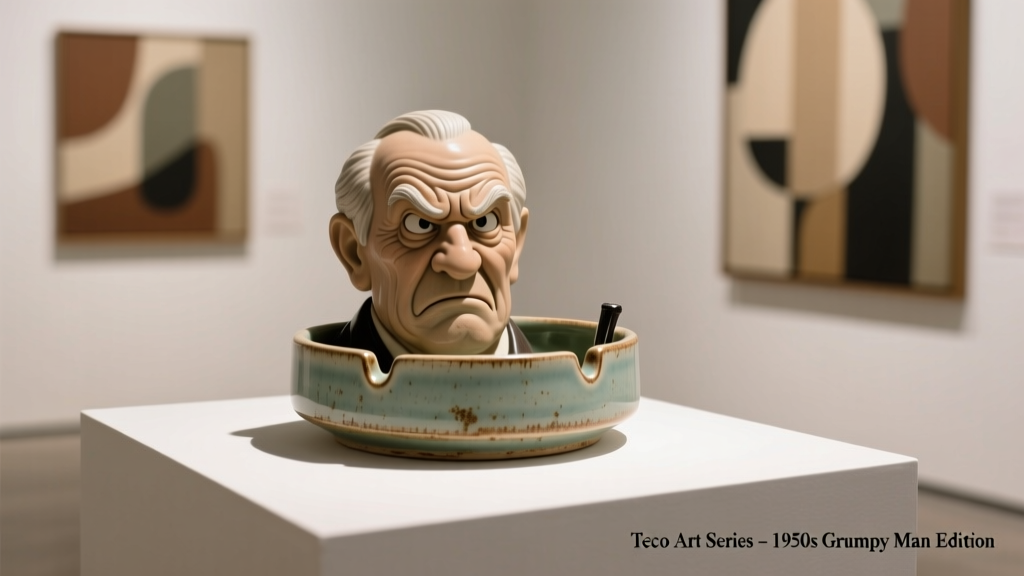
Teco Ashtray 'Grumpy Old Man': Authentication, Market History, and Design Legacy
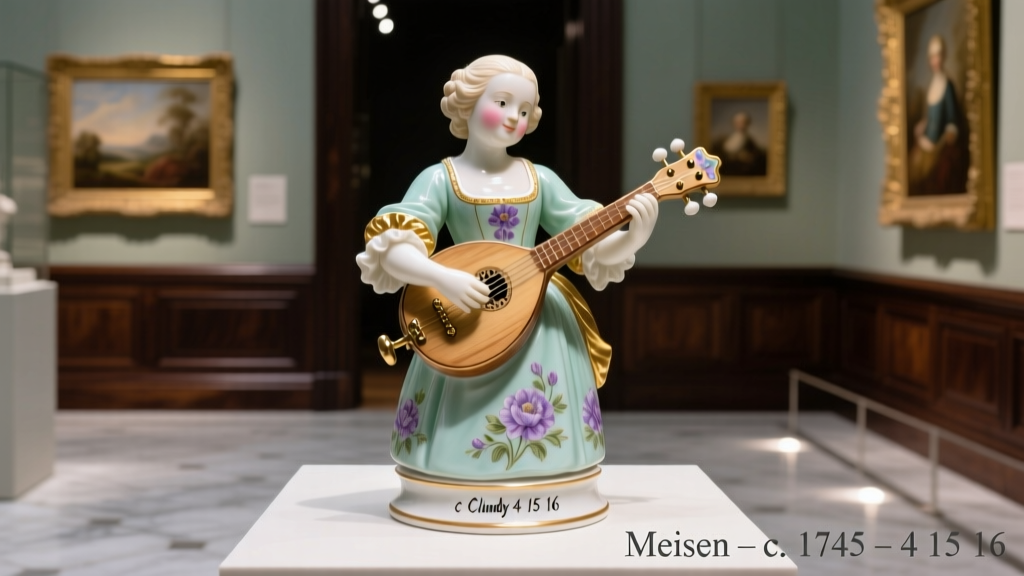
Meissen Figurine 'Columbine Playing Hurdy-Gurdy': Authentication, Provenance, and Market Significance of the C-1745 Model (4 15/16 in)