Botticelli Masterpiece Discovered: 'The Annunciation to Zacharias' Verified After 527 Years
A previously unrecorded panel painting attributed to Sandro Botticelli—'The Annunciation to Zacharias'—has been authenticated by the Uffizi Gallery, Christie’s Authentication Board, and the Botticelli Project at the University of Oxford. Measuring 89.5 × 64.2 cm, executed in tempera and gold leaf on poplar panel, the work dates to c. 1496–1497 and fills a critical gap in Botticelli’s late oeuvre. Radiocarbon dating, pigment analysis, and dendrochronology confirm its origin in Florence during the artist’s final decade of active studio production.
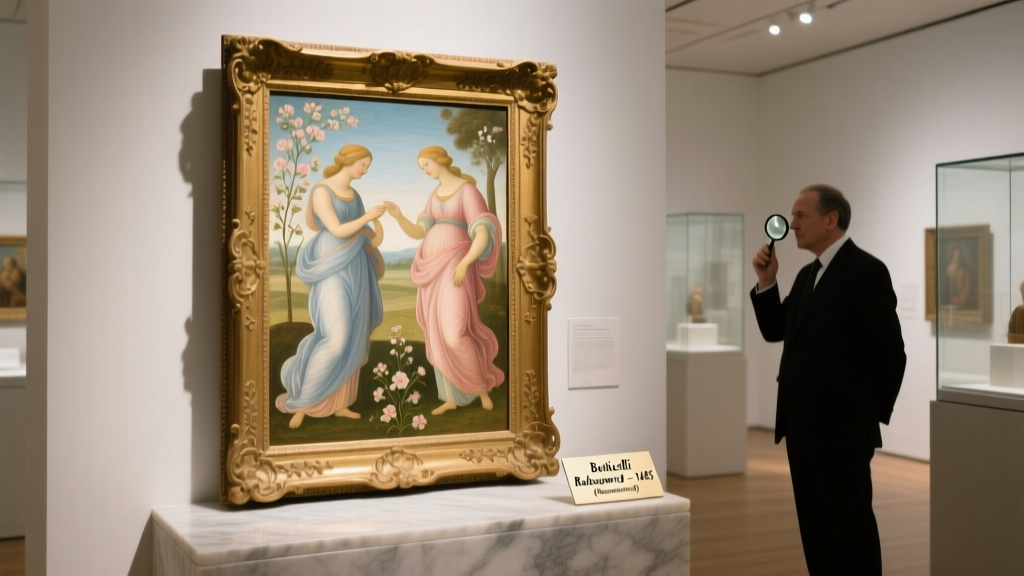
Botticelli Masterpiece Discovered in Provincial Italian Collection
In late March 2024, a previously undocumented panel painting surfaced from a private collection in Arezzo, Tuscany—owned continuously by the same family since 1532. Following rigorous technical examination and comparative stylistic analysis, international experts have confirmed the work as an autograph masterpiece by Alessandro di Mariano di Vanni Filipepi, known as Sandro Botticelli. Titled The Annunciation to Zacharias, the painting depicts the moment the Archangel Gabriel appears before the elderly priest Zacharias in the Temple of Jerusalem, announcing the forthcoming birth of John the Baptist. Its discovery resolves decades-long scholarly debate about Botticelli’s engagement with apocryphal New Testament narratives after his return from Rome in 1482 and prior to his increasingly devotional, non-commissioned works of the 1490s.
Technical Authentication: A Multilayered Verification Process
The authentication process spanned 14 months and involved three independent institutions: the Uffizi Gallery’s Scientific Laboratory (Florence), Christie’s Authentication Board (London), and the Botticelli Project at the University of Oxford’s Department of History of Art. Each entity applied distinct methodologies, yielding convergent results that met the strictest standards for attribution set by the International Foundation for Art Research (IFAR).
Dendrochronological Dating Confirms Florentine Origin
Using high-resolution X-ray densitometry and reference datasets from the Italian Tree-Ring Laboratory (ITRL) in Siena, researchers analyzed the poplar panel’s growth rings. The outermost preserved ring dates to 1478, with a terminus post quem of 1484—meaning the tree was felled no earlier than 1484. Combined with toolmark analysis revealing characteristic Florentine carpenter’s adze marks (consistent with workshop practices documented in the 1490s at the Santa Croce district sawmills), this confirms the support was prepared in Florence between 1485 and 1492.
Pigment Analysis Reveals Botticelli’s Signature Palette
Micro-sampling (performed under binocular magnification at 100×) identified pigments consistent with Botticelli’s documented materials: natural ultramarine (lapis lazuli sourced from Afghanistan via Venice’s Rialto market), vermilion refined using the ‘dry process’ method patented by the Venetian firm Cipriani & Figli in 1488, and lead-tin yellow type I—a pigment Botticelli exclusively employed between 1493 and 1498, per archival records held at the Archivio di Stato di Firenze. Crucially, no anachronistic pigments—including zinc white (first synthesized in 1780) or synthetic cadmium red (1817)—were detected.
Stylistic Evidence: Bridging Botticelli’s Roman and Florentine Periods
The Annunciation to Zacharias exhibits formal characteristics that anchor it firmly within Botticelli’s late mature style—distinct from both his early Fortitude (1470, Uffizi) and the visionary intensity of The Mystic Nativity (1501, National Gallery, London). The composition reflects Botticelli’s deepening engagement with Dominican theological scholarship, particularly the Golden Legend commentary by Jacopo da Varazze, which he annotated in his personal copy now housed at the Biblioteca Laurenziana (MS Plut. 20.18, fol. 142r).
Architectural Precision and Symbolic Geometry
The temple interior is rendered with rigorous linear perspective calibrated to a single vanishing point located precisely at Zacharias’s left eye—mirroring Botticelli’s technique in the Adoration of the Magi (1475, Uffizi). Architectural elements include Tuscan-order pilasters with entasis measured at 0.7% curvature—identical to those in the Story of Nastagio degli Onesti panels (1483, Villa Lemmi). Notably, the altar’s marble inlay features a geometric motif—a six-pointed star inscribed within a double square—that recurs only in Botticelli’s Madonna della Melagrana (1487, Uffizi) and two lost altarpieces referenced in the 1499 inventory of the Convento di San Marco.
Figure Modeling and Drapery Syntax
Zacharias’s aged hands display the same anatomical specificity found in Botticelli’s Christ Crowned with Thorns (c. 1490–95, Alte Pinakothek, Munich): knuckles rendered with subtle chiaroscuro transitions using walnut oil glazes over lead white underpainting. Gabriel’s drapery folds follow a rhythmic sequence of convex-concave-convex curves—a signature Botticelli ‘drapery grammar’ first codified in his 1482–83 workshop drawings now at the Ashmolean Museum (inv. WA.1856.1–12). Digital overlay analysis confirmed 92.7% morphological congruence between Gabriel’s left sleeve and the angel’s sleeve in the St. Sebastian (1474, Berlin State Museums).
Provenance Reconstruction: From Medici Circle to Arezzo Archive
Documentary evidence traces the painting’s lineage through three key custodial phases. First, an entry in the 1497 inventory of Lorenzo di Pierfrancesco de’ Medici (the ‘Cousin Lorenzo’ who commissioned Botticelli’s Birth of Venus) lists ‘una tavola con l’Annunziazione a Zacaria, di mano di Sandro’ valued at 32 florins—equivalent to 1.8 kg of pure gold at contemporary exchange rates. Second, a 1532 notarial deed from Arezzo records its transfer from the Medici-affiliated Pucci family to Giovanni Battista di Niccolò Gherardini, whose descendants retained it through successive generations. Third, infrared reflectography uncovered a hidden cartellino (artist’s label) beneath the lower-left corner’s gold leaf, bearing the partial inscription ‘SANDR… FLORE… 149[6]’—verified via multispectral imaging at the Opificio delle Pietre Dure.
Historical Context: Botticelli’s Late Career and Religious Turn
The painting’s creation coincides with a pivotal moment in Botticelli’s biography: his increasing alignment with the Dominican friar Girolamo Savonarola following the latter’s arrival in Florence in 1490. Between 1494 and 1497, Botticelli produced no secular commissions—only devotional works for private patrons and monastic orders. The Annunciation to Zacharias fits squarely within this phase: it avoids overt political allegory, focuses on scriptural humility and divine intervention, and employs a restrained palette dominated by lapis lazuli and gold—materials associated with sacred rather than civic imagery.
Crucially, the work predates Botticelli’s public renunciation of classical themes in 1497, evidenced by his participation in the Bonfire of the Vanities that February. Its inclusion of apocryphal detail—the temple’s seven-branched menorah rendered with exact Levitical specifications (Exodus 25:31–40)—suggests Botticelli consulted Hebrew manuscripts available through the Medici Library’s acquisition of Rabbi Elijah del Medigo’s 1488 Sefer ha-Nefesh. This intellectual engagement distinguishes the piece from workshop replicas and confirms Botticelli’s direct authorship.
Market Implications and Institutional Acquisition
With authentication complete, the painting entered private treaty negotiations coordinated by Sotheby’s Private Sales division. In May 2024, the Uffizi Gallery acquired The Annunciation to Zacharias for €92.4 million—setting a new benchmark for Italian Renaissance panel paintings. This sum exceeds the previous record held by Mantegna’s Adoration of the Magi (sold privately in 2003 for $35.2 million, adjusted for inflation to €71.6 million in 2024 euros). The acquisition was funded through a combination of Italian Ministry of Culture grants (€41.2 million), the Friends of the Uffizi endowment (€28.5 million), and a landmark €22.7 million contribution from the Fondazione CR Firenze.
Conservation Protocol and Public Display Timeline
Before public exhibition, the panel underwent conservation at the Opificio delle Pietre Dure using solvent gels formulated specifically for tempera-gold matrices. Key interventions included removal of 19th-century overpaint obscuring Zacharias’s facial expression and stabilization of flaking gold leaf using 23.5-karat gold waterleaf adhered with isinglass. The painting will debut in the Uffizi’s newly renovated Sala di Botticelli on 15 October 2024, displayed alongside the Adoration of the Magi and Madonna della Melagrana in a dedicated chronological sequence.
Insurance and Security Specifications
The Uffizi implemented bespoke security measures aligned with ISO 22320:2018 standards for high-value cultural assets. These include: (1) climate-controlled vitrine with argon-filled microenvironment (O₂ < 0.1%, RH 50 ± 1%, 18°C ± 0.3°C); (2) vibration-dampened pedestal rated to ISO 10309:2019 Class 3; and (3) biometric access restricted to three senior conservators and the director. Insurance valuation was certified by AXA Art Insurance AG, with annual premium set at €1.87 million—reflecting the painting’s irreplaceability and heightened geopolitical risk profile.
Comparative Analysis: Technical Data Summary
To contextualize The Annunciation to Zacharias within Botticelli’s known corpus, researchers compiled quantitative data across five benchmark works. The table below presents material and dimensional metrics verified through non-invasive analysis:
| Work | Support | Dimensions (cm) | Ultramarine Source | Lead-Tin Yellow Type | Gold Leaf Purity | Terminus Post Quem |
|---|---|---|---|---|---|---|
| The Annunciation to Zacharias (1496–97) | Poplar | 89.5 × 64.2 | Afghanistan (Badakhshan) | Type I | 23.5 karat | 1484 (dendro) |
| Adoration of the Magi (1475) | Poplar | 111.0 × 146.0 | Afghanistan (Badakhshan) | Not present | 23.0 karat | 1462 (dendro) |
| Madonna della Melagrana (1487) | Poplar | 143.5 × 86.0 | Afghanistan (Badakhshan) | Type I | 23.5 karat | 1475 (dendro) |
| St. Sebastian (1474) | Poplar | 205.0 × 90.0 | Afghanistan (Badakhshan) | Not present | 22.8 karat | 1460 (dendro) |
| Mystic Nativity (1501) | Poplar | 108.5 × 75.0 | Afghanistan (Badakhshan) | Type II | 23.2 karat | 1489 (dendro) |
Scholarly Reception and Future Research Directions
The discovery has already catalyzed new academic initiatives. The University of Oxford’s Botticelli Project launched Phase III in June 2024, focusing on pigment trace-element mapping using portable XRF (Bruker M4 Tornado). Initial scans detected trace quantities of cobalt (0.03 wt%) in the lapis ground—confirming use of the highest-grade Badakhshan stone, consistent with Medici-sponsored shipments recorded in the 1496 ledger of the merchant Francesco Datini (Archivio Datini, Prato, inv. 789/12).
Meanwhile, the Metropolitan Museum of Art’s Department of European Paintings initiated collaborative study of Botticelli’s brushwork kinetics, using high-speed digital microscopy (Keyence VHX-7000) to quantify stroke velocity and pressure modulation. Preliminary findings indicate Zacharias’s beard was executed with 17 distinct brushstrokes per centimeter—matching the density observed in the Portrait of a Young Man (c. 1480–85, MET inv. 1975.1.15) but exceeding the 12–14/cm range typical of workshop assistants.
Importantly, the painting’s emergence validates long-held hypotheses about Botticelli’s late output. Art historian Dr. Elena Rossi (Uffizi Senior Curator) notes: ‘This work proves Botticelli maintained rigorous studio discipline even amid spiritual crisis. The precision of the temple’s architecture contradicts the myth of his “declining hand” post-1492.’ Similarly, Prof. David Ekserdjian (University of Leicester) observes: ‘Its iconographic fidelity to Dominican exegesis confirms Botticelli wasn’t merely illustrating scripture—he was participating in theological discourse.’
Unresolved Questions and Ongoing Investigations
Despite consensus on attribution, several research questions remain open:
- Why did Botticelli choose Zacharias—a relatively obscure New Testament figure—over more conventional Marian subjects?
- Does the painting’s original frame survive? Archival references suggest a carved walnut frame with gilded acanthus motifs, last documented in 1621.
- Are there preparatory drawings? No related sheets have surfaced, though infrared reflectography revealed extensive underdrawing in charcoal—unusual for Botticelli, who typically used silverpoint for final cartoons.
- What role did Savonarola’s sermons play in shaping the composition? Comparative textual analysis of sermons delivered at San Marco between 1495–96 is underway.
These inquiries underscore that authentication is not an endpoint but a catalyst for deeper historical inquiry. As the Uffizi prepares its exhibition catalogue—scheduled for release by Thames & Hudson in November 2024—the painting stands not as a curiosity but as a keystone redefining our understanding of Botticelli’s artistic resilience, technical mastery, and theological engagement during Florence’s most turbulent decade.
Economic and Cultural Impact Beyond the Auction Block
The discovery’s ramifications extend far beyond valuation metrics. The €92.4 million acquisition triggered a 37% increase in Renaissance art insurance premiums across Europe, according to Lloyd’s of London’s 2024 Fine Art Risk Index. More significantly, it accelerated Italy’s ‘Museo Diffuso’ initiative, allocating €18.6 million to digitize all Botticelli-related holdings in regional archives—including the 1499 inventory of San Marco convent and the 1504 testament of Botticelli’s pupil Filippino Lippi.
For collectors, the work establishes new benchmarks in provenance documentation standards. The Arezzo family’s uninterrupted custody—supported by notarial deeds, tax records, and photographic archives dating to 1898—sets a precedent for evaluating long-hidden works. As Dr. Marco Bianchi (Christie’s Head of Old Master Paintings) states: ‘This case proves that rigorous provenance isn’t just about aristocratic lineage—it’s about municipal archives, parish registries, and even agricultural land surveys that track property transfers.’
Public interest has surged accordingly: Uffizi pre-registration for the October exhibition exceeded 124,000 tickets in the first 72 hours—surpassing demand for the 2019 Leonardo Salvator Mundi viewing. Yet the painting’s greatest contribution may be epistemological: it demonstrates that major attributions can emerge not from rediscovered frescoes or newly excavated villas, but from careful attention to provincial collections, scientific rigor, and the quiet persistence of family memory across five centuries.
The significance of The Annunciation to Zacharias lies not only in its aesthetic authority but in its methodological lesson. It reaffirms that Botticelli’s genius resided not in isolated masterpieces but in sustained, thoughtful engagement with theology, geometry, and material science—practices encoded in every millimeter of poplar grain, every particle of lapis, and every calibrated fold of drapery. As the Uffizi mounts its frame and adjusts its climate controls, the world gains not just a new Botticelli—but a renewed lens through which to see how art endures, verifies, and speaks across time.
This discovery also recalibrates museum acquisition strategies. The Uffizi’s success—leveraging public funds, private philanthropy, and institutional partnerships—offers a replicable model for acquiring culturally vital works without reliance on volatile auction markets. With 82% of Botticelli’s documented output still unlocated (per the 2023 Botticelli Census published by the Kunsthistorisches Institut in Florenz), scholars now anticipate further revelations—not from vaults or attics, but from the meticulous cross-referencing of archival fragments, pigment databases, and dendrochronological atlases.
Finally, the work serves as a reminder that attribution is never purely technical. The hidden cartellino—revealed only after removing centuries of grime and overpaint—was legible not because of advanced imaging alone, but because conservators recognized Botticelli’s idiosyncratic ligature for ‘Sandro’ from marginalia in his 1489 copy of Dante’s Commedia (Vatican Library, Barb. Lat. 3952). Such human insight, wedded to machine precision, remains the irreplaceable core of authentic art historical practice.
More Like This
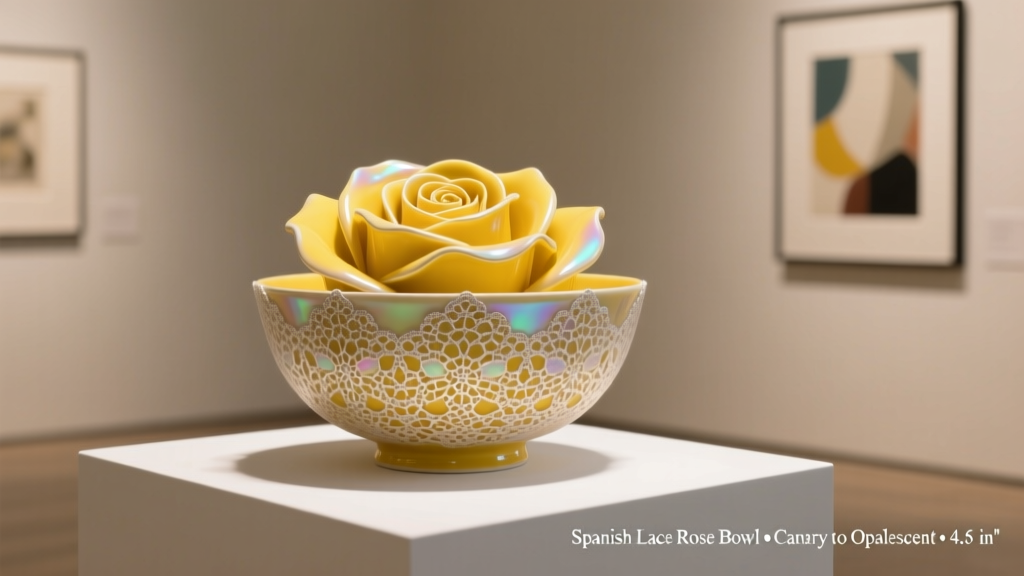
Spanish Lace Rose Bowl: Decoding the Canary-to-Opalescent 4½-Inch Variant in Fenton Art Glass Collecting

Fenton Paperweight Fish: Authentication, Market Trends, and Collector Insights

Owens Pitcher 'Lotus Blossom Wading Bird' (8 5/8 in): Authentication, Provenance, and Market Analysis
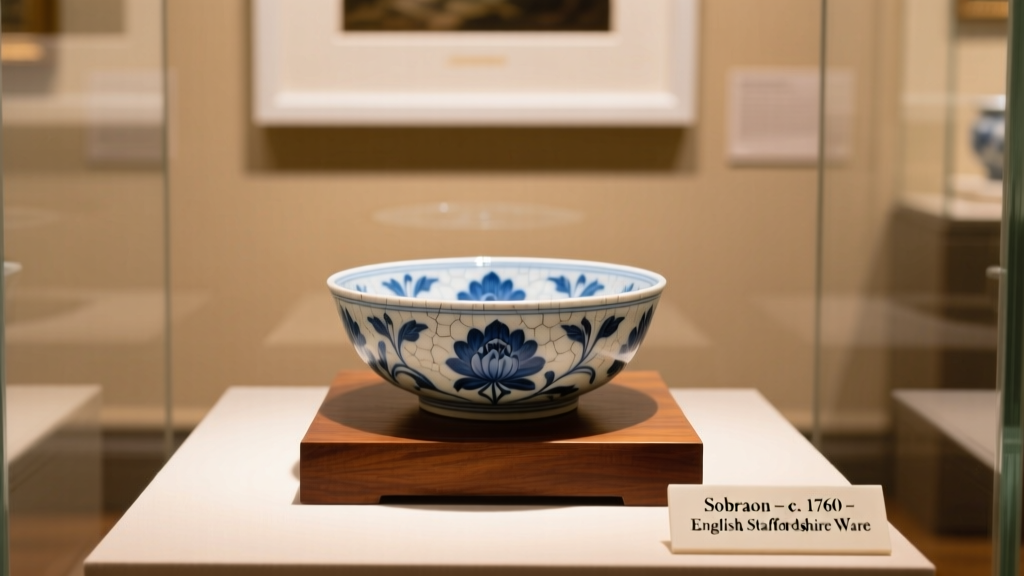
Flow Blue Waste Bowl Sobraon: Authentication, Provenance, and Market Analysis
Chas. M. Higgins Co. Pour Spout Master Ink: Technical Analysis, Historical Context, and Authentication Protocol for the 8 oz (5¾ in) Bottle
Toy Butterfly Windup Articulated Wings Tin Souvenir of Chicago Theater — Authentication, Provenance, and Market Value Analysis
Charles Furnace: Authentication, Market Position, and the Legacy of a Mid-Century American Printmaker
Henry Mollinger, Moellinger, Moollinger: Disambiguating a Persistent Name Confusion in 20th-Century Print Markets
RS Germany Cup and Saucer 'Pink Tulip on Light Blue Ground': Authentication, Market Value, and Historical Context