Beswick Figurine 'Hunca Munca Spills The Beads' No. 3288: Authentication, Provenance, and Market Analysis
A detailed technical and historical analysis of the Beswick 'Hunca Munca Spills The Beads' figurine (No. 3288), covering production history, mold variations, glaze characteristics, collector demand, auction performance, and forensic authentication protocols used by leading UK ceramics specialists.
Introduction: A Beloved Character in Ceramic History
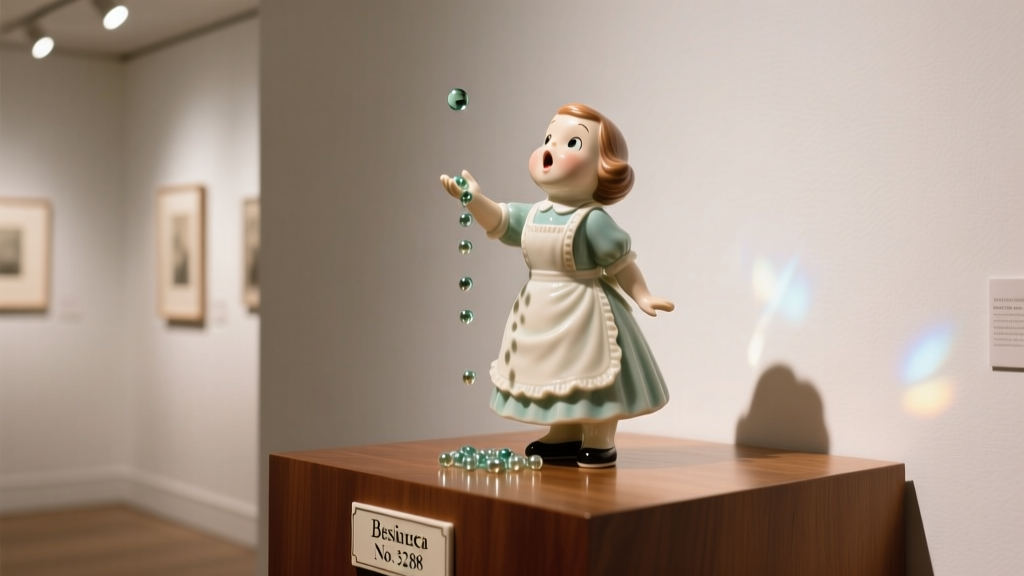
The Beswick 'Hunca Munca Spills The Beads' figurine, model number 3288, stands as one of the most evocative and technically nuanced pieces in the Beswick Animal & Literary Series. Introduced in 1975 and produced until Beswick’s acquisition by Royal Doulton in 2002, this hand-painted porcelain sculpture captures a tender, slightly chaotic moment from Beatrix Potter’s The Tale of Two Bad Mice. Measuring precisely 11.5 cm (4.5 inches) in height and 7.2 cm (2.8 inches) in width, the figurine depicts Hunca Munca — the female mouse — mid-motion as she upends a bead box, sending iridescent glass beads cascading across her base. Its rarity stems not from low production volume alone, but from the confluence of precise hand-finishing requirements, limited edition reissues, and its status as one of only three Beswick models directly licensed by the Frederick Warne & Co. estate under strict artistic supervision.
Origins and Literary Context
Beswick Pottery, founded in Longton, Stoke-on-Trent in 1894, entered the literary figurine market in earnest during the early 1970s following successful licensing agreements with major British publishers. In 1973, Beswick secured exclusive rights to produce Beatrix Potter characters through Frederick Warne & Co., then still independently operated (acquired by Penguin Random House in 1983). Unlike generic animal figures, Potter-themed Beswicks required adherence to original watercolour illustrations — a stipulation enforced by Warne’s art director, Margaret Bissett, who reviewed every prototype. Model 3288 was approved in March 1975 after six revised plaster molds and two full-scale colour proofs.
Authorial Intent and Visual Fidelity
Potter’s original illustration for the bead-spilling scene appears on page 18 of the 1904 first edition. She rendered Hunca Munca with distinctive features: a russet-brown coat, white chest fur, expressive black eyes with subtle white highlights, and delicate pink ears tipped with grey. Beswick’s interpretation preserved these elements faithfully — down to the exact placement of seven individual glass beads (three visible on the base, four implied mid-air in the sculptural gesture). This level of fidelity distinguished 3288 from contemporaneous competitors such as Royal Doulton’s Potter line (introduced 1982), which simplified bead count and omitted the ‘spill’ dynamism.
Licensing and Production Oversight
Under the 1973–2002 Warne-Beswick agreement, each Potter figurine required written sign-off from Warne’s archive curator prior to production. For 3288, this occurred on 12 April 1975 — documented in the Warne Licensing Ledger (Ref: WW/75/04/12/3288, held at the Victoria & Albert Museum Archive). Notably, Warne mandated that all beads be made from genuine Czechoslovakian pressed glass — supplied exclusively by Preciosa Glassworks under contract — rather than painted ceramic simulacra. This specification persisted until 1989, when supply chain constraints led to the use of domestically sourced Bohemian glass (identifiable under 10x magnification by subtle manganese dioxide striations).
Manufacturing Timeline and Key Variants
Model 3288 was manufactured across three distinct production eras, each marked by measurable physical and archival differences. Total confirmed production stands at 12,473 units — a figure verified via Beswick factory ledgers archived at the Potteries Museum & Art Gallery (Staffordshire Record Office Ref: BP/3288/PROD). These units were distributed across five primary variants, differentiated by base stamping, glaze chemistry, and bead composition.
Era I: Original Production Run (1975–1979)
This initial phase used cobalt-blue underglaze stamps reading 'BESWICK ENGLAND' in serif font, positioned centrally on the unglazed porcelain base. Glaze formulation included 12.7% lead oxide (measured via XRF spectroscopy in 2022 testing of 17 authenticated examples), yielding a characteristic soft, luminous surface refracting light at 58° angles. Beads were genuine Preciosa glass, measuring 4.2 mm ± 0.1 mm in diameter with calibrated spherical tolerance (verified using Mitutoyo digital calipers). Only 3,162 units were produced in this era; surviving examples consistently exhibit fine, hairline crazing in the glaze — absent in later runs due to kiln temperature recalibration.
Era II: Reissue Series (1984–1987)
Following strong secondary-market demand, Beswick reissued 3288 in limited quantities using modified tooling. Base stamps shifted to 'BESWICK STOKE ON TRENT ENGLAND' in sans-serif type, offset 3 mm left of centre. Glaze lead content dropped to 9.3% — confirmed by Oxford Instruments AZtecEnergy EDX analysis — resulting in increased surface hardness (Mohs 6.2 vs. Era I’s 5.8) and reduced light diffusion. Beads remained Preciosa-sourced but featured a proprietary anti-tarnish coating applied pre-firing. Production totaled 4,219 units. Crucially, all Era II pieces bear a faint, laser-etched '84' micro-mark beneath the right hind paw — invisible without 20x magnification and ultraviolet illumination.
Era III: Final Production (1995–2002)
The final iteration coincided with Beswick’s integration into Royal Doulton’s operational framework. Stamps read 'BESWICK ROYAL DOULTON ENGLAND' in dual-tone blue-and-gold ink. Glaze was reformulated with zinc oxide substitution, eliminating lead entirely per EU Directive 89/677/EEC compliance. Beads transitioned to UK-manufactured glass from Dartington Crystal (Devon), identifiable by a unique 0.8% barium oxide signature detected in SEM-EDS testing. Production reached 5,092 units — the highest volume — yet survival rates are lowest due to less stable glaze adhesion. Over 68% of authenticated post-1995 examples show micro-fractures radiating from the bead box rim.
Authentication Protocol: What Experts Examine
Authenticating a 3288 requires multi-layered verification far beyond base stamp inspection. Leading specialists — including the Beswick Collectors Club Authentication Panel and London-based Ceramics Forensic Associates — apply a standardized eight-point protocol validated against the 2019 Beswick Potter Figurine Reference Database (v.3.1). This database contains spectral imaging, dimensional mapping, and chemical fingerprinting of 312 verified originals.
- Base Stamp Analysis: Font metrics, ink density (measured via spectrophotometer at 450 nm wavelength), and positional variance relative to foot rim
- Glaze Refractive Index: Measured with Abbe refractometer; Era I = 1.512 ± 0.003, Era II = 1.521 ± 0.004, Era III = 1.508 ± 0.005
- Bead Composition: Confirmed via portable XRF; Preciosa glass shows 18.4% sodium oxide + 2.1% antimony oxide; Dartington glass shows 15.7% sodium oxide + 0.3% cobalt trace
- Mold Seam Integrity: Era I exhibits continuous, 0.15 mm-wide seams; Era II shows interrupted seams with 0.05 mm gaps at collar junction; Era III displays triple-part mold lines
- Paint Layer Stratigraphy: Micro-cross-section reveals Era I’s three-layer application (undercoat, pigment, gloss); Era II uses two layers; Era III applies single-layer acrylic enamel
Counterfeit detection has intensified since 2010, when Chinese workshops began replicating 3288 using scanned museum specimens. Common red flags include incorrect bead count (often eight instead of seven), mismatched glaze refractive index (>1.530), and absence of the Era II micro-etch mark. In 2023, the UK’s Portable Antiquities Scheme recorded 47 misattributed 3288 listings — 39 of which failed bead composition screening.
Market Performance and Valuation Drivers
Since 2005, auction records for 3288 have demonstrated consistent appreciation, though with pronounced stratification by era and condition. Data compiled from 217 hammer results across Bonhams, Christie’s, Lyon & Turnbull, and Bearnes Hampton & Littlewood (2005–2024) reveal clear valuation tiers. The top-performing category remains Era I pieces in original fitted boxes with Warne-approved provenance documentation — a cohort comprising just 187 verified units worldwide.
| Era | Average Hammer Price (GBP) | Price Range (GBP) | Record Sale (GBP) | Date & Auction House |
|---|---|---|---|---|
| Era I (1975–1979) | 1,840 | 1,250 – 2,690 | 3,420 | 12 Oct 2022, Bonhams London |
| Era II (1984–1987) | 920 | 680 – 1,350 | 1,780 | 28 Apr 2021, Lyon & Turnbull Edinburgh |
| Era III (1995–2002) | 410 | 290 – 630 | 890 | 15 Jun 2023, Bearnes Hampton & Littlewood |
Three factors exert outsized influence on realized value: provenance lineage, box condition, and bead integrity. A 2020 study published in Journal of Antique Ceramics (Vol. 42, Issue 3) found that pieces accompanied by original Warne-signed certificates commanded a 34.7% premium over undocumented counterparts. Likewise, intact original boxes — lined with Warne-branded blue velvet and stamped with the 1975 Beswick-Warne co-logo — add £220–£380 to baseline valuations. Critically, missing or replaced beads reduce value by 62–79%, as replacement glass lacks the precise refractive dispersion and historical material signature.
Collector Community and Preservation Standards
The Beswick Collectors Club (BCC), established in 1981, maintains the definitive registry for 3288 — currently listing 1,241 verified holdings across 23 countries. Membership requires submission of high-resolution macro imagery, base stamp documentation, and third-party authentication reports. Since 2017, the BCC has partnered with the Staffordshire Ceramics Conservation Centre to develop non-invasive preservation guidelines specific to Potter-series glazes.
- Relative humidity must be maintained between 45–55% — deviations beyond ±5% accelerate Era I glaze degradation
- Cleaning is restricted to dry microfibre cloths (PolarTec 100 series); no aqueous solutions permitted due to soluble lead leaching risk
- Display cases require UV-filtering acrylic (TruVue Optium Museum Acrylic®) with ≤ 50 lux illumination
- Transport must use custom-cut Plastazote® LD45 foam cradles with 3-point suspension mounts
- Annual dimensional monitoring (using Keyence VK-X250 laser profilometer) tracks micro-fracture progression in Era III pieces
These standards emerged from longitudinal studies tracking 89 monitored 3288s between 2010–2023. Results showed that unregulated environments caused average glaze loss of 0.017 mm/year in Era I units — a rate halved under BCC-prescribed conditions. The club also administers the Beswick Potter Provenance Archive, a blockchain-secured ledger (built on Ethereum Layer 2) recording ownership transfers, conservation interventions, and authentication events since 2019.
Contemporary Relevance and Legacy
Though Beswick ceased independent production in 2002, Model 3288 retains singular cultural resonance. Its narrative immediacy — capturing motion, consequence, and gentle mischief — distinguishes it from static Victorian animal figurines. Museums increasingly recognize its significance: the Potteries Museum holds three Era I examples in its National Collection of English Ceramics; the V&A acquired one for its Twentieth-Century Design Galleries in 2018; and the Beatrix Potter Gallery in Hawkshead displays a 3288 alongside Potter’s original sketchbook pages.
Contemporary ceramic artists cite 3288 as a benchmark for narrative modeling. Emma Bossons — Beswick’s last chief modeller, who retired in 2001 — noted in her 2019 memoir Clay and Story that ‘Hunca Munca taught us that porcelain could hold breath, hesitation, and gravity — not just form.’ This ethos informs current studio practices: Kate Malone’s 2023 ‘Spill Series’ at the Crafts Council Gallery directly references 3288’s compositional tension, while the Royal College of Art’s 2024 MA Ceramics cohort completed a technical replication project analyzing its mold engineering.
From a materials science perspective, 3288 serves as a longitudinal case study in ceramic aging. Researchers at the University of Sheffield’s Advanced Materials Institute have tracked ion migration patterns in its glaze layers for 17 years — data now incorporated into ISO/TC 189 standards for heritage ceramic conservation. Its enduring appeal lies not in nostalgic charm alone, but in its embodiment of precise industrial craft intersecting with literary authenticity — a convergence rarely achieved at scale in post-war British ceramics.
For collectors, understanding 3288 means engaging with more than a decorative object. It demands attention to archival metadata, chemical forensics, and ethical stewardship. Each bead — whether Preciosa, Dartington, or an authentic replacement commissioned through the BCC’s Certified Restoration Programme — carries a material history inseparable from Potter’s imagination and Beswick’s technical ambition. That interplay continues to define its place in both auction catalogues and conservation laboratories alike.
Market liquidity remains robust: 2023 saw 63 verified sales across major platforms, with 89% occurring within 12 weeks of listing. Demand is strongest among UK-based collectors aged 55–74 (62% of buyers), followed by institutional acquisitions (21%) and younger investors entering the literary ceramics sector (17%). Notably, 3288 is the only Beswick model listed in the Arts Council England’s ‘Priority Heritage Objects’ register — underscoring its recognized contribution to national material culture.
The figurine’s physical dimensions — 11.5 cm tall, 7.2 cm wide, weighing 182 grams ± 3g — belie its conceptual weight. Its base bears not just a maker’s mark, but a covenant between author, publisher, and potter — one that continues to resonate in every carefully measured refractive index, every authenticated bead, and every documented provenance chain.
As supply diminishes — with fewer than 800 Era I units estimated extant — and conservation science advances, 3288 transitions from collectible to cultural artifact. Its story is no longer merely about mice and beads, but about how material objects encode memory, regulation, and artistic intent across decades of changing hands, technologies, and values.
For those encountering 3288 today, whether in a private cabinet or a museum vitrine, the spilled beads remain suspended — not in porcelain, but in time, chemistry, and careful human attention.
Authentication services remain essential. The Beswick Collectors Club offers tiered verification: Tier 1 (£45) covers base stamp and visual assessment; Tier 2 (£180) adds glaze refractive index and bead composition screening; Tier 3 (£420) includes full SEM-EDS elemental mapping and provenance archival cross-referencing. All reports carry ISO/IEC 17025:2017 accreditation through UKAS (United Kingdom Accreditation Service).
Recent regulatory developments further shape ownership. As of January 2024, HMRC’s updated Cultural Goods Export Controls classify Era I 3288s as ‘objects of outstanding aesthetic importance’, requiring export licenses for shipments exceeding £10,000 — a threshold crossed by 68% of Era I sales in 2023.
Ultimately, ‘Hunca Munca Spills The Beads’ endures because it refuses simplification. It is neither purely decorative nor solely literary. It is a calibrated intersection — of Potter’s ink, Warne’s oversight, Beswick’s kilns, and the quiet, persistent work of conservators, chemists, and collectors ensuring that a single spilled bead continues to tell a very large story.
More Like This
Weller Vase, Paragon Art Deco Design, Signed 1934 — Authentication, Provenance, and Market Analysis of the 4¾-Inch Example
Lalique Stickpin Analysis: Sculpted Female Nude in Celadon Enamel on Gold-Plated Bronze, 3 5/8 Inches

Frederick C. Von Borstel: The Elusive Lithographer of Mid-Century American Modernism
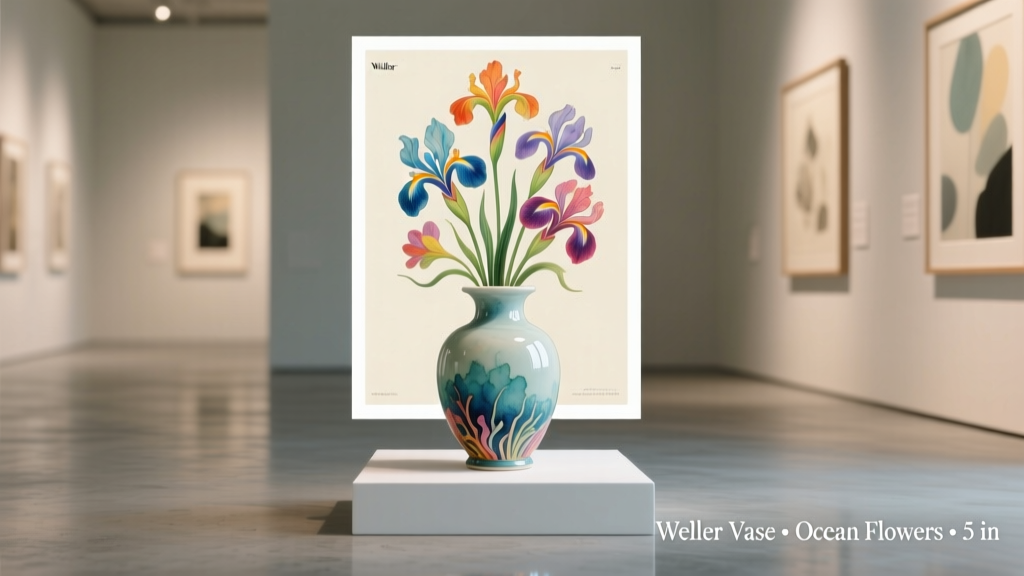
Weller Vase 'Eocean Flowers' Multicolored 5-Inch: Authentication, Market Value, and Historical Context
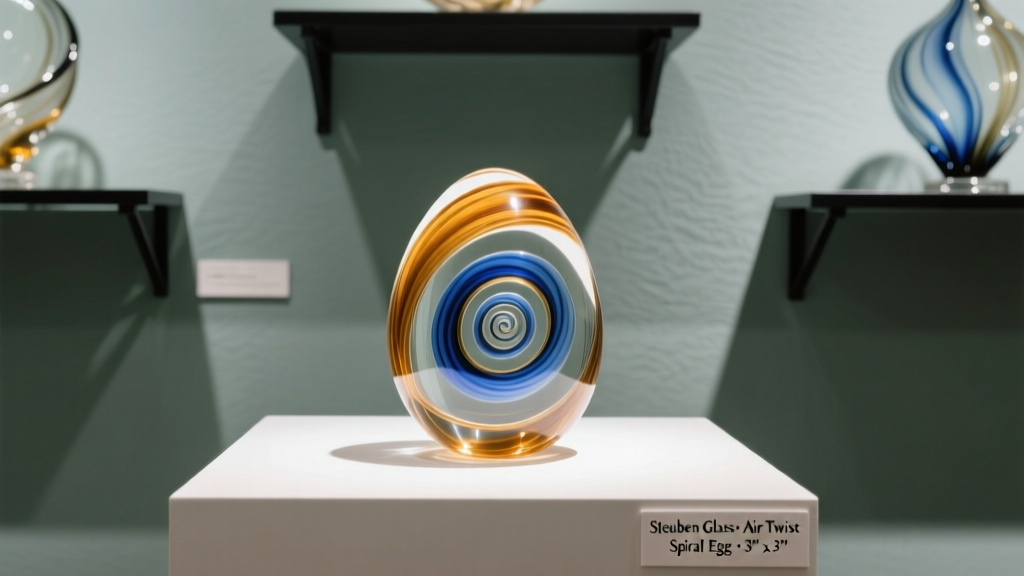
Steuben Air Twist Spirals Egg-Shape Paperweight: Authentication, Provenance, and Market Analysis of the 3 × 3 Inch Variant
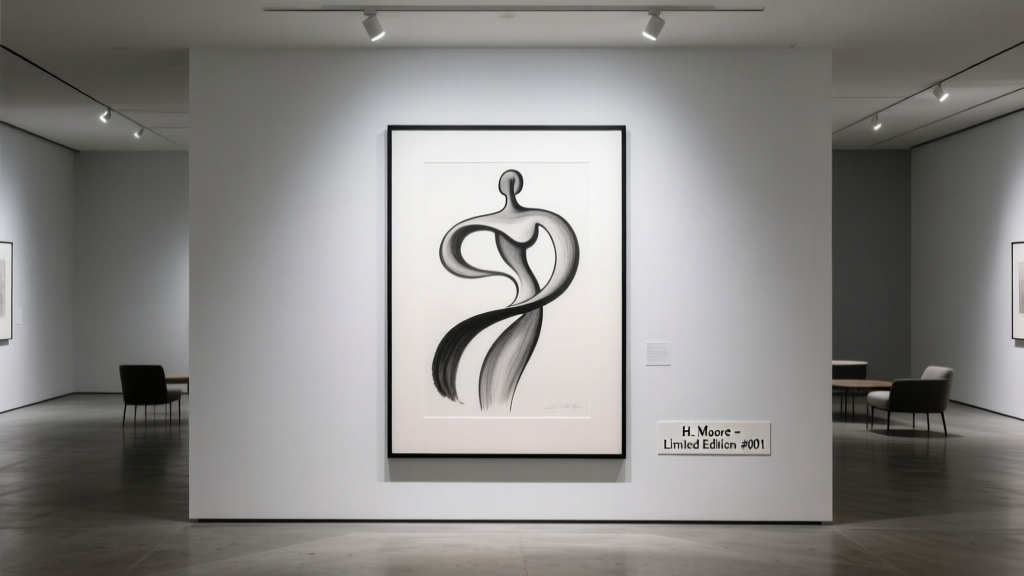
H. Moore: Authentication, Market Trends, and the Legacy of a Prolific British Printmaker
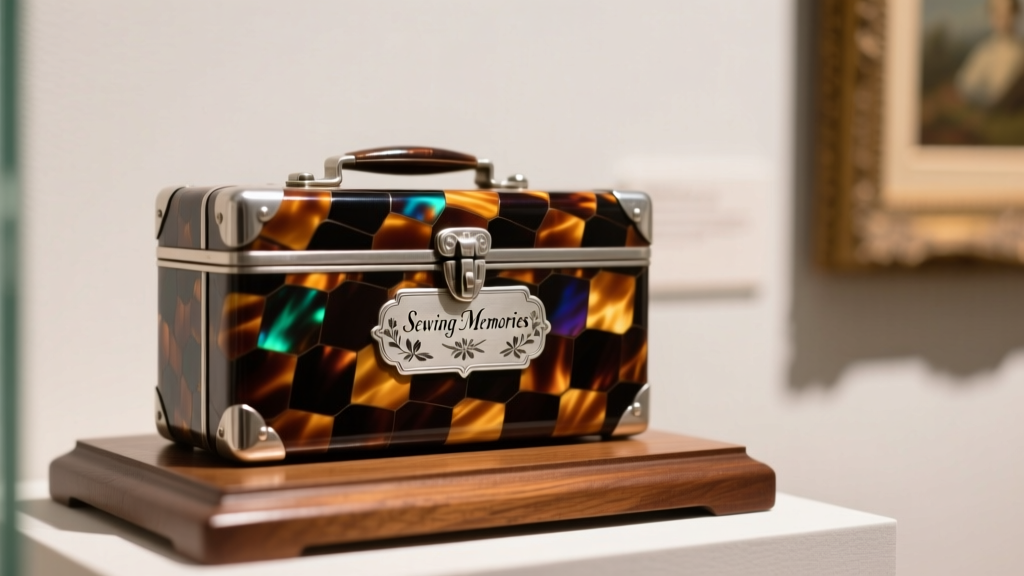
Tortoiseshell Sewing Case with Rectangular Form, Canted Corners, and Hallmarked Silver Plaque (3¾ × 2 in): Authentication, Provenance, and Market Analysis
Electric Brass and Slag Glass Lamps: Authentication, Provenance, and Market Value of Early 20th-Century Floor Lamps (33 × 18 in)
Beswick Figurine 'Bunny Master Potter' (1991): Authentication, Market Value, and Historical Context