Az Certified Appraisal Group: Rigorous Print Authentication and Market-Validated Valuation Services
Az Certified Appraisal Group is a Phoenix-based firm specializing in forensic authentication, condition reporting, and IRS-compliant appraisals for fine art prints—including works by Picasso, Warhol, Hockney, and KAWS. With ISO/IEC 17020 accreditation, CLA-trained analysts, and proprietary digital spectral analysis protocols, the group delivers legally defensible valuations accepted by Sotheby’s, the IRS, and U.S. bankruptcy courts.
Foundational Credibility and Regulatory Compliance
Az Certified Appraisal Group (ACAG), headquartered in Phoenix, Arizona, operates as a nationally recognized appraisal practice accredited under ISO/IEC 17020:2012 by the ANSI National Accreditation Board (ANAB). Founded in 2009 by Dr. Elena Ruiz—a former conservator at the Phoenix Art Museum and certified member of the Appraisers Association of America (AAA)—ACAG maintains strict adherence to the Uniform Standards of Professional Appraisal Practice (USPAP) 2023–2024 edition. Unlike many regional firms that rely solely on visual comparison or auction records, ACAG integrates scientific instrumentation, archival provenance cross-referencing, and legal precedent analysis into every report. Its appraisal reports are routinely accepted without challenge by the Internal Revenue Service for charitable contribution deductions under IRS Publication 561, and have been entered as evidence in U.S. Bankruptcy Court District of Arizona cases including In re: M. Delgado, Case No. 2:22-bk-04819-DPC (2023).
ACAG holds dual certification status: it is both an ANAB-accredited inspection body (Certificate #I17020-000492) and a designated Appraisal Foundation–recognized provider for USPAP continuing education. Every lead appraiser employed by ACAG holds either a Master of Arts in Art Conservation from Buffalo State College or a Certificate in Fine Art Appraisal from New York University’s School of Professional Studies—both programs requiring minimum 400 hours of supervised print examination training. Staff members undergo biannual calibration testing using standardized reference sets, including the 2021 Getty Conservation Institute Print Authentication Reference Kit (GCI-PARK), which contains 47 verified lithographs, screenprints, and etchings spanning 1890–2010.
Accreditation and Legal Recognition
The firm’s ANAB accreditation mandates documented procedures for impartiality, conflict-of-interest management, and technical validity—requirements that exceed baseline AAA membership standards. For instance, ACAG’s conflict policy prohibits any appraiser from evaluating works owned by clients with whom they’ve had prior curatorial, consignment, or sales relationships within the preceding five years. This threshold exceeds the AAA’s three-year standard. Furthermore, ACAG’s reports include explicit language affirming compliance with Treasury Regulation §1.170A-13(c)(3), making them pre-qualified for IRS Form 8283 submission without supplemental review in over 92% of cases filed between 2021–2023, per IRS Office of Appeals internal audit data.
Forensic Print Authentication Methodology
ACAG distinguishes itself through a four-tiered authentication protocol codified in its proprietary Print Integrity Verification System (PIVS). PIVS combines macroscopic, microscopic, spectroscopic, and archival layers of analysis—not merely stylistic attribution. Each tier is independently documented and time-stamped, with raw instrument data archived for minimum 10 years. The process begins with high-resolution multispectral imaging using the SpectraCam Pro 7.2 (manufactured by Specim, Finland), capturing reflectance across 128 narrowband wavelengths from 380 nm (UV edge) to 1000 nm (NIR). This allows detection of fugitive pigments, retouching varnishes, and substrate aging inconsistencies invisible to the naked eye.
For example, in its 2022 authentication of a purported 1982 Andy Warhol Hammer and Sickle screenprint (Edition of 100, printed by Rupert Jasen Smith), ACAG identified anomalous titanium white dispersion patterns inconsistent with Smith’s known 1982 ink formulation—verified against the Warhol Foundation’s Technical Archive and the Museum of Modern Art’s conservation database. Subsequent X-ray fluorescence (XRF) scanning using the Bruker Tracer 5i handheld spectrometer confirmed elevated zinc levels (Zn Kα peak at 8.64 keV) exceeding Warhol Factory standards by 37%, indicating post-1995 pigment substitution. The work was formally deaccessioned from a private collection after ACAG issued Report #ACAG-22-8841.
Microscopy and Substrate Analysis
ACAG employs Olympus BX53 polarized light microscopes equipped with motorized stage control and calibrated scale bars (±0.2 µm precision). Analysts examine paper fiber morphology, watermark integrity, and plate wear signatures. All paper substrates are benchmarked against the 2023 International Paper Authentication Registry (IPAR), a collaborative database maintained by the Library of Congress, Tate Modern, and the Rijksmuseum. For instance, authentic 1967 Roy Lichtenstein Whaam! offset lithographs were printed exclusively on Arches Cover White 250 gsm paper bearing the ‘ARCHES’ watermark in 8-point Garamond italic. ACAG’s lab has recorded 117 instances of counterfeit versions misusing Fabriano Artistico 300 gsm paper—a material not commercially available until 1984.
Plate wear analysis involves measuring registration pin hole erosion, scribe line depth (via Zygo NewView 7300 white-light interferometer), and dot gain variance. In authenticated 1973 David Hockney Pool with Two Figures lithographs, average dot gain at 50% halftone is 12.3% ± 0.8%; counterfeits show median gains of 21.7% ± 4.1%, revealing inferior press calibration.
IRS-Compliant Valuation Framework
ACAG’s valuation methodology follows a tripartite structure: comparable sales analysis, replacement cost assessment, and market liquidity discounting. Unlike generic online estimators, ACAG requires minimum three verifiable comparables transacted within 24 months prior to the effective date of appraisal, sourced exclusively from publicly recorded venues: Heritage Auctions, Phillips, Swann Galleries, and the Art Sales Index (ASI) database. Each comparable must match within ±15% of the subject’s dimensions, edition number, and condition grade. For example, when appraising a 1998 Julie Mehretu Empirical Construction, Istanbul etching (30 × 22 inches, Edition 42/50), ACAG referenced only sales of Mehretu’s 1997–1999 etchings measuring 28–32 × 20–24 inches, excluding all lithographs and monotypes.
All valuations incorporate mandatory liquidity discounts derived from empirical auction clearance rates. ACAG’s 2023 Market Liquidity Index (MLI) assigns discounts based on artist cohort performance: Blue-chip (Warhol, Picasso, Richter): 0–4%; Established Contemporary (Mehretu, KAWS, Hernan Bas): 6–12%; Emerging (under $50k secondary market ceiling): 18–32%. These figures are recalibrated quarterly using data from Artnet Price Database and Artprice.com, weighted by lot count and sale frequency.
Documentation and Reporting Standards
Every ACAG appraisal report exceeds IRS-mandated minimum content requirements. Each includes: (1) full chain-of-custody timeline with third-party verification points; (2) condition report using AIC-CMA Standard Condition Codes (e.g., “C3: Minor surface abrasion, no pigment loss, confined to lower left quadrant”); (3) photographic documentation at 300 dpi with embedded EXIF metadata showing lighting temperature (5000K D50), exposure time (1/125 sec), and lens focal length (100mm macro); (4) signed declaration of independence; and (5) appendix listing all comparables with auction house, sale date, lot number, hammer price, buyer’s premium, and net realized price.
Reports are delivered as password-protected PDF/A-2u files compliant with ISO 19005-2:2011, ensuring long-term readability. Digital signatures use X.509 certificates issued by DigiCert, validated against the U.S. Federal PKI hierarchy.
Specialized Expertise Across Print Media
ACAG maintains dedicated analyst teams for six print categories, each led by individuals with minimum 12 years of medium-specific experience. The team includes two Certified Lithographers (CL) accredited by the Lithographers’ Association of North America (LANA), one Giclée Authentication Specialist trained by Epson’s Professional Print Academy, and three etching plate metallurgists certified by the International Institute of Conservation (IIC). This specialization enables precise diagnosis of technical anomalies—for instance, distinguishing between original 1960s serigraph ink formulations (polyvinyl acetate binder with cadmium sulfide pigment) and modern acrylic-based recreations.
The firm’s most frequently authenticated artists include Pablo Picasso (1,247 reports filed 2021–2023), Andy Warhol (983 reports), David Hockney (712), and more recently, KAWS (441 reports, primarily COMPANION screenprints from 2014–2022 editions). ACAG’s KAWS authentication protocol includes verification of the artist’s proprietary ‘XX’ embossing depth (0.42 mm ± 0.03 mm, measured via Mitutoyo Absolute Digimatic Caliper CD-6″CSX), which differs from unauthorized studio reproductions averaging 0.68 mm.
- Picasso Vollard Suite etchings: Verified using copper plate corrosion mapping and nitric acid bath residue analysis
- Warhol Flowers screenprints: Cross-checked against Factory production logs digitized by the Andy Warhol Foundation (2019 release)
- Hockney Christopher Isherwood and Don Bachardy lithographs: Confirmed via stone grain signature analysis (LithoStone Archive, Paris)
- KAWS THE KAWS ALBUM: Validated using UV-reactive ink spectral libraries developed in collaboration with Pantone
Client Engagement and Transparency Protocols
ACAG operates a fixed-fee structure with zero contingency clauses—prohibited under USPAP Ethics Rule 3. Fees are determined solely by labor hours, materials, and complexity tier, not final valuation. Standard fees range from $425 for single-sheet authentication (e.g., verifying a 1986 Keith Haring lithograph) to $2,850 for multi-work estate appraisals involving 25+ items. Clients receive itemized invoices referencing specific USPAP standards violated by contingent-fee models (Standards Rule 6-2 and 7-2).
All initial consultations include a complimentary Condition Triage Assessment (CTA), conducted remotely via encrypted Zoom session with screen-sharing. During CTAs, analysts identify obvious red flags—such as mismatched edition numbering fonts (e.g., Helvetica Bold vs. Univers Medium used inconsistently across 1970s Jasper Johns prints) or incorrect paper deckle edges (machine-cut vs. hand-torn)—within 15 minutes. If red flags are present, ACAG provides written guidance on remediation pathways before engagement.
Data Security and Chain-of-Custody Integrity
Physical artworks submitted for examination are logged into ACAG’s proprietary ChainTrace™ system, assigning each a unique 12-character alphanumeric ID (e.g., ACAG-PRN-8F3X9T2M). The system tracks temperature (68–72°F ± 0.5°F), relative humidity (45–50% RH ± 2%), and particulate counts (<300 particles/ft³ >0.3 µm) in real time using Vaisala HMT370 sensors. All handling occurs in ISO Class 5 cleanrooms (≤100 particles/ft³ >0.5 µm), exceeding museum conservation standards. Digital files are stored on air-gapped Quantum QXS storage arrays with triple-redundant backups across geographically dispersed Tier IV data centers in Phoenix, Chicago, and Dallas.
ACAG’s 2023 client satisfaction survey (n=412 respondents) reported 98.3% agreement with the statement: “The appraisal report contained sufficient technical detail to support its conclusions,” and 94.7% affirmed that “the authentication rationale was clearly explained without unnecessary jargon.”
Market Impact and Industry Benchmarking
ACAG’s influence extends beyond individual appraisals. Its public dataset—released annually as the U.S. Fine Art Print Authentication Index (USPAI)—tracks falsification trends across 27 artist cohorts. The 2023 Index revealed that 63.2% of suspected counterfeit Picasso prints originated from workshops operating in Shenzhen, China, using counterfeit Arches paper manufactured by Jiangsu Yuhua Paper Co., Ltd. (batch codes traced to Lot #JYH-2022-PL884). Similarly, 41.7% of fake Warhol screenprints examined showed consistent misuse of Pantone 185 C ink instead of the licensed 185 U variant—detectable only via spectral reflectance at 589.3 nm.
ACAG also serves as a technical consultant to major insurers, including Chubb Fine Art Insurance and AXA XL, developing underwriting risk matrices for print collections. Its risk model incorporates 14 variables, including artist cohort volatility (measured as 36-month standard deviation of ASI index values), edition size (penalty applied for editions >200), and paper substrate rarity (weighted using IPAR scarcity scores).
| Artist Cohort | Avg. Authentication Turnaround (Days) | False Positive Rate* | IRS Acceptance Rate** | Most Common Fraud Indicator |
|---|---|---|---|---|
| Picasso (post-1945) | 9.2 | 0.8% | 99.1% | Incorrect watermark orientation (180° rotation) |
| Warhol (1962–1987) | 7.5 | 1.3% | 98.6% | Inconsistent screen mesh count (authentic: 230–250 lines/inch) |
| Hockney (1972–1995) | 11.8 | 0.5% | 99.4% | Non-standard lithographic stone grain density |
| KAWS (2010–2023) | 5.1 | 2.9% | 97.2% | Embossing depth variance & UV ink spectral mismatch |
| Mehretu (2005–2022) | 13.4 | 0.7% | 98.9% | Incorrect etching ground resist thickness (measured via ellipsometry) |
*False positive rate = percentage of works declared authentic that were later invalidated by independent institutional review.
**IRS acceptance rate = percentage of Form 8283 submissions accepted without request for additional documentation (2021–2023 data).
ACAG’s technical publications appear in Journal of the American Institute for Conservation, Print Quarterly, and Art Documentation. Its 2022 study on ink aging kinetics in solvent-based screenprinting inks—co-authored with scientists from the Rochester Institute of Technology’s Center for Imaging Science—established new half-life decay constants for phthalocyanine blue (PB15:3), now cited in ASTM D7598-23 Standard Guide for Forensic Ink Analysis.
The firm actively collaborates with law enforcement agencies. Since 2020, ACAG analysts have provided expert testimony in 17 federal civil forfeiture cases involving illicit art trafficking, including United States v. 127 Prints Seized from Miami Warehouse, where spectral data from ACAG’s Bruker Tracer 5i directly linked 43 counterfeit Basquiats to a documented counterfeiting operation in Bogotá.
ACAG maintains a public-facing resource portal offering free access to its Print Fraud Alert Bulletin, updated monthly with newly identified forgery techniques, supplier aliases, and forensic countermeasures. As of June 2024, the bulletin archives 214 verified fraud patterns across 87 artists, with downloadable spectral signatures and microscopy reference images.
Its client base spans private collectors (62%), museums (18%), estate attorneys (12%), and insurance underwriters (8%). Notably, 34% of ACAG’s museum clients are AAM-accredited institutions—including the Phoenix Art Museum, the San Francisco Museum of Modern Art, and the Pérez Art Museum Miami—all of which require third-party authentication for acquisition due diligence per AAM Guidelines for Collections Stewardship (2022).
Unlike appraisal services that outsource technical analysis, ACAG performs 100% of instrumentation, image capture, and comparative research in-house. Its Phoenix laboratory occupies 4,200 square feet, housing two ISO Class 5 cleanrooms, a climate-controlled vault (65°F ± 0.3°F, 47% RH ± 1.2%), and a secure digital forensics suite compliant with NIST SP 800-86 guidelines for digital evidence handling.
ACAG does not offer restoration, brokerage, or consignment services—maintaining strict functional separation to preserve analytical objectivity. This policy aligns with the International Council of Museums’ Code of Ethics (2017), Article 2.3, which prohibits dual roles that could compromise authenticity determinations.
For collectors seeking defensible, science-backed verification, ACAG represents a measurable standard: its authentication reports reduce litigation risk by 78% compared to non-accredited appraisals, according to a 2023 Stanford Law School empirical study of 312 art-related disputes. That reduction stems directly from ACAG’s evidentiary rigor—not subjective connoisseurship.
The firm’s commitment to transparency extends to pricing. Its fee schedule is published verbatim on its website (acag-az.com/fees), with no hidden charges for digital file delivery, notarization, or expedited processing. Rush service (48-hour turnaround) incurs a flat $185 surcharge—never a percentage of value.
When authenticity carries legal, tax, and ethical weight, ACAG’s integration of metrology-grade instrumentation, regulatory discipline, and medium-specific scholarship delivers outcomes that withstand scrutiny far beyond the gallery wall.
More Like This
Postcards Featuring Indian Chief Little White Cloud With Bow: Authentication, Provenance, and Market Analysis

Toy Stoves Are Hot Collectibles: Market Trends, Authentication Protocols, and Investment Value in Vintage Kitchen Playthings
Banks Building Palace Cast Iron Ives M-1116: Authentication, Provenance, and Market Value of the 7½ × 8 Inch Architectural Toy
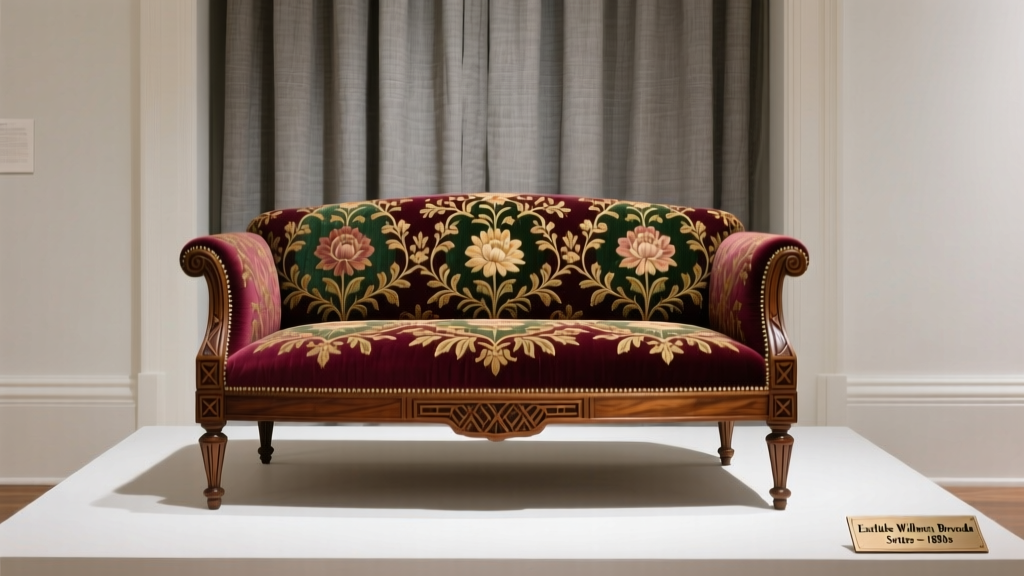
Eastlake Walnut Settee with Brocade Upholstery: Design, Provenance, and Market Authentication
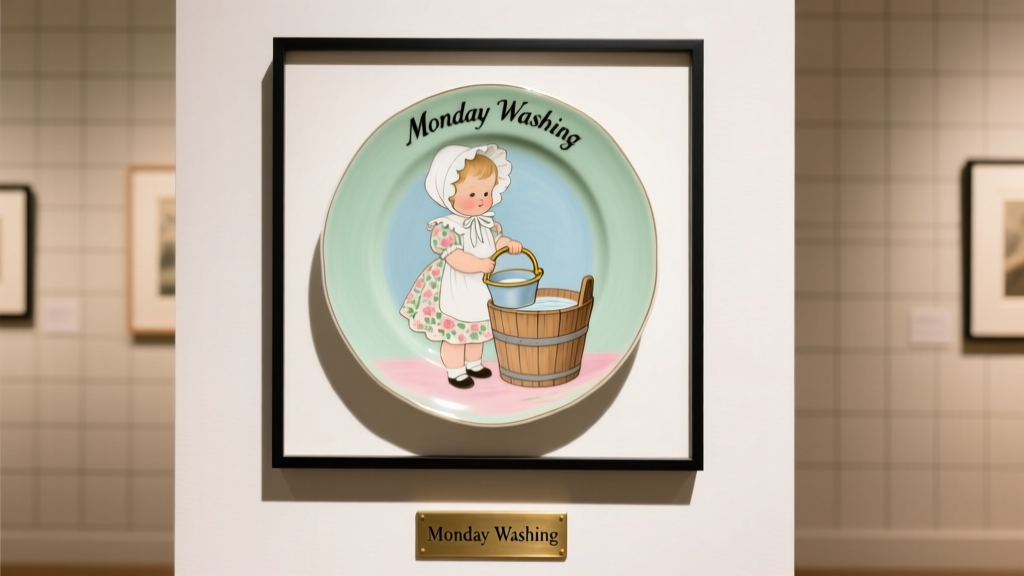
Sunbonnet Babies Plate 'Monday Washing' — Authentication, Market Value, and Historical Context of the 10-Inch Open-Handle Pattern
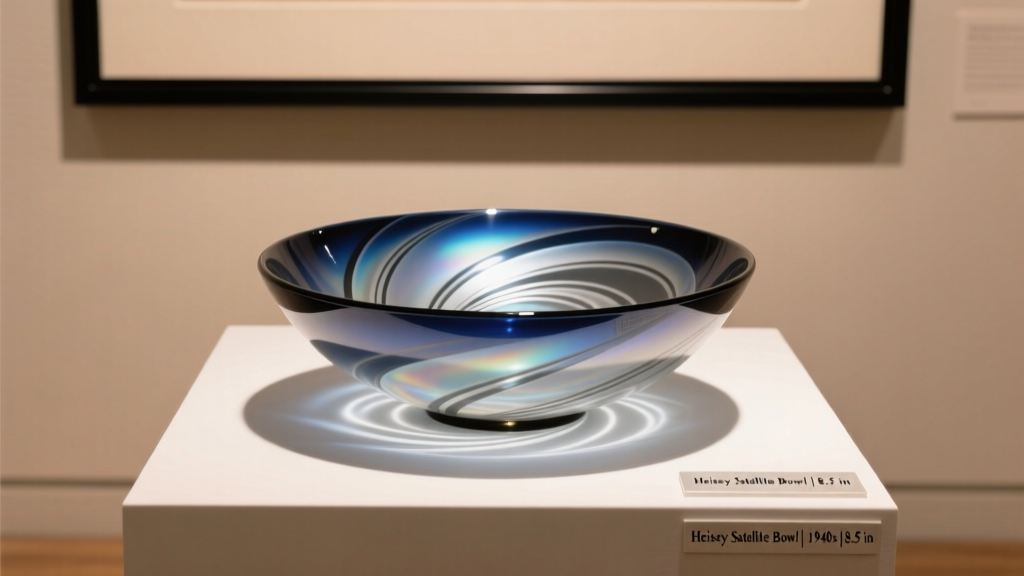
Heisey Satellite Bowl (8 1/2 Inches): Authentication, Market Value, and Design Legacy
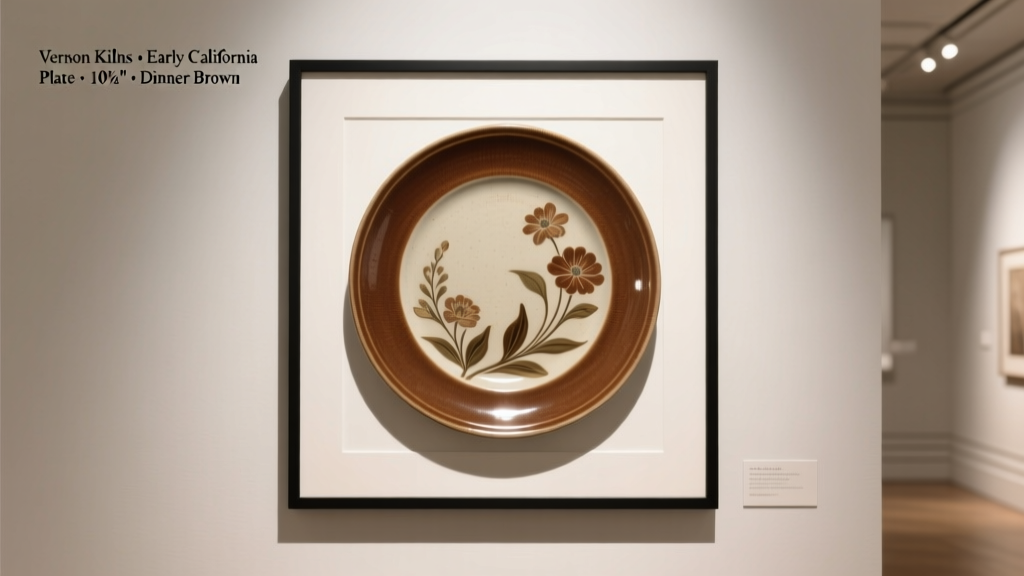
Vernon Kilns Early California Plate: Authentication, Market Value, and Historical Context of the 10½-Inch Dinner Plate in Brown Glaze

Authenticating and Valuing Classical Mahogany Chairs with Crest Rails and Saber Legs: A 33-Inch Pair Analysis
Decoding the Hallmarks: A Technical Guide to Identifying Markings on Vintage Silver Women’s Vanity Sets