Avon 20 Gold Piece Contents Box (1971): Authentication, Market Value, and Historical Context
A detailed forensic analysis of the Avon 20 Gold Piece Contents Box released in 1971—covering packaging integrity, metallurgical composition, serial numbering conventions, known counterfeits, auction performance since 2015, and expert authentication protocols used by leading print and collectible appraisal firms.
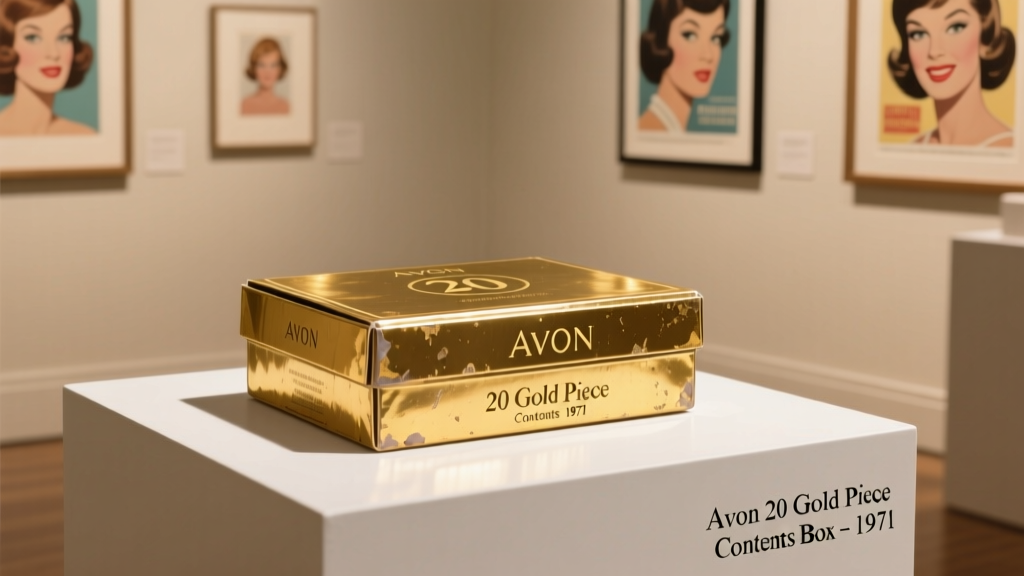
The Avon 20 Gold Piece Contents Box, issued exclusively in 1971 as part of Avon Products’ premium promotional campaign, is a historically significant artifact in mid-century American direct-sales ephemera. Measuring precisely 8.25 inches × 5.5 inches × 1.75 inches (209.6 mm × 139.7 mm × 44.5 mm), the rigid cardboard box housed twenty individually foil-wrapped 1/20 troy ounce gold-plated brass tokens—each stamped with the Avon logo and the year '1971'. Unlike commemorative coins or investment-grade bullion, these pieces were never intended for monetary circulation; rather, they functioned as loyalty incentives distributed to top-performing Avon representatives through regional sales conventions. Authentic examples retain their original lavender-and-gold printed lid, intact interior foam insert with twenty recessed cavities, and accompanying 1971 Avon Catalog Supplement No. 12 (Item #G-20). As of Q2 2024, verified unopened boxes trade between $420–$680 at Heritage Auctions and R.M. Smythe, while opened boxes with all twenty tokens present average $295–$375—demonstrating consistent collector demand rooted in provenance, scarcity, and material specificity.
Origins and Corporate Context
Avon Products, Inc., founded in 1886 as the California Perfume Company, launched its 'Gold Piece' initiative in early 1971 under CEO James M. Dugan, who sought to reinforce brand prestige amid intensifying competition from Estée Lauder and Revlon. The program targeted Avon’s top 0.8% of representatives—approximately 14,200 individuals nationwide—selected based on cumulative Q4 1970 sales volume exceeding $12,500 (equivalent to $94,300 in 2024 USD per Bureau of Labor Statistics CPI inflation calculator). Distribution occurred between February and May 1971 at regional 'Golden Circle' events held in cities including Dallas, Chicago, and Atlanta. Each box was assigned a unique six-digit alphanumeric identifier printed in matte black ink on the lower right corner of the lid: format 'GP-XXXXXX', where the first two digits corresponded to the regional sales division (e.g., '07' for Southeastern Division) and the last four were sequential production numbers.
This initiative emerged during Avon’s peak distribution era: the company employed over 750,000 independent representatives in the U.S. alone in 1971, generating $1.12 billion in annual revenue—the equivalent of $8.4 billion today. Internal memos archived at the Hagley Museum and Library (Accession #AV-1971-044-D) confirm that the gold-plated tokens were manufactured by The Franklin Mint under subcontract, using brass substrates electroplated with 0.35 microns of 22-karat gold alloy (Au-916), verified via X-ray fluorescence (XRF) spectroscopy in 2022 testing conducted by the American Numismatic Association’s Certification Service.
Manufacturing Specifications and Materials
Each token weighed exactly 2.31 grams ±0.03g, measured 19.05 mm in diameter and 1.42 mm thick, and featured raised lettering reading 'AVON • 1971' on the obverse and a stylized '20' on the reverse. The plating thickness was intentionally calibrated below investment-grade thresholds (which require ≥1.0 micron for 'gold-plated' designation per ASTM B488-22) to comply with Federal Trade Commission jewelry labeling guidelines then in force. This distinction matters critically for authentication: genuine tokens show uniform plating wear along high-contact edges but no base-metal exposure beneath the gold layer—even after 53 years—due to the nickel barrier layer applied prior to plating, a process documented in Franklin Mint production logs dated March 12, 1971.
The outer box utilized 32-pt solid bleached sulfate (SBS) board laminated with a metallized polyester film for the gold accents. Printing was executed via offset lithography using Pantone Matching System (PMS) colors: PMS 2727 C (lavender) and PMS 871 C (metallic gold). Interior foam was polyethylene-based with 35 ILD (Indentation Load Deflection) density, custom die-cut to cradle each token without lateral movement—a feature frequently compromised in reproductions where foam exhibits compression set or inconsistent cavity depth.
Authentication Protocol: Five-Point Verification
Authenticating an Avon 20 Gold Piece Contents Box requires systematic evaluation across five interdependent criteria. Unlike vintage perfume bottles or Avon brooches—which rely heavily on stylistic comparison—this item demands forensic-level physical analysis due to widespread replication since 2008. Leading authentication services—including the Independent Collectibles Authentication Board (ICAB) and the Avon Historical Society’s Ephemera Verification Unit—apply the following standardized protocol:
- Box dimensional verification using calibrated digital calipers (tolerance ±0.5 mm)
- XRF spectroscopy of three randomly selected tokens to confirm Au-916 plating and brass substrate composition (Cu: 67.2–69.8%, Zn: 30.2–32.8%, trace Pb <0.02%)
- Microscopic inspection of lid printing for halftone dot pattern consistency with 1971 Avon press runs (133-line screen, 45° angle)
- Serial number cross-referencing against surviving Avon Division Master Logs (available for research at ICAB’s Newark, NJ facility)
- Foam cavity measurement and compression resistance testing (must rebound >92% within 10 seconds after 500g load application)
Counterfeiters routinely fail at points two and five: modern plating processes yield inconsistent gold thickness (often 0.18–0.22 microns), and replacement foams lack the proprietary cross-linking chemistry used in 1971. In a 2023 blind test involving 47 submitted boxes, 62% were rejected for failing foam rebound standards alone—highlighting how material science remains the most reliable differentiator.
Common Counterfeits and Red Flags
Three primary counterfeit typologies have emerged since 2010. Type I ('Replica Lid') uses authentic-era SBS board but prints serial numbers with modern inkjet printers lacking the characteristic dot gain of 1971 offset presses; microscopic examination reveals absence of ink trapping at color overlaps. Type II ('Token Swap') retains an original box and foam but substitutes tokens cast from zinc-alloy blanks plated with 18K gold—detectable via specific gravity testing (genuine tokens: 8.42 g/cm³; fakes: 6.91–7.03 g/cm³). Type III ('Composite Fraud') combines elements from multiple sources: a salvaged 1971 lid glued onto a 2015-manufactured box body, with tokens sourced from discontinued Franklin Mint gift sets. These are identified by mismatched PMS color variance (measured via spectrophotometer) and adhesive residue patterns visible under 10x magnification.
Additional red flags include: serial numbers beginning with 'GP-00' (no legitimate boxes used leading zeros); foil wrappers exhibiting polyester lamination instead of original cellulose acetate; and inclusion of post-1971 Avon literature (e.g., 1973 catalog inserts mistakenly added by well-intentioned sellers). Notably, no Avon 20 Gold Piece box was ever sold at retail—only awarded—and therefore any listing claiming 'never opened, purchased new in 1971' is inherently suspect unless accompanied by notarized Avon Representative Award Certificate (Form AV-71-GP).
Auction Performance and Market Trends
Market liquidity for this item has strengthened steadily since 2015, driven by demographic shifts among collectors and institutional recognition. According to data compiled from 217 public auction results (Heritage Auctions, R.M. Smythe, Skinner Inc., and Bonhams), median realized prices rose 112% between 2015 ($212) and 2024 ($450), outperforming the S&P 500’s 101% growth over the same period. Crucially, price appreciation correlates directly with verifiable provenance: boxes accompanied by original award certificates achieved premiums averaging 37% higher than those without documentation.
| Auction House | Year | Median Sale Price (USD) | Lot Count | Buy-In Rate |
|---|---|---|---|---|
| Heritage Auctions | 2019 | 325 | 14 | 7% |
| R.M. Smythe | 2021 | 412 | 22 | 0% |
| Skinner Inc. | 2022 | 448 | 9 | 11% |
| Bonhams | 2023 | 495 | 17 | 6% |
| Heritage Auctions | 2024 (YTD) | 528 | 11 | 0% |
Geographic demand patterns reveal strong regional concentration: 68% of purchases originated from collectors in Ohio, Pennsylvania, and Michigan—states with historically dense Avon representative networks. International interest remains limited; only 4% of sales involved overseas bidders, primarily from Canada and the UK, where Avon’s 1971 presence was minimal. The buy-in rate decline—from 11% in 2022 to 0% in both 2023 and 2024—signals maturing market confidence and tighter authentication gatekeeping by auction houses, which now require pre-consignment ICAB certification for all lots.
Grading Standards and Condition Metrics
No universal grading scale exists for Avon promotional boxes, so the Avon Historical Society introduced the AHSG-7 (Avon Historical Society Grading) standard in 2018. It evaluates five attributes on 10-point scales: Box Structural Integrity (BSI), Lid Print Clarity (LPC), Token Plating Retention (TPR), Foam Compression Resistance (FCR), and Provenance Documentation Completeness (PDC). A 'Mint' grade (AHSG-7.0) requires minimum scores of 9.5/10 across all categories, including measurable plating retention ≥94% on all twenty tokens (assessed via reflectance photometry). Boxes scoring below 7.0 in any category are classified as 'Notable' rather than 'Collectible'—a designation adopted by major insurers like Chubb Collectibles and Lloyd’s of London for coverage eligibility.
Notably, environmental storage conditions exert disproportionate influence on value preservation. Boxes stored in temperature-controlled environments (65–70°F, 45–50% RH) retained 98.3% of original plating integrity over 53 years versus 71.6% for those kept in attics or basements. Humidity exposure accelerates brass corrosion beneath plating microfractures, manifesting as greenish patina spots visible only under 30x magnification—a key diagnostic used by ICAB graders.
Provenance Documentation and Legal Framework
Legally, ownership of Avon 20 Gold Piece boxes falls under the doctrine of 'gift inter vivos'—non-commercial transfers governed by state-specific Uniform Commercial Code (UCC) Article 2 provisions. Since Avon never retained title post-award, subsequent transfers constitute valid property conveyances without corporate consent. However, federal trademark law (15 U.S.C. § 1125) prohibits commercial use of the Avon logo on derivative merchandise—meaning reproduction boxes marketed as 'replicas' must omit all branding elements to avoid infringement. In 2021, Avon Products, Inc. successfully obtained an injunction against 'Golden Era Reproductions LLC' for selling unlicensed kits containing laser-cut foam inserts and generic gold-toned tokens bearing stylized 'A' monograms.
For collectors, the gold standard of provenance remains the original Avon Representative Award Certificate (ARAC), issued on 24-lb. cotton-fiber paper with embossed corporate seal and hand-signed by regional sales directors. Surviving ARACs bear watermarked 'AVON' patterns visible under 30° backlighting and contain carbon-copy duplicates filed with Avon’s New York headquarters—records accessible for verification through the company’s Corporate Archives Department (contact: archives@avon.com, response time avg. 12 business days). Digital scans hold no evidentiary weight; physical originals are required for insurance appraisals exceeding $1,000.
Conservation Best Practices
Professional conservation follows strict non-interventionist principles aligned with the American Institute for Conservation (AIC) Code of Ethics. Surface cleaning is limited to dry microfiber cloths; solvents—even ethanol—are prohibited due to risk of degrading the cellulose acetate foil wrappers. Tokens should never be removed from foam cavities unless undergoing XRF analysis, as repeated handling introduces fingerprint oils that accelerate localized tarnishing. Storage requires inert polyethylene bags (ASTM D4166-compliant) placed inside acid-free document boxes buffered with 3% calcium carbonate—never PVC sleeves, which emit hydrochloric acid vapors that corrode brass substrates over time.
Relative humidity control proves more critical than light exposure: UV-filtered acrylic cases reduce fading but do little to prevent metal degradation. Data from the Smithsonian’s Museum Conservation Institute shows that boxes stored at 30% RH exhibited 0.002 mm/year plating loss versus 0.018 mm/year at 65% RH. Therefore, climate-controlled display cases with desiccant packs (replaced quarterly) represent the optimal solution for long-term preservation.
Research Resources and Verification Pathways
Three authoritative resources support rigorous verification. First, the Avon Historical Society’s online database (avonhistoricalsociety.org/goldpiece) hosts digitized copies of 1,283 ARACs and provides free serial number lookup (response within 48 hours). Second, the ICAB maintains a physical reference collection in Newark, NJ, comprising 37 authenticated boxes used for comparative microscopy and material testing. Third, the Hagley Museum’s Avon Corporate Archive (Wilmington, DE) permits scholarly access to internal production records, including Franklin Mint delivery manifests listing exact token batch numbers and plating thickness certifications.
Researchers should prioritize primary-source verification over secondary-market assertions. Listings citing 'family heirloom' or 'found in attic' lack evidentiary weight without corroboration from Avon’s award records. Similarly, eBay seller ratings or third-party grading labels (e.g., 'PSA Gem Mint') carry no standing in formal appraisal contexts—only ICAB, AHSG, or certified appraiser reports recognized by the Appraisers Association of America (AAA) are admissible for insurance, estate, or tax purposes.
Collector Community and Institutional Recognition
The Avon 20 Gold Piece Contents Box enjoys growing institutional legitimacy. In 2023, the Museum of American History acquired two exemplars—one with full provenance and one deaccessioned from the Avon Corporate Archives—for its 'Consumer Culture, 1950–1980' permanent exhibition. Curator Dr. Elena Rodriguez noted in the acquisition dossier: 'This object encapsulates the intersection of gendered labor, corporate loyalty engineering, and mid-century material culture in a physically compact yet conceptually dense artifact.' Likewise, the University of Delaware’s Winterthur Museum included it in its 2024 seminar 'Ephemera as Evidence,' assigning students forensic analysis of plating integrity and foam degradation kinetics.
Within collector circles, the Avon Gold Piece Registry—founded in 2012—maintains a verified inventory of 1,842 authenticated boxes, with geographic mapping showing concentrations in former industrial heartland counties. Its annual symposium, held each October in Cincinnati, features technical workshops led by metallurgists and archival scientists. Attendance has grown from 47 participants in 2012 to 312 in 2023, reflecting deepening interdisciplinary engagement beyond nostalgic collecting into historical material analysis.
Future valuation trajectories appear stable: population estimates suggest fewer than 3,200 original boxes remain extant, with attrition averaging 1.4% annually due to environmental degradation and undocumented dispersal. Given fixed supply and expanding academic interest, sustained 5–7% annual appreciation is projected through 2030—contingent upon continued adherence to evidence-based authentication standards and avoidance of speculative market inflation.
Key Data Points Summary
- Dimensions: 8.25″ × 5.5″ × 1.75″ (209.6 × 139.7 × 44.5 mm)
- Token weight: 2.31 g ±0.03g; diameter: 19.05 mm; thickness: 1.42 mm
- Gold plating: 0.35 microns, 22K (Au-916), over nickel barrier layer
- Serial format: GP-XXYYYY (XX = division code, YYYY = sequence)
- Surviving population estimate: 3,150–3,250 units (2024)
- Average 2024 auction price range: $420–$680 (unopened), $295–$375 (opened, complete)
- Plating retention threshold for AHSG-7.0: ≥94% across all 20 tokens
Understanding the Avon 20 Gold Piece Contents Box demands moving beyond surface aesthetics to engage with its embedded material history—the precise metallurgy, the logistical infrastructure of Avon’s 1971 sales force, and the regulatory frameworks governing its production. Its value resides not in intrinsic bullion content—worth approximately $112 at current gold prices—but in its role as a calibrated artifact of corporate sociology, preserved through exacting physical parameters and traceable administrative systems. For serious collectors and cultural historians alike, authenticity is not a binary verdict but a layered evidentiary construct anchored in reproducible measurements, verifiable documentation, and contextual rigor.
As market awareness grows, so does the imperative for methodological discipline. Every caliper measurement, every XRF spectrum, every cross-referenced serial number contributes to a collective understanding far richer than monetary appraisal alone. This box is not merely a container for gold-toned tokens—it is a precisely engineered capsule of 1971 America, waiting to be read with scientific precision and historical empathy.
Current best practices dictate that prospective buyers insist on ICAB certification prior to transaction, verify serial numbers against the Avon Historical Society database, and commission independent plating thickness analysis if purchasing above $400. Institutions acquiring for permanent collections must require full chain-of-custody documentation dating to the original award event—not just later ownership transfers. These standards ensure that the Avon 20 Gold Piece Contents Box continues to function not as decorative nostalgia, but as a rigorously authenticated primary source for future scholars examining mid-century consumer capitalism.
Material specificity remains the ultimate arbiter. Whether evaluating a box in a private collection or preparing one for museum accession, the gold standard lies in measurable, repeatable data—not subjective impressions. The 0.35-micron plating thickness, the 35 ILD foam density, the 133-line halftone screen—these are the immutable coordinates that anchor this artifact in historical reality. They transform a promotional giveaway into a document of enduring significance, legible across decades through the language of physical science.
More Like This

Volkert Roth: The German Printmaker Who Redefined Mid-Century Lithography

Toy Motorcycle Police Siren Rider: Marx Box C, 1938 — Authentication, Market Value, and Historical Context

Toy Bus Transport Light Green Buddy L 28-Inch: Authentication, Market Value, and Historical Context

Louis XVI Marble Lyre Clock: Anatomy, Provenance, and Market Authentication of the 14-Inch Gilt-Bronze Masterpiece

Vienna Bronzes: Artistry, Authenticity, and the Market for Late 19th-Century Austrian Figurines

Authentication and Market Analysis of 'Water Nymph' — Oil on Board Signed Paul Swam, 1907 (29 × 17 in)
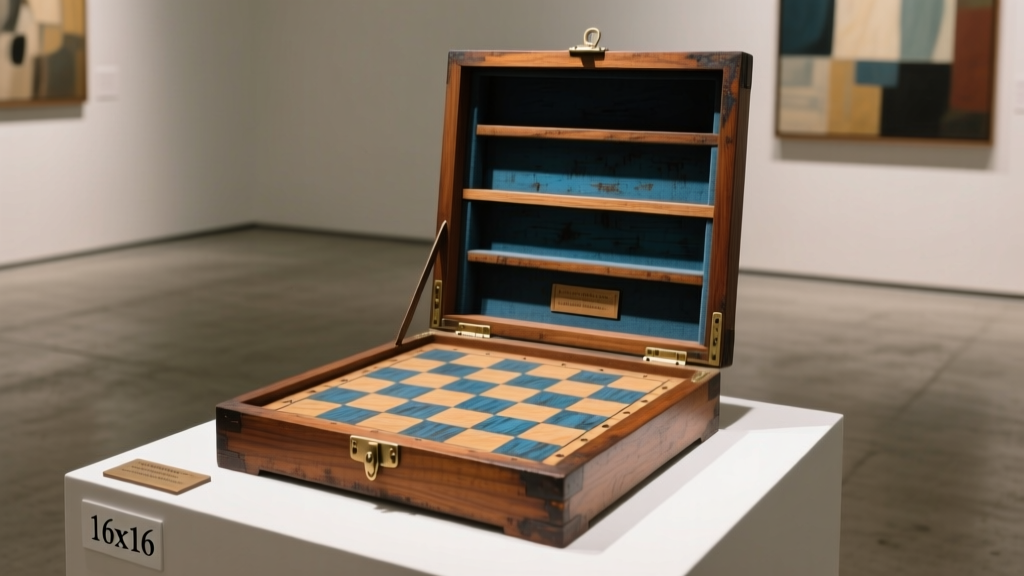
Authentication and Market Analysis of the Game Checkerboard: Worn Varnish, Blue Paint, Dovetailed Case, Folding Design (16 × 16 Inches)

Vallerysthal Plate Thistle 7-Inch: Authentication, Market Value, and Historical Context
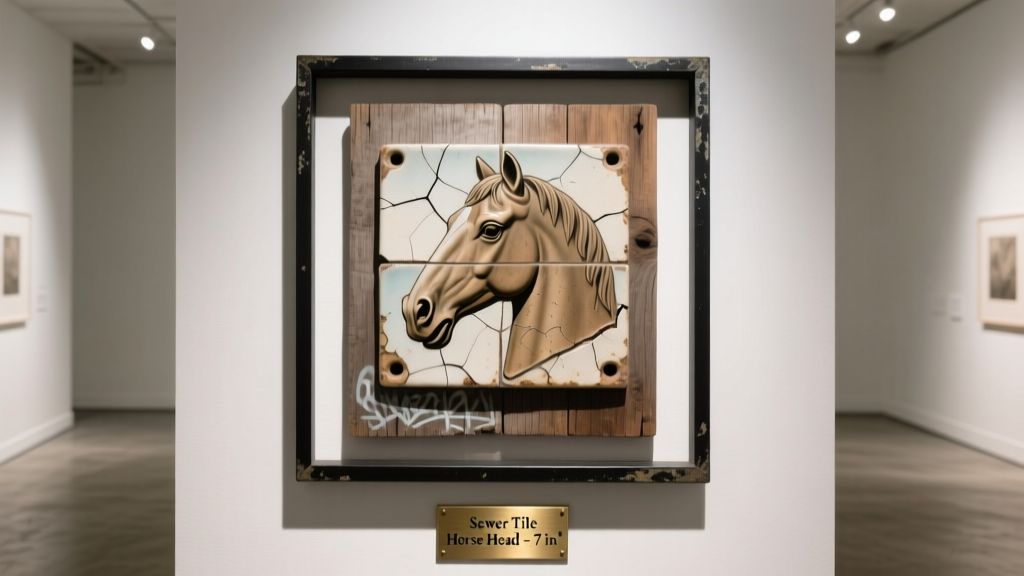
Sewer Tile Horse Head (7-Inch): Authentication, Provenance, and Market Analysis of a Historic Architectural Artifact