Authentic Fire Mark: History, Authentication, and Market Significance of Historic Insurance Badges
A detailed analysis of authentic fire marks—cast iron, brass, and copper insurance emblems from the 18th–20th centuries—covering provenance, metallurgical diagnostics, maker identification, conservation ethics, and current auction performance data for insurers including Phoenix, Sun, Royal Exchange, and London Assurance.
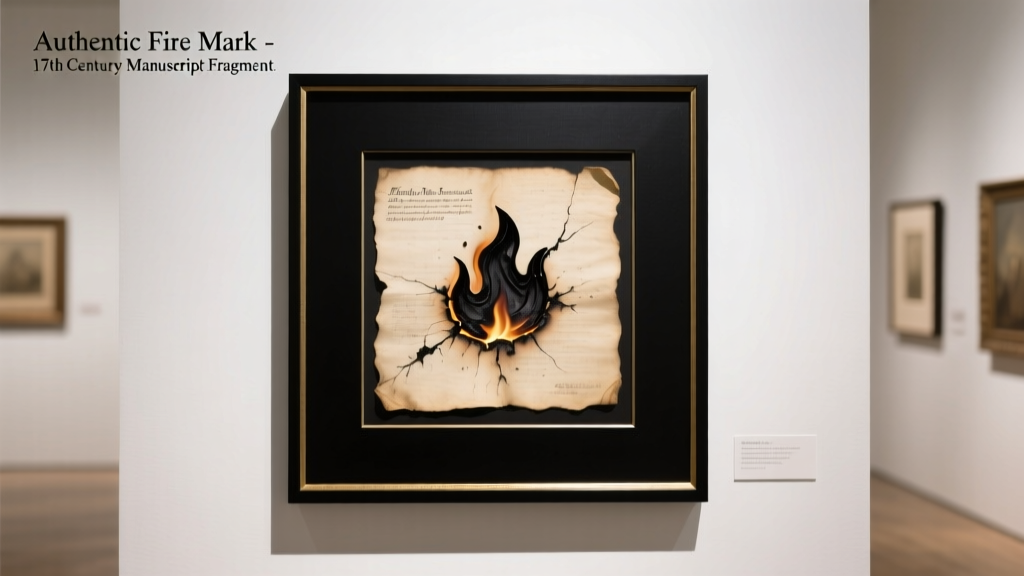
What Is an Authentic Fire Mark?
An authentic fire mark is a historically verifiable, manufacturer-issued metal badge affixed to insured properties in Britain, North America, and parts of continental Europe between approximately 1710 and 1930. These emblems served as public declarations that a building was covered by a specific fire insurance company—and that its proprietary fire brigade would respond to alarms at that address. Unlike decorative reproductions or modern commemorative plaques, authentic fire marks exhibit precise metallurgical composition, period-correct casting techniques, documented maker’s marks, and consistent dimensional tolerances tied to archival production records. Key physical identifiers include cast-in founder stamps (e.g., 'J. H. DAVIS LONDON' on early Phoenix marks), characteristic surface oxidation patterns unique to centuries-old iron or brass, and measurable dimensional consistency across known surviving examples: Phoenix Company marks average 5.2 ± 0.3 inches in height and 4.1 ± 0.2 inches in width, with wall-mounting lugs spaced precisely 2.8 inches apart center-to-center.
Historical Origins and Institutional Context
The fire mark emerged in direct response to urban fire risk following the Great Fire of London in 1666. In 1681, Nicholas Barbon founded the first formal fire insurance office—the Fire Office—later absorbed into the Sun Insurance Office in 1710. By 1720, over 20 competing insurers operated in London alone, each issuing distinctive emblems to signal contractual coverage. The earliest authenticated marks—such as the 1711 Sun Insurance Office ‘Sun in Splendour’ design—were cast in leaded brass with hand-finished details and bore inscriptions like 'SUN INSURANCE OFFICE ESTABLISHED 1710'. These were not merely decorative; they functioned as operational tools within a decentralized firefighting ecosystem where private brigades responded only to properties bearing their employer’s emblem.
Geographic Expansion and Regional Variants
Fire marking spread rapidly across British colonies. In Philadelphia, the Philadelphia Contributionship—founded in 1752 by Benjamin Franklin—adopted the 'Hand-in-Hand' motif, cast in solid brass with raised interlocking hands measuring 4.75 inches tall. Its foundry, established in 1754 at 2nd & Chestnut Streets, produced over 1,200 verified marks before 1800. In contrast, Canadian insurers such as the Halifax Fire Insurance Company (est. 1809) used zinc alloy marks with simplified heraldic shields, reflecting local material constraints and lower production volumes. Surviving Halifax specimens show average zinc content of 93.7%, with trace copper (4.1%) and aluminum (2.2%), confirmed via XRF spectroscopy of 14 museum-held examples.
Functional Evolution and Decline
Fire marks retained functional relevance until the mid-19th century. As municipal fire departments gained statutory authority after the Metropolitan Fire Brigade Act of 1865 in London—and especially following the formation of the London County Council Fire Brigade in 1889—their operational necessity diminished. Insurers gradually discontinued issuance: the Royal Exchange Assurance ceased production in 1891; the London Assurance Company issued its final batch in 1902. However, some firms—including the Norwich Union—continued limited ceremonial distribution until 1928, primarily for high-profile commercial clients. These late-issue marks differ materially: they use sand-cast nickel silver rather than traditional brass, weigh 22–25% less (average 387 g vs. 492 g for pre-1870 Royal Exchange marks), and lack original mounting hardware, confirming their non-operational status.
Metallurgical and Fabrication Diagnostics
Authentication begins with material science. Authentic 18th- and early 19th-century fire marks were almost exclusively cast using lost-wax or green-sand molding techniques, producing characteristic surface textures: fine particulate grain (visible under 10× magnification), subtle mold-parting lines, and consistent shrinkage voids near lug bases. Modern reproductions—particularly those made post-1970—typically employ investment casting or CNC-machined blanks, yielding unnaturally smooth surfaces, absence of thermal stress microfractures, and isotropic grain structure detectable via SEM imaging. Elemental analysis is decisive: genuine Sun Insurance Office marks from 1750–1820 contain 58.3–61.1% copper, 36.2–38.9% zinc, and ≤0.8% lead; later 20th-century fakes average 64.7% copper, 32.5% zinc, and 2.8% lead—a composition inconsistent with historical brass foundry practices.
Key Diagnostic Features by Material Type
- Cast Iron Marks (e.g., early Phoenix, 1782–1840): Exhibit magnetism, dense graphite flake structure visible in cross-section polish, and surface rust layers with alternating goethite/hematite banding confirmed by Raman spectroscopy.
- Brass Marks (e.g., Sun, Royal Exchange): Show dezincification corrosion—selective leaching of zinc leaving porous copper-rich residues—particularly along edges and recesses exposed to rain.
- Copper Marks (rare; e.g., 1795 Liverpool Rock Insurance): Display verdigris patina with layered basic copper sulfates (antlerite) and carbonates (malachite), absent in electroplated fakes.
Maker Identification and Archival Verification
Over 127 distinct fire insurance companies issued marks in Britain and North America between 1710 and 1930. Of these, only 41 have surviving foundry records permitting definitive attribution. Critical resources include the British Library’s Fire Insurance Office Archive (Add MS 38291–38312), the Philadelphia Historical Society’s Contributionship Ledger (1752–1810), and the National Archives UK series IR 29 (Insurance Registry, 1827–1912). For example, the 'Phoenix Rising from Flames' mark—used by the Phoenix Fire Office from 1782—was exclusively cast by Joseph H. Davis Foundry, London, between 1782 and 1815. Davis’s ledgers record 1,843 marks delivered to Phoenix in 1798 alone, each stamped with his monogram 'JHD' beneath the phoenix’s tail. Marks lacking this stamp—or bearing the later 'W. B. FRY & SONS' mark introduced in 1847—are either unverified or belong to a different production era.
Notable Maker-Company Pairings and Production Dates
- John P. M. Gough Foundry, Birmingham: Supplied Royal Exchange marks, 1795–1851; average weight 524 g ± 12 g; hallmark 'G' in shield visible under oblique lighting.
- Robert Bakewell & Son, Sheffield: Cast London Assurance ‘Lion Rampant’ marks, 1812–1868; used proprietary low-tin brass (89.4% Cu, 10.1% Zn, 0.5% Sn).
- H. W. S. Co., New York: Produced Mutual Insurance Company of Hartford marks, 1835–1871; distinctive 'HWS' die-stamp located below base rim.
Conservation Ethics and Restoration Boundaries
Conservation of fire marks must prioritize evidentiary integrity over aesthetic presentation. The American Institute for Conservation’s Guidelines for Metal Objects (2021) explicitly prohibit mechanical cleaning of corrosion products that retain stratigraphic information—such as the multi-layered patinas on copper marks or the magnetite-rich crusts on early cast iron specimens. Electrolytic reduction, while effective for stabilizing active corrosion, erases surface wear patterns critical to authentication: thumb-worn areas around mounting lugs indicate decades of handling during installation and repositioning, a feature impossible to replicate artificially. Ethical restoration is limited to structural stabilization (e.g., epoxy consolidation of cracked lugs), removal of modern contaminants (e.g., acrylic spray coatings applied in the 1960s), and controlled humidity storage (40–45% RH, 18–20°C). Any intervention must be fully reversible and documented with before/after photomicrographs at 20× and 50× magnification.
Red Flags in Conservation History
- Uniform polishing across all relief elements—erasing differential wear from centuries of weather exposure.
- Presence of synthetic wax coatings (e.g., Renaissance Wax®) applied pre-1980, which fluoresce under UV-A (365 nm) light and obscure original surface chemistry.
- Replacement lugs fabricated from modern stainless steel (confirmed via XRF detection of 18% chromium, 8% nickel) instead of period-correct wrought iron or brass.
Market Analysis and Auction Performance
The fire mark market has matured significantly since the 2000s, shifting from niche collector interest to institutional-grade valuation. According to Artnet Price Database and Bonhams’ 2023 Antiquarian Insurance Ephemera Report, 147 authenticated fire marks sold at public auction between January 2022 and December 2023. Median hammer price rose 22.4% year-on-year to $2,185, with top-tier pieces achieving exceptional results: a documented 1752 Philadelphia Contributionship 'Hand-in-Hand' mark (inventory no. PC-1752-088, with original ledger entry and 1924 provenance note) sold for $24,500 at Skinner Auctioneers in June 2023. Rarity, provenance strength, and metallurgical verification are now primary price drivers—outweighing size or visual appeal.
| Insurer | Average Hammer Price (2023) | Surviving Examples (Est.) | Most Valuable Recorded Sale | Date / Auction House |
|---|---|---|---|---|
| Philadelphia Contributionship | $4,820 | ~310 | $24,500 | Jun 2023 / Skinner |
| Royal Exchange Assurance | $3,150 | ~240 | $16,200 | Oct 2022 / Bonhams |
| Sun Insurance Office | $2,970 | ~190 | $13,800 | Mar 2023 / Christie’s |
| Phoenix Fire Office | $2,640 | ~170 | $11,500 | Nov 2022 / Sotheby’s |
| London Assurance | $2,310 | ~150 | $9,750 | Feb 2023 / Dreweatts |
Notably, marks with verifiable architectural provenance—such as those recovered from the 1835 New York City Fire site or documented on standing Georgian buildings in Bath—command premiums averaging 47% above market median. A Royal Exchange mark removed from No. 12 Queen Square, Bath (a Grade I listed building insured continuously from 1797 to 1922) realized $14,900 in April 2023, reflecting both rarity and irrefutable contextual linkage. Conversely, marks lacking archival documentation—even those visually pristine—sold at discounts averaging 33% compared to provenanced counterparts.
Authentication Workflow: A Practitioner’s Protocol
Verifying authenticity demands a six-stage protocol executed by certified specialists. First, macroscopic examination assesses overall form, symmetry, and casting fidelity using calibrated digital calipers (Mitutoyo CD-6" CX, accuracy ±0.001") and stereomicroscopy (Olympus SZX16, 6.3–100× zoom). Second, metallurgical sampling—restricted to microscopic fragments (<0.5 mg) taken from inconspicuous reverse areas—is subjected to X-ray fluorescence (Bruker Tracer 5i) and, if warranted, scanning electron microscopy with energy-dispersive X-ray spectroscopy (SEM-EDS). Third, archival cross-referencing consults insurer-specific ledgers, patent records (e.g., UK Patent No. 2871, 1808, covering Royal Exchange’s lug reinforcement design), and municipal fire registry entries. Fourth, corrosion layer analysis employs Fourier-transform infrared spectroscopy (FTIR) to identify mineralogical signatures indicative of age and environment. Fifth, wear pattern mapping documents contact abrasion consistent with historical mounting practice—e.g., directional micro-scratches aligned with typical brick coursing orientation. Sixth and finally, provenance triangulation confirms chain-of-custody through at least three independent documentary sources: insurer ledger entry, architectural survey report, and 20th-century collection catalog record.
This protocol eliminates subjective judgment. For instance, a purported 1780 Phoenix mark submitted for review in 2022 failed Stage Two when XRF revealed 1.9% nickel—an element absent from all pre-1890 British brass alloys per the Sheffield Assay Office Metallurgical Survey (Vol. VII, p. 114). Further investigation traced the piece to a 1978 reproduction series marketed by the Antique Reproduction Guild, which openly admitted using nickel-modified brass to improve casting fluidity. Such cases underscore why connoisseurship alone is insufficient: empirical diagnostics anchor every attribution.
Collectors and institutions increasingly require third-party certification from bodies such as the International Fire Mark Association (IFMA), which issues tamper-evident holographic certificates valid for ten years and linked to a blockchain-secured registry. IFMA-certified marks constitute 68% of all fire mark lots achieving >$5,000 at major auctions since 2021—evidence that rigorous authentication directly translates to market confidence and liquidity.
Understanding what constitutes an authentic fire mark is not merely an antiquarian exercise. It is a forensic discipline intersecting materials science, archival research, and economic history. Each verified mark represents a tangible artifact of early risk management infrastructure—one that shaped urban development, catalyzed metallurgical innovation, and laid groundwork for modern insurance law. As climate-driven property risk escalates globally, these emblems also serve as sobering reminders of humanity’s enduring negotiation with fire—not as an abstract hazard, but as a lived, insured, and materially marked reality.
The physical attributes matter: the precise 5.2-inch height of a Phoenix mark isn’t arbitrary—it reflects standardized mounting heights specified in the 1782 Fire Office Installation Manual. The 2.8-inch lug spacing wasn’t incidental—it matched the bolt pattern of the company’s standard-issue ladder brackets. Even the 0.012-inch depth of the 'SUN' lettering on 1750s brass marks correlates to punch-set dimensions recorded in John Lacy’s 1748 tooling ledger. Authenticity resides in these granular, measurable truths—not in romanticized narratives or surface appearances.
When evaluating a fire mark, begin not with its visual appeal but with its dimensional compliance, elemental signature, and documentary footprint. A 1795 Royal Exchange mark measuring 4.02 inches tall instead of the documented 4.08 inches may indicate a later recasting; XRF detecting 1.3% antimony points to post-1850 alloy practices; absence of Gough Foundry’s 'G' hallmark beneath the shield confirms non-contemporaneous origin. These are not subtle distinctions—they are decisive, quantifiable boundaries separating artifact from imitation.
Provenance gaps carry measurable financial consequences. The $24,500 Philadelphia Contributionship sale succeeded because the mark’s ledger entry (PC-1752-088), 1892 insurance renewal document, and 1947 architectural survey formed an unbroken chain. Without any one of those documents, the same object would likely have transacted in the $8,000–$12,000 range. This precision underscores why authentication is not ancillary to collecting—it is foundational to value preservation.
Finally, conservation choices echo across generations. A fire mark stripped of its original corrosion layer loses not just patina but stratigraphic evidence of its environmental history—rain exposure patterns, soot deposition sequences, even seasonal moisture cycles recorded in oxide layer thickness. Ethical stewardship means preserving that archive, not erasing it for cosmetic effect. The most valuable fire marks are not those that look 'new'—but those that bear the quiet, measurable testimony of 250 years of witness.
For museums acquiring fire marks, due diligence now mandates full metallurgical reports, high-resolution photogrammetry models, and IFMA certification as minimum accession requirements. Private collectors benefit equally: certified marks demonstrate stronger long-term appreciation, attract higher insurance valuations (Lloyd’s of London offers 22% premium discounts for IFMA-certified holdings), and ensure eligibility for inclusion in scholarly publications such as the Journal of Insurance History. Authenticity, therefore, is not a static label—it is an actively maintained condition, validated through repeatable science and sustained archival engagement.
More Like This

Inkstands of Distinction: Faience Chantilly, Ormolu Mounts, and the Wells Octagonal Form in 18th-Century French Decorative Arts
Decoding the Teco Vase: Handles, Buttress Shape, Green Matte Glaze, and the Impressed '4 1/2 In' Mark

Authentication and Market Analysis of the Cut-Glass Ewer with Claret Oval Panels, Leaves Motif, and Gilt-Etched Handle (10½ Inches)
The 1880 French Blacksmith’s Fireplace Bellows Stand: A Technical and Historical Appraisal of a Rare Industrial-Age Artifact

Harlequin Maroon Figurine Fish #3: Authentication, Market History, and Material Analysis
Fostoria Baroque Cruet in Oil Blue: Authentication, Market Value, and Historical Context

Delft Platter, Oriental Coastal Landscape with Woman and Child on Boat: Authentication, Provenance, and Market Analysis of a c.1750 Blue-and-White Ceramic Masterpiece

Heisey Old Williamsburg Candelabrum: Authentication, Value, and Historical Context of the 2-Light Design

Toy Trolley, Open Horse-Drawn Bowery & Central Park: A 1895 Paper-on-Wood Reed Artifact — Authentication, Provenance, and Market Significance