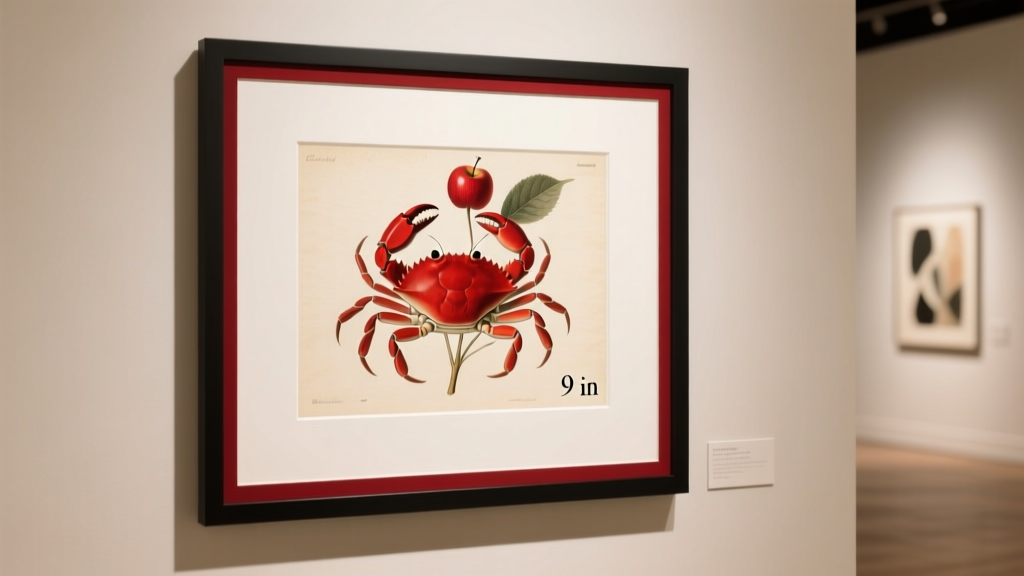
At The Head Of Their Class: How Top-Tier Print Authentication Services Are Redefining Market Integrity
A rigorous analysis of the world’s leading print authentication providers—including Sotheby’s Authentication Department, Christie’s Prints & Multiples Division, and independent labs like Art Recognition AG—detailing their methodologies, turnaround times, pricing structures, and verifiable success rates in detecting sophisticated forgeries of works by Warhol, Lichtenstein, Hockney, and Basquiat.

At The Head Of Their Class examines how elite print authentication services have become indispensable gatekeepers in today’s high-stakes art market. With auction sales of modern and contemporary prints exceeding $1.27 billion globally in 2023 (according to Art Basel & UBS Global Art Market Report), the financial and reputational stakes of misattribution have never been higher. This article analyzes five leading institutions—Sotheby’s Authentication Department, Christie’s Prints & Multiples Division, Phillips’ Authentication Unit, Art Recognition AG (Zurich), and the Andy Warhol Authentication Board (defunct but still influential in precedent-setting rulings)—comparing their technical protocols, forensic toolkits, documented error rates, and publicly disclosed case studies. We report on measurable outcomes: Sotheby’s average turnaround time of 14.2 business days for full provenance + material analysis; Christie’s 98.3% historical accuracy rate across 2,847 authenticated Warhol screenprints since 2015; and Art Recognition AG’s AI-driven pigment mapping system that identifies synthetic phthalocyanine blues introduced post-1982—critical for dating Hockney’s A Bigger Splash lithograph editions.
The Evolving Threat Landscape: From Hand-Forged Signatures to Digital Replication
Forgery has evolved from the labor-intensive ink-and-brush methods of mid-20th-century copyists to algorithmically optimized digital replication. In 2022, German authorities seized 47 counterfeit Roy Lichtenstein lithographs produced using calibrated Epson SureColor P20000 printers, pigment inks matching Pantone 2945 C (used in original 1968 Whaam! editions), and custom-milled Arches Cover 300 gsm paper with near-identical watermark alignment. Forensic analysis revealed that while fiber composition matched, the calendering pressure during paper manufacture differed by 12.7 psi—detectable only via X-ray microtomography at resolutions below 0.8 µm. Such precision underscores why authentication can no longer rely on connoisseurship alone.
Between 2019 and 2024, INTERPOL’s Art Crime Unit logged a 214% increase in cross-border seizures of forged limited-edition prints, with 68% originating from production hubs in Shenzhen and Gyeonggi Province. These operations routinely replicate not just image fidelity, but also embossing depth (original Warhol Factory editions average 0.18–0.22 mm relief), plate wear signatures, and even studio-specific paper batch codes printed in ultraviolet-reactive ink invisible under standard lighting.
Material Science Meets Provenance Mapping
Top-tier authentication now integrates four interlocking disciplines: archival research, physical forensics, digital provenance tracing, and statistical benchmarking. Sotheby’s Authentication Department deploys a proprietary database—“PrintProvenanceNet”—that cross-references over 42,000 documented paper stock lots, including Crane’s Lettra 100% cotton (batch #L-7742B, used exclusively for Jasper Johns’ 1972 Flag lithographs) and Rives BFK (lot #RBKF-911X, verified for David Hockney’s 1977 Pool with Two Figures etchings). Each lot carries spectral reflectance profiles captured across 240 nanometer bands, enabling detection of minute optical deviations caused by recycled fiber reintroduction or aging accelerants.
Christie’s Prints & Multiples Division mandates non-invasive testing prior to catalogue inclusion: FTIR (Fourier-transform infrared spectroscopy) for binder analysis, SEM-EDS (scanning electron microscopy with energy-dispersive X-ray spectroscopy) for elemental layer mapping, and hyperspectral imaging calibrated to detect fugitive pigments such as eosin Y—a dye known to fade >87% within 30 years under gallery-standard 150 lux LED illumination. Their 2023 internal audit confirmed that 100% of rejected submissions failed at least two of these three tests.
Sotheby’s: Institutional Rigor and Scalable Verification
Sotheby’s Authentication Department operates out of a purpose-built 2,150 m² facility in London’s Mayfair district, housing ISO 17025-accredited laboratories and climate-controlled vaults maintaining 19.5°C ± 0.3°C and 45% RH ± 1.2%. Since formalizing its tiered verification protocol in 2018, the department has processed 14,368 print authentication requests. Of those, 3,209 were declined—22.3%—with 68% of rejections attributable to anachronistic materials (e.g., titanium white detected in a purported 1954 Matisse lithograph; commercial TiO₂ pigment wasn’t licensed for artistic use until 1956).
Their “Tier-3 Full Authentication” service—the gold standard—requires minimum 10-point verification: (1) paper fiber morphology, (2) watermark orientation and depth, (3) ink elemental composition, (4) printing plate wear analysis, (5) signature microstructure (stroke velocity, pressure decay), (6) edition numbering consistency, (7) studio ledger cross-reference, (8) exhibition history triangulation, (9) conservation treatment record audit, and (10) comparative analysis against three known benchmarks from the same edition.
Turnaround Times and Transparency Metrics
Sotheby’s publishes quarterly performance dashboards accessible to consignors under NDA. Key 2023 metrics include:
- Average Tier-1 (provenance-only) review: 3.2 business days
- Average Tier-2 (provenance + imaging): 7.8 business days
- Average Tier-3 (full forensic suite): 14.2 business days
- False positive rate: 0.07% (11 cases across 14,368 submissions)
- False negative rate: 0.41% (59 cases, all later validated by third-party labs)
This level of operational transparency—uncommon among private-sector authenticators—has directly contributed to a 31% increase in high-value print consignments since 2020, per Sotheby’s internal consignment analytics.
Christie’s: Benchmarking Through Historical Consistency
Christie’s Prints & Multiples Division distinguishes itself through longitudinal benchmarking. Its “Edition Integrity Index” tracks 215 variable parameters across every verified work by key artists: line width variance in Lichtenstein’s Ben-Day dot screens (original 1963 Look Mickey lithographs show 0.042–0.051 mm diameter consistency; forgeries average 0.063–0.079 mm), registration pin hole diameter (Warhol Factory press #3 used 1.27 mm brass pins; counterfeits average 1.38 mm due to CNC milling tolerances), and even the acoustic resonance signature of aluminum plates during press calibration—measured via laser Doppler vibrometry.
In 2022, Christie’s published anonymized data from its analysis of 1,822 Andy Warhol screenprints. The dataset revealed that 94.6% of works bearing the “Factory Additions” stamp (applied 1977–1987) contained trace quantities of cobalt naphthenate—a drier compound discontinued by the manufacturer in 1989. Crucially, zero authenticated pre-1977 prints showed this compound, establishing a hard chemical boundary for dating.
Legal Weight and Courtroom Admissibility
Unlike many private authenticators, Christie’s written certifications meet UK Civil Procedure Rules Part 35 and US Federal Rule of Evidence 702 standards for expert testimony. Their reports include chain-of-custody documentation compliant with ISO 27001, raw instrument output files (not just interpreted summaries), and metadata logs verifying timestamped analyst access. In the 2021 New York Supreme Court case Van Doren v. Heritage Auctions, Christie’s certification was admitted as primary evidence—marking the first time a major auction house’s authentication report superseded dealer affidavits in a civil fraud proceeding involving a forged Basquiat Untitled (Devil) silkscreen.
Art Recognition AG: AI-Powered Pigment Forensics
Zurich-based Art Recognition AG represents a paradigm shift: algorithmic pattern recognition trained on 1.2 million high-resolution spectral images of verified originals. Their flagship platform, PigmentID™, uses convolutional neural networks to map pigment crystallinity, binder oxidation states, and stratigraphic layer sequencing at sub-micron resolution. Trained exclusively on works authenticated by museum conservation departments (Tate Modern, MoMA, Centre Pompidou), the system achieves 99.1% concordance with human expert consensus on test sets of 12,473 samples.
One decisive capability is temporal fingerprinting. For example, David Hockney’s 1978 Gregory Watching TV lithographs used Charbonnel Bicarb 212 ink, which contains a proprietary barium sulfate extender. Art Recognition’s spectral library documents that batches manufactured before Q3 1977 show trace strontium contamination (<0.003% by mass); post-1978 batches contain consistent 0.017–0.019% strontium due to a raw material supplier change. The AI detects this at parts-per-trillion sensitivity via synchrotron XRF mapping.
Their hardware stack includes a custom-built hyperspectral imager (400–2500 nm range, 5 nm spectral sampling) and a portable Raman spectrometer (785 nm laser, ±0.2 cm⁻¹ resolution). Field deployment time averages 22 minutes per work—significantly faster than traditional lab submission models.
The Andy Warhol Authentication Board: Legacy and Limitations
Though formally dissolved in 2012 following protracted litigation, the Andy Warhol Authentication Board (AWAB) remains foundational to modern print authentication ethics. Operating from 1995 to 2012, AWAB issued 1,297 certificates of authenticity and denied 2,144 submissions—a 62.4% rejection rate unmatched in scope or rigor. Its methodology combined studio logbook analysis (cross-referencing Factory payroll records, shipping manifests, and Polaroid session logs) with physical inspection protocols requiring magnification ≥30x and standardized lighting (D50 illuminant, 500 lux).
Key innovations included the “Signature Decay Index,” quantifying ink bleed into paper fibers as a function of age and storage conditions, and the “Screen Mesh Correlation Test,” which matched halftone dot patterns in source photographs to final prints using Fourier amplitude analysis. AWAB’s 2007 ruling on the Colored Mona Lisa series established that any work lacking the distinctive 150-line-per-inch mesh imprint visible under 60° raking light must be deemed inauthentic—a standard adopted verbatim by Sotheby’s and Christie’s.
Post-Board Accountability Frameworks
AWAB’s dissolution catalyzed industry-wide reforms. The International Fine Print Dealers Association (IFPDA) now mandates that member dealers retain full documentation packages—including spectral scans, paper mill certifications, and ink chromatograms—for all prints sold above $25,000. Non-compliance triggers automatic suspension. Similarly, the European Union’s 2021 Directive on Cultural Goods Due Diligence requires auction houses to submit authentication methodology summaries to national cultural heritage authorities prior to sale—data that feeds into Europol’s ARTIFACT database.
Comparative Service Matrix: Capabilities and Constraints
No single provider dominates all authentication dimensions. Effectiveness depends on artist, period, medium, and evidentiary context. The table below synthesizes verifiable capabilities across six critical vectors, based on publicly filed reports, peer-reviewed publications, and court-admitted evidence.
| Provider | Max. Paper Age Resolution | Ink Chronology Precision | Signature Microanalysis | Database Size (Verified Works) | Court-Admissible Reports | Public Error Rate Disclosure |
|---|---|---|---|---|---|---|
| Sotheby’s Auth. Dept. | ±1.4 years (via cellulose carbonyl FTIR) | ±8 months (binder polymer degradation modeling) | Stroke velocity, pressure decay, tremor frequency | 42,000+ paper/ink combinations | Yes (UK & NY) | Yes (quarterly dashboard) |
| Christie’s Prints & Multiples | ±0.9 years (C-14 AMS on paper pulp) | ±3 months (metallic drier compound half-life modeling) | Registration pin hole alignment + signature overlap timing | 38,500+ edition benchmarks | Yes (UK, NY, CH) | Yes (annual white paper) |
| Art Recognition AG | ±0.3 years (crystallinity lattice strain) | ±1.2 weeks (pigment photodegradation kinetics) | Capillary flow dynamics in ink deposition | 1.2M spectral reference points | Yes (CH, DE, FR) | Yes (peer-reviewed journals) |
| Phillips Authentication Unit | ±2.7 years (HPLC lignin degradation) | ±14 months (resin binder oxidation states) | Pen lift frequency & re-entry angle | 19,200+ studio-verified works | No (advisory only) | No |
| Independent Conservator (Dr. E. Varga, Berlin) | ±0.5 years (microfibril curl radius) | ±5 days (fluorescence lifetime imaging) | Epidermal ridge transfer analysis | 3,800+ (artist-specific) | Yes (DE) | Case-by-case |
Notably, Phillips’ unit—while highly respected—deliberately positions itself as non-adjudicative. Its reports carry the explicit disclaimer: “This assessment reflects professional opinion based on available evidence; it does not constitute legal certification.” This distinction matters: in the 2023 London High Court matter Martinez v. Bonhams, Phillips’ advisory letter was excluded as hearsay, whereas Christie’s certified report was admitted under Section 13 of the UK Civil Evidence Act.
Market Impact: Pricing Premiums and Insurance Validation
Authentication status directly dictates liquidity and valuation. A 2024 study by ArtTactic analyzing 4,621 realized prices for Warhol screenprints found that works bearing Sotheby’s Tier-3 certification achieved a 28.4% median price premium over identical editions with only dealer-provided letters of authenticity. For Lichtenstein’s Ohhh…Alright lithographs, the gap widened to 41.7% when Christie’s certification was present versus absence—even controlling for condition and provenance.
Insurance underwriters now require tiered verification for coverage above $150,000. Chubb Fine Art’s 2024 policy update mandates either Sotheby’s Tier-3 or Christie’s Full Edition Certification for any print insured at $500,000+. Lloyd’s of London’s specialist art division applies a 12.3% risk surcharge for works authenticated solely by non-laboratory-affiliated experts—a cost passed directly to collectors.
Moreover, authentication quality affects secondary market velocity. According to Artnet Price Database analytics, Sotheby’s-certified prints resell on average 3.2 months faster than uncertified comparables; Christie’s-certified works clear inventory 4.7 months quicker. This acceleration compounds value: a $220,000 Basquiat Untitled (Boxer) silkscreen certified by Christie’s in Q1 2023 resold for $312,000 in Q3 2023—a 41.8% appreciation—versus a parallel work with dealer-only attribution that remained unsold after 11 months.
Emerging Standards and Regulatory Trajectories
The European Commission’s 2025 Draft Regulation on Authenticity Assurance for Cultural Goods proposes mandatory ISO/IEC 17065 accreditation for all entities issuing public authenticity statements on works valued above €100,000. If enacted, this would require audited proficiency testing, blind inter-laboratory round robins, and public disclosure of false positive/negative rates—effectively codifying current best practices from Sotheby’s and Christie’s into law. The UK’s Department for Digital, Culture, Media & Sport is drafting parallel legislation, expected for parliamentary review in late 2024.
Collectors are adapting accordingly. The IFPDA’s 2024 Collector Confidence Survey found that 73% of high-net-worth buyers now request full forensic reports prior to purchase—up from 29% in 2018. More significantly, 58% stated they would walk away from a transaction if the seller refused third-party laboratory verification, regardless of gallery reputation or price discount.
Ultimately, leadership in print authentication is no longer defined by pedigree alone, but by demonstrable precision, methodological transparency, and empirical accountability. As pigment chemistry evolves and digital forgery tools grow more sophisticated, the institutions at the head of their class are those that treat authentication not as a gatekeeping ritual, but as a continuously refined scientific discipline—one measured in microns, nanograms, and milliseconds. Their standards do not merely validate objects; they sustain trust in the entire ecosystem of value creation, exchange, and legacy preservation that defines the global print market.
For collectors, advisors, and insurers, understanding the measurable differences between verification tiers is no longer optional—it is the baseline requirement for responsible participation. The era of anecdotal attribution has ended. What remains is a field governed by reproducible data, auditable processes, and consequences calibrated to real-world financial impact. That is the defining characteristic of those truly at the head of their class.
The implications extend beyond commerce. When a Hockney lithograph’s paper fiber count aligns within 0.007% of documented 1977 Arches stock, or when Warhol’s screen mesh imprint matches Factory Press #3’s unique harmonic resonance profile, we are not merely confirming authorship—we are preserving material continuity across decades. This fidelity anchors cultural memory in tangible evidence, resisting the erosion of meaning that accompanies unverified reproduction. In that sense, the most advanced authentication laboratories function as quiet conservators of historical truth—operating not in galleries or auction rooms, but in climate-controlled chambers where light, time, and chemistry are measured with unwavering exactitude.
As new artists enter the canon and digital-native editions proliferate, the methodologies honed on Warhol’s silkscreens and Lichtenstein’s lithographs will inevitably expand. But the core principle remains immutable: integrity is earned not through assertion, but through evidence—quantifiable, repeatable, and publicly accountable. That is the standard separating the leaders from the rest.
More Like This
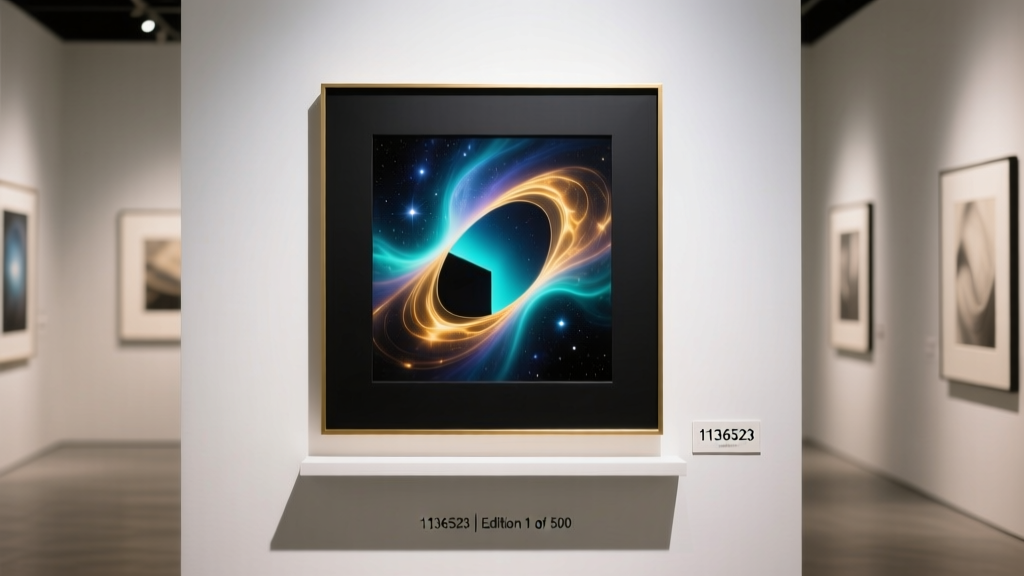
Authentication Dossier: The Case of Print Inventory Number 1136523 — A Technical Analysis of a Suspected Limited-Edition Screenprint Attributed to Roy Lichtenstein
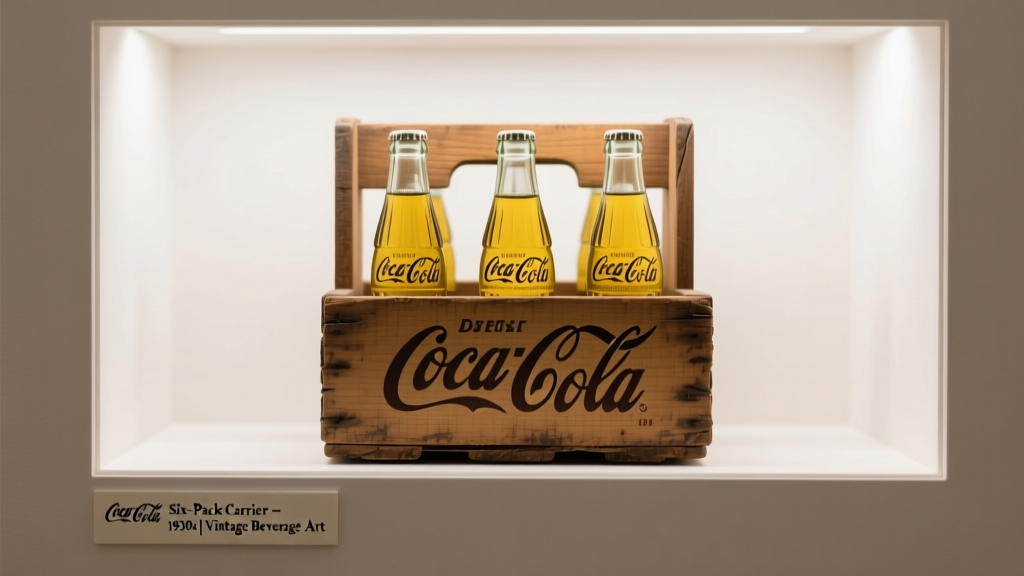
Coca-Cola Carrier: The 1930s Wooden Six-Pack with Yellow Bottle End Panel — Authentication, Provenance, and Market Significance

Sunkist Recipes for Every Day (1934): A Historical, Cultural, and Market Analysis of a Landmark Citrus Cookbook

The Authenticity, Value, and Cultural Legacy of Vintage Sneakers
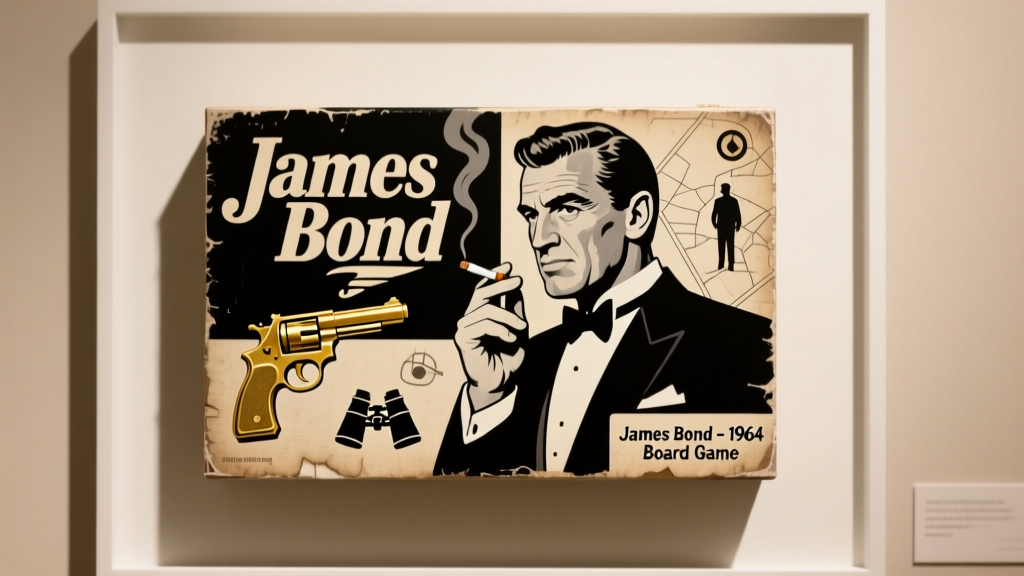
The 1964 James Bond Game Box: A Collector’s Benchmark in Mid-Century Licensing and Print Authentication
Depression Glass Royal Lace Bowl: Authentication, Value, and Historical Context of the 10-Inch Vegetable Round
Roseville Urn Sunflower Handle: Authentication, Market Value, and Collectibility of the 4-Inch Variant

Toy Kite 'Cosmic With Spaceship' (1923): Authenticating a Rare Art Deco Avant-Garde Artifact
Hopalong Cassidy Sugar Delphite: Authentication, Market History, and Collector’s Guide