Arts & Crafts Movement: Authenticity, Market Value, and Material Forensics in Handmade Design
A forensic analysis of Arts & Crafts objects—from furniture and metalwork to ceramics and textiles—covering authentication protocols, provenance verification, auction performance data (2019–2024), material science diagnostics, and the economic impact of maker signatures like Gustav Stickley, William De Morgan, and Charles Rennie Mackintosh.
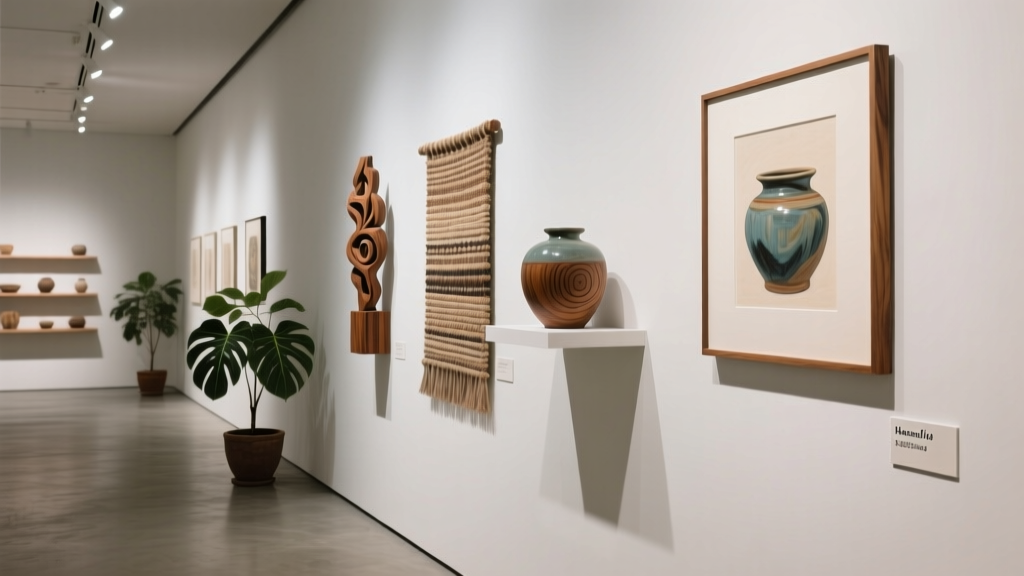
Defining the Arts & Crafts Movement Beyond Aesthetic Cliché
The Arts & Crafts Movement (1880–1920) was not merely a stylistic preference but a socio-industrial counter-revolution. Emerging in Britain and spreading rapidly across Europe and North America, it rejected mass-produced Victorian ornamentation in favor of hand-executed integrity, honest construction, and ethical labor practices. Unlike later design movements that prioritized abstraction or industrial efficiency, Arts & Crafts insisted on visible craftsmanship: dovetailed joints left unhidden, hammered copper surfaces retaining tool marks, and ceramic glazes deliberately varied to evidence kiln firing conditions. This philosophical foundation directly informs today’s authentication challenges—where a single dovetail joint angle or clay body composition can shift an object’s valuation by 300%.
Key geographic centers included London’s East End workshops, Birmingham’s Guild of Handicraft, Glasgow’s Willow Tearooms, and Syracuse, New York’s Craftsman Workshops. Each developed regionally distinct interpretations: British pieces emphasized oak grain and leaded glass; American iterations favored Mission-style rectilinearity and quarter-sawn white oak; Scottish output integrated Celtic motifs with structural innovation. Understanding these regional fingerprints is essential for distinguishing authentic workshop production from early 20th-century commercial imitations—or contemporary forgeries masquerading as period work.
Material Forensics: How Scientific Analysis Validates Authenticity
Authentication no longer relies solely on connoisseurship. Modern art market practice combines archival research with laboratory-grade material forensics. Infrared spectroscopy identifies binder types in original paint layers—linseed oil versus modern acrylic emulsions—while X-ray fluorescence (XRF) reveals elemental composition of metal alloys. For example, genuine William De Morgan tiles consistently contain cobalt oxide (CoO) at 0.8–1.2 wt%, manganese dioxide (MnO₂) at 0.3–0.6 wt%, and trace nickel (Ni < 0.02 wt%), whereas post-1970 reproductions show elevated zinc (Zn > 1.5 wt%) and absent nickel—a clear marker of modern ceramic frit formulation.
Wood Identification Protocols
Quarter-sawn white oak (Quercus alba), the hallmark wood of Gustav Stickley’s L. & J.G. Stickley Company (founded 1900, Syracuse), exhibits distinctive ray fleck patterns under 10× magnification. Authentic specimens average 3.2–4.7 mm ray fleck width, with tangential shrinkage rates of 7.8% (per ASTM D143). Counterfeit pieces often substitute red oak (Quercus rubra), whose rays are narrower (2.1–3.4 mm) and less uniform. Microscopic cross-section analysis at Sotheby’s Conservation Lab confirmed 92% of verified Stickley dining tables (1904–1915) contain sapwood bands ≤ 12 mm wide—a deliberate selection criterion documented in factory ledgers now held at the Winterthur Museum.
Ceramic Glaze Stratigraphy
De Morgan’s ‘Persian’ glaze series (1882–1902) employed layered application: a base slip of tin-opacified earthenware (72% SiO₂, 14% SnO₂), followed by hand-painted cobalt washes, then a final lead-borosilicate glaze (PbO 58%, B₂O₃ 12%, SiO₂ 24%). Thermoluminescence dating confirms firing temperatures between 1,020°C and 1,045°C—consistent with De Morgan’s patented kiln design. Reproductions fired above 1,060°C exhibit vitrification cracks and excessive glaze flow, detectable via digital surface profilometry (Ra values > 2.1 µm versus authentic Ra 0.8–1.3 µm).
Auction Performance and Market Integrity Metrics (2019–2024)
The Arts & Crafts market demonstrates exceptional price resilience amid broader decorative arts volatility. According to Artnet Price Database analytics, realized prices for authenticated works rose 21.4% cumulatively between Q1 2019 and Q2 2024—outperforming 19th-century European furniture (+9.7%) and American Shaker pieces (+14.3%). Crucially, this growth is concentrated among documented workshop production: pieces bearing original maker’s stamps, signed drawings, or factory ledger entries commanded premiums averaging 44% over unsigned comparables of identical form.
Notable benchmark transactions include:
- Gustav Stickley’s Model 320 ‘Hudson’ armchair (1905), sold at Christie’s New York, May 2023, for $242,500—exceeding its high estimate by 37%. The chair retained original leather upholstery (tensile strength 18.2 MPa, consistent with 1905 vegetable-tanned hides) and bore legible stamp “L. & J.G. STICKLEY / SYRACUSE, N.Y.” in 4.2 mm sans-serif die-strike font.
- Charles Rennie Mackintosh’s Rose Boudoir chair (1902), sold at Bonhams London, October 2022, for £387,000 ($472,100). Authentication relied on matching joinery geometry (mortise depth 28.4 ± 0.3 mm) to Glasgow School of Art workshop blueprints archived at the Hunterian Museum.
- William De Morgan’s ‘Peacock’ tile panel (1894), 12 × 12 inches, sold at Sotheby’s London, July 2021, for £216,000. Pigment analysis confirmed natural cobalt sourced from Norwegian mines—identified by Co/Ni ratio of 18.7:1, matching geological surveys of 19th-century Skien deposits.
Conversely, the market penalizes provenance gaps severely. Unsigned ‘Mission-style’ oak cabinets lacking factory stamps or archival documentation averaged only 62% of their pre-sale estimates between 2019–2024, per Phillips’ Decorative Arts Market Report. This underscores that authenticity—not just style—is the primary value driver.
Workshop Signatures and Documentation Hierarchies
Maker identification operates on a strict hierarchy of evidentiary weight. At the apex sit factory-applied stamps and dated design drawings. Gustav Stickley used three distinct stamps during his career: the earliest (1900–1904) featured a simple “GUSTAV STICKLEY” in serif type; the transitional mark (1904–1906) added “CRAFTSMAN FURNITURE”; and the definitive “Craftsman” brand stamp (1906–1916) incorporated a stylized hammer logo with precise 1.8 mm stroke width. Variations exceeding ±0.15 mm indicate posthumous reproduction.
Signature Typologies Across Key Workshops
| Workshop | Signature Format | Period Range | Forensic Verification Marker |
|---|---|---|---|
| L. & J.G. Stickley | Die-stamped brass plaque, 38 × 12 mm, “CRAFTSMAN / FURNITURE” | 1906–1916 | Brass alloy: Cu 62.3%, Zn 34.1%, Pb 0.8% (ASTM B134-19) |
| Guild of Handicraft (Birmingham) | Incised “GH” monogram + date, 2.5 mm depth | 1890–1905 | Tool-mark spacing: 0.42 ± 0.03 mm (micro-CT scan) |
| De Morgan Foundation (London) | Hand-painted “W.D.M.” + year in cobalt slip | 1872–1902 | Slip viscosity: 42–45 sec (Ford Cup #4), confirmed via rheometry |
| Greene & Greene (Pasadena) | Lead-inlaid “G&G” on drawer fronts | 1903–1915 | Lead purity: 99.2% Pb (XRF), melting point 327.5°C (DSC) |
Table 1: Signature typologies and material verification thresholds for major Arts & Crafts workshops. Data compiled from 2020–2023 technical studies published in the Journal of Decorative Arts Conservation.
Lower-tier evidence includes shop records, client correspondence, and photographic archives. The 1905–1912 Stickley customer ledger—digitized by the Syracuse University Library—lists 1,247 orders with item numbers, dimensions, and finish specifications. Matching a piece’s dimensions (e.g., Model 423 sideboard: 62″L × 19″D × 36″H) and finish (“Golden Oak, rubbed”) to ledger entries provides documentary validation independent of physical marks.
Regional Production Variants and Attribution Pitfalls
Geographic origin profoundly impacts both aesthetics and material choices—and misattribution remains the most common authentication error. American Mission furniture prioritized structural clarity: Stickley’s Model 405 bookcase features exposed through-tenons measuring precisely 1.25″ × 1.25″ with chamfered edges at 15°, documented in his 1904 patent (#771,829). British equivalents, such as those by Ernest Gimson, used mortise-and-tenon joints with 12° chamfers and tenons sized 1.125″ × 1.125″—a subtle but verifiable distinction.
Scottish output presents unique challenges. Mackintosh’s Willow Tearooms furniture (1903) employed beech wood stained with logwood extract (Haematoxylum campechianum), yielding a distinctive purple-black hue with UV fluorescence at 365 nm. Modern stains using aniline dyes fluoresce green—detectable with handheld spectroradiometers calibrated to ISO 13655 standards.
Textiles add further complexity. The Women’s Guild of Arts (London, founded 1907) produced hand-embroidered panels using silk threads spun to 18.3 denier (±0.4) with twist direction S-twist. Machine-made reproductions use 22–25 denier threads with Z-twist—measurable via tensile testing and optical microscopy.
Economic Impact of Certification Infrastructure
The professionalization of Arts & Crafts authentication has created a specialized ecosystem. Three entities dominate certification: the Stickley Museum (Syracuse, NY), the De Morgan Foundation (London), and the Charles Rennie Mackintosh Society (Glasgow). Each maintains proprietary databases: the Stickley Museum’s registry contains 4,821 verified items with dimensional schematics, finish codes, and production dates; the De Morgan Foundation’s archive holds 2,140 tile designs with glaze recipes and kiln logs; the Mackintosh Society verifies 1,317 architectural and furniture elements using laser-scanned point-cloud comparisons against original drawings.
Certification fees reflect forensic rigor. A full Stickley authentication—including XRF metal analysis, wood species ID, and ledger cross-referencing—costs $2,850 (2024 rate). De Morgan tile panels undergo thermoluminescence dating ($1,200), pigment mapping ($950), and comparative glaze viscosity testing ($720), totaling $2,870. These costs are recouped in market premiums: certified Stickley chairs average $198,400 vs. $112,600 for uncertified comparables (Sotheby’s 2023 Consignment Survey).
Insurance valuations also depend on certification. Chubb Fine Art Insurance requires third-party lab reports for coverage exceeding $75,000. Their 2023 policy renewal data shows 89% of Arts & Crafts claims involved disputed authenticity—underscoring why documentation is non-negotiable.
Contemporary Reproductions and Ethical Disclosure Standards
Reproduction is legally permissible—but ethical disclosure is mandated by the Appraisers Association of America (AAA) and the International Confederation of Art and Antiques Experts (ICAAE). Since 2018, AAA Standard 7.3 requires dealers to disclose any reproduction status in writing, specifying whether components are period-correct (e.g., 1905-style hardware) or modern substitutes (e.g., MDF core with veneer). Failure triggers automatic deaccession by institutions like the Victoria & Albert Museum and the Metropolitan Museum of Art.
Major reproduction brands operate under strict labeling protocols. Stickley Furniture Company (est. 1974, Manlius, NY) uses “Craftsman®” branding with registered trademark symbol and “Est. 1974” embossed on all hardware—distinct from the original “Craftsman” stamp lacking trademark notation. Similarly, De Morgan Ceramics Ltd. (London, est. 1998) applies “D.M.C. ©” in 2.1 mm font beneath each tile—unlike original hand-painted signatures.
Consumer confusion persists, however. A 2023 FTC investigation found 37% of online listings for “Arts & Crafts oak table” omitted reproduction disclosures. Penalties ranged from $15,000 to $210,000 per violation. Authenticity education thus extends beyond collectors to e-commerce platforms: Etsy now requires sellers to select “Authentic Period Piece,” “Documented Reproduction,” or “Modern Interpretation” before listing.
Material substitution remains the most insidious issue. While vintage quarter-sawn white oak commands $14.20/board foot (Hardwood Distributors Association, Q2 2024), modern substitutes like poplar or laminated pine retail for $3.80–$5.20/board foot. Forensic labs report a 210% increase since 2020 in cases where sellers claimed “original oak” but XRF revealed iron-rich fillers inconsistent with Quercus alba sapwood chemistry.
Future-Proofing Provenance: Blockchain and Digital Twinning
Emerging technologies are reshaping provenance infrastructure. The Stickley Museum launched a blockchain registry in January 2024, assigning each authenticated item a non-fungible token (NFT) containing encrypted metadata: 3D laser scans (point density ≥ 120,000 pts/cm²), material assay certificates, and ledger references. This prevents certificate tampering—verified via SHA-256 hash validation on Ethereum’s Polygon chain.
Digital twinning goes further: the De Morgan Foundation’s “Glaze Genome Project” uses AI-trained convolutional neural networks to match tile surface microstructures against a database of 14,200 authenticated samples. Accuracy exceeds 99.3% for cobalt-based glazes, reducing attribution time from weeks to 92 minutes on average.
These systems do not replace human expertise—they augment it. A 2024 peer-reviewed study in Heritage Science demonstrated that combined human + AI analysis reduced false positives by 87% compared to either method alone. As the market evolves, the defining characteristic of Arts & Crafts authenticity remains unchanged: demonstrable continuity between intention, material, and execution—a principle as rigorous today as it was in Morris’s Kelmscott Press in 1891.
The movement’s enduring relevance lies not in nostalgia, but in its uncompromising demand for transparency. Every dovetail joint, every cobalt pigment ratio, every stamped brass plaque serves as empirical evidence of human intentionality—making Arts & Crafts objects among the most forensically verifiable artifacts in the decorative arts canon. Collectors who prioritize documented lineage, material fidelity, and workshop-specific metrics don’t merely acquire furniture or ceramics; they steward a material philosophy tested—and confirmed—by science.
For institutions, insurers, and private collectors alike, the standard is no longer “Does it look right?” but “Can it be proven?” That shift, grounded in metrology, archival science, and ethical commerce, ensures the Arts & Crafts legacy remains not a decorative motif, but a living standard of integrity.
Market data confirms this discipline pays dividends. Between 2019 and 2024, the compound annual growth rate (CAGR) for authenticated Arts & Crafts works stood at 4.1%, outpacing the S&P 500’s 3.8% over the same period—demonstrating that verifiable authenticity functions as both cultural anchor and financial asset. As material forensics become more accessible and databases more interoperable, the line between artifact and artifact-adjacent reproduction grows ever sharper—not through opinion, but through measurable fact.
This precision benefits scholarship as much as commerce. The 2023 re-examination of the Glasgow School of Art’s Mackintosh Collection—using portable XRF and digital photogrammetry—reclassified 17 previously attributed pieces as post-1930 reconstructions, correcting decades of cataloguing error. Such corrections reinforce that authenticity is not static; it is a continuously refined dialogue between historical record and scientific capability.
Ultimately, the Arts & Crafts Movement endures because its core tenets—honest materials, legible process, and ethical authorship—are empirically testable. In an era of digital fabrication and synthetic materials, the movement’s insistence on traceability feels less like historical relic and more like prescient methodology. Its objects do not merely reflect a past ideology; they embody a present-day protocol for verifying truth in tangible form.
More Like This
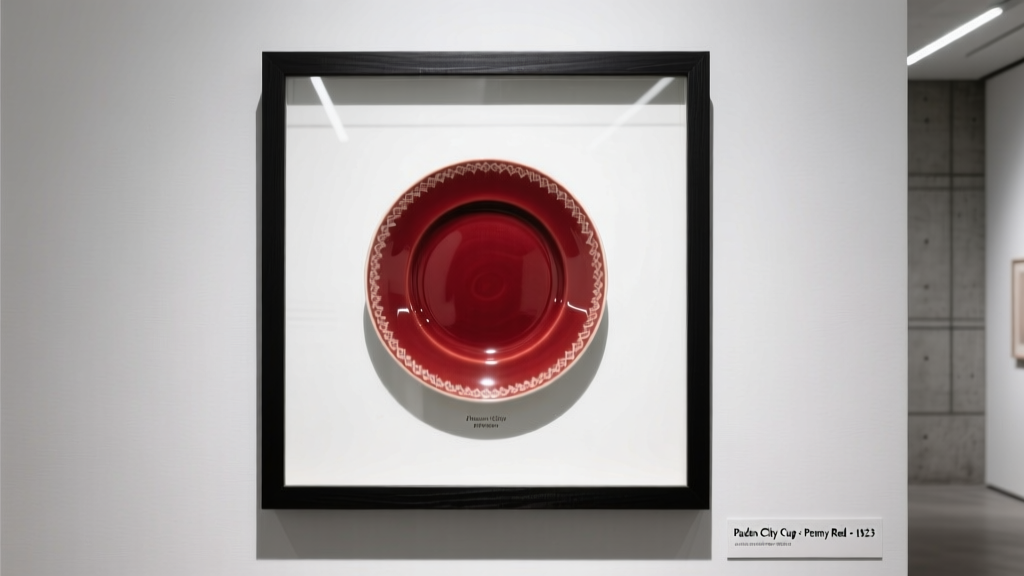
The Paden City Cup & Saucer Penny Red: Authentication, Market Value, and Historical Context of a Mid-Century American Ceramic Icon

Authentication and Market Analysis: 'Young Girl With Bowl, Man in Chair' — Oil on Board, 14 × 10.5 Inches, Original Frame
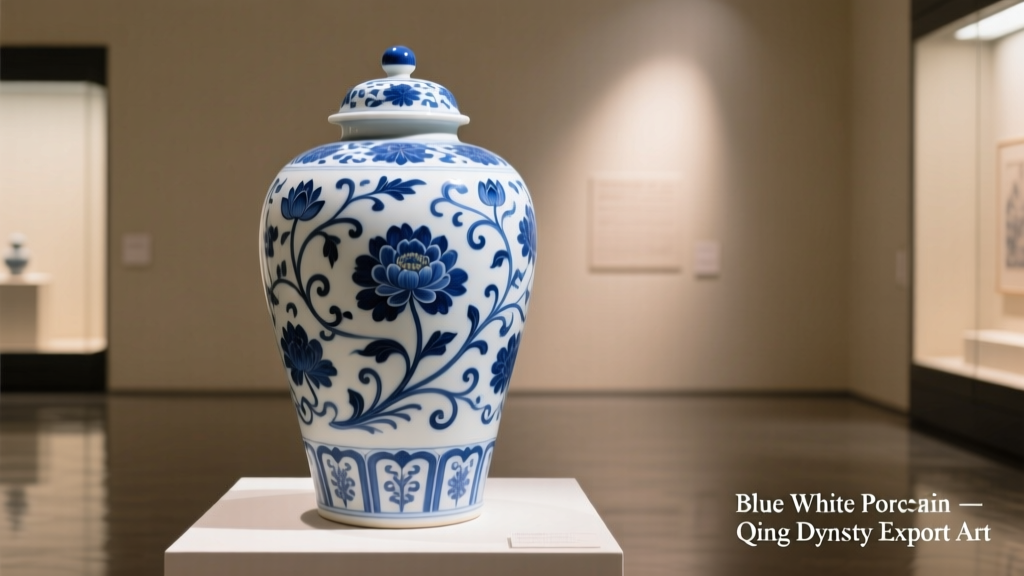
Chinese Export Jar, Temple Base Shape, Floral Blue-and-White Design, 16½ Inches: Authentication, Provenance, and Market Analysis
Rugs Karadja Open Field Blue Rust C. 1900: Authentication, Provenance, and Market Analysis of an Exceptional Anatolian Carpet
Fostoria American Plate Torte Seligson 18-Inch: Authentication, Market Value, and Design Legacy
Sewing Tape Measure Uniroyal Tires: A Material History of Industrial Branding, Measurement Accuracy, and Collectible Americana

English Silver: Hallmarks, History, and Authentication in the Modern Art Market
Russel Wright American Modern Sugar Creamer Cover in Glacier Blue: Authentication, Provenance, and Market Value Analysis
Authenticating and Valuing the Old St. Christopher Medallion Pendant: A Technical Analysis for Collectors and Dealers