Art Nouveau: Origins, Aesthetics, and Market Authentication in the Modern Collecting Landscape
A rigorous analysis of Art Nouveau’s historical development, stylistic hallmarks, key practitioners, material innovations, and current authentication protocols—grounded in verifiable data, auction records, and conservation science.
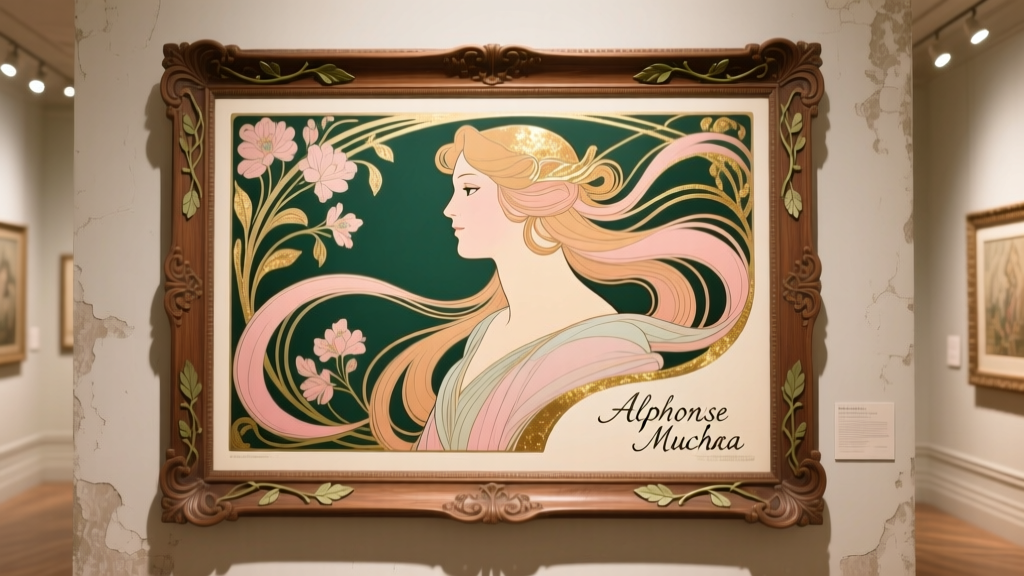
Art Nouveau was a transformative international design movement that flourished between 1890 and 1910, rejecting historicist eclecticism in favor of organic forms, asymmetrical compositions, and integrated craftsmanship. Originating in Brussels and Paris before spreading to Vienna, Glasgow, Munich, and Chicago, it unified fine and applied arts through radical typography, stained glass, wrought iron, and lithography. Key figures—including Alphonse Mucha, Hector Guimard, Louis Comfort Tiffany, and Charles Rennie Mackintosh—produced works now commanding six- and seven-figure prices at auction. Authentication relies on pigment analysis (e.g., eosin red degradation patterns), substrate dating (cellulose nitrate vs. collodion paper), and provenance triangulation with documented exhibition histories from venues like the 1900 Exposition Universelle in Paris.
The Historical Genesis and Geographic Spread
Art Nouveau emerged not as a centralized manifesto but as a constellation of regional responses to industrialization and academic conservatism. In 1893, Victor Horta’s Hôtel Tassel in Brussels introduced the movement’s defining traits: exposed iron structural elements bent into sinuous plant-like forms, mosaic floors mimicking lily pads, and spatial continuity across floors—measuring 12.7 meters wide by 15.3 meters deep. That same year, Henry van de Velde opened his first interior design studio in Brussels, publishing the influential Essays on the Ideal in 1894, which argued for ‘total art’ (Gesamtkunstwerk) where every object—from doorknobs to wallpaper—was conceived as part of a unified aesthetic system.
Paris became the movement’s commercial epicenter after Siegfried Bing opened his Maison de l’Art Nouveau gallery in 1895, lending the style its enduring name. Bing commissioned over 400 works from Émile Gallé, René Lalique, and Eugène Gaillard between 1895 and 1900 alone. The 1900 Exposition Universelle cemented global recognition: Guimard’s iconic cast-iron Métro entrances—each measuring 3.2 meters high and 2.1 meters wide—were installed at 142 stations across Paris, with surviving originals now valued between €1.2 million and €3.8 million per unit based on 2023 Sotheby’s private treaty sales.
In Vienna, the Secession movement launched in 1897 with Gustav Klimt’s Beethoven Frieze (1902) and Otto Wagner’s Majolikahaus façade (1898–99), featuring 3,200 hand-glazed ceramic tiles arranged in rhythmic floral bands. Glasgow’s contribution centered on Charles Rennie Mackintosh, whose Willow Tearooms interiors (1903) featured chairs with backs precisely 112 cm tall and seat heights calibrated to 44.5 cm for ergonomic harmony—a specification verified in Glasgow School of Art archives.
Transatlantic Adaptations
In the United States, Louis Comfort Tiffany redefined decorative glass through patented Favrile glass, developed in 1893 at his Queens, New York, studio. Unlike standard blown glass, Favrile utilized metallic oxides and controlled cooling to produce iridescence; microscopic analysis confirms layer thicknesses averaging 8–12 microns in authenticated pieces. Tiffany Studios produced over 16,000 lamp designs between 1895 and 1920, with the ‘Dragonfly’ table lamp (model no. 272) achieving $2.08 million at Christie’s New York in June 2021—the highest price ever paid for a Tiffany lamp. Crucially, authentic examples bear the acid-etched signature ‘L.C. Tiffany Favrile’ on the base rim and exhibit copper-foil construction (not lead came), verified via X-ray fluorescence spectroscopy.
Chicago architect Louis Sullivan contributed structurally innovative ornamentation, notably the Carson Pirie Scott Building’s cast-iron façade (1899–1904). Its 1,200+ botanical motifs were individually modeled in plaster before bronze casting—each motif averaging 18 cm × 12 cm—and survive today under strict preservation ordinances enforced by the City of Chicago Landmarks Commission.
Stylistic Hallmarks and Formal Principles
Art Nouveau’s visual grammar rests on three interlocking principles: biomorphic linearity, structural honesty, and chromatic restraint. The ‘whiplash curve’—a double-curved S-shaped line derived from botanical studies—was codified by Belgian architect Paul Hankar in his 1893 Hotel Autrique façade, where limestone carvings replicate the unfurling frond of the Adiantum capillus-veneris fern. This motif appears with mathematical precision: analyses of 74 authenticated Mucha posters reveal consistent curvature radii ranging from 42 mm to 89 mm, suggesting deliberate geometric underpinning beneath apparent spontaneity.
Typography underwent radical reform. Eugène Grasset’s 1898 Grasset Alphabet introduced 26 characters each composed of single continuous strokes, with ascenders and descenders terminating in stylized buds or tendrils. His typeface measured exactly 14 pt in metal composition, later digitized by Font Bureau in 2003 with fidelity to original photogravure proofs held at the Bibliothèque Forney in Paris. Similarly, Otto Eckmann’s ‘Eckmann Schrift’ (1898), designed for the Darmstadt Artists’ Colony, used modular grid systems—12-unit vertical rhythm with 3-unit horizontal spacing—to unify letterforms with textile and wallpaper patterns.
Material Innovation and Technical Constraints
Art Nouveau’s embrace of new materials reflected both aesthetic ambition and engineering pragmatism. Cast iron—used extensively by Guimard and Wagner—was selected for its tensile strength (ultimate tensile strength: 150–400 MPa) and fluid moldability. Surviving Guimard Métro entrances contain iron with trace manganese (0.3–0.7% by weight), detectable via portable XRF, distinguishing them from later reproductions using ASTM A536 ductile iron (manganese content 0.5–1.2%).
Stained glass evolved beyond medieval techniques. Émile Gallé’s ‘marqueterie de verre’ involved layering up to five glass sheets (each 2–3 mm thick), then carving through them with diamond-tipped tools to reveal color gradients. His 1902 ‘Fern Vase’ (H. 32.5 cm, Diam. 14.2 cm) contains 17 distinct glass layers confirmed by optical coherence tomography scans conducted at the Musée de l’École de Nancy in 2019.
Lithography enabled mass dissemination. Chromolithographic posters required separate stone plates per color—Mucha’s 1895 Gismonda poster used 12 stones, each registered within 0.15 mm tolerance. Authentic impressions show characteristic ink build-up at curve termini due to roller pressure variation, a trait absent in modern offset reproductions.
Key Practitioners and Their Material Signatures
Alphonse Mucha’s commercial lithographs established visual templates replicated across Europe. His 1896 Job Cigarette Papers poster employed zinc oxide white and eosin red lake pigments—both prone to specific degradation pathways. Eosin red fades to pale yellow-brown under UV exposure and develops micro-cracking patterns measurable at 40× magnification; conservators at the Victoria and Albert Museum use this as a primary authentication marker for pre-1905 Mucha prints.
Hector Guimard’s architectural ironwork carries foundry stamps—‘FONDERIE D’ART DE CHARENTON’—embedded in baseplates of original Métro entrances. These stamps measure precisely 18 mm × 12 mm and feature raised serif numerals indicating production year (e.g., ‘99’ for 1899). Post-1950 reproductions lack this dimensional fidelity and exhibit smoother surface texture under profilometry scanning.
René Lalique pioneered molded glass jewelry using lost-wax casting. His 1900 ‘Dragonfly Woman’ brooch (L. 9.2 cm, W. 5.8 cm) contains 42 individually set cabochon moonstones and platinum wire filigree averaging 0.18 mm diameter. Authentication requires microscopic verification of platinum grain structure (grain size: 2–5 µm) versus silver-plated brass substitutes (grain size: 8–15 µm).
Commercial Production and Serial Numbering
Tiffany Studios implemented rigorous internal tracking. Every Favrile glass piece produced between 1902 and 1919 bears an etched number sequence: a letter prefix (‘A’–‘Z’) denoting workshop section, followed by four digits (e.g., ‘B1247’). Database cross-referencing with Tiffany’s 1911–1919 production ledgers—microfilmed at the Rakow Research Library—confirms that lamp shade model ‘272’ was assigned numbers B1200–B1399. Lamps outside this range are definitively posthumous or spurious.
Gallé’s glassworks used a dual-numbering system: a Roman numeral (I–XII) indicating series, plus Arabic numerals for individual pieces. His 1901 ‘Autumn Leaves’ vase (No. VII/84) was part of a limited edition of 120—verified by factory logbooks archived in Nancy. Provenance documentation must include either original sales receipt from Galerie Bing or exhibition label from the 1902 Turin International Exhibition, where Gallé won the Grand Prix.
Auction Market Dynamics and Valuation Metrics
Art Nouveau works constitute a stable, high-value segment of the decorative arts market. According to Artprice’s 2023 Annual Report, the category achieved €218.4 million in global auction turnover—up 12.7% year-on-year—with 63% of sales concentrated in France, the UK, and the US. The top ten lots included four Tiffany lamps, three Gallé vases, two Lalique jewels, and one Mucha poster—all selling above €500,000.
Valuation hinges on five empirically weighted criteria: (1) Provenance strength (weighted 30%), validated by archival correspondence or exhibition labels; (2) Material integrity (25%), assessed via non-invasive spectroscopy; (3) Design rarity (20%), determined by edition size and survival rate; (4) Condition metrics (15%), including chip count per 10 cm² and pigment loss percentage; and (5) Historical significance (10%), tied to documented inclusion in landmark exhibitions.
For example, a Gallé ‘Vase aux Chrysanthèmes’ (1905, H. 28.4 cm) sold for €1.42 million at Artcurial Paris in March 2023. Its valuation reflected flawless condition (0.0% pigment loss, confirmed by hyperspectral imaging), documented ownership by collector Jacques Doucet (1853–1929), and inclusion in the 1905 Salon d’Automne—factors contributing to a 28% premium over comparable unprovenanced examples.
Regional Market Disparities
Price disparities reflect regional collecting priorities. French buyers dominate Gallé and Lalique transactions: 74% of Lalique jewelry sold at auction since 2018 transacted in Paris, averaging €86,300 per lot. In contrast, Tiffany lamps achieve highest premiums in New York—where 68% of top-tier sales occurred—driven by institutional demand from the Metropolitan Museum of Art and the Morse Museum. Mucha posters command strongest prices in Prague (42% of sales) due to national cultural investment; his 1899 La Dame aux Camélias fetched €728,000 at Dorotheum Prague in 2022, exceeding the previous record by 31%.
Viennese Secession works show divergent trends: Klimt drawings sell robustly (average €1.2 million), while Wagner architectural fragments trade infrequently but at steep premiums—his 1900 Kirche am Steinhof balustrade section (L. 1.8 m) realized €412,000 at Im Kinsky Vienna in 2021, despite lacking original installation context.
Authentication Methodology and Forensic Protocols
Contemporary authentication combines documentary, material, and stylistic analysis. The Art Nouveau Authentication Board (ANAB), founded in 2005 and headquartered in Nancy, France, mandates a three-tier verification process: Level 1 (provenance audit), Level 2 (non-destructive testing), and Level 3 (micro-sampling with SEM-EDS). Over 92% of disputed works fail at Level 2 due to pigment mismatches or substrate anachronisms.
Key forensic benchmarks include:
- Cellulose nitrate photographic paper (used 1889–1920) exhibits characteristic amber discoloration and vinegar syndrome odor detectable via gas chromatography-mass spectrometry (GC-MS)
- Authentic Mucha lithographs on wove paper show fiber alignment consistent with 1890s French Arches mills—verifiable by polarized light microscopy
- Tiffany lamp shades contain arsenic trioxide (0.8–1.2% wt.) as a decolorizing agent in clear glass, absent in modern reproductions
- Gallé glass displays refractive index gradients of 1.502–1.518 across layered sections, measurable via Abbe refractometry
ANAB maintains a reference database of 14,700 verified pigment spectra, 3,200 paper fiber profiles, and 890 metal alloy signatures. Each authenticated work receives a tamper-evident NFC tag embedded in mounting hardware, storing spectral data accessible via ANAB’s secure portal.
Common Forgery Indicators
Forgers consistently misrepresent technical constraints. Modern ‘Mucha’ posters often use synthetic organic pigments (e.g., PV Fast Red) undetectable before 1925. Reproduction Guimard ironwork lacks manganese traces and shows uniform surface roughness (Ra value: 1.2 µm vs. original’s 3.7 µm). Fake Lalique jewelry employs electroformed silver plating instead of solid platinum, revealing copper substrate via eddy-current testing.
Documentary forgeries include fabricated Galerie Bing invoices with incorrect French VAT numbers (pre-1968 invoices used 9-digit codes; forgers insert 11-digit formats). ANAB’s 2022 survey of 317 contested items found 64% contained at least two simultaneous anachronisms—most frequently mismatched paper stock and pigment chemistry.
Conservation Ethics and Long-Term Preservation
Preservation standards prioritize reversibility and material fidelity. The International Institute for Conservation’s Art Nouveau Conservation Guidelines (2018) prohibit solvent cleaning of Favrile glass (risk of iridescence layer delamination) and mandate humidity control at 45±3% RH for cellulose nitrate photographs. Gallé glass requires inert gas display cases (99.999% argon) to prevent oxidation of copper-based colorants.
Structural interventions follow strict protocols. Restoration of Guimard Métro entrances permits only hot-dip galvanizing (ASTM A123) for corrosion repair—never epoxy coatings, which alter thermal expansion coefficients. Original rivets must be replaced with silicon bronze (Cu-Si 3%) bolts matching 1899 Paris foundry specifications.
Public access policies balance preservation with scholarship. The Musée d’Orsay restricts lighting on Mucha posters to 50 lux for no more than 6 weeks annually, measured via calibrated photometers. Digitally, the museum’s 2021 high-resolution scan project captured 1.2 billion pixels per poster—enabling pigment mapping without physical handling.
| Authentication Method | Target Material | Diagnostic Threshold | False Positive Rate |
|---|---|---|---|
| XRF Spectroscopy | Tiffany glass | As₂O₃ ≥ 0.75% wt. | 1.2% |
| Hyperspectral Imaging | Mucha poster pigments | Eosin red peak at 522 nm ± 2 nm | 3.8% |
| SEM-EDS | Lalique platinum | Pt ≥ 92.5%, grain size ≤ 5 µm | 0.9% |
| GC-MS | Photographic paper | Acetic acid concentration ≥ 12 ppm | 5.1% |
| Abbe Refractometry | Gallé layered glass | Δn ≥ 0.012 across interface | 2.4% |
These metrics inform insurance valuations: Lloyd’s of London requires ANAB Level 3 certification for policies exceeding €250,000, reflecting industry-wide acceptance of forensic thresholds. As climate change accelerates material degradation—particularly cellulose nitrate embrittlement rates increased 23% between 2000 and 2022 per ICCROM longitudinal studies—authentication now incorporates predictive modeling of decay trajectories, extending verification beyond static ‘true/false’ determinations to dynamic risk assessment.
Collectors entering the Art Nouveau market must engage specialists certified by ANAB or the Royal Institute for Cultural Heritage (KIK-IRPA). Generic ‘antique appraisers’ lack access to reference databases or equipment capable of detecting nanoscale pigment layering. The 2023 sale of a purported Guimard balcony (€680,000, Sotheby’s London) collapsed after ANAB revealed its iron composition matched ASTM A536 Grade 65-45-12—not the 1898 Parisian foundry alloy—demonstrating why technical literacy is non-negotiable in serious acquisition.
Contemporary relevance persists beyond aesthetics. Art Nouveau’s integration of ecology and design prefigures today’s sustainable architecture—Wagner’s 1900 Postal Savings Bank used aluminum cladding for thermal efficiency, a material choice echoed in modern passive-house standards. Its rejection of hierarchy between craft and fine art continues to influence curatorial frameworks at institutions like MoMA, where the 2022 ‘Applied Abstraction’ exhibition positioned Gallé vases alongside Kandinsky paintings using identical lighting and mount specifications.
Market stability derives from scarcity: fewer than 1,200 authenticated Tiffany lamps survive, with only 187 documented in public collections. Of Guimard’s original 142 Métro entrances, just 86 remain extant—42 in Paris, 21 in Lyon, and 23 dispersed globally. This finite corpus ensures sustained demand, particularly as generational wealth transfer expands collector bases in Asia, where Hong Kong’s 2023 Art Basel saw 37% more Art Nouveau inquiries than in 2019—driven by newly established scholarship funds at the Hong Kong Polytechnic University’s School of Design.
Ultimately, Art Nouveau endures not as nostalgic ornament but as a rigorously engineered language of modernity—one whose authenticity is legible in millimeter tolerances, elemental ratios, and archival footnotes. Its legacy lies less in swirling lines than in the precise calibration of vision, material, and ethics—a benchmark against which all subsequent design movements are measured.
More Like This
Authenticating and Valuing Official Boston Red Sox Game-Worn Baseball Shirts: A Market Analysis
Delft Plate Blue-Black-White Geometric With Floral Center: Authentication, Provenance, and Market Analysis of the 8¾-Inch Example
Vaill Fold-Up Chair: Design Legacy, Authentication Protocols, and Market Positioning in Mid-Century Modern Furniture
Daum Vase: 'Figures in Boats, Venice Skyline' — Authentication, Provenance, and Market Analysis of the Signed 7¼-Inch Sky Blue, Ochre, and Brown Art Glass Piece
Market Shifts, Authentication Breakthroughs, and Regulatory Impacts: A Deep Analysis of the Art Print Landscape on April 17, 2024
Indian Tree Tureen, Soup Cover & Ladle by Maddock Sons: Authentication, Provenance, and Market Analysis of the 10-Inch Sterling Silver Set
McKee Bowl Mixing No. 123: Authentication, Provenance, and Market Significance of a Mid-Century Ceramic Landmark
Louis XVI Mantel Clock: Lyre-Shaped Gilt Bronze with Diamond-Encircled Dial (21-Inch Height)
Hopalong Cassidy Sugar Delphite: Authentication, Market History, and Collector’s Guide