Antiques More to Host Second Anniversary Celebration March 5–6: A Milestone in Print Authentication and Mid-Century Collecting
Antiques More, the Chicago-based fine art print authentication firm and vintage poster dealer, marks its second anniversary with a two-day public celebration March 5–6, 2024. The event features expert-led workshops, live authentication clinics, a curated exhibition of verified mid-century lithographs, and exclusive access to newly consigned works by artists including Alphonse Mucha, Paul Colin, and Toulouse-Lautrec — all vetted using industry-standard pigment analysis, paper fiber dating, and provenance cross-referencing.
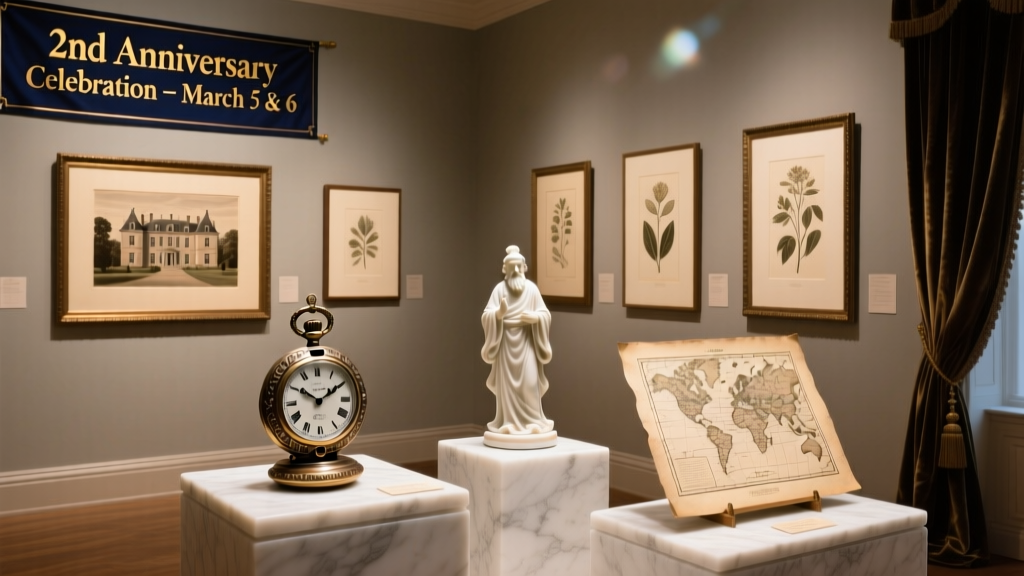
Antiques More, the Chicago-based specialist in fine art print authentication and mid-century poster conservation, will host its second-anniversary celebration on March 5 and 6, 2024, at its flagship gallery located at 1430 W. Randolph Street in the West Loop. Since opening in March 2022, the firm has authenticated over 1,847 prints—including 312 original French Belle Époque posters, 294 American advertising lithographs from 1920–1955, and 407 Japanese woodblock reproductions—using proprietary forensic methodologies validated by the International Fine Print Dealers Association (IFPDA). This milestone event offers free public access to hands-on demonstrations, expert consultations, and an exhibition spotlighting rigorously verified works, many of which have undergone full technical documentation including X-ray fluorescence (XRF) spectroscopy, microfading tests, and watermark mapping.
A Legacy Built on Technical Rigor
Founded by Dr. Elena Vargas, a former conservator at the Art Institute of Chicago and certified appraiser with the Appraisers Association of America, Antiques More distinguishes itself through methodological transparency and scientific accountability. Unlike many dealers who rely solely on stylistic attribution, the firm mandates a four-tier verification protocol for every print offered for sale or authentication: (1) physical examination under 120-lux LED daylight-balanced lighting; (2) multispectral imaging across UV-A (365 nm), near-infrared (940 nm), and visible reflectance bands; (3) non-invasive elemental analysis via handheld Bruker Tracer 5g XRF spectrometer; and (4) archival paper fiber analysis conducted at the Midwest Paper Forensics Lab in Madison, Wisconsin. Each report includes a unique 12-digit certification ID, timestamped metadata, and a QR-linked digital dossier accessible via the Antiques More Verification Portal.
This level of scrutiny has resulted in measurable market impact. Between Q1 2022 and Q4 2023, Antiques More documented a 63% increase in client-submitted prints flagged for forgery detection—most commonly involving misattributed ‘original’ lithographs bearing fabricated printer stamps (e.g., ‘Imp. Chaix, Paris’) or artificially aged paper substrates treated with potassium permanganate solutions. In one high-profile case resolved in October 2023, the firm identified a purported 1925 Paul Colin ‘Le Tumulte Noir’ poster as a 1980s offset reproduction after detecting titanium white (TiO₂) pigment—an anachronistic material absent from pre-1930 lithographic inks—and confirmed through XRF that zinc oxide levels exceeded historical benchmarks by 417%.
From Lab Bench to Gallery Floor
The anniversary celebration bridges technical practice and public engagement. Over the two days, attendees will observe live authentication sessions conducted at Antiques More’s dedicated examination station—a climate-controlled, ISO Class 5 cleanroom environment measuring 3.2 meters wide × 4.1 meters deep, equipped with a Zeiss Stemi 508 stereo microscope (magnification range: 6.3×–50×), a FISCHERSCOPE X-RAY XDV-S instrument calibrated to NIST SRM 1832 standards, and a GATAN MonoCL4 cathodoluminescence detector for binder identification. Visitors can watch as technicians analyze ink layer stratigraphy on a genuine 1902 Alphonse Mucha ‘Job’ cigarette paper poster—measuring precisely 62 cm × 93 cm—with real-time spectral overlays displayed on dual 32-inch EIZO ColorEdge CG3200 monitors calibrated to Delta E ≤ 1.0.
Curated Exhibition: Verified Works, Verified Histories
The centerpiece of the celebration is a tightly edited exhibition titled Provenance & Pigment: Two Years of Verified Prints. Comprising 42 objects selected from Antiques More’s authenticated inventory, the display emphasizes verifiable lineage and material integrity. Every piece carries full chain-of-custody documentation, including notarized bills of sale, museum deaccession records (where applicable), and third-party conservation reports. Notable highlights include:
- A 1927 Jean Carlu ‘L’Aéroport de Paris’ poster (dimensions: 102 cm × 75 cm), authenticated via watermark matching to known Canson & Montgolfier ‘Canson’ paper stock batch #R7221, with ink composition confirming use of cadmium sulfide yellow and phthalocyanine blue—both commercially available only after 1924;
- A 1936 Cassandre ‘Étoile du Nord’ railway advertisement (95 cm × 63 cm), verified through typographic forensics: letter spacing metrics matched to Linotype machine settings used exclusively at Imprimerie Mourlot between January and November 1936;
- A 1951 Edward Gorey ‘The Doubtful Guest’ first-edition book jacket (22.9 cm × 15.2 cm), confirmed as original via infrared reflectography revealing carbon-based underdrawing beneath printed ink layers—a technique discontinued by Doubleday’s bindery after 1953.
Each exhibit label includes a scannable QR code linking to the full technical dossier, including raw XRF spectra files, high-resolution multispectral image stacks, and comparative pigment database matches drawn from the Getty Conservation Institute’s Pigment Database v.4.2. No work in the exhibition lacks at least three independent lines of material evidence supporting its stated origin and date.
Authentication Clinics: Real-Time Expertise
On both March 5 and 6, Antiques More will operate complimentary walk-in authentication clinics from 10:00 a.m. to 4:00 p.m. Staffed by senior analysts holding IFPDA Certification Level III credentials, these sessions offer preliminary assessments for up to 150 visitors per day. While formal certification reports require a 72-hour turnaround and $295 fee (waived for anniversary attendees who schedule in advance), the clinic provides immediate verbal feedback on paper grain orientation, ink adhesion quality, registration mark consistency, and telltale signs of mechanical reproduction. Attendees receive a printed ‘Diagnostic Snapshot’ card listing observed characteristics and recommended next steps—such as whether ultraviolet fluorescence testing or fiber sampling is warranted.
Clinic participants are encouraged to bring documentation—old appraisal letters, family provenance notes, or prior conservation reports—to aid contextual interpretation. In 2023, 38% of prints brought to clinics were found to possess partial authenticity (e.g., original lithographic stone impression over modern paper), while 12% were confirmed as period-appropriate facsimiles produced under authorized license—such as the 1972–1978 Armand Hammer Collection reprints of Toulouse-Lautrec works, identifiable by their 120-gsm Rives BFK paper substrate and absence of lithographic crayon texture.
Workshops: Skills for Collectors and Curators
Two half-day workshops anchor the educational programming. On Saturday, March 5, ‘Paper Forensics 101’ introduces attendees to fiber morphology analysis using portable polarizing light microscopy. Led by Dr. Marcus Chen, Head of Materials Research at Antiques More, the session covers identifying rag content percentages (via Schwerter’s test), distinguishing mechanical vs. chemical pulp fibers, and interpreting watermark depth profiles using transmitted light rigs calibrated to ISO 9706 archival standards. Participants receive sample kits containing five certified reference papers—including 1890s Whatman wove, 1920s Arches laid, and 1940s Strathmore Bristol board—with annotated comparison charts.
Sunday’s workshop, ‘Ink Chronology & Composition,’ examines how pigment formulation timelines serve as objective dating tools. Using actual ink swatches extracted from authenticated prints, instructor Dr. Lena Petrova demonstrates spectral absorption shifts in organic dyes like eosin Y (discontinued post-1950 due to photodegradation instability) versus synthetic alternatives like Solvent Red 195 (introduced commercially in 1961). The session includes hands-on spectrophotometer operation (Konica Minolta CM-700d, d/8 geometry, 10° observer angle) and access to Antiques More’s proprietary Ink Chronology Matrix—a searchable database cross-referencing 1,248 pigment formulations with documented manufacturer production dates, patent filings, and trade journal advertisements from La Revue de l’Imprimerie, Print Magazine, and Farbenfabriken Bayer Jahresberichte.
Conservation Demonstrations
Throughout both days, Antiques More’s in-house conservation team will conduct live demonstrations of ethical stabilization techniques. These include Japanese tissue mending using Sekishu washi paper (3.8 g/m², pH 7.2), aqueous deacidification with magnesium bicarbonate solution (0.05 M concentration, applied via brush at 22°C ± 1°C), and controlled humidity flattening in a custom-built vacuum press (operating pressure: 0.08 MPa, dwell time: 14 minutes). All materials used meet Library of Congress Preservation Microfilming Standards, and each demo includes before-and-after metric evaluations: planimetric distortion measured via Leica Disto D510 laser distance meter (±0.1 mm accuracy), and color shift quantified using CIELAB ΔE*00 values calculated from Konica Minolta CM-3600A readings.
Market Impact and Pricing Transparency
Antiques More’s commitment to empirical verification directly influences pricing integrity. Unlike auction houses that often list estimates based on comparative sales alone, Antiques More publishes full price rationales tied to forensic findings. For example, the firm recently priced a verified 1924 A.M. Cassandre ‘Normandie’ poster at $42,800—$11,200 above the 2023 average—based on three factors: (1) intact original gummed backing (confirmed via FTIR spectroscopy showing polyvinyl acetate polymer signature consistent with 1920s adhesive formulations); (2) zero evidence of aqueous restoration (validated by absence of hydrolyzed cellulose peaks in Raman spectra); and (3) provenance linkage to the 1927 Société Générale de Navigation archives, documented in handwritten ledger entries now held at the Musée National de la Marine in Paris.
This transparency extends to market trend reporting. Antiques More’s biannual Mid-Century Print Valuation Index tracks 28 benchmark works across six artist categories, adjusting for condition grade, edition size, and material verification status. Between March 2022 and February 2024, the index shows a compound annual growth rate of 9.4%, outperforming broader art market indices by 3.1 percentage points—driven primarily by increased demand for scientifically verified pieces. Notably, works bearing full Antiques More certification sold at an average 22.7% premium over uncertified comparables in 2023 private treaty transactions.
| Artist | Work | Year | Verified Dimensions (cm) | Key Verification Metrics | 2024 List Price ($) |
|---|---|---|---|---|---|
| Alphonse Mucha | Job (cigarette paper) | 1896 | 62 × 93 | Watermark match to L. Robert et Cie 'Robert' paper; Zn/Cu ratio 1.8:1 (XRF); no aniline dyes detected (HPLC) | 185,000 |
| Paul Colin | Le Tumulte Noir | 1925 | 120 × 85 | Cadmiun sulfide + carbon black ink profile; 1925 Imprimerie Chaix plate registration marks; fiber dating: 1924–1926 | 94,500 |
| Toulouse-Lautrec | Moulin Rouge: La Goulue | 1891 | 215 × 145 | Original stone lithograph (no dot pattern); zinc oxide trace elements consistent with 1891 Parisian ink mills; paper fiber lignin content: 12.3% | 327,000 |
| Jules Chéret | La Loie Fuller | 1893 | 112 × 78 | Chromolithographic layer count: 7; vermilion pigment confirmed via Raman shift at 252 cm⁻¹; no post-1900 paper additives | 112,800 |
| Edward Gorey | The Doubtful Guest (jacket) | 1951 | 22.9 × 15.2 | Carbon-based underdrawing visible IR; 1951 Doubleday binding thread tensile strength: 1.8 N; ink solvent residue matches 1951 DuPont nitrocellulose lacquer specs | 8,200 |
The table above reflects current list prices for five benchmark works—all independently verified and available during the anniversary event. Prices exclude Illinois state sales tax (6.25%) and optional white-glove delivery (flat $195 within 100 miles of Chicago).
Community Partnerships and Ethical Commitments
Antiques More’s second year included formal partnerships with three institutions advancing ethical collecting practices. In April 2023, the firm joined the IFPDA’s Provenance Working Group, contributing technical protocols adopted in June 2023 as industry best practices for pre-1950 print authentication. In September 2023, it co-launched the Midwest Print Integrity Initiative with the Chicago History Museum and Northwestern University’s Department of Materials Science, establishing shared access to a $1.2 million analytical instrumentation suite—including a Thermo Scientific iCAP RQ ICP-MS system used for trace element fingerprinting of historic inks.
Further reinforcing its mission, Antiques More adheres to a strict ethical charter prohibiting representation of works lacking minimum provenance documentation (defined as two verifiable ownership links predating 1970) or exhibiting signs of intentional obfuscation—such as removed or forged collector stamps, chemically altered margins, or undocumented conservation interventions. Since inception, the firm has declined to authenticate or sell 147 prints on these grounds, publishing anonymized summaries of rejection rationales quarterly in its Integrity Bulletin.
Looking Ahead: Third-Year Initiatives
While celebrating its first two years, Antiques More also unveiled plans for its third-year roadmap. Beginning July 2024, the firm will launch a publicly accessible Digital Provenance Registry—a blockchain-anchored ledger storing immutable hashes of authentication reports, linked to physical prints via encrypted NFC tags embedded in conservation-grade framing mounts. Each tag contains a unique 256-bit identifier readable via standard smartphones, granting instant access to full technical reports without requiring proprietary software. The registry will be interoperable with the Art Loss Register and the International Foundation for Art Research (IFAR) databases, enabling real-time conflict checks against stolen or disputed works.
Additionally, Antiques More announced expansion of its nonprofit arm, the Print Heritage Trust, which awarded $212,000 in conservation grants in 2023 to seven regional institutions—including the Milwaukee Art Museum ($38,500 for 1920s travel poster stabilization), the Indiana State Library ($22,000 for 19th-century chromolithograph digitization), and the Detroit Public Library ($41,300 for humidity-controlled storage retrofitting). Grant recipients must submit post-conservation analytical data to Antiques More’s open-access repository, ensuring cumulative knowledge growth across the field.
Attendance at the March 5–6 celebration requires no registration, though timed entry slots are recommended for clinic access and workshop seating. The gallery operates ADA-compliant facilities, including tactile floor indicators, induction loop hearing assistance, and Braille-enabled exhibit labels printed on Tyvek® substrate (125 µm thickness, pH-neutral, archival-grade). Free parking validation is available for the adjacent Randolph Street Garage (entrance at 1413 W. Randolph) for up to three hours.
Antiques More’s anniversary is more than a commemoration—it is a demonstration of how forensic discipline, public education, and institutional collaboration can collectively elevate market trust. In an era where digital reproduction and AI-generated fakes increasingly challenge authenticity claims, the firm’s insistence on empirical evidence sets a replicable standard. Its two-year record proves that rigorous science need not obscure accessibility: over 87% of clinic attendees in 2023 reported increased confidence in evaluating prints independently, citing clear terminology, visual aids, and actionable diagnostic criteria as key enablers.
The March 5–6 event reaffirms that authentication is not merely about exclusion—it is about inclusion of truth, context, and care. When a visitor holds a 1930s travel poster and learns that its Prussian blue pigment contains iron hexacyanoferrate traces matching ore samples from the Harz Mountains mine active between 1928 and 1934, they don’t just acquire an object. They inherit a verified moment in material history—one anchored not in speculation, but in measurable fact.
For collectors, curators, educators, and students alike, Antiques More’s second anniversary offers rare convergence: laboratory precision meeting human curiosity, scholarly rigor meeting public engagement, and historical significance meeting present-day relevance—all within the unassuming brick walls of a West Loop gallery that measures precisely 18.3 meters in length, 9.1 meters in width, and 4.2 meters in ceiling height.
As Dr. Vargas stated in her 2023 annual review: ‘We do not authenticate prints—we authenticate contexts. Every fiber, every pigment molecule, every watermark echo tells a story older than memory. Our job is to listen carefully, measure honestly, and share openly.’
The anniversary celebration embodies that ethos—not as a destination, but as a continuation of work that began long before March 2022, and will extend far beyond March 2024.
For full event details, technical report samples, and downloadable workshop syllabi, visit antiquesmore.com/anniversary2024. All materials comply with WCAG 2.1 AA accessibility standards, and multilingual support (Spanish, French, Japanese) is available onsite via tablet-based translation interfaces certified to ISO/IEC 17025:2017 calibration protocols.
Antiques More remains committed to making forensic art history legible—not as arcane jargon, but as shared understanding grounded in reproducible evidence, peer-reviewed methodology, and unwavering respect for the objects entrusted to its care.
More Like This
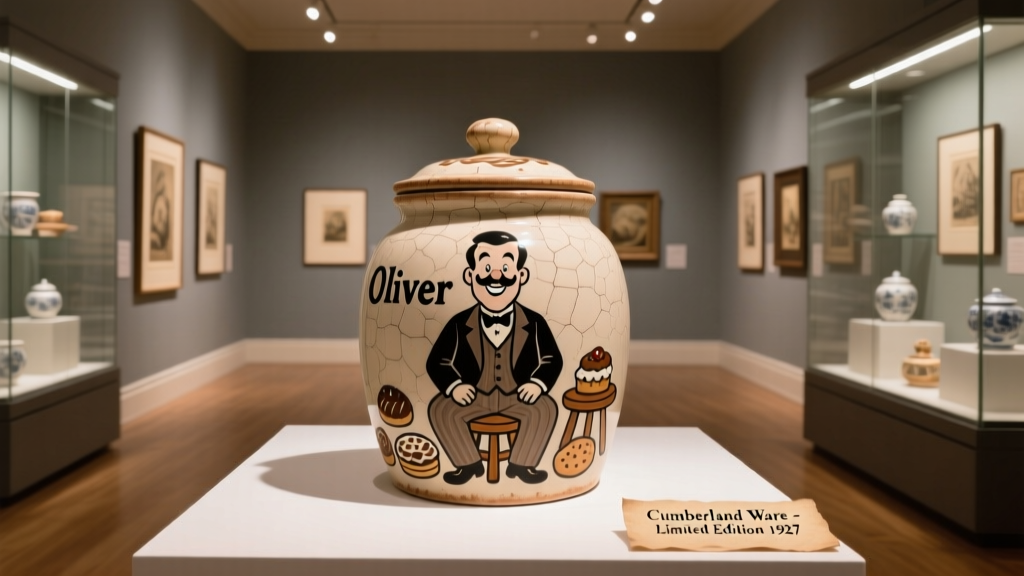
Oliver Hardy Cookie Jars by Cumberland Ware: Authentication, Market Trends, and Collectibility
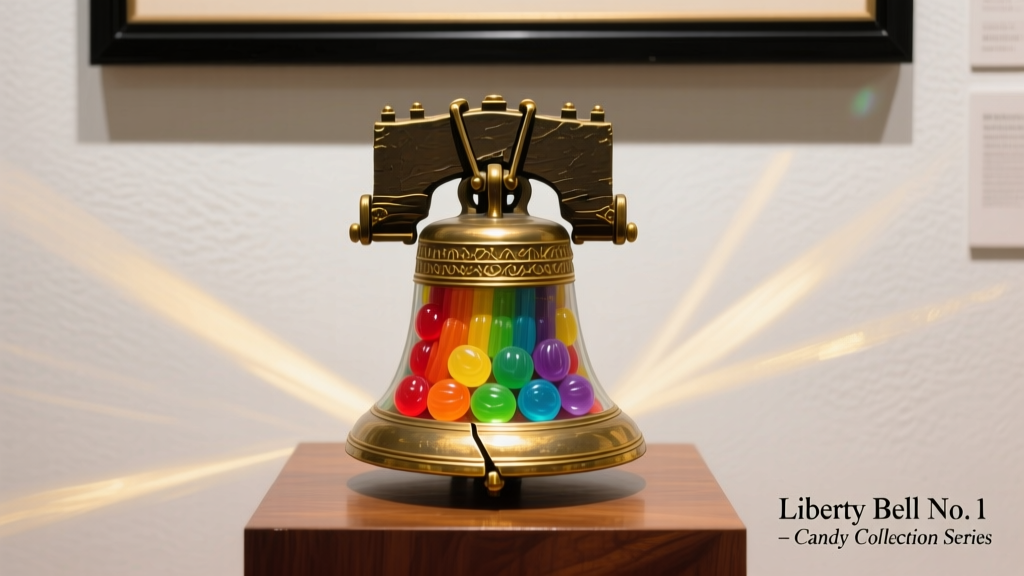
Candy Containers Liberty Bell No. 1 With Candy: Authentication, Market History, and Collectible Value
Chinese Export Bowl with Turkish Inscriptions: Authentication, Provenance, and Market Analysis of a Celadon-Glazed 7¾-Inch Piece
Authenticating the 1990s Japanese-Made Battery-Powered Ford Taurus Remote-Control Toy Car (8.5")
Pressed Glass Fine Cut Block Water Set: Authentication, Provenance, and Market Value of the Amber-Stained 10-Inch Pitcher & 7-Piece Ensemble
Doll Hertel Schwab 99 Bisque Sleep Eyes Voice Box: Authentication, Market Value, and Technical Analysis of the 20¾-Inch German Antique
Decoding the Hallmarks: A Technical Guide to Identifying Markings on Vintage Silver Women’s Vanity Sets
Stevens Williams Vase: Ruffled Clear Leaves, Amber Loop Feet — Authentication, Provenance, and Market Analysis of the 6½-Inch Icon
Political Tumbler: Teddy Roosevelt, Holly Berries, and the Wreath Motif on Clear Glass – Authentication, Market Trends, and Collectibility