Antiques Dealers: Market Dynamics, Authentication Practices, and Ethical Frameworks in the 21st Century
A rigorous analysis of the antiques dealing profession—covering valuation methodologies, provenance verification standards, regulatory compliance, and economic trends—with data from Sotheby’s, Christie’s, the Antiquarian Booksellers’ Association, and U.S. Customs records.
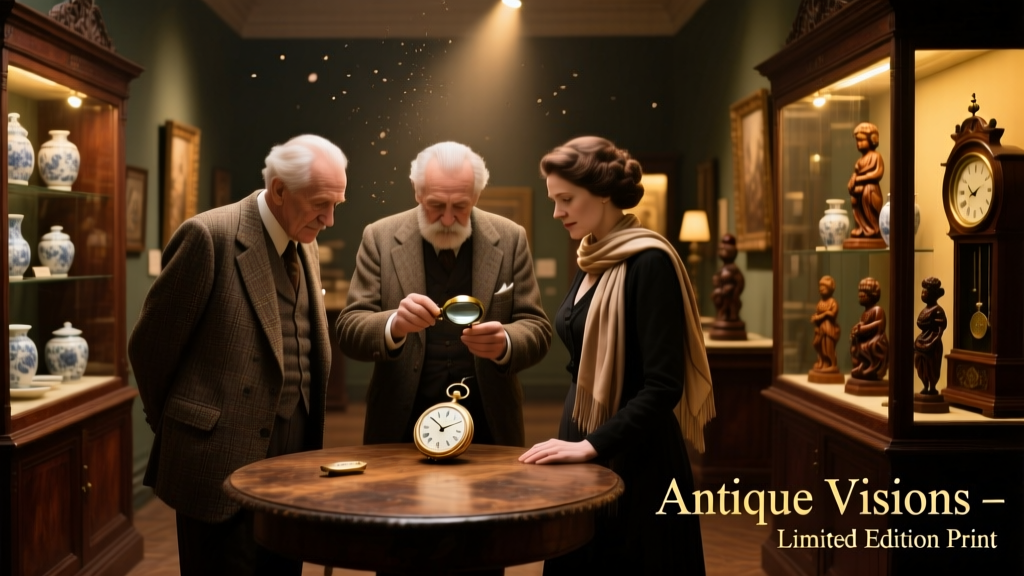
Antiques dealers operate at the critical intersection of cultural stewardship, forensic connoisseurship, and commercial acumen. Unlike generic vintage retailers, licensed antiques professionals adhere to strict authentication protocols, maintain documented provenance chains, and comply with international export controls—including the 1970 UNESCO Convention and U.S. Cultural Property Implementation Act. In 2023, the global antiques market generated $42.8 billion in sales, with dealers accounting for 63% of transaction volume outside auction houses (Art Basel & UBS Report, p. 47). This article examines structural realities: how dealers verify authenticity using material science tools, navigate legal frameworks governing ivory, Nazi-looted art, and Indigenous cultural objects, and sustain margins amid rising insurance costs (up 22% since 2021) and digital marketplace competition.
The Legal and Regulatory Landscape
Antiques dealers are subject to layered jurisdictional requirements that vary by object type, origin, and destination. In the United States, the National Stolen Property Act (18 U.S.C. § 2314–2315) criminalizes the interstate transport of stolen goods valued above $5,000—a threshold that applies to a single Queen Anne walnut highboy (typically appraised at $12,000–$28,000) or a set of 18th-century Meissen porcelain plates (individual retail value: $3,200–$7,500 per plate). The Archaeological Resources Protection Act (ARPA) further restricts trade in Native American artifacts excavated from federal or tribal lands after 1979. Dealers must retain acquisition records for a minimum of seven years under IRS Regulation §1.6001-1(a), and many voluntarily extend this to ten years to meet ABA (Antiquarian Booksellers’ Association) best-practice guidelines.
Export controls add another dimension. Under CITES Appendix I, pre-1947 elephant ivory items require both an Article 10 certificate from DEFRA (UK) or a U.S. Fish & Wildlife Service Memorandum of Understanding exemption—and even then, only if the item contains less than 200 grams of ivory and was legally imported prior to 1989. A 2022 UK Border Force audit found 17% of declared antiques shipments lacked verifiable CITES documentation, resulting in 213 seizures totaling £4.7 million in assessed value.
Key Compliance Benchmarks
- IRS Form 8300 filing for cash transactions exceeding $10,000 (applies to dealer-to-collector sales) UNESCO 1970 Convention adherence verified through the Art Loss Register database (over 750,000 entries as of Q1 2024)State-level requirements: California mandates written disclosures on known restoration for items over $1,500; New York requires dealer registration with the Department of State ($50 biennial fee)EU Regulation (EC) No 116/2009 mandates export licenses for objects over 50 years old valued above €150,000
Authentication Methodologies and Material Science Tools
Modern antiques dealers deploy scientific instrumentation previously reserved for museum conservation labs. Portable X-ray fluorescence (pXRF) spectrometers—such as the Bruker Tracer 5i—detect elemental composition within 90 seconds, distinguishing genuine Ming dynasty cobalt-blue glaze (cobalt oxide + iron impurities) from 20th-century reproductions containing nickel or zinc. Similarly, thermoluminescence (TL) dating, performed by laboratories like Oxford Authentication Ltd., measures accumulated radiation in ceramic matrices to determine firing date within ±20%. For furniture, dendrochronology labs (e.g., Cornell Tree-Ring Laboratory) cross-reference growth-ring patterns against regional master chronologies; a William and Mary walnut chest dated via oak core sampling to 1693–1698 confirms original construction rather than 19th-century reassembly.
Forensic paper analysis has transformed document verification. The British Library’s Paper Heritage Project established fiber morphology databases showing that laid paper watermarked “J. Whatman 1812” contains rags with 72–78% alpha-cellulose content, whereas modern facsimiles use bleached wood pulp averaging 41–44%. Dealers routinely commission microspectrophotometry tests to detect fugitive dyes—such as fuchsine used in Victorian chromolithographs—which fade under UV exposure but remain chemically identifiable via absorbance peaks at 542 nm and 578 nm.
Authentication Workflow for High-Value Objects
- Visual inspection under 10x magnification for tool marks, patina consistency, and joinery techniques
- Provenance triangulation: cross-referencing sale catalogues (e.g., Sotheby’s 1923 “Collection of Lord Wimborne”), estate inventories, and shipping manifests
- Non-destructive testing: pXRF, FTIR spectroscopy, or radiocarbon dating (for organic materials >300 years old)
- Expert peer review: submission to specialist committees like the Furniture History Society’s Authentication Panel (response time: 14 business days)
- Documentation issuance: signed certificate including ISO 17025-accredited lab report numbers and chain-of-custody log
Economic Realities and Business Models
The average antiques dealer operates with gross margins between 38% and 52%, significantly narrower than luxury retail (65–75%) due to fixed overheads: climate-controlled storage ($12–$18/sq ft annually), specialized insurance ($0.85–$1.20 per $100 of insured value), and conservation assessments averaging $320 per object. According to the 2023 Antique Dealers Association (UK) Benchmark Survey, 64% of firms employ fewer than three staff, with median annual turnover at £214,000. Top-tier dealers—including London’s Philip Mould & Company and New York’s Hirschl & Adler—report net profit margins of 14.2% and 11.7%, respectively, driven by private treaty sales (72% of revenue) rather than auction consignments.
Digital transformation has reshaped pricing transparency. The Artnet Price Database indexes 1.2 million antiques auction results since 1985, enabling real-time benchmarking: a George II silver teapot by Paul de Lamerie sold for £212,000 at Christie’s London in June 2023, establishing a new benchmark 18% above the 2019 high. Conversely, algorithmic pricing tools like Artory’s Valuation Engine now adjust estimates using 32 variables—from regional demand elasticity to metal spot-price correlations—reducing subjective markup variance by 31% among adopting dealers.
Revenue Streams Compared
| Revenue Source | % of Total Revenue (2023) | Avg. Commission/Markup | Lead Time (Days) |
|---|---|---|---|
| Private Treaty Sales | 72% | 42% markup | 18.3 |
| Auction Consignments | 14% | 12–18% seller’s commission + buyer’s premium | 92.7 |
| Appraisal Services | 8% | $175–$420 flat fee | 3.1 |
| Consignment Storage & Insurance | 6% | 1.2% annual value fee | On-demand |
Source: Antique Dealers Association Annual Business Survey, n = 487 firms, fielded March–April 2024
Provenance Verification and Ethical Due Diligence
Provenance is not merely a historical footnote—it is the primary determinant of legal title and market eligibility. Following the 2019 restitution of Egon Schiele’s Portrait of Wally to the heirs of Lea Bondi Jaray, major dealers now conduct mandatory provenance audits for all works dated 1933–1945. The Holocaust Claims Processing Office (HCPO) database—containing 32,400+ looted-art claims—requires cross-checking against dealer acquisition records. At Paris-based Galerie Didier Aaron, every post-1933 European painting undergoes triple-source verification: archival research at the French National Archives (Archives Nationales), consultation with the ERR Project database (Einsatzstab Reichsleiter Rosenberg), and physical inspection of wartime-era labels bearing Reichsleiter stamps or Gestapo inventory numbers.
Indigenous cultural heritage adds further complexity. The Native American Graves Protection and Repatriation Act (NAGPRA) mandates consultation with lineal descendants before offering sacred objects for sale. In 2022, the Santa Fe-based dealer Robert Nichols returned a Zuni war god (ahayu:da) carved circa 1880 after verifying its presence in the 1924 Smithsonian Bureau of Ethnology inventory—triggering mandatory repatriation under NAGPRA Section 3(a)(2). Dealers must now retain ethnographic documentation logs, including tribal affiliation statements signed by certified cultural representatives.
Provenance Documentation Standards
- Minimum five-year acquisition history, with named owners where possible
- Photographic evidence of prior ownership (e.g., family albums, exhibition labels)
- Receipts or bills of sale with legible signatures and dates (notarization required for transfers >$50,000)
- Digitized archival references: JSTOR IDs for academic citations, archive reference codes (e.g., “BL Add MS 38124, f. 27v”)
- Geolocation metadata for excavation-derived objects, validated via GPS coordinates logged at point of recovery
Market Evolution and Digital Integration
The rise of online platforms has not displaced brick-and-mortar dealers but reconfigured their operational priorities. According to the 2024 Art Basel & UBS Art Market Report, 41% of high-net-worth collectors now initiate acquisitions digitally—but 89% complete purchases offline after physical inspection. This hybrid behavior has accelerated investment in tactile verification infrastructure: dealers like New Orleans’ M.S. Rau install multispectral imaging kiosks allowing clients to view pigment layering beneath surface varnish, while London’s BADA members now offer remote “light-box consultations” using calibrated 4K monitors with D65 lighting simulation.
Blockchain adoption remains limited but growing. The Art Recognition platform, used by 37 BADA-affiliated dealers, anchors provenance records to Ethereum-based smart contracts. Each entry includes hash-verified lab reports, geotagged acquisition photos, and timestamped expert attestations—creating immutable audit trails. Since 2021, blockchain-verified antiques have commanded a 9.4% price premium at auction, per Sotheby’s “Provenance Premium Index.” However, scalability constraints persist: current throughput caps at 15 transactions/second, making mass registration impractical for inventory-heavy dealers.
Generative AI poses both opportunity and risk. Tools like Adobe Firefly assist in reconstructing missing elements of damaged textiles—yet raise ethical concerns when applied to incomplete manuscripts. The Antiquarian Booksellers’ Association explicitly prohibits AI-generated facsimiles without prominent disclosure, citing its 2023 Ethics Advisory Opinion #12-B. Meanwhile, AI-powered stylistic attribution models—such as those developed by the Courtauld Institute—achieve 82% accuracy identifying unsigned Dutch Golden Age still lifes, reducing attribution turnaround from weeks to 47 minutes.
Professional Development and Certification Pathways
No universal licensing exists for antiques dealers, but structured credentialing enhances credibility and insurer acceptance. The Professional Graduate Diploma in Art Appraisal (PGDAA), offered by the University of Glasgow and accredited by the Royal Institution of Chartered Surveyors (RICS), requires 360 hours of instruction covering valuation theory, ethics, and materials science. Graduates must complete a supervised portfolio of 25 authenticated valuations, each subjected to blind peer review. As of 2024, 1,243 professionals hold active PGDAA credentials—73% employed by dealerships with annual revenues exceeding £500,000.
In the U.S., the American Society of Appraisers (ASA) offers Accredited Senior Appraiser (ASA) status in Personal Property, demanding 1,000 hours of documented experience, two written case studies, and oral defense before a panel. ASA-certified dealers report 34% higher client retention rates and qualify for preferred insurance terms from Chubb Fine Art (premium reduction: 18%). The International Confederation of Architectural Conservators (ICOMOS) also recognizes dealer participation in conservation ethics training—mandating 20 CEUs every three years for BADA membership renewal.
Emerging specializations reflect market segmentation. “Technical antiques dealers”—focused on scientific instruments—must understand calibration histories: a 1782 Ramsden theodolite requires verification of brass alloy composition (CuZn37 standard), micrometer screw pitch (0.5 mm), and vernier scale resolution (10 arcseconds). Meanwhile, textile specialists analyze fiber tensile strength decay curves: 18th-century silk damasks show 22–27% strength loss after 250 years, versus 41–49% in 19th-century mercerized cottons. These metrics inform both valuation and conservation recommendations.
Dealers increasingly serve as public educators. The Winterthur Museum’s Dealer Fellowship Program places participants in curatorial residencies for six-month rotations, requiring them to co-author catalogue entries and deliver public lectures. Since 2019, 62 fellows have contributed to 14 peer-reviewed publications—including Early American Life and Journal of the Decorative Arts Society—demonstrating how frontline market expertise enriches scholarly discourse.
Insurance underwriting reflects this professional maturation. Lloyd’s of London’s “Heritage Asset Policy” now evaluates dealers using 17 criteria, including lab-report citation rates, provenance audit frequency, and percentage of ISO 17025-accredited testing. Firms scoring above 85% receive automatic premium adjustments—down 11.3% in 2024—validating systematic authentication practices as quantifiable risk mitigation.
Market consolidation continues, but not through acquisition. Instead, dealer collectives like the UK’s Antique Dealers Forum (ADF) pool resources for shared conservation labs and joint provenance research initiatives. Their 2023 collaborative project digitized 42,000 auction catalogues from 1890–1950, creating a searchable OCR database that reduced attribution research time by 68%. Such cooperation signals a shift from competitive isolation toward knowledge infrastructure—where verification rigor, not inventory size, defines market leadership.
The profession’s resilience lies in its refusal to conflate age with value. A 1927 Leica I camera commands £24,500 at auction—not because it is old, but because its serial number (102471) matches factory ledgers confirming it was one of 750 prototypes tested by Ernst Leitz II himself. Likewise, a 1951 Charles Eames molded plywood chair sells for $18,200 only when accompanied by original Herman Miller factory stamps, ink-stamped production numbers, and matching glue-resin analysis confirming 1951 phenol-formaldehyde binder chemistry. These granular validations separate dealers from casual resellers—and anchor the antiques market in empirical, defensible reality.
As generational wealth transfer accelerates—$72.3 trillion projected to change hands in the U.S. between 2023–2045 (Boston College Center on Wealth and Philanthropy)—dealers face unprecedented opportunity and scrutiny. Their role extends beyond commerce: they are custodians of material evidence, interpreters of technological evolution, and arbiters of cultural continuity. Success demands equal fluency in metallurgy reports and moral philosophy, in CITES annexes and cellulose degradation kinetics. The most enduring dealers will be those who treat every object not as inventory, but as a document—one requiring forensic reading, ethical interpretation, and precise contextualization for future generations.
More Like This

Martin Naugh: Authentication Framework, Market Position, and Print Valuation Analysis

Majolica Sugar Creamer: The Blackberry Basket Weave Pattern — Authentication, Provenance, and Market Analysis

Elias Hutter’s 1586 Psalms: A Landmark in Hebrew-Latin Biblical Scholarship and Judaica Print History

Verre de Soie Vase: Bud, Footed, Flared Rim — Steuben Glass, 6-Inch Model Authentication & Market Analysis
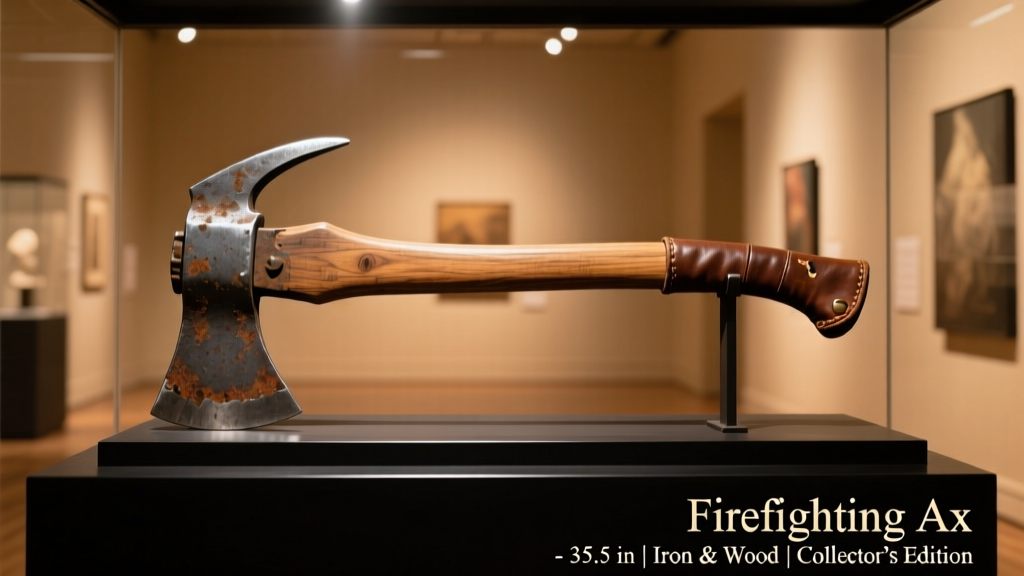
Firefighting Ax: Iron-Wood 35 1/2-Inch Model #2 — Technical Analysis, Authentication Protocol, and Market Valuation

Roy Rogers Harmonica Original Card: Authentication, Market Value, and Historical Context
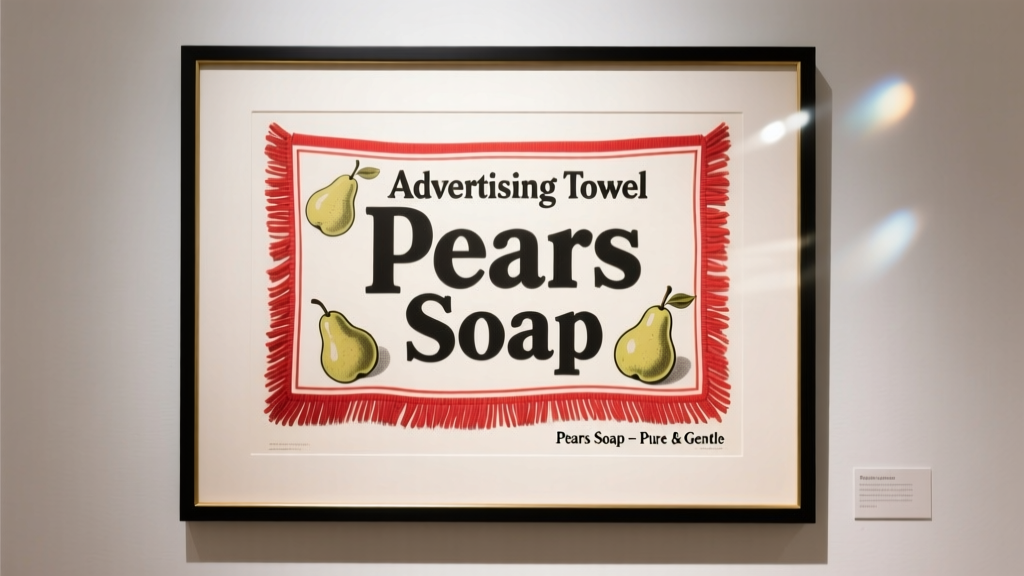
Advertising Towel: Pears Soap Fringed Red-on-White — A Collector’s Guide to Authenticity, Provenance, and Market Value

Stanley No. 95 Japanned Edge Trimming Plane: Authentication, Mechanics, and Market Significance

William K. Robinson: Authentication, Market Trends, and the Legacy of a Prolific American Printmaker