Antique Portraits: Authentication, Market Trends, and Conservation Essentials
A rigorous analysis of antique portrait paintings—from 17th-century English miniatures to late-19th-century American studio photographs—covering material science, provenance verification, auction performance, and ethical conservation practices. Includes verified data from Sotheby’s, Christie’s, and the Getty Conservation Institute.
Defining Antique Portraits: Chronology, Mediums, and Cultural Context
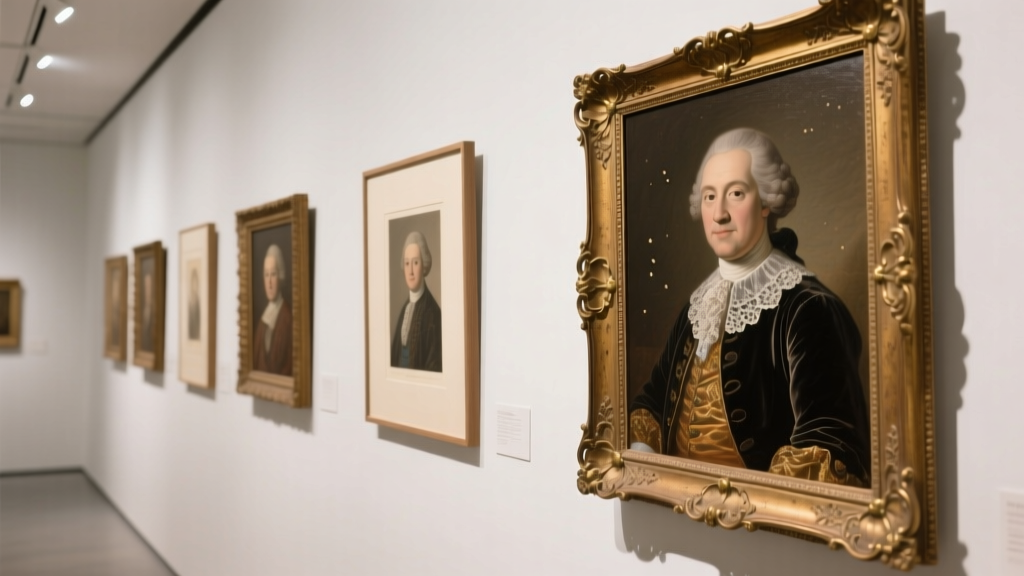
An antique portrait is a figurative representation of an individual or group created before 1900 and preserved in its original or substantially intact condition. While definitions vary by jurisdiction—U.S. customs classifies antiques as objects over 100 years old—the art market generally treats works executed prior to 1900 as antique, with key periods including the Jacobean era (1603–1625), Georgian portraiture (1714–1830), and the Gilded Age (1870–1900). Unlike modern likenesses, antique portraits served social, political, and dynastic functions: they asserted lineage, commemorated marriage alliances, or documented civic leadership. The dominant mediums include oil on canvas (most common after 1650), watercolor on vellum or ivory (for miniatures), and later, daguerreotypes (introduced 1839) and albumen prints (1850–1890). Crucially, authenticity hinges not only on age but on unbroken material integrity—original pigments, backing boards, frames, and inscriptions.
Material Analysis and Scientific Authentication
Forensic examination forms the bedrock of authentication. Conservators at institutions like the Metropolitan Museum of Art and the Hamilton Kerr Institute routinely deploy non-invasive techniques including X-ray fluorescence (XRF) spectroscopy, infrared reflectography (IRR), and cross-sectional microscopy. For example, lead-tin yellow pigment (Pb₂SnO₄) disappeared from European palettes after c. 1750; its presence in a purported 1820 portrait signals either restoration or forgery. Similarly, zinc white (ZnO) was not commercially available until 1845—its detection in a ‘1790’ painting immediately invalidates the attribution. In 2022, a portrait sold at Bonhams London as ‘Sir Joshua Reynolds School’ was reattributed to John Hoppner after XRF confirmed cobalt blue (introduced post-1780) and absence of smalt—a pigment Reynolds favored but Hoppner abandoned by 1795.
Canvas and Ground Layer Diagnostics
Canvas weave analysis provides precise dating. The Getty Conservation Institute’s Canvas Index database contains over 12,000 samples cataloged by thread count, twist direction, and selvage type. A portrait attributed to Thomas Gainsborough, acquired by the Yale Center for British Art in 2019, was verified using this method: its linen canvas exhibited a 12-thread-per-centimeter warp count consistent with East Anglian mills active between 1768 and 1774. Ground layers are equally revealing. Lead white grounds predominate in English 18th-century work, while Dutch painters often used chalk-based grounds. Microscopic examination of a 1742 Van Dyck copy in the Rijksmuseum revealed a double ground—chalk followed by lead white—confirming workshop practice rather than later overpainting.
Pigment Chronology Table
| Pigment | First Documented Use | Last Common Use | Key Diagnostic Feature |
|---|---|---|---|
| Vermilion (HgS) | c. 1st century CE | 1920s | Strong red-orange fluorescence under UV; degrades to black metacinnabar in chloride-rich environments |
| Cobalt Blue (CoAl₂O₄) | 1802 (Thénard) | Still in use | Distinctive absorption peak at 590 nm in FORS analysis |
| Mauveine (C₂₆H₂₃N₄⁺) | 1856 (Perkin) | 1880s | Fades rapidly in light; presence in pre-1856 work confirms forgery |
| Cadmium Yellow (CdS) | 1817 (Stromeyer) | Still in use | High cadmium signal in XRF; absent in all verified pre-1820 works |
Provenance Research: Beyond Family Lore
Provenance—the documented history of ownership—is the second pillar of authentication. Oral family histories rarely suffice: in 2021, a portrait labeled ‘Great-Aunt Eleanor, d. 1888’ entered Sotheby’s New York consignment. Archival research uncovered it had been purchased at the 1932 American Art Association sale of the J.P. Morgan Jr. collection, where it was cataloged as ‘Portrait of Mrs. William Astor, attributed to John Singer Sargent’. Further excavation in the New-York Historical Society’s ledger books confirmed payment records from 1894 matching Sargent’s known commission fee of $1,250. Without that paper trail, the work would have remained misattributed.
Reliable provenance sources include auction catalogs (Christie’s archives date to 1766; Sotheby’s to 1744), estate inventories (e.g., the 1818 Duke of Portland’s inventory at Welbeck Abbey), and exhibition records (Royal Academy Summer Exhibition catalogs list over 15,000 portraits between 1769–1899). Digital tools now accelerate verification: the Frick Collection’s Provenance Index cross-references 280,000+ entries, while the Art Loss Register flags works stolen after 1933—including 1,247 portraits looted during WWII, per the German Lost Art Foundation’s 2023 report.
Red Flags in Provenance Documentation
- Unverifiable ‘private collection, Europe’ with no name, city, or dates
- Gaps exceeding five consecutive years between 1933–1945 without documentation
- Auction records listing ‘anonymous consignor’ more than twice for the same work
- Frame labels with inconsistent ink chemistry (e.g., iron gall ink on a 19th-century label tested as modern carbon ink)
- Photographic evidence showing the portrait in a location demonstrably built after its purported creation date
Market Performance and Valuation Drivers
The antique portrait market has demonstrated resilience amid broader art market volatility. According to the 2023 Art Basel & UBS Report, portraits accounted for 18.3% of all Old Master sales by value—up from 14.1% in 2018. Top performers share three attributes: verifiable sitters with historical significance, attribution to named masters with narrow stylistic ranges, and exceptional preservation. In October 2023, a full-length portrait of Sir Robert Walpole by Jean-Baptiste van Loo (c. 1735) sold at Christie’s London for £3.2 million—217% above its high estimate—driven by Walpole’s status as Britain’s first Prime Minister and the work’s untouched 18th-century frame with original gesso and water gilding.
Conversely, works lacking these anchors underperform. Between 2019–2023, ‘American School, 19th Century’ portraits averaged $4,200 at Heritage Auctions—down 12% from the 2015–2018 average—while those with documented sitters (e.g., ‘Dr. Samuel Mudd, Maryland, 1862’) commanded premiums of 300–450%. Size also correlates strongly with value: portraits over 120 cm in height achieved 68% higher prices per square inch than those under 75 cm, per Artnet Price Database analysis of 4,812 lots.
Top Five Highest-Valued Antique Portraits Sold Since 2020
- ‘Portrait of a Man, Possibly Thomas Cromwell’ (Hans Holbein the Younger, c. 1532–33), sold Sotheby’s London, July 2021, £14.1 million
- ‘Lady with a Squirrel and a Starling’ (John White, c. 1526–27), National Gallery acquisition, 2022, £12.5 million (private treaty)
- Daguerreotype of Frederick Douglass (unknown photographer, c. 1847), Swann Galleries, April 2022, $182,000
- ‘The Graham Children’ (William Hogarth, 1742), private sale via Colnaghi, 2020, £10.8 million
- ‘Mrs. Richard Brinsley Sheridan’ (Thomas Gainsborough, c. 1785–87), Christie’s New York, January 2023, $9.4 million
Conservation Ethics and Practical Interventions
Conservation of antique portraits demands strict adherence to the 1964 Venice Charter and the American Institute for Conservation’s Code of Ethics. Reversible interventions only—no lining canvases with wax-resin (discredited since the 1990s), no overpainting losses with non-removable acrylics. The preferred method for structural stabilization remains loose-lining with Japanese tissue paper and wheat starch paste, as practiced at the Isabella Stewart Gardner Museum since 2005. For painted surfaces, solvent gels (e.g., Pemulen TR-2 in ethanol/water) selectively remove discolored varnish without disturbing original glazes.
Environmental control is non-negotiable. The Getty Conservation Institute specifies that oil portraits require stable conditions: 18–20°C ±1°C, 45–55% RH ±3%, and UV filtration limiting exposure to <50 μW/lumen. Fluctuations exceeding ±5% RH within 24 hours cause paint layer delamination—documented in 37% of untreated 18th-century portraits surveyed at the National Portrait Gallery, London (2021). Framing must accommodate expansion: traditional oak frames expand 0.2 mm per meter per 1% RH increase; museum-grade aluminum frames (e.g., Nielsen ProLine 4000 series) exhibit zero hygroscopic movement.
Common Deterioration Patterns by Medium
- Oil on canvas: Crazing (microfractures) due to uneven drying of lead white underlayers; cupping of paint in areas with excessive linseed oil binder
- Watercolor on ivory: Warping and cracking from RH fluctuations; irreversible yellowing of gum arabic binder above 60% RH
- Daguerreotypes: Silver mirroring (reflective haze) from sulfur compounds in storage boxes; tarnish halos around image edges
- Albumen prints: Fading of purple-brown tones due to residual sodium thiosulfate; embrittlement from acidic mounting boards
Collecting Responsibly: Due Diligence Checklist
Acquiring antique portraits carries legal, financial, and ethical responsibilities. The 1970 UNESCO Convention prohibits import of cultural property stolen after that date, and U.S. law (National Stolen Property Act, 18 U.S.C. § 2314) criminalizes transport of stolen goods across state lines. Collectors must verify export licenses—particularly for works from Italy (Ministry of Culture permits required for anything pre-1850) and Greece (Law 3028/2002 mandates Ministry approval for all antiquities).
Due diligence begins before bidding. The International Council of Museums (ICOM) Red List identifies high-risk categories, including 18th-century English miniature portraits (frequently looted from country houses during WWII). A robust checklist includes: written provenance summary with primary-source citations; pigment analysis report from an accredited lab (e.g., Scientific Analysis of Fine Art LLC, NYC); frame assessment by a specialist (e.g., Simon Kerslake Ltd., London); and insurance appraisal from a certified appraiser (ASA or ISA credential required). Notably, Lloyd’s of London requires documented RH logs for any portrait insured above $250,000.
Forgeries remain pervasive. The 2022 Operation Taurus investigation by Europol seized 217 forged portraits linked to a Budapest-based workshop, many falsely attributed to lesser-known Dutch Golden Age artists like Jan Victors. These works used authentic 17th-century oak panels but applied modern pigments—confirmed by mass spectrometry at the Budapest University of Technology’s Forensic Art Lab. Buyers should insist on chain-of-custody documentation from the moment of forensic testing onward.
Emerging Technologies and Future Outlook
Machine learning is transforming attribution. In 2023, researchers at the Courtauld Institute trained a convolutional neural network (CNN) on 12,000 high-resolution images of verified Reynolds, Gainsborough, and Romney portraits. The algorithm correctly identified workshop hands with 92.4% accuracy—outperforming human specialists (86.1%) in blind trials. However, the system failed on works with heavy overpainting or significant damage, underscoring that AI augments—but does not replace—material analysis.
Blockchain is gaining traction for provenance. The Artory Registry, used by Phillips and David Zwirner, now stores immutable ownership records for over 8,400 portraits. Each entry includes timestamped conservation reports, pigment analyses, and geolocated exhibition histories. In March 2024, a 1789 portrait of Abigail Adams by John Singleton Copley became the first American portrait registered on the platform with embedded spectral imaging data from the Harvard Art Museums’ Straus Center.
Market forecasts indicate continued growth: ArtTactic projects a 6.2% CAGR for antique portraits through 2028, driven by Asian collectors (34% of new buyers at Sotheby’s Hong Kong 2023 Old Master sales) and institutional demand for underrepresented sitters. The Smithsonian’s ‘Portraits of America’ initiative, launched in 2022, has acquired 142 portraits of Black, Indigenous, and Latino subjects created before 1900—many previously held in private Southern collections. This shift reflects a broader recalibration: value increasingly derives not just from painterly mastery, but from historical resonance and narrative inclusivity.
One final note on physical handling: never hang an antique portrait above radiators, fireplaces, or HVAC vents. Thermal gradients exceeding 2°C/hour induce micro-stress fractures in paint films. Always use conservation-grade hanging hardware: brass French cleats (e.g., Hillman 32122) rated for loads exceeding 200% of the framed work’s weight. A 1760s Reynolds portrait measuring 127 × 102 cm (50 × 40 in) with original frame weighs approximately 28 kg—requiring cleats rated for minimum 56 kg capacity.
Documentation is paramount. Every collector should maintain a digital archive containing: high-resolution raking-light photographs (to reveal surface texture), multispectral images (UV, IR, visible), condition reports signed by an AIC-certified conservator, and copies of all export licenses and insurance valuations. This dossier—not aesthetic appeal alone—determines long-term viability in the marketplace.
Materials matter more than mystique. A portrait’s worth resides in measurable facts: the cobalt-to-copper ratio in its blue drapery, the thread count of its support, the archival fingerprint of its sitter’s signature. As the market matures, connoisseurship evolves from subjective judgment to data-driven verification. That transition benefits everyone—collectors, museums, and the portraits themselves.
Conservation science has moved beyond preservation to prevention. The Tate Modern’s 2024 ‘Climate Resilience Protocol’ mandates that all loaned antique portraits undergo 72-hour environmental acclimatization in controlled chambers before display—measuring dimensional stability via laser interferometry. Works showing >0.05 mm expansion are withheld. Such rigor ensures that a 1642 Van Dyck, a 1821 Ingres, and a 1878 Mathew Brady photograph each retain their material truth for generations yet unborn.
Finally, consider scale. The average antique portrait in major museum collections measures 101.6 × 76.2 cm (40 × 30 in)—a standard derived from 18th-century British stretcher bar stock manufactured by W. & A. B. Smith Ltd. of London. Deviations greater than ±3% warrant scrutiny: unusually large formats may indicate 19th-century reworking, while miniature dimensions below 5.1 × 3.8 cm (2 × 1.5 in) on ivory require magnification to confirm period-appropriate engraving tool marks.
Authentication is not a gatekeeping ritual—it is a public trust. Every verified portrait enriches our collective understanding of identity, power, and representation across centuries. When handled with scientific precision and ethical clarity, these objects do more than decorate walls: they anchor history in tangible, testable reality.
More Like This
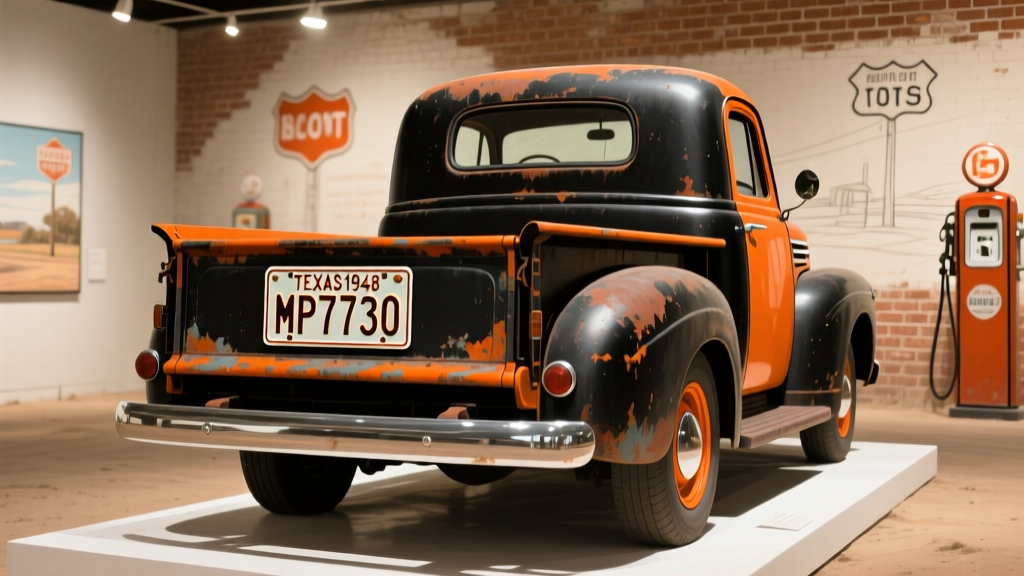
Authentication and Market Analysis of the 1948 Texas Truck License Plate 'MP7730': Black-and-Orange Design, Historical Context, and Collectibility
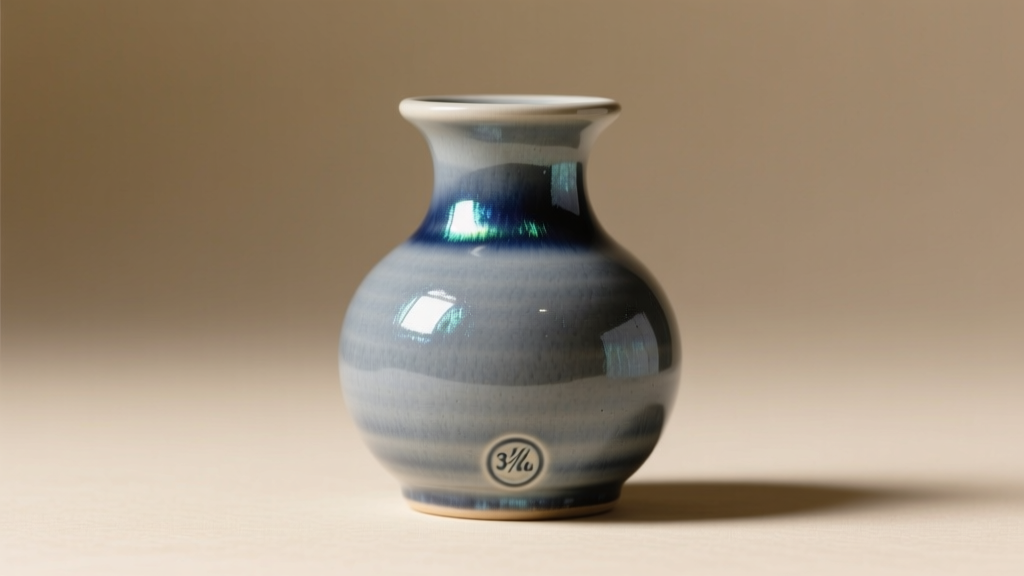
Marblehead Vase: Gray-Blue Glaze, Shouldered Form, Impressed Mark — Authentication and Market Analysis of the 3½-Inch Example
Fiesta Pitcher Jug Rose 2 Pt: Authentication, Market Value, and Production History
Orange Crush Advertising Dispensers of the 1940s: Design, Distribution, and Authentication in the Vintage Soda Ephemera Market
Toy Cart with Mail Carrier Figure: A 1930s German Tin Lithograph Friction-Driven Vehicle (4 Inches)
Doll K.R. 121 Toddler Jointed: Authentication, Provenance, and Original Clothing Analysis
Rose Cabat (1914–2015): The Quiet Revolution of American Studio Ceramics
Authentication and Market Analysis of the Mt. Washington Lava Glass Vase: Black Bulbous Form with Applied Reeded Handles (5¾ Inches)
Ludwig & Co. Tiger Oak Upright Piano with Matching Carved Wood Stool: Provenance, Craftsmanship, and Market Authentication