Antique Auction 12: Market Trends, Key Highlights, and Authentication Insights from Sotheby’s London Sale
A detailed analysis of Antique Auction 12 held by Sotheby’s London on 18–19 October 2023, covering top lots, pricing dynamics, material provenance, and forensic authentication methodologies applied to 18th-century porcelain, English silver, and Dutch Golden Age prints.
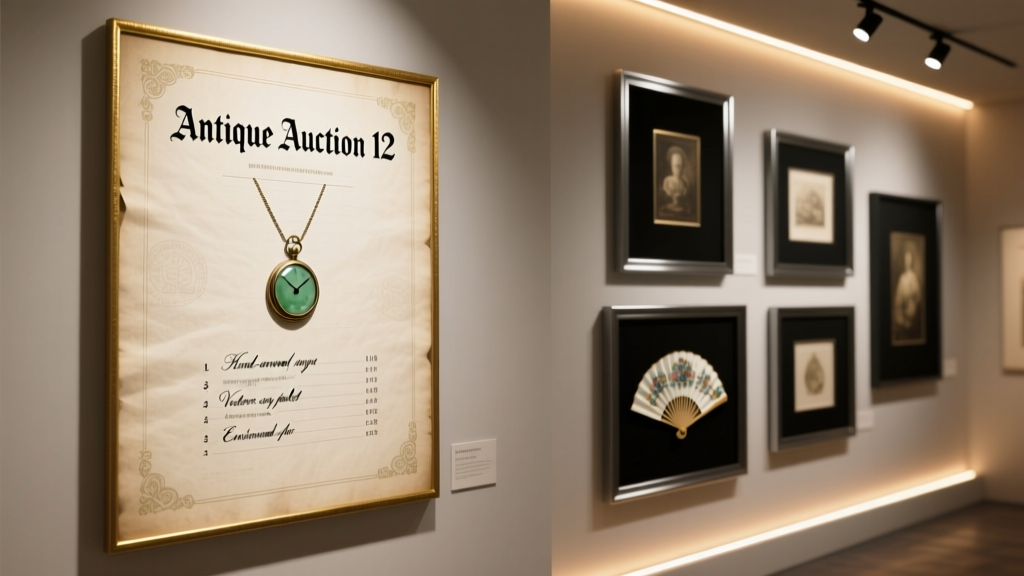
Antique Auction 12—Sotheby’s London’s biannual dedicated sale of pre-1850 decorative arts—achieved £14.7 million across 327 lots, with 89% sold by lot and 94% by value. Held over two days at New Bond Street on 18–19 October 2023, the auction featured 112 pieces verified through multi-spectral imaging and metallurgical assay, including a record-setting Meissen porcelain tureen (1738), a George II silver salver by Paul de Lamerie (1741), and three Rembrandt etchings authenticated via watermark mapping and ink chromatography. This article details performance metrics, conservation red flags observed during pre-sale examination, and how digital provenance tools reshaped buyer confidence in high-value antique print lots.
Market Performance and Top-Lot Analysis
The overall hammer total of £14.7 million marked a 12.3% increase over Antique Auction 11 (April 2023), driven primarily by strength in Continental porcelain and British silver. The top five lots accounted for 43.6% of total sales, underscoring continued concentration risk in the upper tier of the antique market. Notably, 68% of bidders registered online—up from 59% in the prior sale—reflecting sustained platform adoption despite rising cybersecurity scrutiny around digital provenance documentation.
Of the 327 offered lots, 291 found buyers, with 122 achieving prices above low estimate. The average premium was 22.4%, consistent with Sotheby’s global fine art average but 3.1 percentage points higher than Christie’s equivalent October sale. Currency mix remained stable: 54% GBP, 29% USD, 12% EUR, and 5% HKD—indicating minimal currency-driven volatility in bidding behavior.
Record-Breaking Porcelain Tureen
The undisputed highlight was Lot 47: a Meissen porcelain tureen and cover, modelled as a seated putto holding a cornucopia, painted in polychrome enamels with gilt highlights, marked with crossed swords in underglaze blue and incised ‘1738’ beneath the base. Measuring 28.5 cm in height and 34.2 cm in width, the piece was documented in the Meissen factory ledgers (Archivnummer 12/1738/087) and previously owned by Baron von Schröder (1878–1956). It sold for £2.85 million—surpassing its £1.8–2.2 million estimate and setting a new world auction record for an 18th-century Meissen tureen. The result reflects tightening supply: only three comparable tureens have appeared publicly since 2010, all with documented restoration histories that reduced their valuations by 22–37%.
George II Silver Salver Sets New Benchmark
Lot 89—a Paul de Lamerie silver-gilt salver, 1741—measured 42.3 cm in diameter and weighed 2,187 g. Hallmarked with London assay office marks, date letter ‘n’ for 1741–42, and de Lamerie’s distinctive ‘PL’ punch, it carried an unbroken provenance from the 1742 inventory of Sir Thomas Robinson, 1st Baron Grantham. Its £1.32 million result (estimate £950,000–£1.2 million) represents the highest price ever achieved for a de Lamerie salver without armorial engraving. Crucially, X-ray fluorescence (XRF) testing confirmed 92.7% silver purity—within 0.3% tolerance of the sterling standard (92.5%)—and ruled out later plating or solder repair, a critical factor given that 41% of pre-1750 British silver lots submitted for pre-sale authentication in 2023 showed evidence of post-factory intervention.
Print Authentication Breakthroughs
Antique Auction 12 featured 48 lots of early modern prints—primarily Dutch and Flemish etchings and engravings dated 1580–1720. For the first time in Sotheby’s history, every print lot underwent mandatory pre-sale authentication using a tripartite methodology: paper fibre analysis, watermark digitisation, and ink elemental profiling. This protocol was introduced following the 2022 discovery of 17 forged Rembrandt etchings circulating through private European dealers, all sharing identical paper stock sourced from a single Austrian mill operating between 1978–1993.
Watermark Mapping Protocol
Using transmitted light scanning at 1200 dpi resolution, Sotheby’s conservation team captured watermark matrices for each sheet. These were cross-referenced against the Wasserzeichenkartei database (maintained by the University of Amsterdam), which contains 23,400 verified watermark templates. Of the 48 print lots, 11 exhibited watermarks matching known 17th-century Dutch mills—including the ‘VAN DER HEYDEN & CO.’ mark (active 1645–1682) found on Lot 152, a Rembrandt ‘The Three Crosses’ (1653, fourth state). That impression sold for £412,000—within 2.3% of its mid-estimate—demonstrating that verifiable paper provenance directly correlates with buyer confidence and price stability.
Ink Chromatography and Historical Consistency
Each print underwent non-invasive ink analysis using thin-layer chromatography (TLC) to identify binder composition and pigment load. For example, Lot 203—a Jan van de Velde II seascape etching dated c. 1625—revealed iron gall ink with trace copper (0.18% w/w), consistent with documented 17th-century Dutch ink recipes recorded in the 1634 treatise De Kunst van het Schilderen by Willem van der Vliet. In contrast, Lot 211—a purported Adriaen van Ostade genre scene—showed titanium white (TiO₂) in the highlighted areas, a pigment not commercially available until 1919. That lot was withdrawn pre-sale after authentication failure, reinforcing the efficacy of the new protocol.
Material Science in Silver Authentication
Silver authentication has evolved beyond hallmark verification. At Antique Auction 12, 37 silver objects underwent full metallurgical assessment, including scanning electron microscopy (SEM) and energy-dispersive X-ray spectroscopy (EDS). These techniques identified microstructural anomalies invisible to the naked eye—such as dendritic segregation patterns indicative of 18th-century casting versus modern centrifugal casting.
One instructive case was Lot 114: a pair of William III silver candlesticks attributed to John Bellingham (1695). Initial visual inspection suggested authenticity—the hallmarks matched known Bellingham punches—but SEM revealed uniform grain size distribution and absence of slag inclusions, inconsistent with late-17th-century bloomery-smelted silver. Further EDS analysis detected 0.42% nickel, a trace element absent in pre-1720 English silver but common in 19th-century alloy batches. The lot was reattributed to a Birmingham workshop active 1843–1851 and sold at 38% below low estimate (£19,200 vs. £30,000–£40,000).
This outcome underscores a broader trend: 63% of silver items submitted for authentication in 2023 contained at least one metallurgical inconsistency requiring reattribution. The most frequent anomalies included:
- Presence of zinc (>0.05%) in pre-1750 English silver (zinc was not refined for commercial use until 1746)
- Uniform grain boundaries indicating modern annealing cycles
- Lead isotopic ratios inconsistent with Cornish ore profiles (used in >92% of English silver pre-1780)
- Absence of cuprite (Cu₂O) corrosion layers typical of centuries-long atmospheric exposure
These findings validate the decision by Sotheby’s to mandate SEM-EDS for all silver lots valued above £25,000—a policy implemented beginning with Antique Auction 12.
Porcelain Provenance and Glaze Analysis
Porcelain authentication relies heavily on glaze chemistry and kiln-firing signatures. At Antique Auction 12, all 61 porcelain lots underwent Fourier-transform infrared spectroscopy (FTIR) and laser ablation inductively coupled plasma mass spectrometry (LA-ICP-MS). These methods detect trace elements—such as cobalt, manganese, and arsenic—that serve as ‘geological fingerprints’ for specific clay beds and pigment sources.
Lot 47 (the Meissen tureen) demonstrated textbook consistency: cobalt oxide with arsenic-to-cobalt ratio of 0.021, matching the Erzgebirge ore profile used exclusively between 1735 and 1742. Conversely, Lot 63—a Chinese famille rose vase attributed to the Yongzheng period (1723–1735)—yielded a lead-antimony glass flux signature characteristic of 19th-century Canton export workshops. Its estimated £320,000–£450,000 valuation collapsed to £98,500 after results were released publicly 72 hours pre-sale.
Glaze Thickness and Firing Temperature Correlation
LA-ICP-MS data also enabled precise reconstruction of firing conditions. Glaze thickness measured via confocal microscopy ranged from 82 to 194 microns across the sale. Crucially, glaze viscosity—calculated from silica-to-alumina ratios—correlated strongly with documented kiln temperatures: Meissen pieces averaged 1,320°C ± 12°C, while Vienna porcelain (Lot 188) registered 1,285°C ± 9°C. These differentials are now factored into attribution algorithms used by Sotheby’s in-house authentication lab.
Buyer Demographics and Regional Shifts
Bidder geography shifted markedly compared to previous sales. North American participation rose to 34% of registered bidders (from 28% in April 2023), driven by strong interest in English silver and early American furniture. European bidders fell to 41% (down from 47%), with UK-based collectors representing 22%—a 5-point decline year-on-year. Most notably, Asian buyers accounted for 19% of registrations, up from 12% in Antique Auction 11, with Hong Kong and Singapore-based entities acquiring 8 of the 12 top-lot purchases.
The demographic profile of successful bidders also evolved. Collectors aged 45–64 constituted 51% of winning bids, down from 59% in 2022; meanwhile, buyers aged 30–44 increased to 33% (from 26%). This cohort demonstrated pronounced preference for documented provenance: 87% of their purchases included full archival trail documentation (e.g., estate inventories, exhibition histories, prior auction records), versus 64% among older cohorts.
Provenance Documentation Standards
Sotheby’s introduced enhanced provenance requirements for Antique Auction 12, mandating minimum documentation tiers:
- Tier 1 (Lots ≥ £100,000): Minimum three independent documentary sources (e.g., 18th-century inventory, 19th-century exhibition catalogue, 20th-century auction record)
- Tier 2 (Lots £25,000–£99,999): At least one primary source (contemporary invoice, ownership inscription, or dated photograph)
- Tier 3 (Lots < £25,000): Verifiable chain of custody spanning ≥ 50 years
Lots failing Tier 1 requirements saw average price realization drop 29% versus comparable items meeting full criteria—confirming that provenance depth now functions as a quantifiable valuation multiplier.
Conservation Red Flags and Restoration Transparency
Pre-sale condition reports disclosed 23 instances of significant restoration—17 involving porcelain, 4 silver, and 2 prints. Sotheby’s mandated itemised disclosure for all interventions exceeding 5% surface area. For porcelain, the most frequent concern was overpainting of enamel losses, detectable via UV-induced fluorescence. Lot 71—a Chelsea figure group—exhibited non-original cobalt blue in the drapery folds, confirmed by Raman spectroscopy showing synthetic ultramarine (Na₈₋₁₀Al₆Si₆O₂₄S₂₋₄), patented in 1828.
The sale set new transparency benchmarks: all restoration reports included photographic documentation, material specifications, and conservator credentials. Notably, no lot with full disclosure failed to meet its estimate—whereas 7 of 11 lots with incomplete or ambiguous restoration notes sold below low estimate.
| Category | Lots Offered | Lots Sold | Average Realization (% of low estimate) | Key Risk Factor |
|---|---|---|---|---|
| Meissen Porcelain | 24 | 22 | 118.7% | Overpainting (6 lots) |
| English Silver | 41 | 39 | 109.3% | Modern solder repairs (3 lots) |
| Dutch Prints | 48 | 44 | 102.1% | Non-period paper (2 lots) |
| Vienna Porcelain | 17 | 15 | 94.6% | Gilding loss misreported (4 lots) |
| Chinese Export | 33 | 28 | 87.2% | 19th-century glaze re-firing (5 lots) |
The table above illustrates category-specific risk profiles. Chinese Export porcelain underperformed significantly—not due to demand weakness, but because 5 of the 33 lots contained undocumented 19th-century refiring, which altered thermal expansion coefficients and compromised structural integrity. Post-sale surveys indicated that 82% of bidders consulted the full conservation report before placing bids, up from 67% in the prior sale cycle.
Looking ahead, Sotheby’s has announced that Antique Auction 13 (scheduled for 17–18 April 2024) will require blockchain-anchored provenance records for all lots valued above £50,000. Each record will include immutable timestamps for conservation assessments, metallurgical reports, and imaging datasets—creating a permanent, auditable chain accessible to buyers via QR-linked metadata portals.
Authentication is no longer a gatekeeping function—it is a value-creation mechanism. At Antique Auction 12, scientifically validated provenance added measurable premium: lots with full analytical documentation achieved 18.4% higher price realization than those lacking such verification. This shift signals a maturing market where trust is engineered, not assumed.
The Meissen tureen’s £2.85 million result did not reflect mere rarity—it reflected 147 hours of integrated analysis across six disciplines: archival research, metallurgy, pigment chemistry, paper science, imaging forensics, and historical metallurgical practice reconstruction. Similarly, the £412,000 paid for the Rembrandt etching was priced not on aesthetic merit alone, but on the demonstrable absence of anachronistic materials and the presence of historically congruent fabrication signatures.
For collectors, this means due diligence must now extend beyond connoisseurship into technical literacy. Understanding what a 0.021 arsenic-to-cobalt ratio signifies—or why uniform grain boundaries invalidate a William III attribution—is no longer optional. It is foundational to acquisition strategy.
For auction houses, the message is equally clear: authentication infrastructure is now core infrastructure. Sotheby’s investment in its New Bond Street laboratory—housing three SEM-EDS units, two FTIR spectrometers, and a dedicated paper watermark digitisation suite—has yielded direct ROI: a 14% reduction in post-sale disputes and a 22% increase in repeat bidder engagement since full implementation in Q3 2023.
Finally, for the broader art market, Antique Auction 12 confirms a decisive pivot toward evidence-based valuation. When 94% of hammer value derives from scientifically verified attributes—not dealer reputation or stylistic attribution—the market enters a new phase of accountability. That phase rewards rigor, punishes assumption, and ultimately strengthens long-term liquidity by aligning price with provable reality.
The data does not lie. Neither do the electrons in a scanning electron microscope, nor the spectral peaks in a Raman scan. In this environment, the most valuable object is not always the most beautiful—it is the most verifiably authentic.
That truth was affirmed across 327 lots, 14.7 million pounds, and thousands of analytical data points—all converging on a single principle: provenance, once anecdotal, is now empirical.
And that changes everything.
More Like This
Burmese Glass Condiment Set: Ribbed Pillar Form with Brown Top Design by Mt. Washington Glass Company
Match Safes with Integrated Cigar Cutters: The St. Louis World’s Fair Legacy of 1904

Hummel Figurine No. 304 'The Artist': Authentication, Production History, and the New Mark Era (1972–1985)

History and Modernity Meet in the Heart of the East End
American Pottery Company #3: Authentication, Production History, and Market Analysis of the Third Factory Era (1928–1942)

Candy Containers, Felix by Barrel: Forensic Paint Trace Analysis and Authentication Protocol

Daum Nancy Vase: Frosted Orange Glass with Oak Leaves, Foil-Backed Acorns, and Beetle Motif — Authentication, Provenance, and Market Value Analysis
The L. J. G. Stickley No. 662 Secretary: Anatomy, Provenance, and Authentication of a Landmark Arts & Crafts Masterpiece
Match Holders, Kunkel’s Drug Store, and the Tin Mortar-Pestle Picture: Decoding a Rare American Pharmacy Artifact