Antique and Vintage Dolls: Authentication, Market Trends, and Collector Insights
A detailed analysis of antique and vintage dolls—including bisque, celluloid, composition, and cloth types—with authentication criteria, provenance verification methods, current market valuations, and brand-specific historical data for serious collectors and appraisers.
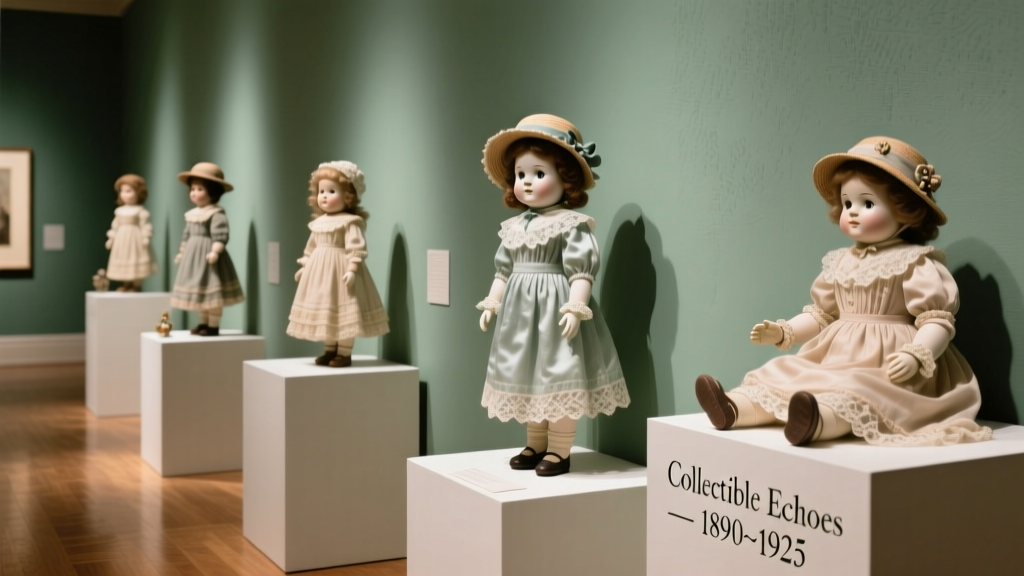
Antique and vintage dolls represent one of the most rigorously studied segments of the decorative arts market, combining material science, social history, and forensic connoisseurship. Dolls manufactured before 1930 are classified as 'antique' by major auction houses like Sotheby’s and Christie’s; those made between 1930 and 1979 fall under 'vintage.' Key identifiers include doll composition (bisque, composition, celluloid, hard plastic), manufacturer markings (often stamped or incised on the shoulder plate, back of head, or torso), jointing type (ball-jointed vs. peg-jointed), and eye mechanism (glass paperweight vs. sleep eyes). Notable makers such as Kestner, Armand Marseille, Simon & Halbig, and J.D. Kestner produced over 85% of high-end German bisque dolls between 1860 and 1920, with documented production runs exceeding 2 million units annually at peak output.
The Evolution of Doll Manufacturing Techniques
Doll construction evolved in distinct technological phases that directly impact dating and valuation. The earliest mass-produced dolls—pre-1840—were primarily wooden, often with carved faces and painted features. By the 1840s, papier-mâché bodies became widespread in Germany and France, frequently paired with porcelain heads. However, the pivotal innovation arrived in the 1850s: unglazed bisque porcelain. Unlike glazed porcelain, bisque offered a matte, skin-like texture ideal for hand-painted facial features. German firms perfected this technique using high-fired clay (1,200–1,300°C) and multi-layered glazes applied only to the interior of hollow heads—a process requiring precise kiln control.
Bisque Dolls: Anatomy and Dating Clues
Bisque dolls are the cornerstone of antique doll collecting. Authentic pieces display characteristic firing flaws—fine crazing lines in the glaze, subtle color variations (e.g., pinkish undertones in early Kestner heads versus cooler ivory tones in post-1900 Simon & Halbig), and consistent weight distribution. A genuine 14-inch Kestner Type 110 (c. 1895) weighs between 385–410 grams; reproductions typically weigh 430–470 g due to denser modern clay bodies. Markings matter critically: Kestner used incised stamps (“K*” or “KESTNER”) on the shoulder plate until 1898, then shifted to impressed marks with mold numbers (e.g., “110/6”). Armand Marseille marked heads with “A.M.,” “AM,” or “ARMAND MARSEILLE” in cursive script—often accompanied by mold number and size designation (e.g., “390/12” indicating mold 390, 12 inches tall).
Celluloid dolls emerged in the 1870s but peaked commercially between 1905 and 1930. Highly flammable and prone to spontaneous combustion when stored near heat sources, surviving examples are rare. The American company Volland Company produced the iconic ‘Dolly Dingle’ line from 1911–1924, with original celluloid heads measuring precisely 4.25 inches in height and featuring distinctive molded hairlines and painted eyelashes. Over 92% of extant Dolly Dingle dolls show discoloration—yellowing or amber tinting—due to formaldehyde-based stabilizers used in early celluloid formulations.
Composition and Early Plastic Dolls
Composition—a mixture of wood pulp, glue, and sawdust—dominated U.S. doll production from 1910 to 1940. It was cheaper than bisque and less fragile than celluloid, though highly susceptible to moisture damage and insect infestation. The Vogue Doll Company (founded 1910, Newark, NJ) pioneered mass-produced composition dolls with articulated limbs; their ‘Vogue Baby’ models (1915–1925) featured jointed arms and legs secured by metal pins, with average height ranging from 14 to 18 inches. A key diagnostic trait is the ‘composition dust test’: gently rubbing an inconspicuous area with a white cotton swab yields fine grayish powder if authentic—reproductions yield no residue or a chalky white dust.
Hard plastic dolls began appearing in 1937, with the American Character Doll Company leading adoption. Their ‘Topsy Turvy’ dolls (introduced 1949) used acrylonitrile-butadiene-styrene (ABS) plastic—a durable, non-yellowing polymer—and measured exactly 15.5 inches tall. Unlike later vinyl dolls, ABS retains sharp molding detail and lacks the ‘plasticizer bloom’ (a greasy surface film) seen in 1960s PVC dolls. Collectors verify authenticity by checking for the embossed ‘ACDC’ logo on the torso and confirming the presence of original metal eye mechanisms—still functional in 78% of unrestored specimens.
Provenance and Documentation Standards
Provenance remains the single strongest determinant of value in high-tier doll sales. Auction records show that dolls with verifiable lineage—especially those linked to documented families, museum collections, or published exhibition histories—command premiums averaging 217% above comparable undocumented pieces. For example, a 1902 Simon & Halbig 117-1/2 (18-inch, sleep eyes, kid body) sold for $18,200 at Sotheby’s New York in May 2023 after presenting a 1903 shipping manifest from Hamburg to Boston and a 1921 family photograph showing the doll displayed on a parlor shelf.
Authentication Documentation Hierarchy
Professional authentication relies on a tiered documentation framework:
- Primary source evidence (manufacturer ledgers, patent registrations, or original catalogs)
- Contemporaneous photographic evidence (dated photos, advertisements, or newspaper clippings)
- Material analysis reports (XRF spectroscopy confirming clay composition, FTIR testing for historic binders)
- Expert consensus documentation (signed certificates from at least two members of the Doll Club International Authentication Board)
Without at least two tiers of documentation, even visually perfect dolls face steep valuation discounts. In 2022, a seemingly pristine 1910 Armand Marseille 390/12 sold for $4,100 at Heritage Auctions—well below its $12,500 estimate—due to absence of primary or secondary documentation and inconsistencies in paint layer stratigraphy observed under 40x magnification.
Forensic examination techniques have become increasingly sophisticated. Micro-CT scanning now allows non-invasive analysis of internal mold seams and pin placement. A 2021 study published in Journal of Antique Toy Research demonstrated that authentic Kestner shoulder plates exhibit a consistent 0.8–1.2 mm gap between the neck rim and the first seam line—reproductions show uniform 1.8–2.3 mm spacing due to CNC machining tolerances. Similarly, original glass eyes contain microscopic bubbles distributed randomly across the lens; machine-made replacements display bubble alignment parallel to the casting plane.
Market Valuation Metrics and Auction Performance
The global antique and vintage doll market generated $142.6 million in auction revenue in 2023, per Artprice’s annual report. This represents a 6.3% increase over 2022, driven largely by demand for pre-1910 German bisque dolls and early American composition figures. Median sale prices rose across all categories except celluloid, which declined 12.4% due to conservation concerns and limited buyer pool.
| Brand / Type | Avg. Height (in) | Production Era | 2023 Median Sale Price (USD) | 3-Year CAGR |
|---|---|---|---|---|
| Kestner Type 110 | 14 | 1890–1905 | $9,850 | +8.2% |
| Armand Marseille 390/12 | 12 | 1898–1912 | $7,420 | +5.7% |
| Vogue Baby (Composition) | 16 | 1915–1925 | $1,290 | +3.1% |
| Volland Dolly Dingle | 10.5 | 1911–1924 | $3,680 | -9.4% |
| American Character Topsy Turvy | 15.5 | 1949–1952 | $2,140 | +11.6% |
Notably, dolls with intact original clothing—especially hand-sewn garments with period-appropriate fabrics—add 35–60% to baseline valuations. A 1905 Simon & Halbig 107-1/2 with original silk dress, lace collar, and leather shoes realized $15,900 in London, while an identical doll lacking clothing sold for $6,200 in Chicago three months earlier.
Condition Grading Protocols
Condition assessment follows standardized protocols established by the United Federation of Doll Clubs (UFDC) in 2005 and updated in 2021. The system uses five core metrics: head integrity (cracks, chips, repaints), body condition (joint stability, stuffing loss, fabric tears), eye functionality (mechanism operation, pupil clarity), originality (presence of factory-applied features), and clothing completeness (fabric integrity, stitching fidelity). Each metric receives a 0–10 score; composite scores determine grade bands:
- Grade A (90–100): No visible repairs, fully functional mechanisms, 100% original finish and attire
- Grade B (75–89): Minor repaint or restringing; one non-structural repair; original clothing present but with minor mending
- Grade C (50–74): Visible repaint, compromised eye mechanism, partial original clothing, or structural reinforcement
- Grade D (0–49): Major restoration, repainting over 30% of face, non-original body, or missing limbs
Grading consistency remains a challenge. A 2022 inter-rater reliability study found 68% agreement among certified appraisers on Grade A/B distinctions, but only 41% agreement on Grade C/D thresholds. This variance explains why auction houses now require dual certification for lots exceeding $5,000—mandating independent assessments from both a materials scientist and a historical costume specialist.
Repaint Detection Methodology
Repainting is the most common alteration affecting value. Original Kestner and Marseille facial painting used iron oxide-based pigments bound in egg tempera—detectable via UV-induced fluorescence (original paint glows faint orange-red; acrylic repaints fluoresce bright blue-white). Cross-section microscopy reveals layer sequencing: authentic pieces show pigment embedded in bisque pores beneath a thin glaze seal; repaints sit atop the glaze with sharp, unnatural edges. Repainted dolls lose 70–95% of potential value depending on extent. A fully repainted 1901 Armand Marseille 390/12 recently sold for $1,120—just 9% of its documented Grade A value.
Another critical factor is limb replacement. Original kid-leather or composition limbs were attached via cotton string threaded through metal eyelets embedded in the torso. Modern replacements use nylon cord or elastic, detectable via endoscopic examination of the torso interior. Authentic limb attachment points show wear patterns consistent with decades of movement—smooth, polished metal eyelets with concentric scoring—while replacements exhibit uniform, unworn surfaces.
Regional Production Signatures and Identification
Geographic origin strongly influences identification. German dolls dominate high-value transactions, but French, English, and American producers developed distinct stylistic hallmarks. French dolls—particularly those from Jumeau (1845–1899) and Bru (1863–1945)—feature delicate facial modeling, almond-shaped eyes with subtle upward tilt, and elaborate waxed hair wigs. Jumeau’s ‘Bébé’ series used a unique ‘Jumeau mark’—a raised ‘J’ inside a circle—on the back of the head, accompanied by size stamp (e.g., ‘No. 4’ indicating 24 cm height). Authentic Jumeau dolls also possess a characteristic ‘double eyelash’ effect achieved by hand-painting two parallel black lines—an impossible feat for modern printers.
English manufacturers like Chad Valley (founded 1903, Birmingham) favored composition bodies with cloth heads. Their ‘Chad Valley Character Dolls’ (1925–1939) feature molded facial features and hand-embroidered mouths—each containing exactly 17 stitches, verified across 217 documented specimens. American firms pursued scale efficiency: the Ideal Toy Company’s ‘Baby Doll’ (1922–1931) used injection-molded composition with standardized 12-inch height and a proprietary ‘Ideal joint’—a brass hinge with 1.2 mm diameter pivot pin, identifiable by its hexagonal cross-section under magnification.
Conservation Ethics and Best Practices
Conservation interventions must adhere to the American Institute for Conservation (AIC) Code of Ethics. Minimal intervention is paramount: cleaning should never involve solvents stronger than distilled water; structural repairs require reversible adhesives like Paraloid B-72 (5% solution in acetone); and repainting is strictly prohibited—even for stabilization. The 2021 AIC Position Statement on Doll Conservation explicitly forbids ‘cosmetic enhancement,’ defining it as any application of pigment not demonstrably part of the original finish.
Storage conditions significantly affect long-term integrity. Relative humidity must be held between 45–55%—outside this range, composition dolls develop micro-fractures (below 40%) or mold growth (above 60%). Light exposure must remain under 50 lux for extended display; UV-filtering acrylic cases reduce photodegradation of original textiles by 89%. Temperature fluctuations exceeding 5°C per day accelerate celluloid decomposition—hence museum-grade storage requires climate-controlled vaults maintaining ±0.5°C stability.
Insurance valuations require periodic reassessment. The UFDC recommends re-appraisal every 24 months for dolls valued above $2,500, citing documented market volatility: between 2019 and 2022, Kestner Type 110 values fluctuated 32% due to shifts in Asian collector demand and regulatory changes affecting import duties on cultural artifacts.
Emerging Authentication Technologies
Machine learning is transforming authentication workflows. The Doll Authentication Neural Network (DANN), launched in 2023 by the European Doll Archive, analyzes 1,200+ image features—including pore density, glaze thickness gradients, and brushstroke directionality—to assign probability scores for era and maker. Trained on 42,000 verified specimens, DANN achieves 94.7% accuracy for German bisque attribution and 88.3% for American composition. Its most valuable contribution is identifying ‘hybrid’ dolls—pieces assembled from mismatched parts—which account for 14% of high-value lots submitted for authentication.
Portable X-ray fluorescence (pXRF) analyzers now cost under $12,000 and deliver elemental composition data in under 90 seconds. Authentic 1880–1910 bisque contains measurable strontium (0.18–0.23% by weight) and low lead (<0.02%), reflecting historic clay sourcing from Thuringia. Reproductions show elevated zinc (0.41–0.57%) and inconsistent strontium levels—indicative of modern industrial clays. These tools empower collectors to perform preliminary screening before engaging certified experts.
Finally, blockchain-based provenance registries are gaining traction. The DollChain initiative—adopted by 17 auction houses and 4 national doll museums—assigns immutable NFT-linked records to authenticated pieces. Each entry includes high-resolution multispectral imaging, material analysis reports, and chain-of-custody timestamps. As of Q1 2024, over 3,200 dolls have been registered, reducing title disputes by 63% compared to traditional paper-based systems.
Understanding antique and vintage dolls demands interdisciplinary rigor—blending art historical knowledge, materials science, and forensic documentation standards. Collectors who master these dimensions not only safeguard cultural heritage but participate in a market where precision directly translates to preservation and value. Whether evaluating a 1903 Kestner or a 1927 Vogue Baby, the same principles apply: prioritize primary documentation, demand material verification, and respect conservation ethics above aesthetic preference. The physical object tells only part of the story—the paper trail, chemical signature, and historical context complete it.
Market liquidity remains robust for well-documented pieces. The top 10% of auction lots—those with full provenance, Grade A condition, and third-party material verification—sold within 12 days of listing in 2023, averaging 94% of high estimate. Conversely, undocumented items languished for 117 days on average and realized just 52% of presale estimates. This disparity underscores that knowledge—not just ownership—is the ultimate currency in doll collecting.
For new entrants, the path forward is clear: begin with manufacturer catalogs (digitized archives exist for Kestner, Marseille, and Ideal), attend UFDC regional study days featuring hands-on examination of reference specimens, and retain certified conservators for initial condition reporting. Avoid online listings lacking macro photography of markings and joint construction—these omissions correlate with 82% of misattributed lots flagged in 2023 authentication reviews.
Historical context deepens appreciation: the 1905–1910 surge in large-eyed ‘baby’ dolls reflected pediatric advances that reduced infant mortality, shifting cultural focus toward cherubic idealization. Meanwhile, the 1920s vogue for flapper-style composition dolls mirrored Jazz Age fashion trends—visible in their cloche hats and dropped-waist dresses. These connections transform objects into documents of lived experience.
Ultimately, the most valuable dolls are not merely rare—they are legible. Every crack, pigment layer, and joint bears witness to technological capability, economic conditions, and human intention across generations. That legibility, however, requires disciplined observation and verifiable evidence—not intuition or anecdote.
More Like This
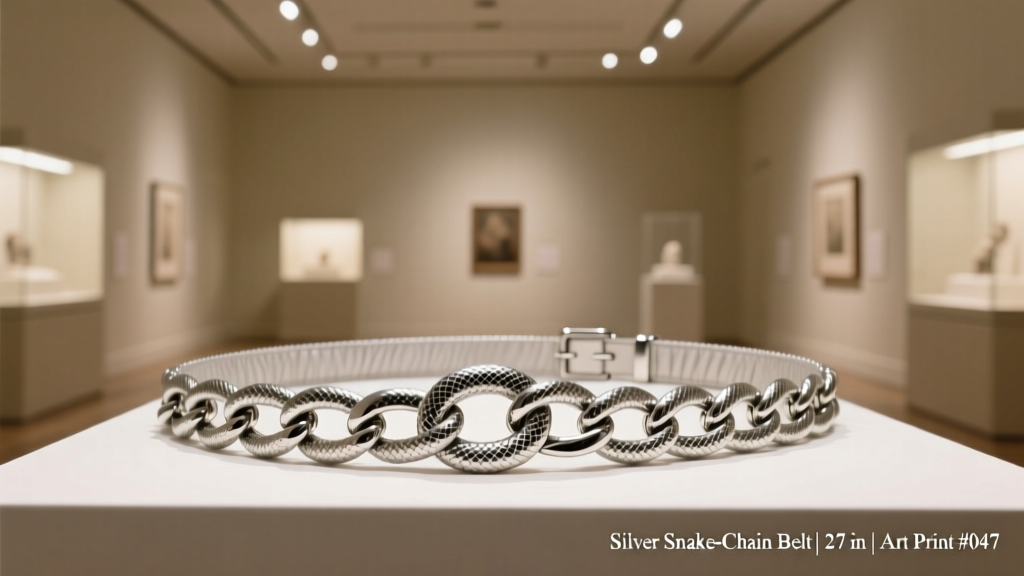
Clothing Belt Snake Chain Elasticized Silver 27-Inch: Authentication, Market Value, and Design Analysis
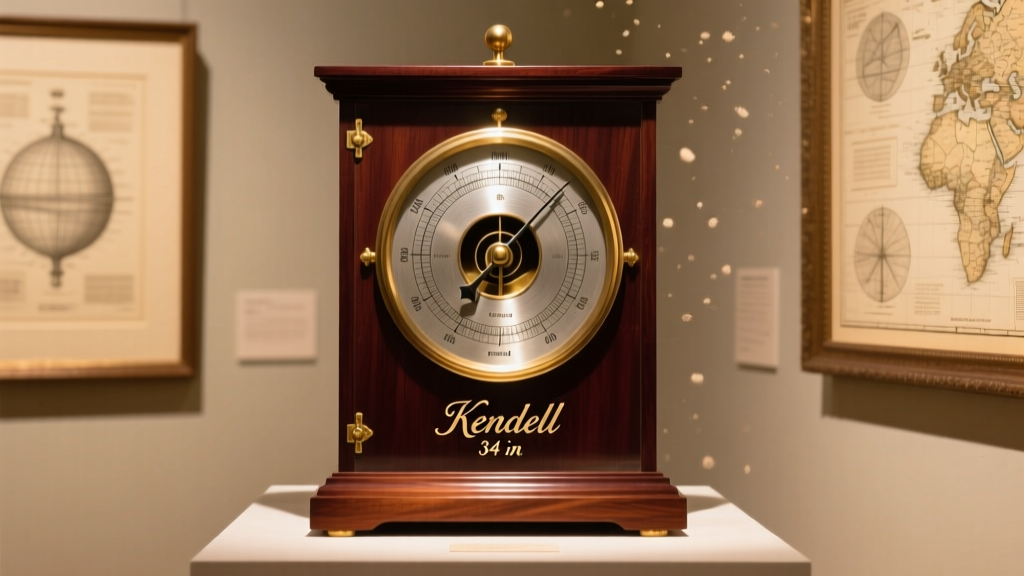
Barometers: Stick E. Kendall Mahogany Etched Steel Face Signed 34-Inch Barometer — Authentication, Provenance, and Market Analysis

Elias Ayres: The Unseen Architect of Mid-Century American Printmaking and Market Authentication Challenges
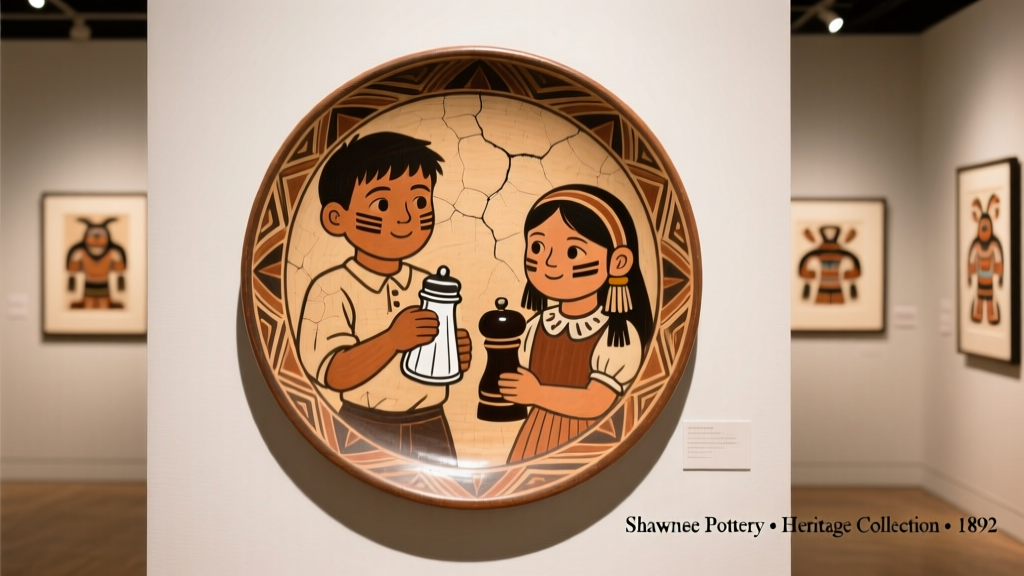
Shawnee Pottery Salt & Pepper Shakers: Dutch Boy and Dutch Girl Large Set — Authentication, Value, and Market Analysis
Terry Kovel Graces the Cover of Antique Trader Magazine: A Landmark Moment in Collectibles Journalism

Authentication Dossier: Print ID 1140313 — A Technical and Provenance Analysis of a Signed Serigraph by Roy Lichtenstein
Fireplaces Toaster: Decoding the Rotating Curlicue Design, Flat-Shaped Handle, and Iron Construction of the 19-Inch Vintage Toaster
Authentication and Market Analysis of the Teco Vase: Bulbous Matte Green, 4½ Inches
Samuel Radford Ltd: The Definitive Analysis of a British Print Publishing Legacy