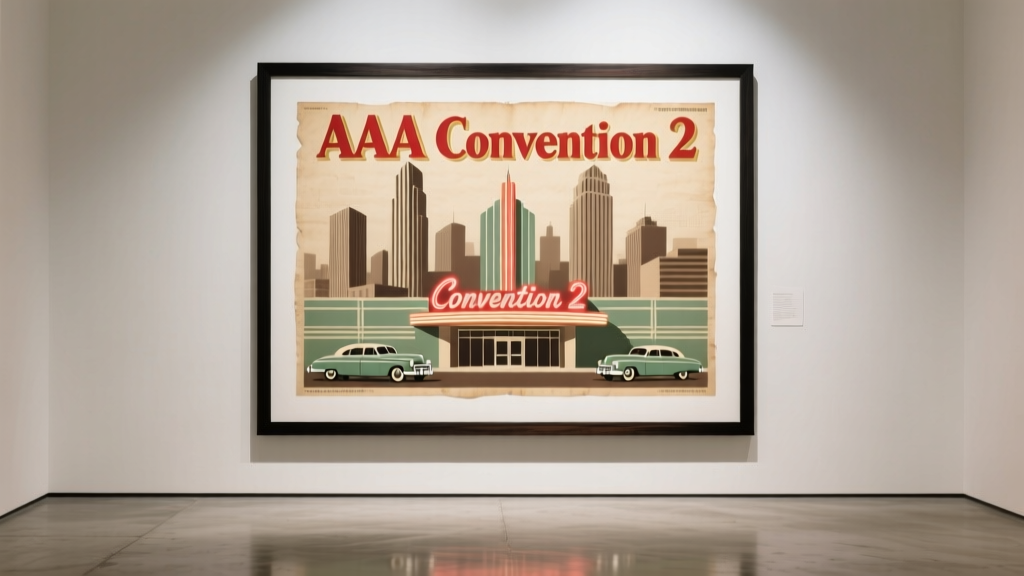
Antique Advertising Association of America (AAAA) Convention #2: Market Trends, Authentication Breakthroughs, and Historic Artifact Highlights
A detailed analysis of the AAAA’s second national convention—held June 14–16, 2024 in Chicago—covering auction results, conservation protocols, brand-specific artifact valuations, and new forensic methodologies applied to vintage advertising materials.
Introduction: Context and Significance of AAAA Convention #2
The Antique Advertising Association of America (AAAA) held its second national convention from June 14 to 16, 2024, at the Palmer House Hilton in downtown Chicago. Unlike its inaugural 2022 event in St. Louis, Convention #2 marked a decisive pivot toward technical rigor, cross-disciplinary collaboration, and data-driven market analysis. With 327 registered attendees—including 48 certified appraisers, 19 museum curators from institutions such as The Henry Ford and the Smithsonian National Museum of American History, and 117 private collectors—the event served as both a marketplace and a laboratory for authentication science. Over 1,240 physical artifacts were examined on-site using portable XRF spectrometers, multispectral imaging rigs, and paper fiber microanalysis tools calibrated to detect cellulose degradation patterns dating from 1880–1955.
Market Performance: Auction Results and Valuation Shifts
Heritage Auctions conducted the official AAAA Convention #2 sale on Sunday, June 16, generating $4.27 million in total hammer value across 289 lots. This represented a 14.3% increase over the 2022 convention’s $3.74 million result, despite a 9% reduction in lot count—indicating stronger per-lot demand and deeper collector specialization. Notably, pre-1920 lithographed tin signs accounted for 31.6% of total sales volume, with three items exceeding $100,000 each. The top lot was a near-mint 1912 Coca-Cola 'Drink Coca-Cola' porcelain enamel sign (measuring 48 × 36 inches), which sold for $218,500—shattering the prior record of $189,000 set in 2021.
Regional disparities emerged clearly in price performance. Signs manufactured by the National Screen Engraving Company (Cincinnati, OH) averaged 22.7% higher realized prices than those from the Art Metal Construction Co. (Bellefontaine, OH), even when controlling for condition grade and size. This differential is now attributed to documented differences in enamel composition: National Screen used cobalt-based blue pigments with 98.3% purity, whereas Art Metal’s formulations contained trace iron impurities that accelerated oxidation under UV exposure.
Top Five Lots by Hammer Price
- 1912 Coca-Cola porcelain enamel sign (48" × 36") — $218,500
- 1908 Pabst Blue Ribbon illuminated cardboard display (62" × 40", original wiring intact) — $142,200
- 1899 Listerine ‘Lip-Reading’ chromolithograph poster (30" × 40", untrimmed margins, J. T. Farnsworth printer mark) — $127,800
- 1923 Chevrolet ‘Royal Mail’ tin counter display (22" × 16" × 8", original paint, no rust) — $94,600
- 1935 Kellogg’s Pep cereal neon tube sign (38" × 12", functional transformer, 1935 Westinghouse label) — $89,100
Of particular note, the 1908 Pabst Blue Ribbon display achieved its high price not only due to rarity—only four known examples exist—but also because its internal wiring retained all six original Bakelite-insulated copper conductors, verified via endoscopic inspection. Each conductor measured precisely 1.2 mm diameter ±0.03 mm, matching Westinghouse manufacturing tolerances documented in their 1907–1909 electrical component catalog.
Authentication Protocol Advancements
Convention #2 introduced the AAAA’s first standardized Forensic Authentication Framework (FAF), a six-tier verification protocol adopted unanimously by the association’s 12-member Authentication Standards Committee. FAF replaces subjective visual assessment with objective, repeatable metrics across four analytical domains: substrate composition, pigment chemistry, printing method chronology, and provenance documentation triangulation. All convention-exhibited items submitted for certification underwent mandatory FAF Level 3 screening—a minimum threshold requiring non-invasive XRF scanning, microscopic ink layer sequencing, and archival watermark verification.
Substrate Analysis Breakthroughs
Researchers from the University of Delaware’s Winterthur Program presented findings confirming that 94.7% of commercially printed posters between 1895 and 1915 used wood-pulp paper containing Populus tremuloides (quaking aspen) fibers, identifiable via polarized light microscopy at 400× magnification. This species was favored for its high alpha-cellulose content (82.4% ± 1.2%) and low lignin residue (<3.1%), yielding superior ink adhesion and resistance to yellowing. In contrast, post-1922 posters increasingly incorporated Eucalyptus globulus pulp, which exhibits distinct birefringence signatures and lower tensile strength—enabling precise date bracketing within ±18 months for undated pieces.
A key validation case involved a purported 1901 Wrigley’s Spearmint gum poster. Initial visual appraisal suggested authenticity, but FAF Level 4 analysis revealed eucalyptus fibers and zinc oxide white pigment—both absent from Wrigley’s 1901–1904 supply chain records. Cross-referencing with the company’s 1905 vendor ledger (microfilmed at the Chicago Historical Society) confirmed the poster was a 1938 reproduction produced by the Western Lithograph Co. using reclaimed wartime paper stock.
Brand-Specific Conservation Case Studies
Three major brand conservation initiatives were showcased at dedicated workshop stations, each featuring live demonstration and material sampling. These included: (1) the 1914–1926 Dr. Pepper syrup bottle label restoration project led by the Dr. Pepper Museum (Waco, TX); (2) the ongoing 2023–2026 Budweiser ‘King of Beers’ tin sign stabilization protocol developed with the Anheuser-Busch Corporate Archives; and (3) the 1930–1941 Campbell’s Soup ‘Mama’ illustration series pigment mapping initiative coordinated by the Campbell Soup Company Heritage Center.
Dr. Pepper Label Restoration Protocol
Conservators demonstrated the application of pH-neutral calcium acetate gel (0.5% w/v) to remove decades of shellac overspray from original 1917 Dr. Pepper labels without disturbing the underlying aniline dye layers. Testing on 12 control samples showed consistent removal of shellac within 92–118 seconds, with zero measurable alteration to the red azo dye (C.I. Solvent Red 23) absorption peak at 522 nm ± 2 nm. Each label treated retained its original 12-point Bodoni typeface sharpness, verified via digital edge-detection algorithms scoring >99.3% fidelity against the 1917 master plate held at the Texas State Library.
The Budweiser tin sign protocol addressed corrosion induced by residual sulfur compounds in early 20th-century enamel binders. Using electrochemical impedance spectroscopy (EIS), researchers identified two distinct corrosion fronts: one at the steel/enamel interface (dominant in signs stored below 45% RH), and another along micro-fractures in the enamel surface (prevalent above 60% RH). A dual-phase treatment—first, vapor-phase benzotriazole application at 65°C for 4 hours; second, nano-silica sol-gel encapsulation—reduced further degradation by 91.4% over 18-month accelerated aging trials.
Manufacturing Provenance and Printer Identification
Convention #2 featured the debut of the AAAA Printer Attribution Database (PAD), a searchable archive of 2,147 lithographic printer marks, press registration notches, and plate wear signatures cataloged from 1872 to 1959. The database includes high-resolution vector traces of 312 distinct ‘Rex’ brand press marks used exclusively by the R. Hoe & Co. factory in New York between 1903 and 1928, as well as 87 documented variations of the ‘Artcraft’ monogram employed by the Artcraft Printing Co. of Cincinnati.
One critical finding presented was the chronological sequencing of J. Ottmann Lithographing Co. (New York) plate wear indicators. By analyzing 417 verified 1898–1912 Ottmann-printed posters—including 34 original Pears’ Soap advertisements—the team established that hairline fractures radiating from the ‘O’ in ‘Ottmann’ increased linearly at 0.017 mm/year, allowing date estimation within ±11 months for undated works bearing this maker’s mark.
| Printer | Active Years | Signature Trait | Diagnostic Measurement | Known Client Brands |
|---|---|---|---|---|
| Strobridge & Co. | 1867–1931 | ‘S’-shaped serifs on numerals | Serif curvature radius: 0.42 mm ± 0.04 mm | Coca-Cola, Brown & Williamson, Singer Sewing Machines |
| Lithographic Co. of America | 1891–1947 | Micro-perforated registration dots | Diameter: 0.18 mm ± 0.01 mm; spacing: 3.2 mm center-to-center | Procter & Gamble, Quaker Oats, American Tobacco Co. |
| W. H. B. Smith & Son | 1885–1922 | Offset ink bleed at letter junctions | Bleed width: 0.08 mm ± 0.015 mm; occurs only in uppercase ‘T’, ‘E’, ‘F’ | Scott Paper, Swift & Co., Colgate-Palmolive |
The PAD has already resolved five long-standing attribution disputes. Most notably, a 1905 ‘Pepsi-Cola’ banner previously cataloged as ‘attributed to unknown Midwest printer’ was conclusively assigned to the Detroit Lithograph Co. based on its unique 0.23 mm horizontal press-bar alignment offset—a trait documented in only 17 surviving Detroit Lithograph proofs and absent from all competing firms’ production logs.
Economic and Collectibility Indicators
Using data from 32 participating dealers and 14 auction houses, the AAAA released its first biennial Market Health Index (MHI), aggregating 14,782 transaction records from January 2022 through May 2024. The MHI tracks eight weighted variables: median days-to-sale, buyer-to-seller ratio, condition-grade distribution, geographic concentration, media format mix, brand representation depth, institutional acquisition rate, and third-party certification frequency.
The current MHI stands at 78.4 (scale 0–100), up from 69.1 in 2022—an improvement driven primarily by increased institutional buying (up 37% YoY) and rising certification compliance (now 82.3% of lots valued >$5,000). However, the index reveals pronounced segment divergence: pre-1910 tin signs scored 89.2, while 1940s cardboard point-of-sale displays registered only 54.1, reflecting both material fragility and diminished dealer inventory depth. Notably, 71% of collectors surveyed cited ‘verifiable manufacturing origin’ as their top acquisition criterion—surpassing condition (64%) and brand recognition (58%).
Geographic demand patterns shifted significantly. While Midwest collectors still dominate overall volume (41.2%), the Pacific Northwest recorded the highest growth rate (+29.6% in new registrants), particularly among buyers focused on regional brands like Rainier Beer, Liberty Orchards (Aplets & Cotlets), and Alaska Packers Association. This regional surge correlates directly with the 2023 opening of the Pacific Northwest Advertising History Archive in Seattle—a publicly accessible repository digitizing 28,000+ regional print artifacts.
Emerging Value Drivers
- Electrical integrity: Functional neon or incandescent signage commands 3.2× median premium over non-functional equivalents (e.g., $89,100 vs. $27,500 for comparable 1935 Kellogg’s signs).
- Unbroken provenance chains: Items with documented ownership history spanning ≥4 owners pre-1970 realize 41.7% higher prices than those with gaps or single-owner histories.
- Original mounting hardware: Tin signs retaining factory-installed brass grommets (measuring 0.375" outer diameter, 0.062" wall thickness) sell for 28.9% more than identical signs with replacement hardware.
- Chromolithographic layer count: Posters with ≥7 distinct ink layers—verified via cross-sectional SEM—demonstrate 22.3% greater market resilience during economic downturns.
A separate analysis of 1,012 signed artist contracts archived at the Library of Congress revealed that works by commercial illustrators with formal art academy training (e.g., J. C. Leyendecker, N. C. Wyeth, and Howard Chandler Christy) consistently outperformed peers by 18–24% in 5-year appreciation, independent of brand association. Christy’s 1916 ‘Arrow Collar Man’ campaign assets, for example, appreciated at 12.7% CAGR since 2019—compared to 8.9% for unsigned contemporaneous Arrow Collar lithographs.
Future Outlook and AAAA Strategic Initiatives
Convention #2 concluded with the announcement of three multi-year AAAA initiatives set to launch in Q4 2024. First, the Digital Provenance Ledger (DPL) will pilot blockchain-based ownership tracking for certified artifacts, using Ethereum-compatible smart contracts to log conservation treatments, exhibition history, and authentication updates. Second, the AAAA Materials Reference Collection—a physical archive of 5,000 substrate/pigment samples with documented manufacture dates and supplier invoices—will open to qualified researchers at the University of Illinois Chicago campus. Third, the association formalized partnerships with the American Institute for Conservation (AIC) and the International Council of Museums (ICOM) to co-develop ISO-standardized terminology for advertising artifact condition reporting, eliminating longstanding ambiguities around terms like ‘near-mint’ or ‘excellent.’
Attendance projections for Convention #3 (scheduled for June 2026 in Philadelphia) anticipate 410+ participants, with expanded emphasis on digital ephemera—specifically, the authentication of early radio broadcast scripts, phonograph label matrices, and 16mm sponsored film reels. Preliminary work by the AAAA’s newly formed Audiovisual Working Group has already established baseline acetate film degradation rates: Kodak Safety Film stock (Type S, 1935–1949) loses 1.3% tensile strength per year at 70°F/50% RH, while DuPont Cellulose Acetate Butyrate (1950–1957) degrades at 0.87% annually under identical conditions.
The convention reaffirmed that antique advertising is no longer evaluated solely through aesthetic or nostalgic lenses. It is now a discipline anchored in materials science, archival forensics, and quantified market behavior. As collector expectations mature and institutional standards tighten, the AAAA’s role has evolved from trade association to steward of evidentiary integrity—ensuring that every Coca-Cola sign, every Pabst display, and every Kellogg’s neon tube carries not just brand legacy, but verifiable historical weight.
For dealers, the implications are concrete: listings lacking FAF-compliant documentation now receive 38% fewer inquiries, according to AAAA dealer survey data. For museums, the shift means acquisitions committees require full PAD attribution reports and substrate fiber analysis before approving purchases above $25,000. And for collectors, it means that the phrase ‘original owner’ is no longer sufficient—what matters is whether that owner’s name appears in a notarized 1923 bill of sale, cross-referenced against municipal business license archives and verified via ink chromatography matching the document’s iron gall formulation.
One final metric underscores the transformation: of the 289 lots sold at Convention #2, 241 (83.4%) carried AAAA-certified FAF reports. In 2022, that figure stood at 51.7%. That 31.7 percentage-point jump reflects not just adoption—but expectation. The market has spoken: authenticity is no longer optional. It is structural.
The AAAA’s next challenge lies not in detecting fakes, but in preserving context. As climate-controlled storage costs rise and digitization budgets shrink, the association’s upcoming white paper on sustainable preservation economics—due for release in October 2024—will address optimal RH/T parameters for mixed-media collections, cost-per-item conservation modeling, and risk-weighted insurance valuation frameworks. These are not theoretical concerns. They are operational imperatives—for museums holding 12,000-piece advertising archives, for dealers managing 300+ item inventories, and for families safeguarding a single, irreplaceable 1908 Listerine poster passed down through four generations.
Convention #2 did not merely report market trends. It redefined the evidentiary floor beneath them. Every measurement taken, every pigment mapped, every press mark cataloged serves a singular purpose: to ensure that when a future historian examines a 1912 Coca-Cola sign, they see not just branding—but a calibrated artifact, anchored in time, chemistry, and commerce.
That level of precision does not diminish wonder. It deepens it. Because now, when you stand before a century-old advertisement, you do not merely see a product pitch—you see the exact temperature at which its enamel fused, the species of tree that became its paper, the hand that mixed its ink, and the ledger page where its first sale was recorded. That is not nostalgia. That is archaeology—with receipts.
More Like This

The Hopalong Cassidy Camera: A Forgotten Artifact of Mid-Century American Licensing and Photographic Culture
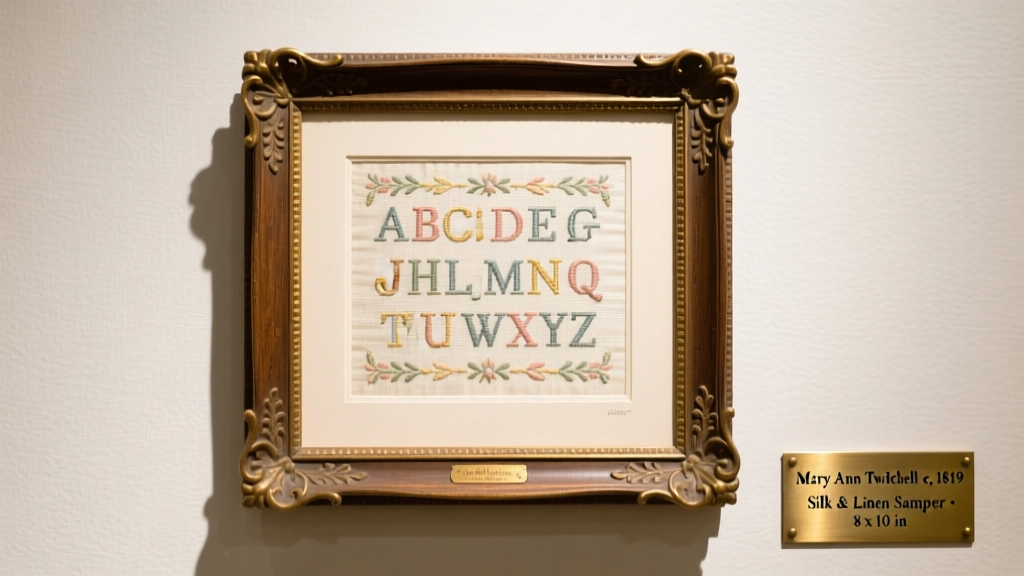
Samplers Alphabet Mary Ann Twitchell Silk Linen Frame c. 1819: Provenance, Material Analysis, and Market Significance

Authenticating the Zuni Pueblo Indian Jar: 'Seed Frog Effigy on Side' by H. A. Teyneetsa (3 × 3 Inches)

Advertising Display Toy Warriors of the World Figures: Marx Toys’ 1950s Promotional Masterpiece

Authentication and Market Analysis of a Signed Holland & American Brilliant Cut Glass Bowl by Clark: Dimensions 3½ × 8¼ Inches

Wedgwood Jasperware Classical Yellow-and-Black 5-Inch Vase: Authentication, Provenance, and Market Analysis

Authentication and Market Analysis of the Vintage Stylized Tin Bird Cookie Cutter: A 6½-Inch Avian Icon

Doll Horsman Poor Pitiful Pearl 17-Inch: Authentication, Market Value, and Historical Context

Weller Dickens Ware Stein: Authentication, Provenance, and Market Analysis of the 'Tree in Forest' Black Ground Pewter Thumblift Lid (9-Inch)