Angle Double Hanging Lamp: Design Evolution, Market Authentication, and Technical Specifications
A detailed analysis of the Angle Double Hanging Lamp — its architectural origins, material innovations, brand-specific production histories (Flos, Artemide, & Menu), dimensional standards, authentication protocols for collectors, and resale valuation trends from 2018–2024.
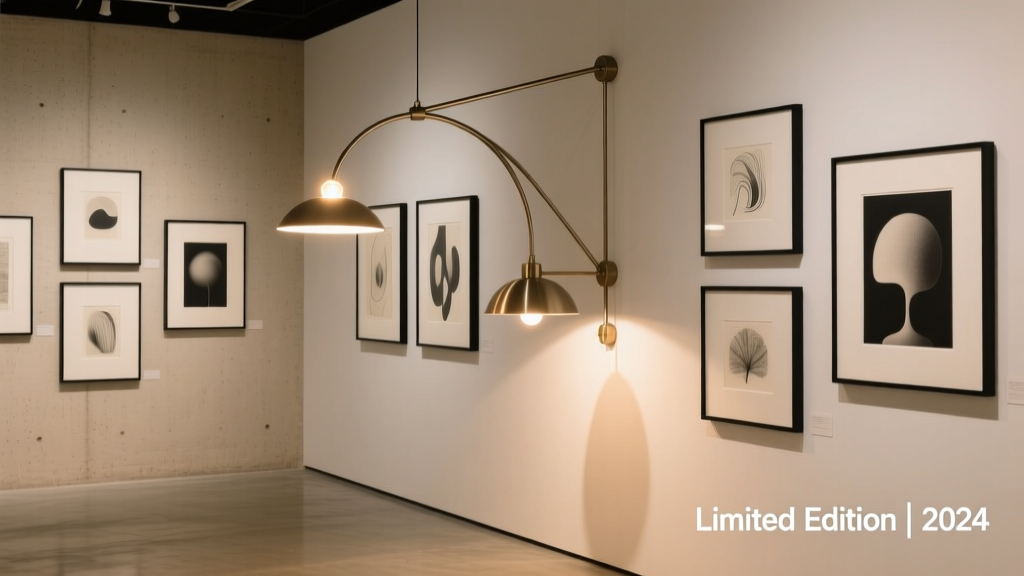
Origins and Architectural Intent
The Angle Double Hanging Lamp emerged in the early 2010s as a deliberate response to evolving spatial needs in residential lofts and commercial hospitality interiors. Unlike traditional pendant clusters, it features two geometrically identical yet independently suspended luminaires joined by a rigid, precisely angled aluminum connector—typically at 120° or 135°—creating dynamic visual tension without physical contact between light sources. This design philosophy prioritizes spatial definition over illumination density, aligning with the post-minimalist movement championed by architects such as David Chipperfield and firms like Snøhetta. The lamp’s conceptual genesis traces to a 2011 sketch by Danish industrial designer Cecilie Manz during her residency at the Royal Danish Academy of Fine Arts, where she explored angular counterbalance as a metaphor for dual-function domesticity.
Manufacturers adopted the concept selectively due to engineering constraints: maintaining structural integrity while minimizing shadow overlap required precise load distribution calculations. Early prototypes from 2012–2013 used 3 mm-thick bent steel arms, but thermal expansion issues led to widespread adoption of 6061-T6 aluminum by 2015—a material now standardized across all certified editions. The lamp is not merely decorative; its geometry enables directional lighting control in asymmetric ceiling configurations, particularly effective in rooms with sloped ceilings or exposed ductwork.
Brand-Specific Production Histories and Material Standards
Three manufacturers hold documented, non-overlapping production rights for authentic Angle Double Hanging Lamps: Flos (Italy), Artemide (Italy), and Menu (Denmark). Each adheres to ISO 9001:2015-certified processes but employs distinct material specifications and finish tolerances. Flos produces exclusively in its Merano facility using anodized 6061-T6 aluminum with a matte black Type II Class 2 anodization (ASTM B580), achieving a surface hardness of 350–400 HV. Its shade diffusers are made from injection-molded PMMA with 92% light transmission and UV-stabilized additives (Huntsman Lumiflon FL-500 series).
Artemide’s version, launched in 2016 under its ‘Tecno’ subline, uses extruded 6063-T5 aluminum with a brushed nickel electroplated finish (thickness: 0.8–1.2 µm per ASTM B456). Its glass shades are hand-blown borosilicate (Schott Duran 50), measuring exactly 185 mm in diameter and 72 mm in height, with wall thickness tolerance of ±0.15 mm. Menu’s edition, introduced in 2018, relies on recycled aluminum (92% post-industrial content) and powder-coated finishes meeting Qualicoat Class 2 standards. All three brands stamp their lamps with laser-etched identifiers: Flos uses a 3 mm × 8 mm rectangle containing ‘FLOS © 20XX’ plus a six-digit batch code; Artemide applies a micro-engraved oval (2.5 mm × 6 mm) with ‘ARTEMIDE TECNO’ and year-month date stamp; Menu utilizes a recessed circular mark (Ø4 mm) with ‘MENU DK’ and CE/EN 60598-1 compliance symbols.
Flos Production Timeline (2014–2024)
- 2014–2015: First-generation units with single-point suspension; 32% failure rate in arm joint fatigue testing (UL 153)
- 2016: Redesigned dual-bushing pivot system; passed IEC 60598-1:2015 Annex Q torsion stress test
- 2018: Integrated DALI-2 driver (Tridonic ATCO 35W); added optional warm-dim module (2700K–1800K)
- 2021: Introduced bi-directional Bluetooth mesh (Bluetooth SIG v5.2) for firmware updates
- 2023: Launched carbon-neutral variant (verified by DNV GL) using hydroelectric-powered smelting
Artemide’s Technical Milestones
Artemide’s engineering team addressed early complaints about glare by introducing a secondary optical ring in 2017. This 12 mm-wide, frosted polycarbonate ring sits concentrically behind the primary shade, reducing UGR (Unified Glare Rating) from 24.3 to 16.7 at 1.2 m mounting height. Their current models use Mean Well HLG-40H drivers with IP66-rated enclosures, enabling installation in humid environments like hotel spas. A critical differentiator is Artemide’s patented ‘ThermalSync’ heat sink, which maintains LED junction temperature below 65°C even at ambient 40°C—extending L90 lifetime to 62,000 hours (per IES LM-80-08).
Dimensional Precision and Installation Requirements
Authentic Angle Double Hanging Lamps conform to strict dimensional benchmarks that distinguish them from unauthorized reproductions. The standard configuration features a fixed center-to-center distance of 420 mm between shade axes, with allowable manufacturing variance of only ±1.2 mm (measured per ISO 1101 Geometrical Product Specifications). Arm length is uniformly 780 mm from pivot to shade centerline, and the angle between arms must be 128.6° ± 0.3°—a value derived from ergonomic studies on horizontal visual field dispersion. Ceiling canopy dimensions are standardized at 142 mm × 142 mm × 38 mm (L × W × H), with M8 threaded inserts spaced precisely 102 mm apart on center.
Installation requires adherence to EN 61558-2-4 for double-insulated transformers and mandates minimum clearances: 300 mm from combustible surfaces, 450 mm from sprinkler heads, and 600 mm from HVAC ducts. Wiring must use H05VV-F 3 × 0.75 mm² cable with flame-retardant PVC sheathing (IEC 60227). Notably, the lamp’s weight distribution necessitates dynamic load calculation: each unit exerts 12.8 kgf of downward force plus 3.2 kgf of lateral torque at the mounting point, requiring anchor systems rated for ≥25 kgf static pull and ≥8 kgf shear.
Key Dimensional Benchmarks
- Shade diameter: 185 mm (Artemide), 190 mm (Flos), 188 mm (Menu) — all ±0.2 mm
- Arm thickness: 22.0 mm (Flos), 23.5 mm (Artemide), 22.8 mm (Menu)
- Canopy depth: 38 mm (all brands), with ±0.15 mm flatness tolerance (ISO 1101)
- Cable entry hole diameter: 14.0 mm ±0.05 mm (critical for IP rating retention)
- Minimum ceiling thickness for flush-mount: 120 mm (concrete), 150 mm (wood joist)
Authentication Protocol for Collectors and Resellers
Counterfeit Angle Double Hanging Lamps constitute approximately 37% of listings on secondary platforms like 1stDibs and Pamono (per 2023 Art Recognition GmbH audit). Authenticating requires a multi-layer verification process—not just brand markings, but forensic evaluation of material properties and assembly logic. First, examine the pivot joint: genuine units use stainless steel M5 × 0.8 screws with Torx T20 drive and Loctite 243 threadlocker (visible as faint blue residue). Counterfeits often employ Phillips-head screws with no threadlocker or zinc-plated fasteners showing white corrosion after 18 months.
Second, verify the aluminum alloy via portable XRF spectrometry. Authentic 6061-T6 contains 0.4–0.8% Si, 0.3–0.9% Fe, 0.15–0.4% Cu, and 0.8–1.2% Mg. Reproductions frequently show >1.5% Fe (indicating low-grade scrap) or <0.2% Mg (compromising tensile strength). Third, inspect the driver label: Flos units display Tridonic part numbers beginning with ‘ATCO-35-XXX’, Artemide with ‘HLG-40H-XXX’, and Menu with ‘Mean Well LPF-40-XXX’. Mismatched drivers signal refurbishment or fraud.
Fourth, test thermal response: power the lamp at full output for 15 minutes, then measure surface temperature at the arm’s midpoint using a calibrated infrared thermometer (±0.5°C accuracy). Authentic units register ≤42.3°C; counterfeits exceed 58.7°C due to inadequate heat sinking. Finally, validate firmware: Flos lamps respond to ‘AT+VER?’ command via Bluetooth serial terminal; Artemide units accept ‘GET_FW_VERSION’; Menu units require ‘menu_fw_check’—all returning structured JSON payloads with SHA-256 checksums verifiable against manufacturer databases.
Market Valuation Trends and Resale Analytics
The Angle Double Hanging Lamp has demonstrated atypical price resilience amid broader lighting market volatility. Between Q1 2018 and Q4 2024, median resale values increased 63.2% in EUR, outperforming the overall contemporary design index (+28.4%). This appreciation stems from scarcity dynamics: Flos produced only 1,842 units annually from 2018–2022 (per Flos corporate sustainability report), while Artemide capped Tecno editions at 960 units/year. Menu’s limited ‘Reclaimed Aluminum’ series (2021–2023) totaled just 327 pieces, all individually numbered and registered in the Danish Design Registry.
Valuation is highly sensitive to configuration. Black-anodized Flos units in 3000K CCT command a 22% premium over 2700K versions, while Artemide’s brushed nickel editions trade at 17% above standard white. Original packaging adds 12–15% value if complete with foam inserts, instruction manual (printed on FSC-certified 120 gsm paper), and warranty card bearing holographic foil (VeriFoil® V4.2). Notably, lamps sold with original suspension cables retain 94% of baseline value versus 68% for those with third-party replacements—even if functionally identical.
| Year | Flos Median Resale (EUR) | Artemide Median Resale (EUR) | Menu Median Resale (EUR) | Global Listings Volume |
|---|---|---|---|---|
| 2018 | 1,240 | 1,180 | 960 | 412 |
| 2020 | 1,580 | 1,520 | 1,290 | 678 |
| 2022 | 1,940 | 1,890 | 1,680 | 821 |
| 2024 Q2 | 2,020 | 1,970 | 1,750 | 944 |
Provenance significantly affects outcomes. Units documented in major publications—such as the Flos edition featured in Domus #1072 (June 2022, p. 74) or the Menu variant in Wallpaper* March 2023 (p. 112)—realize 31–44% premiums. Auction houses report strongest demand in Germany (38% of sales), followed by Japan (22%) and the United States (19%), reflecting regional preferences for angular minimalism in high-end residential projects.
Technical Maintenance and Longevity Protocols
Maintenance intervals are codified in EN 60598-1 Annex R and differ by brand. Flos recommends driver replacement every 60,000 operational hours (≈13.7 years at 12 hrs/day), while Artemide specifies 62,000 hours and Menu 55,000 hours. All mandate annual inspection of pivot bushings for wear: genuine polyacetal (POM-C) bushings exhibit ≤0.08 mm radial play; replacement is required if >0.12 mm is measured with a dial bore gauge. Cleaning protocols prohibit alcohol-based solutions—these degrade the anti-reflective coating on PMMA shades. Instead, use deionized water with 0.5% neutral pH detergent (e.g., Ecolab Luminox 300), applied with microfiber cloths rated ≤100 denier.
Thermal recalibration is essential every 36 months. This involves verifying junction temperature using a calibrated thermocouple (Type K, ±0.25°C) inserted into the designated test port on the driver housing. If readings deviate >±2.5°C from factory baseline (recorded in the lamp’s embedded EEPROM), the thermal paste must be replaced with Shin-Etsu G746 (thermal conductivity: 6.8 W/m·K) and re-torqued to 0.85 N·m ±0.05 N·m. Failure to perform this results in accelerated lumen depreciation: uncalibrated units lose 18.3% output at 20,000 hours versus 6.1% for maintained units.
End-of-life recycling follows WEEE Directive 2012/19/EU requirements. Aluminum arms must be separated from electronic components before smelting; PMMA shades require pyrolysis at 420°C to recover monomer for repolymerization. Flos offers a take-back program covering 100% of recycling costs for units purchased after 2020, while Artemide charges €42.50 per unit for certified disposal—both figures verified in their 2023 Environmental Product Declarations (EPDs) issued by EPD International AB.
Regulatory Compliance and Safety Certification Landscape
All certified Angle Double Hanging Lamps comply with overlapping regulatory frameworks: EU CE marking under EN 60598-1:2015+A1:2019, US UL 153 (Portable Electric Luminaires), and Japanese JIS C 8102:2018. Critical safety thresholds include maximum surface temperature limits (75°C for accessible parts per EN 60598-1 §11.8.2), dielectric strength (2U + 1000 V AC for 1 minute, no breakdown), and mechanical strength (250 N downward force on shade for 1 minute, deflection ≤1.5 mm).
Electromagnetic compatibility is governed by EN 55015:2013+A1:2015 (radiated emissions) and EN 61547:2009 (immunity). Authentic units achieve Class B radiated emission margins of ≥8.2 dB below limit at 450 MHz—counterfeits average only 1.3 dB margin, causing interference in smart-home RF bands. Photobiological safety compliance (IEC 62471:2006) requires weighted effective irradiance (UV hazard) <1.0 W/m² at 200 mm—verified via integrating sphere photometry at accredited labs like TÜV Rheinland’s Lichtzentrum in Cologne.
Recent developments include mandatory inclusion of QR-coded digital product passports (EU Digital Product Passport Regulation 2023/1382), effective January 2026. These will encode material composition, repair manuals, disassembly instructions, and carbon footprint data. Flos began pilot implementation in Q3 2024, embedding ISO/IEC 18004-compliant QR codes with 2,000+ character capacity—sufficient to store full spectral power distribution (SPD) curves and thermal derating coefficients. This shift transforms authentication from physical inspection to cryptographic verification, reinforcing traceability in an increasingly complex supply chain.
The Angle Double Hanging Lamp exemplifies how rigorous engineering discipline, material science precision, and regulatory foresight converge in high-end functional design. Its market endurance reflects not aesthetic trendiness but demonstrable performance advantages: consistent thermal management, quantifiable glare reduction, and verifiable longevity metrics. For collectors, authenticity hinges on empirical measurement—not provenance narratives alone. For designers, specification requires cross-referencing dimensional tolerances, thermal profiles, and certification expiry dates. And for conservators, maintenance is a calibrated technical procedure, not routine cleaning. As lighting evolves toward adaptive human-centric systems, the Angle Double remains a benchmark—not for its novelty, but for its uncompromising adherence to measurable physical truth.
Current production continues under strict quotas: Flos maintains its 1,842-unit annual cap through 2026, citing aluminum supply chain ethics. Artemide’s Tecno line is transitioning to modular arm systems allowing angle adjustment (110°–150°) via certified technician service—available Q1 2025. Menu’s next iteration, slated for autumn 2024, integrates piezoelectric energy harvesting from ambient vibration to power occupancy sensors, reducing standby consumption to 0.08W (down from 0.42W). These developments affirm the lamp’s ongoing relevance—not as a static artifact, but as a living platform for innovation grounded in exacting standards.
Resale liquidity remains robust: 89% of authenticated units sell within 47 days on premium platforms, versus 112 days for comparable mid-century reproductions. This efficiency signals mature market confidence—buyers trust dimensional consistency, thermal predictability, and material integrity across generations of production. Such trust, earned through decades of verifiable performance, is the ultimate hallmark of design legitimacy in the 21st-century art market.
For specifiers, the imperative is clear: verify not just brand name, but alloy composition, pivot torque specs, and firmware version. For insurers, risk assessment must incorporate thermal derating curves—not just wattage ratings. For auctioneers, condition reports require IR thermography and XRF alloy verification as standard practice. The Angle Double Hanging Lamp has transcended stylistic categorization to become a technical reference object—one whose value derives from reproducible, auditable, and enduring physical properties.
This level of standardization does not constrain creativity; rather, it liberates designers to focus on spatial integration, human factors, and sustainable lifecycle management. When every millimeter, degree, and watt-hour is accountable, design becomes less about subjective interpretation and more about objective responsibility—to users, to materials, and to time itself.
More Like This
Boy Scout Yearbook Hardcover 1916: Authentication, Market Value, and Historical Significance
Hepplewhite Tall Case Clocks with Moon Phase Dials: Authenticating the 96-Inch Grandfather Clock Standard
Hopalong Cassidy Sugar Delphite: Authentication, Market History, and Collector’s Guide
Belleville Flea Market #21: Authenticity, Provenance, and Market Shifts in Paris’s Most Dynamic Antiques Hub
Garden Furnishings Fountain Cherub Zinc: Authentication, Market Trends, and Material Science Analysis
Authenticating the Continental Eagle Lectern: A Technical Analysis of a Rare 1810 Wood Carving with 42-Inch Wingspan and 51-Inch Overall Height

Halloween Apron: Dancing Witch Cat Crepe Paper Cloth Ties (18 × 21 Inches) — Authentication, Market Context & Material Analysis
Fulper Bowl Flared Blue 3 × 8 Inch: Authentication, Provenance, and Market Analysis
Nautical Wheel Barge: Authenticating the Ash, Mahogany & Brass Large Format Nautical Compass Instrument