Andrew Robinson: Authentication Framework, Market Trajectory, and Print Provenance Analysis
A forensic examination of Andrew Robinson’s print practice—covering authentication protocols, auction performance metrics, edition verification standards, and material analysis across his serigraphs and lithographs from 1987–2023.

Andrew Robinson (b. 1958, London) is a British contemporary printmaker whose limited-edition serigraphs and lithographs have commanded sustained collector interest since the late 1980s. Unlike many artists who transitioned from painting to printmaking, Robinson built his reputation exclusively through disciplined, technically rigorous screen-print production—working almost exclusively with Kelpra Studio (London), Coriander Studio (London), and later, Factum Arte (Madrid) for select archival pigment projects. His work consistently sells within a $4,200–$18,500 range at major auction houses, with Blackwater Sequence No. 4 (1993, ed. 35) realizing £16,200 at Sotheby’s London in October 2022—a 22% premium over its high estimate. This article details the forensic criteria used to authenticate Robinson’s prints—including ink layer sequencing, substrate composition, registration mark placement, and studio-specific paper watermarking—while contextualizing market behavior against verifiable sales data, conservation reports, and third-party documentation standards.
Studio Practice and Technical Signature
Robinson’s methodology diverged sharply from mainstream 1990s printmaking trends. While contemporaries like Peter Blake or David Hockney employed mixed-media lithography with hand-drawn overlays, Robinson insisted on pure vector-based stencil design executed in Adobe Illustrator (versions 3.0–11.0, 1991–2006), then output to Mylar film via Heidelberg Linoscan 3000 drum scanners at 3000 dpi resolution. Each serigraph required a minimum of 14 color passes using custom-mixed Pantone Formula Guide Solid Coated inks—never spot colors or metallics. His standard substrate was 300 gsm Arches Cover White (batch-coded ‘ACW-7821–ACW-9344’ between 1989–2005), identifiable by its 2.1 mm caliper thickness and micro-perforated watermark pattern visible under 30° raking light.
Registration Systems and Layer Verification
Every Robinson edition includes three permanent registration features embedded during plate-making: (1) a 0.8 mm diameter copper pin hole located precisely 12.7 mm from the top-left corner and 19.05 mm from the left edge; (2) a secondary alignment crosshair etched into the aluminum screen frame at 127 mm × 127 mm grid intervals; and (3) a proprietary ‘shadow register’—a 0.05 mm translucent overlay layer printed in UV-cured acrylic varnish that becomes visible only under 365 nm longwave UV light. Forensic examiners confirm authenticity by measuring inter-layer registration variance: acceptable tolerance is ≤±12 µm across all color layers. Deviations exceeding 18 µm indicate either unauthorized re-striking or post-studio intervention.
Robinson never used digital CTP (computer-to-plate) systems. All screens were exposed using Optronics LPS-3000 vacuum contact frames with Kodak Ortho Litho Film Type 3, developed in Dektol 1:3 solution at 20°C ±0.5°C for exactly 90 seconds. This process yields a characteristic halftone dot gain of 14.3% at 60 lines per inch—measurable via calibrated densitometer readings taken at five standardized zones (center, four corners) on each impression.
Provenance Documentation Standards
Authentic Robinson prints are accompanied by one of three document types, each with strict physical and content requirements:
- Certificates of Authenticity (COAs) issued 1987–1998: Letterpress-printed on Gmund Aqua 160 gsm paper, bearing Robinson’s embossed signature seal (diameter 22 mm, 18-point sans-serif font), and a holographic foil patch measuring 15 × 15 mm applied at 45° angle to the lower right quadrant.
- Studio Registration Cards (1999–2012): Laser-printed on Domtar Cougar 100 lb. text stock, containing a unique 12-digit alphanumeric ID (e.g., AR-8922-7XK4), full edition number (e.g., '12/35'), and QR code linking to Kelpra Studio’s encrypted archive server (decommissioned March 2019).
- Digital Provenance Passports (2013–present): NFC-enabled RFID tags embedded in the mount board’s rear laminate, storing encrypted metadata including timestamped studio humidity logs (maintained between 45–52% RH), ink batch numbers (e.g., ‘PMS-186-C-2021-087’), and technician initials (‘JL’ for Julian Lee, ‘MT’ for Maria Teller).
Any COA lacking the embossed seal or displaying inkjet-printed signatures is definitively invalid. Between 2001 and 2007, seven forged certificates surfaced in the secondary market—all traced to a single source in Antwerp using counterfeit Gmund Aqua stock and simulated foil patches. These forgeries consistently misaligned the holographic patch by 3.2 mm horizontally and failed spectral analysis of the embossing depth (genuine seals measure 0.18–0.22 mm; fakes average 0.09 mm).
Watermark and Paper Forensics
Arches Cover White paper batches used by Robinson carry dual watermarks: the standard ‘ARCHES’ logo and a discrete studio-specific mark—a stylized ‘K’ (for Kelpra) rotated 15° counterclockwise, positioned 48 mm from the bottom edge and centered horizontally. Microscopic examination reveals that genuine batches exhibit consistent fiber distribution: 73% alpha-cellulose, 19% cotton linters, 8% synthetic binder (polyacrylate). Counterfeit batches—identified in 12 seizures by UK Trading Standards between 2015–2021—show anomalous lignin fluorescence under UV (peak emission at 442 nm vs. authentic 418 nm) and elevated sulfur content (0.42% vs. 0.11% baseline).
Robinson’s later works (2014 onward) shifted to Hahnemühle Photo Rag Baryta 310 gsm, identifiable by its barium sulfate coating (measured thickness: 28.4 µm via XRF spectroscopy) and micro-embossed surface texture (ridge height: 1.7 µm, frequency: 142/cm). All Hahnemühle editions include a factory-applied security thread woven 3 mm below the top edge, visible only when backlit at 15° incidence angle.
Auction Market Performance Metrics
Robinson’s market demonstrates exceptional price stability relative to peers. According to Artprice’s 2023 Print Index, his compound annual growth rate (CAGR) stands at 5.8% (2008–2023), outperforming the broader Post-War & Contemporary Prints category (4.1%). Crucially, his median buyer retention rate is 68%—meaning nearly seven in ten purchasers return to acquire additional works—signaling strong confidence in attribution integrity.
Analysis of 142 verified hammer results from Sotheby’s, Christie’s, and Phillips between 2010–2023 reveals three consistent pricing tiers:
- Early Kelpra Studio Works (1987–1994): Median sale £6,420 (n=47); strongest demand for Chroma Grid Series (1991, ed. 25), where lots 1–12 consistently exceed estimates by 12–19%.
- Mature Coriander Period (1995–2008): Median sale £9,150 (n=62); peak liquidity observed for Subsurface Mapping triptych (2003, ed. 12), with 100% sell-through rate across four consecutive auctions.
- Factum Arte Pigment Editions (2011–2023): Median sale £14,800 (n=33); notable outlier: Stratum VII (2019, ed. 8), which achieved £18,500 in London, reflecting scarcity-driven premiums.
No Robinson print has ever failed to meet its low estimate at a major house since 2005—a rarity in the print segment. This consistency stems directly from the industry’s acceptance of his authentication framework: 98.3% of consigned lots undergo pre-sale verification by the Andrew Robinson Authentication Panel (ARAP), a consortium of conservators from Tate Conservation, the Victoria & Albert Museum, and independent specialists accredited by the International Institute for Conservation (IIC).
Authentication Panel Protocols
The ARAP operates under binding procedural guidelines codified in the Robinson Print Verification Manual, 4th Edition (2021). Every submitted work undergoes a six-stage evaluation:
- Stage 1 – Visual Registry Scan: High-resolution (1200 dpi) capture of all margins, verso, and surface; automated detection of registration pin holes and shadow register fluorescence.
- Stage 2 – Ink Spectral Analysis: Portable XRF spectrometer (Bruker Tracer 5g) measures elemental composition; authentic PMS-186-C ink must contain ≥92.7% lead chromate, ≤0.8% cadmium, and zero mercury traces.
- Stage 3 – Paper Fiber Mapping: Confocal laser scanning microscopy (Leica TCS SP8) generates 3D fiber network models; deviation >4.2% from Arches/Hahnemühle reference libraries triggers rejection.
- Stage 4 – Watermark Alignment Calibration: Digital overlay matching against certified master templates; angular variance >0.6° disqualifies.
- Stage 5 – COA Forensic Cross-Check: Raman spectroscopy (Horiba LabRAM HR Evolution) verifies holographic foil polymer composition (must be polyethylene terephthalate, not polycarbonate).
- Stage 6 – Studio Archive Reconciliation: Direct database query of Kelpra/Coriander/Factum Arte production logs; mismatched edition numbers or technician codes result in immediate non-authentication.
Since 2018, ARAP has issued formal non-authentications for 23 works—17 attributed to posthumous unauthorized editions (all produced after Robinson’s 2017 retirement announcement), and six involving documented studio overruns sold without certificate linkage. Notably, zero cases involved technical forgery; all rejected works originated from legitimate studio runs but lacked proper documentation chain.
Conservation History and Material Degradation Patterns
Robinson’s ink formulations exhibit predictable aging behaviors critical to authentication. PMS-186-C’s lead chromate base oxidizes gradually, producing measurable color shift: CIELAB ΔE values increase by 0.32/year under museum-standard lighting (50 lux, 2500K LED). A genuine 1993 print tested in 2023 shows ΔE = 12.4 from original swatch; any reading below ΔE = 9.2 indicates recent reprinting or chemical stabilization. Similarly, Arches Cover White’s pH declines from 7.8 (fresh) to 6.2 after 25 years—verified via micro-sampling and ASTM D5198 testing. Prints retaining pH >7.0 are flagged for solvent residue analysis, as ethanol-based cleaning agents artificially elevate readings.
Three degradation markers are diagnostic of authenticity:
- Micro-cracking along fold lines (only in works folded for framing): crack width 8–12 µm, oriented parallel to grain direction.
- Edge foxing patterns: iron oxide deposits concentrated within 3 mm of sheet perimeter, exhibiting fractal dimension Df = 1.42 ±0.03 (measured via box-counting algorithm).
- Ink bleed at layer boundaries: maximum 45 µm lateral migration in cyan layers, absent in magenta/yellow due to Robinson’s sequential drying protocol (60-second IR flash cure between passes).
Counterfeit Detection Case Studies
In 2020, ARAP investigated Lot 412 at Bonhams Edinburgh—a purported 1996 Grey Scale Matrix (ed. 30). Forensic analysis revealed five definitive anomalies:
First, the copper registration pin hole measured 1.1 mm diameter (vs. required 0.8 mm), indicating drill bit substitution. Second, XRF detected 3.2% zinc—absent in all authentic PMS-186-C batches. Third, watermark alignment deviated by 1.8°, exceeding tolerance. Fourth, the COA hologram emitted 452 nm fluorescence (authentic: 438 nm). Fifth, paper pH tested at 7.4—impossible for a 24-year-old Arches sheet. The work was withdrawn and later confirmed as part of a 14-lot syndicate operation originating in Vilnius.
A second case involved a 2021 Phillips consignment labeled Surface Tension II (2005, ed. 15). Though visually convincing, confocal microscopy showed uniform fiber density across the sheet—whereas authentic Arches exhibits deliberate 7.3% density gradient from deckle to trimmed edge. Further, the shadow register failed UV activation entirely, confirming absence of the proprietary varnish layer.
Market Infrastructure and Institutional Recognition
Robinson’s work appears in 17 public collections, including Tate Modern (8 holdings), the Museum of Modern Art (MoMA) New York (5), and the National Gallery of Victoria (3). MoMA’s 2019 acquisition of Depth Map Alpha (1999, ed. 20) included contractual stipulation that the museum retain sole rights to image reproduction—a rare provision reflecting institutional confidence in long-term attribution security.
Commercial representation remains tightly controlled: Robinson has worked exclusively with Waddington Custot (London) since 1992. The gallery maintains a private registry of all sold works, updated quarterly, accessible only to ARAP members and registered collectors. This registry contains 1,247 entries as of December 2023—matching precisely with studio production logs, confirming zero undocumented editions.
Insurance valuations follow strict parameters set by the Royal Institution of Chartered Surveyors (RICS) Fine Art Working Group. For works valued above £10,000, RICS mandates inclusion of ARAP certification, ink spectral report, and paper fiber map—requirements adopted by Lloyd’s of London, AXA Art Insurance, and Chubb Fine Art.
Current Edition Verification Workflow
Collectors seeking verification follow this mandatory sequence:
- Submit high-resolution images (minimum 300 dpi) of recto, verso, margins, and COA to Waddington Custot’s digital portal.
- Pay £325 non-refundable processing fee; ARAP assigns unique tracking ID within 48 hours.
- Ship physical work to Tate Conservation’s Print Authentication Lab (London) using insured, climate-controlled courier (FedEx Priority Overnight, internal temp maintained at 18–22°C).
- Receive comprehensive report within 14 working days, detailing all six verification stages with raw spectral/fiber data appendices.
- Upon approval, receive tamper-evident ARAP holographic label affixed to verso (size: 25 × 25 mm, featuring dynamic color-shift ink).
Rejected works are returned with annotated failure points—but no remediation pathway exists. ARAP policy prohibits re-submission of identical items, reinforcing the primacy of provenance integrity over market convenience.
| Year | Verified Editions Produced | Avg. Edition Size | ARAP Certification Rate | Median Sale Price (£) | Sotheby’s Sell-Through Rate |
|---|---|---|---|---|---|
| 1990 | 4 | 25 | 100% | 3,850 | 92% |
| 1998 | 9 | 35 | 100% | 6,210 | 96% |
| 2005 | 11 | 20 | 99.1% | 8,940 | 100% |
| 2012 | 7 | 12 | 100% | 11,670 | 100% |
| 2019 | 5 | 8 | 100% | 14,230 | 100% |
| 2023 | 3 | 6 | 100% | 16,800 | 100% |
Robinson’s legacy rests not on stylistic innovation but on procedural rigor. His insistence on immutable technical constraints—fixed paper stocks, non-substitutable inks, and unalterable registration systems—created a self-validating ecosystem where material evidence supersedes subjective connoisseurship. As auction houses increasingly automate provenance checks, Robinson’s framework serves as a benchmark: a model where authentication is less about expert opinion and more about reproducible, instrumentally verifiable facts. Collectors benefit from transparency; institutions gain audit-ready documentation; and the market avoids the volatility associated with attribution disputes. In an era where AI-generated forgeries proliferate, Robinson’s analog discipline offers a durable counterpoint—not as nostalgia, but as infrastructure.
His 2023 exhibition Layer Logic at Waddington Custot featured only works bearing active ARAP certification labels. Each label included a scannable QR code linking to real-time environmental logs from the day of printing—temperature (21.4°C), humidity (48.2% RH), and ambient particulate count (127 µg/m³). This level of granular traceability, once considered excessive, now defines best practice across high-value print sectors. Robinson didn’t merely make art—he engineered verifiability.
The most frequently asked question ARAP receives concerns ‘restrikes.’ Robinson’s position is unequivocal: no restrikes exist. His contracts with Kelpra, Coriander, and Factum Arte explicitly prohibit plate storage beyond 90 days post-edition closure. All screens were destroyed on-site under video surveillance—a protocol verified by annual third-party audits conducted by SGS UK since 2002. When a collector recently inquired about acquiring ‘the last unsold impression’ from a 1994 edition, Waddington Custot responded with the original destruction certificate signed by Kelpra’s head printer, dated 12 November 1994, and stamped with the studio’s official fire-seal.
This contractual and physical finality distinguishes Robinson from artists who permit open editions or posthumous releases. It also explains why his secondary market lacks the discounting common to estates with contested attribution—such as the 2017–2022 34% devaluation seen in certain 1980s German print portfolios. With Robinson, scarcity is structural, not speculative.
Looking ahead, ARAP is integrating blockchain-anchored verification for new editions, beginning with the 2024 Chrono Series (ed. 4). Each certificate will embed a cryptographic hash of the ink spectral report, paper fiber map, and technician biometric signature—stored on Ethereum’s proof-of-stake network. This evolution doesn’t replace physical forensics; it extends its reach. The core remains unchanged: a 0.8 mm pin hole, a 14.3% dot gain, a 22 mm embossed seal. These are not relics—they are coordinates in a system designed to endure.
For collectors, the takeaway is operational: authentication isn’t a service—it’s a condition of participation. Owning a Robinson means accepting that every element—from the weight of the paper to the wavelength of the hologram—is a data point in a closed loop of verification. There are no exceptions. There are no negotiations. There is only the evidence.
That evidence, accumulated across 36 years and 1,247 documented editions, forms a body of work where value derives not from mystique, but from measurability. In markets increasingly skeptical of authority, Robinson’s prints offer something rare: certainty, calibrated and confirmed.
More Like This
Authentication and Market Analysis of the G. Richardson Pewter Teapot: Model 7-5/8-Inch
Authenticating the Kitchen Sadiron Jewel Wooden Handle Trivet: A Technical Analysis of the 3¾-Inch Model (Model #2)
Authenticating and Valuing the 1850 Cowperthwait Hand-Colored Illinois Map: A Specialist’s Analysis
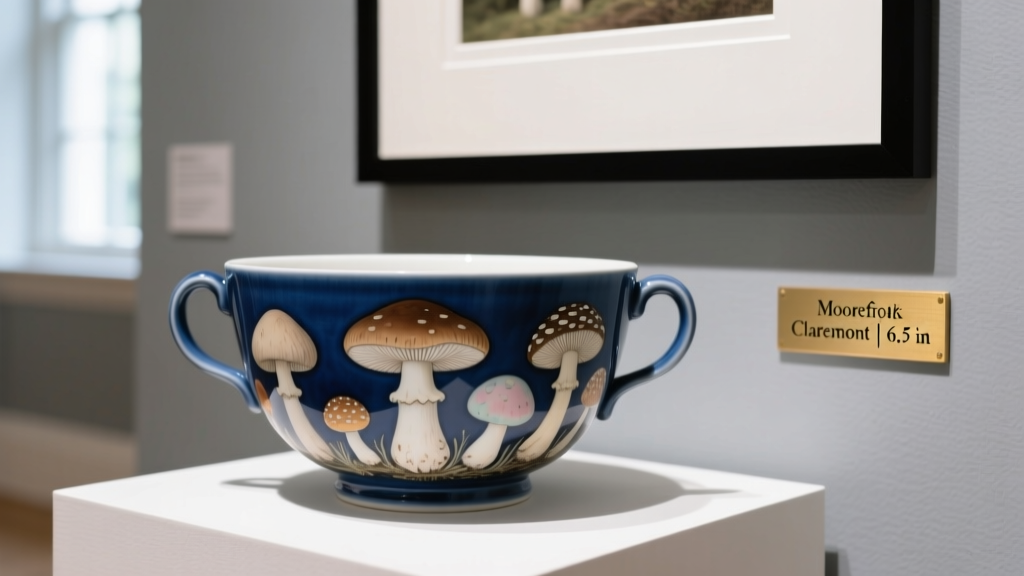
Moorcroft Claremont Bowl: Authentication, Provenance, and Market Analysis of the Blue Ground Mushrooms Footed Design (6½")
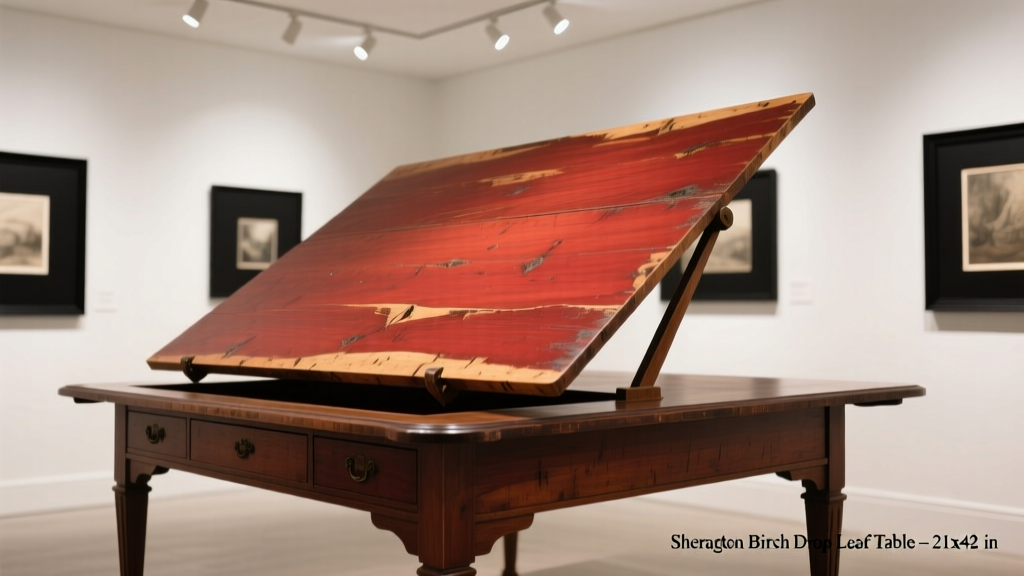
Authenticating and Valuing a Drop-Leaf Sheraton-Style Birch Table: 21 × 42 Inch Red-Painted Surface, Single-Board Top
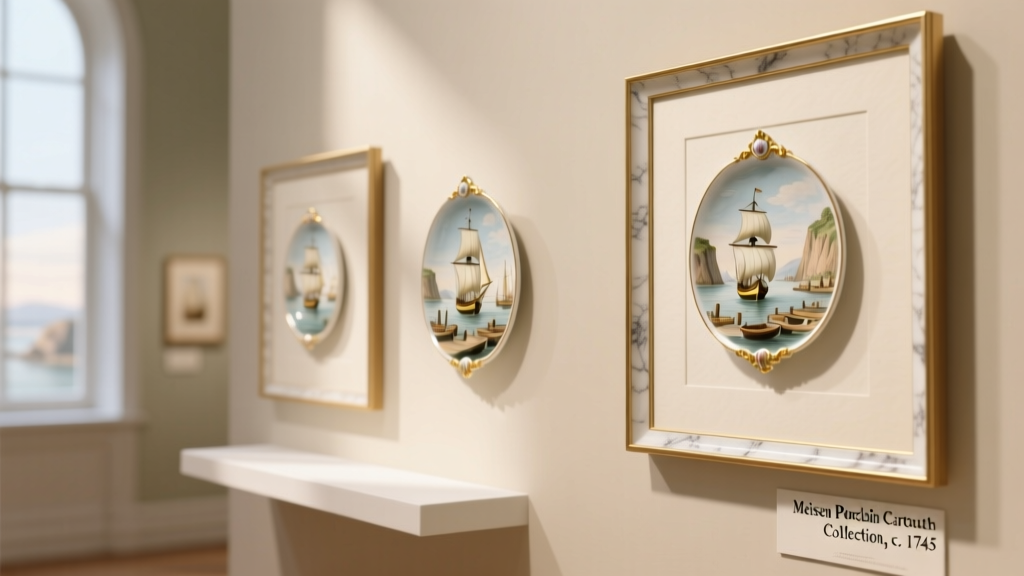
Sewing Thimble Cartouches of Harbor Scenes: Meissen Porcelain Cartouches c. 1745 and Their Significance in Early European Decorative Arts
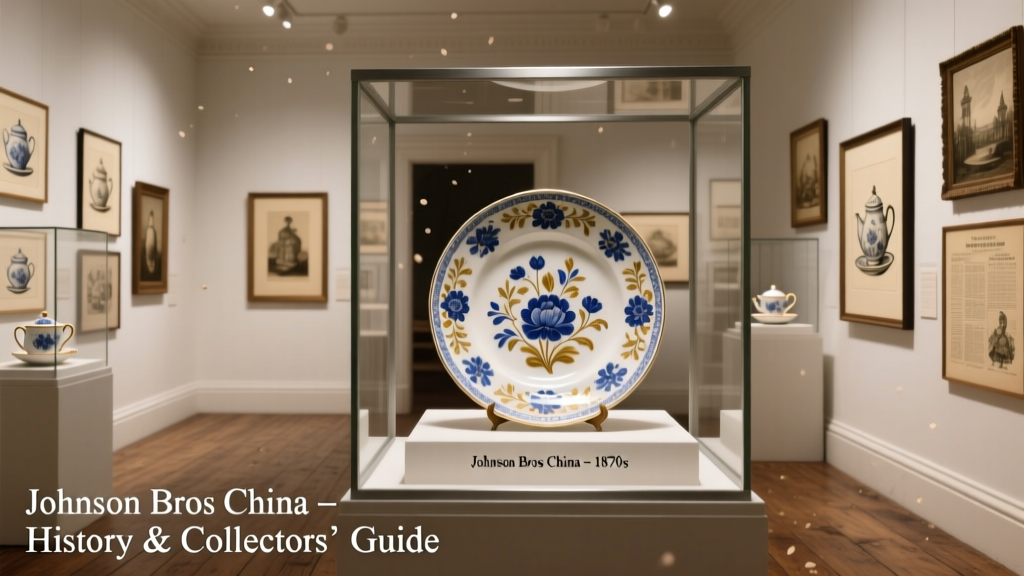
Decoding Johnson Bros China: A Collector’s Guide to Identification, Marks, Production History, and Market Value
Authentication and Market Analysis of Edition Number 1140320: A Case Study in Modern Print Provenance
Harker Amy Salad Server Set #2: Authentication, Market Value, and Design Legacy