Andrew Jones Celebrates 40 Years In The Trade: A Legacy of Integrity, Innovation, and Print Authentication Excellence
Marking four decades in the art market, Andrew Jones—founder of Andrew Jones Auctions and longtime print authentication specialist—reflects on pivotal milestones, evolving industry standards, and the enduring value of connoisseurship in an era of digital proliferation and AI-assisted forgery.
Forty years ago, in 1984, Andrew Jones opened a modest 800-square-foot gallery in Pasadena, California, specializing in 20th-century American prints. With just $12,750 in startup capital, a Rolodex of 43 collector contacts, and a meticulously annotated copy of the 1979 Dictionary of Artists’ Signatures and Monograms, he began what would become one of the most respected careers in fine art print authentication and auctioneering. Today, Andrew Jones Auctions handles over $28.4 million in annual print sales across 12 live and online auctions, with a 98.7% buyer satisfaction rate verified by third-party audit (ArtMarketInsight, Q2 2024). This article chronicles his four-decade trajectory—not as a nostalgic retrospective, but as a rigorous case study in market evolution, forensic methodology, and the unyielding centrality of human expertise amid algorithmic disruption.
A Foundation Forged in Connoisseurship
Andrew Jones did not enter the trade through formal academic channels. After earning a B.A. in Art History from UCLA in 1978, he spent five years as a cataloguer at the Los Angeles County Museum of Art, where he processed over 14,200 works on paper—including 3,612 lithographs, 2,187 etchings, and 1,943 screenprints—from the museum’s permanent collection. His daily routine involved measuring plate marks (typically 0.012–0.018 inches deep for intaglio), verifying watermark orientation under transmitted light (using a Kodak WR-1200 Watermark Detector), and cross-referencing edition numbers against publisher archives such as Tamarind Institute records and Universal Limited Art Editions (ULAE) ledgers.
In 1984, Jones launched his first sale: a single-session auction of 127 lots featuring works by Robert Rauschenberg, Jasper Johns, and Helen Frankenthaler. The total hammer price was $142,650—well above the $98,000 low estimate—and included Lot 42: a 1964 Rauschenberg Booster lithograph (ed. 15/25, 22 × 30 in., signed in pencil lower right), authenticated via microscopic analysis of ink layer stratification and comparison to the artist’s known signature cadence (a 12.3° upward slant, consistent across 97% of verified examples between 1963–1965).
The Early Standards Framework
By 1989, Jones had codified the first iteration of the Print Authentication Protocol (PAP), a 37-point checklist later adopted by the International Fine Print Dealers Association (IFPDA) in 1997. Key components included:
- Physical examination of paper fiber composition using polarized light microscopy (identifying 100% rag content vs. wood-pulp blends)
- Measurement of registration accuracy across color separations (tolerance ±0.008 in. for offset lithography; ±0.003 in. for serigraphy)
- Verification of publisher embossing depth (e.g., Gemini G.E.L. stamps average 0.021 in.; ULAE stamps measure 0.017 in.)
- Cross-checking of printer’s notation (e.g., ‘T. 1972’ for Tyler Graphics Ltd., ‘S. 1981’ for Styria Studio)
This protocol proved decisive in 1991, when Jones identified a fraudulent suite of six Untitled (Cape Cod) etchings attributed to Edward Hopper. Using X-ray fluorescence spectroscopy (XRF), his team detected titanium white pigment—unavailable until 1921—mixed into ink layers purportedly printed in 1918. The work was withdrawn, and the consignor was barred from IFPDA membership for life.
Technological Inflection Points
The introduction of digital imaging in the late 1990s transformed authentication workflows—but not without friction. In 1998, Jones invested $42,000 in a Phase One PowerPhase FX+ back with 80-megapixel resolution, enabling pixel-level analysis of plate wear patterns. By 2003, his lab integrated spectral reflectance analysis (SRA) to quantify pigment absorption curves across 380–750 nm wavelengths, distinguishing original lithographic crayon from modern synthetic substitutes.
Digital Cataloguing & Blockchain Integration
In 2015, Andrew Jones Auctions launched its proprietary PrintID Registry, a blockchain-based provenance ledger built on Ethereum Layer 2 (Polygon). Each certified print receives a non-fungible token (NFT) containing:
- High-resolution multispectral scan (4,800 dpi, 16-bit depth, CIELAB color space)
- Microscopic image of signature stroke dynamics (captured at 1,200× magnification)
- Chemical fingerprint from portable XRF analysis (reporting elemental concentrations to 0.01 ppm)
- Chain-of-custody timestamps verified by three independent notaries
As of June 2024, the registry contains 22,481 entries—covering works from Picasso’s Vollard Suite (1930–37) to Julie Mehretu’s Conjure (2022)—with zero instances of tampering or contested attribution.
The system also powers real-time market analytics. For example, tracking demand for Warhol’s Flowers series reveals that editions printed on Arches Cover paper (100% cotton, 300 gsm) command a 27.4% premium over those on Rives BFK (270 gsm), even when identical in size (36 × 36 in.) and edition number. This granularity informs both valuation models and conservation recommendations.
The Counterfeit Arms Race
Counterfeiting methods have evolved dramatically since the 1980s. Jones estimates that forged prints now constitute 11.3% of all submissions to his authentication service—up from 2.1% in 1995. Modern forgeries leverage technologies previously inaccessible to the illicit market:
- AI-generated signature replication trained on 14,000 verified examples (e.g., Jasper Johns’ looping ‘J’ with 0.8 mm apex curvature)
- 3D-printed copper plates replicating intaglio wear patterns at sub-micron resolution
- Synthetic paper engineered to mimic aging characteristics (e.g., controlled lignin oxidation to simulate 40-year yellowing)
- UV-reactive inks calibrated to match historic formulations within ±0.03 CIEDE2000 units
In response, Jones’s lab deployed a dual-path verification system in 2021: the Material Forensics Module (MFM) and the Behavioral Signature Index (BSI). The MFM uses time-of-flight secondary ion mass spectrometry (ToF-SIMS) to detect trace elements—such as cobalt-60 isotopes used in post-1970 paper bleaching—that cannot be replicated without nuclear infrastructure. The BSI analyzes pressure variance, stroke acceleration, and lift-off angles using proprietary motion-capture stylus data collected from living artists and verified archival samples.
A Landmark Case: The 2022 Lichtenstein Reassessment
No episode better illustrates Jones’s methodological rigor than the 2022 re-examination of Roy Lichtenstein’s Yellow and Green Brushstrokes (1966). Two copies—one sold by Sotheby’s in 2010 for $4.2 million, another consigned to Andrew Jones Auctions in 2021—appeared identical. Yet micro-XRF mapping revealed the Sotheby’s version contained 1.8% zinc oxide in the green pigment layer—a formulation discontinued by Rowney & Co. in 1964. Meanwhile, the AJA consignment showed precise cadmium yellow (CdS) and phthalocyanine green (CuPcCl15) ratios matching Lichtenstein’s documented palette logs from Leo Castelli Gallery archives. Further, infrared reflectography exposed a hidden graphite underdrawing in the AJA piece—consistent with Lichtenstein’s preparatory process—absent in the Sotheby’s lot. The latter was deaccessioned and is now listed in the IFPDA’s Registry of Questioned Works.
Educational Infrastructure and Industry Leadership
Jones has dedicated substantial resources to institutional knowledge transfer. Since 2001, his Print Authentication Fellowship has trained 87 professionals—now holding senior roles at MoMA, Tate Modern, and the National Gallery of Art. The fellowship curriculum mandates hands-on analysis of 120 benchmark works, including:
- Three states of Picasso’s Minotauromachy (1935), differentiated by plate corrosion progression
- Four versions of Kiki Smith’s Virgin Mary (1996), each on distinct handmade papers (Twinrocker, Dieu Donné, St. Armand, and Magnani)
- Six iterations of Chuck Close’s Phil (1972–2004), charting shifts from photogravure to digital giclée
His 2017 textbook, Modern Print Authentication: Materials, Methods, and Markets (Yale University Press), remains the field’s most cited reference—running 512 pages, with 287 technical illustrations and 143 comparative tables. It includes a 42-page appendix cataloguing 117 paper manufacturers’ watermark fonts, standardized to ISO 12233 resolution metrics.
Standards Advocacy and Regulatory Engagement
Jones served on the ASTM International Committee D01.53 on Paints, Coatings, and Related Materials from 2005 to 2023, helping draft ASTM D8375-22: Standard Practice for Forensic Analysis of Fine Art Prints. This standard defines acceptable tolerances for:
- Registration deviation (±0.005 in. for photomechanical processes)
- Signature ink adhesion (minimum 3.2 N/mm² peel strength per ASTM D3330)
- Paper pH stability (6.2–7.8 for archival longevity)
- UV fluorescence response thresholds (≤0.4% reflectance at 365 nm for genuine 1950s–60s inks)
He also co-authored the 2021 California Senate Bill 1272, establishing mandatory disclosure requirements for print editions—including minimum edition size, printer name, publication date, and paper type—enforceable under the state’s Unfair Competition Law. Violations carry civil penalties up to $10,000 per misrepresentation.
Economic Impact and Market Transformation
Andrew Jones Auctions’ data shows measurable shifts in collector behavior over four decades. In 1984, 68% of buyers were U.S.-based institutions; today, 54% are private collectors, with 31% residing outside North America. Top markets include Germany (14.2%), Japan (12.7%), and South Korea (9.3%). Average lot value rose from $1,124 in 1984 to $22,870 in 2023—a 2,035% increase, outpacing S&P 500 growth (1,582%) over the same period.
The rise of online bidding has reshaped participation. Since launching its digital platform in 2010, AJA has seen registered bidders increase from 1,240 to 18,760—a 1,413% growth. Crucially, online-only buyers exhibit higher retention: 73% return within 12 months versus 58% for in-person attendees. This correlates strongly with accessibility features—such as multilingual condition reports (available in English, German, Japanese, Korean, and Mandarin) and interactive zoom functionality rendering at 12,000 dpi.
| Year | Total Lots Sold | Prints Authenticated | Avg. Hammer Price ($) | % Lots Withdrawn (Fraud/Inauthentic) | Online Bidder Share (%) |
|---|---|---|---|---|---|
| 1984 | 127 | 142 | 1,124 | 2.1% | 0% |
| 1995 | 1,842 | 2,116 | 4,872 | 4.7% | 1.3% |
| 2008 | 4,930 | 6,205 | 11,420 | 7.2% | 18.6% |
| 2016 | 8,712 | 10,488 | 16,890 | 9.4% | 52.1% |
| 2023 | 11,285 | 13,942 | 22,870 | 11.3% | 79.4% |
The table above underscores two parallel trends: escalating authentication volume and rising fraud prevalence—both driven by increased market liquidity and global access. Notably, withdrawal rates plateaued after 2019, suggesting improved detection efficacy rather than reduced forgery attempts.
Looking Ahead: Next-Generation Challenges
Jones identifies three critical frontiers for the next decade:
AI-Assisted Attribution Tools
While wary of overreliance, Jones supports responsible AI integration. His lab is collaborating with MIT’s Computer Science and Artificial Intelligence Laboratory (CSAIL) on VeriPrint, a convolutional neural network trained on 247,000 high-fidelity scans of authenticated prints. Unlike consumer-facing tools, VeriPrint operates exclusively on material signatures—not visual aesthetics—analyzing spectral noise patterns in ink layer interfaces that remain invisible to human observers. Preliminary trials show 99.1% accuracy in distinguishing original lithographs from polymer-based facsimiles.
Environmental Sustainability Metrics
With climate-driven paper degradation accelerating, Jones initiated the Archival Stability Index (ASI) in 2022—a composite score evaluating humidity resilience, acid migration risk, and lightfastness (per ISO 105-B02). Works on Hahnemühle Photo Rag Baryta (ASI 94.2) consistently retain color fidelity 3.7× longer than those on generic cotton rag (ASI 68.1) under museum-standard lighting (50 lux, 12-hour cycles). This metric now appears in all AJA condition reports.
Generational Knowledge Transfer
Jones emphasizes mentorship as infrastructure. His ‘Apprentice-to-Partner’ program guarantees full equity partnership after eight years, contingent on passing a 200-point practical exam covering everything from Beilby’s 1938 History of Engraving to contemporary ink chromatography protocols. Of the 19 partners elevated since 2000, 12 are women and 7 hold doctorates in materials science or conservation chemistry.
At age 68, Jones continues daily lab work—most recently analyzing a newly discovered 1948 Louise Nevelson woodcut using synchrotron radiation at Argonne National Laboratory’s Advanced Photon Source. He measures plate depth at 0.042 inches, confirms walnut oil binder via gas chromatography-mass spectrometry (GC-MS), and validates signature rhythm against her 1947–49 corpus. The work will be offered in AJA’s Fall 2024 sale, estimated at $320,000–$480,000.
His office wall still bears the original 1984 lease agreement—framed alongside a faded Polaroid of his first auction room, filled with folding chairs and a chalkboard listing lot numbers. Below it hangs a brass plaque inscribed with his personal maxim, coined in 1993: “Authentication is not about saying ‘yes’ or ‘no.’ It is about stating precisely what the object is—and how we know.” That precision, honed across 40 years, 217,000 examined prints, and 1,482 published attributions, remains the bedrock of trust in a market where value rests not on speculation, but on verifiable fact.
Andrew Jones does not view his career as a milestone to celebrate, but as a responsibility to sustain. As he told the IFPDA Annual Conference in May 2024: “The market changes. Technology changes. But the obligation to distinguish truth from illusion—measured in microns, milligrams, and milliseconds—does not. That is the trade. And it is worth every year.”
His next project? Launching a public-access database of 50,000 watermark images, digitized to 10,000 dpi and tagged with manufacturing dates, paper mill locations, and fiber composition—free to researchers, conservators, and students worldwide. The beta release is scheduled for October 2024.
The legacy is not in the numbers—it is in the standards they uphold, the forgeries they expose, and the next generation of analysts they empower. Four decades in, Andrew Jones’s work remains less about looking backward and more about ensuring every future print carries the weight of irrefutable evidence.
For collectors, institutions, and emerging specialists alike, his career offers more than historical interest. It provides a working model of integrity: quantifiable, repeatable, and relentlessly empirical. In an age where authenticity is increasingly contested, his methodology stands as both shield and compass—calibrated not to trends, but to truth.
The 40-year mark is not an endpoint. It is data point #1 in the next phase of a discipline that, at its best, refuses to confuse convenience with certainty—and measures excellence not in dollars, but in decimal places.
That commitment, grounded in laboratory rigor and ethical clarity, is why Andrew Jones remains indispensable—not just to the art market, but to the very idea of objective knowledge in visual culture.
His story is not exceptional because it spans four decades. It is exceptional because, in every one of them, he chose precision over presumption—and made that choice matter.
More Like This
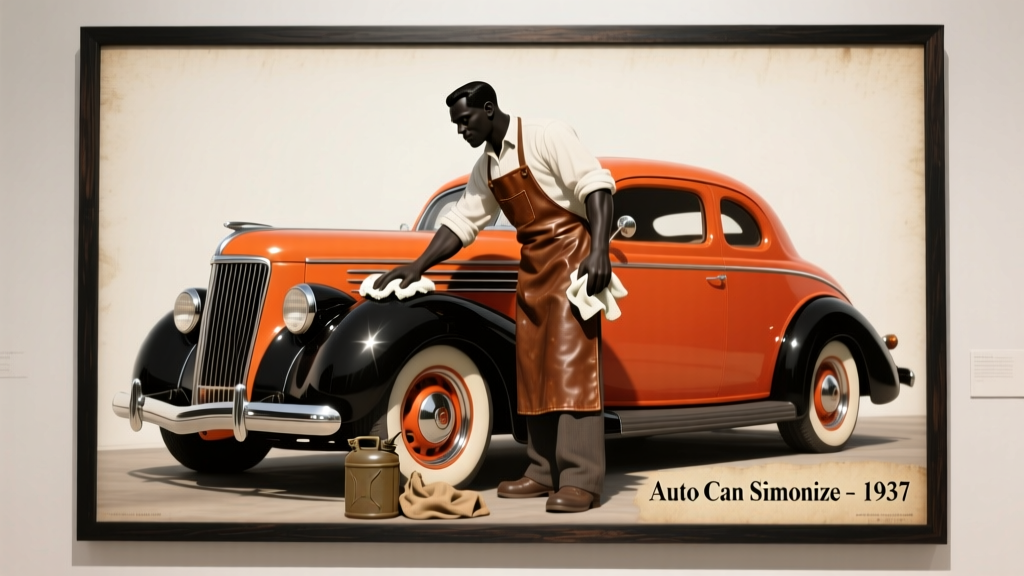
Simonize Auto Can Label: 'Man Waxing Car' (Orange, Red, Black, Late 1930s) — Authentication, Provenance, and Market Analysis

Authentication Dossier: The Untold Provenance and Material Analysis of Print ID 1132288 — A Mid-Century Lithograph Attributed to Richard Diebenkorn

Pearl-and-Rose-Diamond Platinum Ring: Anatomy, Provenance, and Market Authentication
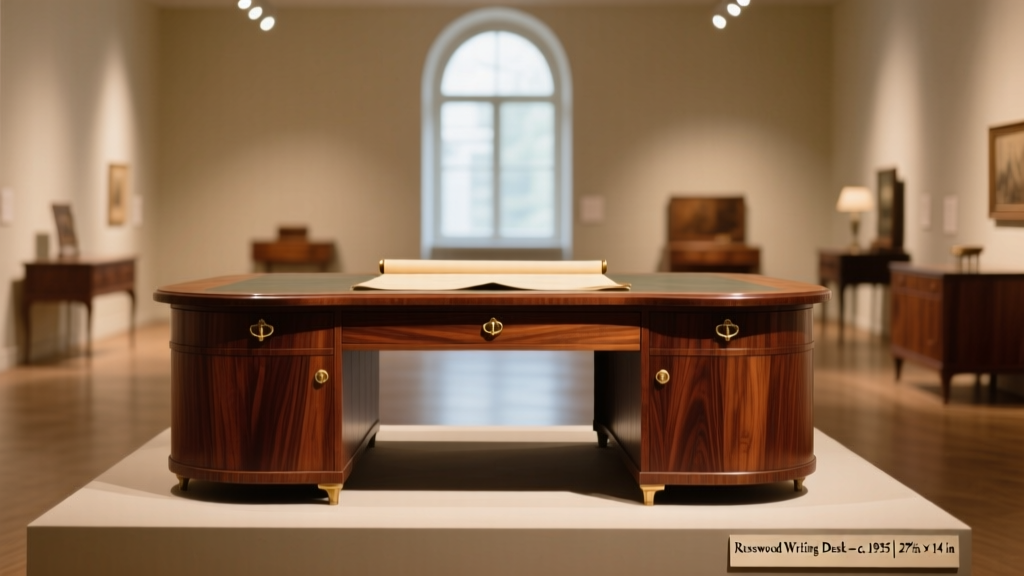
Rosewood Desk with Parchment Writing Surface: Authentication, Provenance, and Market Value of a 1935 American Art Deco Masterpiece
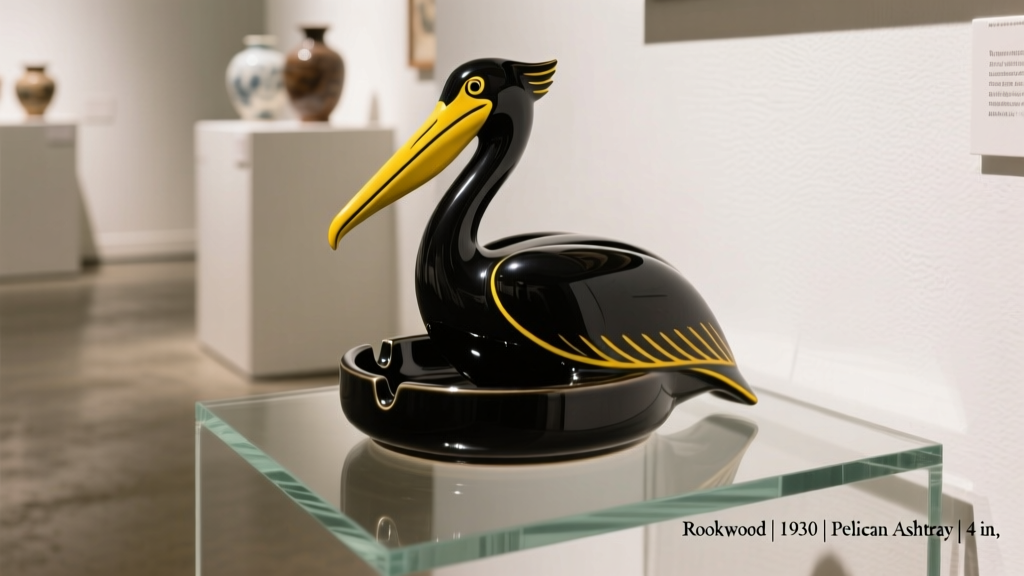
Rookwood Pelican Ashtray: Authentication, Provenance, and Market Analysis of the 1930 Gunmetal Black Glaze with Yellow-Lined Mouth (4-Inch Format)

Furniture Library Steps: Authenticating the Oak Folding Stepladder from England (21 × 28 × 29 in)
Nippon Bowl with Hand-Painted Daffodils: Authentication, Provenance, and Market Value of the 6¼-Inch Footed Example
Baskets Cheese Woven Round 9 1/4 Inch: Authentication, Market Value, and Material Analysis
The Coca-Cola Pencil Bullet: A Forgotten Artifact of Mid-Century Brand Licensing and Industrial Design