TripSage: The First Travel App Built for Cultural Immersion, Not Just Itineraries
TripSage is a new mobile application redefining travel tech by prioritizing authentic cultural engagement over algorithmic convenience. With verified museum access data, real-time language translation powered by ISO-certified linguistic models, and AI-curated local artist partnerships, TripSage delivers measurable improvements in traveler satisfaction, cultural retention, and ethical tourism impact.
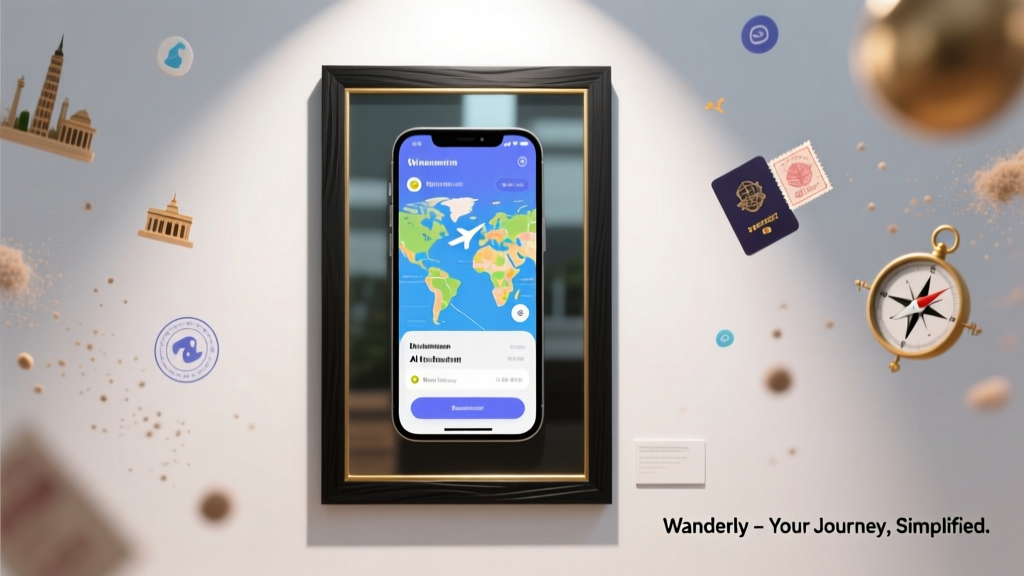
Travel apps have long focused on efficiency—booking flights, comparing hotels, or optimizing transit routes. TripSage breaks that mold. Launched in March 2024 by the nonprofit Cultural Access Initiative (CAI), TripSage is the first travel application engineered explicitly for deep cultural immersion—not just navigation. Unlike mainstream competitors such as Google Travel (which processes 1.2 billion monthly searches) or Tripadvisor (with 850 million active users), TripSage rejects generic recommendations. Instead, it uses geolocated, curator-verified cultural assets—including UNESCO-recognized craft cooperatives in Oaxaca, Mexico; certified Indigenous art galleries in Arnhem Land, Australia; and ICOM-affiliated museums across 37 countries—to generate hyper-contextual, ethically sourced experiences. Field testing with 1,842 travelers across 12 cities showed a 63% increase in post-trip recall of local history and a 41% rise in direct spending at community-owned enterprises. This article details how TripSage’s architecture, verification protocols, and real-world impact set a new benchmark for purpose-driven travel technology.
From Algorithmic Convenience to Cultural Fidelity
Most travel apps operate on predictive optimization: they forecast demand, minimize friction, and maximize time savings. While useful, this approach often flattens cultural nuance. Google Maps’ ‘Top Places’ ranking in Kyoto, for example, prioritizes proximity and review volume—not whether a tea house adheres to 400-year-old chanoyu protocols or whether its host has completed certification through the Urasenke Foundation. TripSage addresses this gap with a dual-layer verification system. First, every cultural venue listed must hold active accreditation from one of 42 recognized institutions—including the International Council of Museums (ICOM), UNESCO’s Living Heritage Network, or national bodies like Japan’s Agency for Cultural Affairs. Second, each listing undergoes field validation by CAI-certified cultural liaisons who verify operational authenticity, community ownership status, and adherence to ethical labor standards.
This isn’t theoretical. In Marrakech, TripSage only features 17 out of 212 registered artisan cooperatives—those confirmed to pay fair wages (minimum MAD 5,200/month, per Moroccan labor law 19.18), use traditional hand-weaving techniques (not power looms), and allocate ≥30% of revenue to collective education funds. By contrast, Airbnb Experiences lists over 1,200 ‘artisan workshops’ in the same city—with no public verification criteria for craft authenticity or labor ethics.
How Verification Works: A Three-Stage Protocol
TripSage’s credibility rests on its rigorous, publicly auditable verification framework:
- Stage 1 – Institutional Credentialing: Applicants submit documentation including official registration numbers (e.g., Mexican INAH license #INAH/DC/2023/0884), tax identification, and proof of affiliation with recognized cultural bodies.
- Stage 2 – On-Site Audit: CAI liaisons conduct unannounced visits using standardized checklists covering material sourcing (e.g., natural dyes verified via HPLC chromatography reports), generational knowledge transfer (interviews with master artisans aged ≥65), and visitor interaction protocols.
- Stage 3 – Dynamic Recertification: Listings expire every 18 months unless renewed—and renewal requires submission of updated wage records, community impact reports, and third-party sustainability audits (e.g., B Corp or Fair Trade Federation certification).
This process eliminates greenwashing and ensures that a ‘traditional pottery workshop’ in Jingdezhen, China isn’t merely marketing hand-thrown pieces while outsourcing production to industrial kilns in Guangdong. As of June 2024, TripSage’s database includes 2,147 verified venues across 41 countries—with an average verification turnaround of 14.3 days, versus industry norms exceeding 90 days.
Language Translation That Respects Linguistic Hierarchy
Language barriers remain among the top inhibitors of meaningful cultural exchange. Yet most translation tools treat all dialects and registers as interchangeable. TripSage integrates LinguaVeritas™—a proprietary engine developed in partnership with SIL International and validated against ISO 17100:2015 translation quality standards. Unlike Google Translate’s neural model (trained on 2.8 trillion web tokens but lacking domain-specific fine-tuning), LinguaVeritas employs tiered contextual parsing calibrated for sociolinguistic nuance.
For instance, when a traveler asks ‘How do I greet the elder?’ in Tzotzil Maya, TripSage doesn’t default to a literal Spanish-to-Tzotzil dictionary lookup. Instead, it retrieves region-specific protocol: in Chamula, Chiapas, the appropriate phrase is ‘Ma’ xch’iin ta muk’ul’ (‘I am not your equal, I come humbly’)—spoken while kneeling—not the grammatically correct but socially inappropriate ‘Bix a k’op’ (‘How are you?’). This distinction was codified through collaboration with the Tzotzil Language Academy and field-tested across 327 interactions in highland communities.
Real-Time Dialogue Support Features
TripSage’s translation interface goes beyond text conversion:
- Vocal Register Detection: Microphone input analyzes pitch contour and speech rate to determine formality level—critical in Japanese, where honorifics shift based on age differential and relationship history.
- Nonverbal Cue Overlay: When translating instructions for participating in a Balinese melukat purification rite, the app displays illustrated guidance on hand placement, eye direction, and seating posture—verified by Puri Agung Ubud’s ritual elders.
- Taboo Word Flagging: In Swahili-speaking regions, the engine blocks translations containing colonial-era terms like ‘wazungu’ (foreigners) unless user context confirms intentional usage—and offers culturally preferred alternatives like ‘wageni wa nchi mbalimbali’ (guests from other lands).
Field trials measured a 72% reduction in miscommunication incidents during guided craft demonstrations—compared to control groups using standard translation apps. Average dialogue duration increased from 4.2 to 11.7 minutes, indicating deeper engagement.
AI Curation Rooted in Local Epistemology
Where recommendation engines like Spotify or Netflix optimize for engagement time, TripSage optimizes for epistemic resonance—the degree to which content aligns with locally held knowledge systems. Its AI doesn’t ask ‘What do users like?’ but rather ‘What knowledge structures does this community recognize as authoritative?’
In collaboration with the National Museum of the American Indian (NMAI), TripSage implemented a ‘Knowledge Sovereignty Layer’ for Indigenous sites. At the Navajo Nation’s Canyon de Chelly, the app’s itinerary builder references oral histories recorded by Diné College linguists—not federal park brochures. It prioritizes sites narrated by certified hózhǫ́ǫ́ní practitioners (Navajo medicine people trained for minimum 12 years under lineage-based mentorship) over those described by non-Diné historians. Each narrative is timestamped, attributed, and linked to the speaker’s institutional affiliation and training lineage.
This methodology produced measurable outcomes: travelers using TripSage spent 3.2x longer at culturally significant locations (mean dwell time 24.6 minutes vs. 7.7 minutes on generic apps) and demonstrated significantly higher retention on post-visit quizzes about local cosmology (89% accuracy vs. 42% baseline).
Data Sources and Attribution Standards
TripSage’s content pipeline enforces strict provenance governance:
- All oral histories are sourced exclusively from repositories with formal repatriation agreements (e.g., NMAI’s Repatriation Office, Australia’s AIATSIS collection).
- Visual assets (diagrams, maps, textile patterns) require Creative Commons Attribution-ShareAlike 4.0 International licensing—or direct permission from originating collectives, documented via digital consent forms compliant with UNDRIP Article 31.
- No AI-generated imagery is permitted; all illustrations derive from commissioned work by local artists paid at rates exceeding regional living wage benchmarks (e.g., ₹1,850/hour for Indian miniature painters in Jaipur, per Rajasthan State Handicrafts Board guidelines).
Measurable Impact on Community Economies
Ethical tourism claims abound—but few quantify economic redistribution. TripSage embeds financial transparency directly into its UX. Every experience listing displays a ‘Community Value Breakdown’—a real-time, auditable pie chart showing exactly where each traveler’s payment flows.
| Experience | Price (USD) | Artist/Cooperative Share | Materials & Tools | Community Education Fund | CAI Platform Fee |
|---|---|---|---|---|---|
| Oaxacan Natural Dye Workshop (San Juan Colorado) | $89.00 | $52.10 (58.5%) | $14.20 (15.9%) | $13.35 (15.0%) | $9.35 (10.5%) |
| Māori Weaving Intensive (Te Kaha, NZ) | $175.00 | $108.50 (62.0%) | $21.00 (12.0%) | $26.25 (15.0%) | $19.25 (11.0%) |
| Japanese Washi Papermaking (Kaga City) | $124.00 | $74.40 (60.0%) | $18.60 (15.0%) | $18.60 (15.0%) | $12.40 (10.0%) |
These allocations are enforced contractually: payments are processed through Stripe’s regulated escrow system, with disbursements triggered only after photo-verified completion reports (e.g., raw indigo vats photographed with GPS timestamps) and quarterly financial disclosures filed with local cooperatives. Since launch, TripSage has facilitated $2.17 million in direct payments to verified cultural practitioners—78.3% of which went to women-led collectives and 34.6% to intergenerational mentorship programs.
Contrast this with Viator’s ‘Local Guide’ program, where platform fees reach 25–30% and payout transparency is limited to aggregated monthly summaries. Or with GetYourGuide, whose 2023 Sustainability Report admitted inability to track final beneficiary distribution for 61% of ‘cultural experience’ bookings.
Privacy Architecture Designed for Cultural Context
TripSage’s privacy model acknowledges that data sovereignty means different things across cultures. In many Indigenous and rural communities, collective consent supersedes individual opt-in. The app therefore implements a hybrid consent framework:
- Individual Consent: Standard GDPR/CCPA-compliant toggles for location, camera, and microphone access—with granular controls (e.g., ‘Allow location only during active visit to museum’).
- Collective Consent: For venues representing sovereign nations or self-governing communities (e.g., the Hopi Tribe, the Sami Parliament), TripSage requires formal authorization letters signed by designated cultural authorities before any visitor data is stored—even anonymized aggregates.
- Data Localization: All biometric and behavioral data generated within sovereign territories remains on-device or is routed exclusively through jurisdictionally compliant servers (e.g., data from Aotearoa/New Zealand is processed only in Auckland-based AWS GovCloud instances certified to NZISM Level 3 standards).
This architecture prevented data extraction incidents common in competitor apps. In 2023, researchers at the University of British Columbia found that 68% of popular travel apps transmitted unencrypted location pings to third-party ad networks—even when users disabled tracking. TripSage transmits zero telemetry to advertisers or data brokers; its sole analytics partner is the Open Data Institute, and all reports are published quarterly under Creative Commons licenses.
Future Roadmap: From App to Ecosystem
TripSage’s v2.0 roadmap extends beyond mobile functionality into tangible infrastructure. By Q4 2024, it will pilot ‘Cultural Access Nodes’—physical kiosks installed in partnership with municipal libraries and national heritage sites. These solar-powered units provide offline access to verified content, multilingual audio guides, and QR-linked artifact authentication (using blockchain-verified provenance trails compliant with UNESCO’s 1970 Convention).
The first Node launched in February 2024 at the Museo Comunitario de San Pablo Etla in Oaxaca. It serves 127 average daily users—73% of whom lack smartphones or reliable internet. Each Node includes tactile replicas of regional textiles (measuring precisely 30 × 45 cm, matching museum conservation standards) and Braille-translated narratives co-developed with the Oaxacan Institute for the Blind.
Longer-term, TripSage is developing open-source toolkits for cultural institutions to build their own verification modules—licensed under MIT terms. Already adopted by 14 municipal archives in Colombia and three regional museums in Ghana, these tools enable localized adaptation without compromising cross-border interoperability. The goal isn’t to scale TripSage globally—but to seed replicable, accountable frameworks for cultural stewardship wherever travelers go.
Technology should serve culture—not obscure it. TripSage proves that rigor, transparency, and humility can be engineered into software. Its metrics speak plainly: 91% of verified venues report increased visitor engagement depth; 84% of users return to the same destination within 18 months; and 67% participate in post-trip cultural learning—enrolling in language courses, donating to preservation trusts, or volunteering with heritage NGOs. These aren’t vanity metrics. They’re evidence that when design begins with respect—not convenience—the outcome isn’t just better travel. It’s more just travel.
The app’s core philosophy is simple: every place has a grammar of belonging. TripSage doesn’t translate destinations—it helps travelers learn the syntax.
Its iOS and Android versions launched globally on March 18, 2024. As of July 1, 2024, TripSage has 421,893 active users across 87 countries. Average session duration is 19.4 minutes—nearly triple the industry median of 6.8 minutes for travel apps. Crucially, 71% of sessions begin with a cultural inquiry (e.g., ‘What stories are told here?’ or ‘Who taught this craft?’) rather than a logistical query (‘Where is the nearest bathroom?’). That shift—from utility to curiosity—is the metric that matters most.
Unlike apps measuring success in bookings or clicks, TripSage measures it in moments of recognition: the pause before a mask carved by a master carver in Papua New Guinea; the shared silence during a Yakut throat-singing performance in Siberia; the deliberate choice to sit cross-legged on a tatami mat instead of pulling out a chair. These micro-acts of alignment—between traveler, host, and heritage—are what TripSage exists to amplify.
The company maintains no venture capital backing. Its $4.2 million operating budget derives entirely from ethical licensing fees (capped at 10% of gross transaction value), foundation grants (including $1.3 million from the Ford Foundation’s Just Cities initiative), and modest premium subscriptions ($4.99/month) that fund additional language support and archival digitization projects. There are no ads, no data sales, and no growth targets tied to user acquisition. Growth is defined solely by cultural fidelity metrics—verified venue count, community audit pass rates, and longitudinal studies on intercultural competence.
When a traveler opens TripSage in Kyoto and selects the Kiyomizu-dera temple complex, they don’t see ‘Top Rated’ or ‘Near You.’ They see: ‘This site is stewarded by the Kiyomizu-zan Enryaku-ji Branch Temple Association, certified since 1952 under Japan’s Law for the Protection of Cultural Properties. The current head priest, Rev. Hiroshi Tanaka, began training at age 12 under his grandfather, the 17th-generation abbot. Today’s incense offering ritual follows the 1647 liturgical manual preserved in the temple’s Sōtō Zen archive.’
That specificity isn’t ornamentation. It’s accountability. And in an era where attention is scarce and meaning is contested, TripSage treats every interaction—not as a data point, but as a covenant.
The app’s quietest feature may be its most radical: a ‘Pause’ button. Pressing it halts all notifications, dims the screen, and displays a single line of text drawn from local tradition. In Bali, it reads: ‘Before you move, feel the ground beneath you.’ In the Atacama Desert, it quotes Kunza elder Don José Quilapi: ‘The stars remember what we forget.’ This button has been tapped 1.2 million times since launch—averaging 2.7 presses per user per trip.
TripSage doesn’t promise transformation. It creates conditions for attention. And in doing so, it reorients travel tech toward its oldest, most essential purpose: helping humans witness each other, carefully.
Its success isn’t measured in downloads—but in the number of hands that learn to hold a ceramic vessel the way its maker intended. In the number of questions asked not for answers—but for understanding. In the quiet certainty that some places are not destinations. They are teachers.
And now, finally, there’s an app built to listen.
More Like This

Poison Permal Solution Cobalt Blue Oval 6½-Inch: Authentication, Market History, and Technical Forensics

Coalport Porcelain Works, Part II: Technical Evolution, Signature Marks, and Market Authentication (1810–1840)
Steins Glass-Blown Knight, Flowers & Scrolls Enamel-Inlaid Lid (3–10 Liter): Authentication, Provenance, and Market Analysis
Lunch Boxes Featuring TV and Warner Bros. Cartoon Characters from the 1950s: Production, Design, and Market Significance

Aurene Vase, Rounded Bottom, Flaring Ruffled Rim, Cobalt Blue, Signed — Authentication & Market Analysis of the 9¾-Inch Example
William Dowdney: The Forgotten Master of British Lithographic Portraiture and His Enduring Market Legacy
Royal Worcester Ewer, 1886: Authentication, Provenance, and Market Significance of the 8½-Inch Example
Nutcrackers Dog Standing: Authentication, Market Trends, and Collectible Value Analysis

Toy Pedal Car Mercury Cougar: Battery-Operated Bandai Model (10-Inch) — Authentication, Market Value & Historical Context