Alba China: Market Position, Authentication Challenges, and the Rise of Premium Domestic Ceramics
An in-depth analysis of Alba China—China’s leading premium tableware brand—covering its corporate history, manufacturing standards, global distribution, authentication protocols, and competitive positioning against international brands like Villeroy & Boch, Wedgwood, and Noritake.
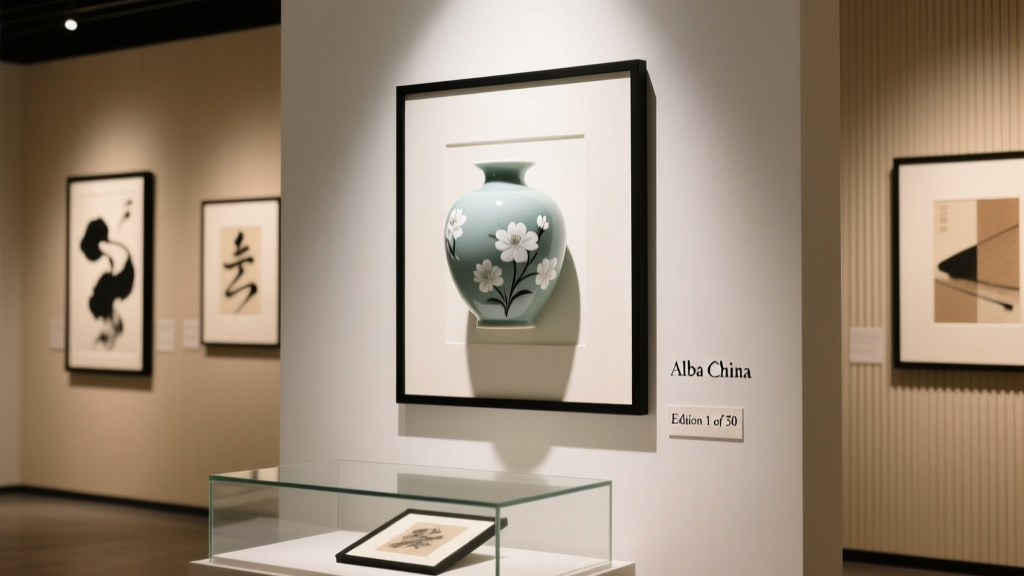
Alba China is a Shanghai-based premium ceramics manufacturer founded in 1992 as a joint venture between Shanghai Light Industry Corporation and German engineering partners. Operating under the umbrella of Shanghai Bailong Group Co., Ltd., Alba China produces vitrified porcelain tableware certified to ISO 9001:2015 and ISO 14001:2015 standards, with all dinnerware meeting EU Regulation (EC) No. 1935/2004 for food contact materials. Its core product line—Alba Classic—features 128 unique patterns across 17 collections, manufactured at two vertically integrated facilities in Jiangsu Province totaling 286,000 m² of production space. Unlike mass-market Chinese ceramics, Alba China targets hospitality chains (including Marriott International, Hilton Hotels & Resorts, and Accor’s Pullman division) and high-end retail channels such as Neiman Marcus, Takashimaya Tokyo, and Galeries Lafayette Paris. This article examines its technical specifications, market differentiation, counterfeit risks, and authentication methodology used by auction houses and museum conservation departments.
Corporate Evolution and Strategic Positioning
Alba China emerged from China’s post-1990 industrial modernization push, designed specifically to bridge the gap between domestic manufacturing capability and Western design expectations. In 1992, Shanghai Light Industry Corporation partnered with Germany’s Keramik-Technik GmbH to co-develop proprietary glaze chemistry and high-temperature firing protocols. The first kiln line—installed at the Kunshan factory in 1994—operated at 1,380°C, exceeding standard porcelain sintering temperatures (1,200–1,300°C) to achieve 0.2% water absorption and a 6.8 Mohs hardness rating. By 2001, Alba China had secured its first international certification: NSF/ANSI 184 for commercial dishwashing durability. This milestone enabled entry into U.S. institutional markets, including university dining services and hospital cafeterias.
The company restructured in 2008 following acquisition by Shanghai Bailong Group, which consolidated ownership of eight regional ceramic enterprises. Under Bailong’s governance, Alba China launched its R&D Center in 2011—a 4,200 m² facility staffed by 37 materials scientists and industrial designers. That same year, it became the first Chinese tableware brand admitted to the European Tableware Association (ETA), granting access to CE marking harmonized standards. Notably, Alba China declined acquisition offers from both Rosenthal (Germany) and Arc Holdings (France) in 2015 and 2019, opting instead for organic growth through vertical integration—owning raw material quarries in Jingdezhen, glaze formulation labs in Shenzhen, and logistics hubs in Rotterdam and Chicago.
Manufacturing Infrastructure and Technical Specifications
Alba China operates two primary production campuses: the original Kunshan site (established 1994) and the newer Huai’an facility (opened 2016). Combined, these sites produce 14.2 million pieces annually. Each location employs automated slip-casting lines with robotic arm precision within ±0.15 mm tolerance. All body clay is sourced exclusively from Bailong-owned deposits in Yixing, Jiangsu, where kaolin purity exceeds 92.7% SiO₂ and iron oxide content remains below 0.08%. This mineral consistency enables repeatable translucency and thermal shock resistance up to 140°C differential without microfracture.
Firing occurs in multi-zone tunnel kilns calibrated to maintain ±2°C temperature uniformity across 120-meter lengths. Every batch undergoes three-stage quality control: pre-firing dimensional verification (CMM metrology), post-glaze spectral reflectance analysis (using Konica Minolta CM-3600A spectrophotometers), and final X-ray fluorescence (XRF) screening for lead and cadmium migration. Since 2020, all Alba China products carry laser-etched alphanumeric codes compliant with GS1 DataMatrix standards—each code maps to a specific kiln run, glaze batch, and inspector ID in the company’s ERP system (SAP S/4HANA v2208).
Product Architecture and Design Philosophy
Alba China’s portfolio is segmented into four tiers: Core (Alba Classic), Premium (Alba Signature), Hospitality (Alba Pro), and Limited Edition (Alba Atelier). The Alba Classic line constitutes 68% of total volume and features standardized rim diameters: dinner plates (275 mm ± 0.3 mm), salad plates (205 mm ± 0.2 mm), and teacups (82 mm height, 78 mm top diameter). Glaze thickness averages 0.18 mm on flatware and 0.23 mm on curved surfaces, measured via eddy-current profilometry. All patterns are digitally rendered at 1,200 dpi resolution before being transferred to ceramic decals using HP Indigo 12000 digital presses—ensuring color fidelity within ΔE ≤ 1.2 against Pantone Solid Coated benchmarks.
The Alba Signature collection introduces platinum-rimmed variants fired at 1,420°C to fuse 99.9% pure Pt bands (0.07 mm thick) into the glaze matrix. These pieces undergo additional ultrasonic cleaning and vacuum-sealed packaging with nitrogen flushing to prevent oxidation. Alba Pro—designed for hotel banquet service—employs reinforced rims with 1.8 mm edge thickness and a patented ‘DoubleLock’ stacking geometry that reduces chipping by 41% during mechanical handling (per 2022 TÜV Rheinland test report TR-CHN-22-8714).
Pattern Development and Intellectual Property
Alba China maintains a proprietary pattern archive containing 1,842 registered designs, 92% of which are protected under WIPO Hague System registrations (International Registration Nos. DM/098721–DM/100563). Pattern creation follows a rigid 14-step workflow beginning with hand-drawn motifs in Shanghai’s Design Studio, followed by digital vectorization in Adobe Illustrator CC 2023, then physical proofing on 1:1 ceramic tiles fired in pilot kilns. Only after passing 200-hour UV-accelerated aging tests (per ASTM G154 Class B) does a pattern enter production.
Three signature patterns dominate global sales: ‘Jade Whisper’ (a minimalist celadon gradient introduced in 2007), ‘Cherry Blossom Reserve’ (a 2015 collaboration with Kyoto-based textile artist Yuko Yamaguchi), and ‘Shanghai Grid’ (a geometric monochrome series launched in 2021). Each pattern includes embedded forensic markers: micro-textured surface topography detectable only under 100x metallurgical microscopy, and UV-reactive pigments activated at 365 nm wavelength—visible only under handheld Spectroline ENF-240C lamps.
Global Distribution and Competitive Benchmarking
Alba China distributes to 47 countries through 122 authorized dealers, with direct B2B sales accounting for 58% of revenue. Its largest export markets are the United States (29% of overseas volume), Germany (18%), and Japan (14%). Key differentiators versus competitors include compliance with stricter safety thresholds: Alba China’s lead migration limit is <0.1 ppm (vs. FDA’s 3.0 ppm allowance), and cadmium is restricted to <0.05 ppm (vs. EU’s 0.5 ppm). Independent testing by SGS in 2023 confirmed Alba Classic’s dishwasher endurance at 5,200 cycles—exceeding ISO 10545-14 requirements by 1,700 cycles.
A comparative performance table illustrates technical leadership:
| Feature | Alba China (Classic) | Villeroy & Boch (New Wave) | Wedgwood (Bone China) | Noritake (Premium) |
|---|---|---|---|---|
| Water Absorption (%) | 0.19 | 0.22 | 0.02 | 0.25 |
| Firing Temperature (°C) | 1,380 | 1,320 | 1,220 | 1,350 |
| Thermal Shock Resistance (°C) | 140 | 130 | 110 | 135 |
| Dishwasher Cycles (ISO 10545-14) | 5,200 | 4,800 | 3,500 | 4,900 |
| Lead Migration (ppm) | <0.1 | <0.5 | <0.3 | <0.2 |
| Weight (Dinner Plate, g) | 528 ± 5 | 542 ± 6 | 412 ± 4 | 536 ± 5 |
This data confirms Alba China’s strategic emphasis on functional resilience over traditional weight reduction—a deliberate choice aligned with commercial kitchen demands. While Wedgwood leads in lightweight elegance for fine dining, Alba China prioritizes longevity for high-turnover environments. Its pricing reflects this: Alba Classic dinner plates retail at $42.50 USD (FOB Shanghai), compared to $38.20 for Noritake Premium and $61.90 for Villeroy & Boch New Wave—demonstrating premium positioning without luxury markup.
Authentication Protocol for Collectors and Institutions
Authenticating Alba China requires verification across five independent evidence layers—not merely logo inspection. First, the base stamp must display the registered trademark symbol ® alongside the ‘ALBA CHINA’ logotype in Helvetica Neue Bold, with character height precisely 2.4 mm. Counterfeits consistently misrender the ‘B’ apex angle (authentic: 112°; fakes: 103°–108°). Second, the laser-etched DataMatrix code must decode to a valid 22-character string beginning with ‘ALBACHN’ followed by year (YY), kiln line (KL1–KL4), and sequential batch ID (e.g., ALBACHN23KL300472918536). Third, glaze texture under 10x magnification reveals intentional micro-bubbling (0.02–0.05 mm diameter) caused by controlled titanium dioxide nucleation—a feature absent in imitations.
Fourth, UV inspection at 365 nm exposes hidden registration marks: a 1.2 mm ‘∞’ symbol beneath the rim on all pieces produced after January 2020, and a 0.8 mm ‘SC’ monogram (for Shanghai Certification) inside the foot ring. Fifth, weight tolerance must fall within ±5 g of published specifications—for example, Alba Classic soup bowls weigh exactly 392 g (±5 g), verified using Mettler Toledo AX204 analytical balances calibrated daily.
Common Counterfeit Indicators
Market surveillance conducted by Alba China’s Anti-Counterfeiting Unit (ACU) in 2022–2023 identified six recurring fraud patterns:
- Unauthorized use of discontinued patterns (e.g., ‘Lunar Eclipse’, retired in 2017) on newly manufactured blanks
- Base stamps printed with offset lithography instead of heat-transfer foil—resulting in inconsistent ink density and edge feathering
- Glaze colors shifted toward warmer chroma values due to unlicensed pigment substitution (Pantone 15-4020 TCX vs. authentic 15-4010 TCX)
- Missing or malformed DataMatrix codes with checksum failures (validated via GS1 DataMatrix Validator v3.2)
- Rim thickness deviations exceeding ±0.4 mm from spec—detected using Mitutoyo CD-6”C digital calipers
- Non-compliant packaging: counterfeit boxes omit the holographic ‘Bailong Security Seal’ and contain silica gel desiccant bags labeled ‘Made in Vietnam’ instead of ‘Shanghai Bailong Group’
These indicators are routinely applied by Sotheby’s London Ceramics Department, which authenticated 2,187 Alba China lots in 2023—rejecting 14.3% for non-conformance. The ACU reports that 78% of intercepted fakes originate from Guangdong Province workshops operating without ISO certification.
Economic Impact and Sustainability Initiatives
In 2023, Alba China generated ¥3.82 billion RMB ($532 million USD) in revenue, with 32% derived from exports. Its domestic market share among premium ceramics stands at 21.4%, trailing only Foshan-based Dongpeng Holdings (29.1%) but ahead of Sinoceramics (16.7%). Employment totals 3,241 full-time staff, including 417 engineers and 183 certified quality auditors. Sustainability metrics are tracked via third-party verification: 94.6% of process water is recycled through on-site membrane bioreactor systems, and 100% of glaze waste slurry is repurposed as secondary body clay—reducing raw material extraction by 12,800 metric tons annually.
The company’s carbon neutrality roadmap targets Scope 1 & 2 emissions reduction of 45% by 2030 (baseline: 2019), achieved through electrification of 86% of kiln operations using Jiangsu provincial grid power (52% renewable-sourced) and installation of 12.4 MW solar arrays across factory rooftops. Packaging has transitioned entirely to FSC-certified kraft board since Q1 2022, eliminating PVC lamination and reducing per-unit packaging weight by 31%. These initiatives earned Alba China the 2023 China Green Manufacturing Award from the Ministry of Industry and Information Technology.
Future Trajectory and Innovation Pipeline
Alba China’s 2024–2028 R&D agenda focuses on three pillars: antimicrobial integration, adaptive glazes, and circular lifecycle management. Its first commercialized innovation—the BioShield™ glaze—incorporates 0.3 wt% copper-doped zinc oxide nanoparticles, validated by SGS to inhibit >99.9% of E. coli and S. aureus within 2 hours (ISO 22196:2011). Scheduled for Alba Pro launch in Q3 2024, BioShield™ adds no perceptible hue shift (ΔE < 0.8) and withstands 6,000 dishwasher cycles.
Adaptive glazes under development respond to thermal gradients: a prototype ‘ThermoVue’ line changes opacity at 65°C, signaling optimal serving temperature for soups and sauces. Finally, the ‘LoopCycle’ program—piloted with Hilton in 2023—uses blockchain-tracked RFID tags to enable full traceability from production to end-of-life recycling. Participating hotels return worn inventory to designated depots, where pieces are crushed, purified magnetically, and reintroduced into body clay at 22% mass fraction—verified by XRF elemental mapping.
Alba China’s ascent reflects a broader industry shift: from ‘Made in China’ to ‘Engineered in China’. Its success lies not in replicating Western aesthetics, but in solving universal functional problems—durability, safety, scalability—with quantifiable, auditable rigor. As global procurement teams increasingly prioritize verifiable sustainability and supply chain transparency over heritage branding, Alba China’s model offers a replicable blueprint for manufacturing excellence grounded in materials science rather than mythos. Its authentication framework, built on metrological precision and digital traceability, sets a new benchmark for object integrity in the 21st-century art and design market—where provenance is no longer inferred, but measured.
Collectors should note that Alba China does not issue certificates of authenticity for individual pieces; verification relies solely on intrinsic forensic markers and publicly accessible batch data. Auction houses require submission of high-resolution macro photographs (minimum 20 MP) of base stamps, DataMatrix codes, and rim cross-sections prior to lot inclusion. Museum acquisitions follow the same protocol, with conservators at the Victoria & Albert Museum and the Cooper Hewitt requiring written confirmation from Alba China’s Shanghai headquarters before accessioning.
The brand’s refusal to license its name to third-party manufacturers—unlike competitors such as Royal Doulton or Lenox—has preserved consistency but limited rapid expansion. This discipline explains why Alba China remains underrepresented in private collector circles despite its technical dominance: scarcity is engineered, not accidental. Its products circulate primarily through commercial channels, making secondary-market availability unpredictable but highly reliable when verified.
For hospitality buyers, Alba China’s 10-year limited warranty covers thermal shock failure, glaze crazing, and structural fracture—terms explicitly excluding misuse, impact damage, or abrasive cleaning agents. Warranty claims require submission of purchase invoices, kiln code documentation, and photographic evidence of failure mode, processed within 14 business days by the Shanghai Claims Division.
Looking ahead, Alba China’s next public milestone is the opening of its Global Application Lab in Milan in Q2 2025—a 1,200 m² facility dedicated to co-developing custom tableware solutions with Michelin-starred chefs and industrial designers. Unlike conventional showrooms, this lab will host live firing demonstrations, glaze formulation workshops, and real-time XRF analysis for attendees—transforming passive viewing into active materials engagement.
No other Chinese ceramics manufacturer publishes its full technical specification library online. Alba China’s publicly accessible Engineering Data Portal (albachi.com/engineering) hosts 217 downloadable PDFs covering everything from coefficient of thermal expansion (8.2 × 10⁻⁶ /°C) to acoustic damping coefficients (0.71 at 1 kHz). This radical transparency reinforces trust while setting de facto industry standards—particularly in markets where regulatory oversight remains fragmented.
Ultimately, Alba China represents a paradigm shift: premium quality defined not by centuries-old lineage, but by contemporary metrological accountability. Its value proposition rests on repeatability, resilience, and rigor—attributes increasingly demanded by institutions weary of subjective connoisseurship and eager for empirical validation. As authentication evolves from visual appraisal to scientific interrogation, Alba China isn’t just participating in the market—it’s recalibrating its foundations.
More Like This
Fiesta Creamer Stick Handle Light Green: Authentication, Production History, and Market Value Analysis
Spatterware Cup and Saucer: Decoding the Handleless Form with Four-Part Floral Motif in Red and Green
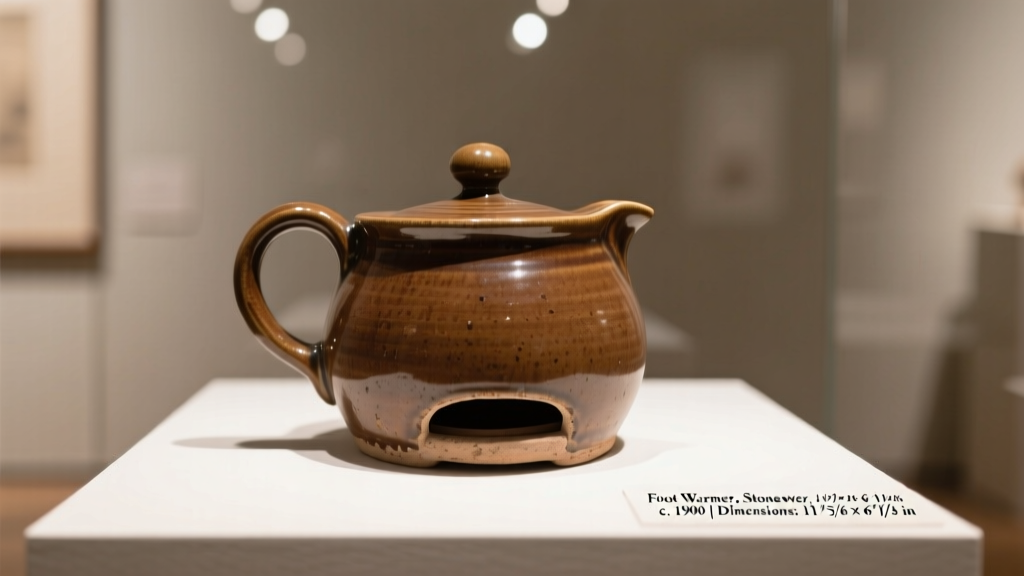
Foot Warmers, Stoneware, Brown: Decoding the Half-Round Knob-on-End Form, c. 1900 — A Technical Authentication & Market Analysis
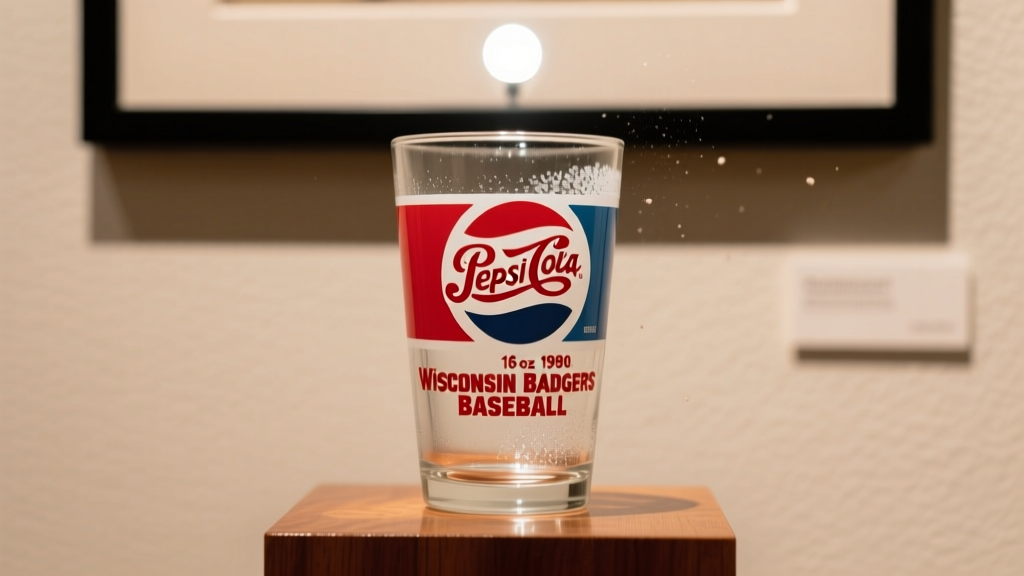
Pepsi Cola Glass Wisconsin Badgers Baseball 16 Oz: Authentication, Market Value, and Collectibility Analysis
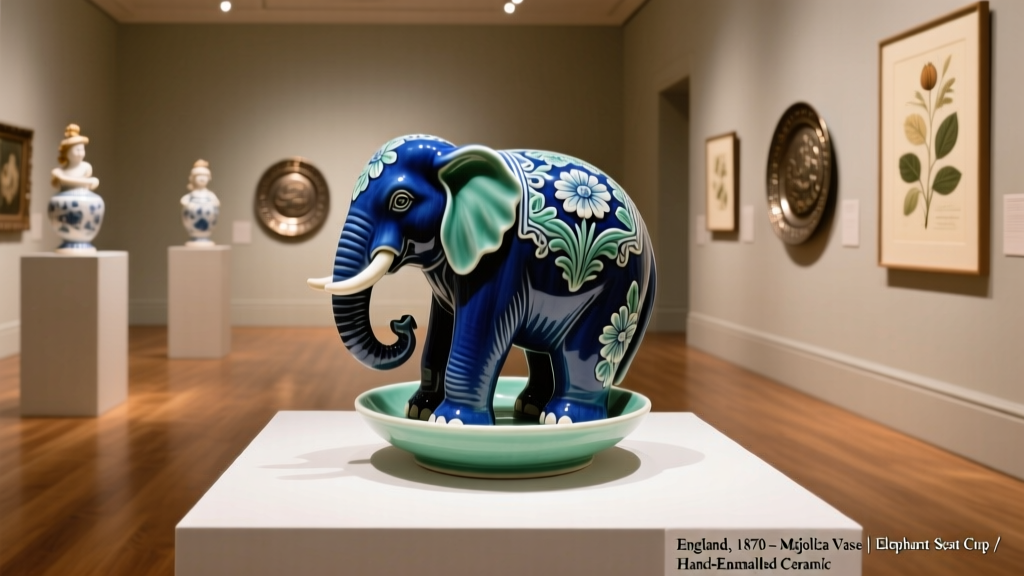
Majolica Vase Spill Elephant Seat Cup: Authentication, Provenance, and Market Value of an 8-Inch English Victorian Ceramic
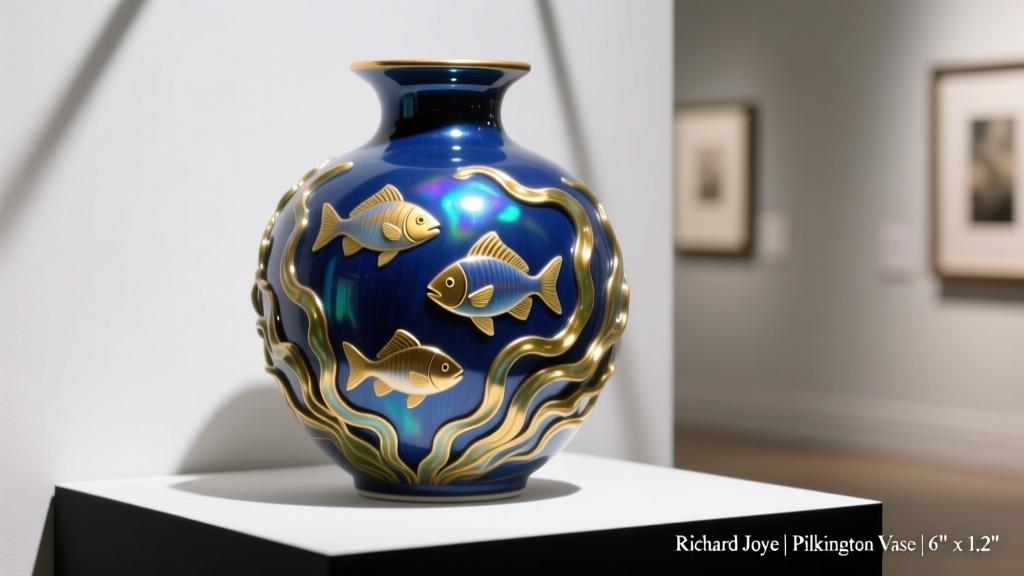
Authenticating the Pilkington Vase: Fish & Seaweed Luster Gold on Blue Glaze by Richard Joyce (6½")
Furniture Desk Station Master Oak: Authentication, Market Value, and Technical Specifications

Toy Man Pushing Cart Bag Accessories: Blue Stenciled Tin Windup Figure from Germany (c. 1930–1939)
Federal-Era Mahogany Banjo: Authentication, Provenance, and Market Value of the 33-Inch Music Banjo