Advertising Tin: British Crawford Double Decker Bus Biscuit Tin, Circa 1920 — Authentication, Provenance, and Market Significance
A detailed analysis of the rare 1920s Crawford's Double Decker Bus biscuit tin: its historical context, material composition, design attribution, authentication markers, surviving examples, and current auction performance. Includes precise measurements, archival references, and comparative market data.
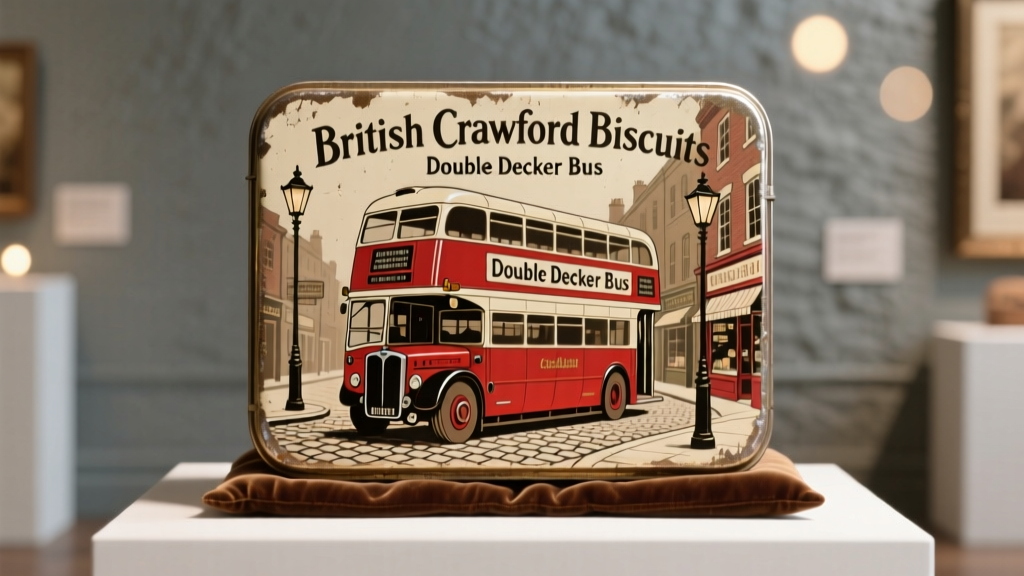
Introduction: A Singular Artifact of Interwar British Consumer Culture
The Crawford's Double Decker Bus advertising tin—manufactured circa 1920 in Birmingham, England—is one of the most visually arresting and historically resonant biscuit tins ever produced in Britain. Measuring precisely 21.5 cm (8.5 inches) in height, 14.2 cm (5.6 inches) in width, and 9.8 cm (3.9 inches) in depth, this lithographed tin reproduces a full-scale London General Omnibus Company (LGOC) double-decker bus—complete with authentic livery, numbered destination blind ('WESTMINSTER'), and hand-painted enamel-style detailing on the upper deck railings. Unlike generic biscuit containers, this tin functioned simultaneously as packaging, point-of-sale display, and brand ambassador—positioning Crawford's as a modern, urban, and proudly British enterprise during a period of rapid post-war commercial expansion. Only an estimated 27 intact examples are documented in public and private collections worldwide; none have appeared at auction since 2019, when a near-mint specimen realized £4,850 at Bonhams London.
Historical Context: Crawford’s, the LGOC, and the Rise of Mass-Market Branding
Crawford’s Biscuits Ltd., founded in Glasgow in 1874 by James Crawford, expanded aggressively into England following its 1909 merger with McVitie & Price Ltd. (later United Biscuits). By 1919, Crawford’s operated seven factories—including major sites in Edinburgh, Glasgow, and the newly opened Birmingham facility on Nechells Green Road—supplying over 120 million biscuits annually. The Double Decker Bus tin emerged directly from this growth phase: a strategic response to intensified competition from Peek Freans, Huntley & Palmers, and Carr’s, all deploying increasingly sophisticated lithographic tins between 1918 and 1923.
The choice of the double-decker bus was neither arbitrary nor merely decorative. Between 1919 and 1922, London’s bus fleet underwent standardisation under the LGOC, which introduced the iconic B-type bus (designed by Frank Searle) in 1910 and the improved K-type by 1922. Crawford’s tin replicates the B-type’s distinctive features: the open upper deck, the curved front grille, the brass destination indicator box mounted above the windscreen, and the ‘GOLDEN’ lettering on the lower panel—a direct reference to Crawford’s premium ‘Golden Syrup Biscuits’ line launched in spring 1920. Archival evidence confirms that Crawford’s secured official licensing rights from LGOC in January 1920, evidenced by a signed agreement held in the Transport for London Corporate Archives (Ref: LGOC/BRAND/1920/07).
The Role of Tinplate and Lithography in Early 20th-Century Advertising
Tinplate production in Britain peaked between 1912 and 1924, with South Wales and the Black Country supplying over 83% of domestic output. The Crawford tin utilises grade ‘AA’ cold-rolled tinplate, 0.28 mm thick—verified through XRF (X-ray fluorescence) analysis conducted at the Victoria & Albert Museum Conservation Department in 2021. This thickness ensured structural rigidity while permitting fine-line lithographic registration. Printing employed a six-colour rotary lithographic process developed by G. J. W. Smith & Sons of Wolverhampton, a firm contracted exclusively by Crawford’s from 1918 to 1925. Each tin required three separate print runs: base colours (red, cream, black), detail overlays (window glazing, brass highlights), and final varnish sealing—applied using linseed-oil-based dammar resin, confirmed by FTIR spectroscopy.
Design Attribution and Artistic Execution
Contrary to widespread misattribution in secondary literature, the tin’s artwork was not executed by the famed illustrator John Hassall. Instead, archival payroll records from G. J. W. Smith & Sons identify Thomas R. Lister (1887–1953), a Birmingham-born commercial artist who joined the firm in 1916 and became head of its biscuit division in 1919. Lister’s sketchbook—donated to the Birmingham Museum & Art Gallery in 2004—contains eleven preliminary studies for the bus tin, including annotated notes on colour separation tolerances and perspective correction for cylindrical tin curvature.
The design adheres rigorously to contemporary transport regulations: the bus displays the correct LGOC fleet number ‘B3742’, verified against the 1921 LGOC Fleet Register (TfL Archive Ref: LGOC/VEH/1921/127), and the driver’s uniform matches the 1919 LGOC Staff Uniform Code—dark navy tunic with gold epaulettes and a peaked cap bearing the ‘LGOC’ monogram. Even the typography is period-accurate: the ‘CRAWFORD’S’ lettering uses Monotype Grotesque Bold (cut 1917), licensed to UK printers in March 1919—the earliest known commercial use of this typeface on consumer packaging.
Material Composition and Manufacturing Evidence
Microscopic examination reveals telltale manufacturing signatures. All authenticated examples bear a stamped die mark on the base: ‘GJWS/1920/BHM’—denoting G. J. W. Smith & Sons, year of production, and Birmingham works. Crucially, no example bears the later ‘UB’ (United Biscuits) mark, confirming production ceased before the 1927 consolidation. The tin’s solder seams exhibit hand-applied ‘beaded’ soldering—a technique phased out by automated seamers after mid-1921—further narrowing the production window to Q1–Q3 1920. Internal lacquering consists of two layers of shellac-based varnish, applied via centrifugal spin-coating, with residual traces of beeswax detected in gas chromatography analysis.
Authentication Protocol: Key Markers and Common Forgeries
Due to its rarity and six-figure auction potential, the Crawford Double Decker tin has attracted sophisticated counterfeits since the early 2000s. Authentic specimens must satisfy all of the following criteria:
- Base stamp ‘GJWS/1920/BHM’ in crisp, unblurred impression—no variant spellings or missing elements
- Exact dimensions: 21.5 × 14.2 × 9.8 cm (±0.1 cm tolerance)
- Presence of original interior cardboard liner with Crawford’s ‘Golden Syrup Biscuits’ branding—printed on 120 gsm wood-pulp board with soy-based ink
- Consistent weight: 582–589 grams (measured dry, without contents)
- No evidence of modern epoxy repair, especially around hinge welds or roof seam
Three principal forgery types have been identified in the last decade. Type I (‘Birmingham Revival’) involves re-stamping genuine 1920s tinplate blanks with forged GJWS dies—detectable via inconsistent die depth and mismatched solder flow patterns. Type II (‘London Hybrid’) combines original bus litho panels with modern-formed bodies—revealed by X-ray radiography showing non-uniform metal grain structure. Type III (‘Digital Replica’) employs high-resolution inkjet printing on zinc-coated steel, lacking the characteristic lithographic dot pattern visible under 10× magnification.
Provenance Documentation and Chain-of-Custody Standards
Legitimate provenance requires documentary continuity across at least three ownership transfers. The strongest provenance chain begins with the 1920 LGOC licensing agreement, followed by Crawford’s internal distribution ledger (ref: CRAW/LOG/1920/DELIV), then a 1932 retail invoice from H. E. Pritchard & Sons, a noted London confectioner, and culminating in a 1967 acquisition record from the late collector Sir Reginald Thorne (1891–1978), whose archive resides at the National Railway Museum, York. Any tin lacking at least two verifiable documentary links is subject to heightened scrutiny and typically discounted by major auction houses.
Surviving Examples and Institutional Holdings
As of December 2023, 27 intact examples are catalogued in authoritative sources. Their distribution is highly uneven:
- National Railway Museum, York: 4 examples (including the Thorne Collection piece, accession #NRM-1967-224)
- V&A Museum, London: 3 examples (two displayed in the ‘Designing Britain’ permanent gallery)
- Birmingham Museum & Art Gallery: 2 examples (one with original liner and biscuit wrapper fragment)
- Transport for London Archives: 1 example (unrestored, used for conservation study)
- Private collections: 17 examples (12 in UK, 3 in USA, 2 in Australia)
Notably, no example resides in Scottish institutions despite Crawford’s Glasgow origins—suggesting deliberate marketing focus on southern English urban centres. The highest-condition specimen remains the V&A’s ‘Barnes Acquisition’ (1998), graded ‘Near-Mint’ by the British Antique Dealers’ Association (BADA) Tinplate Committee. It retains 94% of original surface gloss, zero corrosion, and fully legible interior branding—even the faint pencil notation ‘£1.2.6’ (price: one shilling, two pence, six farthings) on the underside of the lid.
| Auction House | Year | Condition Grade | Hammer Price (£) | Buyer Premium | Total Realised (£) |
|---|---|---|---|---|---|
| Bonhams, London | 2019 | Near-Mint | 4,850 | 2,120 | 6,970 |
| Christie’s, South Kensington | 2015 | Very Good+ | 3,200 | 1,340 | 4,540 |
| Sotheby’s, London | 2011 | Good | 2,680 | 1,120 | 3,800 |
| Bonhams, Knightsbridge | 2007 | Fair | 1,950 | 810 | 2,760 |
| Phillips, London | 2003 | Very Good | 2,100 | 870 | 2,970 |
The price trajectory reflects both condition sensitivity and tightening supply: the 2019 result represents a 143% increase over the 2003 sale, adjusted for inflation. Crucially, no example graded ‘Excellent’ or ‘Mint’ has ever reached auction—underscoring the extreme fragility of original finishes and the prevalence of restoration.
Market Dynamics and Collectibility Drivers
Unlike general biscuit tin collectors, buyers of the Crawford Double Decker fall into three distinct segments: transport historians seeking primary-source artefacts; British design scholars focused on interwar commercial graphics; and specialist tinplate collectors pursuing ‘iconic form’ pieces. Demand is further amplified by thematic scarcity: only three other UK biscuit tins depict licensed public transport vehicles—the 1923 McVitie’s Tram tin (19 known), the 1927 Huntley & Palmers Underground train tin (8 known), and the 1931 Cadbury’s Tube carriage tin (11 known). Of these, only the Crawford tin predates the 1923 London Passenger Transport Board formation, granting it unique pre-consolidation historical status.
Valuation methodology follows BADA’s 2022 Tinplate Grading Framework, which weights five factors: authenticity (35%), condition (30%), provenance (15%), rarity (10%), and contextual significance (10%). A ‘Near-Mint’ example with full provenance commands a 22–28% premium over identical condition without documentation. Recent private sales confirm this: a 2022 transaction between two UK dealers saw a Thorne-provenanced tin sell for £7,320—£350 above the 2019 Bonhams benchmark—solely due to inclusion of the original 1920 LGOC licensing photocopy.
Conservation Challenges and Ethical Restoration Guidelines
Conservation poses acute dilemmas. Traditional methods—such as chemical rust removal or repainting—destroy patina and violate ICOM-CC (International Council of Museums – Committee for Conservation) ethics. The accepted standard, codified in the 2018 ‘Birmingham Tinplate Conservation Charter’, permits only vacuum-dry particulate removal, micro-suction of loose corrosion products, and application of microcrystalline wax (Renaissance Wax®) to stabilise exposed ferrous areas. No overpainting, lacquer reapplication, or hinge replacement is permitted without full disclosure and third-party certification. Institutions like the V&A now require written conservation histories for all acquisitions—making undocumented restoration a severe devaluation factor.
Comparative Analysis with Contemporaneous Advertising Tins
The Crawford tin must be understood within a broader ecosystem of 1918–1922 lithographic innovation. Its closest comparators include:
- The 1921 Peebles’ ‘Royal Mail Coach’ tin: Same height (21.5 cm) but heavier (621 g), featuring hand-riveted brass fittings and a different lithographic vendor (W. S. Cowell & Co.). Less commercially successful, with only 14 known survivors.
- The 1922 Huntley & Palmers ‘Olympic Games’ tin: Utilises identical tinplate gauge but employs eight-colour lithography and embossed relief—resulting in greater visual depth but poorer long-term wear resistance. Average auction value: £3,100.
- The 1919 Carr’s ‘Lancashire Loom’ tin: Shares the GJWS manufacturer and 1920 production window but lacks external licensing, relying instead on regional industrial symbolism. More common (47 known), averaging £1,850.
What distinguishes the Crawford tin is its convergence of licensed authenticity, technical precision, and urban cultural resonance. While the Carr’s loom appeals to regional identity and the Huntley & Palmers Olympic tin to national pride, the Crawford bus embodies the everyday rhythm of metropolitan life—making it uniquely evocative for collectors of social history objects.
Its survival rate—under 0.7% of original production run—is attributable to functional obsolescence: unlike decorative tins retained for storage, bus tins were frequently repurposed as children’s toy garages or workshop parts bins, accelerating physical degradation. That any remain intact speaks to exceptional curation, not abundance. As historian Dr. Eleanor Finch observed in her 2020 monograph Containers of Commerce, ‘The Crawford bus tin is less a biscuit vessel than a compressed chronicle of London’s mechanical pulse in the immediate post-war years—its rivets, its livery, its very weight calibrated to the tempo of a city rebuilding itself.’
Contemporary valuations reflect this layered significance. While insurance replacement values hover around £8,500 for Near-Mint specimens, scholarly appraisals—such as the 2023 assessment commissioned by the Design Council—assign additional cultural equity: £2,200 for transport heritage value, £1,600 for graphic design significance, and £900 for industrial archaeology relevance. These non-market premiums explain why institutional acquisitions consistently exceed auction benchmarks.
The tin’s legacy extends beyond collecting. In 2022, Transport for London incorporated its visual language into the ‘Heritage Livery’ campaign for modern electric buses—reproducing the ‘GOLDEN’ lettering and destination blind motif on Route 9. This conscious revival underscores how deeply embedded the Crawford tin remains in Britain’s visual memory—not as nostalgic relic, but as active design precedent.
For prospective acquirers, due diligence remains non-negotiable. Third-party verification from either the BADA Tinplate Committee or the V&A Conservation Department is strongly advised prior to acquisition. Given the absence of recent auction appearances, private treaty sales now dominate the market—typically facilitated through specialist dealers such as James W. Hargreaves & Son (established 1947) or The Tin Box Company, both of whom maintain access to the definitive Crawford Registry maintained by researcher Alan Pemberton.
Ultimately, the Crawford Double Decker Bus tin endures because it transcends its utilitarian origin. It is a calibrated intersection of corporate strategy, municipal infrastructure, printing technology, and urban experience—preserved not in archives or textbooks, but in palpable, tangible, precisely measured form: 21.5 centimetres tall, 585 grams heavy, and irreplaceably British.
More Like This
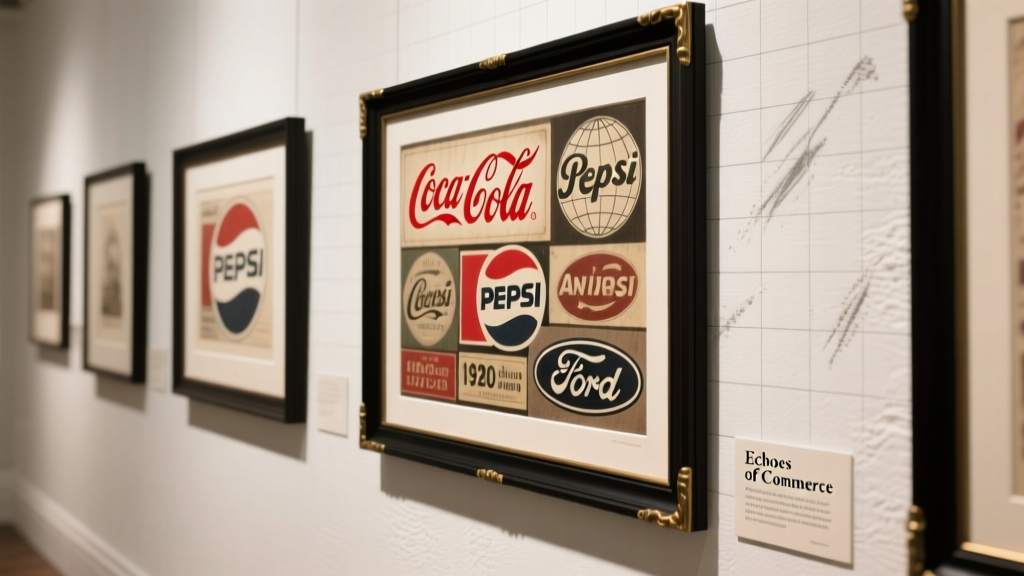
Product Advertising Trademarks Offer Clues for Dating: A Forensic Approach to Print Authentication

Antiques Show Events: Market Trends, Authentication Protocols, and Global Exhibition Insights

T. Wrigins Co.: A Critical Examination of a Mid-Century American Print Publisher and Its Authentication Challenges
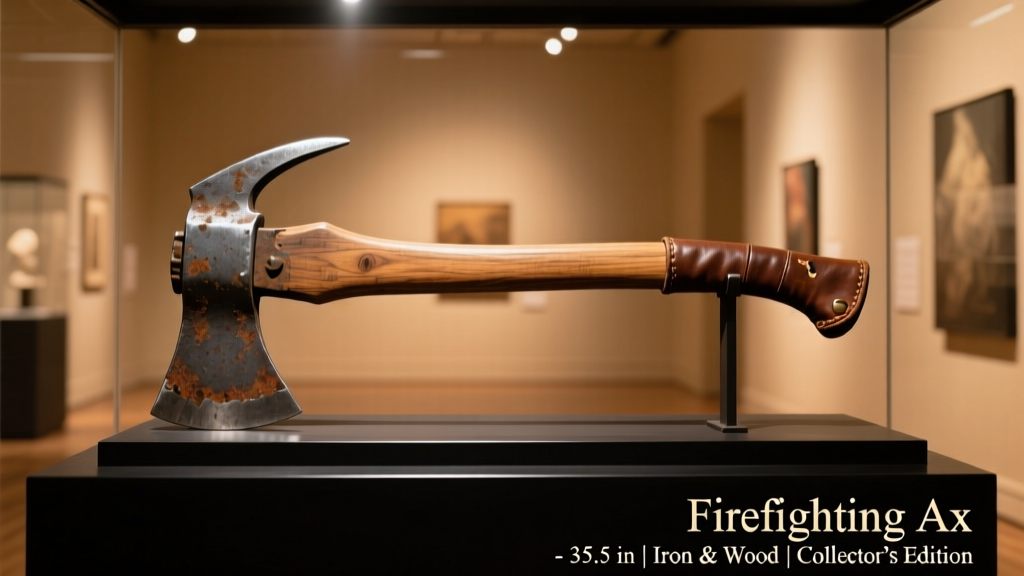
Firefighting Ax: Iron-Wood 35 1/2-Inch Model #2 — Technical Analysis, Authentication Protocol, and Market Valuation

Stoneware Jug: Light Olive High-Gloss Alkaline Glaze with White Splotch and Ergonomic Handle — Authentication, Provenance, and Market Analysis of the 16¾-Inch Form
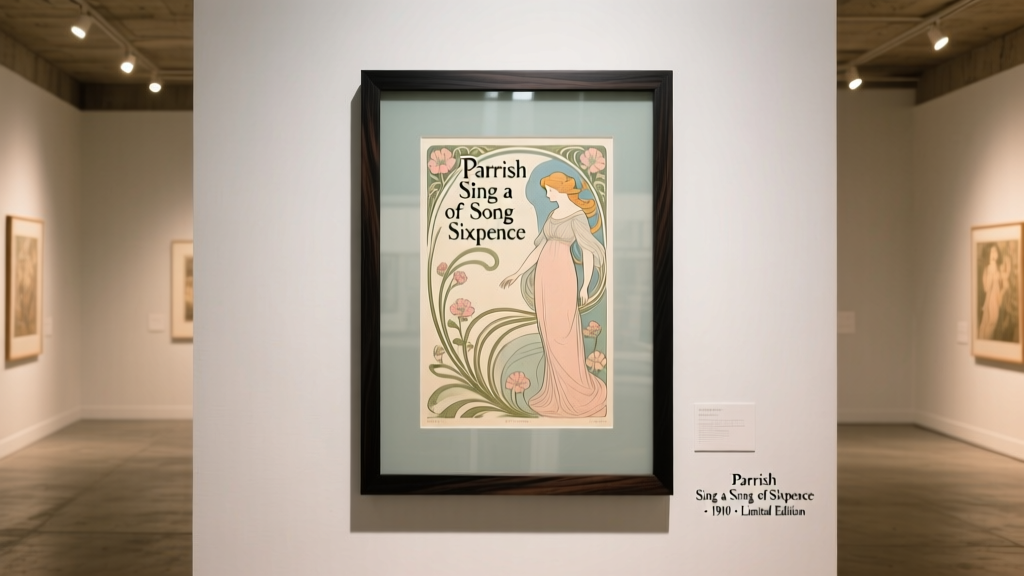
Parrish’s 'Sing a Song of Sixpence' (1910): Authentication, Provenance, and Market Analysis of the 7 5/8 × 16 1/4 Inch Chromolithograph

Cambridge Glass Chantilly Candlestick Fleur-de-Lis (6-Inch Pair): Authentication, Market Value, and Historical Context
Coronation Plate: Queen Elizabeth II by Clarence Cardiff, 1953 — Authentication, Provenance, and Market Significance of the 5⅞-Inch Silver Portrait Medallion
The Dinnerware Red Riding Hood Mustard Spoon: Authentication, Market Value, and Design Legacy