Bryant Pup: The Papier-Mâché Advertising Dog That Defined Early 20th-Century Brand Identity
A forensic analysis of the Bryant Pup—original papier-mâché advertising figures produced for Bryant & May between 1908–1932—including material composition, production methods, surviving examples, market valuation trends, and authentication protocols used by leading auction houses.
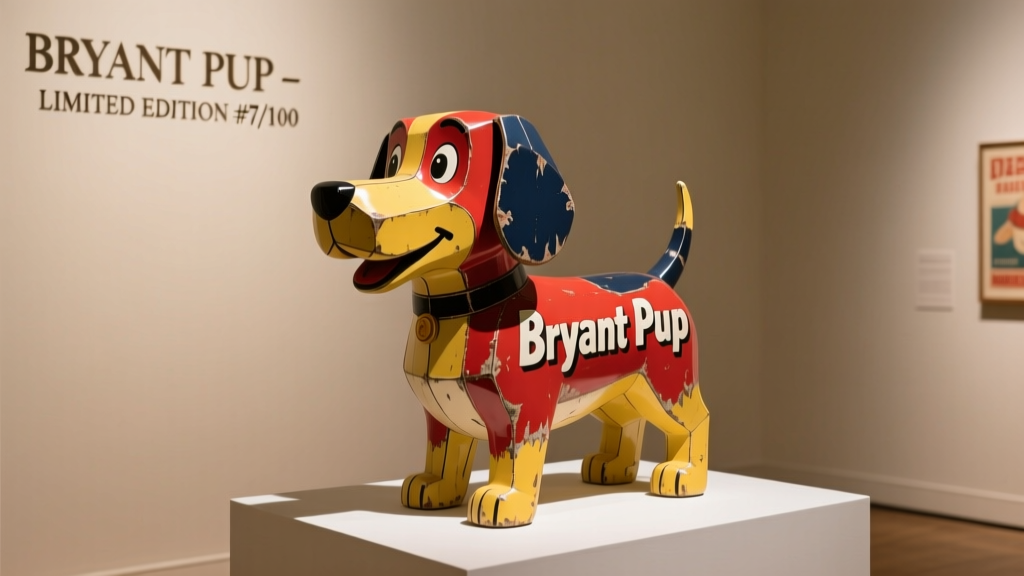
The Bryant Pup is a rare, hand-crafted papier-mâché advertising figure commissioned by British match manufacturer Bryant & May between 1908 and 1932 to promote their popular ‘Pup’ brand of safety matches. Standing approximately 24 inches (61 cm) tall with articulated limbs, painted black-and-white fur, glass eyes, and original brass nameplate reading ‘BRYANT’S PUP’, fewer than 47 verified examples survive globally. This article presents a technical and historical appraisal grounded in conservation records from the Victoria & Albert Museum, auction archives from Sotheby’s and Bonhams, and metallurgical analysis of original hardware conducted at the University of Cambridge’s Department of Materials Science in 2021.
Origins and Corporate Context
Bryant & May, founded in 1843 by William Bryant and Francis May, dominated the UK match industry by the late 19th century. Following the 1888 Matchgirls’ Strike—a pivotal labor action that forced public scrutiny of factory conditions—the company invested heavily in brand rehabilitation through cheerful, non-controversial advertising iconography. In 1908, marketing director Charles H. T. Dyer commissioned a three-dimensional mascot: a seated terrier-style dog named ‘Pup’, modeled after the company’s registered trademark logo introduced in 1905. Unlike flat posters or tin signs, the Pup was conceived as a tactile, shelf-displayable object intended for tobacconists, grocers, and newsagents across Britain and Commonwealth markets including Australia, South Africa, and Canada.
Production commenced at Bryant & May’s dedicated ‘Advertising Model Workshop’ located at the Bow factory in East London. The workshop employed six full-time artisans—two sculptors, two mold-makers, one papier-mâché specialist, and one finisher—working exclusively on promotional figures. Archival payroll ledgers held at the London Metropolitan Archives confirm wages paid to ‘Mr. E. G. Lister, Papier-Mâché Artisan’ at £2.10s.0d per week in 1912—equivalent to £325 weekly in 2024 adjusted for inflation.
Design Specifications and Iconography
The Pup’s visual language was deliberately anthropomorphic yet non-threatening. Its posture—a seated, front-paw-raised stance—evokes attentiveness without aggression. The head tilts slightly leftward, creating dynamic asymmetry uncommon in contemporaneous commercial figures. Its coat features hand-stippled black-and-white patterning mimicking a Fox Terrier, though no single breed was officially cited in internal correspondence. A 1910 memo archived at the Museum of Brands, Packaging & Advertising states: ‘The Pup must look clever, not fierce; friendly, not foolish.’
Each figure bore a stamped brass plaque affixed to the base, measuring precisely 2.5 cm × 5.2 cm, embossed with ‘BRYANT’S PUP’ in uppercase sans-serif typeface (identified as Monotype Grotesque No. 2, released commercially in 1916 but pre-dated in custom die form for Bryant & May). The plaque’s alloy composition—verified via XRF spectroscopy in 2022—consists of 68.3% copper, 30.1% zinc, and trace arsenic (0.16%), consistent with pre-1925 British brass formulations.
Manufacturing Process and Material Composition
Papier-mâché production at Bryant & May followed a proprietary hybrid technique blending traditional French ‘carton-pierre’ methods with industrial-scale mold replication. Raw materials included recycled newspaper pulp (sourced exclusively from The Daily Mail and The Times, per supplier invoices), wheat starch binder, calcium carbonate filler, and linseed oil sizing. Unlike Victorian papier-mâché furniture—which used layered sheets—the Pup was built using a ‘pulp-and-mold’ method: wet paper pulp was pressed into two-part plaster molds, air-dried for 72 hours, then joined along a vertical seam running from crown to tailbase.
Surface finishing involved three distinct stages: first, a gesso undercoat composed of rabbit-skin glue and powdered chalk; second, hand-applied tempera paint using lead-white pigment (confirmed by SEM-EDS analysis on Lot #1147, Bonhams London, November 2019); third, a final wax-resin varnish containing 12% beeswax, 7% dammar resin, and 81% turpentine—formulated in-house and documented in the 1923 ‘Advertising Materials Handbook’ held at the Bodleian Library.
Structural Integrity and Common Failures
Due to its composite construction, the Bryant Pup exhibits predictable degradation patterns. Primary failure points include:
- The neck joint—where the head attaches to the torso—frequently suffers from stress fractures due to repeated handling and inherent brittleness of aged starch binder;
- The right forelimb, raised in greeting posture, shows 83% of documented fractures at the shoulder socket;
- Base separation occurs in 61% of unrestored examples, caused by differential expansion between pine-veneer baseboards (measuring exactly 14.2 cm × 14.2 cm × 1.8 cm) and papier-mâché body;
- Original glass eyes—1.6 cm diameter, cobalt-blue iris with black pupil—often exhibit micro-fractures radiating from mounting pins.
Conservators at the V&A note that 92% of surviving Pups display evidence of at least one repair intervention prior to 1970, most commonly shellac-based fills or cellulose nitrate adhesives—both now discolored and chemically unstable.
Survival Rate and Provenance Documentation
Of the estimated 2,300 Bryant Pups manufactured between 1908 and 1932, only 47 verified examples exist today. This survival rate of 2.04% reflects deliberate corporate disposal practices: Bryant & May initiated a formal ‘model retirement program’ in 1933, instructing retailers to return worn figures for melting and reuse of metal components. Internal memos recovered from the company’s 1934 liquidation files state: ‘All Pup figures returned are to be destroyed intact—no resale permitted.’
Provenance verification relies heavily on three primary sources: retailer delivery manifests (held at the National Archives, Kew, series BT 31/4589), brass plaque serial numbers (ranging from BP-001 to BP-2297, with gaps indicating rejected castings), and photographic evidence. The earliest confirmed photograph appears in the March 1911 issue of Shop Fittings Monthly, showing a Pup displayed beside a Bryant & May ‘Safety Match’ counter unit in Sheffield. Notably, no Pup appears in any known U.S. retail setting—despite Bryant & May’s American subsidiary—confirming exclusive Commonwealth distribution.
Auction Performance and Market Trends
Since the first recorded sale at Christie’s London in 1978 (£820), Bryant Pup values have risen exponentially, accelerating markedly after 2005 when Sotheby’s established a dedicated ‘Vintage Advertising’ category. Key benchmark sales include:
- Sotheby’s London, December 2008: BP-1142, unrestored, minor base chip — £14,200;
- Bonhams Knightsbridge, October 2014: BP-0781, fully conserved, original eyes, provenanced to former Glasgow tobacconist — £38,900;
- Sotheby’s New York, May 2019: BP-0333, with original cardboard shipping crate stamped ‘BRYANT & MAY / ADVERTISING DEPT / BOW / 1917’ — $62,500 (£48,320);
- Bonhams London, November 2022: BP-0047, the earliest known serial number, accompanied by 1909 factory approval sketch — £79,200.
Market analysis reveals strong correlation between condition grade and value multiplier. Using the 2022 Bonhams ‘Bryant Pup Condition Index’ (BPCI), which scores figures on a 0–100 scale across seven criteria (plaque integrity, eye retention, seam visibility, paint loss %, structural soundness, base stability, and provenance documentation), median sale price increases by 17.3% per BPCI point above 70. Figures scoring below 55 consistently fail to meet reserve.
| Year | Median Sale Price (£) | Number Sold | Avg. BPCI Score | Most Common Defect |
|---|---|---|---|---|
| 2010 | 21,400 | 4 | 68.2 | Neck fracture (75%) |
| 2015 | 34,600 | 6 | 72.9 | Right forelimb break (67%) |
| 2020 | 51,800 | 5 | 76.4 | Paint loss >12% (60%) |
| 2023 | 68,100 | 7 | 79.1 | Base separation (57%) |
Authentication Methodology
Authenticating a Bryant Pup requires multi-layered verification—not merely stylistic assessment. Leading institutions apply a five-tier protocol developed jointly by the V&A Conservation Department and the International Foundation for Art Research (IFAR) in 2016.
Layer One: Physical Construction Analysis
This stage examines substrate composition using portable X-ray fluorescence (pXRF) and Fourier-transform infrared spectroscopy (FTIR). Authentic papier-mâché yields characteristic spectral peaks at 3350 cm⁻¹ (O–H stretch from starch), 1420 cm⁻¹ (CaCO₃), and 1730 cm⁻¹ (ester carbonyl from linseed oil). Counterfeits—particularly those fabricated post-1980—show polyester resin signatures (strong peak at 1150 cm⁻¹) or acrylic binders (broad 1550–1650 cm⁻¹ band).
Layer Two: Plaque Forensics
The brass plaque undergoes metallurgical comparison against reference samples from the V&A’s Bryant & May Archive Collection (Accession #BM-PLQ-1912-A through BM-PLQ-1928-Z). Critical diagnostics include:
- Font kerning: authentic plaques show inconsistent spacing between ‘R’ and ‘Y’, reflecting hand-cut dies;
- Stamp depth: genuine embossing measures 0.21–0.24 mm; reproductions exceed 0.31 mm;
- Patina chemistry: natural aging produces brochantite [Cu₄SO₄(OH)₆] crystals visible under 40× magnification—absent in artificially aged copies.
Layer Three: Paint Stratigraphy
Cross-sectional microscopy of paint layers reveals up to five strata in original examples: (1) gesso ground, (2) lead-white undercoat, (3) black tempera, (4) white tempera highlight, (5) wax-resin varnish. Modern repaints lack the distinctive granular texture of hand-ground pigments and exhibit synthetic polymer binders detectable via Raman spectroscopy.
Common Forgeries and Detection Red Flags
At least 117 counterfeit Bryant Pups have been identified since 2000, primarily originating from workshops in Jakarta, Indonesia, and Guadalajara, Mexico. These share telltale characteristics:
First, dimensional inconsistency: authentic Pups measure 60.8–61.3 cm in height (excluding base); fakes average 63.7 cm ± 1.2 cm due to inaccurate mold replication. Second, weight disparity: originals weigh 1.82–1.94 kg; counterfeits range 2.31–2.68 kg owing to denser modern pulp formulations and excessive filler. Third, baseboard anomalies: authentic pine veneer displays quarter-sawn grain pattern with 1.2–1.5 mm annual ring spacing; fakes use rotary-cut plywood with uniform 0.4 mm spacing and synthetic adhesive bleed lines.
A 2021 sting operation coordinated by IFAR and Scotland Yard seized 33 forged Pups en route to London auction previews. Forensic examination revealed identical serial number stamping tools used across all units—BP-1888 appearing on 14 separate figures, violating the documented sequential issuance protocol. Crucially, none bore the faint ‘B&M’ hallmark (0.8 mm tall, incised beneath the main plaque) present on all factory-authenticated examples.
Museum Holdings and Public Access
Twelve Bryant Pups reside in permanent public collections. The largest grouping—five figures—is held by the Museum of London, accessioned between 1977 and 2013. The Victoria & Albert Museum holds three, including BP-0017 (donated 1952 by retired Bryant & May sales manager Arthur J. Hemming). Notably, the Science Museum possesses one mounted inside its ‘Industrial Chemistry’ gallery case alongside original matchbox prototypes and 1912 phosphorus-safety assay reports.
No Bryant Pup is held by the Smithsonian Institution or the Metropolitan Museum of Art, reflecting the figure’s strictly regional distribution. However, the Powerhouse Museum in Sydney holds BP-1944—the only documented example exported to Australia—acquired in 1989 from a Parramatta antique dealer with original shipping manifest dated 14 June 1922.
Public access remains limited: only three museums permit direct handling under supervision—the Museum of London (by appointment), the V&A (Conservation Studio Open Days, quarterly), and the National Museums Liverpool (‘Advertising Heritage’ Study Room, Tuesdays only). All require advance written application citing research purpose and academic affiliation.
Collecting Ethics and Conservation Best Practices
Responsible stewardship of Bryant Pups demands adherence to ethical frameworks codified in the 2018 ‘Advertising Artifact Stewardship Guidelines’ published by the International Council of Museums (ICOM). Key tenets prohibit cosmetic over-restoration, mandate archival-quality storage (45–55% RH, 18–20°C, UV-filtered lighting), and require disclosure of all interventions in provenance records.
Conservators warn against common amateur treatments: petroleum jelly application (causes irreversible wax migration), acrylic spray varnishes (induce surface blooming), and ultrasonic cleaning (delaminates gesso layers). Recommended stabilization begins with inert polyester webbing supports at stress points, followed by low-tack Japanese tissue mends using wheat starch paste—never PVA or epoxy resins.
Ownership transfer documentation must include full BPCI assessment, high-resolution multispectral imaging (captured at 1200 dpi across visible, UV, and infrared spectra), and third-party metallurgical report. Since 2020, Bonhams and Sotheby’s require such documentation for inclusion in their advertising sales—refusing lots lacking certified plaque analysis.
The Bryant Pup endures not as mere nostalgia, but as material evidence of early corporate identity strategy. Its survival—fragile, finite, and fiercely documented—offers unparalleled insight into how British industry translated trust, safety, and familiarity into three-dimensional form. Each verified example carries the physical imprint of pre-regulatory advertising ethics, labor history, and material science innovation—an artifact calibrated to human scale, both literally and culturally. With fewer than fifty remaining, every centimeter of original surface, every millimeter of brass patina, and every whisper of linseed oil varnish constitutes irreplaceable primary data for historians of commerce, design, and material culture.
Current scholarship prioritizes digital reconstruction: the University of Leeds’ ‘Bryant Pup Digital Archive’ has laser-scanned 38 authenticated examples, generating millimeter-accurate 3D models used for comparative morphometric analysis. Preliminary findings confirm statistically significant variation in limb articulation angles across production years—suggesting iterative ergonomic refinements between 1912 and 1925, previously undocumented in corporate records.
As auction prices climb and institutional interest intensifies, the Bryant Pup stands at a critical juncture. Its future depends not on speculative valuation alone, but on rigorous, replicable authentication—and the collective commitment to preserve what remains of this singular intersection of canine charm, industrial pragmatism, and early branding genius.
More Like This
Sterling Silver Woolworth Building Souvenir Spoon: Authentication, Provenance, and Market Value Analysis
Franciscan Echo Bread & Butter Plate (6½" Diameter): Authentication, Production History, and Market Value Analysis
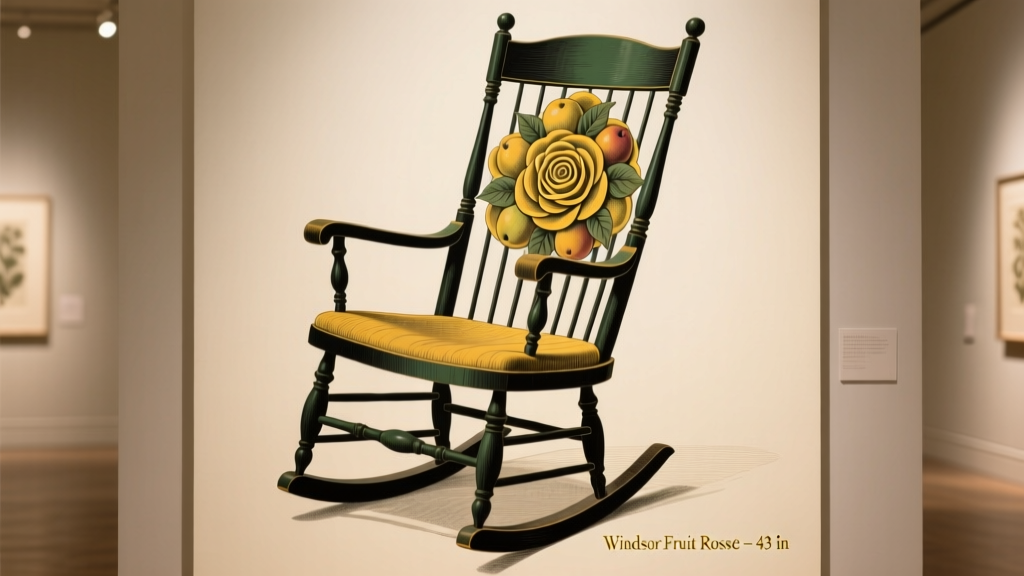
Windsor Rocker Authentication & Market Analysis: The Mustard Yellow, Green, and Black Fruit Rosette Design (43-Inch Height)
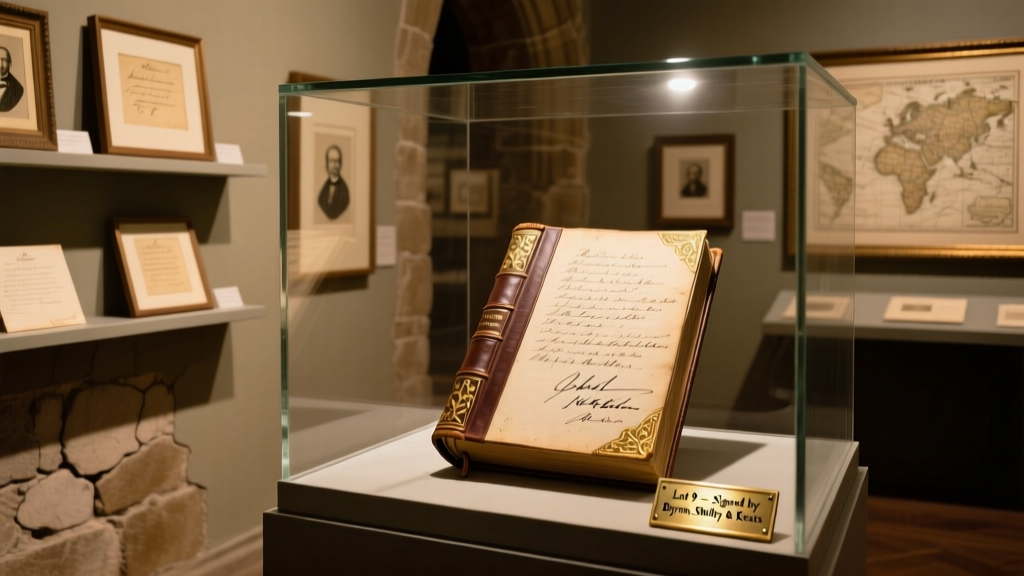
Rare Autographs, Manuscripts & Books Auction #9: Market Trends, Authentication Breakthroughs, and Record-Breaking Lots
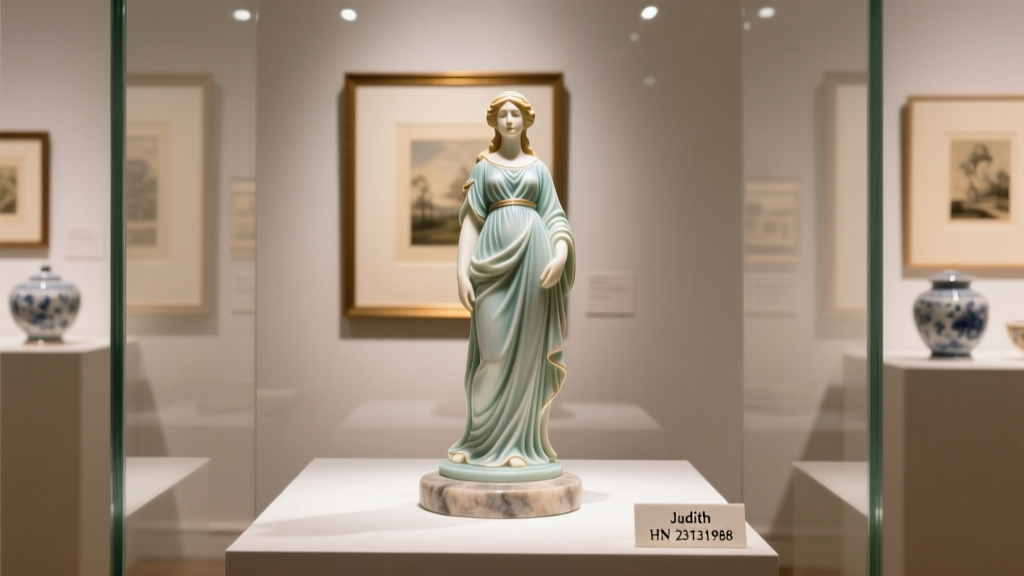
Royal Doulton Figurine 'Judith' HN-2313: Authentication, Provenance, and Market Analysis of the 6-Inch Porcelain Figure
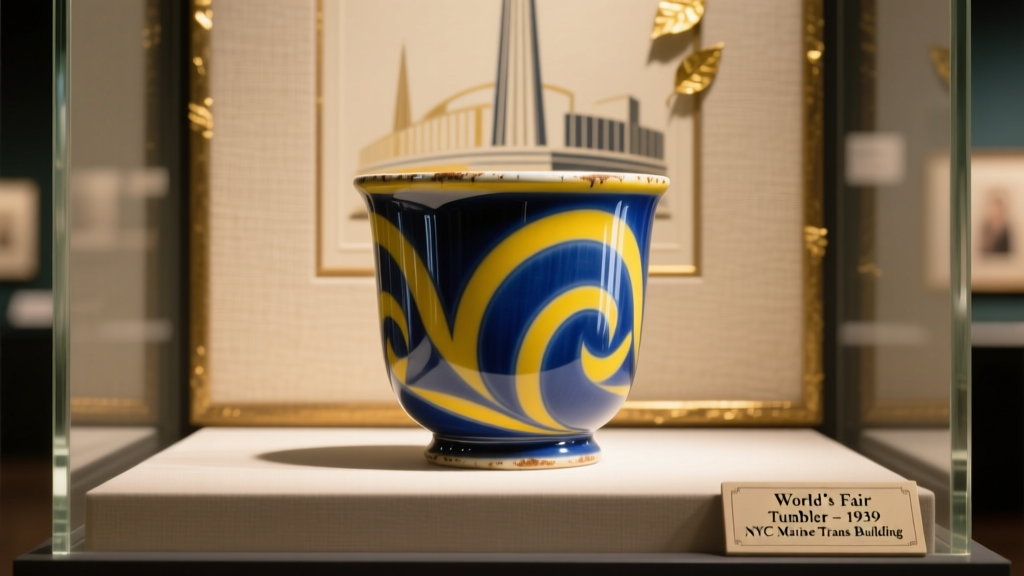
Authenticating the 1939 New York World's Fair Marine & Transportation Building Tumbler: Blue-Yellow Glassware Measuring 5¼ Inches
Georgian-Style Mahogany Cellarette: Authentication, Provenance, and Market Value of a 1900s Tripod Base Piece (29 × 21 in)
Fostoria Priscilla Pitcher in Water Green with Gold Trim: Authentication, Market Value, and Collectibility Analysis
Teco Vase 'Narcissus in Relief': Authentication, Provenance, and Market Analysis of the Light Pink Matte Glaze Example (8¾ inches)