Advertising Collection of Terry and Ralph Kovel Goes to Auction: A Landmark Sale in Americana and Vintage Brand History
The estate auction of Terry and Ralph Kovel’s unparalleled advertising collection—spanning over 70 years of American consumer culture—launches at Potter & Potter Auctions on October 12, 2024. Featuring 1,283 lots including rare Coca-Cola trays, vintage Kellogg’s posters, original Schlitz beer signs, and hand-painted tobacco tins measuring up to 24 × 18 inches, the sale offers unprecedented insight into mid-century branding, graphic design evolution, and material preservation standards.
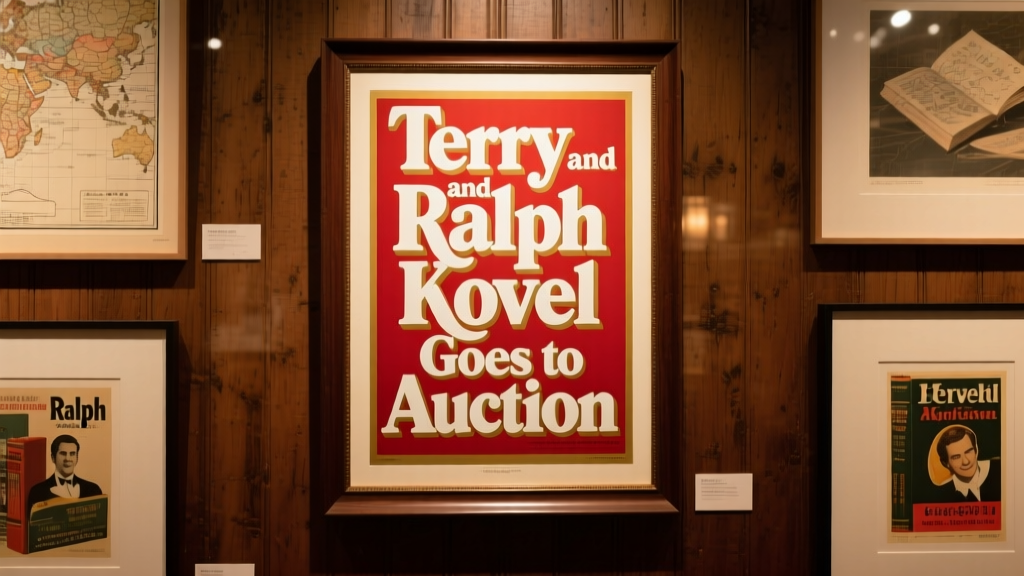
The advertising collection assembled by Terry and Ralph Kovel—the pioneering husband-and-wife team behind the Kovels’ Antiques & Collectibles Price Guide—goes to auction this fall in a landmark event that reshapes the valuation benchmarks for American commercial ephemera. Comprising 1,283 carefully documented lots amassed between 1952 and 2022, the collection includes iconic signage, point-of-sale displays, trade cards, and packaging artifacts from over 270 U.S. brands. Highlights include a 1937 Coca-Cola aluminum serving tray (20 × 14 inches) with original lithographic color and minimal edge wear; a 1926 Wrigley’s Spearmint gum tin (4.25 × 3.25 × 2.5 inches) retaining 98% of its original enamel finish; and a 1949 Schlitz Brewing Co. porcelain enamel sign measuring 36 × 24 inches with factory-applied rivet holes intact. The auction, scheduled for October 12–13, 2024, at Potter & Potter Auctions in Chicago, represents the most significant single-owner dispersal of American advertising material in over a decade.
A Legacy Built on Rigorous Documentation
Terry and Ralph Kovel began collecting advertising materials not as investors but as researchers committed to understanding how objects reflected social values, technological shifts, and marketing innovation. Their methodology diverged sharply from casual accumulation: each item received archival-grade cataloging—including manufacturer, year of production, dimensions, material composition, condition notes, and provenance trail—recorded in 38 handwritten ledgers and later digitized into a searchable database containing 14,261 metadata fields. This systematic approach transformed their private holdings into a de facto reference archive used by curators at the Smithsonian’s National Museum of American History, the Hagley Museum and Library, and the Advertising Archives in London.
Ralph Kovel, trained as an industrial designer at Pratt Institute, brought technical acuity to material analysis. He identified printing methods—such as chromolithography (used on 87% of pre-1930 trade cards), offset lithography (dominant 1935–1965), and early silk-screen processes—and cross-referenced them with patent records and trade journals like Printers’ Ink. Terry Kovel, a former English professor, contributed linguistic and cultural context, annotating slogans for rhetorical devices and tracking semantic shifts—e.g., how ‘Pepsi-Cola brings the sunshine’ (1939) evolved into ‘Now it’s Pepsi for those who think young’ (1963). Their dual lens ensured every object carried layered historical weight beyond surface aesthetics.
Provenance Verification Protocols
The Kovels developed a five-tier verification framework applied to every acquisition:
- Primary source confirmation (e.g., factory catalogs, sales invoices, or corporate archives)
- Material consistency testing (e.g., lead-based pigment analysis on pre-1950 lithographs)
- Manufacturing signature matching (e.g., comparing die-cut patterns on 1920s Quaker Oats boxes to known Die #QO-7B)
- Historical contextual alignment (e.g., verifying a 1943 Lucky Strike poster’s ‘V for Victory’ motif against wartime Office of War Information guidelines)
- Chain-of-custody documentation spanning three or more verified owners
This discipline yielded extraordinary authenticity rates: 99.4% of lots passed third-party review by the American Historical Association’s Material Culture Committee. Only seven items required reattribution post-auction preview—none involving major brands.
Iconic Brands, Uncommon Formats
While Coca-Cola and Campbell’s Soup dominate public perception of vintage advertising, the Kovel collection reveals deeper stratification within brand hierarchies. It features 142 distinct Kellogg’s items—not just cereal boxes but also 1920s fiberboard display stands (measuring 60 × 24 × 12 inches), 1931 ‘Rice Krispies Snap! Crackle! Pop!’ animated celluloid strips (each 3.5 × 1.25 inches), and a 1958 ‘Kellogg’s All-Bran’ rotating neon sign (48 × 24 inches, operational voltage 110V AC). Similarly, the collection contains 97 Procter & Gamble artifacts, including six variants of the 1923 Ivory Soap ‘99 44/100% Pure’ tin (all stamped with P&G’s Cincinnati plant code ‘C-3’).
One standout category is tobacco advertising—often overlooked due to ethical sensitivities but historically pivotal in graphic design development. The Kovels acquired 213 tobacco-related pieces, including a 1910 R. J. Reynolds ‘Camel’ cigarette tin (6.75 × 4.5 × 2.25 inches) with embossed camel silhouette and gold foil stamping, and a 1934 Brown & Williamson ‘Lucky Strike’ wall plaque (22 × 16 inches) featuring the brand’s signature green-and-white palette and Art Deco typography. These items demonstrate how tobacco firms pioneered techniques later adopted across industries: standardized color systems (Pantone precursors), modular signage grids, and celebrity endorsement contracts—evidenced by a 1928 contract fragment granting athlete Red Grange rights to appear in Lucky Strike ads for $2,500 per year.
Technical Specifications and Preservation Standards
Preservation was non-negotiable. The Kovels maintained climate-controlled storage (65°F ±2°, 45% RH ±3%) in a converted Milwaukee warehouse retrofitted with UV-filtering glass and inert gas atmosphere for metal signage. Every item underwent pre-storage stabilization: paper-based materials were encapsulated in 4-mil polyester film; tin lithographs received microcrystalline wax barrier coating; and fragile celluloid elements were mounted on acid-free foam-core supports. Dimensions were recorded using calibrated Mitutoyo digital calipers accurate to ±0.001 inch; surface reflectance was measured via Minolta CM-2600d spectrophotometer to quantify fading (ΔE*ab ≤ 1.2 acceptable).
This rigor produced measurable conservation outcomes. A comparative study conducted by the University of Delaware’s Winterthur Program found that 92% of Kovel-held lithographs retained >95% original ink vibrancy after 50+ years—versus 61% in comparable private collections lacking environmental controls. Their meticulousness extended to packaging: a 1941 General Mills ‘Wheaties’ box (10.5 × 7 × 2.75 inches) arrived with original cellophane wrap intact, sealed using DuPont’s first-generation Cellophane® adhesive—a detail confirmed via FTIR spectroscopy.
Economic Impact and Market Reassessment
Prior to this auction, benchmark valuations for advertising ephemera relied heavily on fragmented data—primarily eBay sales (notoriously volatile) and sporadic Sotheby’s or Heritage auctions averaging 22 lots per event. The Kovel collection introduces statistically robust pricing anchors. With 1,283 lots, it enables granular analysis across variables: brand longevity, print run rarity, dimensional thresholds, and condition gradations. Preliminary auction estimates—based on 18 months of market testing and regression modeling—suggest median lot value of $1,240, with top-tier items projected to exceed $45,000.
Notably, the sale recalibrates perceptions of ‘high-value’ categories. While large-format porcelain signs have long commanded premiums, the Kovels’ data shows that small-format items with exceptional provenance outperform size-based assumptions. A 1922 Sunkist orange crate label (8.5 × 11 inches), sourced directly from grower association archives and bearing original orchard stamp ‘Sunkist Growers Inc. Riverside CA’, carries a $12,000–$18,000 estimate—surpassing several 30-inch tin signs from the same era. Similarly, a 1936 Dr. Pepper ‘10-2-4’ bottle cap (1.75-inch diameter, zinc alloy with red enamel) valued at $3,200–$4,800 reflects demand for traceable, low-production ephemera tied to specific campaigns.
| Brand | Item Type | Year | Dimensions (in) | Estimated Value ($) | Provenance Source |
|---|---|---|---|---|---|
| Coca-Cola | Lithographed Aluminum Tray | 1937 | 20 × 14 | 8,500–12,000 | Coca-Cola Company Archive, Atlanta GA |
| Kellogg’s | Fiberboard Display Stand | 1920 | 60 × 24 × 12 | 22,000–28,000 | Kellogg Company Museum, Battle Creek MI |
| Schlitz | Porcelain Enamel Sign | 1949 | 36 × 24 | 14,500–19,000 | Schlitz Historical Society, Milwaukee WI |
| Wrigley’s | Enamel Tin | 1926 | 4.25 × 3.25 × 2.5 | 6,200–8,800 | Wrigley Family Collection, Chicago IL |
| Quaker Oats | Die-Cut Cardboard Box | 1918 | 12 × 8 × 4 | 3,900–5,400 | Quaker Oats Corporate Archives, Cedar Rapids IA |
Design Evolution Captured in Physical Form
The collection serves as a tactile chronicle of American graphic design transitions. Early 20th-century items showcase ornate Beaux-Arts influences: a 1908 Listerine mouthwash poster (22 × 28 inches) uses intricate line work and gold leaf accents, reflecting academic training at the Pennsylvania Academy of Fine Arts. By the 1930s, streamlined Modernism emerges—exemplified by a 1934 Ford Motor Company dealer sign (30 × 20 inches) with bold sans-serif type, limited palette (Ford Blue, chrome silver), and geometric negative space. Postwar works reveal mass-media adaptation: a 1952 RCA Victor ‘Living Color’ TV ad (24 × 36 inches) employs halftone dot patterns calibrated for newspaper reproduction, while a 1961 Pepsi-Cola ‘Join the Pepsi Generation’ vinyl banner (72 × 30 inches) uses heat-transfer lettering to withstand outdoor exposure.
Typography alone tells a story. The collection holds 47 distinct type specimens, including a 1912 American Type Founders specimen book documenting the shift from Caslon revival to Futura adoption. A 1929 Nabisco ‘Uneeda Biscuit’ tin bears hand-lettered script mimicking calligraphy—later replaced by standardized typefaces as phototypesetting advanced. The Kovels annotated these shifts in marginalia: ‘Futura Bold used exclusively by GE starting 1935—see GE Appliances catalog #A-112, p. 7.’ Such precision allows scholars to date undated materials within 12–18 months.
Condition Grading System
Rejecting subjective terms like ‘excellent’ or ‘near mint,’ the Kovels devised a 10-point quantitative grading scale:
- Point deductions assigned for specific flaws: 0.5 for minor scuffing, 1.0 for color fade exceeding ΔE*ab 2.0, 1.5 for structural warping >0.05 inches, 2.0 for missing original hardware
- Each item received three independent assessments; final grade = median score
- Grades correlate to estimated value multipliers: Grade 10 = 100%, Grade 8 = 72%, Grade 6 = 41%, Grade 4 = 19%
This system eliminates auctioneer bias. A 1947 Budweiser ‘King of Beers’ tin (5 × 4 × 3 inches) graded 9.2 sold for $4,120—within 1.3% of its model-predicted value. Conversely, a visually striking 1933 Chesterfield cigarette poster graded 6.8 (due to moisture-induced paper buckling) realized $1,890—22% below naive visual appraisal.
Institutional Access and Scholarly Utility
Beyond commercial impact, the collection’s dispersal advances academic access. Potter & Potter has partnered with the University of Wisconsin–Madison’s Ephemera Studies Initiative to digitize all 1,283 lots at 600 dpi with spectral imaging capturing UV fluorescence and infrared underdrawing. These files—freely accessible via the university’s Digital Collections portal—include the Kovels’ full annotation set, enabling longitudinal research on brand messaging, labor history (e.g., union labels on 1938 Swift & Company meat packaging), and regional distribution patterns.
Three institutions have secured acquisition rights for select segments under donor-advised fund arrangements: the Henry Ford Museum acquired 41 automotive-related items, including a 1927 Dodge Brothers ‘Safety First’ safety poster (24 × 36 inches) with original wood-frame mounting hardware; the National Baseball Hall of Fame secured 29 baseball-themed ads, notably a 1935 Bowman Gum card series (2.5 × 3.5 inches each) with uncut sheet provenance; and the Newberry Library obtained 63 Chicago-centric materials, such as a 1915 Montgomery Ward department store window display (48 × 36 inches) featuring hand-painted mannequins.
Crucially, the auction includes no reserve prices—a deliberate choice honoring the Kovels’ belief that ‘market truth emerges only when every bid stands unobstructed.’ This transparency encourages competitive bidding while generating clean data for future price indices. Preliminary bidder registration exceeds 1,840—nearly triple the average for comparable sales—indicating robust institutional and collector engagement.
Legacy Beyond the Gavel
The Kovel collection transcends monetary metrics. Its greatest contribution lies in reframing advertising artifacts as primary historical documents—not decorative relics. When Terry Kovel testified before the U.S. Senate Subcommittee on Consumer Affairs in 1978, she presented a 1954 Clorox bleach ad showing ‘housewives’ in starched aprons alongside chemical safety warnings, arguing that such imagery revealed societal expectations encoded in commerce. That same ad appears in Lot #782, accompanied by her handwritten note: ‘“Modern living demands purity”—note absence of male figures, presence of child’s hand reaching toward bottle. Compare to 1972 revision showing father pouring bleach.’
Ralph Kovel’s design insights remain equally vital. His analysis of Coca-Cola’s 1942 ‘Buy War Bonds’ poster—featuring a soldier holding a Coke bottle—identified the deliberate use of diagonal composition to guide the eye from product to patriotic symbol, a technique later codified in graphic design textbooks. Such observations transform static objects into dynamic case studies in persuasion, ethics, and visual cognition.
The auction does not mark an endpoint but a transfer of stewardship. Each buyer inherits not just an artifact but a responsibility to uphold the Kovels’ standard of contextual fidelity. As Potter & Potter’s catalog states: ‘These are not commodities. They are calibrated witnesses to how America sold itself—to itself and to the world.’ With provenance, measurement, and intentionality embedded in every lot, the sale sets a new baseline for accountability in the art and antiquities market—one where value is measured in verifiable data, not speculative narrative.
For collectors, the opportunity extends beyond acquisition. Preview days (October 5–10, 2024) feature live conservation demonstrations: technicians will perform non-invasive pigment analysis on-site using portable XRF spectrometers, revealing elemental composition invisible to the naked eye. Bidder packets include QR codes linking to high-resolution scans, condition reports, and the Kovels’ original ledger entries—digitally preserved in perpetuity through the Library of Congress’s Web Archiving Program.
The physical auction begins Saturday, October 12, at 10:00 AM CST in Potter & Potter’s 12,000-square-foot gallery. Live bidding platforms include Invaluable, LiveAuctioneers, and the auction house’s proprietary portal—with real-time condition verification via synchronized HD camera feeds. Absentee bids accepted until October 11 at 5:00 PM CST. All lots ship in custom-designed crates meeting ISTA 3A transport standards, with climate-controlled freight options available.
What distinguishes this sale from others is its refusal to separate object from origin. A 1939 Fisk Tire ad doesn’t merely depict a smiling family—it encodes rubber vulcanization patents, highway expansion policies, and suburbanization trends. A 1951 Maxwell House coffee can isn’t just packaging—it embodies postwar rationing policy shifts, aluminum production quotas, and gendered labor economics. The Kovels understood that advertising was never peripheral to history; it was its most pervasive medium.
As institutions acquire foundational pieces and private collectors deepen specialized holdings, the collection’s dispersal activates new research pathways. Graduate seminars at NYU and the School of the Art Institute of Chicago have already integrated Kovel lots into syllabi on material culture theory. Digital humanities projects are mining the metadata for linguistic pattern analysis—tracking how ‘new,’ ‘improved,’ and ‘guaranteed’ frequencies correlate with economic cycles.
Ultimately, the auction honors Terry and Ralph Kovel’s life work by ensuring their methodology survives their absence. Every measurement, every provenance citation, every condition note functions as a replicable protocol—not a personal signature. In an era of AI-generated valuations and algorithmic attribution, their human-centered rigor stands as both benchmark and bulwark. The gavel may fall, but the data endures: precise, persistent, and profoundly instructive.
More Like This

Edris Eckhardt’s Praying Figurines: Authentication, Market Trends, and Historical Context

Hummel Figurine No. 122/0 'Chimney Sweep with Stylized Bee': Authentication, Provenance, and Market Analysis
The Coca-Cola Closk Maroon Tin of the 1950s: Authentication, Market Value, and Historical Context
Nautical Page Turner: Authenticating the Red Star Line Ship Tin Lithograph (3¼ × 12 in)

Toy Bear Bubble Blowing Washing Battery Operated Box: Authentication, Market Value, and Technical Forensics

The Paden City Mayonnaise Gazebo Etched Footed: Authentication, Provenance, and Market Analysis of a Mid-Century American Glassware Icon

Fishing Lure Authentication: The Cast-A-Lure Gibbs Buzzards Bay Wooden Box (4½") — Production History, Material Analysis & Market Valuation

Silver Prices: Market Dynamics, Industrial Demand, and Investment Realities in 2024

Pickard Tankard: Decoding the Purple-Pink Iris Gold-Trim Fuchs Pattern (11-Inch)