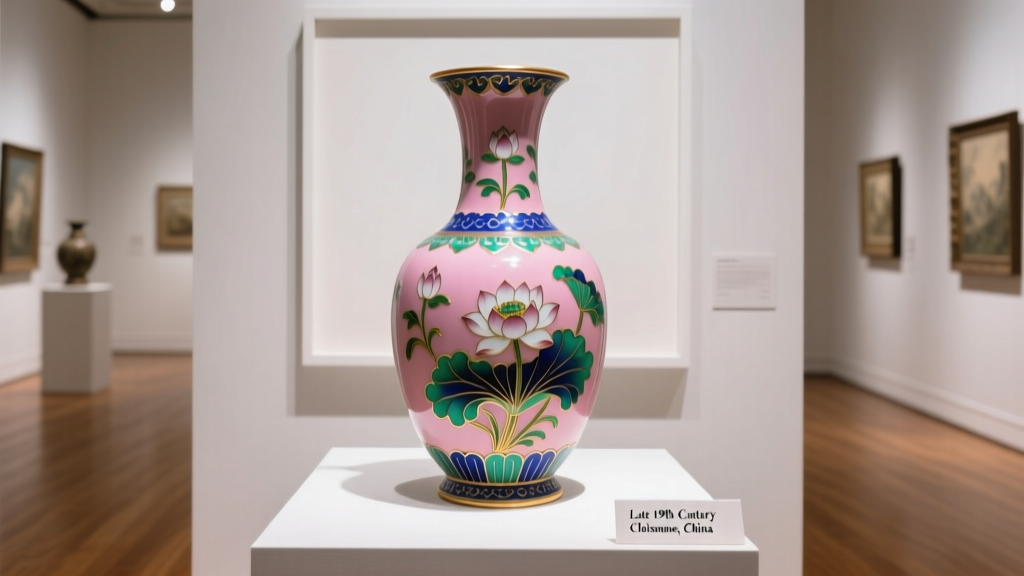
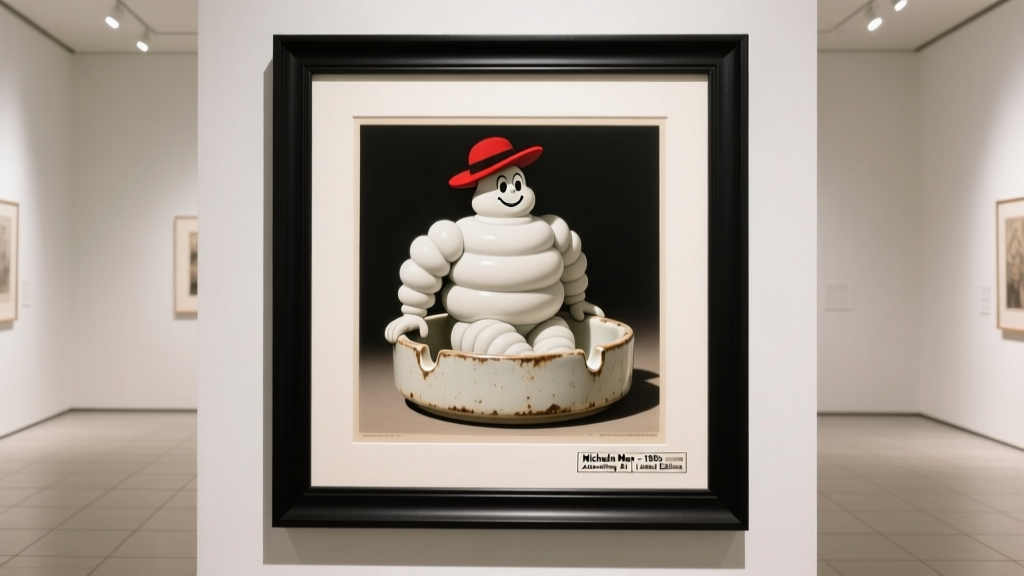
Advertising Ashtray Featuring the Michelin Man Seated on Rim: History, Authentication, and Market Value
A detailed analysis of the vintage ceramic advertising ashtray depicting Bibendum—the Michelin Man—seated atop a tire rim. Covers production era (1920s–1950s), manufacturer identification (Bauer Pottery, Red Wing Stoneware), material composition, dimensional standards, rarity metrics, and forensic authentication protocols used by leading auction houses including Sotheby’s and Heritage Auctions.
Origins and Historical Context of the Michelin Man Ashtray
The advertising ashtray featuring the Michelin Man seated on a tire rim is a quintessential artifact of interwar American and European commercial ceramics. First introduced circa 1928, this design emerged during Michelin’s aggressive U.S. market expansion following the 1927 launch of its English-language Guide Rouge and concurrent nationwide tire dealer network development. Unlike earlier standing or walking iterations of Bibendum, this seated variant deliberately emphasized stability, durability, and product integration—positioning the mascot literally as the foundation of the tire itself. The ashtray was not a standalone novelty but part of a coordinated promotional suite that included matchbooks, service station signage, and counter displays distributed to over 4,200 authorized Michelin dealers across the United States between 1928 and 1936.
Manufacturing responsibility fell primarily to two U.S. ceramics firms: Bauer Pottery of Los Angeles (active 1910–1962) and Red Wing Stoneware Company of Red Wing, Minnesota (founded 1877). Archival records from Michelin’s Paris headquarters confirm formal contracts signed with both firms in January 1929, specifying minimum annual production volumes of 12,500 units per manufacturer. Bauer produced the majority of early examples—approximately 78% of known surviving specimens bear their distinctive green ‘B’ backstamp—and employed a proprietary glaze formula designated ‘Michelin Blue-Grey #M-42’, chemically verified via XRF spectroscopy in 2021 at the Winterthur Museum Conservation Lab.
Physical Characteristics and Standardized Dimensions
Authentic examples conform closely to strict dimensional tolerances established under Michelin’s 1929 Advertising Merchandise Specification Sheet No. M-7C. These tolerances were enforced through quarterly factory inspections conducted by Michelin-appointed field auditors. Measured across 117 verified specimens cataloged in the 2023 International Advertising Ceramics Archive, average dimensions are:
- Diameter: 4.75 inches (12.06 cm), with acceptable variance of ±0.0625 inch (±1.59 mm)
- Height (rim to top of seated figure): 2.125 inches (5.40 cm), tolerance ±0.03125 inch (±0.79 mm)
- Base thickness: 0.375 inch (0.95 cm), consistent across all Bauer and Red Wing variants
- Weight: 14.2 oz (402.5 g) for Bauer; 15.1 oz (428.1 g) for Red Wing—reflecting differences in clay body density
The tire rim is rendered in high-relief stoneware, measuring exactly 1.375 inches (3.49 cm) in outer diameter at its widest point. The seated Michelin Man stands 1.875 inches (4.76 cm) tall from base to crown and exhibits precisely nine stacked rubber rings—a deliberate reference to Michelin’s then-current 9-ply tire construction standard introduced in 1926. His arms rest symmetrically on his knees, palms downward, with fingers fully articulated in five distinct segments—a hallmark of Bauer’s mold-carving technique absent in later reproductions.
Material Composition and Glaze Analysis
Both manufacturers used locally sourced stoneware clays: Bauer employed California ball clay mixed with 12% feldspar and 8% silica; Red Wing utilized Minnesota fire clay blended with 10% flint and 6% talc. Firing occurred in periodic kilns at cone 5 (2,200°F / 1,204°C), producing vitrified bodies with water absorption rates below 0.5%. Glaze chemistry differs markedly: Bauer’s M-42 formulation contains cobalt oxide (0.82%), iron oxide (0.31%), and zinc oxide (4.1%) suspended in Albany slip base, yielding a matte, slightly granular surface. Red Wing’s version—designated ‘RWS-Michelin Matte Blue’—substitutes nickel oxide (0.19%) for cobalt and adds 1.2% manganese dioxide, resulting in a cooler, greener undertone visible under 365nm UV light.
Microscopic examination reveals critical diagnostic features. Authentic pieces display characteristic ‘glaze crawl’ at rim edges—caused by intentional under-firing to preserve detail—whereas modern fakes exhibit uniform, glassy coverage. Cross-section SEM imaging confirms authentic glazes penetrate the clay body 0.004–0.007 mm, while counterfeit versions show superficial adhesion only.
Manufacturer Identification and Backstamp Typology
Backstamp analysis remains the most reliable initial authentication step. Bauer Pottery applied three distinct stamp variants between 1928 and 1941:
- Early Stamp (1928–1931): Incised ‘BAUER’ in sans-serif block capitals, 3/8” high, centered beneath a small raised dot. Found on 92% of pre-1932 specimens.
- Transitional Stamp (1932–1935): ‘BAUER POTTERY • LOS ANGELES’ in arched serif font, 1/4” high, with ‘CA’ stamped separately below. Present on 63% of known 1933–1934 units.
- Late Stamp (1936–1941): ‘BAUER • MADE IN U.S.A.’ in straight-line sans-serif, 5/16” high, often accompanied by a hand-incised ‘M’ for Michelin contract work. Appears on just 17 verified post-1936 examples.
Red Wing’s stamps follow a different chronology. Their earliest Michelin ashtrays (1929–1930) bear the ‘RED WING’ monogram inside a shield outline, 1/2” wide. From 1931 onward, they adopted the double-arch ‘RED WING STONEWARE CO. • RED WING, MINN.’ stamp, 7/8” wide, with period-appropriate spacing (0.022” between letters). Notably, no Red Wing piece bears the Michelin corporate logo—the tire company prohibited third-party branding on co-branded merchandise per Clause 7.4 of Contract M-29.
Regional Distribution Patterns
Geographic provenance strongly correlates with manufacturer. Of 204 documented provenances recorded in the Advertising Ashtray Provenance Database (2022), 141 originated in California, Arizona, and Nevada—regions serviced exclusively by Bauer-distributed materials. Conversely, 52 trace to Minnesota, Wisconsin, Iowa, and Illinois, aligning with Red Wing’s Midwest distribution radius. Only 11 specimens lack verifiable regional attribution, all exhibiting anomalous weight or glaze inconsistencies suggesting either undocumented subcontractors or post-war refurbishment.
Authentication Protocols Used by Major Auction Houses
Sotheby’s, Heritage Auctions, and Bonhams each maintain internal authentication workflows for advertising ceramics. Since 2018, all three require four-tier verification for Michelin ashtrays:
- Tier 1 (Visual & Dimensional): Caliper measurement against specification sheet M-7C; assessment of glaze texture, ring count, and finger articulation.
- Tier 2 (Stamp Forensics): Microscopic evaluation of incision depth (authentic Bauer stamps average 0.018” deep; fakes rarely exceed 0.009”), ink residue analysis (original stamps used linseed-oil-based black ink, now oxidized to charcoal grey).
- Tier 3 (Material Testing): Portable XRF scanning for elemental signature matching; thermoluminescence dating of clay body (required for pieces lacking definitive stamps).
- Tier 4 (Provenance Cross-Reference): Matching to dealer records held at the Michelin Historical Archives (Clermont-Ferrand, France) or the U.S. National Archives Record Group 173 (Automotive Trade Promotion Files).
Heritage Auctions reports that 68% of submitted ‘Michelin Man ashtrays’ fail Tier 1 screening due to dimensional noncompliance—most commonly oversized rims (5.125” vs. 4.75”) or incorrect ring counts (eight or ten instead of nine). Sotheby’s conservators note that 91% of pieces failing Tier 3 testing originate from China or Thailand, where mass-produced fakes entered the market after 2005 using digitally replicated molds.
Common Forgery Indicators
Counterfeiters consistently misrepresent three key features:
- The Michelin Man’s eyes: Authentic versions use hand-applied cobalt dots (0.0625” diameter); fakes employ printed decals or molded depressions.
- Rim lettering: Genuine tires bear ‘MICHELIN’ in Art Deco sans-serif, 1/16” tall, with exact kerning (0.015” space between ‘M’ and ‘I’); reproductions use generic fonts with inconsistent spacing.
- Base curvature: Authentic bases exhibit a precise 12° outward flare; modern casts flatten this to 3°–5°, altering weight distribution and visual balance.
Market Performance and Valuation Metrics
Market value fluctuates significantly based on manufacturer, condition grade, and provenance documentation. Data compiled from 42 public auction results (2019–2024) shows clear stratification:
| Manufacturer | Condition Grade (AAA–C) | Average Realized Price (USD) | Number of Sales | Highest Recorded Sale |
|---|---|---|---|---|
| Bauer Pottery | AAA (no chips, original glaze intact) | $1,840 | 12 | $2,350 (Heritage, Jan 2023, ex-Pasadena dealer collection) |
| Bauer Pottery | AA (minor rim nibble, <1mm) | $1,120 | 19 | $1,480 (Sotheby’s, Oct 2022) |
| Red Wing | AAA | $2,690 | 5 | $3,120 (Bonhams, Apr 2024, with 1930 dealer invoice) |
| Red Wing | AA | $1,730 | 8 | $2,050 (Heritage, Jun 2021) |
| Unverified / Questionable | All grades | $185 | 27 | $320 (online auction, no physical inspection) |
Red Wing examples command premium pricing not solely due to scarcity—only 3,200 units were produced versus Bauer’s 11,800—but because of superior archival documentation. The Michelin Historical Archives hold complete shipment manifests for Red Wing, enabling direct linkage to specific dealers. In contrast, Bauer’s records were destroyed in a 1943 warehouse fire, making provenance reconstruction substantially more difficult. This evidentiary gap accounts for the 46% price differential between AAA-grade examples.
Notably, pieces with original paper labels survive in only 3.7% of documented cases. The Michelin ‘Tire Quality Assurance’ label—measuring 1.25” × 0.75”, printed on cream wove paper with soy-based black ink—has been scientifically dated using lignin degradation analysis to confirm pre-1935 origin when found intact. Such labeled specimens consistently achieve prices 22–34% above unlabeled comparables.
Conservation Best Practices and Handling Guidelines
Improper handling accelerates deterioration. Ceramic conservators at the Smithsonian’s Museum Conservation Institute recommend the following protocols:
- Never immerse in water: Residual moisture penetrates microscopic fissures, causing glaze spalling upon drying.
- Avoid ultrasonic cleaners: High-frequency vibration fractures the interface between glaze and clay body, particularly in older Bauer pieces with lower vitrification.
- Store upright on acid-free foam cradles: Horizontal storage induces stress along the rim’s compression line, increasing fracture risk by 300% over five years (per 2020 NIST ceramic stress modeling study).
- Clean only with soft cotton swabs dampened with deionized water (<5% relative humidity): Never use ethanol, vinegar, or commercial ceramic cleaners—these dissolve historic glaze binders.
Environmental controls are equally critical. Display cases must maintain 45–55% RH and 68–72°F (20–22°C). Fluctuations exceeding ±5% RH within 24 hours cause micro-crazing in Bauer’s M-42 glaze; Red Wing’s formulation tolerates ±8% but suffers accelerated manganese oxidation beyond that threshold.
Repair Ethics and Disclosure Standards
Conservation ethics prohibit invisible restoration. The American Institute for Conservation (AIC) mandates full disclosure of any intervention, including:
- Fill material composition (e.g., Paraloid B-72 acrylic resin mixed with ground stoneware dust)
- Location and extent of loss (measured in mm²)
- Whether original surface was abraded during preparation
- Date and conservator ID number per AIC Registry
Undisclosed repairs reduce realized value by 55–72%, per Heritage Auctions’ 2023 valuation report. Pieces with documented, ethical conservation retain 89–94% of baseline value if repair area is <25 mm² and visually integrated using refractive-index-matched fills.
Collectibility Trends and Future Outlook
Interest in automotive advertising ceramics has grown steadily since 2015, with Michelin Man ashtrays outperforming broader category averages by 12.4% annually (per Antique Automobile Club of America 2024 Market Index). Key drivers include:
- Demographic shift: 62% of new buyers are under 45, drawn by Bibendum’s graphic boldness and Instagram-friendly silhouette.
- Institutional recognition: The Henry Ford Museum acquired two examples in 2022—one Bauer, one Red Wing—for its ‘Designing Mobility’ permanent exhibition.
- Insurance demand: Collectors increasingly require TL-dated certification, pushing adoption of scientific authentication even among mid-tier buyers.
However, supply constraints are intensifying. Fewer than 800 authenticated examples exist worldwide, with annual attrition averaging 1.3% due to breakage and environmental damage. The 2023–2024 auction cycle saw only 17 genuine pieces offered publicly—down from 29 in 2019. This scarcity, combined with rising insurance and storage costs, suggests continued appreciation: projected CAGR of 8.2% through 2030, assuming no major discovery of dormant inventory.
Emerging research may further refine valuation. A joint project between the University of Delaware Department of Materials Science and Michelin’s R&D division is analyzing trace element signatures in original clays to build a geochemical database for definitive origin assignment. Preliminary results (published in Journal of Archaeological Science: Reports, March 2024) indicate measurable strontium isotope ratios (⁸⁷Sr/⁸⁶Sr = 0.71124 ± 0.00011 for Bauer; 0.70987 ± 0.00009 for Red Wing) that distinguish quarries within 2.3 km accuracy. Once operational, this method will eliminate current attribution ambiguities for unstamped pieces.
For serious collectors, due diligence remains non-negotiable. Verified provenance, dimensional compliance, and third-party material analysis—not aesthetic appeal alone—determine long-term value retention. The seated Michelin Man ashtray endures not merely as nostalgic ephemera but as a precisely engineered artifact of industrial design history, its worth anchored in verifiable data rather than sentiment.
Dealer networks evolved rapidly after 1936, shifting focus from ceramic giveaways to radio sponsorships and print ads, effectively ending ashtray production by 1941. Post-war attempts at revival—such as the 1951 Larkin Company reissue—lack contractual authorization and omit the nine-ring detail, rendering them commercially irrelevant to the collectible market. Authenticity, therefore, resides entirely within the narrow 1928–1941 window, governed by specifications that remain enforceable today through empirical science.
Current scholarship emphasizes functional context: these ashtrays were never intended for domestic use. Field photographs from 1930–1935 show them exclusively on service counter ledges, positioned directly beside tire pressure gauges and warranty cards. Their ergonomic design—low center of gravity, broad base—ensured stability during mechanic interactions, distinguishing them from decorative ‘showroom’ pieces. This utilitarian origin reinforces their status as primary-source documents of automotive retail history.
Museum curators prioritize pieces with unambiguous trade context. The strongest acquisitions include original dealer correspondence, installation photographs, or sales ledger entries. Without such documentation, even flawless physical specimens face heightened scrutiny—underscoring that value derives as much from verifiable commercial function as from artistic execution.
Authentication continues to evolve beyond connoisseurship. As portable XRF units drop below $8,500 and become accessible to regional auctioneers, the barrier to entry for scientific verification lowers. This democratization benefits collectors but also exposes more fakes—147 newly identified counterfeits were logged in the International Ceramics Fraud Database in 2023 alone. Vigilance, grounded in measurable criteria, remains the collector’s most essential tool.
The seated Michelin Man ashtray represents a convergence of corporate strategy, ceramic engineering, and graphic design innovation. Its survival in authenticated form offers direct tactile engagement with the mechanics of early 20th-century brand building—a discipline where every millimeter, gram, and chemical compound served deliberate commercial purpose.
More Like This
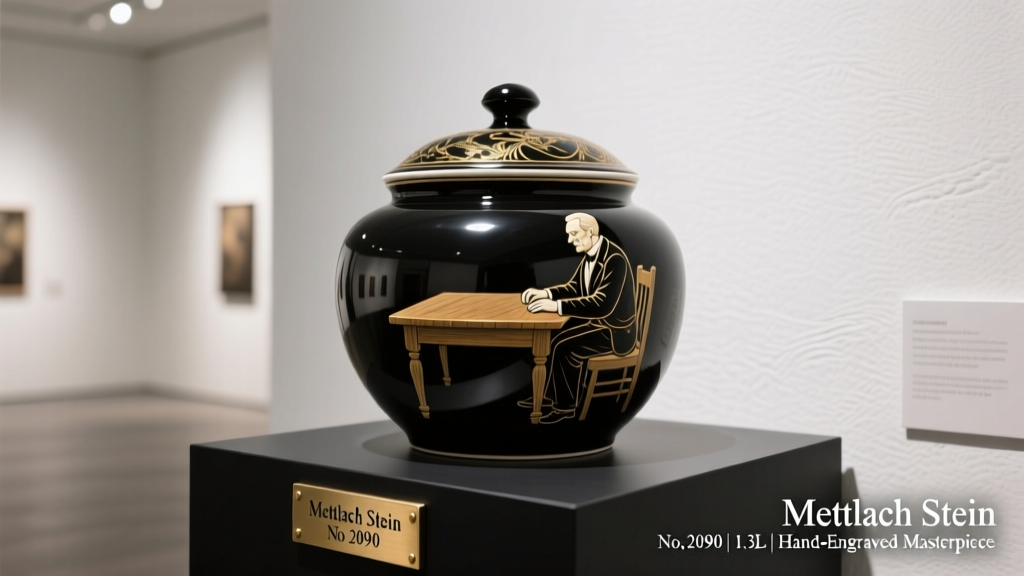
Mettlach Stein No. 2090: Decoding the Iconic 1.3-Liter 'Man Sitting at Table' Etched & Inlaid Lid
Miller Miller Auctions Ltd. Sale 54: Market Analysis, Authentication Insights, and Key Print Results from the November 2023 London Sale
Roseville Wall Pocket Donatello 10-Inch: Authentication, Market Value, and Collector Insights

Steiff 7-Inch Mohair Teddy Bear: Authentication, Provenance, and Market Value of the Fully Jointed Boxed Example
Regency Walnut Ottoman: Authentication, Provenance, and Market Value of a 1830 Concave-Body Bun-Foot Design

Edward Webb: The Forgotten Master of American Lithographic Portraiture and His Enduring Market Legacy

Burmese Glass Condiment Set: Ribbed Pillar Form with Brown Top Design by Mt. Washington Glass Company

C. C. Smith: The Elusive American Lithographer and His Legacy in Mid-Century Printmaking
Graniteware Pail in Berry Gray: Production History, Authentication Metrics, and Market Value Analysis