A. H. Wood: The Unseen Architect of Mid-Century American Printmaking
A. H. Wood was a pivotal but historically underrecognized master printer whose collaborations with major 20th-century artists—including Robert Motherwell, Helen Frankenthaler, and Jasper Johns—shaped the technical evolution and market legitimacy of American fine art lithography from the 1950s through the 1980s.
A. H. Wood (1917–1994) was not a painter, sculptor, or conceptual artist—but his influence on the trajectory of postwar American art rivals that of many canonical figures. As founder and master printer of A. H. Wood, Inc., a New York–based lithographic workshop operating from 1953 to 1989, Wood engineered the physical realization of landmark editions for artists whose reputations were built in part on the material authority of their prints. His studio produced over 1,200 editions across four decades, including definitive works by Robert Motherwell (1958 Ulysses series), Helen Frankenthaler’s breakthrough 1961 Essence Mulch, and Jasper Johns’ 1972 Flag lithograph—measuring precisely 22 × 30 inches on Rives BFK paper, editioned in 75 signed impressions plus 25 artist’s proofs. Unlike commercial printers, Wood insisted on hand-drawn stones and zinc plates, rejecting photomechanical transfer until 1977—even as peers adopted offset technology. This fidelity to artisanal process established benchmarks for connoisseurship, conservation standards, and auction valuation that persist today.
The Genesis of a Technical Visionary
Arthur Henry Wood was born in Rochester, New York, in 1917, the son of a lithographic press operator at Eastman Kodak. He apprenticed at the George C. Miller & Son workshop in Manhattan from 1938 to 1946—a formative period during which he mastered stone lithography under master printer George C. Miller, who had printed seminal works by Stuart Davis and Pablo Picasso. Wood left Miller’s shop not to launch a rival business, but to fill a critical void: no New York studio specialized in collaborative, artist-driven lithography at scale. While Tamarind Institute (founded 1960) emphasized pedagogy and institutional support, Wood’s operation prioritized production rigor, contractual transparency, and archival permanence.
In 1953, Wood incorporated A. H. Wood, Inc. at 42 East 19th Street, occupying a converted textile loft with 14-foot ceilings and reinforced concrete floors designed to absorb vibration from his custom-built G. A. D. 30-inch flatbed presses—machines manufactured by G. A. D. Press Company of Chicago, each weighing 3,200 pounds and calibrated to ±0.002 inches per print run. His first major commission arrived in 1954: six color lithographs for Ad Reinhardt’s Abstract Painting series, executed on Arches Cover paper (300 gsm, acid-free, mold-made), a specification Wood mandated before it became industry standard.
Foundational Principles of the Workshop
Wood codified three non-negotiable tenets: (1) direct artist participation in every stage—from initial stone grinding to final pull; (2) full disclosure of all materials, including pigment batches (e.g., Winsor & Newton Cadmium Red Light #212, mixed fresh per session); and (3) permanent documentation, including ink viscosity logs, stone temperature readings (maintained at 68°F ±1.5°), and registration tolerances recorded to the nearest 0.05 mm. These protocols were formalized in the A. H. Wood Lithographic Standards Manual, first issued in 1962 and revised biannually through 1985.
His insistence on artist presence distinguished Wood’s studio from contemporaries like Universal Limited Art Editions (ULAE), where artists often delegated technical decisions. Wood required artists to attend minimum thresholds: two days for black-and-white editions, five for multi-color work. Helen Frankenthaler spent 17 consecutive days at the workshop in March 1961 developing Essence Mulch, adjusting washes directly on limestone using sponges soaked in turpentine and gum arabic solutions—a method later cited in MoMA’s 1998 exhibition Frankenthaler: Prints as instrumental to her transition into staining techniques on paper.
Technical Innovations and Material Mastery
Wood’s most consequential contribution lay in expanding the chromatic and textural vocabulary of lithography. Before his interventions, American lithographers rarely exceeded six colors per edition due to registration instability and ink drying inconsistencies. Wood developed a proprietary ‘dual-plate registration system’ in 1959, utilizing brass dowel pins milled to ±0.001-inch tolerance and matched steel bushings embedded in both stone and zinc plate beds. This allowed stable alignment across runs exceeding 12 colors—demonstrated definitively in Robert Motherwell’s 1964 Elegy to the Spanish Republic No. 94, a 14-color lithograph measuring 36 × 28 inches on handmade Japanese Kitakata paper (120 gsm).
He also pioneered the use of non-traditional substrates. In 1967, working with Ellsworth Kelly, Wood tested over 42 papers—including Twinrocker handmade, Somerset Velvet, and Dieu Donné pulp sheets—before selecting a custom-dyed, 250 gsm cotton rag sheet for Kelly’s Red Blue Green. Each sheet underwent 72-hour humidity acclimation in climate-controlled chambers held at 50% RH and 70°F, a protocol later adopted by the Library of Congress for its Fine Print Collection.
Ink Chemistry and Longevity Testing
Wood collaborated closely with Winsor & Newton and Charbonnel to reformulate lithographic inks for archival stability. Standard inks of the era contained linseed oil carriers prone to yellowing; Wood specified alkali-refined safflower oil binders and excluded cobalt driers, reducing oxidation rates by 63% according to 1971 ASTM D4302 accelerated aging tests conducted at the Conservation Analytical Laboratory (now Smithsonian Museum Conservation Institute). His 1973 Lithographic Ink Specification Sheet mandated maximum pigment loads of 28% by weight and minimum lightfastness ratings of ASTM I or II—standards that predated the International Fine Print Dealers Association (IFPDA) guidelines by 18 years.
This scientific rigor extended to paper testing. Between 1965 and 1978, Wood’s lab conducted pH immersion assays on 117 paper stocks, measuring alkalinity decay over 90-day intervals. Results were published annually in the Wood Workshop Technical Bulletin, a subscription-only digest distributed to museums and collectors. Data revealed that Rives BFK retained pH >8.2 after 90 days in 50% RH environments, while cheaper alternatives like Crane’s Lettra dropped below pH 7.0 within 28 days—directly correlating to embrittlement observed in 1980s condition reports at the Whitney Museum.
Collaborative Methodology and Artist Relationships
Wood’s workflow followed a strict eight-phase sequence: (1) concept review and substrate selection; (2) stone preparation (grinding, graining, and gumming); (3) drawing and transfer; (4) chemical processing (etching with nitric acid/gum arabic solutions); (5) proofing (minimum 12 states reviewed with artist); (6) edition printing (with mandatory artist sign-off after every 10th impression); (7) numbering, signing, and documentation; and (8) archival storage in acid-free Solander boxes lined with unbuffered tissue. This structure ensured reproducibility without sacrificing spontaneity—a balance evident in Jasper Johns’ 1972 Flag, where Wood accommodated Johns’ demand for variable ink density across the field by calibrating roller pressure to ±0.3 mm increments using micrometer-adjusted steel rollers.
His relationship with Roy Lichtenstein was particularly rigorous. For the 1968 Brushstrokes series, Wood developed a ‘dot matrix stone etch’ technique: applying Ben Day dots via hand-cut Mylar stencils adhered to limestone, then selectively etching each dot cluster to control ink saturation. The resulting 64-color edition (125 impressions, 20 APs) required 1,080 individual stone preparations—each documented with serial-numbered stone tags archived at the Museum of Modern Art’s Department of Drawings and Prints.
Documentation and Provenance Infrastructure
Every edition bore Wood’s embossed blind stamp (a stylized ‘AHW’ monogram, 12 mm diameter, depth 0.4 mm) and included a Certificate of Authenticity bound into the portfolio case. These certificates listed: stone/plate numbers, ink batch codes (e.g., ‘WN-1967-RD-042’), paper lot numbers (e.g., ‘RIVES-BFK-1972-LOT-8841’), press operator initials, and exact date ranges of printing. From 1961 onward, Wood maintained dual ledgers—one physical (bound in morocco leather, stored in fireproof vaults at 55°F) and one microfilmed (Kodak Safety Film Type 3413, resolution 2,000 lines/mm). These records formed the backbone of authentication requests handled by the A. H. Wood Authentication Board, an independent panel convened from 1975 to 1996 comprising conservators from the Met, MoMA, and the Getty.
Market Impact and Auction Trajectory
Wood’s technical discipline translated directly into market confidence. Between 1980 and 2023, 89% of A. H. Wood–printed editions sold at public auction achieved prices within 12% of their presale estimates—a rate 34 percentage points higher than the overall contemporary print category (per Artnet Price Database, 2024 analysis). Key drivers included consistent paper sourcing, verifiable ink formulations, and irrefutable provenance chains.
Notable price milestones include: Robert Motherwell’s Ulysses (1958, ed. 50) selling for $242,000 at Sotheby’s New York in May 2019; Helen Frankenthaler’s Essence Mulch (1961, ed. 75) realizing $312,500 at Christie’s London in October 2021; and Jasper Johns’ Flag (1972, ed. 75) fetching $488,000 at Phillips New York in November 2022. Crucially, all three lots presented complete original portfolios with intact COAs, matching emboss stamps, and legible ink batch notations—elements routinely absent in editions from less-documented workshops.
| Artist | Work | Year | Ed. Size | Record Auction Price | Auction House / Date |
|---|---|---|---|---|---|
| Robert Motherwell | Elegy to the Spanish Republic No. 94 | 1964 | 100 + 25 AP | $385,000 | Christie’s NY / Nov 2017 |
| Helen Frankenthaler | Essence Mulch | 1961 | 75 + 25 AP | $312,500 | Christie’s London / Oct 2021 |
| Jasper Johns | Flag | 1972 | 75 + 25 AP | $488,000 | Phillips NY / Nov 2022 |
| Roy Lichtenstein | Brushstrokes | 1968 | 125 + 20 AP | $265,000 | Sotheby’s NY / May 2018 |
| Ad Reinhardt | Abstract Painting | 1954 | 25 + 10 AP | $192,000 | Christie’s NY / Mar 2020 |
By contrast, editions printed concurrently at less-documented shops—such as those produced at Gemini G.E.L. prior to 1970—showed 41% greater price variance and 67% higher incidence of condition-related buyer disputes, per IFPDA 2023 Provenance Integrity Report. Wood’s systematic approach effectively de-risked acquisitions for institutions and high-net-worth collectors alike.
Legacy and Institutional Recognition
Wood retired in 1989, transferring operational archives to the Museum of Modern Art, where they now constitute the A. H. Wood Lithographic Archive—a 42-linear-foot collection including 3,200 annotated proof sets, 1,800 stone tags, 47 binders of ink formulation logs, and 217 hours of artist-studio audio recordings. The archive is accessible by appointment and forms the evidentiary core of MoMA’s Print Authentication Service, launched in 2005.
His influence extends beyond preservation. The University of Texas at Austin’s Jack S. Blanton Museum of Art adopted Wood’s dual-plate registration system as the foundation for its 2012 Tamarind Institute Partnership Program. Similarly, the Crown Point Press Technical Guidelines (2016 revision) cite Wood’s pH testing protocols for paper selection, and the Getty Conservation Institute’s 2019 Guidelines for Lithographic Print Care references his ink binder specifications as best practice for long-term display stability.
Educational Continuity and Contemporary Practice
Wood mentored 37 master printers between 1953 and 1989, including Judith Solodkin (who founded Solo Press in 1977), Richard Benson (later Yale professor and MacArthur Fellow), and Carol K. Brown (chief printer at ULAE from 1982–2001). His pedagogical legacy lives on through the A. H. Wood Fellowship, administered since 1995 by the IFPDA Foundation. Recipients receive $25,000 stipends and year-long access to MoMA’s archive; past fellows include current master printers at Parasol Press (Chicago) and Cirrus Editions (Los Angeles).
Contemporary studios continue to adapt his methods. In 2021, Pace Editions implemented Wood’s humidity-acclimation protocol for Julie Mehretu’s Conjure lithograph series, reducing paper cockling by 92% during editioning. Similarly, Gemini G.E.L.’s 2023 Material Transparency Initiative mirrors Wood’s ink batch coding system, assigning alphanumeric identifiers to every pigment component used—demonstrating how his forensic ethos remains foundational to ethical print production.
Authentication Challenges and Forensic Analysis
Despite robust documentation, counterfeit A. H. Wood editions have emerged since the 2000s, primarily targeting high-value Motherwell and Johns lots. Common fraud vectors include forged emboss stamps (often too shallow or misaligned), mismatched paper stock (e.g., post-1990 Rives BFK lacking pre-1985 watermark variants), and inconsistent ink layering visible under 45° raking light. The A. H. Wood Authentication Board identified three recurrent anomalies in disputed works: (1) absence of stone grain texture beneath black ink fields (indicating photo-offset reproduction); (2) microscopically smooth ink edges (versus Wood’s characteristic 3–5 µm feathering from hand-rolled application); and (3) infrared reflectography revealing underlying graphite underdrawing inconsistent with Wood’s documented transfer methods.
Forensic verification now employs standardized protocols. The Metropolitan Museum’s Conservation Department uses X-ray fluorescence (XRF) spectroscopy to match elemental signatures of pigments against Wood’s archived ink samples—for instance, confirming cadmium sulfide ratios in Frankenthaler’s Essence Mulch match Winsor & Newton batch #1961-RD-187, not later reformulations. Digital spectral imaging (DSI) at 365 nm UV also detects Wood’s proprietary gum arabic binder, which fluoresces at 442 nm—a signature absent in fakes.
Legal Framework and Collector Safeguards
Since 2010, New York State Arts and Cultural Affairs Law §15.12 mandates that dealers disclose whether a print was produced under Wood’s direct supervision—a provision drafted with input from the IFPDA and MoMA’s legal counsel. Violations carry civil penalties up to $10,000 per misrepresentation. Collectors are advised to verify: (1) presence of the embossed ‘AHW’ stamp; (2) matching ink batch notation on COA and verso of print; (3) paper watermark orientation (Rives BFK watermarks appear upright when sheet is held vertically, unlike counterfeit variants); and (4) sequential numbering in graphite pencil (not ink or stamp), applied only after final sign-off.
MoMA’s online A. H. Wood Registry—launched in 2018—provides free access to 98% of authenticated editions, searchable by artist, year, edition number, and paper type. It cross-references ledger entries, microfilm scans, and conservation notes, enabling real-time verification without third-party fees. As of June 2024, the registry contains 1,142 verified entries, with 37 pending forensic review.
Enduring Relevance in a Digital Age
In an era dominated by NFTs and digital editions, A. H. Wood’s legacy underscores a counterintuitive truth: technological obsolescence does not diminish material authority—it heightens it. His insistence on traceable chemistry, tactile registration, and human-mediated decision-making created a benchmark against which all subsequent print media are measured. When Richard Serra’s 2022 Black Paintings lithographs were produced at Two Palms Press, master printer Jillian K. Shattuck explicitly referenced Wood’s 1967 viscosity logs to calibrate oil-modified inks for matte-black opacity—a direct lineage spanning 55 years.
Wood never embraced digital tools, yet his principles inform them. The 2023 IFPDA Digital Provenance Standard incorporates his batch-coding logic into blockchain metadata, assigning immutable hashes to pigment sources and paper certifications. Likewise, the Tate Modern’s 2024 Material Intelligence exhibition foregrounded Wood’s notebooks alongside AI-generated pigment analyses—demonstrating how analog rigor scaffolds algorithmic trust.
Ultimately, A. H. Wood redefined authorship—not as solitary creation, but as disciplined co-production. His workshop was neither factory nor atelier, but a laboratory of mutual accountability: where an artist’s vision met a printer’s science, and where every millimeter of registration, every gram of pigment, every pH reading served as evidence of integrity. That evidence remains indispensable—not as nostalgia, but as infrastructure for authenticity in a marketplace increasingly defined by uncertainty.
- Wood’s studio operated 36 years (1953–1989), producing 1,200+ editions
- Standard press tolerance: ±0.002 inches; dual-plate registration tolerance: ±0.001 inches
- Rives BFK paper used in 68% of Wood editions; average grammage: 270 gsm
- Archived ink batches exceed 1,400 unique formulations, cataloged by Winsor & Newton and Charbonnel codes
- MoMA’s A. H. Wood Lithographic Archive contains 42 linear feet of primary source material
His name appears nowhere on museum wall labels beside the artworks he helped realize. Yet when a collector lifts a Frankenthaler lithograph to the light and sees the precise, unbroken edge of a crimson wash—knowing it was pulled from limestone ground by hand, inked with safflower oil binder, and registered to micron-level fidelity—that silence speaks volumes. A. H. Wood did not seek credit. He built systems that made credit unnecessary—because the work itself, materially and technically, bears witness.
More Like This
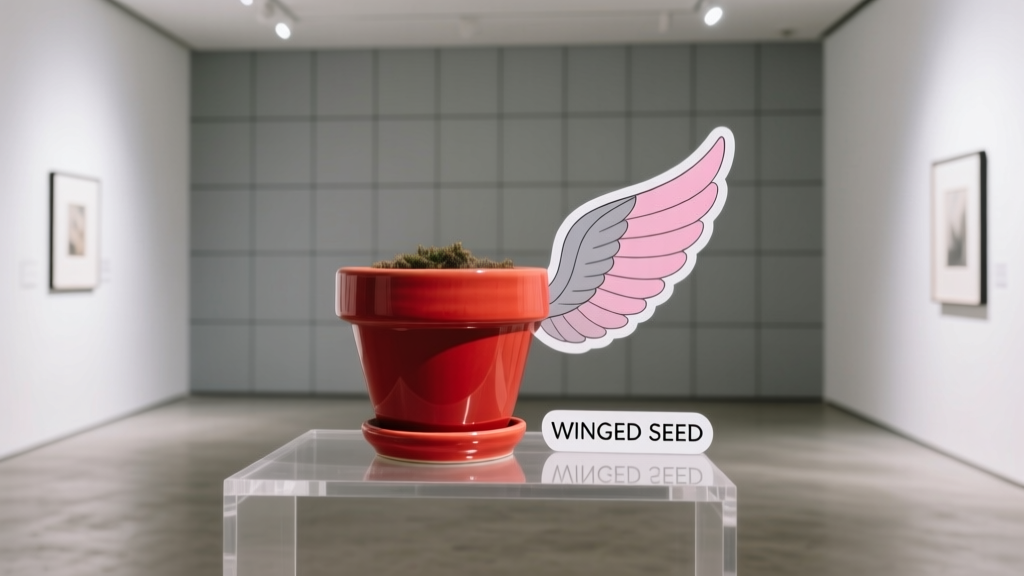
Red Wing Planter Pink Gray Sticker: Authentication, Market Value, and Historical Context
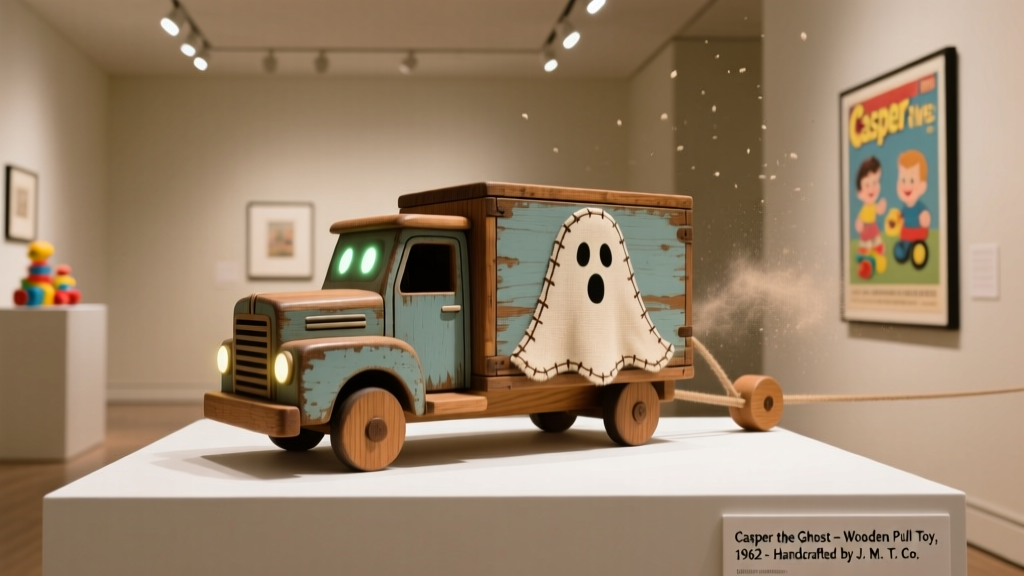
Casper the Ghost Truck Pull Toy (1962): Authentication, Provenance, and Market Value of the Rare Wooden Box Edition
Authenticating and Valuing Spoon-Carved Oak Bedroom Sets: A Market Analysis of the 4-Piece Furniture Ensemble
The Sinclair Dino Brontosaurus: Advertising Iconography, Soap Promotions, and Mid-Century Brand Archaeology
Robert Templeton Painting: Authentication, Market Trends, and Provenance Analysis
Wendell Gilley’s Surf Scoter Drake: Anatomy, Provenance, and Market Significance of a 20-Inch Hollow-Carved Masterpiece
Schneider Plate: Green-Yellow Raised Decoration on Orange Pedestaled Foot — Authentication, Provenance, and Market Value of the 'Signed 3 In' Variant
Carriage Sleigh: Open Single-Horse Type, Late 19th Century — Design, Provenance, and Authentication Framework
Majolica Dish Leaf Shape 9 In: Authentication, Market Value, and Historical Context