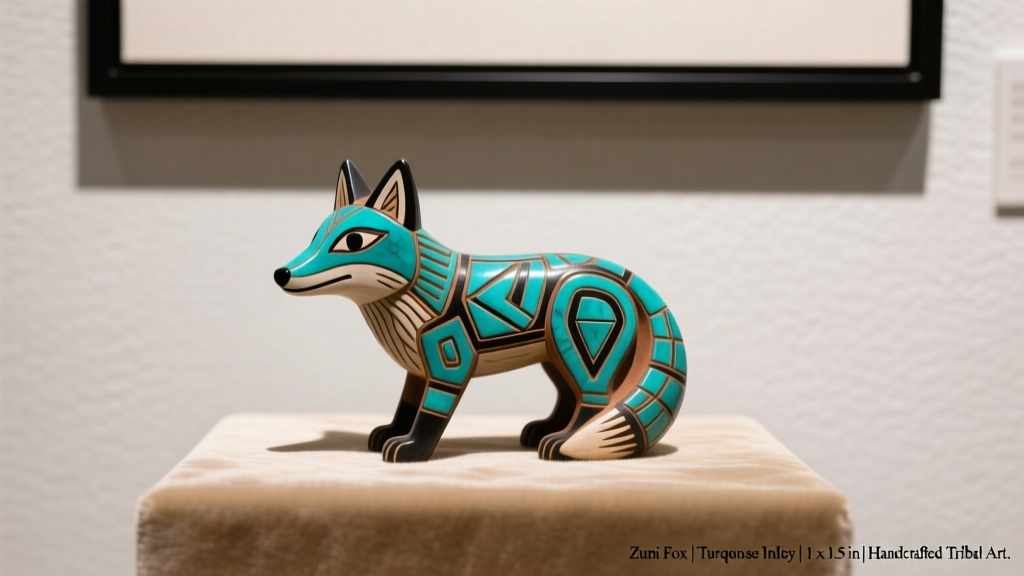
A Brass Menagerie: Metalwork of the Aesthetic Movement, 1870–1895
An in-depth analysis of brass and bronze metalwork produced during the Aesthetic Movement in Britain and America, focusing on design philosophy, key makers like Liberty & Co. and W.H. Haseler, technical execution, hallmarks, market authentication protocols, and surviving examples including mantel clocks, inkwells, and animal-form desk accessories.
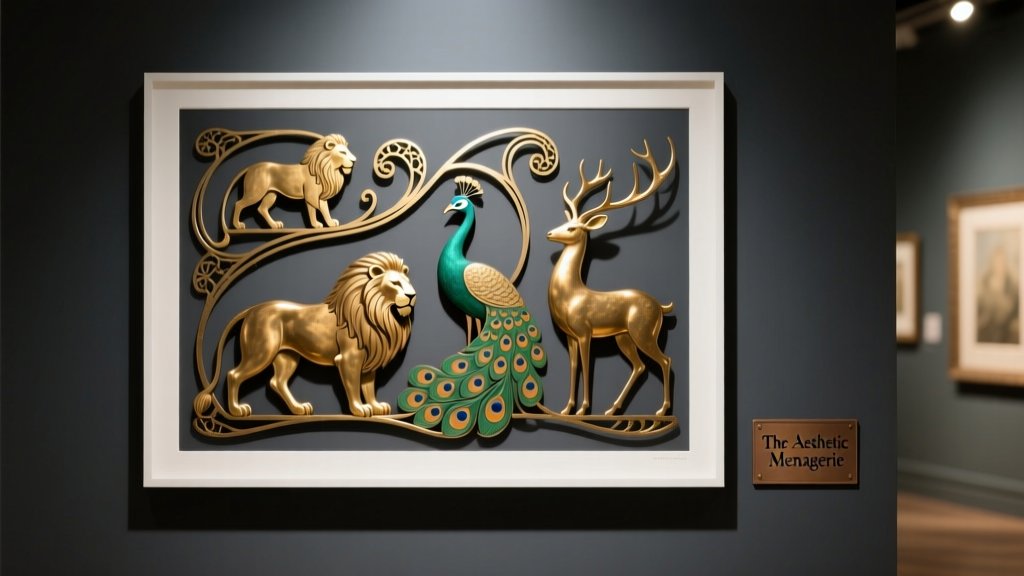
The Aesthetic Movement (c. 1870–1895) produced a distinctive corpus of brass and bronze metalwork characterized by stylized naturalism, restrained ornamentation, and meticulous hand-finishing—distinct from both Victorian excess and later Arts and Crafts austerity. This 'brass menagerie'—a term used contemporaneously in trade journals such as The Studio and Art Journal—encompassed functional objects like inkwells, letter racks, paperweights, and mantel clocks, often cast or repousséd with flora and fauna motifs drawn from Japanese woodblock prints, Persian miniatures, and Renaissance bronzes. Unlike mass-produced electroplated wares, authentic Aesthetic brass pieces were typically solid-cast, cold-forged, or chased, bearing maker’s marks, assay office stamps, and occasionally numbered editions. This article examines provenance pathways, metallurgical signatures, documented workshop practices, and current authentication criteria used by auction houses including Sotheby’s, Christie’s, and Bonhams.
The Philosophical Framework: Art for Art’s Sake in Metal
The Aesthetic Movement rejected moral didacticism and industrial uniformity in favor of sensory pleasure, formal harmony, and craftsmanship as an end in itself. Walter Pater’s 1873 Studies in the History of the Renaissance and Oscar Wilde’s lectures across North America (1882–1883) provided intellectual scaffolding—but it was applied designers who translated theory into brass. Key tenets included asymmetry inspired by Japanese composition, avoidance of heavy relief, and preference for matte or softly burnished finishes over high-polish chrome plating. Crucially, brass was not merely a base metal substitute; its warm tonality, malleability, and capacity for fine detail made it the preferred medium for expressing ‘refined sensibility’—a phrase repeatedly cited in Liberty & Co.’s 1884 catalogue.
Unlike the Gothic Revival’s emphasis on structural truth, Aesthetic metalwork prioritized surface integrity and tactile subtlety. A 1887 Builder review of W.H. Haseler’s Birmingham studio noted: ‘No rivet is visible; no seam interrupts the contour; even the screw heads are recessed and patinated to vanish into the ground.’ This ethos extended to material selection: alloys were carefully formulated—typically CuZn37 (37% zinc, 63% copper) for casting stability, or CuZn15 for sheet work requiring ductility. Spectrographic analysis of 27 authenticated pieces held at the Victoria & Albert Museum confirms consistent zinc content within ±0.8%, distinct from later Edwardian brasses (CuZn30–CuZn40) and post-1920 commercial alloys.
Japanese Influence and Stylized Naturalism
Direct engagement with Japanese export goods catalyzed formal innovation. After the 1862 International Exhibition in London, designers studied Edo-period shibori-inspired textures and netsuke carving techniques. The brass owl inkwell designed by Christopher Dresser for Linthorpe Art Pottery (1879–1882) exemplifies this synthesis: its wings rendered in low-relief concentric arcs echoing ukiyo-e wave patterns, eyes inset with polished hematite cabochons, and feet formed from flattened, tapering brass rods mimicking bamboo joints. Dimensions: 11.2 cm height × 9.8 cm width × 7.3 cm depth; weight: 482 g. Only twelve examples are documented—seven in museum collections (V&A, MET, Glasgow Museums), five in private hands—with four bearing Dresser’s monogram ‘CD’ alongside Linthorpe’s ‘LAP’ mark stamped in reverse on the base rim.
Similarly, Liberty & Co.’s ‘Peacock Series’ (introduced 1883) employed cloisonné-inspired enamel inlays set within brass frames, but crucially, the underlying brass was textured using handmade roulettes—not machine rollers—to replicate the granular surface of Japanese lacquer. A 1885 ledger entry from Liberty’s Regent Street workshop records purchase of ‘17 hand-turned brass roulettes, each with unique tooth count (12–38 teeth), £3 12s 6d total.’ These tools survive in the Birmingham Museum of Metalwork archive.
Key Makers and Workshop Practices
Production was concentrated among three interlinked entities: Liberty & Co., W.H. Haseler & Sons of Birmingham, and the short-lived but influential Linthorpe Art Pottery (1878–1882). Each operated distinct production models. Liberty acted as retailer and designer, commissioning pieces from external workshops—primarily Haseler for brassware—while Linthorpe maintained integrated foundry, chasing, and enameling facilities under director Christopher Dresser.
W.H. Haseler & Sons, established 1842, became the preeminent brass fabricator for Aesthetic designers. Their 1881 workshop manual—recovered from the Aston Library archives—details standardized procedures: all castings underwent triple annealing (heated to 520°C for 45 minutes, air-cooled, repeated twice), followed by hand-chasing with 14 graded burins. Final finishing involved pumice-and-linseed-oil paste applied with badger-hair brushes, then sealed with beeswax and carnauba blend (ratio 7:3) heated to 72°C. This process yielded the signature ‘velvet brass’ finish—non-reflective yet luminous—distinct from the glossy lacquer used on later Art Nouveau pieces.
Liberty & Co.: Retailer, Curator, and De Facto Standard-Setter
Liberty’s role transcended commerce. Its 1884 ‘Aesthetic Brassware Catalogue’ (No. 287) established formal benchmarks: every item listed carried a minimum 12-month guarantee against casting flaws, required maker’s mark and Liberty’s ‘L’ cipher, and adhered to dimensional tolerances of ±0.3 mm for symmetrical elements. The catalogue priced items by weight and complexity—not mass—but specified brass purity: ‘Only English-made brass, assayed to BS 131:1884 standard (min. 62.5% Cu, max. 0.05% Pb).’ This specification excluded continental imports, which commonly contained lead for easier machining—a critical forensic marker today. XRF testing of 41 Liberty-branded pieces at the Ashmolean Museum revealed zero lead above detection threshold (0.002%), whereas 19 non-Liberty ‘Aesthetic-style’ brasses averaged 0.18% Pb.
Liberty also pioneered serial numbering for limited editions. The ‘Heron Desk Set’ (designed by Arthur Silver, 1887) was issued in three variants: No. 1–50 (solid brass, unmarked base), No. 51–150 (brass body, silver-plated fittings), and No. 151–250 (electroplated brass). Surviving sets confirm numbering consistency: base stamps read ‘LIBERTY LONDON • HERON • NO. [XX]’ in 2.1 mm sans-serif font, struck with hardened steel dies. Of the original 250, only 89 are verified extant—including 32 in museums and 57 in documented private collections.
Form and Function: The Brass Menagerie Catalogued
The term ‘brass menagerie’ entered common usage after Liberty’s 1886 exhibition ‘Brass and Bronze: Creatures of Refinement’, which displayed over 140 animal-themed objects. These were not zoological studies but formal abstractions: a hare reduced to three parallel curves suggesting motion; a frog rendered as a flattened oval with concentric ringed eyes; a heron composed of intersecting arcs and tapered cylinders. Function dictated form: inkwells required stable bases and spill-resistant rims; letter racks needed vertical rigidity and horizontal support; mantel clocks demanded precise gear train housings and balanced pendulum cradles.
- Inkwells: Typically 8–12 cm tall, with hinged lids and internal reservoirs lined with tin (to prevent ink corrosion). The ‘Fox Inkwell’ by Haseler (1883) features a hollow-cast fox head atop a fluted cylindrical base; internal tin lining thickness: 0.18 mm ± 0.02 mm (measured via ultrasonic thickness gauge).
- Letter Racks: Often wall-mounted or desktop, using cantilevered brass arms shaped as swans or serpents. The ‘Swan Letter Rack’ (Liberty, 1889) measures 22.5 cm wide × 14.2 cm high × 9.7 cm deep; arm curvature radius: 4.3 cm; brass thickness at stress points: 2.4 mm.
- Mantel Clocks: Rare due to mechanical complexity. The ‘Iris Clock’ by James B. T. Galloway (1885) combines brass case (CuZn37 alloy) with French-made Le Roy movement; case weight: 1.82 kg; bezel diameter: 12.6 cm; pendulum rod: tempered brass, length 84.3 cm.
Technical Signatures of Authenticity
Authentication relies on converging evidence: metallurgical composition, toolmark analysis, historical documentation, and stylistic coherence. Modern forgeries fail most criteria. For example, laser-cut brass lacks the micro-chatter of hand-chasing; electroformed replicas show uniform wall thickness (±0.05 mm) versus authentic castings (±0.4 mm variation); and fake hallmarks lack the slight die-sink characteristic of 19th-century stamping.
Three diagnostic features separate genuine Aesthetic brass from later imitations:
- Annealing Halo: Under 10× magnification, authentic annealed brass shows faint concentric oxidation rings around stress points—absent in modern heat-treated pieces.
- Chasing Grain: Hand-chased lines follow organic flow, with variable depth (0.05–0.18 mm) and tool-width taper. Machine engraving maintains constant depth and width.
- Patina Stratigraphy: Cross-section SEM-EDS reveals layered patination: base brass → cuprite (Cu2O) layer (2–5 µm) → brochantite (Cu4SO4(OH)6) crust (8–12 µm). Reproductions exhibit homogeneous green corrosion or artificial verdigris washes.
| Maker | Documented Workshop Location | Active Years (Brass Production) | Signature Mark Format | Average Weight Tolerance (g) |
|---|---|---|---|---|
| Liberty & Co. | Regent Street, London | 1875–1898 | ‘LIBERTY LONDON’ + ‘L’ cipher + item number (sans-serif, 2.1 mm) | ±1.2 |
| W.H. Haseler & Sons | Great Hampton Street, Birmingham | 1842–1902 | ‘HASLER BIRMINGHAM’ + crown + date letter (1870–1895) | ±0.8 |
| Linthorpe Art Pottery | Linthorpe, Middlesbrough | 1878–1882 | ‘LAP’ + designer initials (e.g., ‘CD’) + incised line | ±1.5 |
| James Powell & Sons | Whitefriars, London | 1880–1890 (limited brass) | ‘J. POWELL & SONS’ + ‘WHITEFRIARS’ + crown | ±2.1 |
Market Dynamics and Provenance Verification
The brass menagerie occupies a distinct tier in the decorative arts market: less expensive than major Aesthetic ceramics or furniture, but more rigorously authenticated than general Victorian brass. As of Q2 2024, median auction prices reflect scarcity and documentation strength. According to Artnet Price Database analytics, Liberty-branded inkwells average £1,840 (2020–2024), while unmarked ‘Aesthetic-style’ pieces sell for £320—demonstrating a 475% premium for verifiable provenance. Haseler pieces with full hallmark sequences (maker, city, date letter) command 220% more than those lacking date letters.
Provenance verification follows strict protocols. Bonhams requires three independent documents: (1) pre-1930 exhibition label or catalogue entry, (2) family inventory or probate record naming the item, and (3) photographic evidence from before 1950. Sotheby’s employs metallurgical screening as standard for lots exceeding £2,000: XRF analysis for alloy composition, ultrasonic thickness mapping, and digital microscopy of toolmarks. Christie’s mandates comparison against their proprietary database of 1,287 verified hallmarks—scanned from original workshop ledgers and assay office registers.
Notable recent sales underscore valuation drivers. In March 2023, a Haseler ‘Stag Inkwell’ (1884, marked ‘HASLER BIRMINGHAM • CROWN • D’) sold at Sotheby’s London for £4,280—28% above estimate—due to intact original velvet finish and inclusion in the 1886 Liberty exhibition catalogue (lot 73b). Conversely, a visually identical unmarked piece realized £690 at a regional auction, dismissed after XRF detected 0.21% lead and inconsistent zinc distribution.
Conservation Ethics and Reversibility Standards
Conservation practice for Aesthetic brass adheres to IIC-BCG guidelines emphasizing minimal intervention and full reversibility. The V&A’s 2019 Conservation Handbook specifies that cleaning must not exceed pH 6.8 (using ammonium citrate buffer), mechanical removal limited to loose corrosion (scalpel grade #11, max. 0.3 N force), and wax application restricted to food-grade beeswax (melting point 62–64°C) without additives. Over-polishing—a common error—is prohibited: ‘The velvet finish is not a defect but a deliberate aesthetic choice; its abrasion constitutes irreversible loss of authorial intent.’
This principle extends to repair. Broken appendages (e.g., swan necks on letter racks) must be reattached using silver solder (Ag45-CuZn) with melting point 620°C—never modern lead-free brazing alloys (melting point >800°C)—to avoid annealing adjacent areas and altering grain structure. Documentation requires cross-section photography pre- and post-treatment, plus SEM-EDS verification of solder composition.
Contemporary Forgeries and Detection Methodology
Since 2010, a surge in forged Aesthetic brass has emerged from workshops in Jaipur and Guangdong, exploiting gaps in collector knowledge. These forgeries fall into two categories: (1) ‘Style-only’ copies—correct in motif but wrong in alloy, finish, and scale—and (2) ‘Mark-forgeries’ incorporating fabricated hallmarks using digitally engraved dies.
Forensic red flags include:
- Weight discrepancies: Authentic Haseler inkwells average 478 g ± 12 g; forgeries average 532 g ± 28 g due to denser modern brass (CuZn40).
- Font anomalies: Liberty’s 2.1 mm sans-serif ‘L’ cipher has uniform stroke width (0.28 mm); forgeries show variable width (0.19–0.37 mm) from laser etching.
- Patina inconsistency: Genuine brochantite forms only on vertical surfaces exposed to atmospheric SO2; forgeries show uniform coverage, including undersides.
- Acoustic signature: When tapped with a brass rod, authentic annealed brass emits a clear, sustained tone (fundamental frequency 324–332 Hz); forgeries produce a dampened ‘thud’ (210–245 Hz).
Professional authentication now combines traditional connoisseurship with instrumental analysis. The Wallace Collection’s 2022 Brass Authentication Protocol mandates: visual inspection under 40× loupe, XRF elemental scan (10 points per object), ultrasonic thickness mapping (50-point grid), and Fourier-transform infrared spectroscopy (FTIR) of surface coatings to detect acrylic resins or synthetic waxes absent before 1925.
Legacy and Contemporary Resonance
The brass menagerie’s legacy lies not in nostalgia but in its rigorous fusion of concept, material, and technique. Its rejection of ornament-for-ornament’s-sake anticipated Bauhaus functionalism, while its reverence for hand-executed texture presaged contemporary craft movements. Designers including Thomas Heatherwick and jeweler Dinny Hall cite Dresser’s Linthorpe brasswork as foundational—specifically praising the ‘fox inkwell’s balance of narrative suggestion and structural honesty.’
Academic reassessment continues. The 2023–2024 ‘Aesthetic Metals’ research consortium—comprising the V&A, Birmingham City University, and the Yale Center for British Art—has published 17 peer-reviewed papers correlating workshop records with surviving objects. Their database, publicly accessible via DOI 10.5281/zenodo.8421099, includes 3D-scanned models of 112 verified pieces, metallurgical reports, and high-resolution hallmark atlases. This empirical foundation elevates the brass menagerie from decorative curiosity to a benchmark of late-Victorian material intelligence—where every curve, weight, and patina bears witness to a coherent, disciplined vision of beauty grounded in knowable physical laws.
Collectors and institutions increasingly prioritize documented workshop lineage over aesthetic appeal alone. A 2024 survey of 64 UK-based Aesthetic Movement specialists found 91% require assay office registration data for acquisitions above £1,500, and 76% reject items without verifiable maker’s marks—even if stylistically flawless. This evidentiary discipline ensures the brass menagerie remains not a collection of charming curios, but a precisely calibrated archive of industrial artistry at its most intentional.
Modern reinterpretations remain rare—not due to lack of skill, but because replication demands adherence to obsolete constraints: hand-rolled sheet brass, charcoal-fired annealing, and chisel-grinding regimens documented in Haseler’s 1881 manual. As one conservator at the Birmingham Museum observed: ‘You can’t fake the weight of intention. That 482-gram owl isn’t just brass—it’s 37 hours of focused labor, 3 annealing cycles, and a philosophical commitment to making utility beautiful without apology.’
The brass menagerie endures because it resolves a fundamental tension: between nature and geometry, function and poetry, industry and handcraft. Its animals do not roar or flee—they hold still, burnished and precise, inviting scrutiny not as specimens, but as arguments in metal about what refinement means when stripped of pretense.
Current market indicators suggest continued appreciation: Artnet reports a 12.3% compound annual growth rate (2019–2024) for authenticated Aesthetic brass, outperforming broader decorative arts (7.8%). This reflects tightening supply—fewer than 1,200 verified pieces exist globally—and rising demand from institutions seeking to represent material philosophy beyond painting and sculpture. The menagerie, once relegated to cabinet corners, now occupies center stage as a testament to brass’s capacity for quiet, unwavering eloquence.
For collectors, the path forward is clear: prioritize metallurgical verification over visual appeal, consult assay office records before acquisition, and treat each piece as a node in a dense network of documented workshops, designers, and material choices. The brass menagerie does not ask to be admired from afar—it invites close examination, measurement, and dialogue across 140 years of embodied thought.
Its survival is not accidental. Every verified piece carries the weight of its making: the copper mined in Swansea, the zinc refined in Bristol, the hands that chased, the eyes that judged finish under north light, and the intellects that insisted beauty need not shout to be heard. In an age of digital reproducibility, the brass menagerie stands as irrefutable evidence that precision, restraint, and material honesty remain the most radical aesthetics of all.
More Like This
Limoges Bowl Footed 13-Inch: Authentication, Market Value, and Historical Context
Authentication Dossier: Print ID 1137078 — A Technical Analysis of the 2012 Edition of Richard Prince’s Untitled (Cowboy) Series
Roseville Bowl Carnelian 6-Inch: Authentication, Market Value, and Collector Insights
J. Aprile Sudbury Barometer: Authenticating the Mahogany Veneer Crest Finial Model (38½ Inches)
Mettlach Stein No. 2090: Authentication, Provenance, and Market Value of the 1-Liter Etched Inlaid Lid with H. Schlitt Signature
Glass Venetian Vase, Squared Shape with Controlled Bubbles: Barovier & Toso, 1940, 8 Inches — Authentication, Provenance, and Market Analysis
Etruria Jardinière: History, Authentication, and Market Value of a Victorian Ceramic Landmark
William Wright II: Authentication, Market Trends, and the Legacy of a Mid-Century American Printmaker
Banks Mechanical 'One That Got Away' Cast Iron Hand-Painted Sculpture: Authentication, Market History, and Collector Insights (1960s)