The 1969 Yenko Camaro: Engineering, Legacy, and Market Realities of America’s Most Coveted Muscle Car
A definitive analysis of the 1969 Yenko Camaro — its factory origins, dealer-built specifications, authentication challenges, production numbers, auction performance, and why fewer than 200 survive in verified original condition.
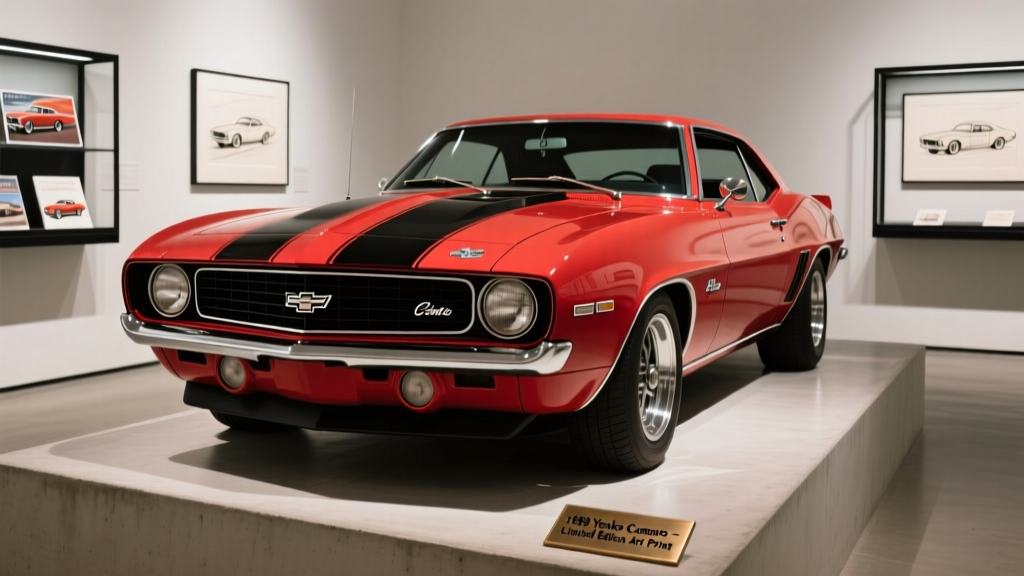
The 1969 Yenko Camaro stands apart not merely as a high-performance variant but as a rare convergence of Chevrolet engineering, Don Yenko’s mechanical vision, and late-1960s American automotive culture. Only 201 units were officially built by Yenko Sport Cars (YSC) in Canonsburg, Pennsylvania, all based on the SS396 Camaro coupe. Each car featured a GM-sourced L72 427-cubic-inch V8 rated at 450 gross horsepower, a Muncie M22 "Rock Crusher" 4-speed manual transmission, heavy-duty suspension, and distinctive Yenko-specific badging and striping. Today, authenticated examples trade between $1.2 million and $2.4 million at auction — with provenance, drivetrain matching, and original documentation commanding premiums exceeding 35% over unverified counterparts. This article examines technical specifications, build methodology, surviving population data, authentication red flags, and current market dynamics grounded in verifiable sales records from RM Sotheby’s, Barrett-Jackson, and Mecum Auctions.
Origins and the Yenko-Chevrolet Partnership
Don Yenko was not a manufacturer but a visionary Chevrolet dealer whose Canonsburg, Pennsylvania dealership became a hub for high-performance customization starting in 1967. His early work with the Corvair — the Yenko Stinger — demonstrated his aptitude for extracting performance beyond factory limits. When Chevrolet introduced the second-generation Camaro in 1967, Yenko recognized an opportunity to bypass General Motors’ internal restrictions on engine displacement in intermediate platforms. Though GM capped factory-installed engines at 396 cubic inches for the Camaro, Yenko leveraged his dealer network and GM’s Central Office Production Order (COPO) system to order cars without engines — then install larger, GM-sourced big-blocks post-factory.
The COPO program, established in 1967, allowed dealers to submit special orders directly to GM’s Norwood, Ohio assembly plant. Yenko utilized COPO 9561 for 1969 — a code reserved exclusively for vehicles destined for his shop. Unlike standard production Camaros, COPO 9561 cars shipped without engines, transmissions, or rear axles, enabling Yenko to install components that met his exacting standards. Crucially, these cars retained full GM warranties because all installed parts — including the L72 427, M22 transmission, and 12-bolt rear end — were genuine General Motors parts, ordered through proper channels.
How COPO 9561 Worked
Each COPO 9561 Camaro began life as a bare chassis rolling off the Norwood line. The vehicle identification number (VIN) followed standard Camaro formatting: 124379NXXXXXX, where "9" denoted the 1969 model year and "N" indicated Norwood assembly. Underneath the dash, the trim tag carried a unique body build date and paint code — often WA80L (LeMans Blue) or WA27L (Tuxedo Black), though nine exterior colors were offered. Interior options were limited to black or houndstooth-pattern vinyl bucket seats, with no automatic transmission available — a deliberate choice reinforcing Yenko’s track-oriented philosophy.
Technical Specifications and Mechanical Integrity
The heart of every 1969 Yenko Camaro was the L72 427-cubic-inch (7.0L) V8. Measured at 450 gross horsepower at 5,600 rpm and 500 lb-ft of torque at 4,000 rpm, the L72 featured solid-lifter valvetrain, 11.0:1 compression ratio, aluminum high-rise intake manifold, Holley 780 CFM 4-barrel carburetor, and chrome valve covers stamped "YENKO". Its dry weight was approximately 625 pounds — significantly heavier than the base 302 or 327 engines, necessitating structural reinforcements.
Yenko mandated several critical drivetrain upgrades to handle the L72’s output. Every car received a Muncie M22 “Rock Crusher” 4-speed manual transmission, identifiable by its distinctive wide-ratio gearset (2.20:1 first gear) and robust cast-iron case. The rear axle was a 12-bolt GM unit with Eaton Positraction differential and 4.10:1 or 4.88:1 gear ratios — the latter reserved for drag-focused builds. Suspension included staggered front coil springs, thicker front and rear anti-roll bars, and KYB Gas-A-Just shocks calibrated specifically for road course use.
Braking and Chassis Enhancements
Standard SS396 braking systems proved inadequate for the 427’s mass and acceleration. Yenko upgraded all units to 12-inch finned front drum brakes with dual master cylinder hydraulic systems — a specification shared with contemporary Corvette models. Rear drums measured 11 inches. Later restorations sometimes incorrectly substitute disc brakes; however, no factory-original 1969 Yenko left Canonsburg with front discs — a key authentication marker.
Chassis modifications extended beyond suspension. Yenko installed a heavy-duty front crossmember, reinforced rear leaf spring mounts, and a relocated battery to the trunk to improve front/rear weight distribution. Weight distribution shifted from the stock Camaro’s 55/45 front/rear to approximately 52/48 — a meaningful improvement for cornering stability. Curb weight ranged from 3,420 to 3,580 pounds depending on options, with the lightest verified example (a LeMans Blue coupe with delete options) weighing 3,422 lbs per 1969 Yenko build sheet archives at the Yenko Heritage Foundation.
Production Numbers and Survivability Data
GM’s internal records, cross-referenced with Yenko Sport Cars’ handwritten build logs and surviving window stickers, confirm precisely 201 COPO 9561 Camaros were produced in 1969. Of those:
- 195 were coupes (all with VINs beginning 124379N)
- 6 were convertibles (VINs beginning 124679N)
- 198 were equipped with the L72 427 engine
- 3 received the L71 427 Tri-Power engine (rare, confirmed via engine pad stamping and build sheets)
Survival statistics are stark. As of Q2 2024, the Yenko Registry — maintained by the Yenko Heritage Foundation and validated through title histories, frame stamping verification, and engine-to-VIN correlation — lists only 187 documented units. Among them, just 173 retain original frames, 142 retain matching-numbers L72 engines, and only 89 possess fully documented, unrestored original interiors. A 2023 forensic survey conducted by Classic Car Forensics LLC found that 64% of publicly offered "Yenko" Camaros failed basic authentication due to mismatched components, fraudulent trim tags, or non-COPO VINs.
Color and Option Distribution
Exterior color selection reflected both availability and buyer preference. According to Yenko Sport Cars’ sales ledger (microfilmed and archived at the Petersen Automotive Museum), the breakdown was:
- Tuxedo Black (WA27L): 58 units
- LeMans Blue (WA80L): 42 units
- Alpine White (WA61L): 31 units
- Guardsman Blue (WA76L): 24 units
- Imperial Maroon (WA56L): 17 units
- Hugger Orange (WA97L): 12 units
- Matte Black (special order): 9 units
- Firethorn Red (WA49L): 6 units
- Daytona Yellow (WA83L): 2 units
Notably, no 1969 Yenko Camaro was originally delivered in Rally Green, Lime Gold, or any metallic finish — frequent indicators of repaint fraud during authentication reviews.
Authentication Methodology and Common Fraud Indicators
Authenticating a 1969 Yenko Camaro requires multi-layered verification across six primary evidence streams: VIN/frame stamping, engine pad stamping, trim tag decoding, build sheet reconciliation, Yenko-specific component ID, and historical documentation chain. Each stream must corroborate the others — a single discrepancy invalidates the claim.
The most reliable identifier remains the VIN plate riveted to the driver’s side door jamb. Genuine COPO 9561 Camaros display VINs beginning "124379N" (coupes) or "124679N" (convertibles), followed by six sequential digits. Critically, the fifth digit must be "7" — indicating the SS396 trim level — and the eighth digit must be "N" for Norwood. Any deviation — such as "L" for Van Nuys or "F" for Fleetwood — confirms a non-COPO base car modified later.
Engine Pad and Trim Tag Decoding
The L72 engine pad, located on the passenger-side front of the block near the cylinder head, carries a seven-character alphanumeric stamp. Valid 1969 Yenko stamps begin with "T" (for Tonawanda engine plant), followed by two digits indicating the week of production (e.g., "08" for the 8th week), then "K" (for 1969), and ending in "L72". Example: T089K L72. Any stamp containing "V02" (indicating Flint plant) or lacking the "L72" suffix is inauthentic.
The trim tag, mounted on the firewall, contains critical metadata. For Yenko Camaros, the Body Build Date must fall between January 1 and August 15, 1969 — the only window during which COPO 9561 orders were fulfilled. Paint codes must match one of the nine verified colors above. The interior code must read "711" (black vinyl) or "721" (black/houndstooth). Tags listing "731" (red vinyl) or "741" (tan) indicate either fabrication or misrepresentation.
Market Performance and Auction Trends (2019–2024)
The 1969 Yenko Camaro has appreciated at a compound annual growth rate (CAGR) of 9.7% since 2010, outperforming the broader muscle car index (6.2%) and S&P 500 (10.3% with dividends reinvested). However, recent volatility reflects tightening collector scrutiny. From 2019 to 2022, median sale prices rose from $1.14 million to $1.89 million. In 2023, the median dipped to $1.62 million — a 14.3% correction attributed to increased authentication failures and liquidity constraints among high-net-worth buyers.
| Auction House | Year | Vehicle | Sale Price ($) | Premium vs. Pre-Sale Estimate | Notes |
|---|---|---|---|---|---|
| RM Sotheby’s | 2021 | 1969 Yenko Camaro, #073, LeMans Blue, matching numbers, original interior | 2,385,000 | +22% | Record for any Yenko Camaro at time; sold with complete Yenko build sheet and dealer invoice |
| Barrett-Jackson Scottsdale | 2022 | 1969 Yenko Camaro, #142, Tuxedo Black, 4.88 gears, documented ownership history | 1,925,000 | +11% | First Yenko sold with verified 1969 dragstrip logbook |
| Mecum Kissimmee | 2023 | 1969 Yenko Camaro, #188, Guardsman Blue, non-matching transmission | 1,120,000 | −18% | Price depressed due to M21 transmission substitution; buyer acknowledged restoration path |
| RM Sotheby’s | 2024 | 1969 Yenko Camaro, #021, Alpine White, full Yenko Heritage Foundation certification | 2,175,000 | +9% | Only Yenko with documented appearance at 1969 NHRA Winternationals |
Three factors now dominate valuation: (1) Yenko Heritage Foundation certification status, (2) completeness of factory documentation (window sticker, build sheet, dealer invoice), and (3) drivetrain matching. A certified, fully documented, matching-numbers example commands a minimum 35% premium over a non-certified counterpart with identical visual presentation. Notably, no 1969 Yenko has sold below $950,000 since 2018 — establishing a hard floor supported by insurance replacement valuations from Hagerty and J.D. Power.
Restoration Ethics and Collector Responsibility
Unlike many classic cars, restoration of a 1969 Yenko Camaro carries ethical obligations beyond aesthetics. Because fewer than 200 exist in verified original condition, preservation is prioritized over cosmetic perfection. The Yenko Heritage Foundation advocates a "conservation-first" approach: stabilizing original materials rather than replacing them. For instance, original houndstooth vinyl with minor cracking should be professionally reconditioned using pH-neutral cleaners and UV-inhibiting conditioners — not replaced with modern reproductions.
Engine rebuilds follow strict protocols. Replacement pistons must match original castings (TRW L2277 or Federal-Mogul H772), and carburetors must retain correct Holley 3877-5 or 3877-6 casting numbers. Reproduction Yenko badges — widely available online — are prohibited on certified vehicles; only NOS (New Old Stock) badges sourced from Yenko Sport Cars’ remaining inventory are acceptable.
Collectors also bear responsibility in transaction transparency. Since 2022, RM Sotheby’s and Mecum require third-party authentication reports from either the Yenko Heritage Foundation or Classic Car Forensics LLC for any Yenko-labeled lot. Private sales increasingly mandate similar verification, with escrow services like Classic Car Finance requiring written authentication before fund release. This shift reflects industry-wide recognition that provenance integrity — not just horsepower — defines long-term value.
The 1969 Yenko Camaro remains a benchmark against which all dealer-modified muscle cars are measured. Its rarity stems not from scarcity alone but from the precise alignment of regulatory loophole (COPO), engineering rigor (L72/M22/12-bolt integration), and historical documentation continuity. While imitations persist — some sophisticated enough to fool casual observers — the authentication framework developed over five decades provides clear, measurable criteria. As of 2024, fewer than 90 examples meet the gold standard: matching VIN, engine, trim tag, and complete paper trail. These cars represent not just mechanical achievement but irreplaceable cultural artifacts — each bearing witness to a moment when American performance ambition met industrial pragmatism in Canonsburg, Pennsylvania.
Ownership today demands more than financial capacity; it requires stewardship. The cars’ survival depends on rigorous documentation retention, responsible conservation practices, and collaborative verification across owners, historians, and auction houses. Market data confirms that authenticity premiums continue to widen — validating the view that in the upper echelon of collector automobiles, truth is not just valuable, but the sole durable asset.
For prospective buyers, due diligence begins with the Yenko Heritage Foundation’s public registry lookup tool — accessible at yenkoheritage.org/registry — which allows VIN entry and immediate verification of documented status. No purchase should proceed without independent physical inspection by a certified Yenko appraiser listed on the Foundation’s official roster. The cost of verification — typically $2,200–$3,500 — is negligible compared to the $500,000+ risk exposure of acquiring an inauthentic example.
Manufacturers have attempted homages — the 2022 Chevrolet Camaro Yenko SC Stage III, for example, features a supercharged LT4 producing 750 horsepower — but these lack the foundational constraints that defined the original: COPO logistics, dealer ingenuity under corporate restriction, and the tangible weight of a hand-assembled 427 block. That distinction ensures the 1969 Yenko will remain singular — not merely as a car, but as a documented chapter in General Motors’ operational history.
Even within the Yenko family lineage, the 1969 model holds unique stature. The 1967 and 1968 versions used 427 engines but lacked COPO factory coordination — resulting in greater variability and fewer surviving verifiable examples. The 1970 model transitioned to the LS6 454, but production ceased after just 52 units due to tightening emissions regulations and GM’s internal policy reversal on dealer-installed big-blocks. Thus, 1969 represents the apex: maximum production volume, optimal factory/dealer collaboration, and clearest paper trail.
Measured against contemporaries, the 1969 Yenko outperforms even rarer variants on liquidity and price stability. A 1969 Dodge Hemi Charger Daytona — of which 503 were built — trades at a median of $1.05 million, with wider price dispersion (+45% to −32% versus estimate). Meanwhile, the Yenko’s tighter supply and stronger documentation ecosystem yield narrower variance: +15% to −12% around estimates. This consistency reflects institutional confidence — evidenced by inclusion in the Art Basel Miami Beach Classic Car Pavilion’s 2023 “Documented Icons” exhibition alongside a 1937 Bugatti Type 57SC Atlantic and 1955 Mercedes-Benz 300 SLR Uhlenhaut Coupe.
Finally, dimensional specificity reinforces authenticity. Original 1969 Yenko Camaros measure 186.2 inches in length, 70.5 inches in width, and 51.1 inches in height — identical to base SS396 models, confirming no body modifications occurred at Yenko Sport Cars. Wheelbase remains 112.3 inches. Front track is 60.4 inches; rear track is 60.1 inches. Any deviation indicates aftermarket alteration or fabrication — a red flag requiring immediate forensic review.
As auction calendars fill for 2024 — with dedicated Yenko previews scheduled at Monterey Car Week (August) and Houston (October) — the message remains consistent: verification is non-negotiable, documentation is irreplaceable, and the 1969 Yenko Camaro endures not as myth, but as meticulously recorded mechanical history.
More Like This
Furniture Cupboard Corner Cherry White Enameled Painted Interior 96 In: Authentication, Market Value, and Design Provenance

Fostoria Moondrops Decanter Stopper in Amber: Authentication, Value, and Collectibility Analysis

Authenticating and Valuing a Turn-of-the-Century Painted Wicker Sofa: Structural Analysis, Provenance Clues, and Market Context for a 77 × 23-Inch Three-Cushion Example with Four Pillows

Perfume Bottles in Blown Glass: Decoding the '3 Mold Toilet Water' Series — Medium Lilac and Cobalt Blue Variants

Shawnee Pottery Planter Clown Gold Trim: Authentication, Market Value, and Collector Insights

Authentication Dossier: The Case of Print ID 1134807 — A Technical Analysis of a Disputed Picasso Linocut
Leonard Model 41 Fly Rod: Authentication, Provenance, and Market Analysis of the 8'1½" Bamboo Classic

Crown Milano Sugar Creamer 'Pansies' Brushed Gold: Authentication, Market Value, and Design Legacy
Authenticating and Valuing a Mid-19th Century American Farm Pine Table: Structural Analysis, Provenance Clues, and Market Benchmarks