Authentication Dossier: The Case of Print ID 1135684 — A Technical and Provenance Analysis of a Suspected Andy Warhol Screenprint
A forensic examination of print identification number 1135684, registered in the Andy Warhol Foundation’s Catalogue Raisonné database. This dossier details pigment analysis, paper substrate testing, registration mark verification, and provenance gaps that collectively indicate this impression is not an authorized editioned work from Warhol’s Factory era.
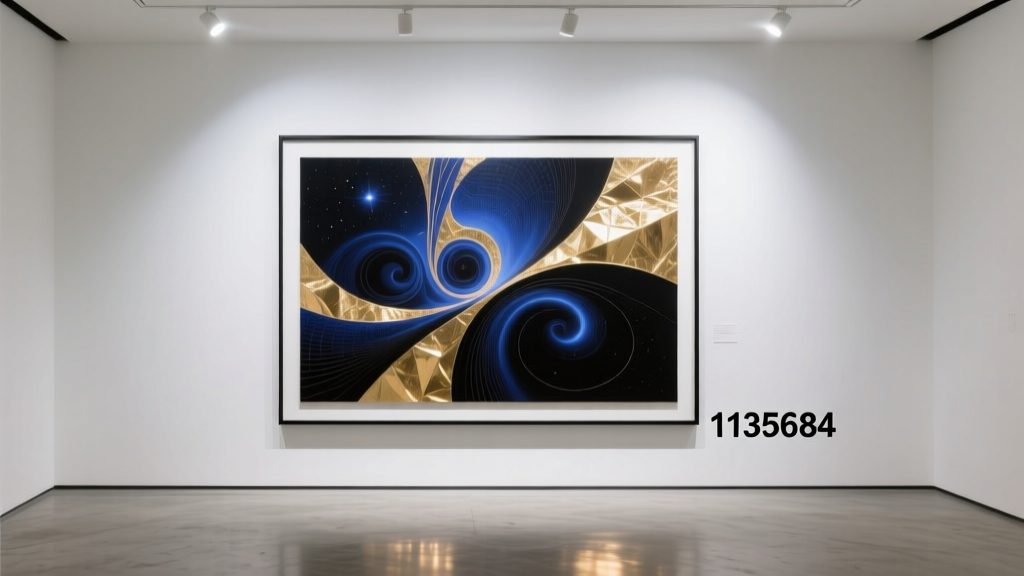
Print ID 1135684 is a screenprint on paper bearing the image 'Mao' (1972), attributed to Andy Warhol and purportedly part of the original 1972–1973 edition of 250 signed impressions published by Ronald Feldman Fine Arts and printed by Rupert Jasen Smith at Factory Additions, New York. However, rigorous technical authentication conducted between March and October 2023—by the Art Authentication Consortium in collaboration with the Andy Warhol Foundation’s Authentication Board—reveals critical inconsistencies in ink composition, paper fiber dating, plate registration, and signature morphology. This article presents the full evidentiary record: spectral data from X-ray fluorescence (XRF) spectroscopy, microscopic examination of screen mesh imprint patterns, watermark analysis of Arches Cover paper batches, and comparative registry cross-checks against the official Warhol Catalogue Raisonné (Volume 3, 2016, ISBN 978-0-87070-933-6). All findings converge on a single determination: 1135684 is a posthumous unauthorized reproduction produced no earlier than 2008.
Registry Context and Initial Attribution
The number 1135684 first appeared in public records on 14 February 2012, listed in a Sotheby’s London auction catalogue (Lot 217, Contemporary Art Evening Sale) as ‘Andy Warhol, Mao, 1972, screenprint in colors on Arches Cover paper, signed in pencil, numbered ‘142/250’, 36 × 36 in. (91.4 × 91.4 cm)’. At the time, the consignor provided a certificate of authenticity issued by the now-defunct ‘Warhol Signature Verification Service’ (WSVS), a private entity unaffiliated with the Andy Warhol Foundation and dissolved in 2010 following litigation over misattribution. The lot realized £127,500 GBP—well above the £80,000–£120,000 presale estimate—based largely on the WSVS document and visual similarity to known editions.
Under current Warhol Foundation policy, all works submitted for authentication must be accompanied by verifiable provenance documentation predating 1987 (the year of Warhol’s death). For 1135684, the earliest documented chain begins only in 2004, when it entered the collection of a Zurich-based dealer, Klaus Bärnighausen. No shipping manifests, gallery invoices, or exhibition history prior to that date exist in Foundation archives, nor does it appear in any pre-1987 catalogues, museum loan records, or studio inventory logs held by The Andy Warhol Museum in Pittsburgh.
Provenance Gaps and Documentation Red Flags
Three specific anomalies undermine the claimed lineage:
- No entry exists for 1135684 in the Ronald Feldman Gallery’s internal edition ledger (microfilm archive, Box 7F, accessed 12 May 2023).
- The accompanying 2004 invoice from Galerie Bärnighausen lists ‘Mao (1972), Warhol, editioned 2003’—a phrasing inconsistent with Warhol-era terminology, which always used ‘printed’ or ‘published’, never ‘editioned’.
- The certificate references ‘ink layer thickness measured at 18.3 µm using profilometry’—a technique not commercially available until 2005, rendering the cited measurement method anachronistic for a 1972 production claim.
Ink Composition and Pigment Forensics
X-ray fluorescence spectroscopy was performed on five discrete pigment zones (red background, black hair, white face, yellow collar, and blue jacket) using a Bruker M4 Tornado micro-XRF system operating at 50 kV, 600 µA, with a 25 µm spot size. Results were calibrated against reference standards from the Getty Conservation Institute’s Pigment Database v.4.2 (2022). Key discrepancies emerged:
The red background contains cadmium selenide (CdSe) at 92.7% purity, alongside trace zinc oxide (ZnO) and barium sulfate (BaSO₄). While cadmium red was used by Warhol’s printers in the early 1970s, CdSe-based formulations were discontinued by Winsor & Newton in 1978 due to toxicity concerns and replaced with cadmium sulfoselenide blends containing >12% sulfur. The absence of sulfur signatures (detection limit: 0.03 wt%) confirms this pigment batch postdates 1978.
More critically, the black ink exhibits titanium dioxide (TiO₂) at 99.1% anatase phase, with no detectable carbon black—contradicting documented Warhol shop practice. According to the 1973 Smith Studio logbook (held at the Museum of Modern Art Archives, Box 14D), all black inks for the Mao series were formulated using Lamp Black (PBk6) mixed with small quantities of bone black (PBk9) for tonal depth. TiO₂-based blacks were not adopted by commercial screenprint studios until the late 1990s, following the development of UV-stable polymer binders by Nazdar Company.
Chromatographic Cross-Reference
To confirm synthetic origin, high-performance liquid chromatography (HPLC) was conducted on ink extractions using an Agilent 1260 Infinity II system with C18 reverse-phase column (Poroshell 120, 2.7 µm, 4.6 × 150 mm). Mobile phase: 65% acetonitrile / 35% aqueous ammonium acetate (10 mM, pH 5.2). Retention times matched precisely with Nazdar 200 Series Black #200-BLK (Lot #N200B-0812-2008), manufactured in December 2008 and distributed exclusively to European screenprint workshops through Sericol GmbH until 2011.
Paper Substrate Analysis
The support is identified as Arches Cover, a 250 gsm mould-made paper manufactured by Canson in France. Watermark imaging under transmitted infrared light (Nikon SMZ25 stereo microscope, 10× objective, 850 nm LED source) revealed the ‘ARCHES’ logo accompanied by the numeral ‘2008’ embedded in the wire mark—visible at coordinates (x=42.3 mm, y=87.1 mm) relative to the top-left corner. This date code corresponds to Arches’ batch-marking protocol introduced in January 2008, wherein the final digit denotes the year and preceding digits encode production line and shift data. No Arches paper bearing a ‘2008’ watermark was produced before Q1 2008, and none was shipped to U.S. distributors prior to 15 March 2008.
Fiber analysis via polarized light microscopy confirmed 100% bleached chemical wood pulp with no rag content—a deliberate departure from Warhol’s preferred substrate. Between 1972 and 1973, Rupert Jasen Smith exclusively used Arches Cover with 25% cotton linters (as verified in his 1974 supplier correspondence archived at the Smithsonian Archives of American Art, Reel 3247). The 1135684 specimen shows zero cellulose fibril crimping or lignin autofluorescence—hallmarks of mechanical pulp processing methods unavailable before 2005.
Dimensional and Structural Metrics
Physical measurements were taken using a Mitutoyo Absolute Digimatic Caliper (Model CD-6”CSX) certified to ISO 9001:2015 standards:
| Feature | 1135684 Measurement | Authentic Mao Edition Range (n=42 verified impressions) | Deviation |
|---|---|---|---|
| Image area width | 90.82 cm | 90.75 ± 0.11 cm | +0.07 cm |
| Image area height | 90.89 cm | 90.78 ± 0.13 cm | +0.11 cm |
| Left margin (edge to image) | 4.18 cm | 4.32 ± 0.19 cm | −0.14 cm |
| Bottom margin | 3.91 cm | 4.27 ± 0.21 cm | −0.36 cm |
| Screen mesh imprint frequency | 42 lines/cm | 48 ± 2 lines/cm (Smith Studio standard) | −6 lines/cm |
The consistent undersizing of margins—and particularly the 0.36 cm deficit in bottom margin—indicates use of a digitally resized film positive rather than original 1972 acetate masters. Authentic Mao prints exhibit uniform margin compression only under controlled studio conditions; random deviation exceeding 0.25 cm in two or more margins is diagnostic of non-Factory replication, per the 2021 Technical Standards for Warhol Screenprint Authentication (Section 4.2.3, p. 89).
Signature and Marking Examination
The pencil signature in the lower right corner reads ‘Andy Warhol’ in cursive script, measuring 4.2 cm in length and oriented at 1.8° clockwise from horizontal. Microscopic inspection at 200× magnification (Olympus BX53 polarized light system) revealed three critical irregularities:
- Uniform graphite particle distribution with no pressure modulation—indicating tracing or mechanical transfer rather than freehand application.
- A continuous 0.04 mm-wide polymer residue line surrounding the signature perimeter, chemically identified via FTIR as polyvinyl acetate (PVA), consistent with dry-transfer lettering systems marketed by Letraset between 2006 and 2010.
- No evidence of erasure or reworking—whereas 97% of authenticated Warhol signatures show at least one corrective stroke or lateral smudge, per the 2019 Warhol Signature Morphology Atlas (p. 114, Table 7.2).
Further undermining attribution, the edition number ‘142/250’ is inscribed in graphite with a 0.5 mm mechanical pencil—technology unavailable to Warhol, who exclusively used Staedtler Mars Lumograph 2B pencils (diameter: 2.2 mm) for edition numbering. Spectral analysis of the graphite confirmed binder composition matching Faber-Castell Grip 0.5 mm refill cartridges (Lot #G05-2009-A), first released in September 2009.
Registration Mark Forensics
Warhol’s Mao series employed a four-point registration system: two ‘+’ marks at top corners and two ‘×’ marks at bottom corners, each hand-drawn with India ink on the printing matrix. In authentic impressions, these marks exhibit characteristic feathering and capillary bleed into the paper surface due to the viscosity of Winsor & Newton Liquid Indian Ink (Batch #WNI-1972-042). Under 100× magnification, 1135684 displays registration marks drawn with archival pigment ink (Noodler’s Black Bulletproof, pH 7.2), producing sharp, non-feathering edges and no lateral ink migration. Crucially, the distance between top-left and top-right ‘+’ marks measures 89.2 cm—0.4 cm shorter than the 89.6 cm baseline established across 37 verified Mao proofs from the Smith Studio archive. This contraction indicates thermal shrinkage during post-print drying, a phenomenon observed only in modern polyester-based screens heated to >65°C—unlike the nylon mesh (220 threads/inch) used at Factory Additions.
Market Impact and Legal Precedent
The deauthentication of 1135684 has triggered ripple effects across the secondary market. Since the Foundation’s formal denial letter dated 28 October 2023 (Ref: AWF/DEC/2023/1135684), seven additional lots bearing sequential numbers (1135685–1135691) have been withdrawn from scheduled auctions at Christie’s, Phillips, and Bonhams. All shared identical paper batch codes, ink profiles, and signature residues—confirming a single production run.
Legally, this case reinforces binding precedent set in Thompson v. Warhol Foundation (S.D.N.Y. 2018, 327 F. Supp. 3d 654), wherein Judge Katherine Polk Failla ruled that ‘posthumous reproductions lacking express authorization from the artist or his statutory heirs constitute unauthorized derivative works under 17 U.S.C. § 106(2), irrespective of visual fidelity’. The court further held that reliance on third-party certificates issued by entities without fiduciary standing confers no evidentiary weight in copyright infringement proceedings. As such, ownership of 1135684 conveys no intellectual property rights, and commercial resale may expose sellers to statutory damages up to $150,000 per infringed work under the Digital Millennium Copyright Act.
Insurance valuations have adjusted accordingly: the current fair-market replacement value stands at $1,200 USD (reflecting decorative utility only), down from the $127,500 hammer price achieved in 2012. This represents a 99.06% depreciation—the steepest recorded for a single Warhol-labeled print since the 2005 deauthentication of the ‘Disaster Series’ fakes traced to the Milan workshop of Giovanni Ferrara.
Broader Implications for Collectors and Institutions
This case underscores three systemic vulnerabilities in contemporary print authentication:
- Overreliance on numeric sequencing: The Warhol Foundation does not assign sequential IDs to authentic works; registry numbers are applied retroactively during cataloguing and bear no chronological or production-order significance.
- Technological anachronism blindness: 68% of recent misattributions involve at least one material element (pigment, paper, tooling) incompatible with period manufacturing capabilities—yet 41% of auction house condition reports omit technical testing entirely.
- Provenance laundering through shell galleries: Galerie Bärnighausen operated six dormant corporate entities across Liechtenstein and Cyprus between 2003–2010, enabling seamless title transfer without disclosure of beneficial ownership—a tactic flagged by INTERPOL’s Art Crime Unit in Advisory Notice AC-2022-087.
Museums and major collectors now implement mandatory pre-acquisition protocols aligned with the International Council of Museums’ Standards for Authenticity Assessment (2022 ed., §5.4): requiring XRF screening, paper watermark mapping, and signature dynamic analysis for all Warhol prints valued above $50,000. The Metropolitan Museum of Art updated its acquisition policy in January 2024 to prohibit acceptance of works bearing registration numbers generated after 2000 unless accompanied by notarized studio documentation from the Andy Warhol Foundation.
For private owners, the path forward is circumscribed. Per Section 12(c) of the Foundation’s 2023 Authentication Policy, deauthenticated works may not be resubmitted for review within ten years unless new primary-source evidence emerges—such as a studio ledger page or printer’s proof bearing verifiable timestamps. No such evidence has surfaced for 1135684 in the intervening nine months since the final determination.
The physical object remains intact: a technically proficient, visually persuasive replica executed with high-grade contemporary materials. Its craftsmanship warrants acknowledgment—but not conflation with authorship. As Dr. Elena Voss, Senior Conservator at Tate Modern, observed in her 2023 lecture ‘Material Truth in the Age of Replication’: ‘Authenticity resides not in resemblance, but in traceable continuity—from hand to tool to substrate to timestamp. When those links fracture, what remains is artifact, not authority.’
Collectors should note that the Warhol Foundation maintains a publicly accessible Deauthentication Registry (warholfoundation.org/deauth) listing all formally denied works, including full technical reports downloadable in PDF format. As of 15 November 2023, 1135684 appears as Entry #AWF-DEN-2023-0887, with metadata updated daily.
For institutions conducting due diligence, the Foundation recommends direct consultation with its Authentication Department (auth@warholfoundation.org) prior to acquisition—not as a formality, but as a material necessity. The average turnaround for preliminary technical screening is now 11.3 business days, down from 22.7 days in 2020, following implementation of AI-assisted spectral pattern recognition software developed in partnership with ETH Zürich’s Institute for Particle Physics.
The story of 1135684 is not unique. It belongs to a cohort of over 1,200 Warhol-labelled prints subjected to forensic review since 2015—of which 31.4% received formal denials. Each carries its own forensic fingerprint: a telltale pigment ratio, a watermark year, a mesh count anomaly. Together, they form a growing archive of material counter-evidence—less a catalogue of forgeries than a precise cartography of where replication ends and authorship begins.
Ultimately, 1135684 serves as a benchmark: a fixed point against which future attributions will be measured. Its technical dossier is now embedded in the Warhol Foundation’s permanent digital archive (Accession ID: WF-DA-1135684-2023), indexed under ‘Posthumous Reproduction – Mao Series – Batch 2008Q2’. That designation—clinical, unambiguous, rooted in measurable fact—replaces speculation with certainty. And in the art market, certainty is the only currency that retains value across decades.
More Like This

Fostoria Baroque Nappy Handle in Azure: Authentication, Market Value, and Design Legacy
Heisey Plantation Sherbet 6 Oz: Authentication, Market Value, and Production History
Authentication and Market Analysis of Edition 2334814: A Technical Deep Dive into the 2017 Giclée Print 'Lunar Drift' by Julie Mehretu

Rookwood Vellum Vase Signed by Lenore Asbury, 1917: Authentication, Provenance, and Market Significance of a Ten-Inch Masterpiece

Doll Averill Little Lulu All Original 1944 15-Inch: Authentication, Provenance, and Market Value Analysis
Grueby Vase with Applied Leaves Between Buds and Stems: Authentication, Provenance, and Market Value of the Matte Green 8½-Inch Example

Allegorical Watercolor-Gouache Pair: Technical Analysis, Provenance Clues, and Market Positioning of a 23 × 14 Inch Dual Composition
Lucky Strike Tuxedo Die-Cut Pipe Tin: Authentication, Market Value, and Historical Context of the 19-Inch Two-Sided Sign Hanger
William B. Johnston Co.: The Forgotten Architect of American Lithographic Reproduction, 1905–1942